

Key Takeaways
Keep following the idea that survives every failed version.
A long apprenticeship. Quinn traces Ishmael through eight versions and roughly twelve years of work. Early drafts ballooned to a thousand pages; later efforts were abandoned when they still failed to capture the book he was reaching for. After an agent dismissed the project and publishers rejected it, Quinn reshaped it as a novel for Ted Turner’s competition. In 1991, it won among 2,500 entries.
Persistence with revision. The lesson is not simply to keep going. Quinn repeatedly changed the form, cut cherished material, and questioned his approach. The enduring element was the question beneath the drafts: how humans understand their place in the world. The book that finally worked was not the first idea polished harder, but a different version built from the same stubborn inquiry.
What's striking is the distinction between loyalty to a question and loyalty to a particular draft. Creative work often stalls when its maker confuses the two. Quinn's willingness to discard thousands of pages suggests that persistence can require subtraction, not just stamina. Still, a long struggle does not prove that an idea deserves endless investment. The useful test is whether each revision reveals something sharper, rather than merely protecting the time already spent. His story honors commitment while quietly demonstrating that commitment needs judgment.
Stop treating humanity as the owner of a world that made it.
Belonging, not ownership. Quinn's central claim is that humans are participants in the community of life, not its appointed managers. Our bodies depend on the same web of life that has shaped every other species. The planet supported life for billions of years before humans appeared, and human beings spent most of their own history within that community rather than trying to rule it.
A change of position. Quinn argues that modern culture mistakes intelligence for a license to control the world. His alternative is not to pretend humans have no influence, but to stop treating other life as raw material whose value depends on human use. The practical question shifts from “How should people manage the planet?” to “How can people live as members of it?”
The shift from ownership to membership gives ecological responsibility a different foundation. Care no longer depends on humans acting as benevolent landlords; it follows from recognizing dependence and participation. That framing also avoids making the natural world valuable only as scenery or resource. Yet rejecting a human right to rule does not eliminate difficult choices. Communities still have to decide how to farm, build, and protect habitats. Quinn's principle is most useful as a limit on entitlement, not as a substitute for careful environmental governance.
Perfection cannot secure love when ordinary humanity already makes connection possible.
A child's private strategy. Quinn grew up amid his parents' chronic conflict and concluded that he could not make them understand each other. He tried instead to become perfect, as if his own sensitivity and goodness might somehow produce the family he needed. Catholic devotion gave the project a spiritual form, while his early wish to become an artist offered another path to being valued without relying on anyone's approval.
The ordinary self. Years later, therapist Ada Saichy helped Quinn see perfection as a cover for the fear that he was worthless. At 37, he wrote down qualities he could recognize in himself, such as fairness and keeping promises. The exercise broke the spell: he did not need to be flawless to count as human, or to be loved by other humans.
Quinn's account shows how a coping strategy can survive long after the conditions that produced it. Perfectionism promises control over other people's affection, but it also makes every mistake feel like evidence of unworthiness. His insight is not that self-esteem arrives through a clever list; it is that human connection cannot be earned by performing an impossible ideal. The story is compelling as memoir, though its sudden resolution should not be mistaken for a universal therapeutic sequence. Some people need sustained support, not a single moment of recognition.
Let a powerful experience challenge your interpretation instead of merely confirming it.
An hour outside. In 1954, while a postulant at the Trappist monastery of Gethsemani, Quinn faced a small but defining test. After a misunderstanding left him believing he could not go outdoors, he chose to remain at the monastery without keeping an escape plan in reserve. When he finally stepped outside, he experienced the plants and landscape as radiant with a force of life. The experience lasted about an hour.
Experience and explanation. Quinn first understood the event as Christian affirmation. But his spiritual director, Thomas Merton, dismissed his account, and the experience did not fit neatly into the Christian ideas Quinn had brought with him. Quinn spent decades reconsidering it, eventually reading it as an encounter with divine life in the world itself, not a glimpse of a separate heaven.
The section is strongest when it distinguishes what Quinn experienced from what he concluded it meant. A profound event can reshape a life without settling the metaphysical questions surrounding it. That distinction lets readers take the experience seriously without being asked to adopt his theology. It also makes room for interpretation to change as a person changes. The limit is important: a private revelation can guide its witness, but it cannot by itself establish a universal account of reality. Quinn's long reconsideration is more instructive than treating the first explanation as final.
Read human history as a chosen story, not a blank before civilization.
The missing beginning. Quinn questions why history textbooks often begin with agriculture and settled civilization, even though human beings existed for millions of years before then. That earlier span is labeled “prehistory,” a word that can make it sound like an empty lead-in to the only history that matters. Quinn argues that this framing reflects the assumptions of a culture that identifies human progress with farming, production, and control.
Two stories, two lives. He contrasts a story of mastery, in which people conquer and organize the world, with a story of belonging, in which people live within a community of life. In his reading of Genesis, the Fall represents humanity taking on the authority to decide what is good or evil for the world, rather than living within the order that shaped it.
Quinn's reframing makes a useful point about historical categories: labels do not merely sort evidence, they can shape what readers consider significant. Calling millions of years “before history” risks making the agricultural era seem like humanity's natural destination. At the same time, his account is an interpretive argument, not a neutral summary of how historians think. Archaeology and history can examine ancient societies without treating them as empty or inferior. The strongest use of Quinn's model is as a challenge to progress narratives, not as a replacement master story that leaves no room for variation.
Let curiosity determine when knowledge becomes useful.
Learning has its own timing. Quinn's work in educational publishing led him to question schools that teach one subject to every child at the same time. He points to children who learn to calculate baseball batting averages because they want to understand the game. The same idea, he argues, can feel baffling when presented as a classroom assignment without a reason that matters to the learner.
A learning-rich city. Quinn imagines a community where children can spend time with people who practice many trades and arts, then learn what interests them. They might explore music, building, animals, computers, or writing by working alongside someone who knows the subject. He argues that children in other cultures acquire extensive knowledge without conventional schools. His proposal is not a redesigned classroom so much as open access to a community's skills and knowledge.
Quinn's example of batting averages captures the difference between information delivered and knowledge actively sought. It also questions an institution's tendency to treat uniform scheduling as proof of learning. His imagined city makes education feel connected to adult life rather than sealed off from it. But the contrast between curiosity-led learning and school instruction can be too clean. A child may not spontaneously seek every essential skill, and institutions can provide access and structure that families cannot. The provocative question is not whether schools should vanish, but how much learning they suppress when they control its timing and purpose.
Treat Providence as a pattern of timing, not a divine definition.
A deliberately open term. Quinn never gives Providence a formal definition. He uses the word for the meaningful-seeming sequence of events that becomes visible when a life is viewed in retrospect. A priest's remark that people matter more than rules helped loosen Quinn's attachment to Catholic authority. Therapy helped him rebuild his self-respect. A week after a sudden change in how he saw himself, he invited Rennie to dinner, beginning their relationship.
Chance and readiness. Quinn emphasizes that a different choice, meeting, or moment could have sent his life elsewhere. The events are not presented as a proof that a supernatural planner arranged every detail. Providence names the way opportunity and readiness sometimes meet, and the way their significance becomes clearer afterward. His story asks readers to notice these convergences without insisting that they can be engineered or explained in advance.
This open-ended use of Providence offers a language for meaning without requiring a complete theory of divine intervention. It treats a life as more than a list of isolated decisions while leaving the mechanism uncertain. That can be emotionally generous: people often understand the importance of an event only after its consequences accumulate. The caution is that hindsight naturally favors a coherent plot. Other events may have mattered just as much but disappeared from the story. Quinn's account works best as an invitation to reflect on timing, not as evidence that every coincidence carries a message.
See divinity in living places without expecting it to favor humans.
A place-centered sacredness. Quinn calls the worldview he adopts animism, but he rejects the caricature that it means imagining a separate little spirit inside every tree. He describes the world itself as charged with divine life. The particular life of a place, such as the Kentucky hills where his experience occurred, is sacred in its own right rather than a backdrop created for human purposes.
No human favorites. In this view, divine life does not take the human side against other species. A virus, a predator, and a person each participate in the same web of life, even when their interests conflict. Quinn uses this idea to reject both human supremacy and the expectation that the gods will shield people from ordinary natural dangers. Humans may defend themselves, but they are not the universe's favored species.
Quinn's account of sacredness links spirituality to attention: a place is not valuable because it serves people, but because it is alive in its own particular way. His refusal to make humans the center also presses beyond environmental concern into a question of religious imagination. Still, “animism” covers diverse beliefs and practices, and Quinn's account should not be mistaken for a complete description of every community associated with that term. Its value here is as his own spiritual framework, one that makes human dependence vivid and challenges the assumption of cosmic favoritism.
Turn the need to feel needed into participation in life's community.
Self-help is not world repair. Quinn describes modern people as intensely focused on personal transformation, spiritual techniques, and inner improvement. He does not say that personal needs are unreal or should be ignored. He argues that attending to them is not the same as protecting the conditions that make life possible. His childhood dream of entering a forest community began with a message that he was needed there, not that the forest would make him feel better.
Belong through reciprocity. In Quinn's account, every organism receives life through other organisms and, in death, returns its substance to the larger community. Humans are no exception. The environmental task is therefore not to become perfect guardians of the planet, but to stop living as if people were outsiders with a right to take without belonging. Quinn ends by urging readers to recognize their place in that shared life.
The closing move turns ecological concern from personal guilt into a question of relationship. People do not have to become spiritually exceptional before they can act as members of a living community. That is a more accessible demand than perfection, and it connects human meaning to reciprocal dependence. Yet the language of being needed can also place a burden on people who already feel responsible for everyone else. Human worth should not depend on usefulness. Quinn's strongest point is not that every person must prove a serviceable role, but that no one is biologically separate from the consequences of collective choices.
Analysis
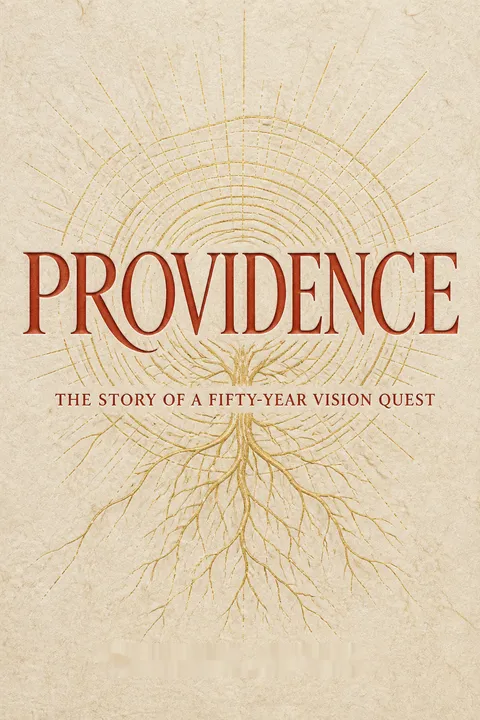
Providence is a memoir about the making of a worldview, not simply a behind-the-scenes account of Ishmael. Quinn gives the reader a sequence of formative encounters: a childhood dream of being summoned by nonhuman life, a family system that taught him to pursue perfection, a brief monastic experience that exceeded its Christian explanation, and years of work that gradually connected those memories to a critique of human mastery. The title names the interpretive thread running through the sequence. Quinn does not define Providence as a doctrine; he uses it to describe how past events can acquire direction when viewed together.
The book's most persuasive intellectual move is its challenge to the story that human history properly begins with agriculture and civilization. Quinn asks what becomes invisible when the earlier span of human life is treated as mere prehistory. His answer is that people can imagine a different human role, one based on belonging to the community of life rather than ruling it. The distinction is memorable because it connects historical narrative to present behavior: a culture's story about what humans are for can become a justification for how it treats the world.
That strength also marks a limit. The Leaver and Taker contrast gives Quinn a clear vocabulary for competing ways of living, but it risks compressing varied societies into two large types. His own warning that no single way of life is universally right complicates the binary, without fully resolving it. His claims about schools likewise expose the cost of standardized instruction, yet the proposed learning community is more an evocative alternative than a detailed account of how every child would gain essential knowledge.
The memoir's personal arc supplies its emotional force, but retrospective coherence can make a life look more guided than it felt at the time. Quinn's method is best read neither as proof of cosmic design nor as a simple ecological manifesto. It is an invitation to question inherited stories, attend to the community that sustains human life, and take responsibility without pretending to stand outside it.
Review Summary
Providence receives mixed reviews, with an average rating of 3.70 out of 5. Many readers appreciate Quinn's insights into his thought process and the development of his ideas, particularly those found in Ishmael. Some find the book enlightening and inspiring, praising Quinn's unique perspective on humanity and nature. However, others criticize Quinn's writing style as egocentric or self-indulgent. The book is seen as a valuable supplement to Quinn's other works, offering autobiographical elements and philosophical musings that shed light on his creative journey.
Glossary
Providence
Meaningful timing in retrospectQuinn intentionally leaves Providence undefined. He uses the term for the meaningful pattern that appears when events, opportunities, and personal readiness are considered across a life. It does not necessarily mean that a supernatural power arranged each event. In the book, Providence names a way of noticing how apparently separate moments can contribute to a direction.
Leavers
Those who leave nature's ruleQuinn uses Leavers for peoples who, in his framework, leave the governance of the world in the hands of the gods rather than claiming to rule it themselves. The term refers broadly to societies he contrasts with modern industrial culture. It is a category in his argument, not a single people, religion, or uniform way of life.
Takers
Those who claim world masteryTakers is Quinn's term for the culture that treats humans as entitled to manage and control the world. He connects this outlook with agriculture, civilization, production, and the belief that human beings can decide what is good for the whole planet. The label describes a cultural role in his framework, rather than every person in modern societies.
Homo magister
Humanity imagined as masterQuinn's proposed name for the human type shaped by the Taker story of mastery. Homo magister sees people as rulers of the world and tends to view earlier human history as insignificant because it preceded agriculture and civilization. The term highlights how a culture's assumptions about human purpose can influence its account of the past.
animism
Sacred life throughout the worldQuinn uses animism for a spiritual outlook in which divine life is present in the living world, rather than remote from it or centered exclusively on humanity. He distinguishes this from the caricature that every tree or object contains an individual spirit. In his account, animism has no single creed, institution, or universal authority.
knowledge of good and evil
Claiming authority to ruleQuinn's interpretation of the biblical phrase is humanity's claim to decide what is good or evil for the world. He argues that people assume a godlike governing role when they try to manage the community of life according to their own judgments. In this reading, the Fall is a move away from belonging within the world's order.
One Right Way
One approved method for allQuinn uses this phrase for the cultural assumption that a single method must be correct, while alternatives are wrong. He sees it in education, where one curriculum or teaching approach is imposed despite differences in how children learn. The phrase also captures the broader tendency to treat a preferred cultural arrangement as universally necessary.
FAQ
What is "Providence: The Story of a Fifty-Year Vision Quest" by Daniel Quinn about?
- Personal and Philosophical Memoir: The book is a memoir tracing Daniel Quinn’s life journey, focusing on the personal, spiritual, and intellectual quest that led to the writing of his acclaimed novel, Ishmael.
- Origins of Ishmael: It details the long, challenging process of developing the ideas and drafts that eventually became Ishmael, including the many failed attempts and the influence of key life events.
- Exploration of Meaning and Belonging: Quinn reflects on his search for meaning, his struggles with religion, perfectionism, and self-worth, and his eventual embrace of a worldview rooted in animism and interconnectedness.
- Cultural Critique: The narrative critiques Western civilization’s myths, especially the belief in human supremacy and the separation from the natural world, advocating for a return to a sense of belonging within the community of life.
Why should I read "Providence: The Story of a Fifty-Year Vision Quest" by Daniel Quinn?
- Insight into Ishmael’s Creation: Readers gain a behind-the-scenes look at the intellectual and emotional journey that produced Ishmael, deepening appreciation for both books.
- Universal Themes: The memoir addresses universal struggles—identity, purpose, spirituality, and the search for belonging—making it relatable beyond Quinn’s personal story.
- Challenging Cultural Assumptions: Quinn’s critique of Western myths and his exploration of animism offer a thought-provoking challenge to mainstream views on humanity’s place in the world.
- Inspirational and Honest: The book is candid about failure, doubt, and transformation, offering encouragement to anyone on a personal or creative quest.
What are the key takeaways from "Providence: The Story of a Fifty-Year Vision Quest" by Daniel Quinn?
- Persistence in Creative Work: Quinn’s thirteen-year struggle to write Ishmael demonstrates the importance of perseverance and being true to one’s unique vision.
- The Power of Myth: The book reveals how unexamined cultural myths shape our lives and worldviews, often to our detriment.
- Belonging to the World: A central message is that humans are not separate from or rulers of the world, but belong to the community of life, a perspective rooted in animism.
- Personal Transformation: Quinn’s journey from perfectionism and alienation to self-acceptance and connection illustrates the possibility of profound personal change.
How does Daniel Quinn describe the process of writing Ishmael in "Providence"?
- Multiple Failed Drafts: Quinn recounts writing and discarding several versions of the book over more than a decade, each time getting closer to his vision.
- Struggle with New Ideas: He emphasizes the difficulty of articulating genuinely new ideas, which often seem obvious in hindsight but require years of effort to express.
- Breakthrough via Competition: The Turner Tomorrow Fellowship, seeking fiction with solutions to global problems, provided the impetus to finally write Ishmael as a novel.
- Personal and Spiritual Influences: Quinn’s life experiences, dreams, and spiritual explorations all contributed to the eventual form and content of Ishmael.
What is the concept of "Providence" as explained by Daniel Quinn in the book?
- Undefinable Guiding Force: Quinn uses "Providence" as an undefined term, akin to a mathematician’s undefined set, representing the mysterious, guiding force in his life.
- Recognized in Retrospect: He identifies moments of apparent luck, coincidence, or timely opportunity as manifestations of Providence shaping his journey.
- Not Religious Destiny: Providence is not presented as fate or divine intervention in the traditional sense, but as a pattern of meaningful events recognized over time.
- Central Theme: The book is ultimately about Providence—how it operates in a life, especially one devoted to a long-term vision or quest.
How does Daniel Quinn’s spiritual journey unfold in "Providence"?
- Early Catholicism and Monastic Aspirations: Quinn describes his youthful embrace of Catholicism and his attempt to become a Trappist monk, seeking perfection and acceptance.
- Mystical Experience: He recounts a transformative mystical experience at Gethsemani, seeing the world "ablaze with divine life," which shaped his later worldview.
- Disillusionment and Departure: After being asked to leave the monastery, Quinn undergoes a crisis of faith, eventually rejecting the God of Christianity.
- Embrace of Animism: Over decades, he comes to identify with animism—a sense of the sacredness and interconnectedness of all life—rather than organized religion.
What is animism, and how does Daniel Quinn define or relate to it in "Providence"?
- Worldview, Not Doctrine: Animism, for Quinn, is not a set of beliefs or rituals but a way of seeing the world as alive and sacred, with no hierarchy between humans and other beings.
- Universal Pre-Religion: He describes animism as the original, once-universal religion of humanity, preceding the anthropocentric religions of the Takers.
- Personal Experience: Quinn’s mystical vision at Gethsemani is interpreted as an animist revelation, leading him to see the divine in the living world rather than in a distant heaven.
- No Need for Conversion: He notes that animism requires no creed, church, or conversion—anyone who experiences the world as alive and interconnected is, in effect, an animist.
What are the "Takers" and "Leavers" as discussed in "Providence" and Ishmael?
- Takers: The term refers to the dominant culture of civilization-builders who believe the world belongs to them, leading to environmental destruction and alienation.
- Leavers: These are peoples and cultures who "leave the rule of the world in the hands of the gods," living in harmony with the community of life.
- Cultural Mythology: Quinn uses these terms to illustrate two fundamentally different stories about humanity’s place in the world, with Takers enacting a story of conquest and Leavers a story of belonging.
- Moral and Ecological Implications: The Taker worldview is critiqued as unsustainable and spiritually impoverished, while the Leaver approach is presented as a model for reconnection and survival.
How does Daniel Quinn critique modern education in "Providence"?
- One Right Way Fallacy: Quinn criticizes the educational system’s insistence on a single correct method, ignoring the diversity of learners and learning styles.
- Suppression of Natural Learning: He argues that schools stifle children’s innate curiosity and capacity for self-directed learning, replacing it with rote and regimentation.
- Alternative Vision: Quinn imagines a "city" of learning where children have access to a wide range of experiences and mentors, learning what they want, when they want.
- Cultural Conditioning: He sees education as a tool for perpetuating the myths and values of the Taker culture, rather than fostering genuine understanding or creativity.
What is the significance of the mystical experience at Gethsemani in "Providence"?
- Transformative Vision: Quinn describes an hour-long experience of seeing the world "ablaze with divine life," which profoundly altered his perception of reality.
- Not a Christian Vision: He emphasizes that the experience was not Christian or theistic in the traditional sense, but a direct encounter with the sacredness of the world itself.
- Lifelong Compass: This vision became a central reference point in his life, guiding his search for meaning and shaping his later embrace of animism.
- Rejection and Acceptance: The experience was initially dismissed by his spiritual director, Thomas Merton, but ultimately became the foundation for Quinn’s spiritual and philosophical outlook.
What advice or message does Daniel Quinn offer to readers in "Providence"?
- You Are Needed: Quinn’s central message is that every person is needed in the work of restoring humanity’s place in the community of life.
- Attend to the World: He urges readers not to focus solely on personal needs or self-improvement, but to direct attention and action toward saving the world for future generations.
- Reject Human Supremacy: Quinn advocates abandoning the myth that humans are rulers or stewards of the earth, and instead recognizing our belonging and responsibility within the web of life.
- Personal Transformation as Foundation: He suggests that healing the world begins with personal transformation—overcoming alienation, perfectionism, and neediness by rediscovering connection and purpose.
What are the best quotes from "Providence: The Story of a Fifty-Year Vision Quest" by Daniel Quinn and what do they mean?
- "The world doesn't belong to us, we belong to it." This encapsulates Quinn’s animist worldview, challenging the myth of human supremacy and advocating for humility and belonging.
- "What makes people lovable isn't being perfect, it's simply being human." Reflecting his personal journey, this quote speaks to the liberation found in self-acceptance and the rejection of perfectionism.
- "Attend to your needs, but don't confuse attending to your needs with saving the world." Quinn distinguishes between personal fulfillment and the urgent, collective work of ecological and cultural healing.
- "Feel needed, because you are." The book’s closing message, encouraging readers to recognize their essential role in the world’s ongoing story and restoration.

Download PDF
Download EPUB
.epub digital book format is ideal for reading ebooks on phones, tablets, and e-readers.








