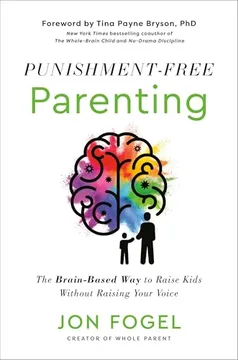


Key Takeaways
Replace punishment with teaching before fear becomes the lesson
Control is not instruction. Fogel defines punishment as making a child uncomfortable to deter behavior. It may produce immediate compliance, but fear, shame, and rejection can distract children from the lesson parents intend to teach. The book’s starting point is a foster-parent trainer’s advice: children with serious behavioral challenges needed connection, not punishment. That insight pushed Fogel to question the parenting methods he had inherited and used himself.
Think beyond the moment. The book points to research linking physical punishment with poorer mental health and more antisocial behavior. It also notes that in a 2012 US survey, 70 percent of parents still considered spanking necessary, despite many countries having prohibited it. Discipline, in the book’s older sense, means teaching. The practical test is whether a response helps a child understand and practice a better choice, not whether it makes the child suffer.
The strongest distinction here is between immediate behavior control and durable learning. A child who complies under threat may be responding to the threat, not understanding the harm or acquiring a skill. That distinction matters in schools, workplaces, and justice systems as well as families. Still, the critique is most persuasive when it targets punitive, humiliating, or frightening responses, rather than implying that every unpleasant outcome is harmful. Children need limits; the question is whether limits teach, protect, and preserve a path back to connection.
Treat misbehavior as a clue, not a verdict on character
Look beneath the behavior. Fogel argues that children often communicate through actions before they can explain what is wrong. A tantrum might reflect hunger, exhaustion, fear, a need for attention, or a developmental stage, rather than calculated defiance. Maslow’s hierarchy of needs provides a useful lens: urgent needs such as food and safety can crowd out patience and reasoning.
Investigate the pattern. Fogel describes his three-year-old’s recurring morning meltdowns, which turned out to follow a long stretch without food. Moving breakfast earlier largely ended the daily crisis. Other possible contributors include loneliness, illness, boredom, too little active play, and a growing need for autonomy. The acronym HALT names four common checks: hungry, angry, lonely, or tired. Curiosity does not mean ignoring harmful behavior. It means looking for its cause before choosing how to respond.
This approach resembles good diagnosis: patterns matter more than a single symptom, and a simple change in conditions can resolve a recurring problem. It also shifts the parent’s question from moral judgment to useful investigation. The limit is that unmet needs are possibilities, not universal explanations. A child may understand a rule and still break it, or may need support in repairing harm even after a need is addressed. Curiosity is most effective when it informs accountability rather than replacing it.
Model the regulation and self-respect you want children to learn
Actions teach constantly. Children learn not only from instructions but by watching how adults handle frustration, mistakes, and relationships. Fogel discusses Albert Bandura’s Bobo doll experiment, in which children who watched adults act aggressively were more likely to imitate aggression. He uses mirror neurons to explain how observing another person’s actions can activate related activity in the observer’s brain, though imitation is broader than any single neural mechanism.
Let repair be visible. In a parent-coaching story, a mother worried that her daughter was blaming herself after accidentally hurting her brother. The mother recognized that she, too, was harshly criticizing herself for yelling in alarm. Fogel’s point is that children need to see adults practice the compassion and accountability they expect children to develop. Social media’s polished images of perfect parenting can feed perfectionism, but ordinary, repaired mistakes provide more realistic lessons.
The emphasis on modeling gives parenting a wider frame: the lesson is not confined to the moment a parent speaks directly to a child. Observational learning helps explain why repeated behavior can outweigh a well-worded rule. The mirror-neuron account should be treated as an illustrative explanation, not a complete theory of imitation. Children also interpret, resist, and learn from peers and institutions. Even so, the practical implication is compelling: a parent’s visible effort to pause, admit an error, and try again makes self-regulation concrete.
Make consequences connected, proportionate, and useful for repair
Let outcomes teach. Fogel distinguishes natural consequences, which follow directly from an action, from logical consequences, which an adult adds to make the connection clear. A child who refuses a coat may feel cold; a child who draws on a new deck with permanent marker can help remove it. Fogel’s five-year-old helped sand away a racetrack he had drawn on the family deck. The work connected the action to its impact, unlike an unrelated penalty such as losing a tablet.
Pause before imposing one. Fogel’s test is whether an added consequence is genuinely needed, whether the adult and child are calm enough to learn, whether it relates to the behavior, and whether its scale matches the harm. A child who has already seen a sibling get hurt may not need an extra penalty. Natural consequences are not permission to expose children to danger or serious harm.
The deck story makes restoration tangible: the child participates in fixing what was damaged, rather than being made to suffer an unrelated loss. This resembles restorative approaches that focus on impact, responsibility, and repair. The difficult judgment is proportionality. A consequence that seems directly connected to an adult may feel arbitrary to a young child unless the link is explained. Adults also need to distinguish a teachable inconvenience from a safety risk. A clear relationship between action and response is more important than swift retaliation.
Set firm safety limits so children can explore inside them
Boundaries create usable freedom. Fogel’s bike-helmet example shows a parent holding a nonnegotiable safety rule while acknowledging that the child finds it unfair. The limit does not require the child to like it. A well-designed playground offers a wider analogy: fences, age-appropriate equipment, and soft landing surfaces make independent play safer. Boundaries can reduce the need for constant adult control by defining where children can make choices.
Adjust limits as children grow. A rule that protects a toddler may unnecessarily restrict a school-age child. Fogel warns against both permissiveness and overprotection: children need some room to fail and encounter manageable risks, while adults step in when likely harm is serious. He cites a CDC finding that reports of persistent sadness and hopelessness among young people rose about 40 percent from 2010 to 2019, and connects resilience with age-appropriate autonomy. Risk should be assessed, not merely feared.
The useful insight is that safety rules and autonomy are not opposites. Clear guardrails can let children act independently without making them responsible for risks they cannot yet judge. That principle also applies to technology, where freedom without guidance can expose children to hazards they are not equipped to manage. Risk estimates deserve humility: rare events can be devastating, and statistics cannot settle every family’s decision. The aim is not to eliminate protection, but to keep protection from expanding into control of every ordinary challenge.
Let children feel every emotion without treating feelings as misconduct
Feelings carry information. Fogel recalls feeling jealous when a childhood friend got a go-kart, then learning that jealousy was something to hide. He argues that families often sort emotions into acceptable and unacceptable categories, teaching children to suppress sadness, fear, envy, or anger rather than understand them. Naming a feeling can help a child recognize what is happening and communicate it more clearly.
Accept the emotion, guide the action. Emotional validation does not mean giving a child everything they want. A parent can acknowledge disappointment about leaving a playground while still leaving, or recognize anger without permitting hitting. Fogel encourages adults to become curious about emotions instead of condemning them. He also points to emotional intelligence as a learnable capacity: children build it through adults who notice, name, and make room for feelings rather than shaming them.
Separating feelings from actions is a powerful way to preserve both empathy and responsibility. An emotion can be accepted as real without being treated as a reliable instruction or a license to harm someone. Naming feelings can also expand a child’s choices: a child who can distinguish embarrassment from anger has more ways to respond than one who knows only that something feels bad. Validation must remain honest, though. It should recognize the child’s experience without pretending to know exactly what the child feels.
Separate your childhood alarm from your child's present behavior
Notice what gets activated. A child’s behavior can trigger a parent’s old fears, shame, or memories of being punished. Fogel calls the ability to distinguish one person’s experience from another’s personal differentiation. A parent who once faced harsh consequences for refusing a coat may feel unusually angry when their own child resists one, even if the current situation is different.
Create a pause. The book describes implicit memories as past experiences that influence reactions without being clearly recalled as a story. Checking bodily signals, asking what is driving the reaction, and taking a few breaths can help a parent choose a response instead of repeating an inherited pattern. Fogel also stresses that adults can change through practice. When childhood experiences remain deeply distressing, he recommends seeking professional support rather than trying to process everything alone.
This is a practical account of how family patterns can repeat without a conscious decision to repeat them. It gives parents a useful question: is the intensity of this response proportionate to what is happening now? The idea should not become a shortcut that labels every strong reaction as trauma or treats memory as a perfect record. Some triggers arise from immediate stress, temperament, or genuine danger. Reflection is valuable precisely because it helps distinguish among these causes, rather than assuming one explanation fits all.
Treat mistakes as practice, not evidence of bad character
Failure can teach. Fogel uses his experience coaching a struggling high-school volleyball team to show what changed when mistakes stopped drawing criticism. Players began describing what had gone wrong and adjusting their play; the team improved and finished second in a tournament. The lesson is not that every failure produces success, but that people learn more when mistakes are treated as information rather than proof that they lack ability.
Aim for good enough. A growth mindset means believing skills can develop through learning and effort, not merely insisting that someone try harder. Fogel also challenges parents’ perfectionism, noting research he cites suggesting that secure attachment does not require perfect attunement. In his account, caregivers needed to be emotionally in sync only about 30 percent of the time to support secure attachment. Consistency matters, but occasional missed moments do not define a parent or doom a child.
The volleyball story illustrates how reducing fear of evaluation can free attention for learning. In education and organizations, people are more likely to report and analyze errors when doing so does not threaten their status. That creates better feedback. A growth mindset should not, however, become a demand to celebrate every failure or ignore persistent obstacles. Children benefit when adults help them identify what happened, what can change, and what support is needed. The book’s rejection of parental perfectionism is especially valuable because shame often makes that learning harder.
Repair ruptures with accountability, not a disguised lecture
Own the harm plainly. Fogel describes yelling at his seven-year-old during a conflict with a younger sibling. After calming down and comforting the younger child, he apologized to the older one without attaching a defense or blaming the child for his reaction. The child then explained his own frustration and offered to play differently. The exchange did not erase the yelling, but it reopened communication and made repair possible.
Make apologies actionable. Fogel draws a parallel with South Africa’s Truth and Reconciliation Commission, which emphasized truth-telling and acknowledgment rather than revenge alone. In family life, repair means naming what the adult did, recognizing its effect, and working to change the behavior. An apology followed by the same harmful action is not enough. The book’s “failure relationship paradox” describes how addressing a rupture well can strengthen trust, though the repair must be supported by changed conduct.
A parent’s apology can challenge the assumption that authority depends on never admitting fault. It models accountability without asking the child to comfort the adult or abandon their own perspective. The connection to restorative justice is illuminating, though family conflict and political injustice differ enormously in scale and power. In either setting, reconciliation is not simply a pleasant feeling after an apology. It requires honest recognition of harm, appropriate action, and attention to the person affected. Children should not be pressured to forgive on the adult’s timetable.
Guide children toward self-discipline by letting them help solve problems
Use a repeatable sequence. Fogel’s WHOLE Parent Method offers a practical route through difficult moments: check immediate safety and both people’s state, connect with the child and recognize their feelings, state and hold the relevant limit, allow time for the emotional storm to pass, then help the child plan what to do next. The order matters: advice delivered before connection or calm may not be heard.
Share the work of learning. With a seven-year-old struggling to stop using an iPad, Fogel and his wife discussed the child’s feelings and jointly agreed on a two-week break, with a plan to reassess. Other tools include slow breathing, grounding through the senses, playful redirection, and reviewing mistakes together. The aim is not instant compliance; it is to help children develop the judgment and skills to manage their behavior with increasing independence.
The method’s strength is that it integrates safety, emotional connection, limits, and problem-solving instead of asking parents to choose between warmth and authority. Its sequence also reflects a sound practical insight: a conversation is unlikely to work while either person is overwhelmed. No mnemonic can make every crisis predictable, and the adult must still act decisively when danger is immediate. Collaboration is best understood as giving children meaningful input within boundaries, not handing them responsibility beyond their developmental capacity.
Analysis
Punishment-Free Parenting is part memoir, part parenting manual, organized around a change in the parent rather than a technique for controlling the child. Fogel begins with his own inherited habits, including moments when anger and punishment contradicted his intentions. The book’s central claim follows from that tension: effective discipline should build capacities children can use when the parent is absent, not merely secure compliance while the parent is watching.
Its most useful contribution is the way it links several practices into a coherent approach. Curiosity encourages parents to investigate what behavior communicates. Modeling makes the adult’s conduct part of the lesson. Related consequences and firm boundaries preserve accountability. Emotional validation supports connection without requiring permission for every action. Repair makes adult mistakes visible and addressable. The WHOLE Parent Method collects these ideas in an order that can be recalled under stress, though it remains a guide rather than a mechanical script.
The book’s neuroscience makes the stakes vivid, but some explanations are more simplified than the science warrants. Stress does not switch off a single reasoning center like a light, and mirror neurons alone cannot explain how children imitate or learn. The more durable claim is behavioral: fear and high arousal can make reflective conversation harder, while calm attention and repeated examples support learning. That distinction preserves the book’s practical insight without taking its metaphors literally.
A further strength is its refusal to treat punishment-free parenting as permissiveness. The helmet rule, the deck repair, and the screen-time conversation show distinct forms of adult leadership: protection, restoration, and collaboration. Each also requires judgment. A related consequence can still be excessive, and autonomy has to match a child’s age, setting, and actual risk. The book is most persuasive when its principles are held together: connection without surrendering limits, and authority without humiliation.
Ultimately, its long view is relational and developmental. Children need to practice making choices, tolerating feelings, learning from mistakes, and seeking help after errors. Parents cannot remove every struggle, nor can they respond perfectly. They can make the home a place where mistakes lead to understanding and repair rather than secrecy and fear. That shift is the book’s clearest promise, and its most useful standard for deciding what discipline is for.
Glossary
WHOLE Parent Method
Five-part discipline guideFogel’s named framework for responding to difficult behavior without punishment. It guides caregivers to assess safety and brain states, connect with and acknowledge the child’s experience, state and maintain a boundary, support regulation, and help the child prepare for future situations. The method emphasizes sequence and flexibility rather than a fixed script.
WRAP acronym
Consequence decision testFogel’s checklist for deciding whether an added logical consequence is useful. A consequence should be genuinely needed, chosen when adult and child can learn, clearly connected to the behavior, and proportionate to its impact. The purpose is to teach or support repair, not to relieve an adult’s anger by making a child uncomfortable.
HALT
Basic needs checkA brief check for four conditions that can make difficult behavior more likely: hungry, angry, lonely, and tired. Fogel uses the mnemonic to prompt parents to consider bodily and emotional needs before interpreting a child’s actions as deliberate defiance. It is a starting point for investigation, not a complete explanation of behavior.
Amygdala hijack
Threat response takes overFogel’s term for a child’s rapid stress reaction when the brain perceives danger, including danger that an adult considers minor. In this state, the child may struggle to use reflective reasoning or absorb instruction. The phrase is a simplified metaphor for stress-related shifts in behavior, not a literal takeover by one brain structure.
Personal differentiation
Distinguishing self from childThe ability to recognize that a child is a separate person, not an extension or replay of the parent. Fogel uses the concept to help parents notice when a child’s behavior activates unresolved memories, fears, or expectations from the parent’s own childhood. Differentiation supports empathy and steadier boundaries.
Implicit memories
Past influence without clear recallMemories that affect present feelings and reactions without being readily accessible as a clear, ordered story. Fogel uses the term to describe how childhood experiences, especially those accompanied by intense distress, may influence a parent’s response to a child even when the parent cannot consciously recall the original event.
Limbic resonance
Emotional connection between peopleFogel’s term for the way emotional connection can help a child feel understood and become more receptive. In practice, it means approaching a child with attunement, presence, and empathy before offering advice or correction. The concept describes interpersonal influence, not a guarantee that a child will immediately calm down.
Failure relationship paradox
Repair can deepen trustFogel’s name for the possibility that a relationship can become more secure when a rupture is acknowledged and repaired well. A mistake does not automatically strengthen a relationship; the adult must take responsibility, recognize the effect on the child, and change behavior. Repair cannot erase harm or substitute for changed conduct.
Cycle breakers
People who interrupt inherited patternsFogel’s term for people who examine behaviors and relational habits passed down through their families and deliberately practice a different way. Breaking a cycle may involve reflection, new parenting responses, and professional support. The aim is to reduce the repetition of harmful patterns while preserving helpful parts of family history.
Bobo doll experiment
Study of modeled aggressionAlbert Bandura and colleagues’ 1961 experiment exposed preschool children to adults behaving aggressively, adults behaving nonaggressively, or no model. Children who watched aggressive adults later showed more imitative aggression in a different setting. Fogel uses the study to illustrate observational learning, while noting that children learn from what adults do as well as what they say.
Download PDF
Download EPUB
.epub digital book format is ideal for reading ebooks on phones, tablets, and e-readers.








