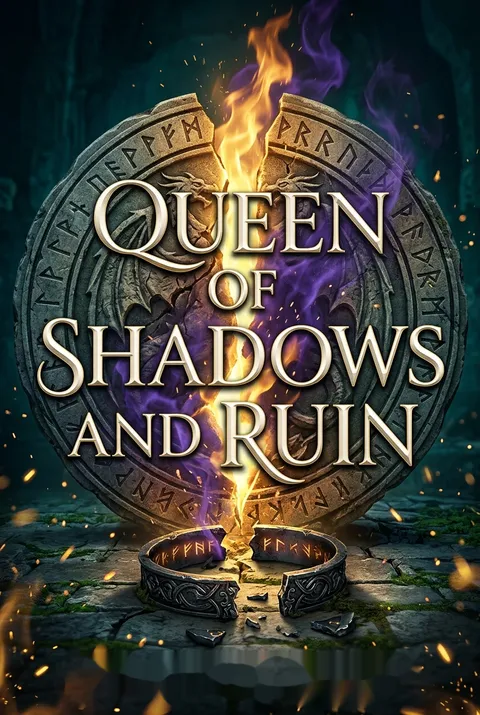


Plot Summary
Prologue
A thousand years before Zarya’s journey, twin rulers Aravind and Manish Ashvin use sacred water to open a passage into the demon realm. Their nightfire summons the nairatta, an army that pours through a mountain portal as their city, Taaranas, collapses into terror.
The brothers mistake the demons’ arrival for proof that they are destined to rule the world. Their ambition gives the darkness a way into Rahajhan, and the catastrophe they create will shape Zarya’s inheritance long after the city disappears.
The prologue makes the ancient disaster an act of human choice, not an impersonal curse. Aravind and Manish have power, knowledge, and a shared history, yet they interpret their abilities as entitlement and call conquest destiny. Their confidence turns a ritual into an invasion. That distinction matters when Zarya later confronts the same darkness: inherited magic does not dictate inherited morality. The Ashvins’ story also frames the novel’s central danger as the conversion of a private hunger for status into public catastrophe. Their destruction of Taaranas leaves a wound in the world that later generations must address together.
Zarya Reaches Andhera
After escaping Ishaan with Rabin, her rakshasa husband, and their companions Yasen and Miraan, Zarya flies north to meet Raja Abishek, the father she has only recently discovered exists. The black castle feels both forbidding and strangely familiar. Abishek greets her with unmistakable emotion, welcomes her as his daughter, and listens as she recounts her life.
His warmth gives Zarya a first taste of the family she has long wanted, though she remains alert to Row’s warnings about him. She and Rabin hide their marriage because Abishek once ordered Rabin to end their romance. When Abishek questions their already completed magical bond, Zarya challenges his authority over their choices.
Zarya enters Andhera carrying two incompatible needs: she wants to test Row’s warning, but she also wants the father she has spent her life imagining. Abishek’s welcome meets that longing with convincing tenderness, making her caution emotionally costly rather than merely prudent. The secret marriage shows how power operates inside intimate relationships: Rabin anticipates Abishek’s displeasure, while Zarya insists that neither a king nor a newly discovered parent owns her decisions. Their first meeting therefore establishes the book’s main test of judgment. Affection may be sincere in the moment and still coexist with control.
A Daughter Says No
Zarya tells Abishek that she can use nightfire to break the star collars enslaving the vanshaj, and asks to free people in Andhera as she did in Ishaan. He refuses, blaming the unrest on the resistance and warning that change could cause further disorder. He does agree to investigate her visions, which show demons, ruin, and a man she cannot identify.
He also explains that her sixth anchor may be damaging the Bandhan, the bond joining her magic to Rabin’s life and power. Their access to the mind plane has already vanished. With Ishaan in crisis and Kishore, the king’s mystic, away, Abishek urges them to remain until he can examine the bond.
This refusal marks the difference between benevolent attention and ethical solidarity. Abishek listens to Zarya’s fears and studies her magic, but when she asks him to share power with the oppressed, he protects the existing order. His language of stability turns the consequences of resistance into an argument against resistance itself. Zarya, meanwhile, is not yet ready to abandon her hope that her father can be persuaded. The apparent Bandhan danger gives her a practical reason to stay and deepens her dependence on Abishek’s expertise. The section builds dramatic irony: his authority grows precisely because she believes he is helping her.
The First Collar Falls
Rabin introduces Zarya to Dav, a tavern keeper involved in Andhera’s small vanshaj resistance. Dav asks her to free his partner, Suria, and Zarya removes the collar with nightfire. Suria’s magic returns, and the couple’s tearful relief gives Zarya a direct answer to the question Abishek keeps postponing: she can change a life now, not merely debate reform.
Dav gathers other willing people, and Zarya frees more collars despite the king’s ban. She also speaks with Urvi, the vanshaj servant assigned to her room. Urvi refuses Zarya’s offer, not because she accepts captivity, but because freedom feels too frightening and its legal consequences remain uncertain. Zarya learns that removing a collar is only a beginning.
Suria’s choice gives the emancipation plot its most intimate measure of success. Freedom is not an abstraction here: it allows two people to imagine marriage without a collar deciding what their lives can be. Urvi’s refusal prevents that moment from becoming a simple conversion story. She understands the risk better than Zarya, whose magic can remove a mark but cannot immediately provide safety, legal status, or a home. The contrast clarifies the limits of heroic intervention. Zarya can open a door, but those living under oppression must decide when crossing it is survivable. Her willingness to act without permission also signals a growing break with paternal authority.
A Secret Becomes Public
At a lavish court gathering, Abishek presents Zarya to nobles and to Amir, an influential Aazheri whose attentions make her uncomfortable. Rabin recognizes Amir’s reputation for abusing women and intervenes when Amir reaches for her. The incident forces Zarya and Rabin to confront how long they can conceal their marriage.
Meanwhile, new reports from Ishaan say Dishani is summoning military support and searching for the resistance. Miraan decides he must return to protect his family and the people he helped organize. Yasen chooses to go with him, leaving Zarya and Rabin behind because their bond still seems unsafe to travel with. The friends separate reluctantly, promising to reunite after Kishore examines them.
The court scene places Zarya’s private autonomy inside a political marketplace. Abishek’s introductions and Amir’s interest treat her as a potential alliance, while Rabin’s intervention protects her but risks replacing one form of control with another. She must insist on her own judgment even when the danger is real. At the same time, Miraan and Yasen leave for reasons that are not romantic or symbolic: Ishaan’s vulnerable residents need them. The separation exposes the group’s practical limits. They cannot all remain together, and each person must decide which danger they are best placed to face. Affection becomes a commitment expressed through difficult choices.
Miraan Faces Dishani
Miraan and Yasen slip into Ishaan and find the Rising Phoenix evacuating vanshaj into a forest camp as the Jadugara hunt those freed from their collars. Miraan returns to the palace hoping to negotiate with Dishani, despite the wanted posters bearing his and Zarya’s faces. Dishani, badly injured by Rabin’s earlier fire, refuses his appeal and vows to crush the resistance.
Her answer convinces Miraan that persuasion alone will not stop the violence. He begins working with nobles who may withdraw support from his sister, while Yasen stays beside him even as danger mounts. Farida and Vikas rebuild the movement in the forest, train an Army of Ashes, and prepare to protect people the palace has abandoned.
Miraan’s visit is a failed negotiation but a successful clarification. He goes because he still believes family ties and shared responsibility might restrain Dishani; her response shows that she interprets concession as defeat. His guilt over having funded the resistance makes him vulnerable to the belief that he personally caused the crisis, even though the crisis rests on generations of coercion. Yasen counters that isolation by staying with him, while Farida and Vikas turn the camp into an alternative civic structure. Their work matters because liberation requires more than removing collars. People need organization, defense, and a way to make decisions beyond the palace’s authority.
The Blight Returns
In Dharati, Yasen visits Vikram, his old friend and the steward bound to the pregnant queen Amrita. He finds black rot spreading through the Jai Tree’s roots and watches Vikram collapse as dark veins surface beneath his skin. Koura identifies the sickness as something from another plane. When Tarin speaks with Amrita, he learns that the ancient seal beneath the tree is weakening and that the Ashvins’ spirits have found a vessel.
The darkness is poisoning Amrita, Vikram, and their unborn child. Tarin says the answer lies in Taaranas, the city imprisoned with the twins, and that the Chiranjivi must act together. Yasen returns to Ishaan with the warning, unaware that Zarya is already uncovering the same history in Andhera.
The renewed blight gives the distant visions bodily consequences. It reaches a pregnant queen, darkens the roots that hold a seal, and alters Vikram’s mind before anyone can reliably understand what he is saying. The danger is therefore ecological and relational at once: a corrupted world damages the people who depend on it. Yasen’s role also shifts. His instinct to avoid responsibility gives way to close observation and decisive action, because he recognizes that the familiar illness is no longer contained. Tarin’s explanation links the crisis to Taaranas, but the revelation is incomplete. The characters know where to search before they know what the search will demand.
Asha Behind Iron
Zarya’s dreams of a starved woman grow more vivid, and she becomes convinced that the figure is Asha, the mother she has never met. While searching the castle, she follows Urvi’s directions into the neglected vanshaj wing and climbs to a sealed tower. There she finds Asha alive, imprisoned, and barely able to speak.
Asha repeatedly calls for Row, the man who raised Zarya and loved her mother. Before Zarya can free her, Abishek arrives with Kishore and guards. He admits he knew Zarya existed from birth, then knocks her unconscious with magic. Rabin, meanwhile, has already been seized after lying to Abishek about Zarya’s search. Their separate discoveries leave them both in the king’s hands.
The tower turns Zarya’s desire for family into evidence of deliberate cruelty. Asha is not simply absent or lost; she has been kept nearby, while Zarya grew up believing she was dead. The discovery also revises the meaning of Zarya’s dreams. What seemed private and uncertain was a form of knowledge emerging through her magic. Urvi’s help is crucial: a servant with little formal power becomes the person who can guide Zarya through the castle’s hidden geography. Asha’s repeated call for Row connects imprisonment to the life outside it, reminding Zarya that her identity was formed by love as well as by the secrets surrounding her birth.
Abishek Names His Price
Abishek reveals that Asha was a rare nali who foresaw Zarya’s birth and nightfire. He imprisoned and tortured Asha until she disclosed the prophecy, then arranged Rabin’s rescue and steered him toward Zarya through magical influence. Kishore had secretly altered Rabin’s dragon tattoo to manipulate their meeting and later invents a crisis in their Bandhan to keep them in Andhera.
Abishek wants Zarya to open the seal containing the Ashvins and the nairatta, then use their power to rule Rahajhan. He admits he never accepted Rabin as family and despises the idea of him beside Zarya. Kishore gives their bond a painful coercive function, ensuring that using magic will hurt the other.
The revelation attacks several kinds of trust at once. Abishek has not merely lied about his intentions; he has edited Rabin’s memories and used Zarya’s longing for kinship as part of a long strategy. The false bond diagnosis is especially effective because it converts intimacy into captivity: the couple must fear that any act of self-defense will injure the person they love. Abishek’s motive is not simply greed. He believes Aazheri power should rule, and regards other people as material for restoring its supremacy. That conviction makes his cruelty systematic. Zarya’s inheritance is real, but the future he claims it demands is a choice she must reject.
The Dead City Wakes
Abishek sends Zarya and Rabin across a perilous mountain bridge into Taaranas, where Kishore’s altered Bandhan forces Rabin into a dragon form programmed to hunt her. Alone among colorless buildings, Zarya escapes him by discovering that her touch restores the city’s stone, water, and food.
The god Loka appears in a dream and explains that opening the seal will free the vanshaj from their inherited bindings and unleash the demons. The Ashvins live within Zarya, and killing them may require her death. Yasen and Row cross into the city after Urvi reveals where the king took them. Zarya finds a map beneath the temple pool and follows it toward the fortress, while Rabin’s roars shake the passages behind her.
Taaranas makes the novel’s abstract history physical: Zarya’s touch restores what the Ashvins drained, while Rabin’s enchanted pursuit turns the intimate bond into immediate danger. Her ability to revive the city suggests she has a relationship to its past beyond simple inheritance, but it does not make her omnipotent. Loka’s revelation forces her to weigh two outcomes that cannot be neatly separated: liberating the vanshaj and releasing the nairatta. The cost of her own death makes that ethical choice personal rather than ceremonial. Meanwhile, Yasen and Row’s entry prevents the climax from becoming a solitary chosen-one story. Others are moving toward her, though they do not yet know how to save her.
The King Burns
At the fortress, Zarya reaches the seal as Rabin, still under the enchantment, closes in. She channels nightfire into the pillar, shattering it and opening the way for the nairatta to pour toward Rahajhan. Abishek strikes her down, but Yasen and Row arrive with Ekaja. Yasen kills Kishore, while Row defeats Abishek and burns him to ash.
Rabin reaches Zarya and uses their true bond to bring her back from the brink. The group learns that the Ashvins must be destroyed to stop the demons, and that Zarya may have to die to draw them out. They return to Ishaan, warn the resistance and palace, and prepare for the approaching army. Zarya later takes poison herself, beginning the final confrontation.
Opening the seal is both the action Abishek demanded and the first step toward ending his control. Its consequences are immediate: the demons enter the world, the king attacks his daughter, and allies must interrupt the plan from several directions. Row’s killing of Abishek ends the personal tyranny but cannot undo the danger already released. Rabin’s revival of Zarya supplies evidence that the bond survives Kishore’s tampering, although it cannot make the coming sacrifice safe. The movement from Taaranas to Ishaan shifts the problem from a secret conspiracy to a public crisis. Zarya’s later decision to take poison shows that she accepts the cost of the plan herself rather than waiting for others to impose it.
Seven Powers, One Line
As armies face the nairatta outside Ishaan, Zarya drinks the poison that stops her heart. The Ashvins emerge from her body, and the Chiranjivi hold them while Rabin searches the mind plane and revives her. Still weakened, Zarya joins Row, Rabin, and the other Chiranjivi against the twins. Their combined magic can resist the Ashvins, but their strength fades as more demons arrive.
Zarya sees Vikas and the newly freed Taara Aazheri fighting nearby and realizes their power must join the line. The freed people link hands with the Chiranjivi, sending strength through Zarya’s nightfire. Their shared magic destroys the Ashvins and sweeps across Rahajhan, annihilating the nairatta and purifying the poisoned roots and land.
The climax resolves the novel’s central political and magical plots through the same mechanism: people previously treated as powerless become indispensable when they act together. Rabin’s bond does not replace Zarya’s agency; it brings her back so she can make the decisive choice. The Chiranjivi can hold the Ashvins briefly, but they cannot win without the Taara Aazheri, whose newly restored magic turns emancipation into collective capacity. This is a structural answer to both Abishek and the Ashvins. Their power concentrates authority in a few hands; Zarya’s victory depends on many hands joined. The cost remains grave, but the ending refuses to make sacrifice the only form of heroism.
Crowns Change Hands
After the battle, Gi’ana’s council strips Dishani of her claim to the throne for her crimes against the vanshaj and her collusion with Abishek. Miraan spares his sister execution and sends her into exile, while the Jadugara are disbanded and pursued. He assumes leadership until Asha can return. A delegation retrieves Asha from Andhera, and Row reunites with the woman he searched for over twenty years.
Zarya meets her mother and welcomes her half-siblings into the family she had once thought impossible. In Andhera, Zarya refuses the throne and asks Ekaja to lead temporarily while building a more representative government with Dav and Suria’s help. The political settlement begins to turn collar removal into lasting rights.
The resolution distinguishes accountability from revenge. Miraan refuses to excuse Dishani’s actions, yet chooses exile rather than execution, a decision rooted in kinship without surrendering public judgment. Asha’s return offers emotional restoration, but it cannot return the years stolen from her or Row. Zarya’s refusal of Andhera’s crown is equally important: she does not confuse inherited authority with the responsibility to liberate people. Instead, she places leadership in Ekaja’s hands and points toward a government shaped by those previously excluded. These decisions make the ending more than a victory over a villain. They test whether the characters can build institutions that do not reproduce the domination they fought.
A Different Home
In Dharati, Zarya finds Vikram grieving because his father, Gopal, has taken Vikram and Amrita’s newborn daughter, Nidhi, claiming he will raise her. Rabin and Yasen go to the Ravana estate, recover the baby, and confront Gopal. Rabin kills his abusive father and renounces his claim to the family fortune, directing Vikram to use it for their mother and the freed Taara Aazheri.
Vikram accepts his apology for leaving, and the two brothers begin rebuilding their relationship. Yasen and Miraan also decide to risk a future together despite Yasen’s fear that he does not belong beside a king. Rabin and Zarya choose Ishaan as home, with visits to Dharati and the forest rather than a return to the life Abishek tried to dictate.
Rabin’s return to Dharati completes a different strand of the book’s argument about inherited power. Gopal treated family as ownership, first over Rabin and Yasen, then over Vikram and the baby. Rabin breaks that pattern not by claiming the estate but by giving up its authority and redirecting its wealth. His violence against Gopal is still morally complicated, but it ends a threat that has shaped several lives. Vikram’s willingness to meet him again makes reconciliation possible without pretending the past did no harm. Yasen’s hesitation with Miraan similarly exposes class as an internalized barrier. Their choice to stay together begins as an act of mutual recognition.
Epilogue
One year later, Zarya leaves university with Vikas and returns to the home she shares with Rabin in Ishaan. Their gathering brings together the people who built the Rising Phoenix, Zarya’s reunited family, and allies from across Rahajhan. The rulers have agreed to give the Taara Aazheri equal rights, fair pay, education, and resources to build independent lives.
Asha and Row are together again, Miraan and Yasen are making a life as partners, and Ekaja is working toward a more democratic Andhera. Rabin and Zarya look over the celebration and choose a future measured not by crowns or prophecy, but by ordinary days lived among the people they love.
The epilogue measures victory through institutions and ordinary intimacy. Zarya is studying, Vikas is learning beside her, and the former resistance now gathers in a home rather than a camp. The legal changes matter because they address the conditions that made collar-breaking necessary, though the book wisely presents a year of reform as a beginning rather than a perfect cure. Family is also remade without a single model: Asha and Row reunite, Miraan and Yasen choose one another, and Zarya and Rabin build a shared life across different places. Their celebration answers Zarya’s opening hunger for belonging with something more durable than ancestry: a community sustained by continuing acts of care.
Analysis
The novel binds two struggles together: Zarya’s fight to free the vanshaj and the effort to stop the Ashvins from returning. That structure makes emancipation more than a subplot. The collars suppress magic, but they also enforce a political story that the vanshaj are naturally powerless and properly subordinate. Once Zarya breaks the enchantment, the resistance must confront what magic alone cannot fix: danger, poverty, law, and who gets to govern. The final victory depends on the newly freed people joining the Chiranjivi, so political liberation becomes a material condition of defeating the supernatural threat.
Abishek and Zarya both inherit extraordinary power, but their interpretations of inheritance diverge. Abishek sees lineage as a license to rule and other people as instruments for preserving his kind. Zarya’s choices instead make power accountable to those harmed by its use. The book does not suggest that good intentions are enough: Zarya’s unilateral acts carry danger, her secrecy strains trust, and her belief in family makes her vulnerable to manipulation. Her maturation consists partly in accepting interdependence, not simply discovering greater strength.
Relationships provide the novel’s counter-politics. Rabin’s bond with Zarya can be weaponized, yet it also helps restore her life. Row’s love is imperfect and overprotective, but unlike Abishek’s affection, it does not require possession. Yasen and Miraan build trust across differences in class and rank, while Dav and Suria imagine a future in which partnership is not constrained by servitude. These connections show care as a practice of recognizing another person’s agency.
The ending is deliberately civic as well as romantic. Zarya refuses a throne, Miraan faces the consequences of his sister’s rule, and Andhera’s future is entrusted to a commander asked to share power. The one-year epilogue cannot guarantee that reform will succeed, but it shows what victory must become: rights, education, paid work, and ordinary lives no longer organized around inherited subordination.
Review Summary
Queen of Shadows and Ruin concludes the Nightfire Quartet series with mixed reviews. Many readers praise the epic finale, complex characters, and satisfying ending. The book is lauded for its unique magic system, found family trope, and steamy romance. Some criticize pacing issues, with a slow first half and rushed ending. Overall, fans appreciate the emotional journey, character growth, and worldbuilding. While some found the main characters naive at times, most readers enjoyed the series' conclusion and recommend it for romantasy lovers.
Characters
Zarya Rai
The nightfire heirZarya is an Aazheri with six magical anchors, including the rare darkness, and a young woman raised in isolation by Row. Curious, impulsive, and hungry for connection, she enters unfamiliar places with a readiness to help that can outrun her caution. Her magic gives her power to challenge the collars imposed on the vanshaj, while her experience of captivity makes their struggle personal rather than theoretical. She wants family, love, education, and a life she can choose for herself. The tension between those ordinary desires and the enormous demands placed on her drives her emotional journey. Her deepest strength is not fearlessness but her willingness to reconsider what responsibility requires.
Rabin Ravana
Her bound protectorRabin is Zarya’s paramadhar, a magical counterpart whose bond can protect and amplify her power. A former commander and rakshasa, he is disciplined, physically formidable, and more emotionally vulnerable than his guarded manner suggests. He carries the history of abuse by his father and the insecurity of having been treated as expendable. Abishek’s role as rescuer and mentor has shaped Rabin’s sense of home, making loyalty both his virtue and his blind spot. His love for Zarya is expressed through protection, but he must learn that protecting her cannot mean making decisions for her. He longs for belonging while fearing that every home he finds can be taken away.
Yasen Varghese
The irreverent loyalistYasen is a former Daragaab commander, a rakshasa, and Zarya’s closest friend. His humor and apparent ease help him deflect grief, especially the losses and mistreatment that shaped his childhood. He has no wish to return to military life or remain under Gopal’s authority, yet repeatedly chooses danger when people he loves need him. His connection with Miraan unsettles his belief that he is only passing through other people’s lives. Yasen’s loyalty is practical: he returns to Ishaan, helps organize fighters, investigates Vikram’s illness, and follows Zarya into danger. Under the sarcasm is a man learning that care does not make him weak or disposable.
Row
Zarya’s chosen fatherRow raised Zarya after Asha disappeared, protecting her through isolation even when that protection became a cage. He is a powerful, ancient Aazheri and a member of the Chiranjivi, but his formidable magic coexists with deep regret and fear. His warnings about Abishek come from firsthand knowledge of the king’s ambition, though he cannot tell Zarya everything about Asha’s disappearance. Row measures himself against the choices he made while trying to keep Zarya safe. His love is steadfast but not uncomplicated: he must accept that the child he protected has become an adult who chooses her own risks. His hope of finding Asha remains inseparable from his grief.
Miraan Madan
The guilty reformerMiraan is Zarya’s half-brother and a Gi’ana prince who once helped sustain the political order he later opposes. His composure conceals a strong conscience and a painful awareness that he waited too long to challenge his family’s abuses. When the uprising turns violent, he feels responsible for everyone caught in it, sometimes at the expense of his own safety. He tries negotiation before accepting that his sister may not be willing to compromise. Miraan’s political instincts and family connections make him a useful bridge between the resistance and the ruling class. His growing closeness to Yasen asks him to trust a relationship that does not fit the expectations of his station.
Raja Abishek
Andhera’s learned kingAbishek is the king of Andhera, a powerful Aazheri, and a scholar fascinated by magic. He is socially perceptive and capable of warmth, especially when welcoming Zarya, but he believes the survival of Aazheri power justifies controlling other people. His love of knowledge does not make him ethically curious: he studies magic as a means to secure influence, not as a reason to question his assumptions. Abishek values lineage, order, and legacy, and treats dissent as a threat to all three. His relationship with Rabin is shaped by a complicated mixture of mentorship and command. He can make care feel genuine even when it is serving his own design.
Asha Madan
The vanished queenAsha is the former queen of Gi’ana, mother to Zarya and the Madan siblings, and Row’s great love. As a rare nali, she has a connection to divine knowledge that places her at the center of political and magical danger. She made decisions to protect her children and conceal what she knew, but those choices left wounds across the family. Her absence has shaped Zarya’s longing, Row’s grief, and the Madan siblings’ understanding of their past. Asha’s story brings together the private cost of prophecy and the public consequences of court politics. She is remembered not only as a queen, but as a mother whose choices were made under threat.
Ekaja Bhari
The king’s commanderEkaja is Abishek’s chief military commander and Rabin’s longtime friend. Raised by the king after being abandoned as a child, she is fiercely competent and accustomed to proving her worth through obedience. She carries guilt from a past military atrocity and uses relentless training to manage memories she cannot erase. Her loyalty to Abishek is tangled with gratitude and dependence, making it difficult for her to distinguish service from consent. Ekaja is direct, physically confident, and more emotionally burdened than she allows others to see.
Dishani Madan
The embattled princessDishani is Zarya’s half-sister and the powerful heir who governs Gi’ana in Asha’s absence. Protective of her position and convinced that control keeps her family safe, she treats rivals and dissenters as threats. Her authority has been built through fear, and she struggles to imagine a form of rule that does not depend on it. Her relationships with Miraan and the other Madans are shaped by old resentments and unequal power. Dishani’s pride makes compromise difficult, while her family’s history leaves her carrying responsibilities she did not create alone.
Vikram Ravana
The burdened stewardVikram is Rabin’s brother and the steward to Rani Amrita, a position his father forced him to accept. He is loyal, gentle, and committed to the people and responsibilities placed in his care, even when they cost him the life he might otherwise have chosen. His friendship with Yasen has been a rare source of uncomplicated affection, though both men carry hurt from their shared past. Vikram’s devotion to Amrita shapes his identity and his hopes for a family of his own.
Gopal Ravana
The Ravana patriarchGopal is the powerful nawab of Daragaab and father to Rabin and Vikram. He treats family loyalty as obedience and uses wealth, status, and intimidation to keep others within his reach. His cruelty has shaped both sons differently: Rabin resists him openly, while Vikram has spent years trying to survive the duties imposed on him. Gopal’s influence extends beyond his household because he believes authority entitles him to decide other people’s futures.
Kishore
The king’s mysticKishore is Abishek’s personal mystic, a skilled practitioner who works with rare and powerful forms of magic. He is self-assured, secretive, and comfortable using expertise to establish authority over those who do not know what he knows. His connection to the king gives him influence beyond his formal role. Kishore embodies the danger of technical knowledge without ethical restraint: his rituals may be precise, but precision alone does not make their use just.
Urvi
The watchful palace servantUrvi is a vanshaj servant in Abishek’s castle, assigned to help Zarya. Observant and cautious, she understands that even a seemingly generous offer can expose her to consequences she cannot control. Her hesitation about removing her collar reflects the difference between having a chance at freedom and having the security to claim it. She listens closely, weighs the risks, and becomes an important source of knowledge when Zarya needs help navigating the castle.
Dav and Suria
The hopeful organizersDav runs an inn and helps organize Andhera’s small vanshaj resistance; Suria is his partner. Their relationship gives their political hopes an intimate shape: they want to choose one another openly and build a shared future. Suria’s decision to accept Zarya’s help makes the promise of liberation concrete, while Dav helps gather others who want their collars removed. They also imagine a more representative government, offering Zarya a vision of reform beyond the king’s court.
Vikas
The resistance organizerVikas is a vanshaj who becomes a central organizer in the Rising Phoenix. Once his collar is removed, he discovers magic and takes responsibility for helping others escape and train. He meets escalating danger with practical focus, balancing evacuation, instruction, and defense. His leadership grows from the trust people place in someone who understands both the old restraints and the risks of new power.
Farida
The fierce co-leaderFarida is a vanshaj resistance leader and Rania’s partner. She helps guide the Rising Phoenix through setbacks, including the betrayal that exposes its plans. Her strength is both physical and organizational: she speaks plainly to frightened people, trains with newly discovered magic, and keeps the movement focused on a future beyond survival. Her relationship with Rania is one of the emotional roots of the rebellion.
Koura
The principled healerKoura is a Niramaya healer whose spirit magic allows him to treat people regardless of their political loyalties. His professional code requires him to help even those who have harmed others, a commitment that can frustrate his allies but reflects a serious belief in care. He brings medical knowledge and steadiness to a group often forced to make decisions without enough information.
Apsara
The committed wind warriorApsara is a Vidyadhara from Vayuu, gifted with powerful wind and ice magic. She is a skilled fighter and an active ally of the resistance. Her affection for Suvanna is more settled than Suvanna’s, and she continues to offer care without pretending the difference between them does not exist.
Suvanna
The independent water fighterSuvanna is a Merdeva from Matsya with formidable water magic and a talent for combat. She is blunt, capable, and wary of promises that might restrict her independence. Her relationship with Apsara challenges her preference for keeping emotional commitments at a distance, while the resistance gives her a cause she chooses freely.
Kindle
The fire-wielding allyKindle is an Agni from Bhaavana whose fire magic can influence emotions. He supports Zarya and the resistance as the conflict spreads across Rahajhan. His ability makes him a valuable ally, but his place in the group rests as much on loyalty as on power.
Talin Madan
The younger Madan brotherTalin is the youngest Madan sibling. He is close to Miraan and caught between his brother’s challenge to the family and Dishani’s authority. His concern for both siblings gives the family conflict a quieter, less strategic perspective.
Kabir Madan
The overlooked consortKabir is Asha’s former husband and the king consort of Gi’ana. He has long been excluded from the decisions that shaped the realm, leaving him more witness than ruler. His family ties remain important even when he lacks formal power.
Loka
The divine messengerLoka is the god of the people, appearing to Zarya in a dream to clarify the prophecy and the stakes of her magic. The deity offers knowledge rather than an easy escape, leaving Zarya responsible for deciding how to act on what she learns.
The Ashvin twins
The ancient nightfire rulersAravind and Manish Ashvin were twin Aazheri rulers whose command of nightfire fed their ambition. Their names are bound to the lost city of Taaranas and to the ancient catastrophe that still threatens Rahajhan. They represent the union of shared power with a private hunger for domination.
Plot Devices
Nightfire and six anchors
Power that can unmakeAazheri magic is shaped through anchors associated with the elements, while nightfire combines them in an unusually potent form. Zarya carries a sixth anchor, darkness, which gives her the ability to affect ancient enchantments and interact with Taaranas. The same power makes her a target for those who want to command the past. Nightfire is not inherently evil; the Ashvins’ corruption of it makes its moral use a question of intention and collective responsibility. Its final significance emerges when Zarya’s magic joins with the Chiranjivi and the freed Taara Aazheri.
The Bandhan
Love made magically vulnerableThe Bandhan binds an Aazheri, the masatara, to a paramadhar who can amplify and protect their magic. For Zarya and Rabin, it formalizes an intimacy they have already chosen. Abishek and Kishore exploit the couple’s limited knowledge of its mechanics, inventing a threat to keep them in Andhera and modifying the bond to make their magic dangerous to use. Yet their true connection proves deeper than the coercive alteration. The bond is both a source of power and an emotional vulnerability, making trust essential to the plot rather than merely a romantic theme.
Vanshaj star collars
A visible mark of bondageThe Jadugara use star-patterned collars to suppress the magic of the vanshaj, descendants who have been relegated to servitude. Zarya discovers that nightfire can break the enchantment, returning powers the collared people were taught they never possessed. Removing the collar changes what a person can do, but it does not automatically grant legal rights, safety, or economic independence. That gap drives the resistance from individual acts of liberation toward a wider political movement. The collars make oppression visible, while their removal exposes how much of the system depends on a false account of the vanshaj themselves.
The Jai Tree and Taaranas
A seal beneath the worldThe roots of the Jai Tree form a barrier between Rahajhan and the other plane where the Ashvins and their city, Taaranas, were confined. As the seal weakens, the darkness infects Amrita’s roots and spreads into the living world. Taaranas preserves evidence of the Ashvins’ history and gives Zarya a physical path toward the seal. The device links ecological crisis to buried political history: the present is literally rooted in an old attempt to contain the consequences of unchecked power.
Asha’s prophecy
A future mistaken for fateAsha’s nali gift connects her to divine knowledge concerning her children, especially the daughter who will carry nightfire. The prophecy shapes Abishek’s interest in Zarya, Row’s effort to protect her, and the gods’ eventual explanation of what her power can do. Abishek treats the prophecy as a tool for securing rule, while Zarya comes to understand it as a call to free the vanshaj and oppose the Ashvins. The prophecy creates pressure, but it does not remove moral choice: Zarya decides how to meet the future rather than simply obeying another person’s interpretation of it.
About the Author
Other books by Nisha J. Tuli






Download PDF
Download EPUB
.epub digital book format is ideal for reading ebooks on phones, tablets, and e-readers.








