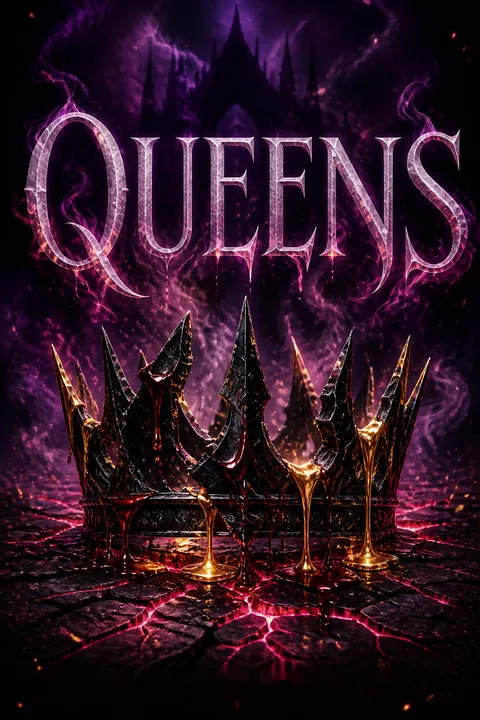


Plot Summary
Prologue
At five, Cassia sees her baby brother Luca lying broken in the family yard. Her fathers arrive almost at once, but nobody can make him cry again. Their mother rushes outside, falls, and runs on toward him while a tutor pulls Cassia away. The household falls silent around the child, and Cassia is left with the image that will govern her anger for years.
The scene gives Cassia’s revenge a bodily origin: she does not inherit an abstract political grievance, but the memory of a child’s stillness and the adults’ helpless arrival. Her mother’s fall matters because grief interrupts even the household’s usual protection and order. Cassia is too young to understand the politics behind Luca’s death, so the image becomes a private explanation for everything that follows. It also establishes a painful asymmetry: her parents can save her from witnessing more, but they cannot undo what she has seen.
Revenge in Aziel’s Files
At twenty-seven, Cassia wakes from the same nightmare and turns her grief into a plan: she will enter Greed and kill its queen, Mammon. Her fathers have avoided retaliation for fear that another war will endanger their surviving children, but Cassia reads their caution as cowardice. She wants both revenge and the authority to rule Wrath, and believes success will prove she is ready.
To learn what she can, she sneaks into Aziel’s office and steals his Greed files. Her sister Valeria cannot use her prophetic sight to help, while her brother David offers access to a tonic that can hide Cassia’s powerful Wrath presence. His offer gives her a possible way past Mammon’s defenses, but requires her to endure physical weakness.
Cassia’s plan fuses two needs that she cannot separate: justice for Luca and recognition as Aziel’s heir. Because the family’s grief remains largely unspoken, she treats action as the only honest form of remembrance. Her ambition is not merely political; it promises a way to make helplessness impossible again. The tonic introduces the cost of that strategy. To enter Greed, Cassia must suppress the very power she associates with strength, making her mission a test of whether she can function without the identity she has built around it.
Ten Days Bought with Tonic
Cassia studies Greed’s outdated maps while handling her public duties in Wrath, then drinks David’s foul tonic and spends days relearning ordinary movement with her power muted. Her siblings help her practice, though David’s deliberately irritating training eventually triggers the anger that breaks through the suppression.
Valeria plants the idea of an emotional-regulation retreat, and Cassia lets her parents believe she wants to attend. At a family dinner, she learns that her mother’s friend Rock entered Greed after Luca’s murder and never returned, one reason the adults feared further bloodshed. Cassia still leaves. She crosses into Greed on foot, carrying the tonic, a false retreat story, and a plan to watch Mammon’s estate.
The retreat is an alibi built out of the family’s genuine concern for Cassia, which makes the deception emotionally complicated rather than merely clever. Her parents want to help her regulate her anger; she uses that wish to evade their control. The account of Rock also complicates her judgment of their restraint. They did not simply forget Luca or refuse to act. They had watched another attempt at revenge disappear into Greed. Cassia hears the warning but cannot accept its logic, because accepting it would mean letting fear set the terms of her life.
The Man at Mammon’s Gate
After a grueling walk to Greed’s capital, Cassia studies the market below Mammon’s mountain castle and meets a striking, low-powered man who seems oddly respected. He points her toward an inn, then leaves through the queen’s gates in a royal carriage. Cassia follows the lead. When he approaches her again, she gives the false name Luna and claims an interest in the royal houses.
She learns that he is Rexton, a Wrath-born man betrothed to Princess Amelia, Mammon’s daughter, after a seven-year engagement. Cassia sees the wedding as her best chance to reach the queen and bluntly asks Rexton for an invitation, offering him a wedding gift of shifter meat in return.
Cassia enters Greed expecting to manipulate a hierarchy she barely understands. Rexton unsettles that confidence: he appears weak by Wrath standards, yet the guards and court treat him as someone important. Her curiosity about him is strategic, but attraction begins to blur the distinction between research and desire. The false name Luna gives her room to improvise, while her blunt request exposes how little she resembles the quiet, deferential Greeds around her. The wedding invitation is a practical opening, but it also ties her fate to a man she has not yet understood.
Rexton’s Wedding Bargain
Rexton has spent years inside Greed as Mammon’s trusted informant, secretly working with Silas to avenge Luca. The man Cassia met as Rexton is the same friend her family once knew as Rock, though Charlie believes he is gone. He has concealed his power with the same kind of tonic Cassia uses, and Mammon’s protective rings make a direct attack impossible.
Her children can touch her without activating the shield, so Rexton’s marriage to Amelia offers a narrow route into the queen’s inner circle. He has endured years of delay from a bride who wants no part of him, but the wedding is finally set. His bargain with Cassia could provide an invitation, though he does not know her true purpose.
Rexton’s concealment mirrors Cassia’s, but where she uses disguise to pursue revenge alone, he has turned it into a long, disciplined operation. His shadow-born past and years of dependence on other people’s trust have made patience a survival skill. The protective rings transform marriage into a tactical instrument, linking intimacy to access and political danger. The parallel between Cassia and Rexton is not yet a bond of trust: each is using a false story to approach Mammon, and each mistakes the other’s apparent weakness for something manageable.
Aziel Pulls Her Home
Before Cassia can reach the wedding, Aziel finds her in the Greed inn and orders her home. He argues that Mammon’s surviving children could retaliate against Cassia’s human mother or her less combative brother David. Cassia refuses to leave, so someone injects her with a sedative.
The drug reacts badly with the tonic already in her body, leaving her muscles locked in painful spasms during the journey back to Wrath. At home, her parents place a magically fastened diamond bracelet on her and her siblings. It tracks them and prevents them from crossing Wrath’s or Lust’s borders. Cassia feels her future in Wrath slipping away, retreats to bed, and stops speaking to her parents.
Aziel’s intervention is an act of love expressed as force. His fear is rooted in Luca’s loss, yet the sedative and bracelet reproduce the very helplessness Cassia is trying to escape. The family’s protective logic becomes indistinguishable from confinement because they do not ask what risks she is willing to take. Cassia’s resistance, meanwhile, leaves little room for her parents to trust her judgment. The result is a closed loop: their fear tightens their control, and their control deepens her secrecy. Her bodily reaction to the drugs makes that conflict impossible to treat as a mere disagreement.
One Breakfast Ends a Queen
After marrying Amelia, Rexton uses his new place in Mammon’s family to enter the queen’s private breakfast room alone. His tonic is wearing off, and he knows he has only a brief opening before his power becomes noticeable. He breaks Mammon’s neck, then uses a knife to sever her head, killing the demon queen before she can respond.
Unable to retrieve her heart or leave through the main corridors, he escapes through the castle’s shadow passages and changes out of his bloodied shirt in a guest room. Back in Wrath, he becomes a celebrated figure for killing the queen who murdered Luca. Cassia learns that someone else has taken the revenge she spent her life preparing to claim.
Rexton’s success depends on intimacy being mistaken for loyalty. The marriage gives him access not because affection has grown between him and Amelia, but because the royal household recognizes a formal bond as evidence of belonging. His swift killing contrasts with Cassia’s fantasies of prolonged punishment, exposing the difference between vengeance imagined and violence carried out. The act also does not end the political danger: Mammon’s children remain, and Rexton returns to a kingdom where the deed will reshape loyalties. For Cassia, another person’s victory feels less like justice than the theft of her purpose.
The Hero Returns to Wrath
Once she hears Mammon is dead, Cassia demands to know why her family withheld the news and suspects a Wrath killed the queen. She learns Rexton is returning and confronts him in Aziel’s office, trying to overpower him in front of her father. Rexton restrains her twice, leaving her humiliated and concussed; Aziel does not intervene.
Cassia hides at David’s home, then returns to work and hires her former partner Wren to investigate Rexton. His records reveal a childhood marked by severe abuse, though Cassia cannot bring herself to read the medical files. The discovery does not end her resentment, but it gives her a sharper understanding of the man she has made her enemy.
Cassia’s defeat is not only physical. Aziel’s refusal to intervene confirms her fear that he does not trust her to lead, while Rexton’s composure makes her anger look like evidence against her. Her retreat to David’s home repeats an older pattern: when shame overwhelms her, she withdraws rather than risk being seen. The file on Rexton creates a moral test. Cassia wants information she can use against him, yet she stops short of consuming the most intimate evidence of his suffering. That hesitation suggests empathy is present before she is willing to name it.
The Mountain Map
Aziel appoints Rexton to oversee Wrath’s generals, and his clear proposals quickly win their attention. Cassia, who has led their meetings, sees her authority thinning. She privately argues that new defenses should be placed farther north, where Greed’s troops could cross the mountains more easily, but Rexton rejects her first location because rain is eroding the slope.
Their rivalry turns personal when Rexton asks Cassia’s assistant Jassy on a date. Cassia storms into his office, hits him, and attacks the childhood wounds she learned about in Wren’s report. Rexton tells her to leave. Outside, Aziel rebukes her, and Cassia realizes she has used Rexton’s abuse as a weapon.
The mountain proposal gives Cassia a real strategic contribution, but she cannot separate professional disagreement from the fear of being replaced. Rexton’s competence threatens the identity she has built around inheriting Wrath, while his request to see Jassy makes that threat feel intimate and immediate. Cassia’s attack crosses a line because she weaponizes knowledge gained through covert surveillance. Her remorse does not erase the harm, but it marks a shift: for the first time, she recognizes that her anger can injure someone who has not simply earned it. The scene makes accountability part of her struggle for authority.
An Apology Misfires
Cassia writes Rexton an apology and, trying to repair the damage, arranges for a succubus to visit him. Rexton rejects the gift and explains that sending a sex worker to a colleague’s home crosses a boundary, regardless of his past. Cassia objects, then accepts the limit and tells him she will stop holding Mammon’s death against him.
Their fragile truce is interrupted when Aziel wakes her with news that Prince Nolic, Mammon’s son, is marching an army toward Wrath. Cassia joins the war effort instead of hiding behind her title. Aziel sends her to Raum’s camp, where she is given ordinary duties and kept out of planning meetings, while Rexton is told to watch over her.
Cassia’s apology reveals how poorly she understands repair: she offers what she assumes Rexton wants instead of asking what would make him feel safe. His refusal gives their relationship a necessary boundary, and her willingness to accept it is a small but meaningful change. The approaching army then redirects her need to prove herself from private rivalry toward public responsibility. Yet the war camp repeats the old pattern of protection and exclusion. Cassia is physically present but denied strategic agency, forcing her to decide whether she can earn trust through service rather than demand it through rank.
A Spear Through Cassia
At camp, Cassia serves meals and sleeps poorly while Rexton follows her through the woods. During a scouting mission, Greed soldiers coated in mud ambush her and drive a spear through her chest. Even wounded, Cassia kills several attackers, but the last knocks her down. Rexton arrives, kills him, and carries her to camp.
He tells her to walk through the grounds so the soldiers will see she fought for Wrath; General Raum answers her bloodied return with a quiet sign of respect. Rexton cleans her wounds when she is too exhausted to do it herself. Cassia learns that he is not merely monitoring her, and that she can accept help without surrendering her claim to strength.
The spear punctures Cassia’s self-image as someone whose power can compensate for every lack of experience. She survives through instinct and force, but the injury makes her dependent on care. Rexton’s decision to bring her back in view of the camp turns that dependence into a public act of courage rather than a private failure. Raum’s acknowledgment matters because it comes from the military world Cassia has struggled to enter. The episode shifts the meaning of strength: it includes enduring pain, receiving treatment, and returning to one’s community visibly marked by risk.
The Scars Beneath His Shirt
As Cassia recovers, Raum offers her command of First Unit, Wrath’s strongest soldiers. She asks that Rexton remain with her rather than return to the capital. In their shared tent, she sees the mass of scars across his back and learns they came from his parents. Cassia immediately tries to teleport away and punish them; Rexton stops her and asks her to let the past remain past.
Instead, they negotiate closeness in smaller, difficult steps. Cassia tends to his wounds, puts her teeth to his neck, and discovers that he will not turn her vulnerability into an advantage. Neither marks the other fully yet, but their hostility has begun to give way to trust.
Rexton’s scars turn Cassia’s curiosity into a direct encounter with suffering she cannot control or neatly avenge. Her first impulse is to convert compassion into violence, repeating the same logic that sent her after Mammon. Rexton’s refusal asks her to respect his account of his own pain, even when she believes justice requires action. His restraint also challenges her expectation that closeness is a contest for dominance. Their tentative physical intimacy remains unsettled, but it establishes a new possibility: care can involve permission and limits, not only possession.
The Bond at the Pass
Prince Nolic’s fifty-thousand soldiers prove to be a feint. While Wrath watches the mountain pass, Greed’s forces emerge through a tunnel beneath the lava fields and attack. Cassia coordinates First Unit as soldiers pour onto the mountains. When a spear tears through Rexton’s chest, she bites his throat and completes a mate bond, desperate to keep him alive.
The tunnel collapses, and Wrath drives off the invading force, though about fifteen hundred soldiers die and another thousand are injured. Nolic disappears. After the fighting, Aziel removes Cassia’s border bracelet and tells her he trusts her judgment. He asks her to begin preparing for a formal transition into Wrath’s leadership.
The battle finally makes Cassia’s authority consequential: her decisions affect soldiers’ lives, not only her own standing. The hidden tunnel exposes the cost of assuming the enemy will follow the obvious route, while the heavy casualties prevent victory from feeling clean. Cassia’s bond with Rexton is born in panic and love, not deliberation, giving her deepest attachment the same impulsive force that has driven her toward revenge. Aziel’s recognition is significant because it follows observed leadership rather than inherited entitlement. His removal of the bracelet also repairs, in action, some of the control he imposed earlier.
Terms for a Coronation
Back in Wrath, Cassia and Rexton establish a shared life while keeping their work separate, and Cassia’s suspicion flares when she sees him with a woman who once slept with Wren. Rexton explains that she works in Lust’s treasury and that their meeting concerned aid for the war; Cassia admits her fear that she is valued only for her title.
He reassures her, and they choose intimacy and a home together. Cassia then brings him to a family meeting. Her parents apologize for the bracelet and for treating her as a child; she accepts, but sets terms, including a promised coronation date from Aziel and political support from Gray. Rexton tells Cassia he loves her, and she recognizes the feeling through their bond.
The resolution does not make Cassia suddenly secure or easygoing. She still reacts to perceived betrayal, bargains for what she needs, and tests whether love will survive her flaws. What changes is her willingness to speak the fear beneath the accusation, allowing Rexton to answer the actual wound rather than defend himself against an imagined offense. Her family reconciliation is similarly negotiated: forgiveness does not erase the bracelet or excuse the decision, but Cassia demands concrete recognition of her adulthood. Authority becomes relational, built through accountability and consent rather than simply granted by blood.
Epilogue
Valeria, Cassia’s fate-seeing sister, has gone weeks without sleep as visions crowd her waking mind. She sees the deaths of family and friends, including events she is not meant to know, and grows determined to resist the fates’ demands.
When a powerful stranger enters her mind, Valeria traps him there rather than letting him escape. She warns that killing her would kill him too, then asks who he is and why the fates want her to capture him.
Valeria’s final scene turns prophetic sight from a privilege into an invasion. Her knowledge does not give her control over the future; it forces her to witness losses she cannot prevent and violates her privacy even in thought. By trapping the stranger, she uses the very capacity that has exhausted her to impose a boundary. The action echoes Cassia’s struggle to claim authority over her own life, but Valeria’s resistance is directed against the fates themselves. The ending leaves her in active defiance, with the identity of her captive and the purpose of the command unresolved.
Analysis
Queens ties political succession to the intimate question of who is allowed to make decisions for Cassia. Her parents’ protection is understandable: Luca’s loss has made every risk feel like a possible repetition. But when they sedate her, conceal information, and confine her with a bracelet, love becomes indistinguishable from control. Cassia’s rebellion is therefore both morally motivated and psychologically compromised. She seeks justice for Luca, but she also wants revenge to certify her fitness to rule.
Rexton complicates that design. He has survived by hiding his power, reading other people, and keeping emotional distance. Cassia initially treats him as a rival who has stolen her purpose; he, in turn, refuses to respond to her provocations with the submission or retaliation she expects. Their bond develops through concrete acts of care, from tending injuries to respecting a refusal, rather than through instant trust. The romance asks whether possession can become mutual commitment without erasing autonomy. Cassia’s jealousy and Rexton’s withdrawal remain real problems, not decorative quirks, and their relationship requires each to name what fear is doing before it can be answered.
The military plot tests Cassia’s claim to leadership more honestly than family argument does. She must make decisions amid incomplete information, accept losses she cannot undo, and earn respect from soldiers who do not owe her deference. The tunnel beneath the lava fields exposes the danger of confident assumptions, while the battle’s casualties prevent victory from becoming uncomplicated proof of her worth. Aziel’s offer of a formal transition matters because it follows her actions rather than her birth alone.
The book does not close every threat: Nolic remains missing, and Valeria’s final encounter shows that fate is still exerting pressure beyond the family’s immediate conflict. The ending offers Cassia a beginning, not a completed settlement. Its clearest insight is that authority cannot be secured through vengeance or inheritance alone. It becomes credible when power is joined to accountability, and when protection leaves room for another person to choose.
Review Summary
Queens receives mixed reviews averaging 3.97/5 stars. Readers are divided on protagonist Cassia, daughter of previous series characters, who seeks revenge for her murdered brother. Many find her bratty, insecure, and frustrating, with repetitive internal monologue dominating the narrative. Critics note the rushed pacing, lack of character depth, and unsatisfying ending. However, fans appreciate the slow-burn enemies-to-lovers romance with Rexton/Rock, the action-heavy plot, and world-building. Most agree the final chapters improve significantly, setting up future installments focused on Cassia's siblings.
People Also Read




Characters
Cassia
Wrath’s driven heirCassia is the firstborn daughter of Wrath’s king and the presumed heir to a powerful kingdom. Ambitious, sharp, and quick to anger, she wants to prove she can lead rather than be protected by her family name. Her grief over her younger brother Luca shapes her sense of justice, but she often turns fear and insecurity into aggression before she can examine them. Cassia is intelligent and capable in government, yet struggles to trust that others can value her apart from her title. Her appetite for control is both her engine and her obstacle: she is brave enough to act, but must learn that leadership also requires listening, restraint, and the ability to accept care.
Rexton
The watchful WrathRexton is a Wrath-born demon whose early life as a shadow left him physically vulnerable and socially isolated. He learned to survive by observing people, adapting to their expectations, and concealing his own needs. Beneath his composed manner is a history of serious family abuse and a guarded approach to intimacy. He is capable, patient, and politically perceptive, but tends to withdraw when he fears rejection. His long friendship with Cassia’s mother gives him a connection to the royal family that predates Cassia’s adulthood. Rexton’s calm often unsettles Cassia, yet his willingness to set boundaries and respect hers makes him a counterweight to her impulsiveness.
Aziel
The guarded kingAziel rules Wrath and is Cassia’s biological father. Powerful and experienced, he has spent years preparing her for leadership while also trying to shield her from the dangers that shaped his own life. Luca’s loss made him intensely protective, and fear can make his care controlling. He is devoted to his mate and children, but his authority does not always help him communicate with them. Aziel’s central conflict is between trusting Cassia as an adult and treating her as the child he is afraid to lose.
Charlie
The human motherCharlie is Cassia’s human mother and the mate of Aziel, Silas, and Gray. Having survived a world in which women were treated as property, she values her daughter’s independence and openly delights in her strength. Her warmth makes her a refuge within the family, though she does not always succeed in changing her partners’ protective decisions. Charlie carries her own history of loss and danger, and her human perspective often brings emotional directness to a household governed by ancient demon politics.
Silas
The fate-bound fatherSilas is one of Cassia’s fathers and a fate, with access to visions and forms of magic unavailable to most demons. He is quiet, perceptive, and deeply attached to his family, but the limits and burdens of his sight leave him cautious. He tends to protect through secrecy and control, believing that knowing where his loved ones are can keep them safe. His difficulty seeing his children’s futures makes him especially anxious around Cassia and Valeria.
Gray
The affectionate former kingGray is Cassia’s father and Charlie’s mate. Formerly the King of Lust, he has a playful, affectionate manner and cherishes time with his children. His openness makes him easier to approach than Aziel or Silas, but his desire to be loved can also make him vulnerable to manipulation. Gray’s devotion is genuine, even when his parenting choices are shaped by fear or by the family’s habit of protecting one another through secrecy.
Valeria
The fate-seeing sisterValeria is Cassia’s older sister, a fate who receives visions and undertakes duties connected to the fates. She is composed and observant, often acting as a mediator when Cassia and David clash. Her calm manner can conceal how much she carries, and her insight has limits, particularly where her own family is concerned. Valeria values her siblings but does not indulge their worst impulses. She offers Cassia practical help while maintaining a life and responsibility beyond the family.
David
The charming Lust kingDavid is Cassia’s older brother and the King of Lust. An incubus with an easygoing, flirtatious manner, he prefers to defuse tension with humor and comfort rather than confrontation. His instincts for pleasure and social connection make him useful in securing resources, including the tonic Cassia needs, but his loose tongue makes him a poor keeper of secrets. Beneath the jokes, David is protective of his siblings and capable of calming Cassia when her anger threatens to overwhelm her.
Luca
Cassia’s youngest brotherLuca is the youngest child of Charlie and Aziel, remembered by Cassia as an infant and through the family stories that followed. His place in the family gives him lasting emotional significance, especially for Cassia and Aziel. He represents the tenderness Cassia struggles to access beneath her anger and the family bond that shapes her ideas of loyalty, protection, and justice.
Mammon
Greed’s guarded queenMammon rules Greed and is both politically shrewd and deeply suspicious of her rivals. Her kingdom’s wealth and rigid hierarchy reflect her belief that power must be secured and displayed. A rare demon with a shifter mate, she has personal ties that complicate the usual political arrangements between species. Mammon responds to perceived threats by tightening her defenses and keeping her family close, making her difficult to approach and harder to read.
Amelia
Greed’s reluctant princessAmelia is Mammon’s daughter, a princess of Greed and a half-shifter. She is independent, openly dissatisfied with the expectations placed upon her, and unwilling to pretend that political arrangements are romantic. Her relationship with Rexton is shaped by duty and resistance rather than affection. Amelia’s sharpness and volatility reflect a woman trying to preserve choices in a royal household where her mother’s authority reaches into intimate matters.
Nolic
Greed’s ambitious princeNolic is one of Mammon’s sons and a prince of Greed. Unlike his more guarded mother, he is associated with a direct appetite for force and political confrontation. His loyalty to his family gives him a powerful motive in the conflict between Greed and Wrath, while his confidence makes him difficult to predict. Nolic represents the danger of a kingdom whose succession may turn personal grief into renewed military action.
Jassy
Cassia’s trusted assistantJassy works for Cassia and is one of the most dependable people on her team. She is organized, perceptive, and willing to disagree when a conversation crosses into territory she considers private. Cassia relies on her judgment and values her loyalty, though that closeness can make Cassia possessive. Jassy’s professional competence gives her influence in Wrath’s administrative world without making her a passive extension of the princess.
Wren
The discreet investigatorWren is a private investigator and Cassia’s former partner. He is polished, ambitious, and skilled at finding sensitive information about powerful people. His work brings him close to the ruling circles of Wrath, and he knows how to use discretion as a professional asset. Cassia once trusted him with personal access as well as investigative tasks, leaving their history complicated even after their relationship ends.
Raum
Wrath’s battle-tested generalRaum is one of Aziel’s most trusted generals and oversees Wrath’s military forces. Large, heavily tattooed, and experienced, he values discipline and expects soldiers to earn respect through action. He does not automatically exempt Cassia from the rigors of camp, believing that a leader must understand the people she commands. Raum’s judgment matters because he is both a formidable soldier and a gatekeeper to the military culture Cassia hopes to lead.
Androl
The scarred lieutenant generalAndrol is Raum’s lieutenant general, a seasoned officer with a prominent scar from an earlier captivity. He is practical, direct, and experienced in organizing troops under pressure. His presence offers Cassia a source of military guidance without taking the command away from her.
Chev
The shifter uncleChev is Charlie’s brother and a shifter who remains close to the family. He is blunt, fond of Cassia, and less invested in demon court etiquette than her fathers. His shifter perspective gives him a measure of distance from Wrath’s internal politics, and he offers Cassia a place among his family when she is struggling.
Vanessa
Chev’s steady mateVanessa is Chev’s mate and Cassia’s aunt. Warm and patient, she is comfortable with Cassia’s bluntness and does not take offense where others might. Her presence helps make the extended family gatherings a place of ordinary affection amid the larger political tensions.
Rock
Charlie’s vanished friendRock is a friend of Charlie’s whose decision to enter Greed after Luca’s loss shaped the family’s fear of retaliation. His fate remains uncertain to those who knew him, making his story a warning about revenge undertaken alone.
Plot Devices
Power-dulling tonic
Conceals a demon’s signatureThe black tonic suppresses the power that would identify a strong Wrath in Greed. It allows Cassia to cross into Mammon’s kingdom without immediately announcing her bloodline, and Rexton has relied on a similar means of concealment. The cost is severe physical weakness: Cassia must relearn ordinary movement, endure pain, and monitor her emotions so her power does not break through. The tonic turns disguise into a bodily ordeal rather than a simple change of appearance, and its effects complicate both her journey and her attempt to remain unnoticed.
Greed’s border wards
Seals the kingdom from travelAfter Luca’s murder, Mammon closes Greed’s borders and uses magic to prevent teleportation within her kingdom. Outsiders must enter on foot and cannot simply escape by teleporting away from the capital. The wards make Cassia’s approach slow and physically risky, while forcing Rexton to plan his escape through the castle’s shadow passages and overland routes. They also shape Wrath’s military preparations: crossing the border is difficult, and an army moving through Greed must rely on roads, tunnels, and deception rather than instant travel.
Mammon’s protective rings
Shield the queen from attackMammon wears magical rings that form an impenetrable defense against attacks. Rexton and Silas do not know how to break the protection, so a direct assault would fail. Mammon’s family can touch her without triggering the shield, which makes Rexton’s marriage to Amelia a calculated route into the queen’s private circle. The rings convert a political relationship into a tactical weakness: Rexton must first be accepted as family before he can approach Mammon when she is alone.
The diamond bracelet
Tracks and confines CassiaSilas has a diamond bracelet magically fastened to Cassia and her siblings after Cassia is brought back from Greed. The enchantment tracks their locations and prevents them from crossing the borders of Wrath and Lust. Its elegant appearance disguises its function as a restraint, and Cassia’s attempts to remove it fail, even when she injures her thumb. The bracelet becomes the concrete symbol of her parents’ fear overriding her autonomy. It is removed during the battle, when Aziel finally acts on his trust in her judgment.
Demon mate marks
Make intimacy permanentAmong demons, placing teeth at the neck can create a mate bond, a lasting connection that allows the partners to sense one another’s emotions and pain. Cassia and Rexton approach this threshold before the battle, but the bond forms when Cassia bites him after he is speared and she fears he will die. The connection intensifies their attraction and makes their private fears harder to hide. It also raises the stakes of Cassia’s possessiveness: she must learn that a permanent bond does not give her ownership over Rexton’s choices or boundaries.
About the Author
Other books by Invi Wright




Download PDF
Download EPUB
.epub digital book format is ideal for reading ebooks on phones, tablets, and e-readers.








