


Summary Unavailable
This book is not suitable for a summary (it may be a textbook, workbook, cookbook, reference book, or collection). However, you can still explore the FAQs, about author, and other metadata below!
Plot Summary
Copper Snow, Red Fire
Kellen, an eighteen-year-old Jan’Tep outcast who makes a living with a few dangerous spells, has tracked Merrell across the borderlands after a card dispute. In the snowy duel, Merrell’s hired war mage expects Kellen’s powder magic to fail against a shield anchored by buried copper wire. Kellen tricks the mage into opening a gap, then blasts him down.
When Merrell reaches for another knife, Kellen kills him too, though his fingers are too numb for another spell. Bleeding, he grabs cloth from a marshal’s horse and discovers it is Darome’s flag. By wiping Merrell’s blood across it, Kellen has unintentionally declared war on the empire. The marshals knock him unconscious and take him toward the capital.
The opening makes Kellen’s talent inseparable from his recklessness: he survives by reading an opponent’s assumptions, then misjudges the legal and moral stakes after the fight. His accidental treason is not a random complication but a consequence of the same improvisational life that has kept him alive. The flag turns private violence into public allegiance, forcing an outlaw who trusts no institution to enter the reach of one.
Eight Spokes, One Prisoner
Bound across a horse, Kellen is being transported by marshals Harrex and Parsus, while his squirrel cat partner, Reichis, enjoys their treats. A Zhuban raider attacks, but the apparent party of seven is really an ambush led by a Crimson Elite.
Parsus wounds the attacker with a crossbow, and the Elite’s plan emerges during the pause afterward: he deliberately sought arrest so he could get close enough to kill the child queen. His supernatural attack requires proximity and sacred gloves, which he cannot obtain while imprisoned.
Rather than face an execution he can no longer carry out, the Elite forces his wounded body into death and urges Kellen to take his place. He leaves Kellen with a murderous mission and the promise of protection from an unnamed court faction.
The Elite’s fatalism is an instrument of recruitment. He treats Kellen’s likely execution as proof that destiny has selected him, converting another person’s fear into a political weapon. Kellen, who experiences fate as the curse that marks his eye, resists the philosophy but cannot ignore its practical appeal: survival and money have always mattered more to him than abstract principle. The scene introduces the book’s recurring conflict between chosen obligation and imposed destiny.
The Queen’s First Hand
At court, Kellen expects the young queen, Ginevra, to confirm his execution. Instead, she questions him about Merrell and recognizes that his card dispute concealed his attempt to stop a man abusing his twelve-year-old wife. She also reveals, through the cards she plays, that her tutors Koresh and Arrasia beat and burn her while using their protected positions to keep power.
Kellen realizes she has arranged the game so he can either take the tutors’ cards or side with her. He forfeits a winning hand, and Ginevra uses his appointment as her card tutor to give him the legal protections of a royal tutor. Kellen gains a place at court, a possible route to a shadowblack cure, and responsibility for a frightened child ruler.
Ginevra’s card game is both a test of judgment and a request for reciprocal trust. She cannot openly accuse the tutors, so she creates a symbolic situation in which Kellen must decide whether to profit from her vulnerability or protect her. His choice does not arise from sudden nobility; it is a wager that she sees him clearly. The scene shifts the cards from Kellen’s means of survival into a language for interpreting power.
A Snake in the Bath
After Koresh and Arrasia threaten Kellen, a langzier, a venomous flying snake, attacks him in the palace baths. Kellen’s fire-fan spell fails, and the creature bites Reichis, leaving the squirrel cat convulsing. Kellen kills the snake with a broken bottle and spends the night tending Reichis.
When the tutors return with an assassin and warded rooms, Kellen lures Koresh into a blast using loose powder, while Reichis mauls the hired killer. Arrasia poisons Kellen, but Marshal Colfax arrives and kills her with a fire lance. Colfax then orders Kellen out of Darome, fearing the shadowblack will consume him. Kellen has won the fight but lost his safety, and the court’s political danger is only beginning.
Kellen’s care for Reichis exposes a tenderness he usually disguises as business. The poison attack makes that tenderness costly: his choices have consequences for the one companion he cannot replace. Colfax’s rescue then complicates the apparent victory. He does not judge Kellen by his actions but by the mark on his face, turning fear of possible corruption into a reason to exclude him before he has done harm.
A Tutor Among Jackals
Kellen returns to the court with Reichis, meets the queen’s blunt social secretary Arex, and is paraded before nobles who mock his shadowblack and his squirrel cat. Ginevra privately reveals that she can understand Reichis, an ability no one else has shown.
At a later audience, Countess Mariadne, the queen’s widowed cousin, pleads for her maid Tasia, condemned after allegedly attacking Major Leonidas. The queen refuses to overturn the law but orders Kellen to accompany Mariadne and keep Tasia company before her execution.
Leonidas presents the case as a matter of military treason, while Mariadne insists Tasia was raped. Kellen is pushed north without knowing whether Ginevra is asking for kindness, intelligence, or something more dangerous.
The court converts care into an official task while keeping its real stakes concealed. Ginevra’s private understanding of Reichis establishes an unusual intimacy, but the public assignment makes Kellen a visible piece on a board controlled by people with more power. Mariadne’s appeal also puts a human cost beneath the court’s legal language: Tasia’s body and future are being treated as instruments in disputes among rulers and commanders.
The Sister’s Gift
Kellen’s sister, Sha’maat, arrives as a Jan’Tep diplomat and gives him a magical image of their family home. She says their father, Ke’heops, will welcome him back and grant him a mage’s name if he helps the Jan’Tep gain leverage over Ginevra and kills Mariadne. Kellen refuses, despite longing for his family and the name he was denied.
Sha’maat admits that Koresh and Arrasia had served Jan’Tep interests, though she claims not to have redirected the langzier toward Kellen. Her offer reveals that his new court position is already being watched by his own people. Kellen travels north with Mariadne, carrying the knowledge that his family’s affection comes attached to orders he cannot accept.
Sha’maat’s gift is emotionally precise because it offers what Kellen most wants, belonging, while attaching that longing to violence. Her affection may be sincere, yet it operates inside the family’s hierarchy, where love and obedience are difficult to separate. Kellen’s refusal marks a fragile act of self-definition: he chooses not to let the promise of a name decide whom he will kill.
Blood on the Northern Road
On the road to Sarrix, mounted attackers race after Mariadne’s carriage. Kellen climbs onto its roof and uses powder blasts, throwing cards, and knives to keep the riders from overturning it. Reichis attacks one from above, while Mariadne kills the final man who breaks into the carriage. Major Leonidas then arrives with forty soldiers, claiming he came to rescue them.
His men remove the bodies, and his polished performance does little to erase Kellen’s suspicion that the assault was arranged. In Sarrix, the marshals refuse Mariadne access to Tasia because the maid has declined visitors. Kellen enters alone, learns that Tasia knows the queen, and finds her guarded and unwilling to explain what happened with Leonidas.
The road attack turns the court’s abstractions into immediate physical danger, while Leonidas’s arrival shows how easily a powerful man can narrate violence as protection. Kellen’s suspicion is sharper than his certainty: he sees the gap between a staged rescue and a genuine one, but lacks evidence. Tasia’s refusal to speak continues the pattern of people protecting one another through silence, even when silence leaves them exposed.
Tasia’s Hidden Hand
During a second visit, Tasia uses a card spread to warn Kellen that a violent man and a secretive ally are moving against him. She will not identify them, explaining that she wants her death to prevent greater harm. Kellen leaves puzzled, but Reichis steals the sealed judgment from the magistrate’s records room while Kellen distracts the marshals with a rigged card trick.
The document shows that Leonidas demanded Tasia’s execution, contradicting his claim that he had sought mercy. More troubling, the queen herself signed the order, despite appearing ignorant of the case in court. Mariadne is furious, and Kellen now has evidence that the legal process is being shaped from inside the palace.
Tasia uses cards not to claim mastery over the future but to make Kellen notice the people and forces he has overlooked. Her silence is a protective strategy, though it also leaves him with a riddle instead of actionable proof. The writ sharpens the moral problem: Ginevra’s public role and private decisions do not align, and Kellen must judge whether the contradiction signals cruelty, necessity, or a hidden plan.
The Writ Comes Due
Count Martius advises Kellen that Ginevra fears appearing weak before nobles who want war with the Zhuban. At the queen’s northern encampment, Kellen uses the writ to expose Leonidas’s demand for Tasia’s execution and challenges his claim that the empire is at war. Ginevra publicly commutes Tasia’s sentence to a year in prison, denies Leonidas more soldiers and money, and orders Mariadne to return to Sarrix.
The queen then privately rebukes Kellen for weakening her position and admits she hoped he would free Tasia. Kellen tells her that this was a dangerous burden to place on him. When she asks him to stay and help, he agrees, though neither yet understands how much that promise will cost.
Kellen’s leverage wins Tasia time but weakens Ginevra by making her dependence on him visible. The queen is not simply a strategist manipulating the court; she is also a child attempting to govern adults who exploit every sign of vulnerability. Kellen’s promise begins as a practical response to her isolation, yet it also challenges his habit of treating all attachment as a trap from which he must escape.
Erras Takes the Challenge
Before Kellen returns north, Sha’maat tells him that their father still expects Mariadne’s death and that Leonidas’s public humiliation will provoke him to act. In Sarrix, Leonidas invokes an old honor rule and demands a champion from Mariadne’s house. Her household has no champion, so the elderly retainer Erras puts on ill-fitting armor and accepts.
Leonidas kills him before the marshals can establish a formal duel, then forces Mariadne to consider marriage as the price of ending the dispute. Kellen recognizes that Erras has died trying to spare his mistress a political surrender. He refuses to flee and accepts Leonidas’s challenge for the following morning, though he expects the major to bring a mage and a shield.
Erras’s choice exposes the cruelty embedded in honor systems: a ritual meant to contain violence can be bypassed by the person strong enough to ignore its rules. His bravery is not a bid for glory but a deliberate attempt to absorb danger meant for Mariadne. Kellen’s acceptance of the duel is a turning point in his self-understanding. He is still afraid, yet fear no longer automatically dictates retreat.
The Shield Turns Inward
Leonidas enters the duel behind a powerful magical shield and dares Kellen to attack. Kellen’s powder blasts cannot break through, so he adds a weak breath shield around Leonidas himself. The layered wards keep out the air, leaving the major unable to breathe until the hired mage breaks the spell. Kellen then uses powder bound to Erras’s death to kill Leonidas.
Mariadne’s household accepts the surrender of the major’s personal guard, but before the victory can settle, Marshal Fen reports that Tasia has hanged herself in her cell. Mariadne blames the queen and demands answers. Kellen and Mariadne seek help from Martius, who agrees to take them and Tasia’s body back to the capital.
Kellen wins by changing the purpose of a defensive system rather than overpowering it. The tactic reflects his broader skill: he survives by noticing that a strength can become a vulnerability when its assumptions are reversed. Yet victory cannot restore what the political struggle has taken. Tasia’s death turns the duel’s triumph sour and makes the cost of delayed, compromised action impossible to ignore.
The White Binder’s Lesson
Back in the capital, Ginevra admits she had asked Tasia to embarrass Leonidas and, if safe, kill him; after Tasia’s sentence was commuted, the queen tried to bring her north, but Tasia did not believe she could protect her. Kellen promises to remain with Ginevra.
Soon afterward, he and Mariadne seek comfort in one another, and Colfax warns Kellen that his shadowblack makes him dangerous. Colfax then kidnaps Reichis and takes Kellen to a restaurant, where the white binder Sophistus controls Kellen’s body.
The binder forces him to terrorize a young server while Colfax stages the scene as proof of Kellen’s evil. Mariadne witnesses it. Although Sha’maat later claims the server’s distress was staged, Kellen cannot know what to believe and feels irreparably tainted.
The binder’s attack weaponizes the distinction between intention and action. Kellen experiences himself resisting, yet the visible event makes him appear culpable; Colfax exploits that gap to turn Kellen’s fear of the shadowblack into self-condemnation. The episode also shows how coercion can be made socially credible by manufacturing an audience. Kellen’s trauma is not only loss of bodily control, but the destruction of his confidence that anyone can distinguish him from what others force him to do.
A Door Left Closed
Sha’maat’s agents bring Kellen back to the palace, and Sha’maat comforts him while insisting that a white binder is still nearby. She tells him to stay in his rooms, promising that her wards will protect him. Kellen explains what Sophistus did to Reichis and calls himself a defiler, but refuses the queen’s summons.
He also turns Mariadne away when she comes seeking an explanation, unable to face the possibility that she saw him act without consent and now hates him. Fires spread through the city, guards abandon their posts, and at midnight Ginevra comes to his door asking for help. Kellen refuses until he hears her scream. Then he blasts the door from its hinges, finally choosing action over the safety his sister has offered.
Kellen’s retreat is not simple cowardice; it is a trauma response organized around preventing further harm. Yet isolation cannot protect anyone beyond the locked room. His refusal of Ginevra and Mariadne compounds shame with abandonment, while the queen’s scream breaks through the logic of self-preservation. The door becomes a threshold between paralysis and responsibility, crossed not by confidence but by the recognition that someone needs him.
Blood Beneath the Palace
Kellen finds Arex gravely wounded by disguised Zhuban attackers and learns that the city fires and a staged breach have drawn the guards away. Following a dying herald’s directions, Kellen and Reichis reach the palace cellar, where masked raiders are forcing Ginevra through a gate toward an underground river.
Kellen kills one attacker but cannot safely fire at the man holding the queen. Ginevra herself urges him to shoot, yet he hesitates, and the raiders escape by boat.
Kellen and Reichis search the devastated palace, then realize that a captured outlaw will be an easy scapegoat. Reichis escapes through a window when marshals arrive, while Kellen is arrested for treason. His failure to save Ginevra leaves him both guilty and useful to whoever planned the coup.
The failed rescue crystallizes Kellen’s central conflict between calculation and commitment. He knows the hostage may die if he acts, and may die if he does not; his hesitation is human, but it gives the kidnappers the moment they need. The coup also transforms his private guilt into public vulnerability. Because he is already distrusted, the evidence of his failure can be shaped into a political story before he can explain it.
Cards Name the Kingmaker
Colfax interrogates Kellen and accuses him of hiding while Ginevra was taken. Kellen argues that the masked attackers were not genuine Zhuban zealots, because they wore no sacred gloves and did not follow the customs of the Crimson Elites. He claims the kidnappers are local nobles who need Ginevra alive to force an abdication.
Sha’maat has secretly placed Tasia’s card deck among his belongings, and Kellen reads the thirteen cards she arranged before her death. The sequence traces the old king’s peace treaty, Leonidas’s ambition, the conspiracy, and a hidden kingmaker. A sealed note bearing an obsolete imperial seal identifies Count Martius. Colfax believes Kellen, gives him back his powders, and sends him to the conspirators.
The cards become a form of posthumous testimony, allowing Tasia to speak without breaking the silence she maintained in life. Their meanings remain interpretive rather than mechanically certain, which suits the political world: evidence matters, but only through judgment. Kellen’s reading succeeds because he combines the deck with specific details about the treaty, the missing gloves, and the old seal. His intelligence is no longer merely a tool for escaping danger; it becomes a means of locating its source.
The Pen and the Shadow
At Martius’s house, the count explains that he planned to use Leonidas, the military, and Mariadne’s royal ties to restore Darome’s expansionist rule. With Leonidas dead, he now intends to force Ginevra to abdicate and make Kellen countersign.
Colfax arrives, but Sophistus takes control of Kellen and makes him kill the marshal. Martius then brings the injured queen to a table and forces her to sign the writ. He claims the binder can make Kellen’s shadowblack, rather than Kellen himself, provide the required consent.
Ginevra insists that Kellen is not evil by nature and asks him to choose what he will do. Kellen finds a fragment of agency in that appeal, breaks Sophistus’s hold, kills the binder and Martius’s guards, and leaves Martius and his wife alive.
The climax rejects the premise that a person’s nature can be read directly from a curse, a mark, or a coerced act. Ginevra does not deny Kellen’s capacity for harm; she separates what he cannot control from what he chooses next. His resistance is not a miraculous cure but a decision to act for someone else while still frightened and damaged. By sparing Martius, Ginevra also refuses to let victory become permission for revenge.
Mariamde’s Last Bid
Kellen carries Ginevra back through the burning city, killing a looter who threatens them. At the palace, forty soldiers under Sergeant Tarius block the entrance, and Mariadne emerges to claim the queen.
After witnessing Kellen under the binder’s control, Mariadne had turned to Martius; she now believes she can take power, protect Ginevra, and give the empire stability. Kellen refuses to hand over the queen. Mariadne offers herself and the throne, but he addresses Ginevra instead and confesses that he once planned to kill her for his own survival.
He uses powder linked to Colfax, whose death he knows can pass through Mariadne’s protection, and kills her. The soldiers hesitate. Ginevra promises no pardon, but gives them time to flee rather than ordering immediate slaughter.
Mariamde’s betrayal grows from grief and fear, not from a simple hunger for power. She believes she can protect Ginevra by replacing her, a benevolent rationale that repeats the coercive logic used by Martius and Leonidas. Kellen’s decision to kill her is therefore both necessary and morally costly. His confession to Ginevra matters because it replaces the pose of the natural hero with accountability for the selfish motive that began their relationship.
The Mark Beneath the Dress
Weeks later, with Reichis’s broken legs healed and the coup’s surviving conspirators being hunted, Kellen tells Ginevra he intends to leave. He no longer trusts promises that the empire can cure his shadowblack.
Ginevra then reveals the same twisting mark beneath her royal dress, explaining that she must stand nearly naked before her people when she comes of age. The tutors’ abuse and her isolation make sense: they have used the secret to control her.
Kellen realizes she chose him because he is the only person who might understand the mark without treating it as proof of evil. He agrees to stay and help. Later, Sha’maat delivers the mage name Ke’helios from their father, suggesting Kellen has served the family’s plans despite his refusals.
The shared mark revises the relationship between Kellen and Ginevra from protector and monarch into two people exposed to the same stigma. Her secret does not erase her political power, but it explains the loneliness that made her trust an outlaw. Kellen’s decision to stay is not faith in an easy cure; it is solidarity with someone whose vulnerability mirrors his own. Sha’maat’s final message complicates that choice, reminding him that even sincere acts can be claimed by other people’s agendas.
Analysis
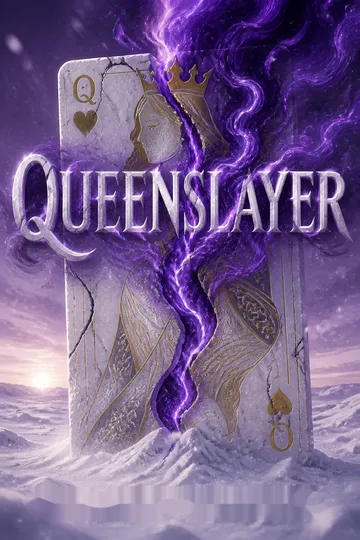
Queenslayer asks whether a person is defined by a condition they cannot choose, or by the decisions they make under its pressure. Kellen’s shadowblack invites others to treat him as a future monster, while his limited magic, criminal habits, and history of fear give that judgment plausible material. The novel does not excuse his failures. He hesitates when Ginevra is taken, pushes away Mariadne, and repeatedly prefers escape to commitment. Yet those failures do not settle his moral identity. His growth comes through choosing action without first becoming fearless or believing himself pure.
The political plot mirrors this personal argument. Darome’s institutions speak of justice, lawful procedure, and public duty, but the powerful manipulate those forms to control a child monarch, a maid, and a widowed countess. The tutors exploit immunity, Leonidas turns military service into personal leverage, and Martius calls conquest practical. Their language does not erase the violence beneath it. Ginevra, meanwhile, is both a ruler with real strategic intelligence and a lonely child who needs a friend. Her authority is neither a guarantee of safety nor a substitute for trust. Cards connect the intimate and political stories. A hand can disclose motive, conceal weakness, or make another person misread the stakes. Kellen’s talent is not simply winning; it is learning when to stop treating every relationship as a game he can leave. Tasia’s cards carry her final attempt to speak, while Ginevra’s appeal at the climax gives Kellen a choice no magic can make for him. The ending offers no easy cure for the shadowblack or the political damage. Instead, it offers a more modest possibility: Kellen can remain marked, frightened, and imperfect, yet still choose to protect someone.
Last updated:
Report IssueReview Summary
People Also Read


Characters
Kellen Argos
Outlaw spellslingerKellen is an eighteen-year-old Jan’Tep exile whose limited magic works through dangerous powders, fast fingers, and a gift for turning an opponent’s assumptions against them. He carries the shadowblack around his eye and expects it to make him feared, hunted, and eventually monstrous. His humor and opportunism protect him from humiliation, but they also give him excuses to avoid choosing a side. He is fiercely attached to Reichis, though he calls their bond a business arrangement. Kellen’s deepest conflict is not whether he can become conventionally good, but whether he can act responsibly while still seeing himself as damaged, frightened, and morally compromised.
Reichis
Thieving squirrel catReichis is Kellen’s squirrel cat partner, a small gliding predator with a large appetite, a larger temper, and an instinct for danger. He steals, threatens, and mocks nearly everyone, including Kellen, but his loyalty is expressed through action rather than tenderness. He treats their partnership as a contract, yet repeatedly risks himself to keep Kellen alive and challenges him when he retreats from a necessary fight. Reichis’s shadowblack does not frighten him as it frightens Kellen; instead, he embraces the possibility of becoming more dangerous. His blunt survivalism gives Kellen a counterweight to self-pity and overthinking.
Ginevra
Isolated child queenGinevra is Darome’s eleven-year-old monarch, expected to embody generations of royal memory while still living in a child’s body. She studies people as carefully as she studies the rules that constrain her, using cards, procedure, and carefully staged questions to reveal what others conceal. Her composure can make her seem older than she is, but it does not erase her loneliness or fear. Ginevra wants to rule responsibly without surrendering the empire to nobles who equate strength with conquest. She chooses Kellen partly because he stands outside the court’s systems of family and patronage, and because he may understand a burden she cannot safely reveal.
Countess Mariadne
Grieving border countessMariamde is a young noblewoman whose husband’s death left her responsible for a vulnerable northern domain and exposed to military pressure. She dresses in mourning and guards her grief with pride, sharp judgment, and a temper that unsettles the court. Her dependence on the army for protection gives Major Leonidas leverage over her, while her loyalty to Tasia makes the maid’s case personal rather than merely political. Mariadne wants to choose her own future after years of being treated as a prize, an asset, or a problem to be managed. Her relationship with Kellen is charged by mutual need, but neither can easily separate affection from danger.
Sha’maat
Ambitious Jan’Tep sisterSha’maat, formerly known as Shalla, is Kellen’s younger sister and a newly named Jan’Tep mage serving as a diplomat. She is perceptive, polished, and skilled at offering intimacy alongside political demands. Her love for Kellen appears genuine, but her loyalty to their father and the House of Ke shapes what she asks him to do. She understands his longing for family and uses it as both comfort and leverage. Sha’maat’s ambition and confidence make her difficult to trust, even when she risks defying her father to help Kellen. She embodies the painful closeness between affection and control within their family.
Arex Nerren
Queen’s social secretaryArex is Ginevra’s cousin and social secretary, a physically imposing courtier who manages her calendar and navigates the court’s rivalries. He uses blunt lessons, teasing, and calculated deference to prepare Kellen for political life. Beneath his swagger, Arex is protective of Ginevra and understands that every public joke or insult can shift the balance of power. He is one of the few people at court who can challenge Kellen directly while still recognizing his value.
Tasia
Maid with a hidden handTasia is Mariadne’s longtime companion, a sharp-witted young woman with a talent for cards and little patience for people who mistake rank for wisdom. She cares deeply for both Mariadne and Ginevra, and her guardedness reflects the risks of speaking openly in a court where powerful people control the story. Tasia’s humor and resilience survive even in prison, where she uses cards to communicate indirectly. She is not simply a victim of the court’s politics; she makes difficult choices according to her own understanding of loyalty and consequence.
Erras
Mariamde’s loyal retainerErras is Mariadne’s elderly retainer, a steady presence who has served her household since she was young. His loyalty is practical and personal: he protects the people he loves even when he has little strength or influence left. He understands the northern danger and the political limits placed on Mariadne, but refuses to let caution become indifference. His courage is quiet, rooted in years of care rather than a desire for recognition.
Jed Colfax
Hard-edged marshal chiefColfax heads the queen’s marshals and has devoted his life to protecting the Daroman throne. He values order and prevention, and his experience makes him suspicious of threats that others dismiss. That vigilance can become brutal: he is willing to frighten or coerce people if he believes doing so will protect the crown. Colfax sees Kellen’s shadowblack as a danger that must be contained, and his devotion to Ginevra often overrides compassion for the people he uses.
Count Adrius Martius
Unassuming royal cousinMartius presents himself as a mild, comfortable nobleman more interested in cards and domestic peace than political ambition. He is observant about the court’s decline and understands how the old imperial appetite for conquest still shapes its powerful families. His practical temperament makes him difficult to read: he avoids dramatic gestures and treats decisions as calculations of cost. Kellen initially sees him as a possible patron because he appears detached from the struggle, while Martius’s views reveal the appeal of order to people who fear political stagnation.
Major Leonidas
Ambitious border commanderLeonidas commands forces along Darome’s northern border and presents himself as the empire’s indispensable defender. He is physically formidable, proud of military honor, and skilled at using danger on the frontier to expand his influence. His pursuit of Mariadne and hostility toward Kellen reveal how personal ambition can hide behind the language of service. Leonidas expects others to respect strength, and his confidence makes him vulnerable to challenges that expose the distance between his public reputation and his conduct.
Sophistus
White binderSophistus is an aging abjurist whose binding magic can seize a shadowblack victim’s body and senses. He treats control as both a technical skill and a source of amusement, showing little concern for the person trapped inside his spell. His ability makes him frightening not because it is merely powerful, but because it can make another person appear responsible for actions they are desperately resisting.
Plot Devices
Powder spellslinging
Magic through volatile powdersKellen combines red and black powders that react explosively, then uses breath magic and precise hand shapes to direct the blast. The powders themselves are dangerous, and the spell can burn or numb his fingers if he uses too much. Because his magic is limited, he wins through deception, timing, and unexpected applications, such as using a weak breath shield to trap air around an opponent. The source of the black powder, dead men’s tongues, also allows him to connect a spell to a person whose blood or death matters to him. The method makes each victory physically costly and ethically complicated.
The shadowblack
Visible stigma and magical vulnerabilityThe shadowblack appears as twisting dark markings around Kellen’s left eye and Reichis’s, and its true nature is poorly understood. Many people treat it as evidence of demonic corruption, which leaves its bearers exposed to fear, exile, and violence. White binders can exploit the mark to control a shadowblack victim, turning the fear of inner evil into a literal loss of bodily agency. The mark also becomes a concealed bond between Kellen and Ginevra, connecting their isolation and making his role as her protector more personal than political.
Daroman playing cards
A map of concealed powerCards are Kellen’s livelihood and the book’s recurring language for strategy, misdirection, and choice. Ginevra uses a game of Royal Court to show Kellen the danger posed by her tutors without accusing them openly. Tasia uses a spread to leave clues about the people and forces surrounding her. Kellen’s skill at sleight of hand also lets him distract the marshals while Reichis steals the sealed writ. Cards never provide certainty by themselves; their meanings depend on the player’s knowledge of people, institutions, and the stakes.
The royal spirit
A throne bound to legitimacyDarome believes its monarch carries the accumulated spirit of the ruling line, and the ancient throne is said to reject anyone who lacks that legitimacy. This belief makes succession more complicated than simply killing the ruler or occupying the palace. Martius’s faction must force Ginevra to abdicate and obtain the freely given signature of someone she trusts. The royal spirit therefore functions both as a constitutional limit and as a political vulnerability: its power depends on trust, consent, and the court’s belief in the tradition.
Spellslinger Series





About the Author
Sebastien de Castell is a versatile author with eighteen published novels, including the acclaimed Greatcoats and Spellslinger series. His works span swashbuckling fantasy, YA, and supernatural investigations. De Castell's background is eclectic, encompassing archaeology, music, fight choreography, and more, all of which influence his writing. His novels have been shortlisted for various awards, including the Goodreads Choice Award and the Gemmell Morningstar Award. De Castell's writing often features unique magical systems and unconventional heroes. He lives in Vancouver, Canada, with his wife and two cats, and maintains an active online presence to connect with readers.
Other books by Sebastien de Castell




Download PDF
Download EPUB
.epub digital book format is ideal for reading ebooks on phones, tablets, and e-readers.








