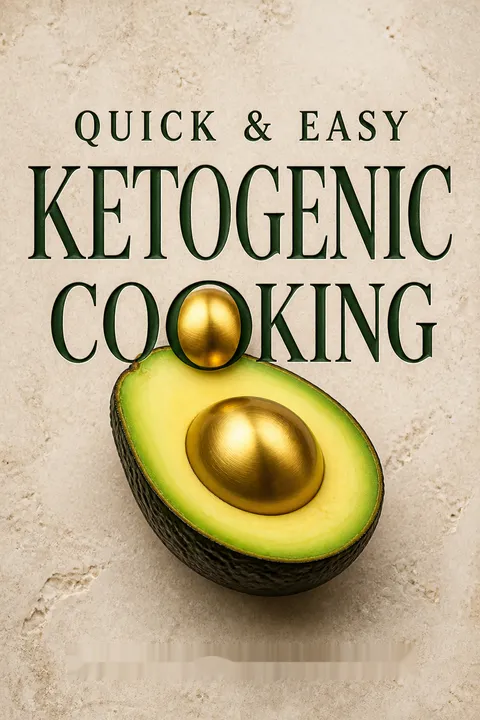


Key Takeaways
Build keto around meals a tired parent can actually cook.
Convenience is the premise. Emmerich’s goal is not to make every meal a culinary project. After adopting two young children, she found herself cooking while carrying one child and keeping a hand free for the other. That experience shaped a cookbook of 170 recipes designed to be quick, simple, and adaptable, including slow-cooker meals and dishes that can be assembled ahead.
Make the plan fit real life. The book offers shortcuts for novice cooks, single servings for households where only one person eats keto, and options for common allergies. Its personal story gives the recipes a clear purpose: healthy cooking has to work on an ordinary, overloaded weekday, not just during a leisurely afternoon.
The book’s strongest argument is practical rather than biochemical: a meal plan that requires more time than a family has is not a usable plan. This resembles choice architecture, the practice of arranging options so the desired choice is easier to make. A freezer meal or prepared sauce can reduce the number of decisions between arriving home and eating. The tradeoff is that convenience alone cannot establish that a diet is nutritionally appropriate, but it can determine whether someone can follow a chosen approach at all.
Use ketosis as the goal: very low carbs, moderate protein, and fat.
The book’s central model. Emmerich describes a ketogenic diet as low in carbohydrates, moderate in protein, and high in fat. Ketosis is the state in which the body produces ketone bodies while using more fat for energy. She argues that reducing carbohydrate intake helps move the body toward this state, while moderate protein supports the diet’s intended balance.
Targets are individual. The book suggests that most people stay below 30 grams of total carbohydrate per day, with lower targets for people with metabolic concerns, and gives a general fat range of 70 to 80 percent of calories. These figures represent the author’s recommendations, not universal medical instructions. Her account also emphasizes that individual responses differ, and she discusses ketone testing as one way to observe them.
The useful mental model is that a ketogenic menu is defined by its overall pattern, not by a single ingredient or a recipe labeled keto. That can help readers see why a low-sugar meal may still be carbohydrate-heavy if it contains substantial starch. At the same time, a precise macro target can create false confidence: a ketone reading does not by itself show that a diet is balanced, sustainable, or suitable for a particular person. The book is most helpful when its numbers are treated as a starting framework to discuss, not a prescription to copy.
Count starches and sweet drinks, not just obvious sugar.
Sugar has less obvious forms. Emmerich treats starch as a major source of dietary carbohydrate because digestion breaks it down into glucose. Her examples include grains such as oatmeal, rice, and quinoa, along with potatoes, sweet potatoes, and high-sugar fruits. She also warns that dried fruit, juice, and sweetened drinks can deliver carbohydrates even when they seem wholesome or have no added sugar.
Read the whole meal. A day built from a gluten-free granola bar, a quinoa salad, a banana, and sweet potato can still be high in carbohydrates by the book’s standards. The point is to evaluate foods by their carbohydrate content, not by labels such as natural, whole-grain, or gluten-free. Emmerich’s approach is deliberately restrictive, especially for readers who have difficulty maintaining ketosis.
This section’s lasting contribution is a label-checking habit: “healthy-sounding” and “low in carbohydrate” are different claims. That distinction can make food choices more deliberate, especially when beverages or dried ingredients concentrate what would otherwise be a larger, more filling food. The book sometimes turns that useful prompt into a sweeping warning about fruit and starch. A food’s effect depends on serving size, the rest of the meal, and a person’s health context, so the examples are best used to ask better questions rather than to declare whole categories harmful.
Rebuild familiar meals with low-carb ingredients, not willpower alone.
Keep the meal recognizable. Many recipes adapt familiar dishes by replacing the starch or bread rather than abandoning the whole meal. Zucchini becomes noodles or tortillas; portobello mushrooms act as pizza bases or burger buns; eggplant is turned into a polenta-like side; and Halloumi cheese stands in for the bread in a grilled-cheese meal. A cheese-based taco shell offers another way to keep the shape and purpose of a familiar dish.
Sauces do the heavy lifting. Emmerich relies on homemade dressings, mayonnaise, hollandaise, and other sauces to add flavor and fat to vegetables and meat. The recipes are modular: a sauce prepared once can support several meals. This makes the diet less about resisting every familiar craving and more about changing the components of the plate.
Substitution works because meals carry more than nutrients. Shape, texture, flavor, and routine all matter, so a different base can preserve some of the experience of tacos or pasta. The method also invites experimentation: a replacement need not imitate the original perfectly to become its own satisfying dish. There is a limit, though. Some substitutions depend heavily on cheese, specialty products, or added fats, and those may not suit every budget, preference, or health need. The book’s flexible recipe structure is more transferable than any single substitute.
Prep sauces and leftovers before hunger makes dinner urgent.
Make tomorrow easier today. Emmerich recommends keeping hard-boiled eggs and prepared keto foods in the refrigerator, making extra portions, and freezing individual meals. For slow-cooker dinners, ingredients can be combined in freezer bags ahead of time. She also suggests preparing the next night’s meal while cleaning up from the current one.
Use a plan, not daily improvisation. The book includes seven-day meal plans with shopping lists and longer plans for weight loss or maintenance, with dairy-free versions. Many recipes produce leftovers that can become lunches or another dinner. Emmerich frames the first 16 days as a manageable trial period for changing routines. The practical lesson is to reduce the number of decisions required when work, family, and hunger compete for attention.
Batch cooking is a form of friction management: it shifts effort from the moment when time and patience are scarce to a moment when preparation is easier. This is especially valuable in food choices, where convenience often competes with intention. The book’s repeatable rhythm of cooking, saving, and reusing food is more sustainable than relying on fresh motivation every evening. Meal plans can also become rigid, however. A useful plan includes substitutions and permission to adjust, so a missed recipe does not turn into a failed week.
Treat early keto symptoms as cues for caution, not a test of grit.
The transition can feel rough. The book notes that some people report headaches, dizziness, fatigue, lightheadedness, and muscle cramps when reducing carbohydrates. Emmerich links these symptoms to fluid and electrolyte changes and discusses sodium, potassium, and magnesium as nutrients to monitor. She recommends options such as broth and salted food, and describes supplements as possible tools.
Do not treat symptoms as proof of progress. The author advises consulting a licensed physician before beginning or changing a diet, and this caution matters particularly when health conditions or medications are involved. The recipes and nutrient suggestions are not a personal medical assessment. A symptom may have more than one cause, so the book’s advice should not replace professional evaluation or justify taking supplements without guidance.
A strength of this advice is that it names predictable discomfort instead of presenting dietary change as effortless. Planning for a transition can prevent people from mistaking a difficult first week for personal failure. The more important lesson is the book’s own boundary: symptoms deserve attention, not a contest in endurance. Advice about salt or supplements can be consequential for people with medical conditions, which makes individualized guidance essential. Practical self-monitoring is useful, but it cannot diagnose the reason someone feels unwell.
A keto dessert still needs a portion, not a health halo.
Sweetness can be redesigned. The cookbook uses stevia, erythritol, monk fruit, and blended sweeteners such as Swerve in place of sugar, honey, maple syrup, and agave. It warns readers to inspect labels because some powdered products contain added ingredients such as maltodextrin. The recipes also explain that sweeteners behave differently in cooking, so substitutions do not always work.
Low carbohydrate is not unlimited. Desserts such as fat bombs, mousse, and ice cream are designed to fit the book’s approach, but many are calorie-dense. Emmerich specifically advises people pursuing weight loss not to rely on drinking calories and recommends adjusting sweetness as tastes change. A keto-friendly ingredient makes a recipe compatible with a dietary target; it does not turn every serving into a free food.
The book wisely treats sweetness as both an ingredient problem and a habit problem. Ingredient lists matter, but so does the role a dessert plays in daily eating. Making a lower-carbohydrate version can help someone preserve a valued ritual without using the same ingredients. Yet a replacement dessert can keep the expectation of constant sweetness alive, and a high-fat recipe can still add substantial energy. The clearest practical distinction is between compatibility with a carb target and an automatic health benefit.
Use meal timing as an option, not the definition of keto.
Fasting is a schedule. Emmerich describes intermittent fasting as limiting eating to a daily window, often six to eight hours, while consuming water and low-calorie drinks outside it. The book suggests ending that window at least three hours before bed and presents either morning or midday as a possible starting point. It argues that a ketogenic diet may make fasting easier by reducing appetite.
Food quality still matters. The author explicitly distinguishes fasting from a diet: a person can fast and still eat poorly during the eating window. She presents fasting as a possible way to save preparation time or support weight loss, not as a requirement for every recipe or every reader. The broader cookbook’s meal plans remain usable without adopting this eating schedule.
Separating meal timing from food composition helps prevent a useful tool from becoming a badge of discipline. For some readers, fewer eating occasions may simplify planning; for others, a strict window may create needless pressure. The book’s strongest point is that fasting does not compensate for poor food choices. Its benefits should also not be assumed from the schedule alone. The practical test is whether the pattern supports a person’s health and daily life, rather than whether it looks more committed.
Treat personal results as clues, not proof of a universal cure.
Stories motivate, but do not settle causation. Emmerich recounts improvements in her own digestive symptoms after reducing carbohydrates and includes testimonials describing weight loss and changes in pain, migraines, and other conditions. These accounts explain why she became an advocate and why readers may find the approach compelling. They are personal reports, not controlled evidence that the diet caused every change or will produce the same result for others.
The book draws a medical boundary. Its opening disclaimer says the author is not a physician and directs readers to obtain medical clearance before changing diet or lifestyle. That warning belongs beside the enthusiastic health claims, not in fine print. Readers can use the recipes and observe how they feel, while involving a qualified clinician when managing a condition or considering a major dietary change.
Personal testimony has real narrative value: it shows what a dietary shift meant to a person and makes an unfamiliar approach imaginable. It also has a clear evidentiary limit. Multiple changes can occur together, and a reported improvement cannot by itself identify the cause or establish how common the outcome is. The book is strongest as a practical cookbook and a record of the author’s experience. Its broadest health claims need more caution than its meal-planning advice.
Analysis
This is a cookbook with a personal origin story and a strong nutritional argument, not a comprehensive clinical guide. Its most durable insight is operational: dietary change becomes more feasible when shopping, cooking, leftovers, restaurant orders, and family preferences are planned together. The recipes make that insight concrete. Zucchini noodles, lettuce wraps, cheese shells, prepared sauces, and slow-cooker batches turn an abstract macro target into meals a busy household might actually serve. The author’s story of cooking while caring for two newly adopted toddlers reinforces the book’s central concern with reducing effort.
The nutritional case requires more skepticism than the recipe system. The book presents carbohydrate restriction, moderate protein, and high fat as a broad route to better health, and sometimes describes carbohydrate and protein metabolism in overly simple terms. Its claims about universal metabolic damage, the dangers of fruit, and the benefits of saturated fats should not be treated as settled rules for everyone. Ketosis is a metabolic state, not a guarantee of weight loss, symptom relief, or disease reversal. The testimonials are meaningful accounts of lived experience, but they cannot establish that the diet caused each reported outcome.
There is also a tension between the book’s weight-loss plans and its many energy-dense sauces, desserts, and added fats. Those foods may help a reader meet a chosen carbohydrate pattern, but “keto” does not make portions irrelevant. Likewise, its electrolyte advice is not a substitute for medical assessment, particularly for readers with health conditions or medications. The author’s own disclaimer acknowledges this boundary.
The fairest way to use the book is to separate its practical toolkit from its strongest physiological claims. Readers can borrow the meal planning, ingredient substitutions, and cooking shortcuts without assuming that its macro targets or health promises fit every body. For someone considering a ketogenic diet, the book offers an unusually detailed kitchen manual, while individualized medical guidance remains essential.
Review Summary
Quick and Easy Ketogenic Cooking receives mostly positive reviews, with readers praising the clear explanations, delicious recipes, and helpful meal plans. Many appreciate the book's beginner-friendly approach and beautiful photos. Some readers find the recipes easy to follow, while others note they can be time-consuming. The book is lauded for its versatility, catering to various dietary needs. A few criticisms include the heavy reliance on dairy and sweeteners, and some find the recipes bland. Overall, readers consider it a valuable resource for those interested in the ketogenic diet.
People Also Read


Glossary
keto-adapted
adapted to fat useThe author’s term for a body that has adjusted to using fat and ketones as a major source of energy instead of relying primarily on glucose from carbohydrate. The book uses “keto-adapted” and “in ketosis” closely, though the terms describe related aspects of the dietary state rather than a guaranteed health outcome.
ketosis
state of ketone productionA metabolic state in which the body produces ketone bodies as it uses fat for energy. In the book, nutritional ketosis is pursued through a low-carbohydrate, moderate-protein, high-fat diet. The author discusses blood, breath, and urine tests for ketones, and emphasizes that a higher ketone reading is not automatically better.
gluconeogenesis
making glucose from other sourcesThe process of producing glucose from sources other than carbohydrate, including components of protein. Emmerich uses the term to explain why she recommends moderate rather than high protein intake on a ketogenic diet. Her discussion presents excess protein as a potential source of glucose, but does not establish that all additional dietary protein will disrupt ketosis in every person.
medium-chain triglycerides (MCTs)
fats readily used for ketonesA category of fatty acids that the book describes as being used relatively quickly by the body and as supporting ketone production. MCTs occur naturally in foods such as coconut and dairy, and concentrated MCT oil is used in several recipes. The author advises adding MCT oil gradually because larger amounts may cause nausea.
intermittent fasting (IF)
eating within a daily windowA pattern that confines food intake to a set period of the day, with water and low-calorie drinks consumed outside that window. The book commonly describes a six-to-eight-hour eating window and presents fasting as optional, distinct from food quality. It is not itself a ketogenic diet, and the author advises ending the eating period before bedtime.
advanced glycation end-products (AGEs)
molecules formed through glycationCompounds formed when sugars or their breakdown products bind with proteins or fats through chemical reactions called glycation. The book discusses AGEs as a possible mechanism linking high sugar exposure with tissue damage and chronic disease. This term describes a biological process, but the book’s discussion should not be read as proving that avoiding all carbohydrate prevents those diseases.
About the Author



Download PDF
Download EPUB
.epub digital book format is ideal for reading ebooks on phones, tablets, and e-readers.








