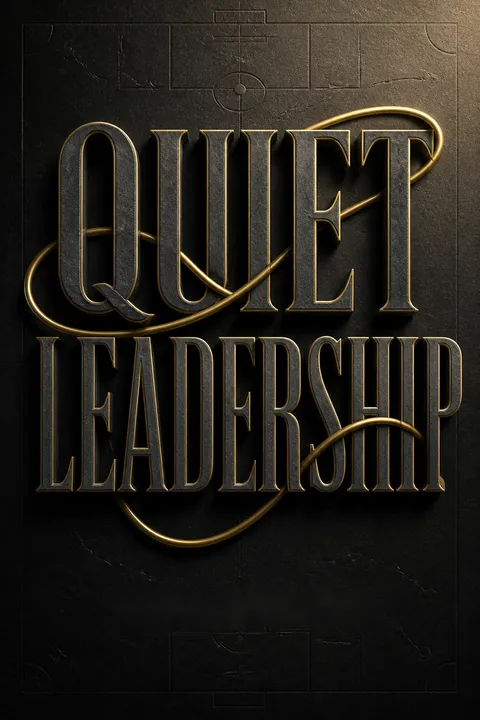


Key Takeaways
Earn authority through calm consistency, not volume.
Quiet leadership defined. Ancelotti’s quiet leadership is calm, measured authority built through trust, respect, and professional decisions. It is not passivity: he expects full effort, confronts unprofessional behavior, and makes the final call. What he rejects is the idea that a leader must dominate through fear or constant displays of anger. His players describe a manager who could criticize them firmly, then quickly restore perspective and composure.
Care makes standards credible. Cristiano Ronaldo recalled playing in the 2014 Champions League final while not fully fit, partly because Ancelotti gave him the freedom to say if he could not continue. The relationship made the request feel like trust, not pressure. For Ancelotti, respect is earned through how a leader treats people, not just through trophies or rank.
The strength of this approach is its combination of emotional steadiness and clear authority. A calm leader can make setbacks feel manageable without pretending that performance does not matter. That predictability may also make difficult feedback easier to hear: the correction is about the work, not a leader’s fluctuating mood. Still, composure is not automatically effective. If expectations remain implicit, calmness can look like indifference or indecision. Ancelotti’s method depends on players knowing both that they are cared for and that standards are real.
Make belonging tangible through shared routines and cultural bridges.
Culture lives in routines. At Milan, a long-serving staff and shared meals made the club feel like a family. When Ancelotti arrived at Paris Saint-Germain, players came shortly before training and left immediately after. He helped create a welcoming place for breakfast and lunch, giving teammates time together without making attendance feel like an order. At Madrid, seating arrangements and informal dinners helped mix players who might otherwise cluster by language or nationality.
Integration takes effort. Ancelotti learned the language wherever he managed abroad and encouraged players to do the same. He also relied on cultural bridges, trusted people who could explain the club and country to newcomers. At Chelsea that person was Ray Wilkins; at Madrid, Zinedine Zidane helped him understand the academy and its players.
Belonging is easier to build when it has a physical and social shape: a shared meal, a familiar guide, or an ordinary conversation across groups. Such routines lower the cost of getting to know colleagues, especially in a multilingual workplace. The useful distinction is between integration and sameness. A team can create common ground without asking people to abandon their identities. The leader’s task is to make cooperation habitual, while leaving room for difference rather than treating every cultural variation as a problem to correct.
Change the formation before you waste a rare talent.
Adapt the system. Early in his career, Ancelotti declined the chance to sign Roberto Baggio because he did not want to change his preferred 4-4-2 formation. He later recognized that he had let his uncertainty override a rare player’s strengths. At Juventus, he adapted his setup to put Zinedine Zidane in the position where he could shape attacks, rather than forcing him into a less suitable role.
Talent still serves the team. At Milan, Andrea Pirlo suggested moving from attacking midfield into a deeper playmaking role. Ancelotti helped him understand the new responsibilities, and the role became central to the team. With Cristiano Ronaldo at Madrid, Ancelotti changed formation rather than insisting Ronaldo become a conventional centre-forward. The goal was not special treatment for its own sake, but a system in which distinctive ability helped the whole side.
This is a practical alternative to the false choice between rigid systems and star-driven chaos. A system should organize talent, but it should not erase the qualities that make talent valuable. Ancelotti’s examples show adaptation as a collaborative process: the coach identifies team needs, the player contributes knowledge of his own strengths, and the formation changes accordingly. There is a limit, though. A system cannot be rebuilt around every preference. The test is whether an adjustment improves the collective performance, not merely whether it pleases one individual.
Give stars extra care, never extra rules.
Individual attention, equal standards. Ancelotti argues that top players may need more careful communication, but they should not receive exemptions from the rules everyone else follows. At Chelsea, Didier Drogba arrived thirty minutes late to a tactical meeting and was left out of the starting lineup. Nicolas Anelka took his place, and Chelsea won 7-1. Drogba later came on against Manchester United and scored, showing that being dropped did not end his contribution.
Explain the decision. Ancelotti also had to tell Milan star Rivaldo that he would begin a match on the bench. Rivaldo initially refused to accept it, but Ancelotti stayed clear about the decision and later explained how rotation could keep players fresh. The point was not to flatten differences in talent. It was to make selection fair, understandable, and connected to the team’s needs.
Fairness does not require treating every person identically in every conversation. It requires that decisions follow defensible principles and that people can understand those principles. This distinction matters in any workplace where high performers receive greater attention, visibility, or pay. Individual care can coexist with shared rules, but unexplained exceptions quickly undermine trust. Ancelotti’s examples also show why consequences need not be punitive theater. A player can lose a starting place, accept the reason, and remain useful to the group.
Build leadership around you, not a court of one.
Leadership comes in types. Ancelotti distinguishes personality leaders, who rally teammates through voice and character, from technical leaders, who lead through expertise and example. A political leader may represent the club publicly without being the main influence inside the team. The roles can overlap. At Madrid, Sergio Ramos brought forceful personality, while Ronaldo’s professionalism made him a technical reference. At Milan, Paolo Maldini combined both.
Trust makes delegation possible. Ancelotti also treats assistants and specialists as essential, not decorative. At Chelsea, he initially expected to bring his own staff, but found strong people already at the club and built new working relationships, including with assistant Paul Clement. He shared planning and decisions with trusted colleagues, giving them room to contribute. The team benefits when leadership is distributed, while responsibility for the final decision remains clear.
A leader who tries to be the only source of judgment creates a bottleneck and deprives others of ownership. Ancelotti’s mix of leadership types recognizes that influence depends on the group and task, not just the org chart. The same principle applies to support staff: delegation works when responsibility is real and trust is earned. Yet a collection of leaders can also produce competing signals. The manager must make roles legible, resolve conflict, and ensure that informal authority supports rather than contradicts the team’s stated standards.
Protect the team by giving power a clear channel.
Manage the hierarchy. At several clubs, Ancelotti relied on a general director to connect him with the president or owner. The director could clarify expectations and absorb some friction, while Ancelotti shielded players from distracting pressure. At Chelsea, the structure became less clear after key intermediaries left, and the owner’s interventions became harder to anticipate. Ancelotti presents this as an organizational problem, not simply a personality clash.
Communicate without surrendering judgment. At Paris Saint-Germain, leaders told him that a single upcoming match could determine his job, even though the club had already qualified from its group. The team won, but the ultimatum damaged his confidence in the project. At Madrid, he disagreed with the president’s demand for more training based on statistics. A leader must hear those above, explain constraints, and protect the people doing the work.
Clear reporting lines reduce the chance that employees receive conflicting instructions from powerful people. They also give leaders a place to surface disagreement before it reaches the team as rumor or panic. The general director’s buffer role is useful, but it should not become a device for hiding information. Upward communication needs candor as well as diplomacy. The harder question is whether the organization genuinely wants the leader’s expertise or only the appearance of consultation. Ancelotti’s stories show how quickly that distinction affects trust.
Let data inform the coach, not overrule the game.
Numbers need interpretation. Ancelotti values performance data for monitoring fatigue, training load, and patterns that may help with tactical decisions. Before facing Atlético Madrid, for instance, analysts found that striker Diego Costa’s long, fast runs behind the fullbacks were associated with Atlético’s stronger performances. Ancelotti told his defenders to deny him that space and force him to receive the ball closer to goal.
A metric is not a verdict. At Madrid, statistics about training time were used to argue that the team needed to work harder, despite a run of twenty-two consecutive wins. Ancelotti believed the players needed more rest. A period of fatigue and injuries followed, including injuries to several key players. He argues for combining data with observation and experience: numbers can focus attention, but the coach must decide which measure matters and what action it supports.
Measurement is most valuable when it changes a decision, not when it merely supplies a persuasive-looking explanation. The Madrid episode illustrates a common analytical hazard: treating a proxy, such as training hours, as though it directly measures performance or effort. At the same time, intuition can preserve old assumptions unless it is open to challenge. The strongest approach is reciprocal: data sharpens questions for experienced observers, while observation tests whether a metric captures the reality it claims to represent.
Own decisions without mistaking outcomes for proof.
Choose with the evidence available. Before the 2007 Champions League final, Ancelotti selected Filippo Inzaghi over Alberto Gilardino, despite pressure to start Gilardino. Inzaghi’s record in European competition persuaded him, along with his own judgment that the striker was right for the occasion. Inzaghi scored twice. Ancelotti considers the choice his responsibility, whether or not it succeeds.
Separate effort from randomness. In Milan’s 2005 final against Liverpool, his team played strongly for most of the match but conceded three goals in a six-minute spell and lost on penalties. Ancelotti did not treat the defeat as proof that the preparation or attitude had been wrong. His focus was to understand what could be improved without inventing certainty after the fact. The same principle shapes his response to a loss: analyze, reset, and prepare for the next match.
Decision quality and outcome quality are related, but they are not identical. A sound choice can fail because conditions change or chance intervenes; a poor choice can be rescued by luck. This distinction guards against hindsight bias, the tendency to judge a past decision as obvious once its result is known. Ancelotti’s account is especially useful because it does not deny accountability. The decision-maker still has to review the evidence, learn, and own the consequences, without pretending that every result was fully controllable.
Study the job's culture before accepting its leadership arc.
Leadership has a cycle. Ancelotti describes a recurring arc: courtship, an early honeymoon, a period of results and stability, a plateau with growing problems, and a breakup. The cycle can be compressed at elite clubs. The book reports average managerial tenures of 2.36 years in the English Premier League, 1.31 in Italy’s Serie A, and 1.34 in Spain’s La Liga. Ancelotti’s eight years at Milan were an exception; his Madrid tenure lasted two.
Do the homework. A manager should learn whether a club is a family, a corporation, or a project still being built, and whether its leaders expect the new hire to preserve or change its culture. Ancelotti found Juventus formal and corporate, while Milan felt like home. These differences affected how he worked. A short tenure is not always personal failure; sometimes the fit or expectations were wrong from the start.
The arc is a useful warning against assuming that success creates permanent security. It also reframes hiring as a mutual fit problem: the organization is selecting a leader, but the leader is selecting an environment. That perspective can prompt better questions about decision rights, timelines, and what counts as success. The cycle should not be treated as a law, however. The book’s own contrast between Milan and shorter appointments shows that culture, resources, leadership stability, and circumstance can stretch or compress a career in ways no simple stage model predicts.
Build a leadership style from your own character, not borrowed theatrics.
Learn through experience. Ancelotti grew up in a farming family where his father’s long workdays, careful budgeting, and steady temperament shaped his ideas about discipline and responsibility. As a young manager at Reggiana, he struggled with the jump from player to boss. The team sat at the bottom after seven games, and he doubted whether he belonged in the job. He leaned on lessons learned as an assistant to Arrigo Sacchi, worked with experienced colleagues, and eventually guided the club to promotion.
Adapt without pretending. Ancelotti learned from mentors with very different approaches, including the flexible Nils Liedholm and the more rigid Enzo Bearzot. He did not copy either wholesale. His style remained calm and relational, while his methods changed across clubs: he learned languages, adjusted training, and altered formations to suit players and circumstances.
Authenticity is more than a personality preference. It can make behavior consistent enough for colleagues to understand what a leader values and how decisions are made. Ancelotti’s story also avoids a simplistic lesson that people should never change: he adapts his methods while retaining his basic disposition. The important distinction is between changing tactics and performing a false identity. Still, self-knowledge alone is not proof of effectiveness. A leader’s preferred style must remain open to feedback, especially when patience or gentleness stops serving the people and work at hand.
Analysis
Quiet Leadership is both a career narrative and a practitioner’s account of managing elite talent. Its argument is not that warmth replaces authority, but that authority can be built through care, consistency, and earned trust. The strongest examples make that distinction concrete: Ancelotti accommodates a star’s strengths, but does not excuse lateness; he protects players from destabilizing pressure, but accepts that owners hold the ultimate power; he uses data, but refuses to treat a statistic as self-explanatory.
The underlying model is relational and organizational at once. Individual trust matters, yet it depends on structures: clear reporting lines, capable assistants, shared rituals, and leaders inside the team. This resembles the practical value of psychological safety, meaning that people can raise concerns without expecting humiliation, while preserving the need for explicit standards. It also highlights a tension in modern organizations: leaders are asked to be close enough to understand people, but distant enough to make decisions that disappoint them.
The book’s evidence is vivid but not experimental. The players’ testimony and Ancelotti’s trophies establish that this approach can work in demanding settings; they do not isolate the cause of success from exceptional budgets, elite rosters, institutional resources, and luck. The Istanbul final, where Milan’s strong performance ended in defeat, makes that uncertainty visible. So does the Madrid experience, where an extraordinary winning streak did not secure the manager’s future.
The most transferable lesson is therefore not to imitate Ancelotti’s temperament. It is to build a coherent operating system around one’s own temperament: know the culture, define non-negotiables, listen before adjusting, use evidence critically, and accept that results contain noise. His calmness is not a universal recipe. It is an example of how a leader’s character becomes powerful when matched with judgment, relationships, and structures that let others perform.
Review Summary
Quiet Leadership by Carlo Ancelotti receives mostly positive reviews, with readers praising his calm and empathetic approach to management. Many appreciate the insights into football and leadership, finding the book both inspiring and practical. Some reviewers note that it's not a traditional autobiography but rather a blend of personal experiences and leadership lessons. While a few critics find it repetitive or lacking depth in certain areas, most readers value Ancelotti's philosophy of building relationships and trust with players and staff.
People Also Read




Glossary
Quiet leadership
Calm, trust-based authorityA leadership approach that relies on measured behavior, respect, persuasion, and strong relationships rather than constant displays of force. The leader remains clearly responsible for decisions and standards, but uses trust and influence to gain commitment. In Ancelotti’s account, quietness is not weakness or avoidance; it is a way to stay composed while caring for people and managing pressure.
Leadership arc
A leader's career cycleAncelotti’s description of the recurring pattern many leaders experience in a role: courtship, an initial honeymoon, a period of success or stability, a plateau where problems emerge, and a breakup. The timing varies by organization and leader. Recognizing the arc can help candidates assess a job’s culture and expectations, and help leaders understand that an ending is not always a verdict on personal worth.
Personality leader
Leads through characterA team member whose influence comes chiefly from force of character, communication, and willingness to step forward. This leader rallies teammates, speaks up, and can provide confidence in difficult moments. Ancelotti contrasts this role with the technical leader, who leads more through expertise and example. The categories can overlap, and leadership does not depend on holding the captain’s armband.
Technical leader
Leads through exampleA team member who gains influence through professional habits, skill, and knowledge of the work, rather than frequent speeches. Younger colleagues can use this person as a model for how to train, perform, and behave. Ancelotti’s examples include Cristiano Ronaldo’s professionalism and Paolo Maldini’s combination of expertise and strong character. A technical leader may also be a personality leader.
Political leader
Represents the group publiclyA figure recognized by supporters, media, or senior leaders as a representative of the team, but not necessarily regarded as its main leader by fellow players. Ancelotti uses the term to distinguish public status from influence inside the group. The role can still be useful, but it does not automatically mean that teammates follow the person’s example or judgment.
FAQ
What's Quiet Leadership about?
- Leadership Reflections: Quiet Leadership by Carlo Ancelotti is a collection of reflections on his experiences in football, both as a player and a manager. It delves into his leadership philosophy, focusing on relationships and trust.
- Universal Lessons: Ancelotti shares lessons from football that can be applied to other fields, such as business, offering insights into effective leadership that transcends sports.
- Quiet Leadership Concept: The book introduces "quiet leadership," defined as leading with calmness, authority, and respect, rather than aggression or fear.
Why should I read Quiet Leadership?
- Unique Perspective: The book provides insights from one of football's most successful managers, offering a glimpse into the high-pressure world of elite sports.
- Practical Advice: Readers will find actionable advice on managing talent, building relationships, and fostering a positive team culture, grounded in Ancelotti's real-life experiences.
- Inspiring Stories: Filled with anecdotes from Ancelotti's career, the book illustrates the principles of quiet leadership through interactions with famous players like Cristiano Ronaldo and David Beckham.
What are the key takeaways of Quiet Leadership?
- Importance of Relationships: Ancelotti emphasizes that strong relationships with players and staff are crucial for success, with trust and respect as foundational elements.
- Calmness in Leadership: The concept of "quiet leadership" highlights the power of remaining calm and composed, fostering a positive environment for players to thrive.
- Adaptability and Learning: Ancelotti stresses the importance of being adaptable and open to learning, encouraging leaders to evolve and adjust their methods to suit their teams.
What are the best quotes from Quiet Leadership and what do they mean?
- "Respect is everything.": This quote underscores the fundamental role of respect in leadership, essential for a productive and harmonious environment.
- "Find a solution, don’t waste time looking for the guilty.": Ancelotti advocates for a proactive approach to problem-solving, focusing on solutions rather than blame.
- "You must never think that being a player is enough to be a manager.": This highlights the distinction between playing and managing, emphasizing the need for additional skills and knowledge in management.
How does Ancelotti define "quiet leadership" in Quiet Leadership?
- Calm and Measured Approach: Ancelotti describes quiet leadership as leading with calmness and composure, avoiding loud or aggressive tactics.
- Implicit Authority: True leadership should be based on implicit authority, earning respect through actions and character rather than fear or intimidation.
- Focus on Relationships: Quiet leadership centers around building strong relationships with players and staff, fostering a supportive environment.
How does culture play a role in Ancelotti's leadership style?
- Family Environment: Ancelotti emphasizes creating a family-like culture within a team, enhancing collaboration and performance.
- Cultural Fit: He stresses the importance of aligning with the club's culture for effective management, understanding, and adapting to it for success.
- Integration of New Players: Ancelotti discusses the need for onboarding new players into the team culture, crucial for their success and the team's performance.
How does Ancelotti manage talent within his teams?
- Understanding Players as Individuals: Ancelotti views players as people first, getting to know them personally to understand their motivations and needs.
- Encouraging Professionalism: He expects players to maintain professionalism, including learning the language and adapting to the club's culture.
- Balancing Development and Performance: Ancelotti focuses on developing players while ensuring they contribute to the team's success, tailoring coaching to enhance strengths and address improvements.
What challenges does Ancelotti face in managing upwards?
- Navigating Presidential Noise: Ancelotti discusses managing relationships with club presidents and owners, emphasizing shielding players from external pressures.
- Maintaining Authority: A manager must maintain authority while being responsive to the president's demands, balancing these aspects for a positive environment.
- Communicating Effectively: Clear communication with the general director and president is crucial for managing expectations and reducing conflicts.
How does Ancelotti approach player recruitment?
- Collaborative Process: Recruitment is a collaborative effort between the manager and club leadership, with Ancelotti providing input on player types needed.
- Cultural Fit: Emphasizing recruiting players who align with the club's values and culture ensures smoother integration and enhances performance.
- Long-term Vision: Ancelotti considers the long-term implications of recruitment, focusing on building a team for present and future success.
How does Ancelotti handle player exits and succession planning?
- Sensitive Communication: Ancelotti approaches player exits with care, having honest conversations about roles and future within the team.
- Maintaining Relationships: He emphasizes maintaining positive relationships with departing players, which can lead to future opportunities.
- Planning for the Future: Ancelotti focuses on developing younger players for a smooth transition when established players leave.
How does Ancelotti handle conflicts within the team?
- Immediate Resolution: Ancelotti believes in addressing conflicts quickly to prevent escalation, often intervening directly to facilitate resolution.
- Promoting Team Unity: He emphasizes maintaining team unity, encouraging players to support one another for a cohesive team dynamic.
- Learning from Mistakes: Ancelotti fosters an environment where players can openly discuss issues and learn from conflicts and mistakes.
How does Ancelotti's background influence his leadership approach?
- Humble Beginnings: Ancelotti's modest upbringing instilled values of hard work and discipline, shaping his leadership approach.
- Experiential Learning: His journey from player to manager has been experiential, informing his understanding of player dynamics and team management.
- Cultural Sensitivity: Having played and managed in various countries, Ancelotti has developed cultural awareness, allowing him to adapt his leadership style.
Download PDF
Download EPUB
.epub digital book format is ideal for reading ebooks on phones, tablets, and e-readers.








