

Key Takeaways
Kao's decisive skill was building institutions, not collecting secrets
An institution builder. Rameshwar Nath Kao is remembered as the founder of India’s external intelligence agency, R&AW, but this biography presents institution-building as his larger achievement. He helped create the Aviation Research Centre after the 1962 defeat by China, then built R&AW into a multidisciplinary service with foreign stations, technical capabilities, and links to the military and foreign ministry. Its work contributed to India’s preparations for the 1971 war and Sikkim’s merger with India. The book’s opening examples reach beyond Kao’s tenure, showing the agency’s later role in strategic intelligence, but its central story is how he gave a young organisation people, procedures, and purpose.
Leadership behind results. Kao’s approach combined discretion with careful coordination. He cultivated trusted colleagues, including K. Sankaran Nair, and left day-to-day operations to capable deputies while maintaining relationships with senior decision-makers. The account repeatedly shows outcomes depending on a team and an institution, not a lone master spy.
What's striking is how the book shifts the image of intelligence from secret collection to organisational design. Reliable institutions need recruitment, reporting standards, interagency cooperation, and leaders who can delegate without losing strategic direction. Those less cinematic capabilities help explain how intelligence can influence policy at all. The portrait is strongest when it makes the team visible, rather than attributing complex outcomes to Kao alone. The same distinction matters in evaluating intelligence agencies today: a celebrated operation may be the work of many people, while durable competence depends on routines that survive individual leaders.
Treat early hardship as a source of discipline, not destiny
A difficult beginning. Kao’s father died when he was five, leaving his young mother to raise him and his brother amid recurring financial strain. School brought another kind of hardship: classmates mocked his weight, name, and limited Gujarati, and he withdrew socially. He later described himself as introspective, but his childhood did not determine the limits of his life. At the Ramakrishna Mission hostel, he took up yoga in an effort to address his obesity, and the practice stayed with him for life.
Learning to excel. At Lucknow and Allahabad universities, Kao found confidence in study, writing, and public speaking. He won prizes in debate and graduated first in English literature, despite having little money and preparing for competitive examinations with intense discipline. His story is not a simple tale of adversity producing greatness. It shows how ability can emerge when a person finds a setting and a practice that fit.
The useful lesson is not that hardship secretly benefits everyone. Loss, poverty, and bullying can constrain people for years, and the biography cannot prove that they caused Kao’s later strengths. What it does show is the importance of supports and habits: a mother who invested in his education, an uncle who housed him, and practices such as study and yoga that gave him structure. Developmental psychology often distinguishes risk from destiny; outcomes depend on relationships, resources, and opportunities as well as temperament. Kao’s trajectory is best read as resilience enabled by context, not suffering redeemed by success.
Use liaison to protect facts when politics clouds an investigation
A politically charged inquiry. In 1955, Kao was sent to investigate the bombing of the Air India plane Kashmir Princess, which was carrying Chinese delegates to the Bandung Conference. The aircraft crashed over the sea, killing most aboard. The plot involved alleged Kuomintang agents, Hong Kong police, Chinese officials, and British authorities, each with different interests. Kao spent about six months working between these parties, including meetings with Chinese Premier Zhou Enlai.
Stay within the evidence. The Hong Kong authorities eventually failed to prosecute the main suspects, while China doubted the investigation’s sincerity. Kao was repeatedly pressed to endorse one side’s account. Following instructions from Delhi, he reported what he knew and avoided making political judgments beyond his evidence. The case did not end in a clean resolution. It did teach him how intelligence work can require trust-building, careful reporting, and restraint when the facts are contested.
The case illustrates a core problem in intelligence and diplomacy: information moves through institutions that do not share the same aims or standards of proof. Kao’s refusal to become an advocate for either side helped preserve his usefulness as an intermediary. That resembles the role of a neutral investigator in conflict resolution, where credibility comes partly from distinguishing observed facts from interpretation. The limitation is equally important: neutrality cannot force cooperation or produce justice when powerful actors obstruct the process. A sound account should therefore assess both the quality of the inquiry and the political conditions that restricted what it could achieve.
Split intelligence missions before one bureau becomes blind to both
A lesson from defeat. Before 1968, India’s Intelligence Bureau handled both internal and foreign intelligence. The 1962 war with China exposed the need for specialised capabilities, including aerial reconnaissance and support for operations near the Himalayan frontier. The Aviation Research Centre, established in 1963, gathered photographic and technical intelligence. The Special Frontier Force was created for specialised military tasks. After the 1965 war with Pakistan, failures to anticipate major moves strengthened the case for separating foreign intelligence from the IB.
Build for the mission. Kao helped design R&AW, which began operating in 1968 under the Cabinet Secretariat. Prime Minister Indira Gandhi directed that it draw talent from beyond the police and gave its chief unusual administrative latitude. The new agency needed technical, diplomatic, military, and operational expertise. It also had to establish working relationships with the foreign ministry and armed forces, rather than treating them as afterthoughts.
Specialisation can sharpen attention, but creating a new agency does not automatically improve intelligence. Separate organisations can duplicate work, guard information, or compete for influence. The book’s emphasis on liaison cells and direct communication with consumers is therefore as important as the institutional split itself. In organisational design, a specialised unit performs well when it has a clear mandate and reliable interfaces with other units. The 1962 and 1965 failures supply the case for change, though the available narrative cannot establish that the new structure alone caused later successes. Institutional reform is a necessary capacity, not a guarantee of sound judgment.
Prepare partners and logistics before a liberation struggle becomes war
A long preparation. After Pakistan’s 1970 election, the Awami League won 167 of 169 seats in East Pakistan, but the ruling elite in West Pakistan resisted transferring power. R&AW assessed the risk of a military crackdown and organised a government committee to consider political, humanitarian, and military responses. After the army began its March 1971 crackdown, millions of refugees crossed into India and Bengali leaders formed a provisional government.
Coordinate the resistance. Kao worked with P.N. Banerjee, known as Nath Babu, who had unusually close access to Sheikh Mujibur Rahman and Awami League leaders. Major General Sujan Singh Uban organised training for Bengali fighters, while R&AW helped coordinate political contacts, foreign publicity, and operational planning. The book describes a campaign that prepared the ground for India’s military intervention. The final war lasted 13 days and ended with the creation of Bangladesh.
The strategic insight is that military effectiveness often rests on political and logistical preparation conducted before open conflict. The book shows intelligence officers connecting leaders, trainers, diplomats, and military commanders, while attempting to manage rivalries within the emerging Bangladeshi leadership. This resembles coalition-building in other forms of crisis response: shared aims and communication channels must exist before pressure peaks. Yet covert support is not politically neutral. It can strengthen one faction over another and shape a new state’s early institutions. The account makes the operational coordination vivid, while readers should also ask how local agency and Indian strategic interests interacted.
Remember that covert success can secure outcomes while compromising consent
Sikkim’s contested transition. In the early 1970s, Sikkim’s Chogyal sought greater sovereignty, while pro-democracy groups opposed the monarchy and demanded political representation. New Delhi shifted from supporting the ruler to backing those groups. R&AW officers encouraged the agitation, helped coordinate political leaders, and supported a process that moved control toward India. After elections in 1975, the legislature voted for merger, and Sikkim became India’s 22nd state that May.
Success with a cost. The account describes covert influence, financial support, pressure on the palace, and a plan to disarm the Chogyal’s guards. It presents the operation as strategically successful, but the methods raise a harder question: how freely can a political outcome be called consent-based when a powerful neighbour is actively shaping the process? The story is not simply a celebration of statecraft. It is also a case study in the tension between strategic security and political self-determination.
This episode deserves more than a verdict of success or failure. Sikkim’s internal movements for democracy were real, and the monarchy’s legitimacy was contested; at the same time, India used covert pressure to secure an outcome it considered strategically necessary. Political science distinguishes popular mobilisation from external intervention, but in practice the two can overlap. The key question is not whether outside influence existed, since the narrative documents it, but how it altered the choices available to Sikkimese actors. The book’s unusually candid operational details make this a valuable case for examining how national security goals can conflict with the principle of self-determination.
Treat intelligence as probability, not prophecy, and test the chain
Warnings need action. Kao warned that Pakistan might use military action to divert attention from its internal political crisis. R&AW also assessed that China was unlikely to enter a war directly, while anticipating that it might threaten India’s northern border. These were estimates, not certainties. In 1971, Kao and Nair received a warning that Pakistan planned an air strike. The source’s coded message reportedly gave the correct date, but the date was misread during decoding. The Indian Air Force stayed alert after Nair pressed for more time, and the strike was blunted.
No warning is a guarantee. R&AW also warned Sheikh Mujibur Rahman about a plot against him, but he dismissed the danger. After P.N. Banerjee died in 1974, the agency lost an important network in Bangladesh. Mujib was assassinated the next year. The biography shows intelligence as a chain of collection, interpretation, transmission, and decision. A failure at any link can nullify good information.
Intelligence is best understood as uncertainty reduction, not foreknowledge. The air strike episode makes the human systems around information visible: a source can be right, a decoding process can introduce error, and a decision-maker can still choose to act cautiously. Mujib’s assassination shows the other side, where warnings do not overcome a leader’s confidence or the loss of trusted access. In safety-critical fields, organisations examine near misses as well as disasters because both expose weak links. The account also counsels against hindsight bias: an event that later seems predictable may not have been preventable with the information and authority available at the time.
Keep intelligence agencies capable without turning them into political instruments
Autonomy under pressure. When R&AW was created, Kao argued for a specialised agency with the authority to recruit broadly and operate without ordinary administrative delays. That autonomy helped a new organisation take shape, but it also made political trust essential. During the Emergency, Kao and Nair tried to keep the agency away from Sanjay Gandhi’s informal influence. After the 1977 election, Prime Minister Morarji Desai distrusted R&AW and Kao, whom he associated with Indira Gandhi. Kao left, and Nair resigned soon after a dispute over the chief’s status.
Professionalism is institutional. N.F. Suntook succeeded them and protected the organisation from retaliatory pressure, even as the government cut its budget. The episode shows that agency independence depends not only on rules but also on leaders who resist partisan use and political leaders willing to accept unwelcome assessments. Without those restraints, operational secrecy can become a tool of private power.
The tension here is structural. Intelligence agencies need discretion because their methods and sources must be protected, but discretion weakens ordinary public scrutiny. The answer cannot be unlimited executive trust, nor can it be routine bureaucracy that makes sensitive work impossible. Clear legal mandates, documented authority, and independent oversight are common ways democratic systems try to balance effectiveness with accountability. The biography focuses on personal conduct and political relationships, which makes the stakes concrete, but personal integrity is not a substitute for safeguards. Kao’s difficulties under governments of different political temperaments underline why institutional protections must outlast the leader in charge.
Use authority to steady others, not advertise yourself
Precision without spectacle. Kao was exacting about reporting: colleagues recall reports returned with a brief mark when a word or judgment was off. He disliked interruptions and lateness, but the biography describes him as courteous rather than domineering. He mentored generations of R&AW officers, hosted them at home, and gave capable colleagues room to operate. Even after major achievements, he avoided public credit. At a commemoration of Bangladesh’s founding, he reportedly dismissed praise and left quietly.
Character in small acts. Kao’s family remembered a man who fed stray dogs and treated staff with kindness. A former colleague recalled that he helped someone who had spread rumours about him, reasoning that assistance mattered more than retaliation. These domestic and professional stories support the book’s portrait of a private, disciplined leader whose authority came from standards and conduct, not self-promotion.
The strongest portrait of leadership here is not gentleness alone. Kao combined interpersonal restraint with demanding standards, a combination that can make criticism easier to hear because it is not delivered as humiliation. Research on psychological safety, the shared belief that people can raise concerns without punishment, suggests that respectful workplaces can improve learning and error reporting. That principle sits productively beside his insistence on precision. Still, a modest leader can become difficult to evaluate if secrecy and self-effacement hide decisions from scrutiny. Quiet authority is most valuable when teams can challenge it and the public can assess its consequences.
Analysis
This biography is both a portrait of R.N. Kao and a partial institutional history of Indian intelligence. Its central argument is implicit but clear: the consequential work of a spymaster lies less in lone acts of deception than in creating an organisation able to gather, interpret, and deliver information under pressure. The narrative supports that view through the 1955 Kashmir Princess investigation, the creation of ARC and R&AW, the 1971 Bangladesh crisis, and the operations surrounding Sikkim’s merger. Across these episodes, Kao’s value appears in judgement, relationships, and coordination as much as in clandestine collection.
The book’s most revealing tension is between professional restraint and political power. Kao is portrayed as meticulous, modest, and committed to institutional standards, yet R&AW’s work was deeply entangled with government priorities. Bangladesh shows intelligence serving a liberation struggle and India’s security calculations at once. Sikkim shows covert capacity used to shape a neighbouring polity’s future. Those are not peripheral complications; they define the ethical terrain of intelligence work. The account gains credibility by exposing operational detail, but its celebratory language sometimes makes strategic success stand in for legitimacy or fairness.
The source base also matters. The author draws on Kao’s recollections, family testimony, retired officers, and some declassified or accessible papers. Important files were still closed when the book appeared, so the account is not a complete archival history. Memories from colleagues are valuable, especially for a secretive institution, but they can also reinforce shared loyalties and a founder’s stature. The book should therefore be read as a richly reported first portrait, not a final adjudication of every operation. Its lasting contribution is to make intelligence institution-building visible while leaving readers with the harder question: how can secrecy serve national security without becoming a shield from accountability?
Review Summary
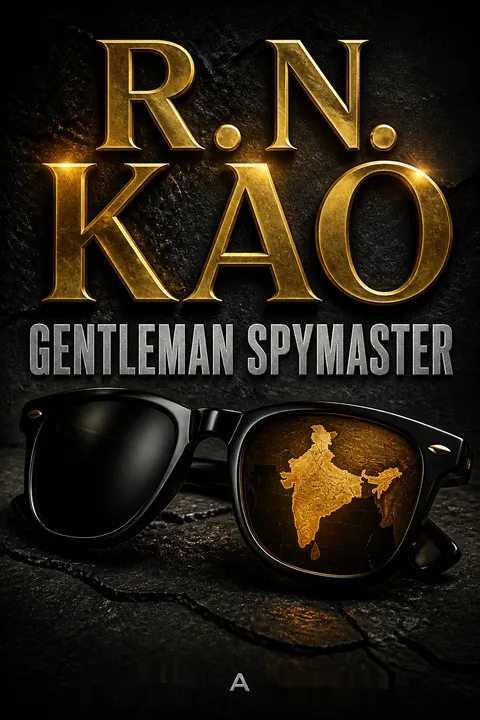
R. N. Kao: Gentleman Spymaster receives mixed reviews, with an average rating of 3.93 out of 5. Readers appreciate the insights into India's intelligence history and Kao's role in founding R&AW. Many find the book informative but lacking excitement. Some praise the detailed accounts of historical events, while others feel it reads like a compilation of facts. Critics note a lack of personal touch and missed opportunities to make Kao's story more engaging. Overall, the book is seen as valuable for those interested in Indian intelligence history.
Glossary
Research and Analysis Wing (R&AW)
India's foreign intelligence agencyIndia’s external intelligence agency, established in 1968 after foreign intelligence responsibilities were separated from the Intelligence Bureau. Under Kao, it recruited beyond the police, developed foreign stations, and built working relationships with diplomatic and military services. The biography focuses on its early institution-building and its roles in the Bangladesh crisis and Sikkim’s transition.
Aviation Research Centre (ARC)
Aerial intelligence collection agencyAn intelligence organisation established in 1963 after the 1962 war with China. Headed by Kao from 1963 to 1966, the ARC used aircraft and technical capabilities to collect photographic and other intelligence, particularly concerning Tibet and Xinjiang. It formed part of India’s effort to develop specialised intelligence capacity.
Special Frontier Force (SFF)
Specialised frontier forceA force established in November 1962 for specialised operations connected to India’s Himalayan frontier. Initially called Establishment 22, it was led by Major General Sujan Singh Uban and included many Tibetans. In the book’s account, its training and leadership later contributed to organising Bengali fighters during the 1971 crisis.
Foreign Service Research Bureau (FSRB)
Ghana's external intelligence serviceGhana’s foreign intelligence organisation, created with Indian assistance in the late 1950s. Kao travelled to Ghana in 1958 to help establish it, train officers, select staff, and develop basic procedures. The assignment involved advising Ghanaian officials while ensuring the service was built under Ghanaian authority.
Mukti Bahini
Bangladesh liberation forcesThe armed forces and resistance fighters who fought for Bangladesh’s liberation from Pakistan in 1971. The biography describes Indian support for training and organising these forces, alongside political and intelligence coordination. Different groups had distinct leaders and purposes, including specialised fighters trained for sabotage and guerrilla operations.
Operation Searchlight
Pakistan Army crackdown in East PakistanThe Pakistani Army’s military crackdown that began in Dhaka on the night of 25 March 1971. It targeted Bengali political activists, students, civilians, and members of East Pakistan’s security forces. The violence intensified the independence movement, sent refugees into India, and precipitated the crisis that led to Bangladesh’s liberation war.
Janamat
Sikkim political operation codenameOne of two codenames, alongside Twilight, used for R&AW operations connected to political agitation in Sikkim between 1973 and 1975. The operations supported anti-Chogyal political groups and helped shift authority toward elected leaders and the Government of India. The biography presents them as part of the process leading to Sikkim’s merger.
Twilight
Sikkim political operation codenameA codename associated with R&AW’s covert activity during Sikkim’s political transition in the 1970s. It formed part of a campaign that encouraged anti-monarchical agitation and supported political forces seeking greater popular authority. The book describes it alongside Janamat, while the precise assignment of each codename is not fully specified in the account.
FAQ
What is "R. N. Kao: Gentleman Spymaster" by Nitin A. Gokhale about?
- Biography of R.N. Kao: The book is a comprehensive biography of Rameshwar Nath Kao, the legendary founder of India’s external intelligence agency, the Research and Analysis Wing (R&AW).
- Evolution of Indian Intelligence: It traces the evolution of India’s intelligence apparatus from the pre-independence era through the formation of R&AW and its major operations.
- Personal and Professional Insights: The narrative blends Kao’s personal life, values, and character with his professional achievements and challenges.
- Key Historical Events: The book covers major events such as the Bangladesh Liberation War, the merger of Sikkim, and the Kashmir Princess investigation, highlighting Kao’s pivotal role.
Why should I read "R. N. Kao: Gentleman Spymaster" by Nitin A. Gokhale?
- Unique Access and Research: The author had access to rare transcripts, personal files, and interviews, offering insights unavailable elsewhere.
- Understanding Indian Intelligence: It provides a rare, detailed look into the secretive world of Indian intelligence and its institution-building.
- Leadership Lessons: Kao’s leadership style, ethics, and decision-making offer valuable lessons for readers interested in management and public service.
- Historical Relevance: The book contextualizes key moments in India’s modern history, making it essential for those interested in geopolitics and national security.
What are the key takeaways from "R. N. Kao: Gentleman Spymaster" by Nitin A. Gokhale?
- Institution Building: Kao’s vision and meticulousness were instrumental in building R&AW into a world-class intelligence agency.
- Quiet Leadership: Kao led by example, emphasizing integrity, humility, and discretion, earning respect across generations.
- Strategic Impact: R&AW’s intelligence under Kao shaped major events like the 1971 Bangladesh War and Sikkim’s merger with India.
- Navigating Bureaucracy: The book highlights the challenges of bureaucratic resistance and political interference in intelligence work.
What are the best quotes from "R. N. Kao: Gentleman Spymaster" and what do they mean?
- “Nasihat mat do, namuna ban jao.” (Don’t advise, set an example for others to follow.) — Reflects Kao’s philosophy of leading by example rather than words.
- “Yes, when they want to, the Chinese can be very polite and charming.” — Nehru’s remark to Kao, underscoring the complexity of international relations and diplomacy.
- “He was a noble man!” — Malini Kao’s succinct tribute, encapsulating Kao’s character and reputation.
- “How can the R&AW be held responsible if Mujib won’t take our warnings seriously?” — Kao’s frustration at the limits of intelligence work when political leaders ignore warnings.
How did R.N. Kao shape the creation and growth of R&AW, according to Nitin A. Gokhale?
- Visionary Founder: Kao conceptualized and structured R&AW as a multidisciplinary, independent agency, distinct from the police culture.
- Recruitment and Training: He emphasized recruiting talent from diverse backgrounds and instituted rigorous selection and training processes.
- Operational Independence: Kao fought for and secured operational autonomy for R&AW, resisting bureaucratic and political interference.
- Legacy of Excellence: He mentored two generations of intelligence officers, instilling values of precision, discretion, and patriotism.
What were R.N. Kao’s most significant intelligence operations as described in "R. N. Kao: Gentleman Spymaster"?
- Bangladesh Liberation War (1971): Kao and R&AW played a decisive role in supporting the Mukti Bahini and providing actionable intelligence, leading to the creation of Bangladesh.
- Sikkim’s Merger: He orchestrated covert operations and political maneuvers that led to Sikkim’s integration into India.
- Kashmir Princess Investigation: Kao led the international probe into the sabotage of an Air India flight, navigating complex diplomatic terrain.
- Ghana Assignment: He helped establish Ghana’s external intelligence service, showcasing India’s soft power and Kao’s expertise.
How does "R. N. Kao: Gentleman Spymaster" portray Kao’s leadership style and personal values?
- Humility and Discretion: Kao avoided the limelight, rarely gave interviews, and maintained a low profile even at the height of his power.
- Leading by Example: He was meticulous, punctual, and expected the same from his team, correcting mistakes with quiet firmness.
- Compassion and Loyalty: Kao was known for his kindness to colleagues, subordinates, and even adversaries, often helping those who had wronged him.
- Family and Spirituality: The book highlights his deep family bonds, spiritual practices, and artistic pursuits, painting a holistic picture of his character.
What challenges did R.N. Kao and R&AW face from bureaucracy and politics, as detailed in the book?
- Bureaucratic Resistance: The formation and functioning of R&AW were hampered by turf wars with the Intelligence Bureau (IB) and the Ministry of External Affairs (MEA).
- Political Interference: Successive governments, especially during the Emergency and the Janata Party era, distrusted R&AW, leading to budget cuts and leadership changes.
- Internal Rivalries: Kao had to navigate internal jealousies and resistance from within the intelligence community.
- Operational Constraints: Despite these challenges, Kao managed to secure a degree of autonomy and effectiveness for R&AW.
How does "R. N. Kao: Gentleman Spymaster" explain the role of R&AW in the Bangladesh Liberation War?
- Intelligence Gathering: R&AW provided real-time, actionable intelligence on Pakistani military movements and plans.
- Supporting Mukti Bahini: The agency trained, armed, and coordinated with Bangladeshi guerrilla fighters, significantly weakening Pakistani forces.
- Political Liaison: Kao and his team managed relationships with the provisional Bangladesh government, ensuring unity and effective strategy.
- Strategic Deception: R&AW’s operations included psychological warfare, sabotage, and misinformation to destabilize Pakistani control.
What is the significance of the Sikkim merger operation in "R. N. Kao: Gentleman Spymaster"?
- Strategic Importance: Sikkim’s location made its integration vital for India’s security, especially vis-à-vis China.
- Covert Operations: Kao orchestrated political agitation, managed local alliances, and neutralized opposition to facilitate a peaceful merger.
- Bureaucratic Coordination: The operation required careful coordination between intelligence, military, and diplomatic channels.
- Lasting Impact: The successful merger set a precedent for intelligence-led statecraft in India’s neighborhood.
What unique insights does Nitin A. Gokhale provide about the world of Indian intelligence in "R. N. Kao: Gentleman Spymaster"?
- Rare Access: The book draws on Kao’s personal notes, interviews with family and colleagues, and declassified documents, offering unprecedented detail.
- Humanizing Spymasters: Gokhale presents intelligence officers as multidimensional individuals, not just shadowy figures.
- Institutional Evolution: The narrative tracks the transformation of Indian intelligence from colonial times to a modern, professional agency.
- Lessons for Today: The book discusses the ongoing relevance of Kao’s methods and values for contemporary intelligence and national security.
How does "R. N. Kao: Gentleman Spymaster" address the limitations and ethical dilemmas of intelligence work?
- Limits of Influence: The book recounts instances where intelligence warnings were ignored by political leaders, highlighting the limits of actionable advice.
- Moral Ambiguity: Operations like the Sikkim merger and Bangladesh war involved ethical trade-offs between national interest and covert action.
- Personal Sacrifice: Kao’s private nature and avoidance of self-promotion sometimes led to underappreciation of his contributions.
- Institutional Responsibility: The narrative stresses the need for intelligence agencies to balance autonomy with accountability and ethical conduct.
Download PDF
Download EPUB
.epub digital book format is ideal for reading ebooks on phones, tablets, and e-readers.








