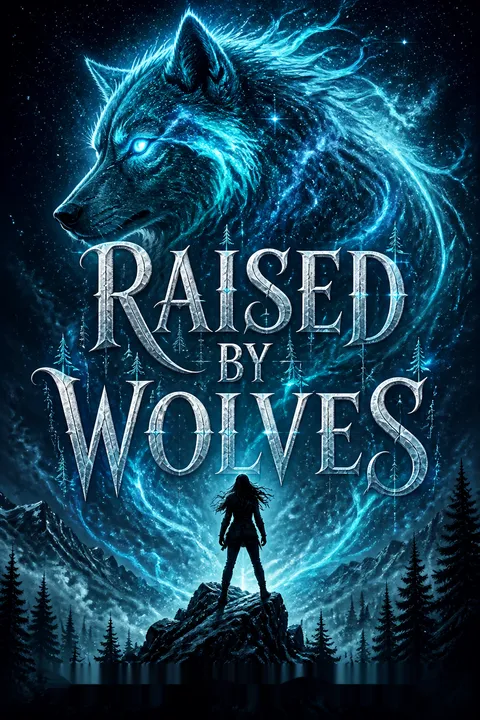


Plot Summary
Curfew Beneath the Trees
Bryn Clare,1 a human girl raised in a werewolf pack, pushes back when Callum,2 the pack’s powerful alpha and her legal guardian,2 confronts her over a stolen motorcycle, her grades, and breaking curfew. His concern turns into surveillance: Devon,5 Bryn’s closest friend,5 must escort her home, while the pack grows tense and refuses to explain why.
At home, Bryn1 finds Ali,3 the human woman who raised her,3 heavily pregnant with twins, and learns that Ali’s husband,8 Casey,8 is absent for reasons she will not disclose. Ali3 asks Bryn1 to stay out of pack business, but the secrecy sharpens her suspicion. Callum’s2 new restrictions feel less like ordinary protection than a warning that something dangerous is approaching.
Bryn’s defiance is not simple teenage rebellion. She lives inside a hierarchy that can physically and psychologically compel obedience, so small acts of independence become tests of whether she still belongs to herself. Callum’s care is genuine, yet it arrives through surveillance and withheld information, making protection difficult to distinguish from control. Ali’s pregnancy adds a private fear to the public tension: Bryn has already learned that childbirth can kill human women bonded to werewolves. Her jokes and evasions keep panic at bay, but her refusal to accept a curfew without an explanation sets the story’s central conflict in motion.
A Voice Below Callum’s
When Callum2 tells Bryn1 that Ali3 has suffered complications and is on bed rest, fear about losing another mother3 overwhelms her. During Ali’s3 labor, Bryn1 slips past her guard and reaches Callum’s2 house, where she tricks Marcus14 into rushing to help by implying Callum2 is hurt. Sora7 catches the deception, binds Bryn1 in the kitchen, and runs after Marcus14 before he can endanger Ali.3
A scream from the basement draws Bryn1 to a knife and freedom. Below, she finds Chase,4 a teenage boy locked in a steel cage. He says a wolf attacked and bit him, then Changes into a black wolf and lunges at the bars. Callum2 later confirms Ali3 has delivered healthy twins, but Bryn1 now knows a Rabid wolf9 has attacked a human.
Bryn’s escape is driven by two forms of helplessness at once: she cannot intervene in Ali’s dangerous labor, and she cannot bear being shut away from the threat the pack is hiding. Her deception of Marcus is clever but reckless, and Sora’s response makes its cost immediate: Marcus might bring violence into the birth room. The basement discovery gives Bryn the knowledge she wanted, but it is not reassuring knowledge. Chase embodies the impossible survival she recognizes in herself, while his cage makes visible the pack’s attempt to contain a danger it does not yet understand.
The Crescent Opens
Six weeks after the twins’ birth, Bryn1 remains grounded for entering Callum’s2 basement, but her need to see Chase4 persists. Rather than sneak in again, she formally asks the alpha2 for permission. Callum2 requires her to intensify her combat training, accept three dominant chaperones, reopen her mental bond with the pack, run with them under the full moon, and stay away from future Senate meetings.
At the pack’s gathering, Bryn1 accepts the terms and lowers the psychic defenses she built to preserve her independence. The pack’s shared feelings flood her, and she joins the wolves, Devon,5 and baby Kaitlin16 as they run through the forest. For once, the pack’s strength feels like belonging rather than a force pressing her into submission.
The bargain changes the meaning of Bryn’s connection to the pack. Until now, she has treated psychic distance as the price of remaining an individual; opening herself to the group shows that intimacy can feel both liberating and dangerous. Callum’s terms are not neutral safeguards. They make her more vulnerable to the very hierarchy she resists, while also preparing her to approach Chase without fear. The run gives this change a bodily form: Bryn cannot become a wolf, yet the pack accepts her as one of its own. That acceptance comforts her, but the ease with which she is absorbed unsettles the independence she has defended for years.
Training for the Cage
Callum2 begins putting Bryn1 through exhausting runs and sparring sessions with his wolves, including Lance13 and Sora.7 During one bout, Devon5 is ordered to attack at full speed; Bryn’s1 survival instinct takes over so completely that she nearly cuts a tendon before Callum2 stops her.
The incident frightens her because the bond seems to have intensified her reactions, even though Callum2 insists she remains human. Ali3 objects to the violence and tries to keep Bryn1 anchored in ordinary life, but finally agrees to the supervised visit.
At Callum’s2 house, Bryn1 finds Chase4 out of his cage and playing a video game. Under the guards’ restrictions, they trade cautious personal details. Chase4 describes the attack and silently shares the Rabid’s9 presence in his mind before Bryn1 is made to leave.
The training is meant to protect Bryn, but it also teaches her to inhabit a state of heightened aggression that she does not fully understand. Her near-injury of Devon exposes a frightening gap between intention and action: the body can move before the self has interpreted what it is doing. Ali’s resistance is therefore more than maternal caution. She sees that Bryn’s expanding bond may be changing her sense of what is normal. The first meeting with Chase offers recognition rather than comfort. Both have been shaped by violence, yet the guards’ rules permit only fragments of honesty, leaving their connection charged with what they cannot safely say.
The Star Returns
Weeks later, Bryn1 returns to Chase4 under the same strict conditions. When he recalls a white star on the attacker’s forehead, Bryn1 recognizes the mark from the wolf who killed her parents9 when she was four. The pack’s supposed distant threat is the same Rabid.9 Before the guards can end the meeting, Bryn1 and Chase4 share memories and panic through their minds; she breaks from the pack’s imposed control and reaches for him.
To steady Chase,4 Bryn1 redirects her powerful bond with Callum’s2 pack into a new connection between the two of them. The change leaves the pack still faintly present, but Chase4 and Bryn1 become each other’s strongest link. Her disobedience has consequences, and Callum’s2 community moves to demand justice.
The revelation collapses the distance between Bryn’s childhood trauma and Chase’s present danger. What she had treated as a closed wound is still active, and the pack’s concealment now appears not only protective but profoundly paternalistic. Bryn’s leap toward Chase is an act of solidarity, yet it also breaks a formal agreement and alters a communal bond without permission. Her ability to redirect that bond turns an emotional choice into a structural one: she creates a relationship the pack cannot simply command away. The scene makes attachment both refuge and rebellion, while raising the question of whether a connection chosen in crisis can preserve freedom.
Justice Takes Its Toll
The pack punishes Bryn1 for breaking her permissions by having Sora7 beat her in public, stopping only when Bryn1 loses consciousness. Chase4 is forced to watch and cannot reach her. Bryn1 wakes three days later battered but healing, to find Ali3 has packed their belongings and plans to take her and the twins to Montana. Ali3 also leaves Casey,8 who remained loyal to the pack during the crisis.
She refuses to let Bryn1 call the assault deserved, insisting that the pack has made danger seem ordinary. Bryn1 resents being removed without a choice, yet follows Ali.3 On the drive, the twins’ connection to the pack fades, and Bryn’s link to Chase grows faint with distance, turning departure into a second separation.
Pack justice exposes the violence beneath the community’s language of loyalty. Bryn has violated a rule, but the punishment is not an abstract penalty: her human body cannot recover as a werewolf’s would, and her family watches the institution they trusted inflict lasting harm. Ali’s decision to leave is an act of care that also repeats the loss of control Bryn has been fighting. Their conflict is therefore ethically complicated. Bryn believes she chose the risk; Ali believes a guardian must intervene when a child’s world normalizes abuse. The drive toward Montana makes the cost concrete, as physical distance weakens the bonds that once made Bryn feel protected.
The Wayfarer’s Other Pack
At the Wayfarer, a Montana inn run by Mitch,11 Bryn1 reunites with Lake,6 a fierce young werewolf who has long been her friend. Lake6 confirms that Ali3 had warned Mitch11 about Bryn’s1 situation but had not known the Rabid’s9 identity. The inn’s bartender, Keely,12 knows the werewolf world and explains that humans can rarely survive an attack and Change.
Bryn1 also hears that other alphas will pass through on their way to Callum’s2 Senate meeting. Lake6 disappears into the mountains rather than risk being surrounded by dominant males who might treat a young female wolf as a prize. Meanwhile, Bryn1 and Lake6 use online records and a map to trace attacks across several territories, noticing that some lie in disputed pockets of land known as No-Man’s-Land.
Montana gives Bryn room to breathe, but it does not give her a life outside pack power. The Wayfarer is a crossroads where human knowledge, peripheral wolves, and rival territories meet, making it an ideal place to gather information that Callum’s central community keeps contained. Lake’s flight reveals that gendered danger operates even among wolves: her strength does not prevent powerful males from treating her as a potential possession. Keely’s account reframes Chase’s survival as rare rather than impossible, while the map supplies a practical counterweight to trauma. Bryn is beginning to investigate as well as react, though every answer expands the scale of the threat.
Madison on the Map
Bryn1 and Lake6 identify Madison Covey,10 a six-year-old whose memorial page resembles the girl Bryn1 saw in the Rabid’s9 mind. The pattern suggests the attacker has crossed multiple territories, striking children and leaving either bodies or disappearances behind.
To learn what the alphas know, Bryn1 enters Chase’s mind while he attends their meeting. The wolves question him about the attack, then debate the Rabid’s9 offer. Bryn1 hears enough to understand that the alphas are interested in the new werewolves he can create, and that the Senate votes to bargain rather than hunt him.
Callum2 opposes the decision but accepts the vote. Bryn1 concludes that the leaders may sacrifice future human victims for the prospect of stronger packs, so she decides to find the Rabid9 herself.
Madison’s memorial turns an abstract pattern into a child with a name, preferences, and a family still grieving. The investigation forces Bryn to recognize that the Rabid’s violence is not an isolated misfortune but a system of disappearances hidden across political boundaries. The Senate meeting then reveals a more institutional form of danger: the alphas can condemn a monster in principle while valuing the power his victims might provide. Callum’s opposition matters, but his submission to the vote also confirms the limits of his protection. Bryn’s decision to act is fueled by moral urgency, yet it also repeats her most dangerous habit: taking responsibility for threats that adults have chosen to manage or ignore.
A Name in Chase’s Mind
Bryn1 tells Lake6 that the Senate has chosen a bargain, and Lake6 agrees to help her pursue the Rabid.9 They raid Mitch’s11 weapon storehouse for guns, silver ammunition, and hidden blades. Bryn1 then asks Chase4 to reopen the mental connection the attacker uses to reach him, despite the risk of renewed torment. As the Rabid9 forces Chase4 to Change repeatedly, Bryn1 follows the psychic link into his mind.
She learns his name is Wilson9 and sees a cabin near Macon’s Hardware in Alpine Creek, Wyoming. Chase4 fights back, severs the attacker’s hold, and sends their connection through Bryn. The location gives the group a target, but the assault has exhausted Chase4 and may alert Wilson.9 Bryn,1 Lake,6 and Chase4 leave for Wyoming with Devon5 joining them.
Bryn’s most consequential tool is not a weapon but her willingness to enter another person’s pain. She asks Chase to reopen the channel that has tormented him, and the request risks turning his trauma into intelligence for her mission. Their trust makes the choice possible, but it does not make it harmless. Wilson’s forced Changes demonstrate domination as bodily control, while Chase’s severing of the bond becomes an act of self-authorship. Naming the attacker also alters Bryn’s relation to him: he is no longer an omnipresent nightmare but a man with a location. That shift makes action possible, though the cost is exhaustion and a dangerous loss of surprise.
Madison Is Alive
In Alpine Creek, Bryn1 scouts Wilson’s9 cabin while Devon,5 Lake,6 and Chase4 wait nearby. A girl emerges, and Bryn1 recognizes her as Madison,10 alive and now a teenager. More children follow her out, all transformed into werewolves. Bryn1 realizes Wilson9 has not merely hunted victims; he has built a pack from children who should have died during their attacks.
The numbers make an attack impossible, and the group retreats rather than shoot at victims who have been conditioned to obey their captor. Back at the motel, Bryn1 and her friends estimate how many attacks Wilson9 may have committed and infer why the alphas were willing to bargain: the children represent a source of future pack power. The rescue mission now carries a larger moral burden.
Madison’s survival overturns Bryn’s assumption that the children on her map were simply dead or missing. The revelation is horrifying precisely because survival has not meant rescue: Wilson has preserved their lives by taking their identities and making them instruments of his authority. Bryn’s refusal to shoot them marks an important limit on vengeance. She can pursue Wilson without treating his victims as acceptable collateral. The group’s retreat is not cowardice but recognition that force alone would reproduce the logic they oppose. Yet the children’s existence also explains the Senate’s compromise, exposing how quickly political calculation can convert abducted lives into strategic assets.
Bait in Alpine Creek
Unable to reach Wilson9 through the children, Bryn1 proposes drawing him into town by presenting herself as the human girl who escaped his attack. Her friends object, but agree to provide cover while she waits in a diner. Wilson9 arrives, speaks as though he means to claim her, and leads her outside. Lake’s6 shot grazes him; Bryn’s1 wrist blades cut his side, but Wilson9 disarms her and uses her as a shield against the others’ fire.
He escapes with Bryn1 while Devon,5 Lake,6 and Chase4 are detained by the town’s armed sheriff and hostile residents. At Wilson’s9 cabin, he ties Bryn1 to a chair and dresses her in a child’s frilly clothes. Madison10 tells Bryn1 that Wilson9 has ordered her not to help, then leaves to prepare for Bryn’s1 forced Change.
Bryn chooses bait because her human appearance is the one advantage the werewolves cannot use. The plan depends on Wilson seeing her as vulnerable prey, which means it asks her to perform the very role she has spent her life resisting. Her wounds and capture show the limits of skill when an opponent is older and prepared. Wilson’s conversation makes clear that he interprets survival as entitlement: because he believes he created the children, he believes he owns them. The frilly dress turns his control into a grotesque ritual, reducing Bryn to the child he once failed to capture. Madison’s obedience shows how thoroughly that ritual has shaped its victims.
The Children Choose
Bound and facing Wilson’s9 attempt to Change her, Bryn1 feels her friends fighting outside and reaches for the bonds linking Wilson9 to his children. She breaks her restraints, then orders everyone to stop fighting long enough to hear her.
Instead of claiming the children for herself, Bryn1 shows them that they can choose whom to trust and whether to obey. Madison10 Changes back to human form and declares her wish to reclaim her life; the others follow, severing Wilson’s9 authority. They join Bryn’s1 group and turn on him together.
Wilson9 dies beneath the attack of the children he had controlled. Afterward, the newly freed werewolves look to Bryn1 to lead them, and she gives them permission to run. The pack forms around choice and mutual protection, not a maker’s command.
The climax turns on a distinction between connection and possession. Wilson has used the bonds created through his attacks to make obedience feel inevitable; Bryn uses her own bond-making ability to restore the possibility of refusal. She does not simply replace Wilson as a stronger controller. Her intervention offers the children alternatives, including the option not to bind themselves to her. Madison’s first act of agency is to reclaim the self Wilson tried to rename and costume. Their collective attack ends the immediate threat, but the deeper victory is that their new community begins with consent. Bryn’s leadership emerges from liberation rather than inherited rank.
An Alpha Without Fur
The North American alphas arrive at Wilson’s9 cabin and find the children gathered around Bryn,1 whom they recognize as their chosen leader. Shay15 challenges her claim, treating her humanity as proof she cannot be an alpha.
Bryn1 answers with the Senate’s own rule: no pack can take another alpha’s wolves without a formal transfer approved by both leaders. If the Senate is a democracy, the children remain hers; if it is not, Callum2 has no reason to honor its limits.
Callum2 backs her argument and unleashes enough power to silence the room. Rather than risk challenging him, the alphas leave. In the months that follow, Callum2 gives Bryn1 territory for the Cedar Ridge Pack, while Ali,3 Lake,6 Devon,5 and the rescued children build a home at the Wayfarer.
Bryn’s claim to leadership is tested in the political language the alphas themselves created. She does not defeat them physically; she recognizes that their democratic rules constrain their appetites only when applied consistently. The argument is a tactical use of institutional ambiguity, supported by Callum’s overwhelming power but not dependent on his making her claim for her. The new territory gives the children a recognized home, while the name of the pack converts an improvised group into a durable community. Still, protection remains entangled with power. The alphas withdraw because challenging Bryn would mean confronting Callum, so the settlement is secure for now, not free from future conflict.
Callum’s Unseen Web
Two months later, Bryn1 meets Callum2 at the Wayfarer. Their conversation begins with school and Ali,3 who misses Casey8 but does not plan to return to him. When Callum2 opens his mind to Bryn,1 she sees how his prescience works: he perceives branching possibilities, not a fixed future. He foresaw that Bryn1 would need to escape the pack, but could not save her parents or prevent every injury.
His conditions around Chase,4 the training, and even the punishment were part of a chain of choices meant to move Bryn1 toward the children she would free. He does not ask forgiveness, and Bryn1 does not pretend she would choose differently. They acknowledge their lasting bond, then part as separate alphas, each responsible for a pack of their own.
Callum’s revelation complicates the story’s moral accounting without erasing its injuries. His foresight explains why he withheld information and engineered events, but explanation is not absolution; Bryn was still denied the right to understand the risks she was accepting. The difference between seeing possibilities and controlling outcomes preserves uncertainty in his power, while showing how easily prediction can become paternalism. Bryn’s response marks her growth: she can love Callum, recognize what he sacrificed, and still refuse to become his dependent again. Their farewell is not a clean reconciliation. It is a renegotiation between two people who remain connected but now hold authority in separate communities.
Analysis
The novel makes belonging an embodied force rather than an abstract comfort. Bryn’s1 Mark gives her access to protection, affection, and shared awareness, but it also places her inside a hierarchy that can compel obedience and punish dissent. Her central problem is therefore not whether she belongs, but whether belonging must require surrendering authorship of the self. Her resistance is complicated by genuine love: Callum2 is not a simple tyrant, Ali’s3 protection can override Bryn’s1 wishes, and even Chase’s4 devotion risks becoming possessive. Care repeatedly arrives with the possibility of control.
The story’s treatment of trauma likewise refuses an easy division between weakness and strength. Bryn1 and Chase4 survive because they respond to danger differently from ordinary victims, but survival does not erase injury. Their resilience makes them targets for Wilson,9 who converts the rare capacity to endure into a rationale for ownership. His violence is effective not only because he is physically dangerous, but because he has taught his victims to experience obedience as safety. Bryn’s1 decisive act is not to replace his domination with her own. She gives the children a choice, and Madison’s10 recovery begins when she can name what was taken from her.
The pack’s political conflicts echo this intimate struggle. The alphas weigh children’s lives against the promise of greater power, revealing how institutions can make exploitation appear rational. Bryn1 counters them with a different model of authority: protection that answers to those being protected, and a bond that can be chosen rather than imposed. Her new pack is not free of instinct or danger, but its founding principle is consent. Callum’s2 foresight complicates the ending by showing that manipulation may come from love as well as ambition. Bryn1 can understand his reasons without giving up judgment. Her adulthood begins when she can remain connected to him while refusing to belong to him.
Review Summary
Raised by Wolves received mixed reviews, with some praising its unique take on werewolf mythology and strong character development, particularly for the protagonist Bryn. Many readers found the plot engaging and suspenseful, especially in the second half. However, others criticized the writing style, pacing, and character decisions. Some felt the romance was underdeveloped, while others appreciated the focus on friendships. Despite divided opinions, many readers found the book entertaining and looked forward to continuing the series.
People Also Read

Characters
Bryn Clare
Human raised by wolvesBryn is a human teenager adopted into Callum’s2 werewolf pack and raised by Ali3. Quick-witted, artistic, and stubborn, she resists the hierarchy that surrounds her while relying on the skills Callum2 has taught her to survive it. Her earliest loss left her with fractured memories and a deep sensitivity to danger, which she often masks with jokes and bravado. Bryn wants agency more than comfort, but her loyalty can make her take risks on behalf of people she loves. Her unusual relationship to pack bonds complicates the boundary between independence and belonging. She is not interested in becoming a conventional leader; she wants the people around her to remain themselves.
Callum
The pack’s far-seeing alphaCallum leads the Stone River Pack and serves as Bryn’s1 guardian, protector, and closest elder. His long experience and formidable dominance make his quietest decisions carry weight. He genuinely cares for Bryn1, but expresses that care through rules, training, and carefully managed information, creating a persistent tension between protection and control. Callum also believes in institutions and agreements, even when the wolves around him would rather settle questions through force. His ability to perceive possible futures informs his strategic mind, though it cannot guarantee that he will choose the least painful path. Beneath the alpha’s composure is a guardian who struggles to let Bryn1 take risks he cannot prevent.
Ali
Bryn’s human motherAli is the human woman who raised Bryn1 after entering the werewolf world as an adult. She is practical, warm, and capable of standing up to dominant wolves without sharing their instincts or power. Her attachment to Bryn1 is fiercely maternal, shaped by the sacrifices she made to keep the girl safe and by her knowledge of how dangerous pack life can be for human women. Ali is especially perceptive about Bryn’s1 habit of treating risk as proof of strength. Her love does not make her endlessly accommodating: she sets limits, challenges Callum2, and expects Bryn1 to face the emotional consequences of her choices. She also brings ordinary domestic care into a community governed by extraordinary rules.
Chase
The haunted survivorChase is a guarded teenager whose difficult human life has already taught him to value privacy and self-reliance. His careful humor and restrained manner conceal the effort required to manage a frightening new reality. He and Bryn1 recognize in each other a capacity to endure what should be unsurvivable, and their connection develops through shared memories, danger, and a growing ability to communicate beyond speech. Chase is protective, but that instinct can become possessive when he fears losing someone. He is not simply a source of answers for Bryn1: he has his own history, anger, and need to determine who he is apart from what was done to him.
Devon
Bryn’s irreverent protectorDevon is Bryn’s1 closest friend and a young werewolf with strong instincts and an unusually theatrical personality. His love of musicals, fashion, and performance sets him apart from packmates who expect a male wolf to embody conventional toughness. Humor is both his social style and a way to soften Bryn’s1 fear without dismissing it. He is deeply protective of her, sometimes to the point of trying to keep her away from danger, but he also respects her stubbornness and recognizes that her fight is partly his. Devon’s loyalty is not passive obedience: he can follow orders while remaining unmistakably himself, and he seeks a place where strength does not require him to surrender his individuality.
Lake
The armed peripheral wolfLake is a bold, physically formidable werewolf who grew up on the edge of Callum’s2 territory with her father, Mitch11. She is Bryn’s1 longtime friend, quick to dare, tease, or act, and far less deferential to pack authority than those raised at the stronghold. Her skill with weapons reflects both practicality and a refusal to rely on physical strength alone. Lake’s confidence does not mean she is untouched by vulnerability; she understands how male dominance can threaten female wolves, and she sometimes chooses distance over confrontation. Her friendship with Bryn1 is frank and companionable, built on shared mischief and the ability to trust each other without requiring either to become less fierce.
Sora
Callum’s trusted enforcerSora is a rare female werewolf and one of Callum’s2 most capable, trusted soldiers. She combines sharp judgment with disciplined control, and her authority comes from competence rather than softness. As Devon’s mother7, she knows Bryn1 well enough to anticipate her tricks, but she also sees her as a child whose risks can endanger others. Sora is loyal to Callum2 and to the pack’s rules, even when those rules place her in painful roles. Her character exposes the contradictions of female power in a male-dominated hierarchy: she can command respect within the system while remaining bound to enforce its harshest demands.
Casey
Ali’s wary werewolf husbandCasey is Ali’s3 werewolf husband and the father of her twins. Cautious and suspicious by temperament, he tends to prepare for threats others would rather ignore, including keeping watch over his children. His concern for Bryn1 is real, but his loyalty to the pack can conflict with his family commitments. Casey often tries to manage risk by restricting information and controlling the situation, a habit that puts him at odds with Bryn’s1 insistence on knowing what she is facing. His role links domestic life to pack politics: marriage gives him closeness to Ali3, but it does not erase the obligations and instincts that shape his decisions.
Wilson
The children’s captorWilson is a Rabid werewolf who uses violence and supernatural dominance to control others. He presents himself as a protector and maker, but his care is conditional on obedience and possession. His interest in people who can survive transformation turns vulnerable children into both a private army and a means of gaining political leverage. Wilson interprets resilience as evidence that he is entitled to command those who survive him. That belief makes him dangerous beyond his physical strength: he can make coercion feel like family, and dependence feel like gratitude. His calm, ordinary human appearance contrasts with the cruelty that governs his actions.
Madison Covey
The lost girlMadison was a young child whose disappearance left her family with a memorial and unanswered grief. She is observant and capable of enduring more than anyone should have asked of her, though years under another person’s9 authority have narrowed her sense of choice. Small traces of her former personality survive in the way she remembers ordinary childhood pleasures. Madison’s story makes the cost of Wilson’s9 violence specific: a child’s life can continue outwardly while the person she was is suppressed. Her presence also gives Bryn1 a mirror for considering the life she might have lived if she had not escaped.
Mitch
Lake’s watchful fatherMitch runs the Wayfarer and raises Lake6 on the edges of Callum’s2 territory. He is practical, unhurried, and more attentive than his relaxed manner suggests. His inn welcomes travelers and peripheral wolves, making it a place where information crosses pack boundaries. Mitch understands that his daughter faces risks others may overlook, and he prepares for those risks without turning their relationship into constant argument. He is also careful about what powerful alphas learn, especially when knowledge could expose someone under his protection.
Keely
The truth-drawing bartenderKeely is the human bartender at the Wayfarer, alert to the unusual people who pass through the inn. Her calm questions and attentive presence make others reveal more than they intended. She knows enough about werewolves to understand the danger around her, yet she is not defined by fear. Keely’s role is small but important: she provides a human perspective within a community where supernatural power often overwhelms ordinary judgment, and she helps Bryn1 and Lake6 begin their investigation without pretending to know more than she does.
Lance
The silent pack guardianLance is Devon’s father13, a physically imposing werewolf whose quietness makes his rare words feel deliberate. He serves as a guard and trainer, relying on strength and steadiness rather than display. Lance’s presence often communicates protection before he says anything, but his loyalty to the pack can also place him in difficult positions when its rules are enforced against someone he cares about. He is one of the adults whose actions teach Bryn1 how much authority can be conveyed without shouting.
Marcus
The resentful pack loyalistMarcus is a compact, aggressive werewolf who resents Bryn’s1 special place in Callum’s2 life and in the pack. His loyalty to Callum2 is genuine, but his hostility toward Bryn1 turns that loyalty into a source of personal grievance. He often sees hierarchy as a clear measure of who deserves authority, making Bryn’s1 position as a human under Callum’s2 protection especially offensive to him. Marcus represents the pack’s capacity for obedience and resentment to coexist.
Shay
The rival young alphaShay is the young alpha of the Snake Bend Pack and Sora’s7 estranged son. He is ambitious, quick to challenge, and conscious of how age and status shape every encounter. His confidence can shade into provocation, especially when he is dealing with Callum2 or anyone who unsettles the existing balance of power. Shay’s presence shows that the Senate’s political order rests on fragile agreements between wolves who remain instinctively inclined to test one another.
Kaitlin
Ali’s shifting daughterKaitlin, often called Katie, is one of Ali’s3 newborn twins and a rare girl in the pack. She Changes into wolf form early and eagerly, showing a spirited independence even before she can speak. Bryn1 treats her as a little sister and hopes she will grow up with more freedom than the pack usually grants its females. Kaitlin’s presence brings tenderness and humor into Bryn’s1 life while making the stakes of protecting young werewolves unmistakable.
Alexander
Kaitlin’s twin brotherAlexander, usually called Alex, is Kaitlin’s16 twin and Ali’s3 son. Like other werewolf infants, he develops quickly, but his temperament differs from his sister’s: he is more inclined to move and run than to wrestle. Bryn’s1 care for him helps establish the household bonds that make Ali’s3 later choices so consequential. He is also a reminder that the pack’s future depends on children who deserve protection without being treated as property.
Lily
The youngest rescued childLily is a very young child among the werewolves living with Bryn’s1 new community. She carries fragments of frightening experiences but is drawn to the safety she senses in Bryn1 and Chase4. Her small gestures show how recovery begins through ordinary trust, touch, and predictable care rather than a single declaration that everything is fixed.
Plot Devices
The Mark and pack bond
Connects and constrainsCallum’s2 Mark binds Bryn1 to his pack without making her a werewolf. Through the bond, she can sense pack emotions and, when she lowers her defenses, share in the group’s awareness. Its pull makes her feel protected, but it also gives the pack a route into her emotional life and reinforces the hierarchy she resists. Bryn’s1 ability to close herself off is an early sign that the bond does not determine every choice. Later, she and Chase4 discover that bonds can be redirected, turning a mechanism of belonging and influence into a way to create a different kind of community.
Permissions and Pack Justice
Makes promises enforceablePack permissions formalize a request made by someone under an alpha’s authority. Callum2 grants Bryn1 access to Chase4 only under conditions: training, chaperones, an open bond, and obedience to pack hierarchy. Because Bryn1 accepts those conditions, breaking them has political consequences beyond a guardian’s reprimand. The system gives the pack a way to manage risk, but it also turns care into a binding contract in which a human body may be punished according to werewolf standards. The device raises the question of whether consent is meaningful when refusal carries the threat of communal force.
Resilience
Survival against the oddsBryn1, Chase4, and Wilson’s9 other victims share an unusual capacity to survive attacks that ordinarily kill humans. Wilson9 identifies people with this trait and uses their survival to create new werewolves. The ability is not simply physical toughness: it also makes its bearers unusually resistant to domination, allowing them to resist bonds and choose whom to trust. The concept first appears as Bryn’s1 unexplained knack for escaping danger, then becomes central to why the children survived and how they can break Wilson’s9 control. It makes survival both a gift and a reason they are targeted.
Shared mental connection
Carries memory and warningBryn1 and Chase4 can enter one another’s thoughts, share memories, and sometimes experience the other’s senses. This connection lets Bryn1 understand what happened during Chase’s4 attack, recognize their shared enemy, and locate Wilson9 when ordinary investigation cannot. It also makes distance less final: each can reach the other through thought and dreams. Yet the connection brings risks. Pain, fear, and loss of control can pass between them, and using it to gather information can expose Chase4 to the Rabid’s9 influence. Their bond is powerful precisely because it cannot be separated from mutual vulnerability.
Callum’s prescience
Steers possible futuresCallum2 perceives branching possibilities and can anticipate how particular actions may shape the future. His ability explains his strategic patience and his habit of withholding information, but it does not make him all-knowing or allow him to prevent every tragedy. Proximity matters, and the future remains changeable. The power complicates his relationship with Bryn1 because he sometimes guides events without giving her the information needed to consent to the risks. It supports the book’s question of whether a person who can foresee danger has the right to manipulate another person’s choices in order to prevent it.
Raised by Wolves Series
About the Author
Other books by Jennifer Lynn Barnes



Download PDF
Download EPUB
.epub digital book format is ideal for reading ebooks on phones, tablets, and e-readers.








