

Key Takeaways
Build grit by pairing a child's real interests with practice through difficulty
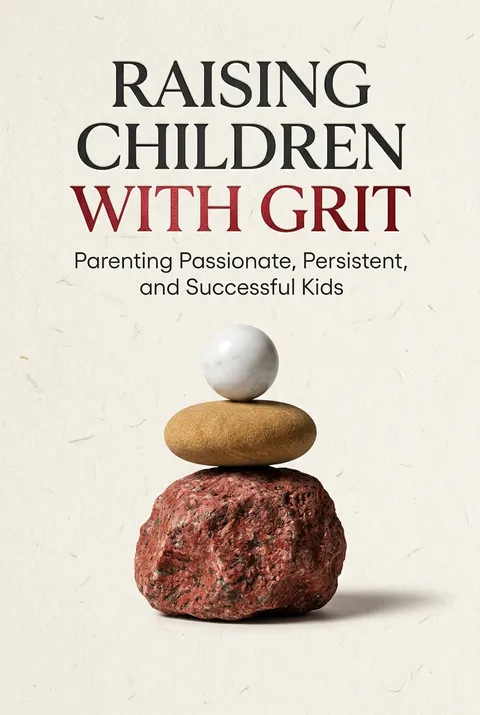
Grit combines two forces. The book defines grit as passion joined to perseverance: caring deeply about an activity and continuing when it becomes difficult. A study by Angela Duckworth and colleagues found that grit explained more individual differences in some success outcomes than IQ. The author argues that, unlike IQ, interests and persistence can be developed through experience. That does not mean every child must excel at everything. It means children can learn to keep working where effort feels worthwhile.
Connect dreams to actions. A child who hopes to play professional basketball can turn that distant ambition into smaller goals, identify mentors or camps, anticipate obstacles, and name what makes the work valuable. Progress is not guaranteed, but a concrete path makes a dream easier to test and revise than a vague command to try harder.
The useful move is to treat persistence as something shaped by both motivation and context, rather than a fixed virtue a child either has or lacks. Goals become more durable when a child can see how daily work serves an aim that matters personally. Still, grit should not be treated as a universal substitute for ability, resources, or opportunity. The book's findings describe associations with success, not a promise that persistence alone overcomes every barrier.
Treat failure as information, not a verdict on your child's worth
Failure lands personally. Children may experience a setback as embarrassment, reduced self-worth, uncertainty about the future, or fear of disappointing people they love. A parent who dismisses a rejected invitation or a disappointing grade as trivial can miss the distress underneath. Listening to the child's account validates the feeling without endorsing every conclusion the child draws from it.
Separate outcome from learning. The book uses the term productive failure for an unsuccessful result that still builds knowledge or problem-solving skill. A child whose handmade project is imperfect may nevertheless learn how to plan, use tools, and correct mistakes. Parents can help by asking what the child tried, what they learned, and what they might change, then shift attention toward the next manageable step rather than replaying the mistake or using fear to motivate.
This approach resembles learning-oriented feedback: attention shifts from judging the person to examining a strategy that can be changed. It also respects the fact that social rejection can feel intensely painful, even when adults see the event as small. The aim is not to make every failure sound secretly wonderful. Some losses are simply disappointing. Children need room to grieve an outcome before they can use it as useful information.
Set warm limits, then let children pay manageable costs of their choices
Be firm and responsive. The book favors authoritative parenting, a style that combines clear expectations with attention to a child's needs and growing independence. It contrasts this with strict control without responsiveness, permissiveness without meaningful limits, and neglectful indifference. The point is not to fit perfectly into one category. It is to provide both structure and a relationship in which a child can ask for help.
Let consequences teach. When a boy forgets his sweatshirt and misses outdoor recess, a parent may feel tempted to bring it to school. If that is not practical, the child experiences a limited consequence and may remember the sweatshirt next time. The book calls this a more affordable opportunity to learn than an adult consequence such as unpaid bills. Safety concerns are different: parents should intervene when natural consequences could seriously harm the child or someone else.
The balance matters because autonomy develops through real choices, while predictable boundaries provide security. A small, reversible mistake can teach more than a lecture because the child experiences a direct connection between action and result. Yet consequences are not automatically educational: a child may need support to understand what happened and plan a better response. The distinction between manageable discomfort and genuine danger keeps independence from becoming neglect disguised as a lesson.
Parent the child in front of you, not the idealized child
Children differ within families. The book describes the Big Five personality traits: openness, conscientiousness, extraversion, agreeableness, and neuroticism. A twin study cited by the author found substantial genetic influence on these traits, including more than 60 percent of variation in openness, while experiences unique to each child also matter. Siblings raised together can therefore respond very differently to the same household.
Match support to development. Erikson's stages of psychosocial development describe changing tasks across life. Toddlers need chances to exercise autonomy, young children need room to initiate play, and adolescents need increasing responsibility as they form an identity. A child who avoids challenge may be anxious, perfectionistic, unsure of their goals, or facing a social barrier. Instead of calling the child lazy or pushing a preset ambition, ask what makes the next step difficult and what support would help.
A developmental lens replaces moral labels with better questions. A child who resists a demanding class may be protecting friendships, avoiding shame, or simply choosing a different priority. That interpretation does not require parents to accept every refusal, but it makes guidance more precise. Temperament can shape how a child approaches challenge, while relationships and opportunity shape what becomes possible. The framework is most useful as a guide to observation, not as a fixed forecast of a child's future.
Make self-control trainable through routines, movement, sleep, and small pauses
Practice regulation daily. Executive functioning is the set of mental skills used to manage attention, memory, flexible thinking, and self-control. In a study of eighth graders, self-discipline was more strongly related than IQ to several academic outcomes, including grades and attendance. The book presents this as encouraging because routines and practice can support these skills, even though a study linking two factors does not prove that one directly causes the other.
Use concrete supports. Regular morning and evening routines reduce the need for repeated reminders. The author also describes a simple attention check: ask where the child is, what they are doing, and what they should be doing. Exercise has been associated with improvements in working memory and flexible thinking; brief mindfulness practice can help children notice distraction. Sleep matters too, since fatigue makes school and social demands harder to manage.
Self-control is easier to teach when it is treated as a skill that can be scaffolded, not a character trait to scold into existence. Routines lower the number of decisions a child must make, while movement and pauses can help restore attention. These supports are not interchangeable, and no single exercise fits every child. The book's practical strength is its low-cost menu of options. Its results should be read as promising evidence, not a guarantee that any one technique will work for everyone.
Expose children to possibilities, then let their own passions take root
Passion is built through engagement. The book defines passion as sustained investment in an activity that a person values. It distinguishes harmonious passion, which fits a person's interests and remains under their control, from obsessive passion, which is driven partly by pressure, approval, or self-worth and can crowd out other parts of life. The distinction matters: commitment is not automatically healthy just because it looks intense.
Offer structure without taking ownership. Classes, clubs, and teams let children explore an interest with guidance, but participation should be voluntary. A daughter may enjoy lacrosse for a season, have a memorable moment on the field, and still decide not to return. Parents can notice what she liked, offer other experiences, and ask open questions rather than treating a temporary interest as a lifelong calling. Passion is more often cultivated through exposure than discovered by waiting for a perfect revelation.
The distinction between chosen commitment and pressured persistence guards against a common mistake: confusing intensity with well-being. A child should have chances to work through ordinary frustration, but the activity should remain connected to curiosity or personal value. Broad exploration can reveal unexpected interests, especially when parents avoid steering every hobby toward achievement. The harder judgment is knowing when quitting reflects a thoughtful change of direction and when it is avoidance. Conversation about motives and costs helps make that distinction.
Coach children through school trouble instead of clearing every obstacle
Let school provide real practice. The book sees classrooms as places where children can encounter challenging questions, discover how to solve problems, and learn through revision. A complaint that a teacher is making students figure things out may sometimes mean the teacher expects them to apply skills independently. Parents can ask what the child has tried before assuming that the teacher has failed to teach.
Support without taking over. If a child forgets homework, resist delivering it as a routine rescue. If a student dislikes a grade, help them prepare to speak respectfully with the teacher instead of making the call for them. A parent can help divide a large assignment into steps, discuss course choices, and ask how the child prepared. The book also recommends asking what was learned, rather than leading every school conversation with a grade. This directs attention toward effort and understanding, not just the final score.
School is a useful arena for guided independence because mistakes are usually limited in scale and adults are available to help. Coaching a student to approach a teacher builds communication alongside academic responsibility. However, stepping back should not mean ignoring unfair treatment, disability-related needs, or a persistent mismatch between a student and the classroom. The parent's task is not simply to avoid involvement. It is to distinguish between a challenge the child can navigate and a problem requiring adult advocacy.
Build social grit with empathy, low-pressure friendship, and practiced boundaries
Friendship is a skill, not a popularity contest. The book connects strong friendships with sharing appropriately, noticing other people's feelings, offering genuine compliments, and handling disagreements fairly. Empathy means trying to understand another person's experience, rather than merely feeling sorry for them. Parents can model it by naming emotions and listening when a child's social disappointment seems small to an adult.
Create openings, not scripts. Structured activities can help children explore interests, but informal play gives them room to negotiate, include others, and develop friendships. When one boy felt isolated at school, his parents invited two classmates he enjoyed spending time with to visit. A parent can also practice how to introduce oneself, respond to teasing, and say no to peer pressure. The book cites research linking rule-breaking among some younger adolescents with later substance-use risk, while emphasizing that peers can strongly influence choices.
Social resilience is not simply the ability to tolerate rejection. Children also need opportunities to find compatible peers, learn how to repair conflict, and recognize when a relationship is harmful. Low-pressure time together can support connection without turning every interaction into a lesson or a scheduled activity. Peer influence is real, but broad warnings about bad friends can backfire if they replace listening. Specific conversations about behavior, safety, and values make parental concern more credible.
Let children watch you struggle, adjust, and repair your own mistakes
Adults teach by example. The book describes overimitation, the tendency of young children to copy an adult's actions even when some steps are unnecessary. In one study, children copied irrelevant actions while learning how to open a box. The broader lesson is that children absorb not only what parents intend to teach, but also how they handle frustration, failure, and other people.
Make effort visible. Parents can talk about a difficult task, explain how they are deciding what matters, and admit when they have made a mistake. If a parent's behavior hurts a child, a genuine apology shows how repair works. Stories from a parent's own childhood can also reassure children that exclusion, disappointment, and uncertainty are not proof that something is wrong with them. Modeling grit does not mean pretending to be fearless; it means showing how to continue, reconsider, or ask for help.
Children learn from the emotional process around a task as much as from the task itself. A parent who calmly acknowledges an error offers a practical alternative to perfectionism and blame. This makes vulnerability compatible with authority: the adult remains responsible while showing that responsibility includes repair. Modeling also has limits. Children need more than an inspiring example when they face structural barriers or distress beyond a parent's expertise. Honest modeling can include knowing when to seek outside help.
Analysis
The book's strongest contribution is its practical definition of grit as a relationship between personally meaningful interest and continued effort, rather than sheer toughness. That framing prevents perseverance from becoming a command to endure everything. Its parenting advice repeatedly returns to a coherent pattern: provide warmth and clear limits, allow age-appropriate risk, and discuss the process of trying instead of making a child's worth depend on outcomes. The personal stories make this pattern concrete, especially when the parent admits to wanting to rescue a child but recognizes that doing so can remove a useful chance to learn.
The evidence requires more caution than the accessible presentation sometimes gives it. Associations between grit, self-discipline, and achievement do not establish that grit independently causes success, and the claim that grit outpredicts IQ should not be universalized across children, goals, or settings. Researchers also debate how much grit contributes beyond traits such as conscientiousness. A child's persistence is affected by factors a parent cannot simply coach away, including resources, health, discrimination, and the quality of instruction. The book's discussion of trauma appropriately signals that recovery may need to come before new performance demands.
The most useful interpretation is therefore not to maximize grit, but to cultivate flexible commitment. Children need experiences of effort and frustration, as well as permission to revise a goal when it no longer fits or carries unreasonable costs. Parents can help by asking whether an activity remains meaningful, what the child is learning, and what support or boundary is needed. In that sense, the book's model is strongest when grit is joined to autonomy, empathy, and sound judgment. Persistence is valuable when it serves a life the child is learning to choose, not when it becomes another standard imposed by adults.
Review Summary
Raising Children With Grit receives positive reviews, with readers praising its insightful approach to parenting. The book emphasizes developing grit - a combination of passion and perseverance - as crucial for children's success. Reviewers appreciate the author's definition of grit and its impact on success compared to IQ. The book discusses parenting styles, free-range parenting, and consultant parenting. Readers find it well-written, informative, and relevant for modern parents, offering practical advice and replacing outdated parenting guides with contemporary language and ideas.
Glossary
Grit
Passion plus perseveranceA combination of sustained interest and continued effort toward valued goals. In the book, grit is not simply working hard at any task. Passion gives effort direction, while perseverance helps a child keep going through setbacks. The author presents grit as developable through experiences that let children explore interests, practice skills, and learn from difficulty.
Productive failure
Failure that teachesAn unsuccessful outcome that still produces meaningful learning in subject matter or problem-solving. A child may not create a polished project, for example, but can learn to plan, test ideas, and correct mistakes. The concept contrasts with failure that yields little learning, and it encourages parents to discuss the process as well as the result.
Authoritative parenting
Warmth with clear limitsA parenting style that combines expectations and consistent boundaries with responsiveness to a child's needs and growing independence. The book contrasts it with authoritarian parenting, which emphasizes obedience with little responsiveness, and permissive parenting, which offers warmth with few demands. It associates the authoritative approach with children's confidence, social adjustment, and ability to take responsibility.
Big Five
Five broad personality traitsA personality framework comprising openness to experience, conscientiousness, extraversion, agreeableness, and neuroticism. The book uses it to explain why children, including siblings raised in the same home, can differ in their temperaments and responses. It treats personality as influenced by both genetics and environmental experiences, rather than as something parents can wholly determine.
Erikson's stages of psychosocial development
Developmental tasks across lifeA theory describing eight life stages, each organized around a psychosocial challenge. Examples discussed in the book include trust versus mistrust in infancy, autonomy versus shame in toddlerhood, and identity versus role confusion in adolescence. The framework helps parents think about how needs change with age, while recognizing that children do not develop on an identical schedule.
Harmonious passion
Chosen, balanced commitmentA form of passion that fits a person's interests and sense of self while remaining under their control. Someone with harmonious passion can engage deeply in an activity without allowing it to dominate every part of life. The book contrasts it with obsessive passion, where external pressure, approval, or self-worth can make stopping difficult even when the activity is harmful.
Obsessive passion
Pressured, consuming commitmentA form of passion shaped by external pressures such as the need for approval or self-esteem. The activity becomes tied to identity, but the person may feel unable to control their involvement, even when it harms other areas of life. The book contrasts this with harmonious passion, which is personally meaningful and remains more flexible.
Executive functioning
Skills for managing thoughtA group of mental capacities used to manage attention and behavior, including working memory, flexible thinking, and self-control. The book connects these skills to everyday tasks such as following routines, shifting attention, and finishing schoolwork. It presents exercise, mindfulness, and predictable routines as possible supports for children's developing executive functioning.
Overimitation
Copying unnecessary actionsA tendency observed in young children to reproduce an adult's actions even when some actions are not needed to achieve the goal. In a study described in the book, children copied irrelevant steps while watching an adult open a box. The concept helps explain why a parent's everyday behavior, not only deliberate instruction, can influence a child.
Download PDF
Download EPUB
.epub digital book format is ideal for reading ebooks on phones, tablets, and e-readers.








