



Plot Summary
The Lab Below Lilydale
Avery White1 is imprisoned at Lilydale after a fire she set while trying to escape her abusive father, and she has built an uneasy refuge with Grey,3 Theo,4 and Damon.2 During a session, psychiatrist Dr. Elsher9 questions whether her father’s death was truly accidental. Before Avery1 can make sense of his accusation, staff arrive and she loses consciousness.
She wakes strapped to a bed in the Emerson Lab, a hidden research facility beneath Lilydale. Dr. West10 and Dr. Cromwell11 treat her as a test subject, not a patient. They restrain her in an ice-filled tank while calling the procedure therapy. Avery1 cannot fight back, but she understands that Lilydale’s promise of rehabilitation conceals something far more dangerous.
The story begins by turning a familiar therapeutic setting into the first instrument of harm. Elsher’s questions make Avery’s trauma a matter for institutional judgment, then the staff remove her ability to answer at all. The ice tank sharpens the distinction between care and control: the doctors use the language of treatment while denying her choice, bodily autonomy, and even basic warmth. Avery’s history makes this betrayal especially potent, since the institution repeats the pattern of adults claiming authority over her without protecting her. Her belief that the lab belongs to Lilydale shifts the threat from a hidden criminal operation to a system embedded inside her supposed refuge.
White Rooms, False Love
The researchers move Avery1 from cold immersion to drug trials and electrical testing, binding her to a chair while monitoring her brain and blood. When the drugs leave her disoriented, she breaks a window and tries to escape with a shard of glass.
She learns that Vivian Capello,12 whom Lilydale had declared dead, is also being held underground. The doctors use recorded footage of Grey with his former girlfriend Leah to make Avery1 believe he has replaced her while she is captive.
They present the footage as live, then watch her distress as part of their experiment. Avery1’s terror nearly silences her, but Vivian12’s presence confirms the doctors are lying about who survives. Avery1 fights back, though guards overpower her and return her to confinement.
The lab’s most effective weapon is not the machinery but its deliberate misuse of intimacy. By turning Grey’s past into apparent present-tense betrayal, the researchers exploit Avery’s fear that affection is temporary and that she is easy to abandon. Their method makes emotional pain legible to instruments while ignoring the person experiencing it. Yet Avery’s attempt to escape and her recognition of Vivian’s mistreatment complicate the doctors’ model of her as a passive subject. She is frightened, drugged, and physically outmatched, but she still interprets what she sees and acts on it. Resistance here is not victory; it is the effort to preserve judgment when someone else is manufacturing reality.
Cirque Goes Below
When Avery1 disappears, Grey3 wants to charge straight into the underground rooms, but Damon2 restrains him long enough to assemble a plan. The society Cirque des Morts uses blueprints, staff reports, and hacked camera access to identify two possible lab locations.
Damon2 sends Grey3 and Theo4 toward the south block while he and Leighton16 search north, and Jillian13 and Byrone14 work to disable surveillance. In the north rooms, Damon2 finds Vivian12 alive and learns that Avery1 has been moved farther along the corridor.
He sends Vivian12 upstairs with Leighton,16 then reaches Avery,1 who is too weak to stand. An alarm sounds as they escape. Damon2 kills guards blocking their route, and Avery1 takes a gun and shoots another rather than be dragged back. Together, they reach the upper levels.
Damon’s restraint of Grey is a consequential form of care: emotional urgency alone would have walked the group into a prepared trap. The rescue succeeds because their different capacities combine, including Jillian and Byrone’s technical work, Leighton’s navigation, and Avery’s own refusal to remain merely the person being carried. Her shot marks an important shift in agency, but it does not erase the violence she has endured; she acts because every other choice has been taken from her. The rescue also exposes the society’s true function. Its secrecy and brutality are not only instruments of dominance; they have been organized to oppose the larger institution that treats patients as disposable.
The Lie at Breakfast
Back upstairs, Avery1 reunites with Grey3 and Theo,4 but the shock of captivity leaves her unsure whether she can trust what she saw. Damon2 explains that the woman in the footage was Leah,20 Grey3’s former girlfriend, who died months earlier; the supposed live stream was a lie designed to make Avery1 give up.
Grey3 and Theo4 stay beside her while she sleeps, and she reconnects with them without yet describing everything the doctors did. At breakfast, Whittingham6 announces that Vivian12 has recovered from a critical condition and that another unwell student has returned, presenting both disappearances as routine medical events.
Avery1 recognizes the cover story and sees how easily Lilydale can make its victims appear unstable instead of its staff culpable. Her fear of being dismissed now sits beside her relief at being home.
The public announcement extends the laboratory’s manipulation beyond its locked doors. Lilydale does not need to deny that patients vanish; it can rename disappearance as illness and return as recovery, making institutional violence difficult to prove. For Avery, the reunion with Grey and Theo restores some trust, but it cannot immediately undo the emotional injury engineered through the footage. The group’s closeness offers real comfort, while the breakfast announcement shows that private care cannot by itself defeat public misinformation. The contrast also clarifies why Avery’s recovery cannot be measured by whether she resumes her schedule. She is physically back among familiar people, yet the institution still controls the official account of what happened.
Damon’s Inherited Prison
Damon2 tells Avery1 that his family owns Lilydale and that his father, Alexander,5 helped turn it into a private prison where research could continue under cover of rehabilitation.
Damon2 created Cirque des Morts to disrupt the facility and protect its patients, but the group could not prevent earlier experiments, including the one that killed Leah.20 He also reveals that Alexander5 had him committed after Damon2’s mother, Lily, died, leaving him trapped inside an institution tied to his inheritance.
Avery1 stops treating Damon2 as the untouchable leader who simply chooses cruelty; she sees a man shaped by the same parental violence that shaped her. She then confronts Elsher,9 rejects his attempt to blame victims for their histories, and demands to return to Dr. Smith7’s care.
Damon’s disclosure changes the moral map without making him innocent. His power comes partly from the same family wealth that finances Lilydale, so resistance and complicity are entangled rather than neatly separated. Avery’s response matters because she does not excuse his brutality or reduce him to it; she recognizes the coercion beneath his authority while insisting that the institution’s victims deserve better. Her confrontation with Elsher applies that same distinction to herself. She refuses the psychiatrist’s framing of her as a defective patient whose suffering explains away her rights. The two revelations begin to shift the group from protection by secrecy toward a more direct demand for accountability.
West Pays for the Machine
After Avery1 tells Grey3 what the researchers did, her anger becomes harder to contain, and the group learns how much the doctors used her trauma as experimental material. Theo4 secretly returns to the underground lab, smashes the remaining equipment, and finds Dr. West10 trying to preserve it.
West10 admits that Lilydale selected Avery1 because her history of abuse made her seem suitable for prolonged testing. Theo4 restrains him in the electrical chair and turns the machine on, killing him. Whittingham6 confronts Theo4 with surveillance evidence and sends him to solitary confinement for a week.
While trying to keep the group informed, Avery1 returns to Dr. Smith,7 who admits he framed her with a staff card because he thought arrest might get her away from Alexander5’s research. Instead, the arrest helped bring her back to Lilydale.
Theo answers an organized system of cruelty with personal violence, an act that may feel like justice to the people he is protecting but carries its own costs. The destroyed equipment interrupts the research; West’s account reveals its logic, that trauma was treated as a useful research qualification rather than a reason to protect Avery. Theo’s punishment also gives Lilydale a means to divide the group just as their solidarity is becoming more effective. Dr. Smith’s confession reveals a different kind of failed protection: he acted from fear and urgency, but made a decision for Avery without her consent. The section refuses easy distinctions between rescue and harm, asking whether good intentions can excuse taking someone’s choices away.
The Share He Traded
Damon2 finally explains why Alexander5 could make decisions about Lilydale: to secure Avery1’s return after her arrest, Damon2 gave his father5 two percent of his shares, shifting control of the institution. Alexander5 now seeks a court order allowing him to access the trust that funds Lilydale, and he expects a friendly judge to approve it.
Whittingham6 retaliates against Avery1 by assigning her administrative work with Elsher,9 separating her from the men who have been watching over her. When Elsher9 and Whittingham6 provoke her, Avery1 sweeps a candle and papers from Whittingham6’s desk; a sheet catches fire before he puts it out.
She tells Damon2 what happened by cell phone. He enters her room that night and turns the fear of being hunted into a chase she chooses, beginning their physical relationship rather than denying the attraction between them.
The share transfer makes Damon’s protective instinct politically costly: he saves Avery from one immediate danger by giving Alexander more control over the structure that endangers them all. The court order turns private family conflict into material threat, since access to the trust could keep Lilydale operating. Avery’s outburst at Whittingham is not presented as simple liberation; the small fire is an involuntary eruption after repeated coercion, and it frightens her as much as it challenges him. The later chase with Damon offers a sharp contrast. In the office, her choices are constrained; in the room, she consents to the pursuit. The difference lies not in intensity but in who controls the terms.
Love Without a Contest
As Theo4 serves his week in solitary, Grey3 checks on him through the door and relays his affection to Avery.1 Grey3 also makes clear that Avery1 does not have to limit her feelings to one partner to keep his love. This permission helps her stop treating her attraction to Damon2 as a betrayal.
The group continues building practical defenses: Damon2 gives them hidden cell phones, Avery1 helps organize a meeting, and Cirque des Morts plans to place independent cameras in Arthur6’s office.
Meanwhile, Grey3 discovers that Arthur6 has tasked a new patient, Rian,18 with befriending Vivian,12 who remains vulnerable after her captivity. Grey3 threatens Rian18 and warns him away. The group’s intimate bonds deepen alongside their work, while Avery1 begins to see that safety can mean being trusted to choose, not simply being guarded.
Grey’s acceptance interrupts the emotional arithmetic Avery has learned from neglect, where being loved by one person seems to threaten another bond. His response does not erase jealousy or make the relationships effortless; it gives Avery permission to speak honestly rather than manage everyone else’s insecurity. That development parallels the society’s practical work. Cell phones and cameras extend trust through communication and shared knowledge, tools that counter the institution’s isolation tactics. Yet Grey’s handling of Rian shows that the group’s protection remains coercive and violent. Their care is real, but it is not morally uncomplicated. Avery’s growth is not a movement from darkness to conventional respectability; it is a growing ability to distinguish chosen intimacy from control imposed in the name of safety.
The Marriage Clause
Alexander5’s court order is granted, threatening to unlock the money that keeps Lilydale operating. Christopher8 provides the paperwork and the spare solitary card, allowing Grey3 and Damon2 to bring Theo4 back before his punishment ends.
The documents point them to a clause in Lily’s trust: shares can pass to a spouse, changing who controls the institution. Damon2 and Avery1 marry through paperwork Christopher8 arranges, giving her a stake that reduces Alexander’s share and restores Damon as the majority shareholder.
The group also installs independent cameras, including one in Arthur’s office, so they can follow his plans. When the feeds reveal that receptionist Dorothea19 has been found dead, they inspect the morgue and confirm her death. Avery1 is shaken, then furious, and her anger spills over as she smashes medical equipment.
The trust clause converts intimacy into legal strategy, a striking reversal of the institution’s habit of reducing people to assets. Marriage here is not a settled romantic resolution; it is a deliberately chosen intervention in the ownership structure that threatens every patient. Christopher’s participation also shows that loyalty can develop across compromised roles, though it does not undo his earlier actions. The cameras expose what Lilydale would rather conceal, including Dorothea’s death, but knowledge brings no clean relief. Avery’s reaction shows the cost of seeing a new victim treated as expendable. Her fury reflects not only grief for Dorothea but the recognition that the group’s protection cannot yet reach everyone.
Lilydale’s Birthday Trap
On Damon2’s birthday, Arthur6 addresses the patients and announces new therapy trials, promising shorter sentences to anyone who volunteers. Avery1 recognizes the offer as a recruitment scheme for the same research that tortured her.
Damon2 presents the marriage paperwork and trust clause to Alexander5 and Arthur,6 arguing that the order to access the funds can no longer stand. His restored majority control gives him grounds to block their plan, and the group prepares to warn patients before they sign consent forms. Avery1 offers to help explain what the trials conceal.
Then Jillian13’s camera feed shows guards taking Christopher8 from his office after he helps them. Damon,2 Grey,3 Theo,4 Avery,1 and the society rush to confront the men. Alexander5 points a gun at them, and the corridor erupts into a fight as the society members arrive to help.
Arthur’s offer dresses exploitation as opportunity, asking desperate patients to consent to procedures they do not understand in exchange for freedom. Avery’s knowledge gives the group a chance to challenge that bargain, but only if they can reach people before the institution controls the story. Damon’s legal maneuver is a direct answer to Alexander’s financial power, though it escalates the conflict rather than ending it. Christopher’s arrest demonstrates the price of crossing the family hierarchy and the limits of his protection. The birthday setting folds private grief into public confrontation: Alexander’s history with Damon’s mother shadows a day that Lilydale has turned into institutional propaganda. The group now has to defend its truth physically as well as legally.
Avery Fights Beside Them
Alexander5 announces that Avery1 is now his daughter-in-law, revealing that the marriage transfers enough shares to undermine his control. Avery1 realizes she has become part of Damon2’s legal defense, but Alexander5’s gun keeps the group from acting freely.
When guards seize Damon,2 Grey,3 and Theo,4 Avery1 punches a guard and helps Damon2 break loose. Cirque des Morts charges down the corridor, turning the fight against the guards. A gun fires during the confusion. Avery1 sees blood on her hands and then notices Damon2 has been shot.
His legs give way as she and Grey3 reach for him, while the hallway’s struggle continues around them. The book ends with Damon2 unconscious and Avery1 unable to tell whether he will survive, leaving the group’s legal victory and physical escape unresolved.
The climax turns Avery’s development into action: she does not wait for the men to position themselves between her and danger, but strikes a guard and helps Damon escape. Her participation does not make the violence triumphant. Alexander’s gun exposes how quickly legal leverage can collapse into bodily peril, and Damon’s wound suspends the meaning of their apparent victory. The marriage that restored control also binds Avery more tightly to the conflict, making love both shelter and exposure. Ending before Damon’s fate is known prevents the story from converting their resistance into easy catharsis. The group has challenged Lilydale’s ownership and recruitment plans, but survival remains uncertain, and the next choice must be made in the middle of the consequences.
Analysis
Ravage treats institutions as extensions of intimate abuse. Avery1’s father taught her that the people closest to her could make her body unsafe; Lilydale repeats that lesson through medical authority, locked doors, and public stories that blame patients for what staff do to them. The lab’s most revealing violence is therefore not only its ice bath or electrical chair. It is the conversion of suffering into evidence that the institution considers itself entitled to gather.
The novel counters that system through relationships that are intense, possessive, and often violent themselves. Grey,3 Theo,4 and Damon2 do not model conventional restraint, and their protection can become another form of control. The crucial difference is Avery1’s increasing ability to choose: she can refuse a session, ask for comfort, confront a psychiatrist, or decide what intimacy means to her. Grey3’s acceptance of her feelings for Damon2 is especially important because it replaces the scarcity logic of abandonment with a relationship negotiated among people who remain capable of jealousy and fear.
Damon2’s conflict gives the institutional struggle a personal history. He is both Lilydale’s prisoner and a member of the family whose wealth sustains it. His attempts to protect Avery1 expose the danger of solving immediate harm through bargains that strengthen the larger system. The trust and marriage plot makes that contradiction concrete: intimate commitment becomes a legal instrument, but it cannot end the danger created by inherited power.
The ending refuses to confuse a tactical victory with safety. The group disrupts Alexander5’s control and challenges Arthur6’s recruitment scheme, but a gunshot leaves Damon2’s fate unknown. Avery1’s growing self-worth has not made her invulnerable; it has made her more able to act without surrendering her account of what happened. The book’s hard-won lesson is not that love cures trauma, but that trustworthy connection can help someone reclaim choice while the structures that harmed them are still standing.
Review Summary
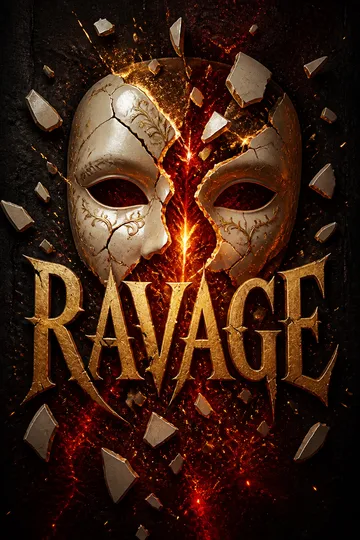
Ravage is the third book in Steph Macca's Dance with My Demons series. Readers praise its intense plot, character development, and steamy scenes. The story continues the asylum setting, focusing on Avery and her three love interests: Grey, Theo, and Damon. Many reviewers express excitement about the twists, cliffhanger ending, and anticipation for the next book. The audiobook narration receives high praise. While some note plot holes, most readers find the book captivating and an improvement over previous installments.
Characters
Avery White
The fire-scarred survivorAvery is an incarcerated survivor whose history of abuse shapes her fear of abandonment, difficulty trusting authority, and fierce wish to be loved without being treated as broken. She is observant and often uses humor to regain a little control, but she can also minimize her own pain to protect people around her. Her connection to Grey3, Theo4, and Damon2 gives her a place to practice honesty and ask for help. At the same time, she resists being reduced to a patient or a cause. What drives her is not simply escape from danger, but the chance to choose what happens to her and to protect others who are being used.
Damon Dale
The society's hard-eyed strategistDamon leads Cirque des Morts with discipline, tactical patience, and an instinct to control every variable. Beneath that precision is a son shaped by violence, grief, and a deep distrust of dependence. He protects people through planning and force, often concealing tenderness because he associates emotional exposure with danger. Avery1 unsettles this arrangement by seeing the person behind his authority without excusing his capacity for cruelty. His bond with Grey3 is foundational, and his growing connection with Avery1 asks him to accept that love cannot be managed like an operation. Loyalty, revenge, and responsibility pull him in different directions.
Grey
The volatile devoted protectorGrey is fiercely attached to Avery1 and intensely loyal to Damon2, but his first response to threat is often physical retaliation. His volatile reputation hides a more calculating side: he can follow a plan when he believes it will keep someone he loves alive. His history makes abandonment and betrayal especially sharp, so accepting Avery1’s other relationships requires him to confront his own fear rather than turn it into a rule for her. Grey’s protectiveness is both comfort and risk. He does not become gentle in a conventional sense; instead, he grows more willing to trust Avery1’s judgment and to make room for forms of love he did not expect.
Theo Ashwood
The fearless guarded loverTheo is an intimidating, physically fearless member of Avery1’s circle whose bluntness can obscure his attentive care. He trusts action more readily than explanation and meets threats with direct force, a temperament that makes him both a formidable ally and a source of escalation. His relationship with Avery1 is grounded in physical closeness and uncomplicated reassurance, while his growing partnership with Grey3 and Damon2 lets the group act as a team. Theo does not need conventional reassurance to accept Avery1’s affection for others. His steadiness matters because it gives her room to feel vulnerable without making vulnerability a debt.
Alexander Dale
The controlling family patriarchAlexander is Damon2’s father, a wealthy and calculating man who treats family, money, and institutions as instruments of control. He uses his influence to shape Lilydale and preserve his access to the wealth tied to his son2. His emotional coldness contrasts with the public image of a benefactor, and his history with Damon2 is built on domination rather than care. Alexander’s power depends on making coercion appear legitimate, whether through legal arrangements, reputation, or institutional authority. He is the clearest expression of the novel’s concern with how private wealth can disguise violence as respectable management.
Arthur
Lilydale's polished operatorArthur runs Lilydale’s day-to-day machinery and manages its public story, presenting disappearances and dangerous research as routine care. He is closely allied with Alexander5 and relies on staff, guards, and institutional procedure to protect his authority. Unlike a villain who acts only through open force, Arthur understands how paperwork and public announcements can make coercion look ordinary. He sees patients as leverage and expects the society to respond predictably to threats. His calm presentation is part of his power, but the fear beneath it appears when Damon2’s group begins to expose the institution’s hidden operations.
Dr. Smith
The compromised psychiatristDr. Smith is Avery1’s earlier psychiatrist and Damon2’s cousin, a professional caught between his job at Lilydale and his resistance to its abuses. He can be empathetic and thoughtful, but his decisions are not always protective in practice. His attempt to get Avery1 away from the institution by framing her for an offense shows how fear can turn care into another form of control. He is also constrained by family pressure and a compromised position within Lilydale. Avery1’s distrust of him is therefore neither simple nor easily resolved.
Christopher
The uneasy institutional insiderChristopher is a Lilydale professional and member of Damon2’s extended family, positioned between the institution’s leadership and the patients he claims to care about. He has intervened in Avery1’s life in ways he considers protective, but his actions have also caused harm. His education and access give him practical value to the society, while his family ties make every act of resistance costly. Christopher is difficult to trust because his motives and methods do not always align. He represents the compromised insider who must decide whether maintaining access is worth cooperating with a system he knows is dangerous.
Dr. Elsher
The punitive psychiatristDr. Elsher takes over Avery1’s psychiatric care and approaches her with impatience, suspicion, and a readiness to interpret trauma as personal defect. He uses clinical authority to challenge her account of her past rather than create conditions in which she can speak safely. His style stands in sharp contrast to Dr. Smith7’s more patient manner, although neither professional relationship is free of institutional compromise. Elsher’s confidence reflects a broader problem in Lilydale: the assumption that expertise grants a right to judge people whose lived experiences he has not shared.
Dr. West
The laboratory researcherDr. West oversees procedures in the Emerson Lab and treats Avery1’s reactions as experimental data. His calm professionalism makes the cruelty more chilling: he can discuss measurements and protocols while a restrained patient is in pain. He believes the research serves a wider purpose, which allows him to separate his methods from their human cost. In the lab, he embodies the danger of technical skill without meaningful consent or accountability.
Dr. Cromwell
The conflicted lab doctorDr. Cromwell assists with Avery1’s tests and tries to present herself as reassuring, even while participating in procedures Avery1 has not consented to. Her manner is less openly cruel than Dr. West10’s, but kindness of tone does not make her actions harmless. She is a useful study in how people can preserve a benevolent self-image while working inside an abusive system. Avery1’s treatment forces the difference between personal sympathy and ethical responsibility into view.
Vivian Capello
A wary former rivalVivian has a fraught history with Avery1 and carries herself with the guardedness of someone accustomed to being mistrusted. Their past antagonism complicates the recognition they share when they encounter each other in danger. Vivian’s presence forces Avery1 to decide whether she can care about someone who has hurt her, without pretending the past did not happen. She is also a reminder that Lilydale’s official accounts of its patients cannot always be trusted.
Jillian
The society's technical anchorJillian works with Byrone14 to access Lilydale’s computer systems and camera feeds, turning technical knowledge into practical protection for the society. She is capable, focused, and willing to act under pressure. Her work gives the group information they cannot obtain through force alone, including a way to monitor Arthur6’s movements. Jillian’s quiet competence helps make Cirque des Morts more than a circle of fighters.
Byrone
The patient systems hackerByrone is a key technical member of Cirque des Morts and Jillian13’s partner. He helps break through Lilydale’s firewalls and keep the society informed during its rescue and surveillance operations. His work is deliberate rather than dramatic, but the group’s plans depend on it. Byrone’s steadiness shows how expertise and cooperation can challenge an institution built on secrecy.
Dr. Markel
A careless medication gatekeeperDr. Markel manages Avery1’s medication before she is taken to the lab, making his office part of the uncertainty surrounding how she was drugged. The book leaves open whether he knowingly participated or whether someone exploited his lax procedures. His concern for Avery1 complicates suspicion, but concern alone cannot answer the questions created by the institution’s failures.
Leighton
The society's field scoutLeighton helps examine Lilydale’s layout, joins Damon2 on the search for Avery1, and assists the society’s efforts to track staff movements. He is a reliable operative whose practical knowledge supports the group’s plans.
Siobhan
A fellow Lilydale patientSiobhan is assigned to share administrative duty with Avery1. She is frustrated by the punishment but keeps to the work, offering a brief glimpse of ordinary patient life inside Lilydale.
Rian Thatcher
A newly arrived patientRian is a new patient whom Grey3 discovers meeting with Arthur6. His fear of bodily fluids becomes leverage during Grey3’s interrogation, and his assignment to approach Vivian12 raises new questions about Arthur6’s plans.
Dorothea
Arthur's office receptionistDorothea works at the reception desk outside Arthur6’s office and is closely associated with his private life. Her presence shows how Lilydale’s staff are drawn into the orbit of those who control the institution.
Leah
Grey's former girlfriendLeah is part of Grey3’s past, and the memory of their relationship becomes a point of emotional vulnerability for Avery1. The lab uses recorded footage involving Leah to make Avery1 doubt Grey3’s loyalty.
Plot Devices
Lilydale and the Emerson Lab
Care concealing coercionLilydale presents itself as a rehabilitation facility for incarcerated young people, while the hidden Emerson Lab conducts unauthorized and dangerous research below it. The contrast gives the novel its central institutional threat: the same organization that claims to provide treatment can control patients, conceal their disappearances, and describe abuse as medical progress. The lab’s procedures also make the physical cost of that deception immediate for Avery1. Lilydale’s public announcements then extend the cover story beyond the underground rooms, shaping what patients and staff believe about those who vanish.
Cirque des Morts
A hidden rescue networkDamon2’s society combines surveillance, technical skill, and willingness to use violence to protect patients and interfere with Lilydale’s leadership. Its members can organize a rescue, but the society is not a simple heroic counterforce: secrecy, threats, and brutality are part of how it operates. Avery1’s growing place within the group complicates its code, bringing questions of trust and personal choice into a structure built around strategy. Cirque des Morts gives the characters a means to act collectively where official channels have failed them.
The False Live Footage
Weaponized abandonment fearThe lab shows Avery1 footage of Grey3 with Leah20 and falsely presents it as live, turning his past into apparent proof that he has moved on while Avery1 is captive. This attack is tailored to Avery1’s history of abandonment and her uncertainty about whether she deserves lasting affection. It makes the research personal, not merely physical, and shows that the doctors study emotional responses by actively producing distress. The lie is exposed when Damon2 explains that Leah20 died months earlier, but its effects persist because knowing the footage was false does not instantly undo Avery1’s fear.
The Trust and Shares
Power hidden in paperworkDamon2’s inheritance and Lilydale shares turn family history into an immediate struggle over the facility’s future. His bargain with Alexander5 shifts corporate control, while the trust governs whether Lilydale can access money to maintain its research contract. A clause concerning a spouse creates a way to change that balance again. Legal documents therefore function as weapons alongside the group’s physical resistance. The device also sharpens the novel’s critique of respectable power: ownership, court orders, and consent forms can hide coercion behind procedures that appear legitimate.
Cells and Hidden Cameras
Breaking Lilydale's information monopolyThe flip phones let Avery1, Grey3, Theo4, and Damon2 communicate when Lilydale separates them, while independent cameras allow the society to monitor Arthur6 and preserve evidence. These tools counter the facility’s control of movement and information. Their usefulness is practical as well as emotional: a message can reassure Avery1, and a camera feed can alert the group to a staff member’s arrest or a patient’s danger. The devices also make secrecy unstable, since every new source of information may expose the group to retaliation if Lilydale discovers it.
Dance With My Demons Series



About the Author
Other books by Steph Macca






Download PDF
Download EPUB
.epub digital book format is ideal for reading ebooks on phones, tablets, and e-readers.








