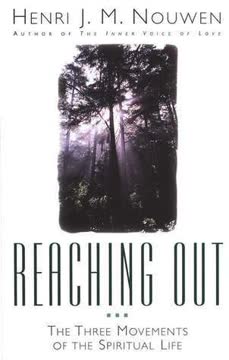
Key Takeaways
1. The Spiritual Life: A Journey of Three Movements
The spiritual life is that constant movement between the poles of loneliness and solitude, hostility and hospitality, illusion and prayer.
Defining the path. Henri Nouwen introduces the spiritual life not as a linear progression, but as a dynamic, ongoing movement between contrasting poles. It's a continuous "reaching out" to our innermost self, our fellow human beings, and our God. This journey acknowledges the inherent tensions within human experience, suggesting that growth occurs within these polarities rather than by eliminating them.
Embracing paradox. The book posits that true spiritual growth emerges from confronting our deepest pains and struggles. Loneliness, hostility, and illusion are not detours but essential starting points. Just as a dark forest makes us appreciate an open field, or hunger helps us value food, our suffering can sharpen our desire for solitude, hospitality, and prayer.
No bypasses. Nouwen emphasizes that there are no shortcuts in the spiritual life. Bypassing our pain—loneliness, hostility, or illusion—will never lead to genuine solitude, hospitality, or prayer. Instead, the invitation is to embrace our brokenness and sinfulness, allowing these struggles to deepen our quest for a life that reflects the divine promise.
2. From Loneliness to Receptive Solitude
To live a spiritual life we must first find the courage to enter into the desert of our loneliness and to change it by gentle and persistent efforts into a garden of solitude.
Confronting loneliness. Loneliness is a universal human experience, intensified in modern society by competition and superficial connections. Nouwen describes it as an "inner gnawing," a "mental hunger" that we often desperately try to avoid through distractions, constant activity, or even "final solutions" in relationships. This avoidance, however, prevents us from truly addressing our human predicament.
The danger of avoidance. Our culture is adept at avoiding pain, both physical and emotional. We panic when left alone, filling our lives with projects, friends, media, and constant busyness to escape the "all-pervasive sense of loneliness." This leads to a superficial existence, where conversations become gossip and we lose touch with our inner selves, constantly seeking external validation or distraction.
Cultivating solitude. Solitude is not mere physical isolation but an inner quality, a "solitude of heart," that can be developed anywhere. It's a receptive state where we listen to our inner voices, transforming restless loneliness into a tranquil center. This shift allows us to be truly present to ourselves and others, fostering genuine connection rather than needy clinging.
3. Solitude Fuels Creative, Compassionate Response
In our solitude, our history no longer can remain a random collection of disconnected incidents and accidents but has to become a constant call for the change of heart and mind.
Beyond reaction. The journey from loneliness to solitude is not a withdrawal, but a deeper engagement with the world. It enables us to move beyond impulsive, fearful reactions to thoughtful, loving responses. In solitude, we can process the "turbulent, often chaotic, life" and "formulate" a response that truly originates from our inner core, rather than being dictated by external stimuli.
Alertness to reality. Solitude fosters an "alertness" that integrates all of life's events—personal disappointments, global tragedies, political upheavals—into our contemplation. These are no longer mere "interruptions" but "opportunities" for growth and conversion. The professor who realized his "interruptions were his work" exemplifies this shift, seeing life's unexpected turns as molding forces that reveal our true vocation.
Compassionate solidarity. From this place of solitude, a "contrite heart" emerges, extending beyond personal guilt to embrace the vast suffering of humanity. This "wilderness of compassion" is where true healing begins, not by offering quick solutions, but by a deep solidarity with pain. It's a liberating message: we are called to respond to suffering, recognizing that "nothing human is strange to us."
4. From Hostility to Liberating Hospitality
Hospitality, therefore, means primarily the creation of a free space where the stranger can enter and become a friend instead of an enemy.
Welcoming the stranger. The second movement of spiritual life involves transforming our inherent hostilities into genuine hospitality. This is a challenging but essential Christian vocation, especially in a world increasingly filled with fear, suspicion, and alienation. Hospitality, in its biblical sense, is not just kindness but a profound openness to the "stranger" who often carries precious, unexpected gifts.
Beyond ambivalence. Our natural inclination towards strangers is often ambivalent, marked by fear and defensiveness. We protect our homes, our spaces, and even our professional circles from perceived threats. This "back-stage hostility" can cripple relationships, even among those working for peace and love. True hospitality requires acknowledging and moving beyond these fears, creating an environment where vulnerability is safe.
Creating empty space. Hospitality is about creating a "free and friendly space"—a "friendly emptiness"—where others can disarm, shed their preoccupations, and discover their own freedom and vocation. It's not about imposing our lifestyle or beliefs, but offering an opportunity for guests to find their own way. This requires a willingness to be "empty" ourselves, resisting the urge to fill every moment with words or activities.
5. Hospitality in Key Relationships: Parents, Teachers, Healers
Children are strangers whom we have to get to know. They have their own style, their own rhythm and their own capacities for good and evil.
Children as cherished guests. Hospitality extends to our most intimate relationships, starting with parents and children. Children are not possessions to control but "gifts to cherish and care for," unique individuals with their own destinies. Parents are called to provide a receptive home with safe boundaries, fostering their children's growth and freedom to eventually embark on their own journeys.
Teachers as space-creators. In education, hospitality means creating a "fearless space" where students can reveal their own experiences, insights, and questions without fear of judgment or competition. Teachers are not just dispensers of information but "receivers" who help students discover and affirm their inherent talents, moving beyond the pressure to "earn" credits to a genuine search for meaning.
Healers as compassionate listeners. For doctors, counselors, and ministers, healing is an act of hospitality: creating an "empty but friendly space" where those who suffer can tell their stories and be truly heard. This "diagnosis" (knowing through and through) is the beginning of treatment, allowing patients to reconnect with their own narratives and find their unique path forward, free from manipulation or impersonal treatment.
6. The Host's Poverty of Mind and Heart
Once we have become poor, we can be a good host.
Poverty as strength. True hospitality is rooted in an inner "poverty"—a detachment from our own needs and defenses. When our loneliness transforms into solitude, we are no longer driven to cling to others, but can offer them genuine freedom. This paradoxical poverty allows us to perceive strangers not as enemies to defend against, but as potential friends to welcome, having "nothing to lose but all to give."
Poverty of mind. This involves a "docta ignorantia," a learned not-knowing, a willingness to recognize the incomprehensibility of life's mysteries. A mind filled with fixed ideas and opinions leaves no room for new insights or for truly listening to others. It's an ongoing refusal to confine God to our concepts, fostering gentleness and receptivity, making us open to receive wisdom from unexpected sources.
Poverty of heart. Similarly, a heart filled with prejudices, worries, or jealousies cannot be truly inclusive. Poverty of heart means detaching from our own limited emotional experiences as the sole criterion for approaching others. It allows us to receive others' experiences as gifts, fostering "creative interdependency" and preventing the self-assertion that leads to loneliness. This self-emptying is a "training for service," where our strength lies in our weakness.
7. From Illusion to Intimate Prayer
The greatest obstacle to our entering into that profound dimension of life where our prayer takes place is our all-pervasive illusion of immortality.
Anchoring in God. Solitude and hospitality, to bear lasting fruit, must be rooted in a deeper reality: our relationship with God. This third movement, from illusion to prayer, is the most crucial, as it provides the vitality for all spiritual life. It's a "reaching out far beyond the limitations of our fragile and finite existence toward our loving God."
Unmasking immortality. Our "illusion of immortality" is a subtle but powerful obstacle. Despite intellectual awareness of mortality, our daily actions often reveal an unconscious belief in our eternal control over life, leading to exaggerated seriousness, sentimentality, and even violence when our expectations are unmet. This illusion makes us cling to possessions, people, and plans as if they were permanent.
Prayer as surrender. Prayer is the act of unmasking this illusion, accepting our mortality, and reaching out to God on His terms, not ours. It's a "great adventure" that leads us from false certainties to "true uncertainties," from easy support systems to a "risky surrender." This surrender allows us to move beyond self-preoccupations and enter into a boundless love, even when it leads to suffering.
8. The Paradox and Practice of Heartfelt Prayer
The paradox of prayer is that we have to learn how to pray while we can only receive it as a gift.
Effort and grace. Prayer is both a discipline and a divine gift. While spiritual masters emphasize continuous effort and arduous practice, they also affirm that true prayer is "grace," a free gift of God's Spirit within us. We cannot force God into a relationship, but our discipline prepares us to receive His initiative, allowing us to participate in the intimate life of God through Christ's Spirit.
Finding our way. To discover the "prayer of our heart"—our most personal vocation—Nouwen suggests three guidelines:
- Contemplative reading of God's word: Letting scripture penetrate our hearts, not just analyzing it.
- Silent listening: Reserving quiet time for God, tolerating inner noise until stillness emerges.
- Trusting a spiritual guide: Someone to help discern God's voice from our own confusion, offering encouragement and direction.
The Jesus Prayer. The Hesychast tradition, particularly the "Jesus prayer" ("Lord Jesus Christ, have mercy upon me"), offers a concrete path. It's a simple, ceaseless prayer that unifies mind and heart, allowing one to "descend with the mind into the heart" and stand in God's presence. This practice transforms daily life, turning pains into joy and fostering an immense experience of God's presence.
9. Prayer Flourishes in the Community of Faith
Just because prayer is so personal and arises from the center of our life, it is to be shared with others.
Shared intimacy. Despite its deeply personal nature, prayer is not a private, isolated affair. It requires the "constant support and protection of the community to grow and flower." The community of faith provides the necessary climate and boundaries to sustain and deepen our prayer, preventing it from becoming a narrow, individualistic emotion.
A waiting community. The Christian community is fundamentally a "waiting community," called out by God, not formed by human effort or shared interests alone. It offers a sense of belonging while simultaneously reminding members that their ultimate destiny lies beyond their togetherness. This forward-moving orientation fosters a "constant criticism" of any tendency to become a closed, comfortable clique.
Transcending differences. In the community of faith, diverse individuals are united by a common divine call, supporting each other in their shared search for God. This collective journey allows us to transcend individual differences and become witnesses to God's universal love. It is in this shared path to God that we become aware of each other's needs and begin the mutual healing of wounds, even amidst the temptation to settle in comfortable, partisan oases.
Last updated:
Review Summary
Reaching Out by Henri Nouwen presents three spiritual movements: from loneliness to solitude, hostility to hospitality, and illusion to prayer. Reviewers consistently praise Nouwen's gentle wisdom and profound insights, particularly regarding solitude and hospitality. Many found the book personally transformative, noting its simple yet dense approach to spiritual growth. The hospitality section resonated strongly, emphasizing the creation of welcoming space for others. Some readers found portions vague or meandering, and a few expressed concerns about mystical elements. Overall, readers recommend it as essential reading for spiritual development and pastoral care.