

Key Takeaways
Read life by combining what you notice, feel, and verify.
More than appearances. Choquette uses “reading life” to mean noticing what is happening beneath the obvious, then responding. She describes a sixth sense made up of inner seeing, hearing, bodily feeling, and sudden knowing, working alongside ordinary senses and reason. Her central point is that decisions improve when people pay attention to both observable details and their inner reactions, rather than relying on analysis alone or treating every feeling as fact.
A warning remembered. As a child, Choquette felt uneasy about her route home but continued anyway. A dog attacked her around the corner. She understood the incident as proof that her feeling had warned her. The story gives the book its emotional premise: attend to discomfort, then choose a response. It cannot establish that intuition predicts events, but it illustrates why people may ignore signals they later wish they had taken seriously.
What's useful here is the invitation to widen attention, not the claim that hidden forces are reliably detectable. People often register small cues before they can explain them: a change in tone, a mismatch between words and behavior, or a bodily response to a setting. Treating those cues as information can prompt a sensible pause. The dog story, though vivid, is also vulnerable to hindsight bias: a frightening outcome can make an earlier unease seem more predictive than it was. A grounded reader stays alert without confusing a compelling story with proof.
Treat intuition as an alert to investigate, not a verdict.
Pair instinct with evidence. Choquette argues that reason and intuition work best together. Observation and research establish what is known; intuition can prompt questions about what may be missing or changing. The book repeatedly rejects guarantees. A feeling is not certainty about the future, and a reader should not surrender decision-making to a psychic, coach, or anyone promising a particular outcome.
A travel adjustment. Before a family wedding in Mexico, Choquette felt uneasy about the planned travel dates. She persuaded her family to arrive earlier and stay longer. Flight disruptions followed, and they made it to the wedding. She interprets this as useful guidance. A practical reading is more modest: unease encouraged a flexible plan, while the actual airline disruption was not something the feeling proves she foresaw. Gather facts, then decide what precaution is proportionate.
This distinction protects the book's practical advice from its more expansive metaphysical claims. In decision science, intuitive judgments can reflect rapid pattern recognition, especially when someone has experience in a domain. They can also reflect anxiety, stereotypes, or random noise. The strongest use of a hunch is therefore as a prompt: check the schedule, ask a question, inspect the inconsistency, or choose a low-cost precaution. Intuition deserves attention, not automatic obedience. That approach preserves openness while preventing an unexplained feeling from outranking reliable evidence.
Put the phone down before the world has to shout.
Attention is the entry point. The book treats presence as the first condition for reading a situation. Choquette describes a traveler so absorbed in his phone and headphones that he missed repeated station announcements and watched other passengers leave for his train without noticing. In another story, a friend lost a purse to a passing thief while focused on a phone call. The lesson is not that screens make people helpless, but that diverted attention can conceal both ordinary information and potential risks.
Practice noticing. Choquette suggests briefly returning attention to the body, breath, sounds, and surroundings. She recounts repeatedly visiting a restaurant before noticing a large aquarium there. Such small checks train awareness of the actual present, including changes in people and places. The book recommends setting short reminders to look up during the day, especially while traveling, in crowds, or talking with someone.
This is among the book's clearest, most testable recommendations. Attention is selective: a person absorbed in a screen has fewer resources available for peripheral events, conversation, or changing conditions. Short pauses can restore awareness without requiring a mystical explanation. Still, vigilance should not become a promise of safety. Paying attention may help someone notice a risk, but it cannot control another person's behavior or prevent every accident. The useful aim is fuller participation in the moment, not the exhausting belief that every detail must be monitored.
Separate today's evidence from yesterday's fear.
Old alarms distort new scenes. Choquette identifies anxiety, trauma, a need for approval, addiction, assumptions, and snap judgments as filters that can twist perception. A person with painful past experiences may become hyper-alert without becoming more accurate. Fear can turn uncertainty into an imagined disaster; denial can hide evidence that threatens a cherished plan; projection can make a stranger resemble someone who once caused harm.
Reset before concluding. The book recommends naming fear, breathing, moving, gathering trustworthy information, and asking for specific examples when someone offers difficult feedback. It also cautions sensitive readers against absorbing every emotion around them. These steps are ways to slow a reaction and examine it. They do not erase trauma, and severe anxiety or distress may call for professional support rather than solitary self-interpretation.
The strongest insight is that sensitivity and accuracy are different capacities. Trauma research and clinical practice both recognize that threat learning can make ambiguous cues feel dangerous, even when a current situation differs from the past. A pause can create room to distinguish a present signal from an old alarm. The book's spiritual language may help some readers treat themselves with care, but it should not imply that every distressing feeling has an external energetic source. Emotions are real experiences; their explanations still need checking.
Use your perceptions, but keep responsibility for the choice.
Guidance is not delegation. Choquette says a reader can offer perspective but cannot solve another person's life or guarantee an outcome. She warns readers against experts who cultivate dependence or claim special power over the future. Her advice is to notice a concern, look for supporting facts, consider possible actions, and accept that the final choice remains one's own.
Speak before the cost compounds. One client saw problems building at work but stayed silent because he feared losing his job. When the project collapsed, his manager asked why he had not raised his concerns. Another client journaled about an unreliable business partner, then called a meeting. The partner disclosed a serious illness, and the group adjusted its expectations rather than letting resentment destroy the company. Attention matters most when it leads to a responsible conversation or a deliberate change.
This emphasis on agency is an important counterweight to the book's language of divine guidance. It also fits a basic principle of ethical coaching: help people clarify options without claiming authority over their decisions. Yet acting on a perception does not always mean confronting someone immediately or taking an irreversible risk. Power differences, safety, and practical constraints matter. Often the responsible next move is to document a concern, seek confidential advice, or test an assumption. Agency includes choosing the method and timing of action.
Check your body, values, and priorities before blaming the world.
Start with yourself. Choquette argues that reading others begins with reading oneself. She asks readers to identify their current values, notice bodily needs, name emotions, and compare priorities with actual behavior. A person who values family but spends every available hour at work may be living with a conflict that no intuitive technique can resolve until it is acknowledged. The book also stresses responsibility for one's choices and emotional responses, rather than treating other people as their sole cause.
Make it concrete. Try a brief daily check-in: What does my body need? What emotion is present? What matters today? What is one intention I can act on? The author recommends writing intentions down and beginning with manageable aims. She also suggests naming what brings joy, since attention to meaningful interests can reveal neglected needs and guide practical changes.
This section turns an abstract idea of self-knowledge into observable questions. It resembles interoception, the capacity to notice internal bodily states, which can inform emotion and decision-making. A written intention can also expose a gap between professed priorities and daily choices. The caveat is that bodily sensations do not diagnose their own causes. Pain, fatigue, or a strong emotional response may have medical, situational, or psychological explanations. Self-attention is a starting point for inquiry, not a substitute for appropriate care.
Replace mind-reading with curiosity, observation, and direct questions.
Meet the person present. Choquette urges readers to drop agendas and assumptions, notice behavior as well as words, and ask questions with genuine interest. She tells of a mother who judged her son's gaming as wasted time. When she learned about the games, she understood that they helped him manage school stress and opened a shared interest between them. He later pursued game creation, and their relationship improved. The shift began with curiosity rather than a lecture.
Check the story. The book's “What Is So” reading asks a person to imagine another's perspective and voice possible observations without editing them. Choquette also recommends clearing accumulated resentment before attempting to understand someone. These exercises can generate hypotheses, but a private imagined conversation cannot confirm what another person thinks. A respectful question, listening, and attention to consistent behavior provide a more reliable check.
Curiosity is a practical antidote to projection. Social psychology has long documented how people mistake their own perspective for a shared one; asking open questions can correct that egocentric bias. The gaming example also shows how taking a young person's interest seriously can reveal competence and create connection. The limit is crucial: imagining another person's inner voice may feel convincing while being wrong. The exercise is safest as preparation for dialogue, not as a substitute for consent, direct communication, or evidence about another person's intentions.
Purpose is what you contribute, not simply the job title.
Separate vocation from meaning. Choquette distinguishes paid work from purpose, which she describes as expressing one's gifts and serving others. A teacher in a difficult school found joy and community by playing blues music, then starting a student music group. His paycheck did not define the full contribution he wanted to make. The book's point is not that work is unimportant, but that meaningful activity may happen inside or outside a job.
Follow what engages you. Choquette recommends listing what you love, trying creative activities, spending time in nature, and talking with others about their interests. She describes a nail technician who discovered breathwork through client conversations and trained in it while keeping her job. Such experiments offer evidence about what sustains attention and feels useful. They need not require quitting a stable job or immediately turning a passion into income.
This distinction challenges the modern tendency to make employment carry every burden of identity, income, belonging, and meaning. A purpose can be practiced in small, repeated contributions rather than discovered as one perfect career. That framing is psychologically useful because it makes exploration less all-or-nothing. At the same time, the book's assurances that purpose will reveal itself can understate economic barriers and caregiving demands. Experimentation is valuable, but a meaningful life may require balancing aspiration with material realities.
Choose places by the experience they support, not their appearance.
Places shape daily life. The author asks readers to assess whether home and work provide the conditions they need, including quiet, connection, light, order, or room to focus. She describes a friend whose home was so crowded with possessions that its beauty and usefulness had nearly disappeared. Removing the clutter revealed a space he had not seen clearly. Her own experience of moving to Paris after major losses taught her that an appealing location could not, by itself, create a sense of belonging.
Define the fit. Before choosing a home, workplace, or social setting, describe the experience desired, then observe how a place actually feels and functions. Choquette calls a systematic imagined scan a “vibe check.” She also advises treating a location as potentially right for now rather than assuming it must be permanent. Sensory comfort can inform a choice, but practical checks such as safety, cost, and access still matter.
Environmental psychology supports the broad premise that settings influence mood, attention, and behavior. Light, noise, crowding, and access to other people can change how a place works for someone, so looking beyond prestige or appearance is sensible. The author's language of a place's stored energy is a personal spiritual interpretation, not an established way to assess a building. A useful evaluation combines felt response with observable conditions, costs, and the needs of everyone who will use the space.
Notice what you feel without carrying every feeling home.
Read the moment, then choose. The book's closing image is a safari tracker who scans the landscape calmly and notices animals others miss. Choquette uses this as a model for moving through life attentively, while remaining flexible. Sometimes a useful response is immediate; sometimes the appropriate signal is to wait for more information. She recounts a client who delayed selling a restaurant business until it became more valuable, illustrating that not every pause is indecision.
Observe without absorbing. Highly empathic readers, in the author's account, may take on other people's distress as if it were their own. She recommends naming the feeling, checking whether it began with oneself, and using movement, a walk, or a shower to reset. Her everyday practice includes breathing, noticing surroundings, gratitude, journaling, and short periods of reflection. The aim is attentive participation, not constant scanning or emotional self-erasure.
The tracker is a strong closing metaphor because skilled observation is patient, selective, and responsive. The book's distinction between noticing another person's distress and taking responsibility for it also echoes boundary-setting in clinical and caregiving professions. Still, sudden feelings cannot reliably be attributed to someone else's energy; stress, sleep, memory, and context may explain them. Naming a feeling and returning to the present can help without deciding its source prematurely. The balance is empathy with discernment, rather than either numbness or total absorption.
Analysis
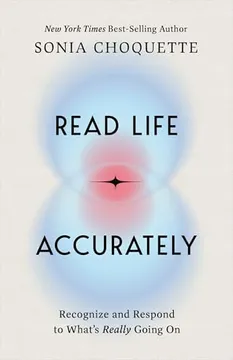
Read Life Accurately is part memoir, part spiritual self-help manual, organized around a broad claim: people function better when they attend to more than explicit words and visible facts. Choquette's stories give that claim a lived texture, from the childhood encounter with a dangerous dog to adults missing distress in a partner, child, or workplace. The book's most durable contribution is practical: slow down, notice bodily and social cues, examine personal filters, ask better questions, and respond rather than drift. Its advice about attention, curiosity, self-knowledge, and boundaries can stand even if readers do not accept its metaphysical account.
That account requires careful separation. The author describes intuition as access to subtle energy, spirit, and sometimes information beyond ordinary perception. Her anecdotes are meaningful to her, but they do not establish telepathy, prediction, remote sensing, or energetic causes of illness. Some stories are especially vulnerable to hindsight bias: once an event occurs, a prior unease can seem like a precise warning. The book's own practical insistence on gathering facts provides a better standard than its more certain claims about inner guidance.
A balanced reading treats intuition as a hypothesis generator. It may reflect nonconscious pattern recognition, especially in familiar contexts, or it may reflect fear, expectation, and coincidence. A feeling that something is wrong can justify pausing, checking observable evidence, asking a direct question, or choosing a reversible precaution. It should not replace medical assessment, professional safety planning, or financial due diligence. Nor should spiritual authority be used to override another person's autonomy.
The book is most persuasive when its vocabulary is translated into ordinary skills: interoceptive awareness, attention control, emotional regulation, perspective-taking, and values clarification. Its exercises can help readers practice those skills, while claims about what the exercises prove remain open to scrutiny. The central promise is strongest when framed modestly: paying closer attention can improve choices and relationships, but no method makes anyone omniscient or guarantees that life will cooperate.
Review Summary
Reviews for Read Life Accurately are mixed, averaging 4.07 out of 5. Fans of Sonia Choquette praise its practical intuitive guidance, inspiring meditations, and real-life anecdotes, with some calling it life-changing. Critics note the book feels repetitive of her earlier work, particularly Trust Your Vibes, and some found it poorly edited with numerous grammatical errors. While valued as a beginner-friendly or back-to-basics read, seasoned followers may find the content repackaged. The audiobook version, narrated by Choquette herself, received particularly warm reception.
Glossary
Reading life
Attending and responding to cuesChoquette's term for using observable details, bodily responses, emotional impressions, and what she calls inner senses to understand a person, place, or situation. It includes interpreting unspoken social signals and deciding how to respond. The book presents it as a natural capacity; readers can use the practical attention skills without accepting the author's spiritual explanation of every impression.
sixth sense
A cluster of inner perceptionsChoquette uses this term for inner seeing, hearing, sensing, and knowing, which she says operate alongside the five physical senses. She associates these perceptions with guidance about relationships, safety, and purpose. The book treats them as spiritual faculties, though subjective impressions alone do not demonstrate perception beyond ordinary sensory or cognitive processes.
room to breathe
A calming inner practiceA visualization and breathing exercise intended to create a clear, protected mental and emotional space. The practitioner notices the surroundings, breathes slowly, releases distracting thoughts, and imagines a calm boundary around the body. Choquette uses this state before reflective exercises, writing, or attempts to understand another person.
What Is So
An imagined perspective exerciseA named practice in which a person settles into a calm state, imagines someone they want to understand, and speaks aloud whatever impressions arise about that person's needs or experience. Choquette presents it as a way to surface overlooked possibilities. Its imagined responses are hypotheses, not verified statements about the other person's thoughts.
Empty the Garbage
Writing out accumulated judgmentsA reflective technique for listing resentments, assumptions, judgments, and old stories about a person or situation before trying to interpret it. The purpose is to reduce the influence of accumulated emotional reactions and create a more neutral starting point. It does not establish that later impressions are accurate, but can make biases easier to examine.
Inspirational writing
Journaling for inner reflectionChoquette's method of asking a question in writing, becoming quiet, and continuing to write without stopping while attending to impressions that arise. She frames the resulting material as communication with one's spiritual self. In practical terms, it is a structured journaling exercise that can reveal associations and concerns, rather than independently verify guidance from an external source.
Automatic writing
Writing with eyes closedA variation on inspirational writing in which the writer responds to questions about purpose or direction with eyes closed. Choquette says this helps quiet analytical thought and lets spiritual guidance emerge. The exercise may prompt unexpected ideas, but those ideas should be assessed alongside practical evidence and personal circumstances before decisions are made.
Four Chambers of the Heart
A four-part purpose reflectionA guided visualization that assigns four symbolic roles to areas of the heart: the joyful inner child, the practical inner adult, the wise self, and the courageous self. The practitioner asks each perspective what it values, understands, or is ready to do, then records the responses. It is a self-reflection framework, not a physical or medical model of the heart.
vibe check
A scan of a place's feelChoquette's term for a deliberate review of a location, imagined or visited, while noticing tension, ease, openness, or discomfort. The exercise asks the person to scan different parts of the setting and describe the response. It can help identify preferences or unease, but should be combined with direct inspection of a place's practical conditions.
Download PDF
Download EPUB
.epub digital book format is ideal for reading ebooks on phones, tablets, and e-readers.








