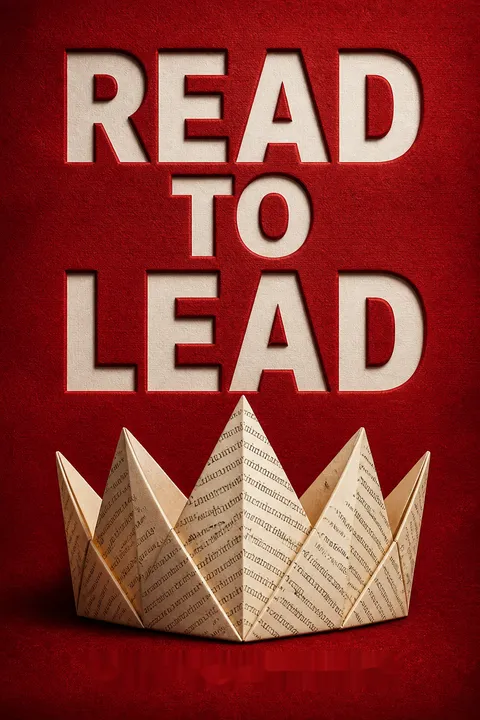


Key Takeaways
Treat books as low-cost career insurance in a changing job market
Learn before the pivot. Jesse Wisnewski faced losing his nonprofit copywriting job and could not afford extra classes or coursework. He spent a little over $100 on books about content strategy, learned the field, and built a proposal for a new role inside the organization. The move worked. His story makes reading a practical tool for adapting, not merely an intellectual hobby. Jeff Brown describes a similar shift: after years of unstable jobs, intentional reading helped him earn six promotions over thirteen years.
Careers rarely stay linear. The book cites an average employee tenure of 4.6 years and argues that learning cannot stop at graduation. Reading offers flexible, relatively inexpensive access to new skills, examples, and solutions that can shorten the path through a professional change.
What's compelling here is the use of books as a bridge between a problem and a credible next step. Self-directed learning can help workers test a new specialty before committing to a costly credential. The story also avoids promising that reading guarantees advancement: Jesse had relevant experience, found an organizational need, and translated learning into a proposal. Books can expand capability, but opportunity, practice, and the ability to demonstrate results still matter.
Read fiction to rehearse ambiguity, empathy, and creative problem-solving
Stories exercise perspective. The authors argue that reading can strengthen communication, judgment, and leadership, and they include fiction in that case. They describe research suggesting that readers of fiction show less need for cognitive closure, the preference for quick, definite answers when a situation is uncertain. That tolerance for ambiguity can support more considered decisions and creative thinking. The book also cites a study in which people reading for just thirty minutes a week reported greater empathy.
Read beyond manuals. Biographies offer models of how people respond to pressure, while novels let readers inhabit perspectives unlike their own. Reading can also support relaxation and sleep. The point is not that every book produces every benefit, but that a professional reading life need not consist entirely of business advice.
Fiction's value is not that a story supplies a reliable script for real life. It offers a low-risk way to encounter motives, conflicts, and consequences from inside another point of view. That can make abstract ideas about empathy more vivid. The evidence summarized here is suggestive, not proof that reading alone makes someone a better leader; experience, relationships, and reflection also shape those abilities. Still, fiction broadens the range of human situations a reader can consider.
Protect attention from screens if you want books to hold it
Digital habits shape reading. The book describes a decline in leisure reading alongside rising screen use, but it does not treat technology as inherently harmful. Its concern is that rapid browsing trains people to scan, skip, and switch tasks, while books ask for sustained attention. The authors cite research indicating that people often spend little time on webpages and read only a fraction of their text. They also note that an interruption can make it take more than twenty-three minutes to return fully to a task.
Make focus easier. Put the phone in another room, silence notifications, or choose a screen-free place. E-book readers can also turn off alerts and move distracting apps out of view. If concentration feels difficult at first, treat that discomfort as a cue to keep practicing, not as proof that reading is impossible.
The useful shift is from blaming weak willpower to noticing how attention is trained by the surrounding environment. A book placed beside a buzzing phone is competing against a device designed to solicit frequent checks. Reducing those cues makes concentration more likely. The argument should not turn into a blanket indictment of screens, though. Digital tools provide access to books, and distraction is also shaped by work demands, stress, and unequal access to quiet space.
Choose books by the person and problem you are trying to become
Start with a reason. The authors offer six broad reasons to read: personal change, enrichment, spiritual exploration, professional development, wisdom, and recommendations from people one respects. These purposes keep a reading list from becoming a random pile of impressive titles. Someone seeking a marketing role, for example, can narrow the field into skills such as content strategy, copywriting, or analytics, then focus most study on the skills most relevant to the goal.
Keep pleasure in the plan. Reading for enjoyment counts too. A history of favorite music, an absorbing novel, or a biography can sustain curiosity without serving an immediate career objective. The authors recommend comparing perspectives on important issues and using trusted recommendations as leads, not commandments. A good plan reflects both the reader's needs and genuine interests.
This approach treats selection as a form of self-direction. A specific question gives a book a job to do, while pleasure helps prevent reading from becoming another instrument of self-optimization. The balance matters: a narrow list can build expertise, but it can also reinforce existing assumptions. Reading across genres and viewpoints creates more chances to encounter unfamiliar arguments. The strongest reading plan is therefore purposeful without becoming so tightly managed that curiosity has no room.
Put reading on the calendar, then replace a screen habit
Find the time you already spend. The authors estimate that a 50,000-word nonfiction book takes about three and a half hours at an average reading rate of 238 words per minute. On that math, thirty minutes daily could amount to a book a week, though actual pace varies and note-taking adds time. Their practical advice is to track a typical week, identify where time goes, and trade a small portion of screen use for reading.
Protect the appointment. Schedule reading when it fits: during a commute with an audiobook, at lunch, during a waiting period, or before bed with an easy, enjoyable book. Treat the calendar block as a real appointment, and suggest another time when a non-urgent request conflicts with it. The goal is a realistic routine, not a heroic schedule that collapses after a few days.
The time calculation makes reading feel less monumental, but it should be used as an illustration rather than a quota. A book's difficulty, a reader's language proficiency, and the need to pause can change the arithmetic substantially. The more durable idea is opportunity cost: a small amount of attention redirected from passive scrolling can create room for deliberate learning. For people with inflexible schedules or caregiving duties, the best reading window may be brief and irregular, and that still counts.
Make reading active: question, annotate, summarize, and apply
Understanding is not remembering. The authors distinguish comprehension, understanding a passage while reading, from retention, recalling it later. For books read to learn, they recommend previewing the material, asking what problem it addresses, marking useful passages, and recording key ideas. Notes can live in the book, on cards, or in a digital file; a simple system used consistently matters more than a perfect one.
Close the loop. Review notes periodically, then identify one to three lessons worth acting on. A reader might turn a book about management into a change in how meetings are run, rather than moving immediately to another title. The authors also adapt a deeper reading approach into four questions: What is the book's central subject? How does it develop its case? Is its argument convincing? What follows for the reader?
Active reading converts exposure into processing. Writing a question, explaining an idea in one's own words, or recalling it without looking are all ways to test whether a concept has actually been learned. The practical strength is that the system ends in action rather than accumulating highlights. A caution: annotating can become elaborate procrastination. Notes earn their keep when they help a reader retrieve an idea, compare it with other knowledge, or make a concrete decision.
Skim strategically, but slow down when learning something unfamiliar
Use speed as a tool. The book rejects extravagant claims that people can read thousands of words per minute with full comprehension. It says substantial comprehension becomes difficult above roughly 600 words per minute, while average adult rates are about 238 words per minute for nonfiction and 260 for fiction. Guided reading, using a finger or pen to keep the eyes moving, can help some readers reduce rereading and take in phrases rather than isolated words.
Skim for the main argument. For familiar nonfiction or a quick overview, inspect the introduction, headings, first and last sentences of paragraphs, and conclusion. This can reveal the chapter's structure and central points. Do not use it as a substitute for careful reading of unfamiliar material, a novel, or a religious text the reader wants to study deeply. Fast reading is useful triage, not a shortcut to mastery.
The distinction between speed and purpose is more credible than treating rapid reading as a universal upgrade. Skimming is a form of selective attention: it helps readers decide where deeper effort is worthwhile. The book's warning against extreme speed claims is especially valuable because comprehension is not simply a measure of how many words pass the eyes. A useful test is whether the reader can explain the argument afterward, not whether a timer shows impressive numbers.
Build a tiny repeatable reading ritual before chasing annual totals
Make starting easy. The authors recommend attaching reading to a dependable time or place, keeping a book nearby, and beginning with a very small commitment. Someone who has not read recently might start with a few pages or a few minutes, then increase the amount when the routine feels stable. A simple calendar or habit tracker can show whether reading is happening without turning the system into a project of its own.
Expect uneven progress. The book cites a habit study with a median of sixty-six days to reach automaticity, while individual results ranged from eighteen to more than two hundred days. Missed days are not a reason to quit. The authors also suggest finding an accountability partner or sharing goals with a group, especially when encouragement helps maintain momentum.
A small starting action lowers the psychological cost of beginning, which is often the real obstacle. Tracking can make progress visible, while a reliable context reduces the need to renegotiate the decision each day. The sixty-six-day figure is a median, not a deadline or guarantee; habit formation varies by person and behavior. A ritual should serve the reader, not become a new source of shame when illness, work, or family responsibilities disrupt it.
Build expertise through focused books, practice, feedback, and teaching
Study a defined skill. To approach a topic systematically, the authors advise clarifying why it matters, choosing one subject, and breaking it into smaller capabilities. Their example is marketing: a learner might focus on consumer behavior, advertising, or analytics rather than trying to become better at everything at once. They suggest identifying roughly seven to ten components and finding relevant books for them, creating a personal curriculum rather than relying on a single title.
Turn knowledge into performance. Summarize what each book contributes, then reinforce it through practice, feedback, a mentor, testing, or teaching someone else. Reading can reveal principles and reduce the learning curve, but the skill develops through use. Brown's account of studying public speaking illustrates the cycle: books helped him build confidence and learn specific techniques, while repeated presentations provided the practice that made improvement visible.
The curriculum idea is strongest when treated as a map, not a credential. A short reading list can organize a beginner's exploration, but expertise also depends on deliberate practice, correction, and context. Teaching is useful because it exposes gaps between recognizing an idea and explaining it clearly. The sequence also guards against a common trap in professional development: consuming more advice while avoiding the uncomfortable task of trying the skill in real conditions.
Use book clubs to turn shared reading into workplace experiments
Make learning social. At the radio station where Jeff worked, the leadership team scheduled weekly discussions of a shared book. The group created a culture of learning, trust, and practical experimentation. When the organization needed to understand social media, Jeff read relevant books, tried ideas in his work, and learned from what succeeded or failed. The value came from connecting discussion to real responsibilities, not from finishing a title together.
Give discussion structure. A workplace group can choose a relevant book, set a regular meeting, prepare questions, and end by deciding what to test. The authors argue that this format can build relationships, practice speaking, expose people to different viewpoints, and align a team around shared ideas. They also caution indirectly that a discussion needs to stay respectful and accessible if quieter participants are to contribute.
A book club makes learning visible and creates a shared vocabulary, which can help teams coordinate experiments. It also gives employees a low-stakes setting to explain and challenge ideas before applying them. But shared reading is not automatically a healthy culture: a group can become performative, hierarchical, or dominated by a few voices. Its value depends on psychological safety, relevant choices, and follow-through. A simple test is whether the conversation changes a decision or practice.
Analysis
Read to Lead is both a practical guide and a career narrative. Its central argument is that reading can make lifelong learning affordable, flexible, and useful in a labor market where roles and employers change. The most persuasive evidence is experiential: Jesse uses targeted books to move from copywriting toward content strategy, while Jeff describes reading as part of a longer transition from job instability to professional growth. These stories show a mechanism, not merely an inspirational claim: identify a need, learn what is missing, demonstrate the new capability, and apply it.
The book's strongest contribution is its treatment of reading as a complete practice rather than a virtue signal. Readers are asked to choose intentionally, make time, sustain a habit, read actively, retain ideas, and test them in life or work. That integrated sequence addresses a real weakness in many learning plans: information intake is mistaken for competence. The sections on focused study and workplace book clubs extend the argument from private consumption to practice, feedback, and collaboration.
The scientific case needs more qualification than the book generally gives it. Studies about fiction, empathy, stress, career outcomes, and screen behavior vary in design and cannot establish that reading alone causes professional success. The book's own examples suggest that outcomes also depend on motivation, access, supportive managers, relevant opportunities, and action. Its advice is most useful when read as a set of promising habits, not universal guarantees.
The practical ideal is therefore not simply to read more. It is to use books as one source of knowledge, pair them with experience and other perspectives, and judge their value by what they help a person understand or do. That makes reading neither a substitute for formal education nor a status marker, but a repeatable method for staying curious and adaptable.
Review Summary
Read to Lead receives mostly positive reviews, with readers praising its practical advice on improving reading habits and leadership skills. Many found the book inspiring and valuable for both avid readers and those new to regular reading. Reviewers appreciated the tips on reading faster, retaining information, and creating reading plans. Some critics felt the content was basic for experienced readers or too focused on business books. Overall, readers found the book motivating and useful for personal and professional development through reading.
People Also Read







Glossary
Cognitive closure
Preference for definite answersA psychological term for the desire to reach a clear, settled conclusion and avoid ambiguity. The book discusses research suggesting that reading fiction may reduce this desire in some readers, which could make them more willing to consider uncertain situations and alternative interpretations. It is not presented as a diagnosis or a guaranteed effect of reading.
Subvocalization
Silent inner speech while readingThe experience of mentally pronouncing words while reading, even when no words are spoken aloud. The authors argue that this can limit reading speed because people can often take in text faster than they can speak. They recommend guiding the eyes with a pointer, while acknowledging that eliminating inner speech altogether is not a realistic goal.
Hop method
Pointer-guided phrase readingA reading-speed practice in which a finger, pen, or similar pointer makes several quick stops across each line of text. The reader's eyes follow these points, aiming to take in groups of words rather than fixating on every word individually. The method is intended to encourage a faster pace while maintaining comprehension, and requires practice.
Commonplace book
Organized collection of useful notesA personal system for gathering ideas, quotations, and observations from reading so they can be retrieved and connected later. In the book's example, a reader copies insights onto categorized index cards and stores them together. The format can vary, but the purpose is to make valuable ideas easier to revisit and use.
Rapid Serial Visual Presentation (RSVP)
Sequential word display techniqueA reading technology that presents words or short groups of words one after another in a fixed location on a screen. Speed-reading apps use it to reduce eye movements across a page and control the display rate. The book describes RSVP as an option to experiment with, while warning that faster presentation does not remove human limits on comprehension.
Download PDF
Download EPUB
.epub digital book format is ideal for reading ebooks on phones, tablets, and e-readers.








