

Key Takeaways
Treat pregnancy as a nutrient-building project, not a reason to double portions
Quality matters more than quantity. Nichols argues that pregnancy raises the need for particular nutrients far more than it raises energy needs. Her rough estimate is an extra 300 calories a day for many women, not twice as much food, and some may need less. The practical question is not simply how much is on the plate, but whether it supplies nutrients needed for fetal growth and maternal health.
Conditions shape development. The book uses the idea of fetal programming: exposures during pregnancy, including nutrition, blood sugar, stress, and toxins, may influence a child's later health. A garden analogy makes the point: genes supply the blueprint, while the growing environment affects how well the plant thrives. This is an influence, not a guarantee; pregnancy outcomes are never fully controllable.
The book's strongest framing is its shift from calorie arithmetic to the quality of the food environment. That fits developmental biology, where timing and availability of nutrients can matter as much as total energy. The metaphor also helps avoid fatalism: genes do not act in isolation. Yet the same framing can accidentally make parents feel responsible for every later health outcome. Fetal programming describes risk patterns across populations, not a precise forecast for one child. The useful conclusion is to improve what can be changed while refusing the false promise that any diet can guarantee a particular outcome.
Anchor meals with vegetables and protein, then adjust starch to your response
Use a flexible plate. Nichols' Plate Method is a visual guide rather than a strict diet: fill about half the plate with non-starchy vegetables, about a quarter with protein and its naturally occurring fat, and the remaining quarter with carbohydrate-rich foods. The portions are starting points, not rules. Hunger, activity, symptoms, blood sugar, and clinical needs can change what works.
Pair carbohydrates thoughtfully. The book explains that carbohydrates raise blood glucose more directly than protein or fat. An apple eaten alone may produce a faster rise than the same apple paired with almonds, whose protein and fat slow digestion. Nichols favors carbohydrates from whole foods, such as vegetables, berries, legumes, and yogurt, over sugary drinks and refined grains. She gives 90-150 grams a day as a common client range, not a universal target.
This approach turns abstract macronutrient advice into a meal-building tool, which is easier to use than constant calorie counting. It also resembles low-glycemic eating strategies that focus on food combinations and less processed carbohydrates. The important word is flexible. Blood glucose responses differ, and activity, nausea, medical history, and access to food all matter. A fixed carbohydrate target is not a substitute for individualized care, particularly in gestational diabetes. The book is most persuasive when it teaches readers to observe their own responses rather than treating one meal template as a prescription for everyone.
Use eggs, seafood, and greens to cover nutrients pills often miss
Build from food sources. Nichols highlights nutrients that she says are commonly under-consumed in pregnancy, including choline, DHA, iodine, iron, vitamin B12, and folate. Eggs provide choline and protein; fatty fish supplies DHA and other nutrients; leafy greens contribute folate and fiber; meat and seafood provide forms of iron and zinc that are generally more readily absorbed than plant forms. The book also gives liver special importance for vitamin A, folate, iron, and B12.
Whole foods are not interchangeable. Nichols' point is that nutrients work together in foods, so a prenatal pill cannot automatically replace a varied diet. However, liver contains concentrated preformed vitamin A, and both intake and supplement use need care. People who avoid animal foods may need deliberate planning and appropriate supplementation, especially for nutrients such as B12 and DHA. Individual needs vary, so food choices and supplements are worth discussing with a prenatal clinician.
This food-first argument usefully asks whether a meal supplies the nutrients that isolated calorie or fat targets overlook. It also distinguishes nutrients that are often treated as interchangeable, such as plant omega-3 ALA and the DHA important to fetal brain development. The claim should not be stretched into a rule that animal foods are necessary for every pregnancy. Well-planned vegetarian diets can be supported with clinical guidance and targeted supplements. Liver is another area for individualized advice because food sources are not automatically risk-free at any quantity. Nutrient density is a strong principle; a single approved menu is not.
Weigh food-safety precautions against the nutrients excluded by blanket bans
Risk has two sides. The book questions long lists of forbidden foods, arguing that avoiding every food associated with possible contamination can displace nutrients. It notes that outbreaks can involve produce as well as animal foods, and that the source, handling, storage, and timing of consumption affect risk. Nichols particularly emphasizes that fish offers DHA and iodine, while eggs provide protein and choline.
Practical caution still matters. The author favors reputable suppliers, prompt refrigeration, clean preparation, and avoiding raw shellfish. Her broader challenge to conventional restrictions should not be read as proof that raw, undercooked, or ready-to-eat foods are safe in every situation. Foodborne infections can be serious during pregnancy, and official recommendations differ by country and clinical circumstance. The durable lesson is to seek specific guidance and handle food carefully, rather than assuming either that every warning is necessary or that every food is harmless.
This chapter raises a valuable public-health question: do warnings communicate absolute risk, or only the possibility of harm? A risk-benefit frame can prevent fear from pushing nutrient-rich foods off the menu. But the book sometimes moves from questioning a blanket rule to minimizing the underlying hazard. Relative risk can sound reassuring while absolute consequences remain serious, especially when infection is uncommon but severe. Advice also depends on the food, local surveillance, and a person's medical situation. The most balanced use of the argument is not to disregard precautions, but to ask what risk a rule addresses and what safer alternatives preserve the same nutrients.
Treat prenatal supplements as backup, then test what needs testing
A label is not a diagnosis. Nichols views a prenatal vitamin as insurance, not a replacement for food. She urges readers to check whether a product contains useful amounts and forms of nutrients, noting that some formulas omit iodine or choline and may use forms of folate or B vitamins that some people process less effectively. She also discusses vitamin D, DHA, iron, magnesium, and probiotics, while stressing that not everyone needs every supplement.
Use tests to guide choices. The book encourages asking a clinician about vitamin D, iron status, thyroid function, and early blood-sugar screening. It describes vitamin D testing by 25-hydroxy vitamin D and iron assessment using measures such as ferritin and hemoglobin. Testing and supplement doses require interpretation in pregnancy, when normal ranges can shift. The book's suggested doses and screening scope are its recommendations, not universal instructions; treatment decisions belong with a qualified provider.
The practical contribution here is a move from supplement marketing to questions with measurable answers: what is low, what test is appropriate, and would the result change care? That is a sound model for avoiding both neglect and indiscriminate pill-taking. It also acknowledges a real limitation of nutrition reference values: many were not established through large pregnancy trials. Still, more testing is not automatically better. Pregnancy-specific interpretation, false positives, cost, and anxiety matter. A clinician should connect each test to an action plan, rather than treating a long panel as a guarantee of optimal health.
Keep moving through pregnancy, scaling effort to breath and comfort
Movement supports both. The book presents exercise as a normal part of a healthy pregnancy, not something to stop automatically. It cites guidance of roughly 30 minutes of moderate activity most days, or 150 minutes weekly, and connects regular movement with lower risks of excessive weight gain, gestational diabetes, and high blood pressure. Walking, swimming, strength work, yoga, and Pilates are among the options discussed.
Let the body set limits. Nichols recommends the talk test: exercise should allow conversation, even if singing would be difficult. She advises adapting for fatigue, overheating, joint looseness, balance changes, and discomfort, with greater attention to posture and core control as pregnancy advances. Medical contraindications matter, so a provider should clear a new or changed exercise plan. The goal is sustainable activity, not proving fitness or pushing through pain.
The strongest feature of this advice is its emphasis on continuity and adaptation rather than an all-or-nothing idea of exercise. A simple talk test gives people a usable intensity cue when pregnancy changes resting heart rate and breathing. Movement also creates routine and a sense of agency during a period of rapid bodily change. At the same time, broad benefits do not erase individual contraindications, pelvic pain, or prior complications. Exercise guidance works best when it is responsive to symptoms and clinical assessment, not when a weekly target becomes another standard by which a pregnant person is judged.
Meet nausea with flexible nourishment, not guilt or rigid rules
Start by noticing triggers. Nichols describes nausea as an experience that can vary by person and time of day. She says about 60% of women see nausea and vomiting resolve by the end of the first trimester, while about 9% experience symptoms beyond 20 weeks. Smaller, more frequent meals may help prevent both an overly full stomach and intense hunger. Cold, salty, or sour foods may be easier to tolerate, and a small amount of protein can be added when possible.
Temporary compromises count. The book allows for more carbohydrate-rich foods during difficult early weeks, suggesting options such as fruit, rice, or sweet potato, followed by protein or fat if tolerated. Ginger and vitamin B6 are discussed as possible supports. If vomiting prevents a person from keeping fluids down, or symptoms are severe, medical help is important. The aim is to get through symptoms safely, not to meet an ideal meal plan every day.
This is a humane correction to nutrition advice that assumes appetite and digestion are stable. In practice, a perfect dietary plan that cannot be kept down is less useful than tolerable food and hydration. The approach also reduces guilt by distinguishing a temporary adaptation from a lasting dietary pattern. However, symptom prevalence and home strategies should not obscure severe illness such as hyperemesis, which needs clinical assessment. Cravings can be informative, but they are not reliable diagnostic tests for a deficiency. Curiosity is useful; self-diagnosis from a single craving is not.
Reduce avoidable chemical exposure without turning pregnancy into a panic project
Make manageable swaps. Nichols surveys possible exposures from food packaging, plastics, personal-care products, pesticides, and non-stick cookware. Her practical suggestions include not heating food in plastic, using glass or stainless-steel containers, choosing simpler or fragrance-free personal-care products, and limiting heavily packaged foods. She argues that repeated everyday exposures deserve attention alongside nutrition, while acknowledging that some exposures cannot be eliminated.
Do not attempt a detox. The book's safer approach is to support ordinary bodily processes through adequate fluids, vegetables, fiber, and movement, rather than fasting or using laxatives to force toxin release. Its discussion ranges across chemicals with different levels of evidence, so the strength of each risk claim should not be assumed equal. A sensible starting point is a small, feasible change, not an attempt to make the home or diet perfectly pure.
Environmental health often faces a communication problem: exposure is widespread, while evidence about the harm of any one dose can be uncertain. Low-cost substitutions, such as avoiding heated plastic, can be reasonable without claiming that every exposure causes injury. The chapter is most useful when it prioritizes practical prevention and rejects aggressive detox products. It is less persuasive when mechanistic findings or animal studies are treated as settled human outcomes. Risk communication should distinguish hazard, actual exposure, and demonstrated clinical effect. That distinction helps readers make changes without converting ordinary life into a constant threat assessment.
Protect mental health as deliberately as blood sugar and diet
Stress is part of prenatal health. Nichols describes anxiety and depression as common during pregnancy and connects persistent stress with possible effects on sleep, self-care, blood pressure, preterm birth, and fetal development. She stresses that worries about birth, finances, relationships, and bodily changes are not unusual, while prolonged distress deserves support rather than silence.
Choose support that fits. Suggested practices include mindfulness, breathing, time outdoors, movement, journaling, social connection, and therapy. Mindfulness means noticing thoughts, feelings, and body sensations in the present without judging them; it need not mean suppressing difficult emotions. The book also links nutrition to mood, mentioning nutrients such as iron, B vitamins, DHA, and vitamin D. These steps can complement mental-health care, but they are not substitutes for professional evaluation when distress persists or interferes with daily life.
The chapter matters because pregnancy advice can become a catalogue of new duties, even while telling readers to reduce stress. Its strongest insight is relational: emotional health depends not just on personal coping skills, but also on time, support, and the demands placed on a person. Mindfulness can help create a pause between feeling anxious and reacting to anxiety, but it cannot repair unsafe conditions or replace treatment for depression. The book's holistic view is most credible when nutrition, social support, and professional care are treated as complementary resources rather than competing explanations.
Plan postpartum as recovery, not a rapid return to normal
Arrange care before birth. Nichols describes a recurring pattern in postpartum traditions: for several weeks, new mothers are protected, fed, and relieved of household work. In places with a customary period of about 40 days, relatives often prepare meals and care for the mother while she learns to care for the baby. The book's modern translation is concrete: plan meals, childcare, help at home, and lactation support before delivery.
Recovery remains demanding. Breastfeeding raises nutritional needs, and the book highlights nutrients whose levels in milk can respond to maternal intake, including B12, DHA, iodine, vitamin D, and choline. It advises a gradual return to exercise and suggests pelvic-floor assessment when needed. Nichols also discusses waiting around 18 months before conceiving again, based on research associating short intervals with higher risks. Timing is a personal medical and family decision, not a universal command.
The cross-cultural comparison makes postpartum care visible as a social arrangement, not merely an individual's recovery task. Its central lesson is that meals, rest, and practical help are infrastructure for maternal and infant health. This connects to research on social support and recovery: good intentions are less useful than someone actually bringing food or taking a shift. The chapter also resists the commercial pressure to regain a pre-pregnancy body immediately. Still, a 40-day model cannot fit every household, and birth recovery varies widely. The principle is protection and support, adapted to a family's circumstances.
Analysis
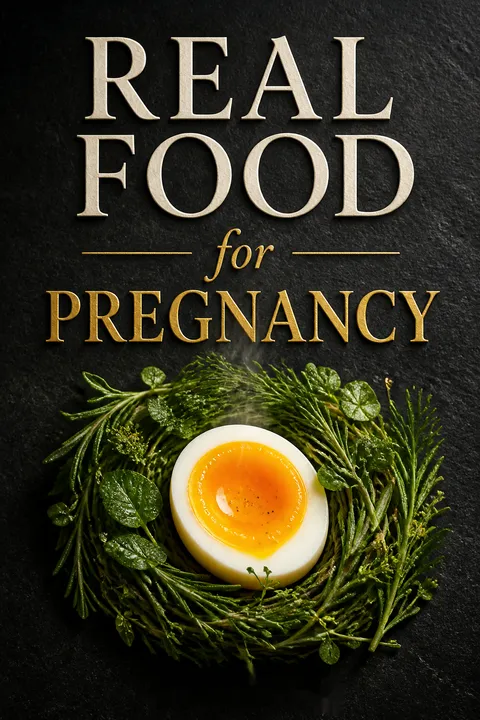
Real Food for Pregnancy is a research-heavy prenatal nutrition guide organized around a deliberate contrast: government-style advice, which Nichols sees as overly focused on grains, low-fat foods, and restrictions, versus a nutrient-dense pattern inspired by whole foods and traditional diets. Its narrative moves from the biological stakes of pregnancy to meal construction, particular foods, supplements, testing, lifestyle, and postpartum recovery. The recurring argument is that adequate calories do not guarantee adequate nutrition, and that maternal health is shaped by more than a prenatal vitamin.
The book's practical strengths are substantial. It translates nutrient discussions into meals, offers ways to pair foods, treats nausea as a real constraint, and gives postpartum support the attention often missing from pregnancy guides. Its insistence that exercise, stress, sleep, and social care belong in the same conversation as diet is also valuable. Readers can leave with a usable framework: prioritize minimally processed foods, build meals flexibly, assess personal needs, and seek help when symptoms or test results warrant it.
Its limits are equally important. The book often presents observational associations, animal research, and plausible mechanisms in a confident causal voice. That is a common challenge in pregnancy research, where controlled experiments are ethically constrained, but it does not make every association proof that a specific food causes a specific outcome. Its skeptical treatment of standard carbohydrate targets, food-safety guidance, and some environmental exposures can also make a contested interpretation sound more settled than it is. The recommendation to emphasize animal foods may be useful for some readers but should not imply that a vegetarian diet is inherently inadequate.
The most reliable way to use the book is as a question-generating resource, not a replacement for prenatal care. Its strongest ideas are nutrient density, individualized observation, and planned postpartum support. Its more prescriptive claims, especially about supplements, food restrictions, and screening, require calibration to current clinical guidance and a person's health history. That distinction preserves the book's practical value without confusing a compelling argument with universal medical consensus.
Review Summary
Real Food for Pregnancy receives mixed reviews. Many praise its thorough research and evidence-based approach to prenatal nutrition, appreciating the focus on whole foods and nutrient density. However, some criticize the book for being overly restrictive, alarmist, and potentially classist in its recommendations. Readers value the comprehensive information on nutrients, toxins, and postpartum care, but some find the advice impractical or overwhelming. The book is generally viewed as a valuable resource for healthcare providers and nutrition-conscious individuals, though its approach may not be suitable for all readers.
People Also Read


Glossary
Real food
Minimally processed, nutrient-rich foodsNichols uses real food for foods close to their natural source, minimally processed, and grown or raised in conditions she believes support nutrient density. Fresh produce, meat, fish, eggs, nuts, and simple-ingredient packaged foods can fit this definition. The term is broader than an unprocessed-only rule and describes the book's preferred dietary pattern.
Fetal programming
Early exposures shape later risksFetal programming is the idea that conditions during pregnancy can influence fetal development and alter health risks later in life. In the book, these conditions include nutrition, maternal blood sugar, stress, exercise, and chemical exposures. It describes possible shifts in developmental pathways, not a guarantee that a particular exposure will determine a child's future health.
Nutritionism
Reducing food to isolated nutrientsNichols uses nutritionism to criticize an approach that focuses on individual nutrients, such as folate or omega-3 fats, while overlooking the foods that contain them and the way nutrients occur together. Her alternative is to use nutrient research to identify useful whole foods, rather than relying only on supplements or nutrient-by-nutrient rules.
The Plate Method
Visual guide to meal balanceThe Plate Method is Nichols' flexible visual guide for composing meals without strict calorie counting. It suggests filling about half the plate with non-starchy vegetables, about one quarter with protein and fat, and the remaining quarter with carbohydrate-rich foods. The book presents these proportions as a starting template that should be adjusted for appetite, activity, blood sugar, symptoms, and individual needs.
Mindful eating
Attend to hunger and fullnessMindful eating means noticing bodily signals before, during, and after a meal, including hunger, satisfaction, fullness, pace, and food preferences, without judging those signals. Nichols presents it as a way to make eating decisions with attention rather than habit, social pressure, or fear of weight gain. It can guide portions while still allowing nutritional considerations.
The Fourth Trimester
Early postpartum adjustment and recoveryThe Fourth Trimester is the book's term for the months after birth when a parent is recovering physically and emotionally while adjusting to a newborn's intensive needs. Nichols uses it to challenge expectations of an immediate return to ordinary routines or a pre-pregnancy body. Rest, food, practical help, feeding support, and gradual physical recovery are central concerns.
Conditionally essential
Needed from food in special conditionsA conditionally essential nutrient is one the body can usually make, but may not produce in sufficient quantities during particular circumstances. Nichols applies this term to glycine in pregnancy, arguing that increased demands for fetal growth and maternal tissue changes make dietary sources important. She points to collagen-rich foods, such as bone broth and slow-cooked meat, as sources.
Hyperglycemia and Adverse Pregnancy Outcomes study
Study of maternal glucose and birth outcomesThe Hyperglycemia and Adverse Pregnancy Outcomes study, often called HAPO in the book, examined glucose levels during pregnancy and outcomes for mothers and infants. Nichols uses it to illustrate that associations with outcomes can appear across a range of blood sugar levels, including levels below diagnostic thresholds. The study is discussed as evidence that glucose matters, not as proof that one dietary prescription fits every pregnancy.
FAQ
What's Real Food for Pregnancy about?
- Focus on Nutrition: Real Food for Pregnancy by Lily Nichols emphasizes the importance of a nutrient-dense diet during pregnancy, challenging conventional guidelines and advocating for whole, unprocessed foods.
- Scientific Evidence: The book is well-researched, drawing on current scientific literature to support its claims about the impact of maternal nutrition on fetal development and long-term health outcomes.
- Holistic Approach: Nichols also addresses lifestyle factors such as exercise, stress management, and toxin reduction, providing a comprehensive view of prenatal health.
Why should I read Real Food for Pregnancy?
- Comprehensive Resource: It is considered essential reading for anyone pregnant or planning to conceive, offering in-depth information on prenatal nutrition.
- Evidence-Based Information: Grounded in scientific research, the book challenges common misconceptions and provides clarity on dietary practices.
- Empowerment Through Knowledge: It empowers women to make informed dietary choices that can positively affect their pregnancy and their baby's health.
What are the key takeaways of Real Food for Pregnancy?
- Nutrient Density is Key: Emphasizes the importance of consuming nutrient-dense foods like eggs, liver, and fatty fish for fetal development.
- Avoid Processed Foods: Advises against refined carbohydrates and sugars, promoting whole foods that provide essential nutrients.
- Mindful Eating Practices: Encourages mindful eating to connect with hunger cues and make healthier food choices.
What are the best quotes from Real Food for Pregnancy and what do they mean?
- “Maternal nutrition plays a critical role in fetal growth and development.” Highlights the central theme that a mother's diet directly affects her baby's health.
- “The nutrition habits that Lily will guide you in developing during your pregnancy will be a gift that you give to your baby, your family, and yourself both now and for years to come.” Emphasizes the long-term benefits of healthy eating habits.
- “Eating the right foods now could prevent your baby from developing diabetes or struggling with obesity later in life.” Suggests that dietary choices during pregnancy can have lasting impacts on a child's health.
What is the definition of "real food" according to Real Food for Pregnancy?
- Close to Nature: Real food is minimally processed and as close to its source as possible, including fresh vegetables, whole fruits, and high-quality animal products.
- Nutrient-Rich: It should provide a rich array of nutrients necessary for both maternal and fetal health, contrasting with processed foods that lack essential vitamins and minerals.
- No Additives: Often doesn’t have a label or is made with simple ingredients and no additives, encouraging whole foods over packaged products.
How does Real Food for Pregnancy address the concept of "eating for two"?
- Misinterpretation of Caloric Needs: Clarifies that "eating for two" doesn't mean doubling food intake; only a modest increase in calories is needed.
- Focus on Nutrient Quality: Emphasizes nutrient quality over quantity, prioritizing foods rich in essential vitamins and minerals.
- Balanced Approach: Suggests a balanced diet with nutrient-dense foods is more beneficial than simply consuming more food.
What foods does Real Food for Pregnancy recommend for building a healthy baby?
- Nutrient-Dense Foods: Highlights foods like eggs, liver, fatty fish, and leafy greens as essential for fetal development.
- Animal Products: Emphasizes the importance of consuming animal products for readily absorbed nutrients often lacking in vegetarian diets.
- Variety of Sources: Encourages a diverse diet including both animal and plant foods to ensure comprehensive nutrient intake.
What foods should be avoided during pregnancy according to Real Food for Pregnancy?
- Processed and Refined Foods: Advises against refined carbohydrates, sugars, and artificial sweeteners due to negative health impacts.
- Certain Animal Products: Cautions with raw or undercooked meats and eggs due to foodborne illness risks, but notes they can be safe if handled properly.
- High-Mercury Fish: Recommends avoiding high-mercury fish like shark and swordfish, while encouraging low-mercury options like salmon.
How does Real Food for Pregnancy suggest managing common pregnancy complaints?
- Dietary Adjustments: Provides strategies for managing nausea, heartburn, and constipation through dietary changes.
- Mindful Eating: Encourages mindful eating to manage cravings and maintain balanced blood sugar levels.
- Nutrient Focus: Emphasizes consuming nutrient-dense foods to support overall health and mitigate common issues.
What role do supplements play in Real Food for Pregnancy?
- Nutritional Insurance: While advocating for food-first, acknowledges some women may need supplements for nutrients like vitamin D and iron.
- Quality Matters: Stresses choosing high-quality supplements with bioavailable forms of nutrients.
- Targeted Recommendations: Provides specific supplement recommendations, such as prenatal vitamins with activated B vitamins.
How does Real Food for Pregnancy address the importance of exercise during pregnancy?
- Overall Benefits: Discusses benefits like improved mood, better sleep, and reduced risk of complications.
- Tailored Exercise Plans: Provides guidance on tailoring exercise routines to different pregnancy stages.
- Mind-Body Connection: Encourages listening to the body and adjusting exercise routines based on how one feels.
How does Real Food for Pregnancy approach postpartum recovery?
- Focus on Healing: Emphasizes nutrition for recovery after childbirth, supporting healing and replenishing nutrient stores.
- Mental Health Considerations: Addresses emotional challenges postpartum and the role of nutrition in supporting mental health.
- Support Systems: Highlights the need for support from family and friends to help new mothers focus on recovery.
Download PDF
Download EPUB
.epub digital book format is ideal for reading ebooks on phones, tablets, and e-readers.








