

Key Takeaways
Treat a call and a planned date as evidence, not flirtation.
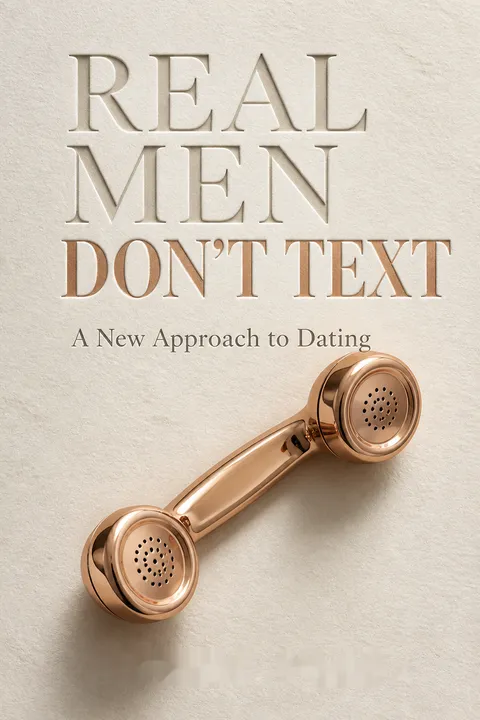
The burrito test. Ruthie’s opening story begins after a promising date: she waits four days, then receives a last-minute text inviting her to meet for burritos. She declines, asks him to call, and he never does. The episode becomes the book’s central dating test: does someone make a clear effort to know you in person, or keep you available through low-effort messages? The authors are not against texting for quick logistics or a brief hello. Their concern is when digital contact replaces direct conversation and real dates.
Make the next step clear. If someone texts to ask you out, respond that you would like to see him and invite him to call. His response gives you better information than a week spent interpreting punctuation. The book’s own love story begins when Michael keeps calling Ruthie, including across thousands of miles.
The useful insight is not that one communication channel proves someone’s character. It is that effort becomes legible when interest moves from hints to a concrete plan. A phone call is a simple test in the book’s setting, but today the more durable standard is mutual clarity: both people should be able to name a plan and follow through. That distinction preserves the authors’ practical advice without turning an etiquette preference into a universal rule about what serious people must do.
Read behavior, not message volume, to judge his intentions.
Words can simulate closeness. The book describes men who send affectionate, frequent messages while rarely making time to meet. One example, Olivia and Brian, develops a lively text relationship after several dates and a sexual encounter. Brian keeps messaging, but avoids making plans. Olivia mistakes continued contact for proof that the relationship is progressing.
Look for consistency. The authors sort common patterns into types: the lonely texter seeks company when convenient, the copy-and-paster sends generic invitations to multiple women, the lazy texter makes last-minute plans, and the hookup-seeker uses warmth to pursue sex. These labels are shortcuts, not diagnoses. The practical check is simpler: do his actions match his claims? If messages suggest devotion but he does not call, show up, or make time, stop asking friends to decode his words and assess what he actually does.
This advice counters a familiar cognitive trap: treating a steady stream of small signals as stronger evidence than a person’s repeated choices. In uncertain relationships, people can become investigators of wording because interpretation feels safer than asking directly. The book’s emphasis on observable behavior offers a useful correction. Still, inconsistency can have many causes, and one missed plan is not a complete character portrait. A direct conversation followed by attention to the pattern is fairer than either endless speculation or instant certainty.
Set sexual boundaries before chemistry starts negotiating them away.
Use boundaries for clarity. The Deans argue from a Christian conviction that sex belongs in marriage and can deepen emotional attachment. They advise making physical limits explicit before desire and pressure make decisions harder. Their suggested boundaries included no sleepovers and no kissing while lying down. They also recommend removing sex from the equation when assessing a partner’s intentions: does he continue to call, date, and show interest when sex is not available?
Protect digital privacy. The book treats sexually explicit messages and images as a serious risk, not a harmless substitute for intimacy. It cites a National Campaign study reporting that 20 percent of teens and 33 percent of young adults had sent nude or semi-nude images; 39 percent of teens and 59 percent of young adults had sent sexually suggestive messages. Once sent, intimate material can be copied or shared without consent.
Precommitting to boundaries can reduce pressure in the moment, especially when someone is trying to secure affection or fears a partner will leave. The book’s religious rationale is specific to its Christian audience, while its emphasis on consent, privacy, and freedom from coercion travels more broadly. Its claim that abstinence clarifies every person’s motives is stronger than the evidence in the text supports. Sexual choices vary across people and relationships, so boundaries should be freely chosen, mutual, and responsive to individual values.
Build self-worth somewhere no date can take it from you.
Attention is unstable proof. Ruthie describes relying on men’s compliments to feel attractive, then feeling worthless when a man disappeared. A coworker’s flattery led to late-night encounters and promises, but when he stopped contacting her, she interpreted his rejection as evidence that she was unlovable. The book connects such dating patterns to deeper pain, including abandonment, abuse, shame, and harsh self-judgment.
Practice care without auditioning. Ruthie encourages readers to notice their self-talk, seek counseling when past wounds need attention, and take small actions that express care for themselves. Shopping with a discouraged friend helped her feel visible again, but the authors stress that clothes are not the source of worth. Their Christian account locates that worth in being loved and accepted by God, rather than earned through beauty, sexual history, or a partner’s approval.
The book identifies a powerful feedback loop: when self-esteem depends on romantic attention, rejection can intensify the very insecurity that makes attention feel indispensable. Small acts of self-care may interrupt that loop, but they are not a substitute for treating trauma or depression. The distinction between intrinsic worth and external approval is especially valuable because it challenges the idea that desirability is a fair measure of human value. Its theological grounding may resonate deeply with Christian readers; others can retain the principle without adopting the same religious explanation.
Treat red flags as information, not a renovation project.
Do not date potential alone. The authors warn against explaining away lying, controlling behavior, cruelty, repeated disrespect, substance problems, or a partner’s stated unwillingness to commit. Ruthie’s friend Jen believed an inconsistent boyfriend was her last chance and stayed through years of uncertainty. They became engaged, but he ended it shortly before the wedding. The lesson is not that every imperfect partner should be abandoned, but that repeated patterns deserve more weight than promises.
Recognize control. The book describes emotional abuse as a pattern that can include monitoring a partner’s whereabouts, isolating her from friends, criticizing and humiliating her, threatening her, or making her feel responsible for his actions. It cites a 2010 article reporting that 35 percent of women had experienced emotional abuse. If a relationship feels unsafe or controlling, the authors urge seeking support from a trusted person or counselor rather than handling it alone.
The strongest part of this section is its attention to patterns of control, not merely dramatic incidents. Gradual isolation and blame can erode a person’s confidence until the behavior seems normal. At the same time, a long checklist can encourage overinterpretation of ordinary flaws, and the cited abuse statistic depends on how abuse was defined and measured. The practical distinction is severity, repetition, and impact: disrespect or coercion that persists after clear limits is more consequential than a single awkward moment.
Choose connection and character over a Prince Charming checklist.
Separate spark from fit. The authors use chemistry for mutual physical attraction, which may be intense and can occur with unsuitable partners. Connection means feeling understood and sharing the deeper capacity to talk, make decisions, and build a life together. Ruthie’s friend June initially doubts a kind, compatible partner because he does not resemble her imagined ideal or produce overwhelming sparks. She learns that a fantasy checklist can obscure a real person.
Keep meaningful standards. The book recommends assessing character, shared faith when faith matters, life direction, friendship, finances, and family expectations. It also warns against forcing attraction: if someone repulses you or genuine connection does not develop after a reasonable period, be honest and end things kindly. The authors suggest dating for about a year before considering engagement, so a couple can see each other across seasons and changing circumstances.
This distinction helps correct the mistaken idea that emotional intensity is a reliable forecast of long-term compatibility. Shared values and the ability to communicate through ordinary life deserve attention alongside attraction. Yet chemistry is not simply disposable noise: mutual desire matters to many couples, and attraction cannot be demanded into existence by a good résumé. The sounder advice is to avoid both extremes, choosing neither a cardboard ideal nor a theoretically perfect match, but a person whose character, values, affection, and daily companionship work together.
Work on your patterns before asking marriage to repair them.
Marriage changes the setting, not the person. Ruthie tells a newlywed story about putting an entire head of garlic into a slow-cooker meal because she misunderstood what a clove was. The joke illustrates a serious point: a new home and spouse did not transform her habits or skills. The authors argue that unresolved wounds, compulsive behavior, financial habits, and selfishness can become more visible under the pressures of shared life.
Start before the wedding. Their six areas for attention are childhood wounds, unforgiveness, selfishness, pornography, spending habits, and fantasy relationships or dependence on romantic attention. They recommend counseling, supportive friendships, practical financial habits, and time away from dating when old patterns are hard to interrupt. This is preparation, not a demand for perfection: the book emphasizes that a person’s past does not disqualify them from love or a new beginning.
The claim that marriage magnifies existing patterns is persuasive because intimacy reduces the distance that once allowed habits to stay hidden. A wedding is not a treatment plan, and a partner cannot reliably serve as therapist, parent, or cure. Still, readiness should not be confused with flawlessness. People can grow inside committed relationships, provided they take responsibility, seek appropriate help, and do not expect a spouse to absorb harmful behavior indefinitely.
Encourage a man with direction, but do not become his career manager.
Direction is effort, not status. Michael recounts losing a job shortly before his wedding, then spending weeks discouraged, rejected by employers, and unsure what to do next. Ruthie encouraged him, helped with applications, and pointed him toward experienced male mentors. The authors distinguish a temporary setback from a persistent refusal to work, plan, or take responsibility. A man with direction, in their definition, has a sense of where he is going and is willing to work toward it.
Support without rescuing. They suggest asking about his interests, affirming his capacities, and encouraging him to seek counsel. But they warn against writing his résumé while he avoids the work, lending money indefinitely, or excusing a chronic lack of effort. The book suggests setting a time limit, even proposing two months to see meaningful movement. Its central boundary is that encouragement can help, but cannot supply another person’s motivation.
This chapter’s useful distinction is between unemployment and passivity. Economic conditions can make stable work difficult, so a job title or income alone says little about a person’s character. The more relevant evidence is initiative, accountability, and willingness to adapt. The authors’ gendered language about men as providers and leaders reflects their Christian framework and may not fit every couple. The underlying standard is more inclusive: partners should contribute responsibly and share the work of building a life.
Use online dating to meet in person, not to manufacture intimacy.
Move from profile to person. Michael describes online dating as a useful way to meet people, especially while living overseas, but says messages can create a false sense of compatibility. The book’s simple sequence is to exchange messages, talk by phone, then meet in a public place. Keep the first meeting brief, tell a friend where you are, and do not let digital conversation stand in for observing how someone behaves face to face.
Protect your time and safety. The authors advise against using dating apps for an emotional rush or while feeling desperate. They flag pressure to meet immediately, sexual images, inconsistent personal details, refusal to talk by phone, and repeated canceled plans. The book notes that one in six relationships began online, a figure reported in its 2013 context. Online dating is presented as a legitimate tool, not proof of either desperation or guaranteed romance.
The distinction between a medium and a relationship is still useful: digital contact can introduce people, but it cannot provide all the evidence of shared presence and follow-through. The safety advice is practical, especially for first meetings with strangers. The book’s early-2010s statistic should not be treated as a current estimate, and its advice about profiles and platforms belongs to a different technological moment. The durable principles are to limit investment before meeting, verify consistency, and keep control over pace and setting.
Let faith offer a second chance, not a new way to shame yourself.
The final promise is grace. The book’s advice rests on a Christian story: Ruthie believes that neither past sexual choices nor failed relationships remove a person’s worth or place beyond God’s forgiveness. She recalls Jesus refusing to condemn a woman accused of adultery while still calling her toward a different life. The authors use this story to reject both moral perfectionism and the idea that past mistakes make someone unworthy of love.
Change remains possible. Ruthie and Michael’s own relationship grows from years of missteps, loneliness, and uncertainty. They describe their marriage not as a prize for perfect dating, but as a gift that followed clearer standards, personal growth, and faith. Their closing counsel is to stop choosing a harmful relationship simply because being alone feels frightening, while also refusing to treat a person’s past as the whole story.
The book’s ending makes hope compatible with accountability: forgiveness does not erase consequences, but it can make change imaginable without reducing a person to past behavior. That is a meaningful counter to shame, which often traps people in secrecy and repetition. The explicitly Christian account will not be every reader’s language for renewal. Its broader lesson remains accessible: self-respect and responsibility can begin now, and a history of poor choices does not dictate every future choice.
Analysis
Real Men Don’t Text is a relationship guide built from alternating memoir, advice, illustrative scenarios, and Christian teaching. Its central proposition is that dating habits shape expectations: vague digital attention, sexual pressure, and excuses can keep people invested in relationships that do not offer reciprocal care. Ruthie’s story of refusing a late-night burrito invitation gives this argument its memorable entry point. Michael’s chapters then complicate the simple message by acknowledging that men may text from fear or immaturity, not only calculated exploitation. Across the book, the reader is urged to evaluate actions, set boundaries, notice warning signs, and invest in personal growth rather than treating a partner as a cure for insecurity.
The most durable insights are behavioral. Ask for clarity instead of decoding messages. Notice whether conduct matches declarations. Take controlling behavior seriously. Do not assume marriage will resolve untreated problems. These principles remain useful even as communication norms have changed since the book’s 2013 publication. Its online dating advice also recognizes that technology can broaden access while making premature intimacy and misrepresentation easier.
The book’s strengths are its vivid personal stories, concrete scripts, and insistence that readers deserve respect regardless of sexual history or relationship status. Its Christian framework offers a coherent account of worth, sexual ethics, forgiveness, and hope. That coherence is also a limit: readers outside that tradition may not share its marriage-centered sexual rules or its assumptions about God as the foundation of self-worth. Some advice also treats conventional gender expectations as broadly applicable, and occasionally turns preferences, such as phone calls or advance planning, into near-universal tests of interest. Those rules are most useful when understood as tools for identifying compatibility and setting boundaries, not as scientific measures of sincerity. At its best, the book is less about banning texting than about refusing to mistake easy access for intimacy, and less about finding a flawless partner than about becoming capable of choosing and sustaining a healthy relationship.
Review Summary
Real Men Don't Text offers a fresh perspective on modern dating, emphasizing the importance of genuine communication over texting. Readers appreciate its practical advice, personal anecdotes, and Christian viewpoint. The book encourages women to set standards, avoid settling, and recognize red flags. While some find certain suggestions challenging, many recommend it for young adults navigating relationships. The authors' honesty about their own experiences resonates with readers, making it a relatable guide for those seeking meaningful connections in the digital age.
Glossary
text goggles
Digital messages distort judgmentThe authors’ term for the rosy assumptions people can develop from flirty or frequent messages. Because texting allows selective self-presentation and leaves tone ambiguous, a person may imagine closeness or compatibility that has not been tested in face-to-face interaction. The advice is to avoid treating messages as proof of a relationship and seek direct, real-world contact.
Four Seasons girl
A woman with clear standardsAn analogy for a woman who expects consideration, planning, and respect in dating. The authors contrast her with a “Knights Inn girl,” who accepts whatever is convenient. The point is that standards can filter out casual or careless partners. The metaphor is not a measure of a woman’s actual worth, which the book says does not depend on how men treat her.
Knights Inn girl
A woman accepting low effortThe counterpart to the book’s “Four Seasons girl” analogy. It describes someone who accepts convenient, low-investment treatment because it meets an immediate need for attention or company. The authors argue that this can normalize poor treatment. Their metaphor is intended to encourage higher expectations, although readers should distinguish self-respect from judging women who make different dating choices.
man-boy problem
Avoidance of adult responsibilityThe authors’ label for men who avoid maturity and responsibility in relationships and broader adult life. They connect it to passivity in dating, reluctance to commit, and lack of direction. The book argues that accepting chronic low effort can reinforce the pattern. The concept is framed through traditional expectations of male adulthood, though its underlying concern about reciprocal responsibility applies across genders.
chemistry
Mutual attraction or excitementThe Deans use chemistry for physical attraction and instinctive excitement between people. They believe it can occur with multiple partners and may cloud judgment, so it is not enough by itself to justify marriage. They contrast it with a deeper sense of being understood and sharing a workable life. In their view, attraction matters, but should be weighed alongside character, values, and friendship.
connection
Feeling deeply understoodThe authors’ term for a durable sense that a partner understands one’s inner life and can share meaningful conversation, decisions, and ordinary routines. They distinguish connection from physical excitement, which may change over time. In their account, connection can strengthen through a relationship and is more important to lasting partnership than intense early chemistry alone.
The Big Six
Six areas for personal preparationThe book’s list of personal patterns to address before marriage: unresolved childhood issues, unforgiveness, selfishness, pornography, spending habits, and fantasy relationships or dependence on romantic attention. The authors recommend counseling and practical changes where needed. The list is not presented as a requirement to become flawless before commitment, but as a prompt to take responsibility for patterns likely to affect shared life.
Download PDF
Download EPUB
.epub digital book format is ideal for reading ebooks on phones, tablets, and e-readers.








