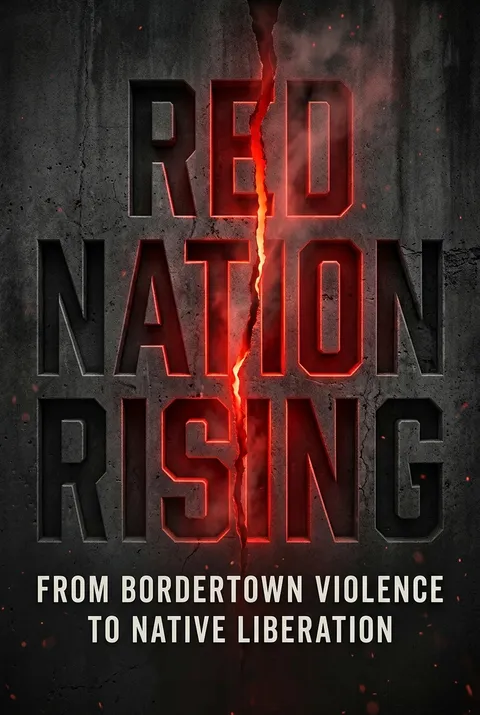


Key Takeaways
Read Native deaths as evidence about the system, not exceptions
A death with a history. Zachary Bearheels, a Rosebud Sioux man experiencing a mental health crisis, was stranded in Omaha after a bus driver refused to let him back aboard. Police found him, ignored his mother’s request for medical help, repeatedly used a Taser, and beat him. He died. The coroner attributed his death to excited delirium, a diagnosis the authors say major medical associations do not recognize. The officers faced little lasting consequence. The book places Bearheels beside George Floyd and other Native people killed by police to argue that individual cruelty cannot explain a pattern that institutions repeatedly excuse.
Follow the structure. The authors ask readers to examine the social order policing protects: one built on Native dispossession and racialized control. The point is not to deny individual responsibility, but to see how supposedly isolated deaths become routine when law, medical language, and public narratives help make them seem acceptable.
The case shows how institutions can distribute responsibility until no single decision appears to explain a death. Police, prosecutors, medical examiners, and arbitration systems each shape the outcome, a pattern familiar to scholars of organizational failure. That lens helps explain why replacing one officer or revising one procedure may leave the larger machinery intact. At the same time, a structural account is strongest when it preserves distinctions among actors, evidence, and local decisions. Explaining a pattern should not flatten every case into an identical one. The book’s opening makes a powerful demand: investigate both what happened to a person and the institutional habits that made the result possible.
A bordertown is a colonial relationship, not just a town near a reservation
A border that travels. The book uses bordertown for white-dominated settlements around Native communities, but the term means more than a location. It names a relationship in which settler authority confronts Native presence, land claims, and political life. That confrontation can happen across reservation boundaries, inside cities, or wherever Native people are treated as outsiders on their own homelands.
Everyday crossings matter. The phrase off the reservation carries the history of boundaries used to contain Native people and punish those who crossed them. Yet most Native people live away from designated reservation land, and cities have often grown on Native territory. The bordertown framework makes ordinary encounters with police, businesses, and local government part of the same contested geography, rather than isolated incidents at a distant frontier.
This framework is useful because it changes the scale of political geography. A border is not only a line on a map; it can also be a rule about who belongs, who may move, and whose authority counts. That helps connect reservation jurisdictions, urban policing, and economic exclusion without pretending they are identical. The concept also asks a difficult question of readers who live in cities: what histories make a place feel settled and ordinary? Its broad reach is analytically provocative, though it risks making every town seem interchangeable. Local histories and Native nations’ distinct claims remain essential to understanding each place.
Treat law and property as history enforced, not neutral ground
Ownership has a backstory. The authors argue that US property law grew through claims to Native land, not through a neutral system that later encountered colonial injustice. They point to the Marshall Trilogy, three Supreme Court cases that grounded federal authority over Native land and limited Native sovereignty. The Doctrine of Discovery, a European legal rationale for claiming lands encountered through imperial expansion, helped give those claims legal form.
Treaties reveal the conflict. Native nations understood treaties as diplomatic relationships with obligations of peace and mutual recognition. The United States signed more than five hundred treaties with Native nations, yet the book says it honored none. Later policies continued dispossession: between 1953 and 1964, more than one hundred Native nations were terminated, and 1.3 million acres left trust status. Law, in this account, does not merely settle disputes. It helps define who may own land and exercise authority.
The account puts legal history in conversation with critical property studies, which examine ownership as a political arrangement backed by institutions rather than a natural fact. Its emphasis on treaties is especially important because it presents Native nations as political actors, not simply communities seeking inclusion in US law. Still, a critique of law’s colonial foundations does not make every legal tool useless. Treaty claims and court decisions can provide resources for Native nations even within a system built to constrain them. The useful distinction is between using law tactically and mistaking legal recognition for a complete remedy to dispossession.
Challenge the common sense that makes Native presence seem criminal
Ideas organize treatment. Anti-Indian common sense is the book’s term for everyday beliefs and institutions that normalize Native disappearance, exclusion, or subordination. It includes familiar stereotypes of the drunk, savage, or vanishing Indian, but also policies and professional expertise that portray Native people as defective or out of place. The category urban Indian can reproduce this logic when city-dwelling Native people are treated as less authentic than those living on reservations.
Policy shaped the map. In the 1950s, federal relocation programs moved Native families into cities while termination policies ended federal recognition of some nations. The stated promise of opportunity concealed a program intended to weaken Native political ties to land. By 2010, 78 percent of American Indians lived off reservation, according to the census cited in the book. Telling Native people to return to the reservation ignores both this history and the fact that cities themselves occupy Native lands.
The idea connects political ideology to daily classification. Labels such as transient or inauthentic can appear descriptive while quietly assigning people a lower claim to safety, services, or belonging. This resembles a broader sociological process in which categories help institutions decide whom to monitor and whom to protect. The book also notes that Native people can reproduce these distinctions among themselves, a reminder that colonial categories can persist beyond the institutions that created them. Challenging the language matters, but changing vocabulary alone is insufficient. The deeper test is whether policies and resource decisions change alongside the words.
Follow the money: bordertown commerce can profit from Native vulnerability
Commerce and coercion intersect. The book describes Gallup, New Mexico, as an economy that depends heavily on Navajo customers while directing profits toward non-Native businesses. Liquor stores, pawnshops, payday lenders, car dealerships, trading posts, and tourist markets draw value from Native spending, labor, and cultural production. Meanwhile, police repeatedly detained people for public intoxication. The book reports that Gallup averaged about 800 such arrests each month in the early 1970s.
Extraction reaches beyond shops. Native-made art may attract tourists, while traders and galleries capture much of its value. Oil, gas, coal, and other materials move through Native lands toward cities and industries elsewhere. These patterns are linked: economic dependence on Native customers or labor does not necessarily give Native people ownership or political power. The book asks readers to look past the appearance of ordinary business and examine who receives the benefits, who bears the costs, and whose land makes the exchange possible.
This analysis broadens the meaning of exploitation beyond wages. It includes control over cultural production, local markets, and the movement of resources, which helps explain why economic growth can coexist with deep local deprivation. A supply-chain perspective can sharpen the question: where does value accumulate, and where are health, environmental, and social costs left behind? The authors’ account is most compelling when it identifies specific institutions, as in Gallup’s liquor economy and policing. A caution is that businesses and Native customers are not a single, uniform bloc. Mapping ownership and decision-making locally can reveal the differences that a broad structural account may obscure.
Make gender justice central to land and sovereignty struggles
Violence follows extraction. The book connects the epidemic of missing and murdered Native women, girls, and Two-Spirit people, often abbreviated MMIWG2S, to policing failures, jurisdictional gaps, and the dispossession of Native communities. It cites research finding that more than one in three American Indian and Alaska Native women will be raped in their lifetime. It also describes increased violence around extractive industry work camps. In North Dakota’s Bakken region, reports of violence by oil and gas workers against Native women, particularly aggravated assault, rose 70 percent from 2006 to 2012.
Colonialism shapes gender. The authors argue that settlers imposed a strict gender binary and attacked Native gender diversity, including the place of Two-Spirit relatives in community life. Gender violence is therefore not an issue separate from sovereignty: it affects kinship, safety, and the ability of Native nations to care for their people. Protecting land while excluding women and LGBTQI2S relatives would leave part of the colonial structure untouched.
The connection between extraction and gendered violence places questions of safety inside economic and political analysis, rather than treating violence as a private misfortune. It also challenges environmental movements to ask whose bodies bear the cost of projects described as development. The emphasis on Two-Spirit relatives complicates any easy appeal to tradition by showing that cultural restoration must not reinforce male authority or narrow gender roles. The figures establish urgency, though they cannot capture every community’s experience or explain every individual case. Good policy analysis needs both the structural pattern and careful local evidence, especially where data collection itself is incomplete.
Do not confuse reform, charity, or reconciliation with decolonization
Help can preserve control. The authors criticize civil-rights remedies, nonprofits, churches, and reconciliation programs when they address suffering without changing the conditions that produce it. They describe the nonprofit sector as one way political movements can be redirected into grant-funded services accountable to donors. Charity may provide food or shelter, but it can also demand religious participation and cast Native people as helpless recipients rather than relatives with rights and political authority.
Care still matters. The critique is not that trauma treatment, food, or legal protection are worthless. The authors explicitly recognize that people need support. Their concern is that therapeutic language, cultural sensitivity training, or a truth-and-reconciliation process can become substitutes for confronting land theft and institutional power. Farmington’s 2005 civil-rights report described improved relations, while a later Navajo Nation investigation found continuing discrimination. A program’s good intentions, the book argues, do not establish that it has changed the underlying relationship.
This is a valuable distinction between immediate relief and structural remedy. Social services can reduce real harm, yet their delivery may leave the causes of that harm intact. The strongest reading does not force a choice between care and political transformation: communities need both, while retaining control over priorities and accountability. The book’s suspicion of nonprofit structures is provocative, especially because these organizations can also provide expertise, continuity, and resources. The practical question is not simply whether an organization receives grants, but whether funding rules narrow its goals, displace community authority, or make it answerable to people outside the struggle.
Build liberation through kinship and horizontal alliances
Kinship is political practice. The book uses kinship to describe relationships of responsibility among people and with the land and other-than-human life. It is not only inherited family connection. The authors point to unsheltered Native people protecting one another, grassroots groups sharing food and supplies, and Native transwomen forming networks of mutual support. These acts counter the idea that urban Native life is simply alienation or loss.
Solidarity can be reciprocal. The book distinguishes vertical solidarity, in which more privileged groups support an oppressed group, from lateral solidarity among groups facing oppression. It argues that Native liberation needs strong relationships with Black, migrant, refugee, queer, and other colonized communities, not only appeals to powerful donors or politicians. The point is not to erase different histories. It is to build cooperation around material commitments while respecting each community’s own political aims.
The account makes solidarity more demanding than public sympathy. It asks whether support changes relationships, shares resources, and follows the priorities of those facing the immediate risk. This resonates with mutual-aid traditions, where people organize care directly rather than waiting for institutions to define need. The emphasis on lateral alliances also guards against the familiar rescuer dynamic. Yet shared opposition alone does not guarantee trust; groups may have different histories, interests, and internal power imbalances. Durable solidarity requires negotiation and accountability, not just a common slogan. Kinship here offers an ethical horizon, while organization supplies the practical means to approach it.
Pair abolition with land return, sovereignty, and material redistribution
The proposed change is structural. The book’s program joins Native liberation to abolition, meaning the dismantling of prisons and policing as institutions that enforce racialized and colonial order. It also calls for decolonization through land return and restored Native political authority, not merely recognition within existing institutions. Because the authors link capitalism to private property and the extraction of Native land, their argument reaches beyond criminal justice reform to the ownership system itself.
A different future is practiced now. The book connects Native resistance with Black freedom struggles and points to examples such as the Dakota uprising, the American Indian Movement, and Standing Rock’s water-protector mobilization. It presents kinship and collective care as existing practices that can support a different political order. Its closing challenge is substantial: abolition without land and sovereignty would be incomplete, just as cultural survival without material power would leave the basic terms of dispossession in place.
The synthesis is ambitious because it treats policing, property, and colonial authority as interdependent rather than separate policy problems. That framing helps explain why a narrow reform can improve a procedure without changing who controls land or resources. It also raises hard questions about transition: what institutions would provide safety, resolve conflict, and coordinate shared resources after abolition? The book’s emphasis on kinship gestures toward answers, but broad principles need concrete governance, safeguards, and pluralism. Those questions do not weaken the demand for transformation. They make the work of imagining and building accountable alternatives more urgent.
Analysis
Red Nation Rising is an activist work of history and political theory, organized as a map of concepts rather than a linear chronology. Its central device, the bordertown, connects the intimate scene of a person being policed to the larger histories of land seizure, racial capitalism, and Native political survival. The opening account of Zachary Bearheels makes that scale shift vivid: the question is not only which officer acted, but how medical, legal, and public institutions can recast state violence as ordinary procedure.
The book’s distinctive contribution is to insist that Native dispossession is not a completed episode or a regional issue. It persists in urban life, public health, education, commerce, and the classification of Native people as outsiders. By linking Native elimination with anti-Blackness and capitalism, the authors make solidarity a structural argument, not simply a moral appeal. Their attention to gender and Two-Spirit life also prevents sovereignty from being reduced to a narrowly masculine or territorial claim.
The force of this account comes with a cost. Its language often presents settler institutions as a unified system whose reform cannot deliver liberation. That is a coherent revolutionary position, but it leaves less room to distinguish among tactics, institutions, and outcomes. Legal action, public services, and nonprofit work can be both constrained and materially useful. The sharper question is when such measures build community power and when they redirect it. Likewise, calling for abolition and land return identifies a horizon, but readers may want more detail about governance, conflict resolution, and political transition.
These tensions do not cancel the book’s core insight. They clarify its demand: judge institutions not only by their stated intentions, but by the relationships and distributions of power they reproduce. Its organizing manual is therefore also a method of attention. Follow who controls land, who is treated as belonging, whose suffering is normalized, and which forms of care build reciprocal authority rather than dependency.
Review Summary
Red Nation Rising receives high praise from readers for its unflinching examination of settler colonialism and Native American struggles. Reviewers appreciate its analysis of bordertowns, anti-Indian violence, and the ongoing impacts of colonization. The book is described as a powerful manifesto for decolonization and resistance, offering a framework for Native liberation. While some note its lack of practical solutions, most commend its thought-provoking content and call to action. Readers find it enlightening, challenging, and necessary for understanding Indigenous perspectives and the ongoing effects of historical injustices.
People Also Read







Glossary
bordertown
Colonial border relationA bordertown is both a settlement bordering Native territory and a relationship in which settler authority confronts Native presence, land claims, and sovereignty. The book extends the term beyond reservation-adjacent towns to cities and institutions across settler society, emphasizing that borders are continually enforced through policing, law, commerce, and ideas about who belongs.
anti-Indian common sense
Everyday ideology of Native eliminationAnti-Indian common sense is the network of beliefs and ordinary practices that makes Native exclusion, dispossession, and disappearance seem natural or justified. It includes racist stereotypes, historical narratives that erase Native nationhood, and institutional policies. The term combines anti-Indianism with the idea that dominant beliefs can become accepted as ordinary social understanding.
Indian rolling
Racist attacks on Native peopleIndian rolling refers to brutal assaults, often by groups of settler men or boys, targeting Native people, especially unsheltered people and those perceived as vulnerable. The attacks may involve beatings, bludgeoning, burning, or mutilation. The book treats the practice not only as individual hate violence, but as a form of terror that enforces the idea that Native people do not belong in settler towns.
settler colonialism
Permanent settlement through dispossessionSettler colonialism is a political structure in which settlers seize Indigenous land, attack Native societies and sovereignty, and establish a permanent society on the occupied territory. In the book’s account, it is not a finished historical event: it continues through law, policing, economic extraction, relocation, and cultural narratives that weaken Native relationships to land and political authority.
Marshall Trilogy
Foundational US Indian law casesThe Marshall Trilogy is the name for three early US Supreme Court cases: Johnson v. McIntosh, Cherokee Nation v. Georgia, and Worcester v. Georgia. Together, they established legal doctrines that supported US claims over Native lands and restricted Native sovereignty. The book presents these decisions as foundational examples of law organizing and defending settler authority.
MMIWG2S
Missing and murdered Native relativesMMIWG2S abbreviates Missing and Murdered Native Women, Girls, and Two-Spirit People. It names a crisis of disappearance and violence affecting Native women, girls, transwomen, and Two-Spirit people. The book stresses that available statistics often undercount the crisis, and connects it to settler colonialism, jurisdictional failures, gender violence, and the loss of kinship-based safety.
kinship
Reciprocal relations of careIn the book, kinship is a political and ethical practice of reciprocal responsibility among people, communities, land, and other-than-human life. It is broader than biological family ties. Examples include mutual aid among unsheltered Native people and community networks supporting vulnerable relatives. Kinship offers an alternative to systems that treat people, culture, and land as commodities or objects of charity.
lateral solidarity
Alliance among oppressed groupsLateral solidarity describes cooperation among groups that experience colonialism, racism, or other forms of oppression. In contrast to support flowing mainly from privileged groups to marginalized ones, it emphasizes reciprocal relationships among movements and communities. The book presents such alliances as important to Native liberation, while recognizing that participating groups retain distinct histories and political aims.
Download PDF
Download EPUB
.epub digital book format is ideal for reading ebooks on phones, tablets, and e-readers.








