

Key Takeaways
Treat political defeat as fuel when grievance can rewrite the rules
Exile changed the conditions. After losing in 2020, Trump spent years insisting the election had been stolen. Many former aides avoided him, social media platforms banned him, and Fox News tried to move on. Yet repetition turned the false claim into a loyalty test for Republicans and helped Trump recast legal investigations as a political vendetta. His indictments and conviction, which might have ended another politician’s career, became campaign material and helped his supporters see him as a persecuted fighter.
Preparation met opportunity. The authors argue that the four years out of office let Trump assemble loyalists and study how to use federal power. The assassination attempt in Butler, Pennsylvania, strengthened his image among supporters. By 2024, he won both the Electoral College and the popular vote, returning with a stronger party and a more prepared team.
What's striking is the feedback loop: a political loss becomes an identity story, the story tightens group loyalty, and loyalty makes correction feel like betrayal. Research on motivated reasoning helps explain why repeating a claim can matter politically even when evidence does not support it. The account also complicates the idea that adversity automatically weakens a leader. Legal scrutiny can strengthen a movement when followers distrust the institutions delivering it. That does not make the allegations against Trump false or the prosecutions improper. It shows that public legitimacy depends not only on evidence, but on whether people trust the process that produces it.
Staff for obedience, and expertise loses its place at the table
Loyalty became a hiring rule. In the transition, candidates for senior jobs faced questions about January 6 and the 2020 election. Past criticism of Trump could end a candidacy, while demonstrated loyalty could outweigh conventional experience. Trump chose figures including Fox host Pete Hegseth for Defense and filled Justice Department leadership with lawyers who had represented him. He also placed Stephen Miller in roles spanning domestic policy and homeland security.
The team was more cohesive. Susie Wiles, the chief of staff, brought order and personal trust, while Miller drove an aggressive policy agenda. The contrast with the first term mattered: Trump had previously appointed establishment figures who sometimes resisted him. In his second term, Congress also showed far less independence. Mike Johnson, the House speaker, worked to turn Trump’s priorities into law, including the One Big Beautiful Bill, which passed the Senate 51 to 50.
The distinction between a loyal adviser and a competent adviser is not always a choice, but a system that rewards loyalty above candor predictably narrows the information reaching its leader. Organizational research calls this a problem of psychological safety: people who fear punishment withhold bad news, and decision-makers become more confident while becoming less informed. Wiles’s stabilizing presence shows that trusted coordination can improve execution. But cohesion has a cost when disagreement is treated as disloyalty. A government needs both reliable implementers and people empowered to say that an idea is mistaken, unlawful, or operationally unworkable.
A fast executive order is theater unless agencies can carry it out
Speed exposed weak planning. Trump signed more than 140 executive orders in his first hundred days, surpassing Franklin Roosevelt’s record. The administration sought to move faster than opponents and agencies could respond. But an early federal funding pause caused confusion, including a temporary disruption to Medicaid payment systems, and was blocked by a judge. Officials later blamed poor drafting and a rushed rollout.
DOGE showed the same risk. Elon Musk’s Department of Government Efficiency gained access to sensitive federal systems and pushed sweeping cuts with little coordination. At USAID, the interruption of food and fuel support to the Al Hol detention camp in Syria threatened to destabilize a site holding ISIS fighters and their families. Even after waivers were approved, payment systems did not work properly. Secretary of State Marco Rubio inherited the remains of the agency and the task of repairing the disruption.
The book’s strongest administrative lesson is that government is not a single machine with one switch. It is a network of agencies, legal authorities, contracts, and people whose dependencies are often invisible until something breaks. Systems engineering calls these hidden connections failure points: a local intervention can create distant effects. Speed can be valuable during a crisis, but it cannot substitute for mapping dependencies and assigning responsibility. The funding pause and USAID example illustrate why measurable cuts are not the same as effective reform. A serious efficiency effort must count the costs of disruption, not just the line items removed.
Emergency language can turn ordinary policy disputes into power grabs
The administration stretched the exception. Trump declared emergencies over the border, energy supplies, and trade deficits, including conditions that had existed for years or had recently improved. Emergency declarations can unlock powers that ordinary policymaking does not. The book traces how Trump and Miller sought to use that flexibility for tariffs, immigration restrictions, and actions against domestic dissent.
Due process became a flashpoint. The administration used the 1798 Alien Enemies Act to deport migrants it described as part of an invasion, sending some to El Salvador’s CECOT prison. Kilmar Abrego Garcia, who had a court order protecting him from removal to El Salvador, was mistakenly deported. The Supreme Court ordered the government to facilitate his return. Separately, staff secretary Will Scharf warned that suspending habeas corpus, the right to challenge detention before a judge, would cross an extraordinary legal boundary.
Emergency powers are attractive because they compress deliberation, but that same compression makes errors harder to detect and correct. Constitutional safeguards are not merely obstacles to action; they create review points that expose mistaken identity, unsupported claims, and excessive force. The Abrego Garcia case gives that abstraction a human scale: one disputed classification can separate a person from family and legal protection. Governments do face genuine emergencies, and delay can also cause harm. The essential question is whether the claimed crisis is specific enough, the response proportionate, and the legal review available quickly enough to correct mistakes.
When accountability becomes vengeance, law enforcement loses its distance
Targets became presidential business. Trump’s second-term team pursued investigations of former officials, prosecutors, and political opponents whom he blamed for his legal troubles. He publicly pressed Attorney General Pam Bondi to bring charges against James Comey, Letitia James, and Adam Schiff. The first indictments against Comey and James were later dismissed after a judge found problems with the prosecutor’s appointment and legal handling.
Pressure spread beyond the courts. The administration targeted law firms whose lawyers had worked on cases against Trump. Paul Weiss agreed to provide $40 million in pro bono legal services after the President threatened the firm’s access to federal work. Harvard faced demands for government oversight of admissions, hiring, and academic programs, backed by threats to billions in grants. The Federal Reserve also faced pressure as Trump sought lower interest rates and attempted to remove Governor Lisa Cook before a court intervened.
The danger is not limited to whether any one investigation has merit. It is the collapse of the distinction between public enforcement and personal retaliation. Legal systems gain legitimacy when similar cases are handled by stable rules rather than a leader’s changing list of adversaries. The book also shows why institutions can capitulate without a final court defeat: clients, grants, licenses, and reputations create immediate pressure. That makes resistance costly, but not futile. The dismissal of the Comey and James cases and judicial protection of Cook demonstrate that formal checks still matter, especially when officials and institutions use them before the damage becomes irreversible.
Use spectacle to govern, because images can outrun explanations
Policy was packaged for an audience. The administration turned deportations into shareable media, including a video presenting the sounds of a shackled deportation flight as entertainment. A cartoon-style image of a detained woman generated millions of views. Officials described provocation as part of the point: viral posts could deter migrants and push critics into reacting on the administration’s chosen terms.
The White House became a stage. Trump welcomed business leaders at Mar-a-Lago with music and displays that framed their visits as submission. In office, he covered the Oval Office in gold, proposed a vast ballroom, and repeatedly used public ceremonies to display dominance. The book’s opening scene joins spectacle to power: while guests celebrated New Year’s Eve at Mar-a-Lago, Trump and aides were preparing the operation that would seize Nicolás Maduro.
Visual politics works by making a policy feel immediate before a viewer has time to inspect its legality or consequences. Communication scholars describe this as an attention advantage: a vivid scene can travel farther than a careful explanation. The administration’s media strategy is especially effective at turning opponents’ outrage into more distribution. But reach is not persuasion, and spectacle can repel people who are not already in the audience. The book notes that harsh deportation tactics alienated swing voters even as the posts drew enormous views. That distinction matters: a government can dominate the feed while losing confidence outside its most committed supporters.
Tariffs and threats can force attention, but not a coherent strategy
Tariffs became an instrument of personal leverage. Trump admired the high tariffs of the Gilded Age and imposed a 10 percent baseline tariff on imports, with additional country-specific rates announced on what he called Liberation Day. The calculation was improvised, and senior officials disagreed about its purpose: revenue, bargaining power, or eliminating trade deficits. Trump also used tariff threats to pressure countries over issues beyond trade.
The markets supplied a limit. After China retaliated, U.S. markets fell sharply, and the S&P 500 lost more than $2 trillion in value in a single day. Trump eventually paused many tariffs for ninety days, while sharply raising those on China. The episode showed both his tolerance for risk and its constraints. He also attacked Federal Reserve chair Jerome Powell for not cutting rates, even though tariffs risked raising prices and complicating the Fed’s inflation decisions.
Tariffs can serve as bargaining tools, but the credibility of a threat depends on knowing what outcome would count as success and what costs are acceptable. Without those conditions, uncertainty itself becomes the policy, and businesses cannot plan around it. The book’s market episode illustrates a constraint that neither executive confidence nor party loyalty can eliminate: investors react to uncertainty, and financing conditions can turn political gambles into economic limits. Still, market discipline is uneven. It can force a retreat when financial risk becomes acute, but it does not reliably protect workers, consumers, or public programs from costs that accumulate more slowly.
Use personal diplomacy for deals, but do not mistake rapport for strategy
A personal channel could open doors. Trump relied on longtime friend and real estate investor Steve Witkoff for sensitive diplomacy with Russia and the Middle East. Witkoff helped secure a Gaza ceasefire and hostage exchange with Jared Kushner, who had experience with regional leaders. Their dealmaking showed the value of access, persistence, and pressure when official channels were stalled.
Rapport did not guarantee leverage. In Ukraine, Trump sidelined his appointed envoy Keith Kellogg, opened a back channel with Putin, and pressed President Volodymyr Zelensky to accept a minerals deal without a security guarantee. The public Oval Office confrontation damaged trust with European allies. Trump’s personal approach produced a Gaza breakthrough, but it also made foreign policy dependent on a small circle, shifting instructions, and the President’s changing preferences.
Informal diplomacy can be useful because negotiators may speak more freely and move faster than large bureaucracies. The Gaza example suggests that personal trust can help unlock a narrow agreement. But diplomatic rapport is not the same as verified alignment: an interlocutor may be charming, sincere, or simply skilled at managing the other party. Durable agreements need clear terms, consultation with affected parties, and institutions able to monitor implementation. The exclusion of Ukraine from talks about its own war illustrates the danger of treating access to leaders as a substitute for legitimacy. A deal can be quick and still leave the central conflict unresolved.
Treat public office as private opportunity, and public trust becomes collateral
Business and government overlapped openly. The Trump and Witkoff families formed World Liberty Financial, a cryptocurrency company whose stablecoin became central to a $2 billion investment by an Emirati state-linked firm. The book describes foreign investment, access to U.S. technology, and policy decisions unfolding in overlapping networks. Trump also accepted a Qatari luxury jet for future government use, with a plan to transfer it to his presidential library after his term.
Favors could be politically useful. The administration pardoned Binance founder Changpeng Zhao, who had served time for financial crimes, after World Liberty had business ties to Binance. The authors also describe fundraising for a Trump library, family ventures, and gifts from people seeking favor. Trump argued that his family had been unfairly restricted from business in his first term. The result was a White House where the boundary between public duty and private gain was difficult to see.
Conflicts of interest are not only about proving that a particular decision was bought. They also create reasonable doubt about whose interests a decision serves. Public administration relies on impartiality as a form of infrastructure: people comply more readily when rules appear to apply consistently. A private venture may have legitimate commercial value, and a government can sometimes accept gifts under narrow procedures. The concern here is the combination of family benefit, official discretion, and limited transparency. Ethical rules exist partly to prevent the appearance of influence, because once public trust is spent, even defensible decisions become harder to credit.
A dramatic military victory does not give a president control of what follows
Force delivered a striking success. In January 2026, U.S. forces seized Venezuelan leader Nicolás Maduro in a carefully planned operation. Trump watched from a secure room at Mar-a-Lago, and the capture became a vivid demonstration of American reach. The administration had also carried out repeated lethal strikes on boats it said were carrying drugs, though an unedited video raised questions about a follow-up strike that killed survivors.
The larger gamble carried different risks. Trump’s February 2026 decision to join Israel in attacking Iran began a major war without a congressional vote, NATO support, or a clear public case. The epilogue reports American deaths and injuries, sharply higher oil prices, and a largely closed Strait of Hormuz. Meanwhile, immigration enforcement had already produced the deaths of Renee Good and Alex Pretti in Minneapolis. The contrast is central: visible displays of force can succeed tactically while creating consequences that are harder to command.
Military power is strongest at producing immediate, bounded effects, such as capturing a target or destroying a facility. Political outcomes are less controllable because they depend on other governments, local populations, alliances, and economic systems. Strategic studies call this the gap between tactical success and strategic success. The book’s contrast between the Maduro raid and the Iran war makes that distinction vivid. A successful operation can tempt leaders to overestimate what force can solve. That does not mean force is never justified; it means the objective, exit conditions, and likely second-order effects must be considered before the dramatic image becomes the substitute for a plan.
Analysis
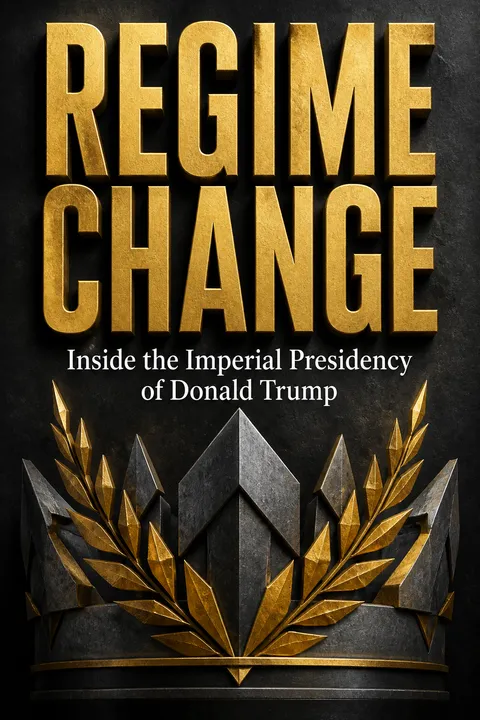
This is a scene-driven account of how presidential power changes when a leader returns to office with fewer internal restraints, a more loyal team, and a party less willing to challenge him. Its central argument is not simply that Trump is impulsive or vengeful. It is that personal instincts become governing capacity when staff, agencies, political allies, and media institutions adapt to them. Repeated scenes show the mechanism: a grievance enters the Oval Office, becomes a directive, and then travels through a system increasingly organized around loyalty and speed.
The book is especially persuasive when it traces consequences across institutions. DOGE’s disruption of payment systems, the pressure on law firms and universities, the effort to bend the Federal Reserve, and the use of immigration powers all reveal different forms of the same contest: whether an elected president’s authority is bounded by law, expertise, and independent organizations. Yet the narrative also documents limits. Judges blocked or reversed some actions, markets forced a tariff pause, internal officials raised legal objections, and political polling showed costs. The distinction is important. The book describes a weakened system, not a system with no resistance.
Its access gives private decisions narrative force, but the real-time reporting also means many consequences remain unsettled. Anonymous accounts, competing recollections, and rapidly changing events require readers to distinguish reported scenes from the authors’ interpretation of them. The book’s strongest insight is that constitutional erosion need not arrive as one dramatic rupture. It can emerge through many decisions that each appear temporary, tactical, or individually survivable. The counterpoint is that institutions are not only rules on paper. Their resilience depends on people choosing to enforce those rules, often at personal or political cost. The book captures that choice as the defining pressure of this presidency.
Glossary
Department of Government Efficiency (DOGE)
Federal cost-cutting operationA Trump administration initiative led by Elon Musk and a team of technology workers, intended to reduce federal spending and shrink the bureaucracy. The team sought access to government systems and pushed rapid staffing and program cuts. The book presents DOGE as a case study in how private-sector methods can disrupt public services when applied without sufficient legal, operational, or interagency coordination.
Pure Trump
Unfiltered Trump-style governingA phrase used by Steve Bannon to describe the administration’s approach when Trump’s personal instincts and demands faced fewer internal restraints. In the book, the term captures actions taken with little deference to conventional process, including blanket clemency for January 6 defendants and a governing style centered on loyalty, speed, spectacle, and the President’s own judgment.
Schedule F
Easier removal of federal workersA proposed federal employee classification intended to make it easier to remove workers in positions deemed policy-related. Russell Vought championed it during Trump’s first term, and the book describes it as part of a broader effort to replace career officials with people more aligned with presidential priorities. Its significance lies in the potential shift from a politically neutral civil service toward a workforce more directly answerable to the White House.
habeas corpus
Right to challenge detentionA legal procedure allowing a person held by the government to ask a judge to examine whether the detention is lawful. The book describes it as a deeply rooted protection in Anglo-American law and the U.S. Constitution. Trump administration officials discussed suspending the right for migrants, a proposal that raised fundamental questions about executive power, judicial review, and protection against arbitrary imprisonment.
Alien Enemies Act
Wartime removal statuteA federal law dating to 1798 that the administration invoked to remove migrants it characterized as members of an invading force. The book describes the law as a rarely used wartime authority and recounts how the administration relied on it to send people to detention in El Salvador without individual hearings. Courts challenged that use, including after the mistaken deportation of Kilmar Abrego Garcia.
Donroe Doctrine
Trump's hemispheric power claimA label used in the book for Trump’s asserted approach to American dominance in the Western Hemisphere, echoing the Monroe Doctrine. It accompanied military pressure on Venezuela, strikes on boats described as drug-smuggling vessels, and claims that the United States should control regional events and resources. The authors caution that the phrase can imply a coherent doctrine where Trump’s actions often appear driven by immediate instincts and shifting objectives.
NSPM-7
Domestic political violence directiveA National Security Presidential Memorandum titled Countering Domestic Terrorism and Organized Political Violence. Signed after Charlie Kirk’s assassination, it directed federal agencies to make domestic terrorism a national priority and coordinate investigations of political violence. The book emphasizes that the directive focused on left-wing groups and did not similarly address right-wing violence, raising concerns about selective enforcement and the use of counterterrorism tools against political opponents.
Board of Peace
Trump-led peace and reconstruction bodyAn international body created around a plan for ceasefire and reconstruction in Gaza. Jared Kushner and Steve Witkoff helped shape the proposal, and the United Nations Security Council endorsed its framework. Trump made himself its chairman, with a central role in its governance. Although initially focused on Gaza, its founding terms gave it broader potential scope, reflecting Trump’s preference for personal diplomacy and new institutions outside established multilateral structures.
Download PDF
Download EPUB
.epub digital book format is ideal for reading ebooks on phones, tablets, and e-readers.








