

Key Takeaways
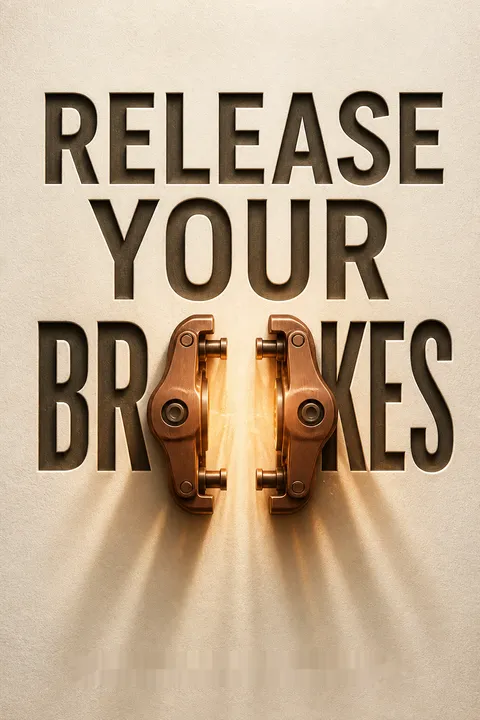
Stop pressing harder; find the emotional brake blocking your existing ability
Potential is more than talent. Newman describes it as a combination of inborn capacity, acquired knowledge and skill, and an inner drive to use them. A fourth factor, emotion, can either let those resources flow or restrict them. Fear of rejection, failure, or success can turn a capable person into someone who avoids acting. The book’s emblematic case is Dave, a salesperson who knew how to prospect and badly wanted to succeed, yet could barely bring himself to call strangers. Rehearsing a more positive experience of those calls helped him use skills he already possessed.
Look for friction first. When effort rises but performance stays stuck, Newman recommends examining the feelings attached to the task before demanding more willpower. The problem may not be a shortage of ability. It may be an emotional pattern suppressing its use.
The useful shift is from judging a person as deficient to asking what is interfering with performance. That can make a problem more specific and less shame-laden: a worker who avoids prospecting may need to address fear of rejection, not relearn the product. The car-brake metaphor is memorable, though it can oversimplify. Performance also depends on resources, training, health, and conditions outside a person’s control. The metaphor works best as a prompt for investigation, not as proof that every failure is an inner blockage.
Treat your self-story as a map, not a verdict on your potential
Experience is interpreted, not copied. Newman calls the accumulated information and feelings about oneself and the world “REALITY.” It guides how a person perceives events, connects them to past experience, judges what they mean, and chooses a response. The map is personal and incomplete, so two people can witness the same event and remember or explain it differently. A familiar example is a child who learns that spinach is awful before tasting it, by absorbing other people’s reactions and forming an expectation of her own.
Expectations shape behavior. Someone who believes they cannot speak publicly may avoid practice, then treat a shaky first attempt as confirmation. Newman calls this self-reinforcement the “SURE ENOUGH!” effect: expectations can influence one’s own conduct and the responses of others. The story is not destiny; it is a learned interpretation that can be updated.
This model makes room for the gap between an event and its meaning, a distinction that supports curiosity instead of reflexive certainty. It also helps explain why feedback alone may not change a settled self-belief: the same feedback can be interpreted to preserve the old story. The caution is that personal perception is not the only source of error. Some environments really are hostile, and some predictions are accurate. A flexible map should be open to revision without teaching people to dismiss evidence of real barriers.
Rehearse the feeling and action you want, not a slogan
Imagination can prepare behavior. Newman’s term “Constructive Imagination” means deliberately experiencing a desired action and its accompanying positive emotion in the mind. The technique is not simply repeating an upbeat phrase. A person first selects a behavior they want to change, decides why the change matters, describes the desired response, and creates a short affirmation to prompt an imagined experience. The crucial distinction is to participate in the scene rather than watch oneself from the outside.
Make the rehearsal concrete. A nervous speaker might imagine addressing a group in a relaxed, conversational way, while feeling the interest and confidence that accompany the performance. Newman describes a hospitalized soldier who mentally practiced typing while unable to move, then typed quickly when he finally had access to a typewriter. Imagination is presented as preparation that can support real practice, not a replacement for every form of training.
The strongest feature of this approach is its specificity: it joins a cue phrase to a sensory, emotional rehearsal, rather than treating language as a magical spell. Mental practice is intuitively useful when it helps a person plan actions and become familiar with a demanding situation. The distinction between imagining oneself acting and merely watching oneself matters because the former requires mentally simulating the task. Still, vividness alone does not guarantee competence. Rehearsal is most credible when paired with feedback and actual attempts.
Raise your internal performance setting before demanding better behavior
Self-image sets a range. Newman’s “Effectiveness Regulator” is his thermostat-like model of how a person’s self-image tends to keep behavior within a familiar range, or “Comfort Zone.” The model explains why a person may perform below their actual ability, or retreat after an unusually strong result. Jerry, a golfer with lessons and practice, generally scored in the mid-nineties. When he played the first nine holes unusually well, anxiety about sustaining that performance often disrupted his game. A poor start, by contrast, could prompt him to settle down and return to his familiar level.
Change the expectation, not just the effort. Newman argues that lasting behavioral change begins with a revised inner picture of what is normal for oneself. Pushing beyond that picture through willpower can feel uncomfortable and may not last. The practical task is to rehearse and accept a more capable self-image, then let behavior adjust through repeated experience.
The regulator metaphor captures a recognizable pattern: people sometimes explain away success as luck because it conflicts with their self-concept. It also suggests why a new standard can feel unsettling before it feels natural. But self-image is not a literal thermostat, and people do not invariably return to a preset level. Practice, incentives, relationships, and opportunity can change performance directly. The model is most useful for noticing when internal expectations are undermining improvement, not for treating every plateau as evidence of hidden resistance.
Give goals enough detail to make tomorrow feel familiar
A goal directs attention. Newman argues that a clear objective makes relevant opportunities easier to notice and gives effort a direction. He asks readers to select goals across work, personal life, and community rather than concentrating everything in one area. Goals should be specific, mutually compatible, important enough to be motivating, and translated into present-tense statements that can be mentally rehearsed. Imagining a clearly described home, for instance, makes the desired future more concrete than wishing vaguely for “a house.”
Groups need a shared destination. Newman compares a group with members rowing toward different shores to show how activity without agreement can produce little progress. A family or team can discuss what it wants to accomplish, then align individual aims where possible. Imagined goals do not eliminate planning or guarantee success. They are meant to make direction vivid enough to guide choices and reveal useful next steps.
The account treats goals as attentional tools, not merely targets for measuring success. Specificity can help a person notice the difference between a vague wish and a decision that can shape priorities. The group example adds an important dimension: coordination requires shared understanding, not just high effort. Yet goals can become brittle if they are mistaken for forecasts or obligations. Plans need room for changed circumstances, and a shared goal is genuinely shared only when participants can question and revise it.
Strengthen self-worth by noticing success and building others up
Worth and confidence differ. Newman defines self-esteem as a person’s underlying sense of worth and value, while confidence is more specific to a skill or situation. A person can feel unsure about public speaking and still regard themselves as worthwhile. To strengthen self-esteem, he recommends noticing successes rather than dwelling endlessly on mistakes, and replacing self-condemnation with a plan for handling a similar situation better next time. His short prompt, “Next time,” turns an error toward learning instead of a verdict on identity.
Reinforcement shapes relationships. Newman also encourages praising qualities that are genuinely valued and reducing put-downs, including jokes that disguise criticism. His “No Put-down Game” asks people to notice how long they can avoid belittling others or themselves. The aim is not to deny mistakes or flatter people, but to make it safer to learn from them and to recognize real strengths.
Separating a bad action from a bad identity is a practical way to keep feedback usable. A person who can acknowledge an error without collapsing into shame has more room to repair it. The book’s emphasis on affirming others also highlights how group climate affects learning: ridicule can make people conceal problems instead of correcting them. Praise is not automatically helpful, however. It is most constructive when specific and sincere, rather than a substitute for honest feedback or a way to secure compliance.
Own your choices, then learn from outcomes instead of blaming fate
Responsibility means accepting consequences. Newman defines it as feeling at ease with the fact that one lives with the results of one’s actions, decisions, and reactions. A responsible person can recognize what went well and reinforce it, or acknowledge a mistake and consider a better response next time. Newman urges readers to notice phrases such as “I have to” and “I can’t,” then examine whether they are literal limits or choices made among alternatives. A person who pays taxes, for example, has selected that course over other options, even if the alternatives are unappealing.
Choice has boundaries. The book distinguishes control over events from control over one’s response. A person may not choose an accident or another person’s actions, but can still make decisions about what to do next. Newman’s point is not that every circumstance is freely chosen; it is that recognizing available choices can restore agency.
This framework is strongest when it clarifies agency without denying constraint. Replacing automatic “have to” language with a description of actual choices can reveal options that habit or resentment has hidden. Yet the rhetoric can be misused if responsibility is equated with blame, or if constrained choices are portrayed as freely selected. Poverty, illness, discrimination, and coercion can sharply limit alternatives. A humane application asks both what the person can influence and what conditions must change.
Make understanding your responsibility, even when the other person speaks
Two people never share identical filters. Newman argues that words and gestures trigger different associations because each person brings a different history and emotional response. The goal is therefore not perfect understanding, but enough understanding to work together. Instead of asking whether someone “got it,” a speaker can ask the listener to describe what they understood and correct any mismatch.
Use practical bridges. Newman names empathy as understanding another person’s viewpoint without necessarily agreeing with it. He also recommends reflecting back the message in one’s own words, listening to tone and body language as well as literal words, and stating feelings, desired outcomes, and willingness to act. In the book’s example, restaurant staff empty sugar packets into bowls after a manager gives an instruction he thought was obvious. A brief check of what they understood could have prevented the mistake.
The emphasis on checking understanding rather than assuming it is especially useful in settings where a small ambiguity has consequences. Reflecting another person’s meaning can also lower the pressure to answer or argue before listening. This is not a demand that one speaker shoulder every communication failure. It is a practical strategy for the person who has something to gain from clarity. The distinction between empathy and agreement is valuable: understanding another perspective does not require surrendering one’s own judgment.
Loosen fixed assumptions to let useful ideas reach awareness
Creativity recombines experience. Newman defines it as rearranging familiar experiences into a new way of doing something. When a situation conflicts with expectations, the mind can search for a solution, but rigid assumptions may prevent alternatives from being considered. He illustrates the trap with a puzzle that asks readers to connect nine dots using four straight lines. People often impose an unstated rule that the lines must stay inside the square formed by the dots, then wonder why the puzzle seems impossible.
Inspect your invisible rules. Newman identifies fear of change, a belief that one is uncreative, labels that make a situation seem impossible, and “have to” or “can’t” thinking as common blocks. When stuck, ask what assumption is narrowing the choices. He also recommends capturing a promising idea when it appears, rather than trusting that it will remain available to memory.
The puzzle is a compact demonstration of how a self-imposed constraint can masquerade as an objective fact. That lesson travels well beyond puzzles: people may overlook an option because they never explicitly named the rule that excludes it. The book’s invitation to play with assumptions supports experimentation rather than premature dismissal. However, constraints are not always imaginary. Time, money, safety, and obligations can be real. Creative thinking becomes more useful when it distinguishes negotiable assumptions from genuine limits.
Turn pressure toward the payoff, and discharge tension before it hardens
Pressure can focus or restrict. Newman argues that performance depends not only on the size of a challenge but on how a person responds to it. Focusing exclusively on feared consequences can make a skilled person tense; picturing the desired result can make pressure feel more like a challenge. He recommends identifying automatic emotional reactions, deciding which ones help, and mentally rehearsing a more useful response. For example, a driver who reacts angrily to tailgating might practice calmly moving aside.
Relax deliberately. Newman offers Deep Relaxation, a practiced sequence of comfortable posture, breathing, relaxing imagery, and counting, which can be used before mental rehearsal or creative work. He also recommends physical activity to discharge tension. His claims linking particular emotions to specific illnesses reflect the book’s period and should not replace medical care.
This section combines two useful ideas: attention can be redirected from catastrophe toward a chosen task, and recovery deserves deliberate attention rather than being treated as wasted time. The practical value lies in learning to recognize a rising reaction before it dictates behavior. The physiological claims require more caution than the behavioral advice. Emotional strain matters to well-being, but a reader should not infer a simple cause between a feeling and a disease, or use a relaxation exercise as a substitute for appropriate diagnosis and treatment.
Analysis
Release Your Brakes is best understood as a practical theory of behavior organized around one recurring question: why does capability fail to become performance? Newman’s answer is that people act through an emotionally charged internal picture of themselves and their surroundings. That picture shapes what they notice, what they expect, and which actions seem possible. His recurring metaphors, the car with a dragging brake and the thermostat that regulates performance, make this theory easy to remember. Its strongest practical contribution is a sequence of usable interventions: identify the task-specific feeling, imagine a more effective response, practice it, and notice what happens. The book also broadens individual improvement into relationships and groups. Its accounts of communication, family goals, and self-esteem argue that people develop inside systems, not in isolation.
The framework remains valuable when treated as a set of hypotheses about behavior rather than a complete scientific model. Mental rehearsal can support learning, but imagined success is not equivalent to practice, and self-belief cannot manufacture missing skill or opportunity. Similarly, taking responsibility can make choices clearer, but it must not erase constraints imposed by illness, unequal power, or material scarcity. The book’s physiological explanations and broad claims about emotion and disease belong to its 1970s context and should be read cautiously. Its language sometimes makes internal control sound more comprehensive than it is.
A modern reader can preserve the practical core while adding two safeguards. First, ask whether the obstacle is emotional, technical, structural, or some combination. Second, test an intervention against observable outcomes rather than treating a vivid feeling as proof of change. Used this way, Newman’s system is neither magical positive thinking nor a demand to blame oneself. It is a prompt to notice how inner expectations affect action, deliberately rehearse a better response, and revise the story when experience provides better evidence.
Review Summary
Release Your Brakes! receives overwhelmingly positive reviews, with readers praising its life-changing impact. Many consider it the best self-help book they've encountered, emphasizing its practical approach to mindset improvement and unleashing potential. Reviewers appreciate the book's logical explanations of affirmations, self-esteem, and positive emotions. Some highlight its similarity to works by Anthony Robbins and its influence on Dan Peña. While a few found it dated or impractical, most strongly recommend it as essential reading for personal growth and achievement.
People Also Read









Glossary
PACE
personal and group effectivenessAn acronym for Personal And Company Effectiveness. Newman uses “Company” broadly to mean groups, including families, teams, and organizations. PACE is the name for his combined philosophy and methods for helping people and groups understand behavior, develop more effective attitudes, and make fuller use of their capacities.
“REALITY”
personal map of experienceNewman’s term for a person’s accumulated information and feelings about themselves and the surrounding world. It functions as a reference system for interpreting events and choosing responses. It is placed in quotation marks because it is an individual map of reality, not reality itself, and is always incomplete and potentially inaccurate.
Constructive Imagination
rehearsal for changing attitudesA deliberate practice of using a present-tense affirmation to prompt a vivid, first-person imagined experience of a desired behavior, together with the positive emotion associated with it. Newman presents this as a way to revise self-image and support behavioral change. It is intended to complement practical action, not to mean repeating words without imagining the experience.
Effectiveness Regulator
self-image guides performanceNewman’s thermostat metaphor for the tendency of behavior to stay within a range consistent with a person’s self-image. When performance departs from that familiar range, the person may feel tension and revert to familiar behavior. The model proposes changing the inner standard, rather than relying only on forceful effort, to support lasting change.
Comfort Zone
familiar range of behaviorThe behavior and environment that feel familiar enough to produce relatively little uncomfortable tension. Newman treats it as part of a person’s “REALITY” about how life is supposed to be. People may try to recreate this familiar range when circumstances take them somewhere unfamiliar, unless their self-image and goals also shift.
SURE ENOUGH!
expectation reinforces behaviorNewman’s label for a self-reinforcing expectation. A person’s prediction about how an event will go can influence their own behavior and subtly affect how other people respond. Those responses may then make the original expectation seem confirmed. The term describes a tendency, not a guarantee that every expectation will come true.
EPI-ORGANISM
group with shared behaviorNewman’s term for a group of people that develops characteristics resembling those of an individual person. A family, workplace, or team can develop shared attitudes, goals, and habits that affect its overall effectiveness. The group’s patterns emerge through the interaction of its members rather than belonging to any one member alone.
Responsibility
comfort with consequencesNewman defines responsibility as the degree to which a person feels comfortable accepting that they live with the consequences of their behavior. It includes decisions, actions, and reactions to events that were not chosen. The concept emphasizes identifying available choices and learning from outcomes, while not implying control over every circumstance.
Deep Relaxation
practiced physical relaxationA relaxation exercise Newman describes using a comfortable, open posture, eyes closed, deliberate breathing, relaxing imagery, and a slow count. He presents it as a skill that can be practiced and used before imagined rehearsal, creative thinking, or sleep. It is a self-guided relaxation technique, not a medical treatment.
FAQ
What's Release Your Brakes about?
- Personal Growth Focus: Release Your Brakes by James W. Newman is a guide to unlocking your potential and improving effectiveness in life. It emphasizes the role of self-image in influencing behavior and performance.
- Change Management: The book discusses the inevitability of change and how individuals can manage their reactions to it, providing a method for guiding personal development.
- Constructive Imagination: A key concept is the Constructive Imagination method, which helps individuals visualize and experience desired behaviors and emotions to facilitate growth.
Why should I read Release Your Brakes?
- Proven Techniques: The book offers a proven system that has helped many enhance their effectiveness and satisfaction, based on years of research and practical application.
- Comprehensive Approach: It covers topics like self-image, emotional patterns, and communication skills, making it a valuable resource for personal improvement.
- Empowerment: Reading this book can empower you to take control of your life, understand your potential, and release the brakes that limit your effectiveness.
What are the key takeaways of Release Your Brakes?
- Self-Image Importance: Your self-image regulates your potential and performance, acting like a thermostat. Improving it is crucial for growth.
- Emotional Patterns: Negative emotional patterns can act as brakes on your potential. Recognizing and addressing these is essential for effectiveness.
- Constructive Imagination: This method is a powerful tool for changing self-image and behavior, involving visualization of desired outcomes and emotions.
What is Constructive Imagination in Release Your Brakes?
- Definition: Constructive Imagination involves visualizing desired outcomes and experiences to positively influence the subconscious mind.
- Steps Involved: It includes selecting an area for improvement, defining outcomes, creating affirmations, and vividly imagining desired behaviors with positive emotions.
- Impact: Regular practice can reprogram your self-image, enhancing effectiveness and creating a positive mindset.
How does self-image affect my effectiveness according to Release Your Brakes?
- Regulatory Function: Your self-image acts as a regulator for behavior, keeping actions within a range based on self-perception.
- Behavior Consistency: You tend to act in ways consistent with your self-image. Believing in your capability leads to better performance.
- Changing Self-Image: Improving effectiveness requires changing your self-image, achievable through techniques like Constructive Imagination.
What are the negative emotional patterns mentioned in Release Your Brakes?
- Braking Mechanisms: Negative emotions like fear, anxiety, and frustration can limit your potential and effectiveness.
- Fear of Failure: This common pattern prevents risk-taking and opportunity pursuit, often stemming from childhood conditioning.
- Impact on Behavior: These patterns lead to self-doubt and hinder performance. Recognizing and addressing them is crucial for growth.
How can I apply the principles from Release Your Brakes in my daily life?
- Daily Affirmations: Use affirmations reflecting the positive self-image you want to develop to guide thoughts and actions.
- Practice Constructive Imagination: Regularly visualize desired outcomes and experience associated emotions to reinforce positive behaviors.
- Reflect on Progress: Regularly assess your progress and self-image changes, acknowledging improvements and areas for growth.
What are some practical exercises from Release Your Brakes?
- Goal Setting: Identify areas for improvement and set clear, achievable goals to create a roadmap for development.
- Visualization Techniques: Imagine yourself successfully achieving goals to enhance confidence and motivation.
- Emotional Check-Ins: Regularly assess emotions and their influence on behavior to address negative patterns.
How does Release Your Brakes address the concept of goals?
- Essential for Growth: Clear, specific goals are essential for personal growth and effectiveness, providing direction and motivation.
- Conflict Resolution: Goals create a conflict between current reality and desired outcomes, stimulating creativity and energy.
- Goal Structure: Develop a structured approach to goal setting, ensuring alignment with personal values for increased success likelihood.
How does Release Your Brakes address the concept of pressure?
- Pressure as a Positive Force: Pressure can motivate and enhance performance when viewed positively, fueling success.
- Personal Responsibility: Individuals create their own tensions through reactions to pressure, empowering change in response.
- Transforming Responses: Strategies are provided for reframing pressure as a challenge, improving performance and creativity.
What is the significance of empathy in Release Your Brakes?
- Understanding Others: Empathy is crucial for effective communication and relationship-building, fostering connections and respect.
- Three-Step Process: Recognize perspective differences, feel comfortable with them, and strive to understand others' viewpoints.
- Application in Relationships: Empathy enhances collaboration and reduces conflicts, leading to a harmonious environment.
What are the best quotes from Release Your Brakes and what do they mean?
- "You are guiding that process of change.": Emphasizes personal responsibility in managing change and influencing growth.
- "Your inner feelings of worth and value as a person have a direct impact on your ability to function effectively.": Highlights self-esteem's importance in achieving success.
- "All lasting constructive change in human behavior starts on the inside.": Reflects the idea that true change comes from within, emphasizing self-image and internal beliefs.
Download PDF
Download EPUB
.epub digital book format is ideal for reading ebooks on phones, tablets, and e-readers.








