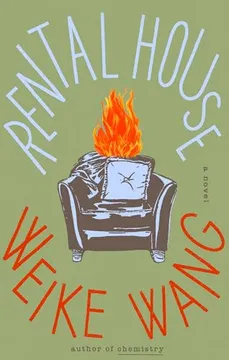


Plot Summary
A Summer Built for Parents
Keru and Nate rent a Cape Cod cottage for a month, arranging separate visits from both sets of parents. Their quiet first week includes gin, real-estate television, and Mantou, the enormous sheepdog Nate had long wanted.
The trip carries the friction of their different beginnings: Keru came from China as a child and learned to turn ambition into security; Nate grew up poor in a small Southern town and reached Yale on financial aid. They met there at a Halloween party, where Keru mistook his homemade shark-fin costume for a pointed joke about white privilege.
He had meant only a silly costume, but her laughter drew them together. Now, married five years, they have built a life without children, while their parents arrive with expectations neither spouse can easily refuse.
The rented cottage begins as a practical arrangement, but its two beds make the emotional architecture visible: each spouse brings a family that understands care differently. Keru and Nate have built intimacy through curiosity and teasing, yet their marriage cannot insulate them from the histories that shaped them. Her parents treat security as something earned through vigilance; his family carries both affection and the limits of a small-town life. Their shared decision not to have children is already a boundary, though the trip will show how often relatives regard it as an invitation to negotiate. The summer is less an escape than a temporary room where inherited rules become impossible to ignore.
The First Houseguest Siege
Keru's parents arrive after driving from Minnesota in shifts, bringing homemade food and familiar caution. Her father washes Mantou's paws in a basin; her mother inventories possible dangers around the cottage. At breakfast, they press Keru and Nate about tenure, promotion, buying a home, and having children.
Keru's mother rejects any expectation that she would provide childcare, while her father offers money and criticizes Keru's choice to live in New York. Their arguments about safety, race, and city life leave Keru quiet and Nate struggling to follow in Mandarin.
When her mother recounts a violent attack on an Asian woman, Keru bites her lip until it bleeds. Nate tries to object to the racial framing, but his halting Chinese only deepens the silence. Keru eventually takes Mantou for a walk to escape the table.
The visit shows how intimacy can become surveillance when a family has no settled boundary between concern and authority. Keru's parents love her, but their care arrives as correction, warning, and instruction, leaving her to absorb what they cannot say directly to each other. Nate's language lessons place him in an awkward double position: he wants to participate, yet fluency gives him a power he does not fully know how to use. His effort to challenge his mother-in-law's racial assumptions is morally serious, but it also lets him momentarily occupy the role of translator and judge. Keru, meanwhile, is expected to remain daughter first, even when the conversation makes her bleed.
The Beach Throws Back
On a quiet stretch of beach, Keru lies in the sand while Nate lets Mantou run toward the water. An older woman approaches to point out that dogs must remain leashed. Before Nate can retrieve Mantou, Keru throws a large rock in the woman's direction; it lands short, scattering sand and stopping her advance.
The woman shrieks, Mantou turns toward the noise, and Keru calmly picks up another rock. Seeing that, the woman retreats. Nate leashes the dog and leaves with Keru, who has answered a minor rebuke with a threat she does not explain.
The moment exposes a side of her that her parents' visit has intensified: she can appear composed while choosing sudden, physical defiance. The woman will return later, turning this impulsive act into a more complicated encounter.
Keru's throw is neither a triumphant act of resistance nor a simple loss of control. It is a fast, disproportionate response to being corrected, a refusal to perform the agreeable immigrant daughter expected by the surrounding culture. Yet the rock also makes her vulnerable: she has crossed from anger into an act that could have injured someone, and she knows it. Her calmness afterward sharpens rather than softens the danger, because it suggests that her aggression is available to her as a deliberate tool. Nate's immediate task is practical, to leash Mantou and leave, but their departure does not settle what Keru has done. The incident is waiting to be reinterpreted by someone else.
Oysters and Old Debts
Nate's parents arrive with firewood, lawn chairs, and familiar habits that contrast sharply with Keru's parents' vigilance. At an oyster restaurant, his mother tries her first oyster, while Keru cannot bring herself to swallow one alive.
Nate's parents trade gentle jokes and childhood memories, but their easy affection leaves Keru unsure how to join in. His mother lists the many ordinary things Nate once loved, then turns to the future: she wants grandchildren and more visits. Years earlier, Keru had already used her savings to clear Nate's student debt before their marriage, a sacrifice his parents did not know about.
On a drive to lighthouses, Nate's parents resist rules they find inconvenient, while Keru tries to keep Mantou leashed. The visit's warmth is real, but so is the assumption that Keru should fit herself into their family without making them uncomfortable.
Nate's family offers a kind of tenderness Keru has long imagined, but its warmth is not neutral. Nate's mother remembers him as a child with affectionate precision, while Keru is left to wonder whether her own family could ever make such uncomplicated space for her. The student debt history complicates this apparent security: Keru has quietly protected Nate from a financial burden that his parents neither understood nor resolved. Her sacrifice reveals a marriage in which practical labor often falls to her, even when the emotional story belongs to Nate's family. At the same time, the parents' casual disregard for rules echoes Keru's own beach act, creating an uneasy parallel between whose defiance is forgiven and whose becomes evidence of danger.
A Mother-in-Law Shield
At the beach, the woman Keru frightened with the rock finds her again and accuses her of trying to kill her. She stands over Keru, calls her unstable, and tells her to leave. Keru pretends not to hear clearly, refusing to give the woman the satisfaction of seeing her flinch.
Nate's mother hurries out of the water and steps between them, calling the stranger off and threatening to photograph her. The woman backs away. Nate's mother then recounts the confrontation to Nate and his father as an attack on Keru, asking whether they have done enough to protect her from anti-Asian harassment.
Keru does not tell them she threw the rock first. Grateful for the intervention yet uncomfortable with being cast as helpless, she retreats to the bedroom and questions what the rescue means.
The encounter forces Keru to hold two truths that do not cancel each other. The stranger is now harassing her, and Nate's mother responds with a genuine act of solidarity; Keru also knows she helped create the confrontation by throwing the rock. By withholding that fact, she protects herself from scrutiny, but also lets her mother-in-law construct a simpler account in which Keru is only the endangered person. The scene complicates Keru's hopes for a white family that might welcome and defend her. Protection can be generous while still turning her into a symbol, and gratitude does not require her to surrender her own agency. Her retreat is an attempt to escape that moral knot, not to resolve it.
The Burning Fourth
On the last evening, Nate's parents build a fire and turn the conversation toward Nate's career. His mother suggests that science is an unfair path for him because his colleagues are often Asian, then insists that their families can coexist without changing one another.
Keru asks what coexistence means if it requires her to accept a slur or let Nate be diminished. Nate stays silent, caught between his wife and his parents. When his father feeds a painted Fourth of July decoration into the fire, Keru grabs the hatchet and pulls the burning log free.
She hurls it through the screen door and into the kitchen, where Nate's father douses it. The doorframe breaks, smoke spreads, and the security deposit is likely lost. Keru sits back down by the fire, convinced she has prevented something worse, while her family stares at her.
The fire turns a coded family argument into an unmistakable physical event. Keru has spent the visit navigating other people's definitions of her: daughter, foreigner, capable professional, possible mother, protected victim. By acting with the hatchet, she refuses the conversation's polite cover, but her choice is also reckless and destructive. The patriotic decoration matters because it transforms an abstract debate about belonging into an object someone is willing to burn. Nate's silence repeats the central strain of his role in the family: he can recognize the injury yet hesitate to confront it. Keru's act cannot repair that hesitation. It makes the conflict visible, and leaves everyone to live with the damage.
Five Years Later
Five years pass. Nate earns tenure, but the achievement barely reaches his father before the older man suffers a fatal heart attack. Six months later, Keru's mother receives a cancer diagnosis that proves mistaken, then breaks her ankle in a fall.
Keru makes partner at her consulting firm and accepts an eight-month assignment in Chicago, closer to her parents. Nate remains in New York, where his academic salary and growing workload make him feel diminished beside Keru's rising income. She travels back whenever she can, while Nate handles Mantou and tries to keep their routines intact.
For a two-week holiday, he proposes that they go away together, hoping to reconnect after months apart. Keru agrees to arrange the trip, and they drive north toward a Catskills bungalow, carrying the distance between them alongside their dog.
The five-year leap compresses the slow forces that change a marriage without producing one dramatic rupture. Nate's tenure, meant to mark arrival, does not bring the security he imagined; his father's death instead removes the person whose approval and criticism shaped him. Keru's career success gives her power and choices, but it also draws her toward the parents whose dependence is increasing. The Chicago assignment is both opportunity and filial response, while Nate experiences it as another reminder of their unequal earnings and diverging needs. The trip is his bid to make shared time matter again. It is also an experiment in whether their old intimacy can survive when neither spouse is occupying the same daily life.
The Bungalow Compound
Nate expects a rough cabin; Keru has booked a gated collection of pristine bungalows with concierge service and lake views. Their argument over whether such comfort is excessive follows them inside. They meet Mircea and Elena, Romanian expatriates living in Brooklyn with their young son, Lucian.
The neighbors bring fresh coffee and bread, then invite the couple to an alpaca farm. There, Nate watches Elena and Mircea move easily together while he and Keru fall into familiar silences. Mircea questions Nate's work and American life; Keru and Elena talk about their families and the pressures of raising children.
The outing leaves Nate feeling judged and Keru wondering whether their cautious routine has become too small. When the couple returns to the bungalow, they find Mantou has panicked alone and damaged the door and floor.
The resort gives Nate a visible object for his unease: a polished vacation that seems to announce the couple's comfort while offering none of the roughness he expected. The neighbors intensify that unease by performing a different kind of ease, one built from money, confidence, and shared social fluency. Nate hears Mircea's judgments as proof that he is inadequate; Keru watches the neighboring couple and imagines a more spontaneous version of marriage. Neither comparison is fair, but both expose needs the spouses have not voiced directly. Mantou's damage then literalizes the cost of leaving their anxious dog alone while they pursue an outing. The supposedly restorative holiday has become another test of what care each spouse notices.
The Storm Tests the Pack
After the alpaca trip, Keru apologizes to the concierge for Mantou's damage while Nate withdraws, unable to face the dog or his own sadness. A hard rain arrives the next day. Mantou refuses to go outside, drinks constantly, and eventually urinates in the bungalow; a gutter tears loose during the storm.
Nate carries her into the clawfoot tub and coaxes her to play with a floating ball. The couple argues over the mess, their different reactions, and whether they sometimes wonder about having children.
They agree they do not wish to become parents, though Keru admits she still wonders about the life they declined. Nate's exhaustion and fear of death surface in small domestic gestures, while Keru remains restless and work-focused. Their dog, the one dependent they chose, becomes the clearest measure of how much care they can give.
The storm strips the vacation's social performance away and returns the couple to the intimate labor they usually divide without discussion. Keru handles the formal apology and household order; Nate handles Mantou's immediate distress, but his fear makes even ordinary damage feel like a larger catastrophe. Their conversation about children is not a reversal of their decision. It is an acknowledgment that choosing one life means losing access to another, even when the chosen life is wanted. Mantou makes the question concrete: the couple already cares for a vulnerable being, and that responsibility can be tender as well as exhausting. Their shared humor survives, but it is fragile, and neither can simply declare the other wrong.
DINKs Under the Grill
The next day, Mircea takes Nate to buy barbecue supplies and advises him to pursue land and business rather than teaching. At the cookout, Elena labels Keru and Nate a childless, dual-income couple, then claims mixed families face special pressure and that children are more cohesive when parents share a background.
Keru challenges the implication; Mircea broadens the argument into a critique of American diversity and urges them to move to Europe. Elena later reprimands Lucian for getting dirty while playing with Mantou, insisting that he remain clean.
The exchange unsettles Keru and Nate, who help tidy up after the family withdraws. The neighbors leave the next morning. At lunch, Keru wants to know whether the encounter means their child-free life has made them socially invisible; Nate insists their friends still care, but cannot offer the cooperation she wants.
The cookout converts a casual label into an argument about who belongs, whose children count as coherent, and which society is fit to raise them. Keru refuses the premise that her marriage is a failed or deficient version of family, while Nate's hesitation reflects his discomfort with confrontation and his fatigue from being evaluated. The neighbor's comments also echo the earlier parental pressure to reproduce, but this time the couple is judged not only for having no children, but for crossing racial lines. Their neighbors' sudden departure leaves no chance for repair. The later lunch argument shows the deeper wound: Keru wants access to friendship and recognition, while Nate treats exclusion as a problem she should not need to solve.
The Brother at the Gate
At the rental's next turn, Nate's estranged older brother Ethan arrives without warning, bringing his girlfriend Morgan. Keru tries to connect with Morgan by joining her run, but she sprains her ankle and has to wait for Nate to collect her. Ethan and Nate reminisce uneasily about their hometown, then Ethan describes plans for a private gym meant to revive it.
He asks Nate to invest as much as ninety-nine thousand dollars, promising quick returns and community improvements without having worked out the finances. Nate refuses, recognizing the pattern of impulsive schemes and money requests that has kept the brothers apart.
Keru considers whether they could offer a smaller sum through a trust, conditional on a legitimate business plan. Nate rejects the idea. The request exposes the old family roles again: Ethan expects rescue, Nate expects disappointment, and Keru is left calculating what loyalty should cost.
Ethan's arrival brings the family history into the vacation home without the buffer of parents or a planned visit. His proposal is framed as civic purpose, but its lack of research and reliance on Nate's money repeat a pattern that has taught Nate to distrust him. Keru sees a possible middle path because she understands that refusal can have consequences beyond the balance sheet; she is also accustomed to solving problems with money and logistics. Her sprained ankle makes her physically dependent at the same moment she is trying to manage the family emotionally. Morgan's presence offers a possible new relationship, but her uncertain commitment to Ethan prevents Keru from treating the visit as a stable expansion of the family. Nobody arrives without a history.
Keru Calls the Meeting
The morning after Ethan asks for money, Morgan leaves following a private argument with him. Keru calls after her, but the car carries her away. Nate and Ethan blame each other, trade insults, and begin swinging across the table until Keru pounds the tabletop and orders them to stop.
She lays out the future she fears: years of mistrust, ruined holidays, and estrangement, then demands that the brothers decide whether they can treat one another with respect. Ethan stays, and the three discuss how they might see each other again; he agrees to consider Keru's fortieth-birthday gathering.
After Ethan leaves, Keru and Nate sit together with Mantou between them. Keru agrees to join Nate for Thanksgiving with his mother, and they attend to her improving ankle without rushing to the hospital. Their problems remain, but the couple chooses presence over another retreat.
Keru's intervention does not reconcile the brothers or resolve Ethan's request. Its achievement is narrower and more credible: she interrupts a familiar script before it becomes another permanent estrangement. She does not ask them to feel affection on command; she asks for mutual respect and a future in which they can meet without repeating old injuries. Her own need to manage everyone remains visible, as does Nate's dependence on her to make difficult family contact possible. Their agreement to spend Thanksgiving together is a practical act, not a cure. The ending's modesty matters: they are still a couple with unequal burdens and unresolved grief, but they have stopped treating distance as the only available form of protection.
Analysis
Rental House makes domestic space a test of who must adjust. Keru and Nate can share a marriage, a dog, and a city while carrying incompatible inheritances: her family treats hardship as proof of love and preparation, while his treats loyalty as an obligation that can survive denial, political conflict, and repeated rescue. The summer visits expose how those inheritances enter the couple's ordinary life through money, language, food, career, and the expectation of children.
Keru's competence is both her protection and her trap. She clears Nate's debt, manages travel and care, supports aging parents, and attempts to mediate his relationship with Ethan. Each solution increases the chance that others will depend on her while reducing the space she has to be uncertain. Nate's ideals offer a different vulnerability. He values teaching and fairness, yet his anxiety and withdrawal leave Keru to confront conflicts he also recognizes. Their imbalance is not a simple battle between ambition and domesticity; it is a contest over whose labor becomes visible and whose needs are treated as optional.
The novel also refuses easy categories of belonging. Keru can be targeted and defended, angry and endangered, a daughter and an adult, without any one label explaining her. Nate's family can be affectionate while repeating racist assumptions; Keru's parents can be controlling while genuinely protective. The neighbors' confidence does not make their judgments enlightened. These contradictions prevent the reader from sorting the families into innocent and guilty camps.
The rentals sharpen the book's central question: when family members cannot change one another, can they still alter the terms of contact? Keru's final intervention does not promise harmony or financial rescue. It asks for respect, a future meeting, and a willingness to remain present. The ending's modest scale suits a marriage whose progress is measured less by resolution than by whether its members can interrupt the familiar retreat.
Review Summary
Rental House receives mixed reviews, averaging 3.26/5. Many readers praise Wang's sharp, dry wit and nuanced portrayal of an interracial marriage between Keru, a Chinese-American woman, and Nate, from a rural Appalachian background. The novel's first half, exploring cultural clashes during family vacations, is widely lauded as funny and incisive. However, several reviewers feel the second half loses momentum, with characters becoming less compelling. Wang's deadpan style divides readers—some find it brilliantly understated, others find it flat and inaccessible.
Characters
Keru
The relentless family fixerA Chinese American consultant, Keru is ambitious, sharply observant, and more comfortable solving a concrete problem than admitting she needs comfort. Her parents' migration and frugality taught her to treat work and money as protection, while their intensity also leaves her vulnerable to old guilt about being a dutiful daughter. She is married to Nate, but their different incomes, family histories, and approaches to conflict make her feel responsible for keeping their shared life functional. Keru's wit can cut through pretension, and her anger can become startlingly physical. Beneath both is a wish to belong without having to translate herself or earn her place through endless competence.
Nate
The anxious idealistNate is a Yale-educated fruit-fly scientist and professor who grew up poor in a small Southern town. He loves Keru and Mantou, cares deeply for his students, and holds ideals about fairness that make family conflict especially painful. His academic work matters to him, though its modest rewards and increasing obligations leave him insecure beside Keru's higher income. He is thoughtful and often gentle, but can retreat into silence when his mother or brother presses him. Nate's anxiety turns ordinary uncertainty into imagined disaster, while his loyalty to family persists even when he resents what that loyalty demands.
Ethan
The volatile older brotherNate's older brother has drifted through unstable work and relationships, while their mother continues to defend and financially support him. Ethan is physically confident and socially direct, able to joke with Nate one moment and provoke him the next. He understands that their hometown is losing work and people, but his plans often outrun the preparation needed to make them real. His bond with Nate is marked by comparison: one brother became the family success, the other the recurring crisis. Ethan resents that distinction even as he sometimes relies on it.
Nate's mother
The affectionate scorekeeperNate's mother is expressive, sentimental, and skilled at making strangers feel warmly received. She remembers Nate's childhood in vivid detail and wants closeness with her adult son, but she often treats disagreement as a personal injury. Her politics and assumptions about race complicate her affection for Keru, whom she also wants to include in the family. She has spent much of her life supporting her husband and sons, and she interprets family obligation through a mixture of love, grievance, and the belief that help should flow where she thinks it is needed.
Nate's father
The quiet working fatherNate's father managed grocery stores and raised his sons in a working-class household where practical skill and steady work mattered. He is quieter than his wife, often trying to stop conflict rather than examine its cause. He shares easy teasing with Nate and knows how to build a fire, but his restraint can leave his son alone when the family turns critical. His life embodies a rooted, local version of American belonging that contrasts with Keru's parents' experience of immigration and reinvention.
Keru's mother
The vigilant immigrant motherKeru's mother is exacting, protective, and convinced that comfort can weaken a person's will. She and her husband built a life after leaving China, and she carries their history as both sacrifice and instruction for their only child. Her warnings about danger and her opinions about Keru's choices can feel invasive, yet she also insists that Keru make her own decisions. She is emotionally guarded, especially about the past, and expresses care through practical admonition more readily than tenderness.
Keru's father
The calculating providerA retired energy chemist, Keru's father takes pride in his technical expertise, frugality, and ability to calculate value. He and his wife left a rural life in China and built security in Minnesota, carrying few details of their history into open conversation. He presses Keru about money, housing, and adulthood, but his strictness grows from a belief that careful planning protects a family. His professional identity gives him authority and confidence, especially when discussing science and energy.
Elena
The confident expatriate motherElena is an artist and mother who lives abroad with her husband and young son. She appears relaxed and socially confident, and her fluency across languages and settings contrasts with Keru's sense of effort. Yet her confidence can harden into certainty about race, family, and child-rearing. Her friendship with Keru begins with curiosity and warmth, then reveals assumptions she has not examined. Elena's relationship with Mircea gives Keru a visible comparison for her own marriage, though the ease she projects does not make her judgments harmless.
Mircea
The self-assured economistAn economist on a temporary assignment in the United States, Mircea is sociable, ambitious, and eager to advise others on wealth and work. He speaks as if his opinions are practical truths, particularly about land, capitalism, and gender roles. His marriage to Elena seems coordinated and affectionate, which makes Nate measure himself against Mircea's confidence. Mircea's charm does not prevent him from being condescending, and his certainty about American life exposes the blind spots he carries into his temporary home.
Morgan
Ethan's guarded girlfriendMorgan works at the school where she met Ethan and is disciplined about exercise. She is polite but reserved with Keru, offering little personal information and treating her relationship with Ethan as casual. Keru hopes the two women might become close, partly because she has always wished for siblings, but Morgan does not share that expectation. Her independence makes her difficult for Keru to read, and her presence reveals how quickly Keru imagines a lasting family connection before the other person has agreed to one.
Mantou
The anxious family dogMantou is the large sheepdog Nate wanted since childhood and the shared dependent at the center of the couple's daily life. She is affectionate, excitable, and strongly attached to Nate, though she also seeks comfort from Keru's father. Her reactions to unfamiliar places and separations make the couple's responsibilities tangible. Mantou cannot settle their disagreements, but caring for her gives Nate and Keru a recurring reason to coordinate, worry, and return to one another.
Lucian
The multilingual childElena and Mircea's young son moves among Romanian, Dutch, and English. His presence brings the adults' arguments about identity and child-rearing into everyday scenes, especially when his parents manage his behavior and language. He is curious about Mantou and eager to play, a child whose ordinary needs sit beneath the adults' confident theories.
Plot Devices
The rental house
A temporary pressure chamberThe vacation homes place people who usually live apart into shared kitchens, bedrooms, beaches, and dining spaces. The Cape cottage forces Keru and Nate to host both sets of parents; the Catskills compound puts their marriage beside an apparently effortless neighboring couple and, later, Nate's brother. Because the stays are temporary, everyone can pretend that conflict will end at checkout. Yet the rentals also gather unresolved questions about money, children, race, and belonging until the characters have to act on them. The houses are not simply settings. Their rules, deposits, doors, and limited rooms make private tensions materially visible.
Mantou
A measure of shared careThe sheepdog provides a continuing test of how Keru and Nate divide attention. Nate wanted Mantou and is her favorite, but Keru carries much of the planning around food, medication, and travel. When they leave her alone at the alpaca farm, her damage to the bungalow makes the cost of that decision immediate. During the storm, Nate's care for her gives him a practical task while Keru observes their different responses. Mantou also reflects the couple's unspoken questions about children: she is not a substitute child, but she makes care, dependence, and divided responsibility concrete rather than hypothetical.
Family translation
Language as uneven accessNate studies Mandarin so he can participate in Keru's family, but he can understand more than he can say, leaving him both present and peripheral. Keru, meanwhile, translates and interprets across generations, often carrying meanings her parents and in-laws do not share. The language gap is not merely a communication problem: it reveals who is expected to adapt, who controls a conversation, and when understanding becomes a form of power. Even affectionate gestures can be missed when Nate does not recognize the Chinese phrases Keru's mother uses to express care.
The branching ending
Alternative futures made visibleAfter the Catskills neighbors leave, the narration presents two possible ways the holiday might continue, then follows the possibility in which Ethan arrives. This visible fork makes the novel's concern with choice structural: a family can repeat familiar patterns, or a new encounter can force a different response. The chosen branch does not create a neat reconciliation. It brings Morgan's departure, Ethan's financial request, and the brothers' physical fight into the bungalow, giving Keru a chance to interrupt the pattern. The device makes contingency feel real without pretending that one decisive speech can erase history.

Download PDF
Download EPUB
.epub digital book format is ideal for reading ebooks on phones, tablets, and e-readers.








