Key Takeaways
1. Sexual Problems Are Normal and Widespread
Every couple has sexual problems at some point.
Widespread unhappiness. Despite the constant barrage of sex-laced media, sexual unhappiness is rampant among normal, healthy couples worldwide. Many individuals and couples mistakenly believe their struggles are unique, leading to feelings of inadequacy and isolation. This widespread prevalence means that experiencing sexual difficulties is, paradoxically, a sign of normality rather than a defect.
Startling statistics. Research reveals that a significant portion of the population faces sexual challenges. For instance, the 1992 National Health and Social Life Survey (NHSLS) found:
- 43% of women and 31% of men reported a sexual problem in the prior year.
- One in five women doesn't enjoy sex; 19% have lubrication difficulty, and 15% experience pain.
- A quarter of all women struggle to reach orgasm.
- One-third of women and 16% of men report low sexual desire.
- 25% of men struggle with rapid orgasm, and 17% of men and 11% of women are anxious about sexual performance.
Beyond the numbers. These statistics represent countless instances of disappointment, frustration, and emotional distance in bedrooms globally. Recognizing this commonality can foster self-compassion and reduce the shame often associated with sexual problems. It's a call to understand that your struggles are part of a larger human experience, not a personal failing.
2. The Quantum Model: Total Stimulation Drives Sexual Response
When your total sexual excitement exceeds your arousal threshold, your body does what you expect.
Response thresholds. Your body has two key "response thresholds": one for initial sexual arousal (genital response like lubrication or erection) and another for orgasm. Sexual function occurs when your "total level of stimulation" surpasses these thresholds. If stimulation falls short or drops below, sexual dysfunction occurs.
Three components. Your total level of stimulation is a complex interplay of three factors:
- Sensory stimulation: Touch, sight, smell, taste, and sound.
- Body's responsiveness: Your physical ability to transmit and react to stimulation, influenced by health, age, and hormones.
- Subjective emotional processes: Your feelings, thoughts, and the meanings you attach to sensations.
Mind-body connection. Human sexuality is profoundly influenced by meaning. The same capacity that allows for deep intimacy also makes you vulnerable to negative thoughts and feelings during sex. For example, a woman might struggle with arousal or orgasm if she senses her partner's performance anxiety, even if physical stimulation is adequate. This holistic view explains why sexual problems are rarely purely physical or purely psychological, but rather a dynamic interaction.
3. Relationships Cycle Between Comfort and Growth
Disrupting business as usual is not the same as destroying your relationship.
Comfort-safety cycle. Couples naturally seek comfort and security, leading them to establish familiar sexual routines and accommodate each other's anxieties. This "comfort-safety cycle" keeps immediate anxiety low but can stifle growth and lead to boredom or stagnation. When sexual problems arise, this cycle often prevents necessary changes.
Growth cycle. All committed relationships also contain a "growth cycle," which involves confronting anxieties and evolving. When the comfort-safety cycle breaks down, often due to unresolved issues or the need for change, the relationship enters this growth phase. This period can feel unstable and anxiety-provoking, but it's essential for long-term vitality and deeper intimacy.
Emotional gridlock. A common outcome of avoiding the growth cycle is "emotional gridlock," where partners are stuck in mutually exclusive positions, unable to accommodate each other without raising their own anxiety. This isn't a communication problem; it's a deeper struggle where:
- Partners depend on each other for validation and anxiety regulation.
- Changing one's behavior threatens the other's sense of self.
- The fear of change outweighs the desire for improvement.
Gridlock often feels like an impasse, but it's a pivotal turning point that demands a shift in approach.
4. "Hold On to Yourself": The Core of Sexual and Personal Growth
The critical factor in making progress is your ability to hold on to yourself and do what needs to be done.
Four pillars. "Holding on to yourself" is the central concept for navigating relationship challenges and resolving sexual problems. It involves four crucial activities:
- Staying clear: Maintaining an honest and accurate sense of who you are, even under pressure.
- Calming yourself: Soothing your own anxieties, insecurities, and frustrations without relying solely on your partner.
- Remaining nonreactive: Not overreacting to your partner's anxieties, provocations, or perceived shortcomings.
- Tolerating discomfort: Embracing temporary unease as a necessary part of growth and moving forward.
Beyond accommodation. Many couples operate on "anxiety regulation through accommodation," where partners constantly adapt to each other's limitations to keep the peace. While seemingly kind, this often means the "worst in both of you runs your relationship." Holding on to yourself means taking 100% responsibility for your own emotional stability and actions, rather than demanding your partner make you feel secure or worthwhile.
Self-confrontation. This process often requires confronting your own fears, insecurities, and even destructive behaviors. For example, a partner who always gives in might need to stand firm, while one who rages might need to learn self-control. This internal work, rather than external blame, is what truly shifts relationship dynamics and allows for genuine intimacy and sexual satisfaction.
5. Anxiety Can Be a Turn-On, Not Just a Turn-Off
Anxiety can facilitate sexual arousal.
Paradoxical arousal. While excessive anxiety can inhibit sexual function, a certain level of "anxiety arousal" can actually enhance sexual excitement. Many people find sex more thrilling when it involves a sense of daring, naughtiness, or breaking rules. This isn't perverse; it's a biological reality where the body struggles to differentiate general physiological arousal from sexual arousal.
Examples of anxiety-laced arousal:
- Intense sex after a near-death experience or a major argument.
- The "thrill of meeting someone new" in dating.
- Being turned on by verbal banter or playful taunting.
- Experiencing "begrudging respect" for a partner who stands firm.
This suggests that a relationship devoid of any tension or challenge can become boring, leading to diminished desire.
Responding to anxiety. Laboratory research supports this:
- Women showed increased vaginal response to erotic films after watching frightening movies or vigorous exercise.
- Men without sexual dysfunctions performed better sexually when experiencing moderate anxiety.
The key is not the presence of anxiety, but one's ability to regulate it. When you have a solid hold on yourself, anxiety can sharpen focus and drive action; when you're brittle, it can lead to disorganization and dysfunction.
6. Medical Solutions Are Tools, Not Relationship Cures
No bionic enhancement replaces compassion and consideration in your relationship.
Tools, not solutions. Sexual devices, drugs like Viagra, and surgical procedures can be incredibly effective tools for addressing physiological aspects of sexual problems. However, they are not magic bullets for relationship issues. They can restore function, but they cannot create intimacy, desire, or love where it doesn't exist.
Relationship impacts. Any change in sexual function, especially rapid ones from medical interventions, profoundly impacts the relationship. For example:
- Viagra: Can reduce performance anxiety, allowing couples to connect more deeply. But it can also reinforce mistaken beliefs (e.g., "erections measure masculinity") or be used for "Viagra deception" (hiding usage from a partner), eroding trust.
- Lubricants/Vibrators: Can enhance pleasure and comfort, but if used to avoid emotional friction or if one partner feels threatened, they can create distance.
- Penile Implants: Can restore physical function but require significant partner acceptance and adjustment; excluding a partner from the decision can be disastrous.
Beyond performance. The true value of medical aids lies in how couples use them. If motivated by a desire to avoid intimacy or to prop up a fragile sense of self, even successful interventions may lead to dissatisfaction. The goal should be to integrate these tools into a broader strategy of personal growth and relationship enhancement, rather than seeking a purely technical fix for human connection.
7. Optimize Your Body's Response, Physical Stimulation, and Inner World
You are more likely to succeed (and enjoy it more) if you try to optimize sex and intimacy as much as you can.
Holistic strategy. Resolving sexual problems requires a multifaceted approach that targets all three components of total stimulation:
-
Body's ability to respond: Address any underlying medical issues.
- Get a thorough medical evaluation (e.g., NPT testing for men, gynecological exam for women).
- Review all medications for sexual side effects (antidepressants, antihypertensives).
- Consider hormone replacement therapy if deficient (estrogen, progesterone, testosterone).
- Explore sex-enhancing oral medications (Viagra) or devices (vacuum pumps, cock rings) if appropriate.
- Address sexual pain (dyspareunia, vaginismus) with medical and psychological interventions.
-
Physical stimulation: Enhance the quality and quantity of touch.
- Don't assume emotional connection; actively work to establish it (e.g., "heads on pillows" exercise).
- "Lean into" your partner's touch, opening yourself emotionally and physically.
- Experiment with different techniques and styles, focusing on mutual pleasure and connection.
- Use masturbation as a tool for self-discovery and to learn what works for your body.
-
Emotions, thoughts, and feelings: Cultivate a positive mental and emotional environment.
- Establish a collaborative alliance with your partner, in and out of bed.
- Explore new dimensions of eroticism, desire, and emotional union.
- Work through unresolved relationship issues that create mental "noise" during sex.
- Confront and soothe your own anxieties and insecurities.
Beyond "good enough." The aim is not just to fix a dysfunction but to pursue your full sexual potential. This means going beyond merely reaching a threshold to creating deeply satisfying, meaningful, and resilient sexual experiences.
8. Confrontation and Self-Disclosure Fuel Deeper Intimacy
Confronting your partner doesn’t involve threats or ultimatums. The best (and safest) way to confront your partner is to first confront yourself.
Truth for growth. True intimacy requires honesty, even when it's uncomfortable. Many couples avoid confronting difficult truths about their sexual relationship, fearing conflict or rejection. However, this avoidance often leads to emotional distance and stagnation. Self-disclosure, particularly about vulnerabilities or hidden aspects of one's sexuality, can be a powerful catalyst for deeper connection.
The power of self-confrontation. Before confronting a partner, confronting oneself is paramount. This means:
- Acknowledging your own fears, insecurities, and contributions to the problem.
- Understanding your motivations for avoiding certain topics or behaviors.
- Taking responsibility for your own emotional state.
When you confront yourself first, your subsequent communication with your partner comes from a place of integrity and self-possession, making it less reactive and more productive.
Breaking the cycle. In relationships where partners are "emotionally fused," they often rely on each other for validation and anxiety regulation. This can lead to a cycle where one partner's attempt to change is met with the other's defensiveness or withdrawal. By holding on to yourself and speaking your truth calmly, you disrupt this fusion. For example, a partner who has faked orgasms for years, like Linda, might finally disclose this truth, initially causing pain but ultimately paving the way for genuine intimacy and a more authentic relationship.
9. Your Inner Mental World Shapes Your Eroticism and Orgasm
Your mind plays a critical role in your ability to recognize your sensations.
Mind over matter. The mental landscape during sex profoundly influences physical response and satisfaction. Distractions, anxieties, or emotional disconnection can delay or prevent orgasm, even with adequate physical stimulation. Conversely, a positive and engaged mental state can significantly enhance arousal and the likelihood of climax.
Fantasies as tools. Sexual fantasies are a normal part of human sexuality and can be powerful "orgasm triggers." They can be used to:
- Facilitate arousal and orgasm during masturbation or partnered sex.
- Increase intimacy and connection through shared role-playing or collaborative storytelling.
- Explore personal eroticism in a safe space.
However, fantasies can also become "mind noise" if they are disturbing, compulsive, or used to tune out a partner, as seen in cases of "Internet affairs" or fantasies that replicate past emotional torment.
Resolving disturbing fantasies. If fantasies are problematic, a two-pronged approach is effective:
- Relationship work: Address underlying issues in the partnership, fostering honesty and mutual respect.
- Direct fantasy work: Engage with the "people in your head" by talking to them within your imagination. This can transform tormentors into resources, revealing deeper truths about one's life and relationships.
This process, often called "digesting your life," allows individuals to make new, healthier responses to their present reality, rather than being controlled by past patterns.
10. Differentiation: The Grand Design of Human Intimacy
Differentiation is Creation seeking its own fulfillment through your development.
Beyond pathology. Many traditional approaches view relationship problems through the lens of individual or relational pathology. However, a more profound understanding reveals that challenges like sexual anxieties, emotional gridlock, and two-choice dilemmas are inherent to the "Grand Design" of intimate relationships. These are not signs of being "screwed up" but rather the "people-growing machinery" in action.
The essence of differentiation. Differentiation is the ability to maintain a clear and solid sense of self while remaining emotionally connected to others. It's about:
- Regulating your own anxiety and impulses.
- Defining your values and beliefs independently.
- Tolerating discomfort for personal growth.
- Remaining nonreactive to external pressures or provocations.
This process is crucial for individual maturity and for fostering resilient, intimate relationships.
Intergenerational impact. Differentiation is an intergenerational process. Parents who struggle to regulate their own anxieties and define themselves often pass these patterns to their children, affecting their future relationships and sexual well-being. By actively engaging in differentiation, individuals not only transform their own lives but also rewrite their family's legacy, contributing to human evolution. This perspective elevates the struggles of marriage and sexuality to a spiritual endeavor, where personal growth is a contribution to a larger, harmonious system.
11. Compassion and Hope Are the Ultimate Aphrodisiacs
Hope is believing in yourself while you have doubts.
Marriage's demands. Marriage, particularly when facing sexual problems, demands compassion in unexpected ways. It forces partners to confront their own limitations and grow, often by shouldering the emotional load for each other. This isn't about being a martyr, but about recognizing that your partner's happiness is intertwined with your own personal development.
Creating hope. Hope is not blind optimism but a realistic belief in your capacity to persevere and transform. It emerges from:
- Self-belief: Trusting in your ability to navigate challenges despite doubts.
- Understanding: Seeing the underlying rhyme and reason in your relationship's struggles.
- Action: Taking concrete steps, even small ones, to change the status quo.
This kind of hope is a powerful antidote to the despair that often accompanies long-standing sexual problems.
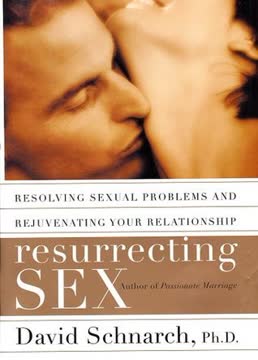
The moral of the story. The journey of resurrecting sex, much like the analogy of frogs churning buttermilk into butter, is a process of transformation. It involves embracing anxiety, confronting oneself, and choosing compassion over combat. This journey, driven by integrity and a willingness to grow, ultimately leads to a deeper, more peaceful, and more passionate connection. The author's wish is for readers to align with this "Creation seeking its fulfillment through your development," becoming better lovers, partners, and parents, and contributing to a kinder world for future generations to fall in love.
Last updated:
Review Summary
Resurrecting Sex receives an overall 4.04/5 rating from readers. Reviewers praise its holistic approach to sexual dysfunction and relationship intimacy, with emphasis on trust, openness, and self-soothing. Many find the techniques revolutionary and solutions practical, though some note the text is repetitive, long-winded, and technically complex. Several readers recommend starting with Schnarch's earlier work, Passionate Marriage. While the book offers sound, mental-health-consistent advice, some found it challenging to complete due to its dense presentation.