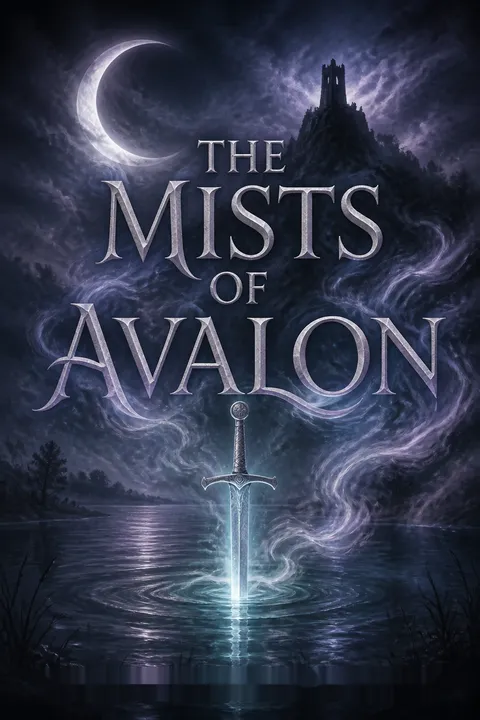


Plot Summary
Prologue
Morgaine tells her story after Arthur has died and the old struggle has ended. The Christian world increasingly treats Avalon as a demonic legend, while the island itself recedes behind the mists.
She remembers Arthur not only as king, but as her brother and lover, and describes carrying him toward Avalon when he was dying. Her account challenges the histories that will be told about them, while admitting that every witness sees events through a different truth.
The frame makes memory itself part of the conflict. Morgaine is not simply correcting a Christian version of Arthur’s life; she is showing how a people’s beliefs determine what can be seen, remembered, and called real. Her tenderness toward Arthur complicates her role as witness: she must tell the truth about a man she loved and opposed. The prologue also sets a limit on certainty. Avalon may be lost, but the story preserves a way of seeing that the victorious faith cannot fully absorb.
A King in Igraine’s Womb
At Tintagel, Igraine lives as the much younger wife of Duke Gorlois, separated from her homeland and its priestesses. Her half-sister Viviane, Lady of Avalon, and Taliesin, the Merlin, arrive with a political and spiritual crisis: Roman power has vanished, Saxon invasions threaten Britain, and Christian belief is closing the road between the ordinary world and Avalon.
They predict that Igraine must bear the king who can unite the divided peoples, and name Uther Pendragon as his father. Igraine resists, but her own vision of Uther and the Merlin’s warning of Gorlois’s death change her choices.
Uther takes Tintagel wearing Gorlois’s cloak and ring. When Gorlois’s corpse arrives, Igraine understands that the old marriage is over and becomes queen beside Uther.
Igraine’s marriage is political before it is personal, and the prophecy intensifies that loss of choice by presenting coercion as sacred necessity. Her resistance matters because she does not simply submit to an abstract destiny: she weighs Gorlois’s kindness, her daughter, and her own fear. The novel’s first moral tension is established here. A cause may be genuinely collective, yet the people asked to serve it still bear the cost in their bodies and intimate lives.
Children Across Two Worlds
Igraine’s daughter Morgaine grows up at Camelot feeling displaced by her mother’s love for Uther and by the arrival of her younger half-brother, Arthur. Uther favors the boy but has little interest in Morgaine, whose visions unsettle the Christian priest in the household. Viviane recognizes Morgaine’s Sight and persuades Uther to send her to Avalon rather than a convent.
Arthur, meanwhile, is fostered with Ectorius and raised for the political role his birth requires. On Avalon, Morgaine learns healing, music, ritual, and the discipline needed to control her visions. She loves Viviane as a mother, but her training also teaches her that priestesses may be required to surrender private wishes to the Goddess and the needs of the land.
Morgaine’s childhood gives the story two competing forms of belonging: dynastic family and spiritual kinship. Her sense of being displaced at court helps explain why Avalon feels like home, while the training there complicates that comfort. Viviane offers knowledge and protection, but also treats Morgaine as someone whose life may be directed toward public necessity. The early bond therefore contains both genuine love and the seeds of later mistrust, without reducing either woman to simple victim or manipulator.
The Stag’s Bride
After years of training, Morgaine is chosen as the Virgin Huntress in an ancient rite meant to test a future king. She blesses the young man who must run with the deer, fight the King Stag, and survive if he is to lead his people. The ritual ends in blood, victory, and a night of union between Morgaine and the Horned One.
At dawn, they recognize each other: the young king is Arthur, her brother. Their grief cannot undo what the rite and their desire have joined. Morgaine discovers she is pregnant, but refuses to return to Avalon or reveal the child’s father. She leaves for her aunt Morgause’s northern court, resolving that Arthur must never learn he has fathered a son with his sister.
The rite collapses the boundary between political ceremony and intimate life. Morgaine and Arthur act within roles larger than themselves, but their recognition afterward restores individual responsibility and horror. The episode also shows how religious frameworks change the meaning of the same act: to the rite, their union serves the land; to Arthur’s Christian conscience, it will become an unbearable sin. Morgaine’s concealment begins as protection, but it also creates a secret that others can later use.
Excalibur and the Crown
After Uther dies, Arthur draws his father’s sword during a Saxon attack, revealing himself to Ectorius, Cai, and the Merlin. Avalon then summons him to receive Excalibur, a blade forged from fallen metal, and its magically worked scabbard, which can keep him from bleeding to death.
Viviane requires Arthur to swear that he will deal fairly with Christians and the old faith alike. He accepts, and the sword helps establish him as the ruler both worlds can recognize. Arthur is later crowned before Britain’s kings and warriors.
He marries Gwenhwyfar, daughter of King Leodegranz, whose dowry supplies valuable soldiers and horses. At the wedding, Morgaine recognizes Gwenhwyfar as the convent girl she once guided out of Avalon’s mists, while Gwenhwyfar and Lancelet silently reveal their attraction.
Excalibur is not merely a weapon but a contract: Arthur’s authority rests on a promise to protect people whose beliefs differ from his own. The coronation turns that private oath into a public performance of unity. Yet the wedding immediately exposes a weakness in the political arrangement. Gwenhwyfar is valuable as an alliance, while her unspoken love for Lancelet threatens the personal life expected to stabilize that alliance. Arthur begins his reign balancing promises that cannot easily be kept together.
The Heir Kept in Lothian
Morgaine’s pregnancy ends in a dangerous birth in Morgause’s hall. The newborn boy is small, and Morgaine is too exhausted to hold him. Morgause first considers what his royal blood could mean for her own sons, especially Gawaine, then uses a simple spell to learn that Arthur fathered the child. When Morgaine wakes and begs her to keep the secret, Morgause swears not to expose it to Lot or the court.
She also prevents the recovering mother from bonding with the baby, sending him immediately to a wet nurse and fostering him among her own children. Morgaine leaves without him, telling herself that he will be safer and that Arthur must not know. The boy grows up known as Gwydion, then Mordred, with his parentage concealed.
Morgause’s choice blends affection, ambition, and control. She does care for Morgaine, yet she also understands that a hidden royal child is political leverage. By separating mother and baby at the moment of greatest vulnerability, she determines the emotional shape of the child’s life before he can speak. Morgaine’s departure is not indifference so much as a decision made under shame and limited choices. The child’s divided identity becomes a lasting fault line between family love and dynastic power.
The Queen’s Divided Heart
Gwenhwyfar arrives at Caerleon frightened by the open countryside, the journey, and a marriage arranged by her father. Arthur greets her kindly but is distracted by the soldiers and horses her dowry brings. Lancelet’s courtesy and beauty draw her, while she draws his attention in return.
Their attraction remains unspoken as Gwenhwyfar becomes queen and tries to learn the demands of court. She suffers miscarriages and begins to fear that she cannot give Arthur an heir. Arthur is often away fighting, and Lancelet becomes her steady companion during his absences.
Their affection deepens, though both understand the loyalty owed to Arthur. Gwenhwyfar’s faith offers her a language of guilt and restraint; her desire for Lancelet offers no simple escape from the marriage that has made her politically useful.
Gwenhwyfar’s conflict is not simply between duty and desire; it is also between the security she needs and the exposure she fears. Her dread of open spaces and her dependence on walls make the court feel protective, even as its marriage rules confine her. Lancelet represents intimacy without safety, while Arthur offers kindness within a public role. Her infertility sharpens this bind: the queen is valued for an heir, but the more she tries to meet that expectation, the more every failure becomes a spiritual accusation.
Morgaine’s Unanswered Desire
At Arthur and Gwenhwyfar’s wedding, Morgaine returns from years of Avalon training and meets Lancelet again as a grown man. Their old tenderness resurfaces, but his attention is fixed on Gwenhwyfar.
Later, on the night of the wedding, Morgaine and Lancelet meet in the stable and begin an intimate encounter. An accident involving a horse interrupts them, and Lancelet’s quick cover story protects her from public scandal. Years later, after Morgaine has returned to court, they find one another alone again.
Lancelet gives her pleasure but stops short of a full union, saying he fears sin and dishonor and that she reminds him of his mother. Morgaine leaves Camelot wounded, and the unresolved bond helps drive her into a long absence from the human world.
Morgaine’s desire for Lancelet is bound to an older hunger to be chosen as a woman rather than used as a priestess or political instrument. His restraint is not cruelty in his own mind; it is an attempt to keep faith with his king and with the religious rules he has adopted. But their different understandings of sex make the encounter painful: Morgaine experiences it as a sacred joining, while Lancelet experiences it as a temptation he must limit. Neither interpretation protects them from injury.
Five Years Beyond Time
Trying to return to Avalon after leaving Camelot, Morgaine loses her way in a country outside both the human world and the hidden island. A fairy woman offers to take the child Morgaine carries from the King Stag and raise him among her people, but Morgaine refuses and finds a path back through the mists.
At another point in her journey, however, she enters the Castle Chariot, where feasting, music, and sensual delights erase her sense of time. What feels like a handful of days costs years in the outside world. She emerges alone, without horse or provisions, and learns from Kevin that Igraine has died and Arthur has moved his court to Camelot. Her years of absence have widened the distance between her and everyone she once knew.
The fairy country literalizes a psychological escape: Morgaine enters a place where ordinary obligations and chronological time no longer press on her. Its pleasures are real, but they do not resolve her grief or restore her place in the world. The lost years turn retreat into consequence. When she returns, other people have aged, political arrangements have shifted, and her mother is gone. The story makes time itself an ethical force: one can evade decisions for a while, but the world continues making them without you.
Viviane Falls at Camelot
Viviane returns to Arthur’s court seeking a renewal of his oath to Avalon and arrives with her son Balan and his foster-brother Balin. Years earlier, she had ended the suffering of Balin’s foster-mother, Priscilla, at the dying woman’s own request.
Balin interpreted that mercy as murder and carried his grievance into Camelot. When Viviane challenges Arthur, Balin seizes a weapon and kills her in the hall. Arthur restrains the ensuing violence and banishes Balin, while Morgaine kneels beside the body and takes Viviane’s small ritual knife.
Arthur buries the Lady of the Lake at Glastonbury rather than Avalon. With Viviane gone and the Holy Regalia exposed to Christian authority, Morgaine loses the mentor who had shaped her life and the power that had once bound the court to Avalon.
Viviane’s death is the novel’s most brutal collision between personal grief and public ideology. Balin believes he is avenging a Christian mother, while Viviane believed she was honoring that mother’s wish to end pain. Arthur’s response is legally measured, but the burial itself shifts symbolic ground from Avalon to Glastonbury. Morgaine inherits no clean authority from this scene: she has lost the woman she loved, and the old order’s protection has weakened at the very moment it most needs a successor.
The Cross Replaces the Dragon
As Arthur prepares to meet the Saxons at Mount Badon, Gwenhwyfar urges him to carry the Christian cross and Virgin banner instead of the Pendragon standard promised to Avalon. Arthur resists because his kingship was sworn to people of many faiths, but her fear for their future and longing for a Christian heir prevail.
He goes into battle beneath the cross, and the victory drives the Saxons back, yet his choice wounds the alliance that helped place him on the throne. Avalon’s people and the northern tribes see the missing dragon as a broken oath. Arthur’s military success strengthens his rule in the Christian world while making Morgaine and the remaining priesthood fear that the old faith is being erased.
The banner is a practical object with an enormous political burden. Arthur believes he can preserve unity while changing its visible symbol; Gwenhwyfar believes a Christian standard can make the kingdom morally coherent. Both are responding to genuine fears, but the victory rewards the choice that weakens Avalon’s place. The scene asks whether pluralism can survive when one group controls the public symbols. Arthur’s compromise is not neutral: it changes who feels represented under his protection.
A Queen’s Dangerous Hope
Gwenhwyfar continues to lose pregnancies, and Arthur’s illness after battle leaves her fearing both widowhood and a childless reign. He tells her that he has never fathered a child with another woman and would acknowledge any child she bore, even if another man had fathered it.
His words give Gwenhwyfar a painful freedom she had not expected: she and Lancelet can love each other without imagining that Arthur’s honor must be destroyed. Their attachment deepens into a secret affair, though guilt and public duty continue to govern them.
When the Queen later miscarries again, she is physically and spiritually shattered. Arthur’s permission does not solve the triangle; it makes their love possible while leaving all three bound to the kingdom and to one another.
Arthur’s offer is compassionate, but it cannot remove the unequal burdens that define the marriage. Gwenhwyfar receives permission to seek a child, yet the decision still exposes her to shame and religious condemnation. Lancelet’s love is constrained by loyalty to Arthur, and Arthur’s generosity is shaped by the political need for an heir. The scene challenges the idea that consent alone resolves a power imbalance. Their private arrangement can ease guilt, but it cannot make the court’s expectations disappear.
A Scabbard Against Death
As threats gather around Arthur’s young heir, Viviane brings Morgaine into Avalon’s deeper training and teaches her to use the Sight. Morgaine helps identify danger to Arthur’s son and later is given the task of making a scabbard for Excalibur. She stitches spells into its crimson cover, using her own blood and symbols that unite the old elements with Christian and Druid signs.
The scabbard can staunch wounds, and Arthur carries it as he fights to defend Britain. Yet its protection binds him to Avalon’s gifts even as Gwenhwyfar urges him toward Christianity. Morgaine’s work saves the king’s life, but it does not save the fragile trust between the Queen, the priestesses, and Arthur’s divided people.
The scabbard condenses the novel’s central problem into a crafted object: unlike a banner, it can hold incompatible symbols together without making them identical. Morgaine’s labor is intimate and political at once, her blood entering the protection of the king who is also her brother and lover. The device succeeds materially, yet its meaning remains contested. Protection cannot compel gratitude or allegiance, and the more the court benefits from Avalon’s power, the more it can deny the source.
Meleagrant Takes the Queen
When Gwenhwyfar travels toward Tintagel after Igraine’s death, she is caught in a country unsettled by renewed Saxon danger. Her half-brother Meleagrant claims her inheritance and traps her in the old castle, intending to use her as a wife and ruler. He beats and rapes her, leaving her bruised, terrified, and convinced that Arthur may reject her.
Lancelet reaches the castle, kills Meleagrant, and frees her. She and Lancelet then leave together, no longer able to maintain the fiction that their bond is merely courtly affection. Gwenhwyfar’s captivity exposes how little protection rank can offer a woman when the men around her decide that her body is political property.
The episode echoes the marriages that opened the novel: women are repeatedly treated as routes to land, heirs, and legitimacy. Gwenhwyfar’s position as queen does not protect her when she is isolated from Arthur’s power. Meleagrant’s violence strips away the polite language of alliance and exposes its coercive underside. Lancelet’s rescue gives Gwenhwyfar immediate safety, but it also forces their private desire into the open. Survival and scandal become entangled, and her next choices are made under trauma rather than freedom.
Mordred Claims His Place
After years fostered in Lothian, Morgaine’s son returns to the world of Arthur’s court as Gwydion, later known as Mordred. He is clever, watchful, and eager to understand the parentage everyone around him hides. Avalon’s priestesses train him for a destiny that could place him on the throne, while Morgause’s household has already taught him how power works.
Arthur does not publicly acknowledge him, and instead names Lancelet’s son Galahad as heir. Mordred enters the Round Table’s orbit and wins a place among its Companions, but he also sees Arthur’s dependence on Christian approval and Gwenhwyfar’s influence. The son born to unite the kingdoms grows into a man with reasons to challenge the order built around his father.
Mordred’s rise is not simply a villain’s ambition. He has been shaped by secrecy, fosterage, and competing claims about which parentage matters: the father who cannot acknowledge him, the mother who left him, or the political community that may need him. His intelligence lets him read the court’s contradictions, but it also tempts him to treat people as instruments. The promised king becomes a product of the very manipulations intended to secure unity, so prophecy risks helping create the danger it predicts.
The Grail Splits Camelot
On Pentecost, the Holy Regalia are brought into Arthur’s hall and the Grail appears in a vision that overwhelms the assembled court. Knights and Companions swear to seek it, leaving Camelot in scattered groups. Galahad sees the vision most clearly and pursues it with a purity that draws him beyond ordinary ambition. Lancelet follows, but his search is clouded by guilt, longing, and the wounds of his past.
He eventually returns after Galahad has found the Grail and died. The quest removes Arthur’s closest defenders at a moment when the kingdom needs them, while also drawing Gwenhwyfar and Lancelet back into a love that neither can resolve. The sacred object inspires devotion, but it also empties the Round Table of its fellowship.
The Grail is both revelation and centrifugal force. It gives each knight a private encounter with what he most deeply desires, and that very inwardness pulls the shared political project apart. Galahad’s fulfillment costs him life in the world; Lancelet’s partial failure returns him to the human ties he could not escape. For Arthur, the vision is not a simple triumph of one religion. It disperses the men who made his rule possible and leaves the kingdom exposed to the rival meanings of sacred duty.
Atonement at Mount Badon
When the Saxons mass again, Gwenhwyfar presses Arthur to abandon the Pendragon banner and lead a wholly Christian army. He refuses at first, knowing that the northern tribes and Avalon’s people swore allegiance to the dragon, but eventually gives in to her plea.
At Mount Badon, the Christian banner flies while the old allies fight beside Arthur anyway, fearing Saxon conquest more than broken promises. Arthur wins, but the choice deepens the breach with Avalon and leaves him spiritually uneasy.
Gwenhwyfar hopes the victory will prove that God has accepted her faith and grant her a child. Instead, another pregnancy ends in loss, and Arthur’s conscience remains divided between the oath that made him king and the faith his wife wants him to serve.
Arthur’s decision turns private marital pressure into state policy. Gwenhwyfar is not merely a doctrinal antagonist; she is trying to make her husband’s public rule match the faith that gives her security. Arthur gives way out of love, yet the victory cannot settle the moral question, and the people who enabled his kingship are left to decide whether to follow him anyway. The repeated pregnancy loss intensifies the danger of interpreting suffering as divine judgment, a habit that makes Gwenhwyfar’s grief fertile ground for fear.
The Last Battle at Camelot
As Arthur ages and the Round Table thins, Mordred’s hidden claim grows harder to ignore. He becomes a trusted Companion but also gathers those willing to challenge the King, while Gwenhwyfar and Lancelet’s love remains a source of vulnerability and scandal. The Grail quest has taken Galahad and many of Arthur’s finest knights away; other Companions die or return diminished.
When Mordred finally turns against Arthur, the conflict that prophecy and secrecy have been feeding becomes open war. Arthur confronts his son in the final battle, and both are fatally wounded. The kingdom is left without the King who had held its factions together, and the old order of Avalon has no political champion strong enough to restore it.
The final conflict is the consequence of choices made long before either man could understand them. Arthur’s legitimacy rests on a hidden birth and a broken religious promise; Mordred’s identity rests on concealment and fosterage. Their clash is therefore both family violence and constitutional collapse. Arthur’s achievement was real, but it depended on personal loyalty rather than durable institutions. Once that loyalty fractures, Britain’s peace cannot survive the loss of its central figure.
The King Returns to Avalon
After the battle, Morgaine reaches Arthur while he is dying. Their old injuries and rivalries fall quiet as she cradles him, and he recognizes her not as enemy or seductress but as the sister who once carried him as a child. She guides the barge toward Avalon, though the island has become nearly inaccessible to the living world.
Arthur dies, and the ordinary people say he sleeps, leaving both Christians and devotees of Avalon to claim his meaning. Morgaine remains behind as one of the few who can still travel between the worlds. The king’s death ends the war, but not the struggle over the story that will survive him.
The ending returns the epic to its most intimate image: Morgaine holding Arthur. After decades in which people used their bodies, vows, and loyalties to build a kingdom, the final act is care rather than rule. Yet the scene does not restore Avalon or undo political losses. Arthur’s body passes into legend, where competing religions can reshape him. Morgaine’s account preserves a more complicated truth: love, guilt, and duty all belonged to the same life.
Epilogue
Years later, Morgaine dreams that Lancelet has become a priest and shares the Grail with her in the old chapel. She wakes alone, then crosses from Avalon to Glastonbury and finds him dead there, known to the monks as Galahad.
The body is old, but his face holds the peace he sought. Morgaine leaves a cutting of the Holy Thorn at Viviane’s grave and realizes that the sacred can survive under more than one name. She returns toward Avalon without claiming that either faith has defeated the other.
The epilogue does not resolve the religious conflict by declaring one side false. Instead, Morgaine encounters the Grail within Christian worship and recognizes a sacred reality she once assumed belonged only to Avalon. Lancelet’s life has moved toward the faith he feared and desired, while Morgaine’s journey brings her to a more capacious understanding of the Goddess. The Holy Thorn becomes a living bridge between traditions. What survives is not a single uncontested account, but the possibility that reverence can cross the boundaries people built around it.
Analysis
The novel’s central conflict is not a simple contest between paganism and Christianity. It is a struggle over who gets to define reality, and what a ruler owes to people whose beliefs differ from his own. Avalon’s power depends on ritual, memory, and a willingness to accept multiple truths; Christianity offers a coherent moral system but, in its most forceful institutional form, seeks to make that system exclusive. Arthur’s attempt to protect both communities is humane, yet politically unstable, because each side reads compromise as betrayal.
Morgaine’s story makes that conflict intimate. She is repeatedly asked to let her body serve a public purpose: first as a daughter married for alliance, then as a priestess, then as a mother whose child carries political significance. Her failures are not merely personal mistakes; they emerge from the pressure to obey institutions that claim to know what the Goddess or God wants. Yet Morgaine also exercises power over others, sometimes with the same certainty she resents in Viviane. Her development lies less in mastering magic than in recognizing the cost of confusing a cause with the people made to serve it.
Gwenhwyfar’s devotion and Morgaine’s devotion are both sincere, but their differing beliefs shape their judgments of one another. The novel refuses to make one woman simply virtuous and the other corrupt: each can love, fear, act selfishly, and mistake certainty for moral clarity. Arthur’s kingdom lasts because people repeatedly choose personal loyalty over factional purity, but that peace is fragile. The ending offers no restoration of Avalon’s old political power. Instead, Morgaine encounters sacred meaning across religious boundaries, suggesting that institutions may fail to contain what they once revealed.
Review Summary
The Mists of Avalon receives mixed reviews, with some praising its feminist retelling of Arthurian legend and complex female characters, while others criticize its pacing, religious debates, and portrayal of women. Many readers appreciate the unique perspective and worldbuilding, but some find the characters unlikable or passive. The book's length and writing style are divisive. Several reviewers express conflicted feelings due to allegations of child abuse against the author, which has tainted their perception of the work.
People Also Read

Characters
Morgaine
Avalon’s reluctant heirMorgaine is Igraine’s daughter, Arthur’s half-sister, a priestess trained in Avalon’s mysteries, and the narrator who frames the story. Her Sight makes her attentive to motives and futures, while her attachment to family repeatedly complicates the discipline expected of a priestess. She wants to serve the Goddess without becoming merely a tool of Viviane’s political design. Proud, observant, and often emotionally guarded, she can be both compassionate and severe. Her deepest struggle is not simply choosing between religions, but deciding when loyalty to an institution conflicts with judgment, love, or the needs of living people.
Arthur
Britain’s divided kingArthur is the son of Igraine and Uther, raised away from his birth family and trained by Ectorius. He is a gifted leader whose instinct is to earn loyalty rather than demand it, and his kindness makes people forgive mistakes they would condemn in another ruler. Yet he is also a king formed by incompatible vows: Avalon helps place him on the throne, while Christianity becomes the public faith of his court. Arthur wants peace and fairness, but repeatedly postpones the cost of choosing between those obligations. His humane personal nature is a strength; his reliance on personal bonds also makes his kingdom vulnerable.
Gwenhwyfar
The anxious High QueenGwenhwyfar is the daughter of King Leodegranz and Arthur’s queen. Raised in a convent, she is devout, learned in religious practice, and deeply uncomfortable beyond enclosed walls. She wants to be a good wife and queen, but measures herself against the expectation that she must provide an heir. Her attraction to Lancelet is inseparable from guilt, fear, and her need to feel chosen rather than simply useful. Gwenhwyfar can be tender and generous, yet her certainty about Christian truth narrows her sympathy for Avalon. Her vulnerability often appears as conviction, especially when she fears losing the safety her faith promises.
Viviane
The commanding Lady of AvalonViviane is Morgaine’s half-sister, foster-mother, and the Lady of the Lake. She reads the Sight and treats politics as part of her priestly duty, working to preserve Avalon and unite Britain against invasion. Her authority comes from discipline, knowledge, and a genuine willingness to sacrifice herself. Yet she can regard other people’s lives as pieces in a necessary design, even when she loves them. That tension makes her formidable rather than simply wise. She longs for a daughter who can succeed her, but her conception of love is often inseparable from the burden she believes the Goddess has assigned.
Uther Pendragon
Arthur’s battle-tested fatherUther is Britain’s war leader after Ambrosius and the father of Arthur. He is a capable commander who values loyalty, courage, and the survival of the kingdom. His marriage to Igraine begins as a political arrangement, but their affection becomes real. Uther is not a theologian; he is wary of religious demands that compete with the practical duty to defend his people. His legacy is both a throne and a crisis of succession: Arthur inherits the authority Uther won, but also the unresolved conflict between Avalon and the Christian court.
Gorlois
Igraine’s first husbandGorlois is Duke of Cornwall, a seasoned soldier and Igraine’s first husband. He can be harsh and controlling, but he is not simply the monster Igraine once feared: he offers her practical kindness and wants a family and a quieter life. His Romanized ideas about marriage and authority clash with Igraine’s upbringing among the Tribes. His suspicion of Uther turns a political disagreement into a personal rupture. Gorlois represents the older generation of warriors who understand honor as keeping one’s oath, even when the choice costs them everything.
Morgause
Lothian’s ambitious queenMorgause is Igraine’s younger sister, raised for a time by Viviane and later married to Lot of Orkney. She is sensual, politically alert, and far more comfortable than Igraine with using charm and strategy to secure influence. Morgause enjoys power but does not confuse it with the self-denial demanded of a priestess. Her warmth toward Morgaine and the children she fosters is real, though it can coexist with calculation. She understands how dynastic claims work and sees openings others overlook, making her both a loving relative and a dangerous political actor.
Gwydion, called Mordred
The hidden royal sonGwydion is Morgaine’s son, raised in Morgause’s household without knowing his full parentage. In the wider court he is called Mordred, a name linked to his Saxon years and his martial identity. He is quick-minded, observant, and adept at concealing what he knows. His education in both Avalon’s traditions and the political world gives him unusual insight into the forces around Arthur. He wants recognition and agency, but the secrecy of his birth makes both difficult. His intelligence can serve a larger cause, yet it also tempts him to manipulate those whose approval he seeks.
Lancelet
Arthur’s brilliant championLancelet is Viviane’s son by King Ban, a gifted horseman and Arthur’s closest friend. His beauty and martial skill draw admiration, but his deepest loyalty is to Arthur, even when his love for Gwenhwyfar threatens that bond. He was fostered away from Avalon and never feels entirely at home in either world. His courtesy often conceals pain, and his longing for a life he cannot openly claim leaves him suspended between Christian guilt and Avalon’s older acceptance of desire. He is generous with the young and the vulnerable, yet unable to resolve the conflict between private love and public honor.
Taliesin
The old Merlin of BritainTaliesin is the Merlin, Druid, bard, and father of Igraine. His wisdom allows him to move between Christian and Druidic councils without insisting that only one vocabulary can name the divine. He acts as messenger and mediator, often urging patience where others demand victory. His long life gives him perspective, but not certainty; he repeatedly warns that even a wise leader can mistake personal will for the Goddess’s purpose. As a father and grandfather, he is warmer than his public office suggests, and he offers Morgaine a model of spiritual authority rooted in humility.
Kevin
The scarred master harperKevin is a gifted bard with severe injuries from a childhood attack, injuries that have left his body twisted and his hands partly damaged. He turns those limitations into an unusual way of playing a great harp, and his music reaches people who cannot accept his arguments. Kevin serves Avalon as a messenger and eventually takes on the Merlin’s role. He is intellectually restless, skeptical of rigid doctrine, and aware that music can cross boundaries words cannot. His longing to be desired and respected makes him vulnerable to intimacy, while his concern for the wider kingdom can lead him into painful compromises.
Nimue
The silent priestessNimue is Taliesin’s daughter and one of the young women trained in Avalon. She has the Sight, but her gentleness and vow of silence make her difficult to read. She is close to Viviane’s circle and later becomes important to Morgaine’s understanding of Avalon’s future. Nimue’s quietness is not emptiness: she observes carefully and carries a strong inner discipline. Her beauty and youth lead others to underestimate the seriousness of her vocation, while her spiritual life asks her to endure demands that are not always chosen freely.
Accolon
The serpent-marked princeAccolon is Uriens’s younger son, trained in the old ways and marked with Avalon’s serpent symbols. He is brave, attractive, and politically useful, but less settled than his elder brother. His connection to Morgaine is shaped by shared religious identity and by her wish to restore Avalon’s influence in Wales. He treats her as a priestess as well as a lover, which gives their bond a ceremonial gravity. Accolon’s loyalty is sincere, but his ambitions and willingness to accept a dangerous role place him within the larger struggle over who may rule and in whose name.
Uriens
The aging King of WalesUriens is a long-established Welsh king, father to Accolon and Uwaine, and husband to Morgaine. He values stability and peace more than religious argument, and he is willing to let his people retain older customs so long as the kingdom remains orderly. Age has made him physically frail, but his political authority still matters. He is kind to Morgaine in ways that can feel both generous and confining. His willingness to leave practical and spiritual matters in her hands reflects trust, but also the limits of his own understanding of the power she carries.
Gawaine
Arthur’s loyal red-haired heirGawaine is Morgause and Lot’s eldest son, a powerful fighter and one of Arthur’s most loyal Companions. He is blunt, generous, and less subtle than his mother, but his loyalty is not a political pose: he regards Arthur as a beloved brother. Gawaine’s physical strength and readiness to fight make him a natural leader among the northern men. He also has a domestic tenderness that appears in his care for his younger brothers. His plain speech can expose tensions others prefer to hide, even when it makes him an uncomfortable ally.
Elaine
Lancelet’s devoted wifeElaine is King Pellinore’s daughter and Lancelet’s wife. She is gentle, patient, and deeply devoted to her children, and she admires Lancelet long before their marriage. Her hopes are sincere, but she enters a union shaped by other people’s desires and bargains. Elaine wants to make a home with a husband whose heart is divided, and she often meets that difficulty with quiet endurance rather than confrontation. Her kindness to Morgaine and her attention to her children show a practical warmth that contrasts with the political calculations surrounding the royal court.
Galahad
Lancelet’s gifted sonGalahad is the son of Lancelet and Elaine, a gifted young man raised with the promise of knighthood and a place in Arthur’s court. He is courageous, earnest, and drawn to ideals larger than personal advancement. His innocence is not stupidity; he takes vows seriously and expects the adults around him to mean what they say. Galahad’s spiritual aspiration sets him apart from the more politically minded Companions, while his close bond with his father makes Lancelet’s own conflicts more intimate. He represents the possibility of a new generation formed by both family loyalty and religious conviction.
Balin
The wounded foster-brotherBalin is foster-brother to Balan and a Christian knight raised by Priscilla. He is brave, earnest, and deeply attached to the mother who fostered him. His faith is sincere rather than merely political, which makes him suspicious of Avalon’s rites and quick to interpret unfamiliar acts through Christian teaching. Balin’s loyalty to his family and his desire to defend what he believes is good can become rigid. He is an example of how grief and moral certainty may turn a loving person toward acts he would otherwise reject.
Balan
Viviane’s elder sonBalan is Viviane’s elder son, fostered by Priscilla alongside her own son Balin. He is broad, steady, and affectionate, with a deep loyalty to the woman who raised him. Unlike his brother Lancelet, he is not drawn to courtly brilliance or Avalon’s priesthood; he finds purpose in practical service and fighting beside Arthur. Balan’s identity is shaped by fosterage rather than blood alone, and he regards his foster-brother as true kin. His relationship with Viviane is respectful but not intimate, reflecting the distance her priestly duties created.
Cai
Arthur’s scarred foster-brotherCai is Ectorius’s son and Arthur’s foster-brother, a loyal soldier and dependable administrator. A battle wound leaves him with a pronounced limp, but he remains eager to serve rather than be treated as helpless. He can be sharp-tongued, yet his practical care keeps the court functioning. Arthur’s affection for Cai is deeply familial, and Cai’s devotion is one of the clearest examples of loyalty that does not depend on ambition. His presence also reminds the court that honor may take the form of daily service rather than glorious combat.
Patricius
The uncompromising bishopPatricius is the Christian bishop who seeks to make the church the sole authority over belief and practice. He is learned in scripture and sincerely convinced that he is defending the truth, but his certainty leaves little room for the local customs or spiritual experiences of others. His presence gives Gwenhwyfar religious counsel that can be comforting and coercive at once. Patricius is not portrayed as personally greedy; his danger lies in institutional conviction. He can interpret compassion as weakness and religious plurality as a threat to the salvation of the kingdom.
Meleagrant
The claimant from CornwallMeleagrant is a rough and ambitious claimant who asserts that he is King Leodegranz’s son and presses his claim through Gwenhwyfar. He is physically imposing and accustomed to using intimidation when courtesy fails. His view of kinship is transactional: he treats Gwenhwyfar as a route to power rather than as a person with her own authority. He represents the violence that can hide behind inheritance claims, especially when a woman’s body and title are treated as the same political prize.
Ectorius
Arthur’s loyal foster-fatherEctorius is the Romanized nobleman who fosters Arthur and raises him alongside his own son, Cai. He gives Arthur discipline, education, and military training, while treating him as family despite the secret of his birth. His loyalty is practical and steady, rooted in service to the kings he has followed. Ectorius believes in Roman order and Christian respectability, so he is uneasy with Avalon’s rites, but he recognizes Arthur’s obligations to the peoples he rules. He represents the household bonds that help turn a hidden child into a king.
King Leodegranz
Gwenhwyfar’s political fatherLeodegranz is Gwenhwyfar’s father and the ruler whose alliance strengthens Arthur’s army. He is practical, protective in his own way, and keenly aware that a royal marriage is also a transfer of military power. His daughter’s fearfulness irritates him, but he believes he is arranging a secure future for her. Leodegranz’s decision to offer horses and armed men as part of Gwenhwyfar’s marriage shows how women’s lives are folded into political negotiation, even when the men involved think they are acting for their benefit.
Plot Devices
Avalon’s moving mists
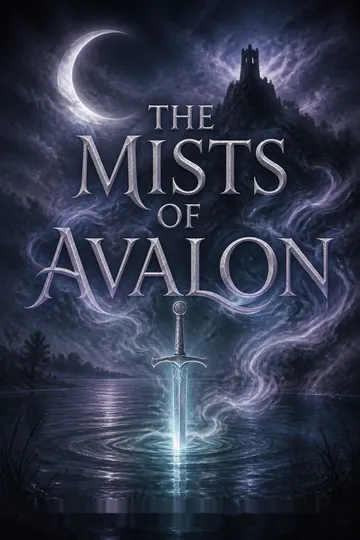
Separating worlds and beliefsAvalon occupies the same landscape as the Christian monastery on Glastonbury, but the mists and the traveller’s beliefs determine which island can be reached. The boundary makes religious conflict physical: the more people accept a single Christian world, the harder Avalon becomes to enter. Morgaine’s journeys through the mists and the fairy country reveal that these borders are not stable, and that time itself can behave differently beyond them. The device also gives the novel a way to dramatize cultural loss without treating it as simple disappearance. Avalon remains, but access to it depends on memory, imagination, and willingness to accept more than one account of reality.
Excalibur and its scabbard
Binding kingship to AvalonExcalibur is a sacred blade received from Avalon, while Morgaine’s embroidered scabbard carries spells intended to keep its bearer from bleeding to death. The sword makes Arthur’s kingship visible to the tribes and links him to the old religious order, even as he increasingly rules a Christian court. Its protective power saves him, but it cannot guarantee that he will keep the oath attached to it. The scabbard therefore represents both practical aid and moral debt: Arthur can benefit from Avalon’s craft without being able to escape the obligations that came with it.
The Sight and sendings
Revealing hidden motives and futuresThe Sight allows certain characters to receive visions, read minds, or project a presence across distance. Igraine sees Gorlois’s death before it happens; Morgaine uses it in training and at moments of crisis; Viviane consults mirrors and pools; Raven’s prophetic silence carries messages that ordinary speech cannot. The Sight is never a simple answer machine. Images arrive in fragments, can be misread, and often make a character responsible for deciding what to do with uncertain knowledge. It is both an inherited ability and a discipline, requiring restraint as much as power.
The King Stag rites
Testing a ruler through sacrificeThe ancient rite joins a priestess representing the land with a young man who must run among the deer, confront the King Stag, and survive. The ceremony links kingship to fertility and to the possibility of death for the people’s sake. Morgaine’s participation brings together religious duty, political prophecy, and private consequence. The rite also frames Arthur’s later life: a king is not merely a ruler who commands others, but a figure whose body and fate are understood as bound to the land. Its meanings change depending on whether the observer sees it as sacred union, pagan obscenity, or political theater.
The Grail
Revealing each seeker’s deepest needThe Grail appears through a vision that different people interpret according to their faith and longing. It draws Arthur’s Companions away from court and sends them on separate quests, while Galahad’s encounter carries him beyond the ordinary demands of kingship. Lancelet’s search exposes the limits of his courage and the burden of his attachments. The Grail is therefore less a prize to be possessed than a test of perception: it reveals what each person is prepared to surrender in pursuit of holiness. Its passage between Avalon and Christian worship becomes a final argument over who may claim the sacred.
Series
Download PDF
Download EPUB
.epub digital book format is ideal for reading ebooks on phones, tablets, and e-readers.








