


Plot Summary
Prologue
Above the Yellow Brick Road, Elphaba watches Dorothy and her companions shelter beneath a willow. The Scarecrow, Tin Woodman, and Lion debate what made the Witch wicked, while Dorothy urges them away from an approaching storm.
Then Elphaba sees the sparkling shoes on the girl’s feet: they belonged to her dead sister, Nessarose. She longs to seize them, but rain drives her beneath the tree’s roots. The travelers continue toward the Emerald City, and Elphaba waits for another chance to meet them.
The opening gives the Witch a body before it gives her a history. From above, she is a watcher and a threat; from below, the travelers turn her into a bundle of explanations, none of which she can correct. The shoes make that distance intimate. They belong to Nessarose, so Elphaba’s desire is not simply for an enchanted object but for a remaining piece of family and inheritance. The storm also establishes a limit no political will can overcome: Elphaba’s fear of water forces her to wait while Dorothy moves on.
The Dragon Arrives at Birth
On the day Melena is due to give birth, her husband Frex leaves their lakeside home to condemn the Clock of the Time Dragon, a traveling puppet show he believes is corrupting Rush Margins. The show turns local gossip into a public spectacle, then depicts a minister’s murder. The villagers take its performance as permission to attack Frex, while his pregnant wife is hidden from a drunken mob by midwives.
They shelter her inside the clock wagon, where she gives birth to a silent, green-skinned girl with unusually sharp teeth. The child bites off a midwife’s finger before anyone can decide whether to kill her. Frex names her Elphaba, then fears her appearance is punishment for his religious and political failure.
Elphaba’s birth is made public before she can act: the crowd has already assigned blame, and the adults around her interpret her body as evidence of sin, illness, or supernatural interference. The Clock of the Time Dragon supplies a crude version of what the novel later keeps testing: images do not merely reflect political life, they can authorize violence. Frex’s failure to protect his congregation becomes entangled with his daughter’s difference, so his devotion begins as both vocation and defense against shame.
A Green Child Learns Cruelty
Frex calls in Nanny, Melena’s former nursemaid, to inspect the child, while he and Melena avoid touching her unless duty requires it. Nanny recognizes that Elphaba is healthy despite her green skin and dangerous teeth, and she persuades the parents to stop treating the baby as a curse that can be washed or prayed away.
Frex’s exorcism fails, and he rejects Nanny’s suggestion that sorcery might help. As Elphaba grows, Melena remains lonely and distant, while Frex disappears on religious missions. Nanny finally takes Elphaba to play among Rush Margins’ poor children. Their rough games teach Elphaba how to approach others, though they also show her how quickly difference attracts cruelty.
Nanny’s care is practical rather than idealized: she does not need to understand Elphaba’s origins before refusing to let the family destroy her. Frex and Melena, by contrast, make the child bear meanings that belong to their own failures and fears. The trip to the village marks a decisive shift from private stigma to public contact. Nanny understands that shelter alone cannot prepare Elphaba for a world that will judge her, but exposure offers no guarantee of kindness.
Glass, Rubies, and Blood
A Quadling glassblower named Turtle Heart arrives at the cottage and quickly charms the isolated Melena. He makes a glass disc that seems to show what is coming: engineers will cut roads through Quadling Country, discover its rubies, and bring violence to the people living there.
Elphaba, nearly two, speaks her first word while asking about the horrors Turtle Heart has seen. Melena is pregnant again, and the family later returns to Colwen Grounds for the birth of Nessarose.
A mob, inflamed by the Time Dragon’s spectacle and religious agitation, kills Turtle Heart there. Nessarose is born without arms. Years later, Melena dies giving birth to Shell, leaving Frex to raise the children with Nanny as the family moves among Quadling settlements.
Turtle Heart links the intimate household to the larger machinery of conquest. His account of roads and ruby extraction makes progress a material threat, not an abstract political slogan. The adults’ uncertain paternity and the children’s very different bodies complicate the family’s claims about inheritance and belonging. Elphaba’s first word turns her into a listener before it turns her into a speaker: she inherits a history of violence that her parents would rather interpret as divine judgment.
Two Girls Share Crage Hall
At seventeen, Galinda leaves her rural home for Shiz University, expecting her beauty and family connections to secure a comfortable place. Her chaperone’s absence at enrollment leaves her without a socially approved roommate, so Madame Morrible assigns her to Elphaba, the green student from Munchkinland.
Their first months are chilly. Galinda avoids Elphaba and joins wealthier classmates, while Elphaba reads sermons and questions how anyone can locate evil.
On a stormy evening, Galinda persuades Elphaba to try on one of her hats; seeing her roommate reflected in the dark window, she admits that Elphaba has a startling beauty of her own. Their guarded exchange opens a small space for friendship, just as Galinda begins to look beyond her reflection.
The rooming arrangement turns social rank into daily proximity. Galinda has learned to treat beauty as a form of authority, but Elphaba’s presence makes that authority feel shallow without immediately replacing it with virtue. Their friendship begins not with a confession but with a shared act of looking: Galinda sees Elphaba differently, and Elphaba allows herself to be seen. The scene also places their contrasting habits beside each other. Galinda performs confidence; Elphaba studies the unstable boundary between moral categories.
Dillamond’s Dangerous Evidence
At Shiz, the Animal professor Doctor Dillamond tells his students that the Wizard’s new Banns restrict Animals’ travel and bar them from professions. Elphaba recognizes the political purpose of Madame Morrible’s poems, which praise obedience while disguising exclusion as art.
She and Boq recruit Crope and Tibbett to search libraries for evidence that Animals and humans share a biological basis. Their work deepens after a Vinkus student named Fiyero survives an attack by animated antlers in a lecture hall, and Elphaba objects when Doctor Nikidik uses a terrified lion cub as a specimen.
Before Dillamond can publish his findings, someone slits his throat. The university calls it an accident, but Elphaba sees the death as deliberate silencing.
Dillamond’s research threatens a political order that depends on claiming a natural distinction between Animals and humans. Elphaba treats scientific evidence as a route toward public accountability, while the authorities treat inquiry itself as a danger. The antlers and the lion cub expose a second problem: the university’s pursuit of knowledge can reproduce the violence it claims to study. Elphaba’s opposition is therefore not a simple rejection of institutions. She wants their methods, but not their willingness to sacrifice vulnerable bodies.
A Nail, a Goat, a Spell
After Dillamond’s murder, Ama Clutch, Galinda’s longtime minder, falls into a strange mental illness. Glinda realizes that the symptoms began after she invented a story about Ama’s supposed confusion to keep Madame Morrible from assigning her extra chaperone duties.
When Ama deteriorates, Glinda tries a spell to ease her suffering, but Ama dies after identifying Grommetik, Morrible’s clockwork servant, as the one who found Dillamond’s body. Elphaba and Glinda conceal what Ama revealed.
Around the same time, Nanny brings Elphaba’s armless sister, Nessarose, to Shiz. Morrible privately selects the three young women for future government service, claiming they are bound to secrecy. Her promise turns their talents into another possible instrument of control.
Glinda’s lie becomes consequential without making her a deliberate sorceress of harm. Her guilt arises from the distance between intention and effect, a distinction the novel refuses to let her settle easily. Ama’s final account gives the girls evidence of institutional violence, but their silence shows how power can survive by making truth dangerous to repeat. Morrible’s recruitment sharpens the same trap: the young women are praised as gifted while being positioned for service they did not freely choose.
The Wizard Refuses Their Case
Elphaba and Glinda travel to the Emerald City to report Dillamond’s murder and argue for the rights of Animals. The Wizard receives them through a storm of theatrical light and weather, then dismisses Dillamond’s work as worthless and rejects Elphaba’s moral challenge. Elphaba realizes that the ruler has no interest in being persuaded by evidence or compassion.
She refuses to return to Shiz and disappears into the city, choosing secrecy over Madame Morrible’s school and the path she has planned for her. Glinda goes back alone. The separation hurts them both, but Elphaba believes that staying close to her friends would expose them to the state’s reprisals.
The audience with the Wizard is a collision between two theories of legitimacy. Elphaba believes a ruler must answer to evidence and the suffering his policies create; the Wizard claims that judgment belongs to leaders alone. His performance of supernatural power obscures how little argument he is willing to hear. Elphaba’s departure is both resistance and retreat. She preserves her freedom to act, but her choice to protect others by cutting them off will become a recurring source of loneliness and regret.
Fiyero Finds Elphaba Again
Five years after Shiz, Fiyero recognizes Elphaba in a chapel in the Emerald City, where she has disguised herself as a religious penitent. He follows her to a hidden room above an abandoned warehouse and learns that she is living underground, avoiding the Gale Force and its raids on dissenters.
Fiyero is now an Arjiki prince, married to Sarima and father to three children, but he returns to Elphaba despite her warnings. Their old friendship turns into a secret love affair. Elphaba refuses to explain the full resistance network or its plans, fearing that Fiyero could be tortured for information. He remains with her, pulled between his family obligations and the intimacy she has kept hidden from the world.
Fiyero’s return makes intimacy both refuge and exposure. Elphaba wants closeness, yet she has built her survival around anonymity and compartmentalization. Their affair does not dissolve those structures; it inhabits them, with Fiyero accepting emotional risk without gaining political knowledge. His divided loyalties are not merely romantic complications. They reveal the costs of resistance for people whose lives connect different communities, while Elphaba’s secrecy makes love feel less like freedom than another liability to manage.
The Lover’s Last Night
As Elphaba prepares for a dangerous operation against the Wizard’s regime, she urges Fiyero to stay away from public places. He follows her anyway on Lurlinemas Eve, watching her approach Madame Morrible’s theater gathering. When children disrupt the scene, Elphaba cannot carry out her assignment. Fiyero returns to her warehouse room, where Gale Force officers attack him.
Elphaba arrives later and finds blood but no body. Unable to learn whether Fiyero survived, she flees to a convent and hides her identity among the maunts. There she spends years in silence and nursing work, until Tibbett, an old Shiz acquaintance dying in the infirmary, recognizes her and insists on treating her as a person with a past.
The failed operation and Fiyero’s disappearance turn Elphaba’s political caution into personal devastation. She cannot know whether her choice spared children or merely left her lover exposed to the state. At the convent, silence first offers structure and escape from guilt; Tibbett’s recognition breaks that shelter by restoring her individuality. His insistence is psychologically important because it refuses the self-erasure Elphaba has mistaken for penance. Returning to life does not mean recovering innocence. It means accepting that she still has choices to make.
A Maunt Leaves the Cloister
After Tibbett dies, Elphaba leaves the convent on a caravan route through the Vinkus, accompanied by a boy named Liir and a guide, Oatsie Manglehand. The journey reawakens her attention to the world beyond her religious routine. In the Thousand Year Grasslands, the travelers meet Princess Nastoya, a Scrow leader who reveals that she is an Elephant living in human form for protection.
Nastoya recognizes Elphaba’s power and gives her three crows as familiars, urging her to act rather than disappear into retreat. Elphaba reaches Kiamo Ko, the mountain stronghold of Fiyero’s people. She has come intending to confess her part in Fiyero’s death to his widow, Sarima, even though she expects no forgiveness.
The caravan makes return a bodily experience: Elphaba must cross dangerous country rather than merely decide to rejoin it. Nastoya offers a counterexample to both submission and simple freedom. She has chosen concealment because her true form would make her a target, yet she does not confuse survival with moral innocence. Her counsel presses Elphaba toward action without promising that action will redeem her. The crows and the label of witchhood give Elphaba a role she did not seek, but one she can use.
Sarima Opens Kiamo Ko
Sarima welcomes Elphaba to Kiamo Ko but refuses to hear how Fiyero died or whether he was unfaithful. She offers her a room for the winter instead of an immediate verdict. Elphaba settles among Sarima’s five sisters, her children, Liir, and a collection of animal companions, including the monkey Chistery.
She finds a copy of the Grimmerie, a strange book of magic, in the castle’s forgotten rooms. While Elphaba studies it and tries to teach Chistery language, the household forms uneasy routines around her. Sarima remains guarded, and Elphaba remains unable to explain herself. Their shared home creates a fragile intimacy that neither woman can yet risk making honest.
Sarima’s refusal is not simply cruelty; it is control over the conditions under which grief may enter her home. By denying Elphaba the chance to confess, she protects herself from being forced into the role of judge or absolver. Her hospitality nevertheless matters. Elphaba is allowed to remain, which creates a relationship more complex than either forgiveness or exile. The Grimmerie adds a parallel uncertainty: it offers power and knowledge, but its unstable text resists easy possession, much like the history Elphaba wants to master.
The Fishwell Takes Liir
Sarima’s son Manek lowers Liir into the castle’s fishwell as a cruel prank, then leaves him trapped above the rising water. Elphaba and the others find Liir, pull him out, and revive him with their desperate efforts. Manek later dies when an icicle falls and strikes him, leaving the family with grief and an unspoken sense that Liir’s survival has displaced him.
Nanny arrives and tells Elphaba more about Melena’s affairs, the medicine she took while pregnant, and the uncertain parentage of Nessarose. Liir hints that a fish in the well told him Fiyero was his father. Elphaba cannot confirm it, but begins to feel responsible for the boy.
Liir’s near drowning forces Elphaba into a form of care she has long resisted. She acts before she can settle whether the boy is truly hers, and that action precedes any settled maternal feeling. Manek’s death then exposes how easily survival is interpreted as a zero-sum exchange, especially in a family crowded with unresolved loyalties. The fishwell’s revelation remains uncertain, but it gives Liir a possible ancestry and Elphaba a new emotional stake. Their connection grows through responsibility before it grows through certainty.
Nessarose Claims the East
Elphaba learns that the Wizard’s forces are surveying the Vinkus, while Nessarose has led Munchkinland into secession and become its ruler. When Nor accidentally discovers that Elphaba’s broom can fly, Elphaba learns to control it and travels to Colwen Grounds.
Nessarose asks her to join the government, but Elphaba refuses to serve as her sister’s adviser or claim the family title for herself. She protests when Nessarose trades Animals to a woman seeking a spell, then frees the Cow and Sheep herself. The sisters argue about religion, sorcery, and responsibility before Elphaba returns to Kiamo Ko, believing Nessarose capable of ruling without her.
Elphaba’s first sustained flight turns a gift of uncertain origin into practical agency. Her visit to Nessarose tests whether family obligation must mean political obedience. Elphaba refuses inherited authority, but she does not remain morally detached: freeing the Cow and Sheep exposes the limits of Nessarose’s new state. The sisters’ disagreement is not simply faith against atheism. Both claim to protect people, yet each can reproduce coercion when she treats her own convictions as sufficient justification.
Kiamo Ko Stands Empty
While Elphaba is away, Commander Cherrystone’s soldiers remove Sarima, her sisters, and the children from Kiamo Ko, claiming they must be protected from a coming battle. Nanny is left behind, and Liir disappears soon afterward. Elphaba returns to find the castle stripped of the people who had begun to make it a home.
She spends years following rumors and trying to learn where the captives were taken, but the Wizard’s forces conceal their fate. Nanny insists they may be dead; Elphaba cannot accept certainty without evidence. She remains at Kiamo Ko with the Grimmerie and her animal companions, unable to rescue the family and unwilling to abandon the search.
The seizure converts Elphaba’s refuge into a site of political occupation. The soldiers’ language of protection disguises the same coercion Elphaba has opposed elsewhere, making good intentions almost impossible to distinguish from state violence. Her failed search leaves her suspended between hope and knowledge. Nanny’s age and Liir’s absence make that uncertainty domestic as well as political. Elphaba’s growing isolation is not chosen as a spiritual discipline now; it is the consequence of trying to keep faith with people she cannot reach.
A House Ends Nessarose
Years later, a tornado tears across Munchkinland and drops a house onto Nessarose as she awards religious-school prizes. Dorothy, a girl from Kansas, survives the crash with her dog, Toto. Glinda reaches the scene, helps Dorothy understand that she is far from home, and sends her toward the Emerald City to ask the Wizard for help.
Before Dorothy leaves, Glinda gives her Nessarose’s enchanted shoes for protection. Elphaba arrives for the memorial service and discovers that Dorothy is carrying the shoes her father made for Nessarose. She confronts Glinda, who argues that the shoes had become a political symbol and needed to leave Munchkinland. Elphaba sees them as both family property and a danger if the Wizard gets them.
Nessarose’s sudden death releases Munchkinland from her rule, but the tornado offers no moral judgment about whether that rule was just. The shoes immediately become more than a keepsake: their magic and public meaning make them instruments in the struggle over the country’s future. Glinda acts from a mixture of care and political calculation, while Elphaba sees that practical choice as another dispossession. Their old friendship cannot erase the conflict between what each believes she is protecting.
Nor Becomes the Bargain
At Colwen Grounds, the Wizard demands to know what Elphaba will do about Munchkinland’s independence and asks where he can find the Grimmerie. Elphaba bargains for news of Fiyero’s family. The Wizard reveals Nor, Sarima’s daughter, bent under chains and held as his personal protection against Elphaba.
He reports that Sarima and her sisters are probably dead, and that Irji was executed publicly. In return for the Grimmerie, Elphaba asks for Nor’s release, but the Wizard refuses to make a promise. He claims the book came from his own world and says he wants it to study its spells. Elphaba leaves without surrendering the book or Nor.
The meeting makes the cost of Elphaba’s prolonged absence concrete. Nor’s captivity is not a rumor or abstraction, and the Wizard uses that knowledge to convert grief into leverage. His account of the Grimmerie’s origin destabilizes the boundary between Oz and another world, but it does not make him trustworthy. Elphaba’s refusal to hand over the book is ethically complicated: she protects dangerous knowledge from a tyrant, yet cannot secure the person whose freedom she wants most.
The Witch Reaches Shiz
Elphaba returns to Shiz intending to kill Madame Morrible for her role in Dillamond’s murder and the girls’ recruitment. She arrives too late: Morrible is already dead. Elphaba strikes the corpse with a trophy, then tells Avaric that she killed the Headmistress. At a carnival, a dwarf connected to the old Clock of the Time Dragon gives her a private puppet play.
Its scenes suggest that the Wizard visited Melena before Elphaba’s birth, and the dwarf identifies Elphaba as a being linked to two worlds. He calls himself the Grimmerie’s guardian and describes Yackle as a force whose purpose he does not understand. Elphaba leaves with more suspicions than answers, while Dorothy continues toward Kiamo Ko.
Elphaba’s revenge arrives after its target is already beyond consequence, exposing how much of her life has been organized around acts she cannot complete in time. The puppet show offers a possible explanation for her birth but refuses the stability of proof. Its theatrical form echoes the Clock’s earlier political manipulations: a staged account can reveal something while also distorting it. The dwarf’s claim to guard the Grimmerie expands the conspiracy without resolving it, leaving Elphaba with knowledge that deepens uncertainty rather than mastery.
Water Ends the Witch
Dorothy reaches Kiamo Ko with the Lion, the Tin Woodman, and a Scarecrow who proves to be filled with straw. Elphaba tries to take Nessarose’s shoes and suspects Dorothy has come to kill her for the Wizard. She locks Dorothy in the tower and demands the shoes, but Dorothy insists they cannot be removed and explains that she came to ask forgiveness for Nessarose’s death.
Elphaba’s broom catches fire during the confrontation. Dorothy throws water to save her, not knowing that water is fatal to Elphaba. Afterward the Wizard leaves Oz by balloon, Liir disappears into the Emerald City searching for Nor, and the tale hardens into the public legend of a wicked Witch. Dorothy’s final account remains disputed.
The climax turns on a failed exchange: Dorothy offers the forgiveness Elphaba has long wanted, but the offer arrives at the instant when Elphaba can no longer decide how to receive it. Dorothy’s water is an act of rescue that becomes fatal because she does not know Elphaba’s vulnerability. The ending refuses to let intention settle consequence. Elphaba’s life becomes a legend that erases the moral complexity she spent years trying to understand, while political power shifts without delivering a clear justice.
Analysis
Wicked treats the word wicked as a political verdict before it treats it as a character trait. Elphaba’s green skin makes her legible to others as a threat, but the story repeatedly shows that the people who label her have their own motives: religious certainty, social embarrassment, political convenience, or fear of losing authority. The novel does not replace one simple account with another. Elphaba can recognize injustice and still harm people; Glinda can act kindly while serving a system she distrusts; Frex can devote himself to the poor while failing his family. These contradictions keep moral judgment tied to consequence rather than identity.
The book’s political argument is grounded in institutions and ordinary decisions. The Banns turn prejudice into law. The ruby projects convert land and people into extractable resources. Morrible converts education into recruitment, and the Wizard uses spectacle to make authority seem supernatural. Yet no single villain explains all the harm. Local crowds, fearful students, opportunistic officials, and silent bystanders help power travel farther than any ruler could reach alone. Even resistance risks copying the habits it opposes, as Elphaba’s secrecy and eventual violence demonstrate.
Family is the novel’s most intimate political structure. Elphaba’s body is interpreted by her parents before she can speak; Nessarose receives care that becomes both support and expectation; Liir enters Elphaba’s life before either can name their bond. The shoes embody this inheritance most clearly. They are made from a father’s love, altered by a friend, claimed by a sister, and carried away by a stranger. Their meaning cannot be settled by ownership alone.
The ending refuses a clean moral ledger. Dorothy means to ask forgiveness, but her attempt to save Elphaba kills her. The public story then reduces a difficult life to the familiar shape of a wicked Witch. The novel’s final challenge is not to declare Elphaba secretly good, but to notice how stories simplify people after their deaths and how easily that simplification serves the living.
Review Summary
Wicked receives mixed reviews, with many praising its innovative premise and complex characters but criticizing its slow pacing and confusing plot. Readers appreciate Maguire's exploration of good and evil, political themes, and Elphaba's backstory. However, some find the writing style difficult and the narrative structure disjointed. The book's departure from the original Oz story divides opinion, with some enjoying the fresh perspective and others disappointed by the changes. Overall, it's seen as an ambitious but flawed reimagining of a classic tale.
People Also Read



Characters
Elphaba
The green dissenterElphaba is the green-skinned daughter of Frex and Melena, born into a household that treats her difference as a problem to explain. She is watchful, intellectually restless, and impatient with claims of moral certainty, especially when those claims excuse political harm. Her focus on Animals’ rights grows from a habit of noticing who is excluded from supposedly universal rules. She can be brave and fiercely loyal, but her distrust makes her protect others by withholding herself. Her struggle is not simply to become accepted. She wants to know whether goodness is real, whether resistance can avoid reproducing cruelty, and whether a person can live without being defined by other people’s stories.
Glinda
The polished sorceressBorn Galinda into a socially ambitious Gillikinese family, Glinda arrives at Shiz confident that beauty and good manners can arrange the world in her favor. Her roommate’s questions unsettle that confidence, gradually making her more attentive to politics and other people’s needs. Glinda is socially agile and often generous, but she also understands how charm can disguise self-interest. Her sorcery develops alongside her moral uncertainty, giving her a practical skill without making her certain about what justice requires. Her relationship with Elphaba matters because it asks her to risk more than admiration or sympathy: it asks her to see a friend whose choices she cannot control.
Frex
The troubled ministerFrex is a unionist minister devoted to serving people he considers spiritually neglected. His moral seriousness gives him courage, but it also lets him neglect his family and interpret misfortune as evidence of sin or divine judgment. He loves his children, though he does not distribute his attention evenly, and his attachment to religious duty often shields him from facing the harm his choices cause. Frex’s relationship with Elphaba is marked by tenderness, shame, and misunderstanding. He wants her to fulfill a family role and to serve a cause, while she resists being made into proof of his beliefs.
Melena
The restless motherMelena is a privileged woman stranded in a rural life she did not expect, and she meets isolation with humor, appetite, and self-medication. She loves Frex but resents his long absences and his habit of placing ministry above domestic life. Her uncertain memories and longing for companionship complicate the family’s understanding of Elphaba’s birth and Nessarose’s parentage. Melena is neither a simple victim nor a careless mother. She is a woman trying to preserve a self that marriage, motherhood, and displacement keep narrowing.
Nanny
The family’s blunt guardianNanny has served Melena’s family across generations, carrying practical knowledge, gossip, medicines, and a sharp sense of when to interfere. She is capable of tenderness, though she rarely expresses it without teasing or scolding. Where Frex seeks spiritual explanations and Melena retreats into intoxication, Nanny attends to the immediate needs of children and household. She protects Elphaba without pretending the world will be kind to her, and she is willing to use manipulation when persuasion fails. Her loyalty is imperfect and sometimes self-serving, but it gives the family a durable source of care.
Turtle Heart
The Quadling glassblowerTurtle Heart is a traveling Quadling craftsman whose quiet skill and unfamiliar customs unsettle the assumptions of Frex and Melena. He makes glass, attends to Elphaba without fear, and understands that the planned road through Quadling Country will bring more than trade. His warnings arise from knowledge of his people’s fragile environment, not from abstract prophecy. He offers Melena companionship and challenges Frex’s confidence about religion and progress. As an outsider, he sees how readily powerful people call a place empty when they want to take it.
Nessarose
The devout younger sisterNessarose is Elphaba’s younger sister, born without arms and raised with intense attention from their father. Her faith gives her a structure for interpreting dependence and suffering, while her intelligence and ambition make her more politically capable than her family expects. She can be gracious, but she can also mistake piety for moral authority and overlook the people harmed by her decisions. Her relationship with Elphaba combines affection with resentment: she wants closeness and support, yet expects her sister to accept a role chosen for her. Nessarose’s enchanted shoes are tied to her wish to stand and act independently.
Shell
The youngest Thropp siblingShell is Elphaba and Nessarose’s younger brother, born after their mother’s death. He grows up with Nanny and Frex, apart from the older sisters’ childhood experiences. Nanny describes him as handsome, bold, and prone to daring schemes. His involvement in the political world shows how the Wizard’s struggle reaches even young people raised far from the capital. Shell’s partial absence from Elphaba’s life leaves him difficult for her to understand, despite their shared family history.
Boq
The earnest MunchkinlanderBoq is a student from Rush Margins who studies agriculture at Shiz and carries a strong attachment to his home community. He is earnest, observant, and often more willing than his privileged classmates to do unglamorous work. His infatuation with Galinda initially makes him awkward, while his friendship with Elphaba develops through research and shared political concern. Boq values loyalty and practical decency, but he also becomes wary of risks that could endanger his family. His later life on a small farm reflects a choice for stability, not ignorance of the injustices he once opposed.
Doctor Dillamond
The Animal professorDoctor Dillamond is a Goat and a respected professor at Shiz, devoted to scientific inquiry and the status of Animals. He is proud, irritable, and sometimes impatient with students who fail to see the political meaning of his work. His research seeks evidence about the relationship between human and Animal life. Elphaba becomes his assistant because she recognizes the consequences of his discoveries. Dillamond’s position makes him an intellectual and political target, while his methods force the university to confront how knowledge is shaped by power.
Fiyero
The Vinkus princeFiyero is an Arjiki prince who comes to Shiz as a student, marked by the blue designs of his people. He is confident in his physical abilities but less certain about the values of the society he enters. Fiyero’s marriage was arranged when he was young, and he carries the obligations of family and leadership even while seeking a life beyond them. His friendship with Elphaba begins in the university’s social circle and gives him access to a more politically questioning world. He is drawn to directness and intensity, qualities he finds difficult to reconcile with his public responsibilities.
Sarima
The guarded Arjiki widowSarima is the senior woman of Fiyero’s household at Kiamo Ko, responsible for three children and five younger sisters in a politically precarious community. She is observant and proud, though her sheltered upbringing has left her less practiced in the wider world than she would like. Sarima uses hospitality as a way to assert control over her home, and she knows how to withhold affection when she feels threatened. Her relationship with Elphaba is shaped by grief, suspicion, and a genuine capacity for welcome. She is not easily persuaded to surrender her own account of her life.
Liir
The uncertain foundlingLiir is a quiet, heavyset boy who travels with Elphaba and gradually becomes part of life at Kiamo Ko. He longs for belonging and responds strongly to the attention of older boys and soldiers, even when they treat him carelessly. His dependence on Elphaba develops before either of them can define their relationship. Liir is often underestimated because he is shy and physically awkward, but he has persistence and a strong emotional imagination. His wish for a father reveals how much of his identity remains unsettled, while his bond with Elphaba tests her ability to care without certainty.
Madame Morrible
The headmistress strategistMadame Morrible leads Crage Hall with polished authority and an appetite for influence. She understands how education can shape students into public instruments, and she presents political recruitment as an honor. Her manner is theatrical, but her ambitions are practical: she wants capable women placed where they can help stabilize the Wizard’s government. Morrible is skilled at reading talent and manipulating insecurity, especially in young people who have not yet found a language for their own power. Her claims about magic and authority remain difficult to separate from her talent for intimidation.
The Wizard
Oz’s distant rulerThe Wizard rules Oz through centralized authority, military force, spectacle, and a careful management of information. He prefers being perceived as more than human, yet his political decisions reveal a ruler concerned with control and survival. The Wizard can speak persuasively about order while dismissing the people harmed by his policies. His interest in the Grimmerie suggests motives beyond ordinary governance, though even he may not fully understand the forces he serves. He is an antagonist whose power comes not only from force, but from making others doubt what they have seen.
Yackle
The unsettling old seerYackle is a mysterious elderly woman associated with potions, predictions, and the hidden edges of Elphaba’s life. Nanny encounters her while seeking medicine for Melena, and later Elphaba sees her as a possible force behind events she cannot explain. Yackle’s identity and intentions remain uncertain even to people who have dealt with her. She represents the discomfort of living with influences that cannot be cleanly named as human, magical, or political.
Princess Nastoya
The Scrow’s hidden leaderPrincess Nastoya is a powerful Scrow leader whose imposing public role conceals a more vulnerable truth. She understands the danger faced by Animals and by anyone whose nature makes them conspicuous under the Wizard’s rule. Her advice to Elphaba is unsentimental: survival may require concealment, but self-protection cannot answer every moral demand. Nastoya offers Elphaba practical aid without claiming to control her choices. She provides a model of authority rooted in listening and community rather than spectacle.
Dorothy
The Kansas outsiderDorothy is a farm girl from Kansas whose arrival in Oz places her inside political events she does not understand. She is plainspoken, attached to her dog, and more emotionally candid than the people who try to direct her. Dorothy’s innocence is not the same as stupidity: she notices distress and responds to it, even when doing so creates danger. She relies on the explanations offered by others but continues to judge situations through her own experience. Her presence unsettles the established stories about witches, rulers, and what a stranger is supposed to do.
Avaric
The privileged skepticAvaric is an aristocratic student from Gillikin, self-assured and often careless with other people’s feelings. His wit can expose hypocrisy, but it also lets him avoid commitment when events become dangerous. He moves easily through elite circles and later acquires political influence, making him a useful observer of how privilege survives changing regimes. His friendship with Fiyero and contact with Elphaba show that he can recognize complexity without necessarily choosing a side.
Chistery
The learning snow monkeyChistery is a snow monkey Elphaba rescues and keeps at Kiamo Ko. She tries to teach him language, hoping his development might illuminate the boundary between Animals and ordinary animals. Chistery acquires fragments of speech and becomes a devoted presence in the household, especially around Nanny. His partial understanding is both comic and poignant: others often project meaning onto him before he can express his own.
The Lion
The fearful great beastThe Lion joins Dorothy’s journey despite his fear, which he tries to conceal behind size and bluster. He is sensitive to threats and deeply affected by the treatment of vulnerable creatures. His history connects him to the experiments conducted at Shiz, where Elphaba once protested the handling of a frightened cub. The Lion’s desire for courage reflects the distance between what others expect from him and what he feels within himself.
The Scarecrow
The straw-filled companionThe Scarecrow travels with Dorothy and the Lion, presenting himself as a figure who lacks intelligence. His body is assembled from straw and clothing, making him a literal image of constructed identity. Elphaba suspects that he may conceal a deeper history, but neither she nor the other travelers can fully establish what he is. He is resourceful under pressure and offers protection in ways that contradict the label he has accepted.
The Tin Woodman
The metal-bodied travelerThe Tin Woodman is a metal-bodied companion on Dorothy’s road to the Emerald City. His mechanical appearance leaves open questions about what happened to the person he may once have been. He acts decisively and can be forceful, sometimes with consequences for the vulnerable creatures around him. His request for a heart points to a wider concern in the novel: whether feeling can be restored by authority, magic, or the recognition of others.
Grommetik
Morrible’s clockwork aideGrommetik is a small mechanical servant who works around Crage Hall and follows Madame Morrible. The girls observe him collecting cups and moving through rooms without knowing how much he hears or understands. His presence links the university’s polished routines to the larger world of tiktok labor and mechanical invention. Grommetik’s status raises questions about whether a constructed being can be treated as property, a servant, or a person.
Tibbett
The dying old classmateTibbett is a former Shiz student whose illness brings him to the convent infirmary where Elphaba serves. Even while dying, he remembers her and insists on addressing her as an individual. His attention helps Elphaba recover a sense of self after years of silence. He is one of the few people whose care takes the form of demanding that she rejoin the world.
Plot Devices
The Grimmerie
A book that resists masteryThe Grimmerie is an ancient book of magic whose writing shifts, blurs, and sometimes becomes readable only briefly. Elphaba studies it at Kiamo Ko, finding spells and knowledge that may affect animals, political power, and the structure of the world. The Wizard seeks it because he believes it came from his own world and may help him return. Its unstable language makes it more than a source of power: it embodies the limits of interpretation. People can possess the book without understanding it, and the desire to control it becomes another form of political ambition.
Nessarose’s shoes
Inheritance turned into leverageFrex decorates a pair of shoes for Nessarose, hoping to emphasize her beauty and offer comfort to his armless daughter. Glinda later enchants them so Nessarose can stand and walk without support. Their magic becomes entangled with Nessarose’s political authority, and after her death Glinda gives the shoes to Dorothy. Elphaba regards them as her father’s work, her sister’s legacy, and a danger if the Wizard claims them. The shoes compress family love, disability, political legitimacy, and personal grievance into one portable object.
The Clock of the Time Dragon
Propaganda staged as prophecyThe traveling Clock of the Time Dragon is a mechanical theater that turns local people and political figures into grotesque puppet stories. Its performances provoke laughter, shame, and violence, while religious reformers condemn it as a rival source of moral authority. The clock’s early appearance coincides with Elphaba’s birth and with attacks on Frex, making spectacle part of the family’s origin story. Later, its presence returns through a carnival performance and a dwarf connected to its operation. The clock blurs entertainment, prediction, and political manipulation without proving that prophecy controls events.
The flying broom
A practical route to agencyElphaba receives a broom from the convent, where it is presented as a link to her future. At first she treats it as an ordinary object, then Nor discovers that it can lift her into the air. Elphaba gradually learns to control it and uses it to travel from Kiamo Ko to Colwen Grounds. The broom’s magic arrives through experimentation rather than formal sorcery lessons, which Elphaba had dismissed as trivial. It gives her mobility, but it does not make her omnipotent: distance, weather, exhaustion, and poor control still constrain her.
The Animal Banns
Law disguising exclusionThe Wizard’s Banns restrict Animals’ travel and employment, pushing sentient beings out of public life and back toward farms and wild lands. Doctor Dillamond’s scientific research seeks to challenge the supposed biological basis for this treatment. Elphaba and Boq help gather historical and scientific material, while the professor’s murder demonstrates the danger of making the case public. The Banns connect individual scenes of cruelty to an organized political system. They also expose how a government can make persecution appear administrative, orderly, and even beneficial to ordinary citizens.
FAQ
Synopsis & Basic Details
What is Wicked: The Life and Times of the Wicked Witch of the West about?
- Reimagining a classic tale: It tells the story of Elphaba, the Wicked Witch of the West, from her birth to her infamous confrontation with Dorothy, exploring her life and motivations beyond the traditional narrative.
- Challenging perceptions of good and evil: The novel delves into the complexities of morality, blurring the lines between heroes and villains, and questioning the nature of power and prejudice.
- A journey of self-discovery: It follows Elphaba's personal journey as she navigates a world that sees her as an outsider, grappling with her identity, her relationships, and her place in a politically charged society.
Why should I read Wicked: The Life and Times of the Wicked Witch of the West?
- Unique perspective on a familiar story: It offers a fresh and thought-provoking take on the classic tale of The Wizard of Oz, exploring the untold story of the Wicked Witch and her motivations.
- Complex characters and moral ambiguity: The novel presents characters with depth and nuance, challenging readers to question their preconceived notions of good and evil, and to consider the complexities of human nature.
- Exploration of social and political themes: It delves into themes of oppression, prejudice, power, and resistance, making it a relevant and thought-provoking read for contemporary audiences.
What is the background of Wicked: The Life and Times of the Wicked Witch of the West?
- Political unrest in Oz: The story is set against a backdrop of political turmoil in Oz, with the rise of the Wizard and the suppression of Animals, creating a climate of fear and injustice.
- Social hierarchies and prejudice: The novel explores the social hierarchies and prejudices that exist in Oz, particularly against those who are different, such as Elphaba and the Animals.
- Religious and philosophical debates: The story incorporates elements of unionist faith, paganism, and the pleasure faith, reflecting the diverse spiritual and philosophical beliefs of the characters and their world.
What are the most memorable quotes in Wicked: The Life and Times of the Wicked Witch of the West?
- "Everyone is entitled to an opinion,": This quote, spoken by the Lion in the prologue, highlights the theme of differing perspectives and the subjectivity of truth, setting the stage for the novel's exploration of Elphaba's misunderstood character.
- "There-is-a-Witch on the horizon,": This line, spoken by the Tin Woodman, foreshadows Elphaba's eventual transformation into the Wicked Witch, and the fear and prejudice she will face.
- "It's the devil," said Frex, sighing. "The devil is coming.": This quote, spoken by Elphaba's father, Frex, on the day of her birth, foreshadows the prejudice and fear that will follow her throughout her life, and the way she will be perceived by others.
What writing style, narrative choices, and literary techniques does Gregory Maguire use?
- Subversive and revisionist narrative: Maguire subverts the traditional narrative of The Wizard of Oz, offering a fresh perspective on familiar characters and events, and challenging readers' preconceived notions.
- Rich and evocative language: The novel is characterized by its lush and descriptive prose, creating a vivid and immersive world for the reader, and enhancing the emotional impact of the story.
- Multiple perspectives and shifting points of view: Maguire employs multiple perspectives and shifting points of view, allowing readers to see events from different angles and to understand the complexities of the characters' motivations.
Hidden Details & Subtle Connections
What are some minor details that add significant meaning?
- The green glass bottle: The "MIRACLE ELIXIR" bottle, given to Melena by a tinker, hints at the possibility of external forces influencing Elphaba's green skin, adding a layer of mystery to her origins.
- The Clock of the Time Dragon: The clock, initially presented as a source of entertainment, becomes a symbol of manipulation and propaganda, highlighting the regime's control over information and public perception.
- The recurring mention of shoes: The emphasis on shoes, particularly the silver ones, foreshadows their importance in the plot and their symbolic connection to power and destiny.
What are some subtle foreshadowing and callbacks?
- The nursery rhyme: The rhyme about children born at different times of day foreshadows Elphaba's difficult life, hinting at the challenges she will face from birth.
- The mention of a "beast abroad": Nanny's repeated warnings about a "beast abroad" foreshadow the arrival of the Wizard's forces and the dangers that Elphaba will face.
- The description of the lake: The description of Illswater as windswept and shadowy foreshadows the isolation and despair that Melena experiences, and the tragic events that will unfold there.
What are some unexpected character connections?
- Frex and Turtle Heart: The connection between Frex and Turtle Heart, though brief, reveals a shared sense of moral conviction and a willingness to challenge the status quo, despite their differing beliefs.
- Elphaba and the midwives: The midwives' initial desire to kill Elphaba, followed by their fear of her, highlights the prejudice and fear that she faces from birth, and the unexpected ways in which people can be influenced.
- Elphaba and the Quadlings: Elphaba's time among the Quadlings, though not fully explored, reveals a connection to a marginalized group, foreshadowing her later role as a champion of the oppressed.
Who are the most significant supporting characters?
- Nanny: Nanny serves as a voice of reason and a source of comfort for Melena and Elphaba, offering a grounded perspective on the events unfolding around them, and a connection to the past.
- Turtle Heart: Turtle Heart's presence introduces a different cultural perspective and a sense of spirituality that challenges the dominant unionist faith, and his warnings about the future foreshadow the coming conflict.
- Ama Clutch: Ama Clutch's role as a minder and chaperone highlights the social constraints placed on women, and her eventual breakdown reveals the psychological toll of living in a repressive society.
Psychological, Emotional, & Relational Analysis
What are some unspoken motivations of the characters?
- Melena's desire for recognition: Melena's unspoken desire for recognition and validation drives her to seek attention from men, and to resent her husband's focus on his ministry.
- Frex's need for control: Frex's unspoken need for control and authority leads him to impose his religious beliefs on his family and community, and to struggle with his daughter's difference.
- Elphaba's longing for connection: Despite her outward defiance, Elphaba's unspoken longing for connection and acceptance drives her to seek out relationships, even with those who misunderstand her.
What psychological complexities do the characters exhibit?
- Elphaba's internal conflict: Elphaba's internal conflict between her desire for justice and her fear of being seen as evil highlights the psychological toll of living in a world that misunderstands her.
- Glinda's moral ambiguity: Glinda's struggle with her own privilege and her desire to do good reveals the psychological complexities of navigating a corrupt system.
- Frex's religious fanaticism: Frex's religious fanaticism and his inability to accept his daughter's difference reveal the psychological toll of rigid belief systems and the fear of the unknown.
What are the major emotional turning points?
- Elphaba's birth: Elphaba's birth is a major emotional turning point, setting the stage for her life of isolation and difference, and highlighting the challenges she will face.
- Doctor Dillamond's death: Doctor Dillamond's death is a major emotional turning point, fueling Elphaba's desire for justice and setting her on a path of resistance.
- The encounter with Turtle Heart: Melena's encounter with Turtle Heart is a major emotional turning point, offering her a sense of hope and connection, and highlighting her longing for something beyond her marriage.
How do relationship dynamics evolve?
- Elphaba and Glinda's friendship: Elphaba and Glinda's friendship evolves from an unlikely pairing to a complex relationship marked by both affection and conflict, highlighting the challenges of navigating different social positions and moral beliefs.
- Elphaba and Frex's strained relationship: Elphaba and Frex's relationship remains strained throughout the novel, reflecting the challenges of communication and acceptance between a parent and a child who are fundamentally different.
- Melena and Frex's marriage: Melena and Frex's marriage is marked by distance and resentment, highlighting the challenges of maintaining a relationship in the face of differing values and personal struggles.
Interpretation & Debate
Which parts of the story remain ambiguous or open-ended?
- The nature of magic: The nature of magic in Oz remains ambiguous, with characters struggling to understand its origins and implications, and whether it is a force for good or evil.
- The Wizard's true motives: The Wizard's true motives and the extent of his power remain ambiguous, leaving readers to question his role in the events of the story and his ultimate goals.
- The meaning of Elphaba's death: The meaning of Elphaba's death and her legacy remain open-ended, inviting readers to consider the complexities of her character and the impact of her actions.
What are some debatable, controversial scenes or moments in Wicked: The Life and Times of the Wicked Witch of the West?
- The midwives' initial reaction to Elphaba: The midwives' initial desire to kill Elphaba due to her green skin raises questions about prejudice and the value of human life, and the extent to which fear can drive people to violence.
- Melena's infidelity: Melena's infidelity and her use of pinlobble leaves raise questions about morality and the complexities of human relationships, and the extent to which people are responsible for their actions.
- The Wizard's manipulation of power: The Wizard's manipulation of power and his use of propaganda raise questions about the nature of authority and the dangers of unchecked control, and the extent to which people are willing to sacrifice their freedom for security.
Wicked: The Life and Times of the Wicked Witch of the West Ending Explained: How It Ends & What It Means
- Elphaba's death and legacy: Elphaba's death at the hands of Dorothy is a tragic culmination of her life, highlighting the destructive nature of prejudice and the difficulty of achieving justice in a corrupt world.
- The ambiguity of good and evil: The ending reinforces the novel's central theme of moral ambiguity, leaving readers to question the traditional notions of good and evil, and to consider the complexities of human nature.
- The cyclical nature of power: The ending suggests a cyclical nature of power, with the Wizard's regime being replaced by another, leaving readers to wonder if true change is ever possible, and if the cycle of oppression will ever end.
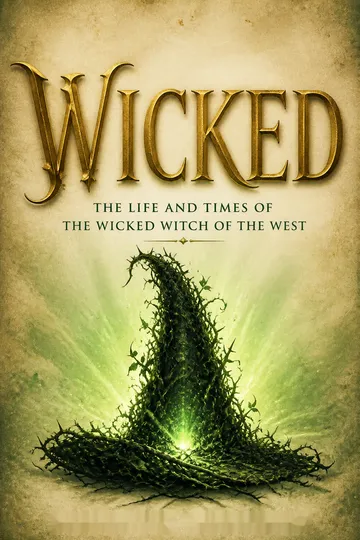
The Wicked Years Series

Download PDF
Download EPUB
.epub digital book format is ideal for reading ebooks on phones, tablets, and e-readers.








