


Plot Summary
Prologue
On Orkney, fisherman Brude brings home news that Merlin has died. His wife, Sula, fears what the news may mean for the dark-haired boy they have raised, secretly delivered to them years earlier. She suspects he is Queen Morgause's child by Arthur, and fears the queen may reclaim him.
Meanwhile, Morgause consults her seeing-pool and discovers that Merlin survived the poison she gave him. His stare reaches across the water to hers, and she begins a spell to protect herself and her sons from Arthur.
The opening places private fear beside public rumor: the fisherman’s household hears history arrive by ship, while Morgause tries to control history through poison and magic. Sula’s attachment to Mordred is already more maternal than the payment that brought him to her. Morgause, by contrast, treats her sons as both family and political instruments. Merlin’s survival makes the prologue a warning about the limits of both kinds of control. A reported death can alter a household before anyone knows whether it is true.
The Cliffside Rescue
At ten, Mordred works the peat moor above his foster parents’ cottage when a disturbance among the seabirds draws him to a dangerous cliff. There he finds Gawain, a red-haired boy with a sprained ankle, stranded after climbing for peregrine chicks. Mordred lowers a rope and guides him up the rock face, then learns that the boy is Orkney’s heir.
Their rescue briefly makes them equals: Gawain depends on Mordred’s skill, while Mordred sees a prince beyond the palace walls for the first time. The next day, instead of sending the reward Gawain promised, Queen Morgause summons Mordred to court. His ordinary labor has opened a door into a life he has only imagined.
The rescue establishes Mordred’s defining advantage before he has any title: he can read terrain, assess danger, and act without waiting for permission. Gawain’s dependence temporarily suspends the hierarchy between them, but that equality lasts only until Mordred learns his companion’s rank. Their encounter also gives Morgause a plausible public reason to call the boy to court, converting a private act of competence into a political opportunity.
The Queen's Invitation
In the island palace, Morgause studies the boy’s face and manner, then tells him he survived the massacre of children at Dunpeldyour. She presents him as King Lot’s illegitimate son, born before Lot’s marriage to her, and says the foster parents took him in after he was found at sea. Mordred is stunned less by the royal claim than by the news that Sula once lived at Dunpeldyour.
Morgause offers to bring him up with her sons and train him as a prince. He accepts, dazzled by the chance to leave poverty and serve the queen. Gabran, her lover, escorts him home to collect his few belongings, while Morgause has already decided he must not speak privately with Sula.
Morgause gives Mordred a story that answers his hunger for status while withholding the truth that would let him judge her motives. His ambition is not simply vanity: he wants a larger world and a chance to prove himself. Yet his acceptance also makes him vulnerable to a patron who defines both his origins and his obligations. The queen’s careful control of his return home shows that her generosity is a form of management, not trust.
Fire at Seals Bay
Mordred’s foster mother sees his excitement and understands that she is losing him, but she does not stop him from leaving. At dawn, newly installed in the palace, he slips out in his old clothes to visit Brude and Sula. Instead he finds their cottage burned, the roof collapsed over their bed, and the air carrying the smell of their bodies.
He assumes an accident and refuses to let Gawain approach the ruins. He saves the goat and hens, giving grief a task his hands can manage. Back at court, he enters the princes’ room with no possessions beyond a knife. He gradually earns room among the brothers, while the life of work and affection he left behind becomes a place he can no longer return to.
The fire severs Mordred from the only people who loved him without using his birth as a reason. His practical response, rescuing livestock and controlling who enters the ruins, is not emotional coldness so much as a survival habit formed by work. The old tunic and abandoned tools mark a transition he has not chosen cleanly: he wants princely life, but its first consequence is the loss of home.
Beneath the Queen's House
After several years of training, Mordred hears a fresh report that Merlin may be dying. Morgause questions him about a previous rumor he had instinctively distrusted, then leads him into the sealed chambers beneath her house. She makes him watch her seeing-pool, where he sees only water and an eel, while she claims visions of herself and her sons at Camelot.
In the same encounter, she kisses him with a possessiveness he cannot understand, though his body recoils from it. Soon a royal envoy arrives: Arthur orders Morgause and all five boys to come south. Before they leave Orkney, Mordred believes he is traveling as Lot’s bastard, unaware that the king’s command concerns a deeper secret.
The underground sequence turns Morgause’s private power into an intimate threat. She uses the pool to test whether Mordred has inherited prophetic sight, but his clear refusal of the vision separates his practical mind from her magical self-image. Her kiss makes the family bond feel dangerous before Mordred knows its full meaning. Arthur’s summons then shifts the story from the queen’s controlled household toward a public court where her account can be challenged.
A Road to Camelot
The journey south stops at Rheged, where Morgause visits her sister Morgan, confined after her plot involving Arthur’s sword and her lover Accolon. Nimue, Merlin’s successor, is also there. Sensing the royal party is being watched, Mordred tries to escape at night, frees a caged wildcat, and slips back into the sleeping chamber when the guards close in.
The next day the escort carries him onward. At Camelot, Arthur receives Morgause and the boys without warmth, then leaves suddenly when a courier reports that Merlin is alive. The princes are moved to Caerleon and placed under Cei’s supervision. Mordred has reached the mainland he long dreamed of, but he remains unsure whether the High King has summoned him for protection or judgment.
Mordred’s failed escape reveals how fear has shaped his sense of agency: he would rather risk the road alone than wait to learn another person’s intentions. Releasing the wildcat is an act of recognition, not sentimentality; he sees a captive creature whose fierce resistance resembles his own. Arthur’s abrupt departure complicates the expected confrontation, leaving the boy in a court that can offer opportunity and surveillance at once.
The Charm in Gabran's Purse
At Caerleon, Mordred and his brothers begin rigorous training, while Queen Morgause is held at Amesbury for poisoning Merlin. On Christmas Eve, a game of tables exposes a wooden charm in Gabran’s purse. Mordred recognizes it as the keepsake he carved for Sula, and Gabran admits that Morgause sent wine laced with poison to kill Brude and Sula before their knowledge could threaten her plans.
Mordred stabs him. Arthur questions the boy, learns the story of the burned cottage, and reveals that Mordred is not Lot’s son: Morgause bore him by Arthur, and Lot ordered the infant massacre to hide the child’s parentage. Arthur names himself Mordred’s father, acknowledges the wrong, and keeps him at court under royal protection.
The charm turns memory into evidence. Mordred’s childhood craftsmanship, made as a gift of love, returns as proof that the queen’s protection was purchased with the murder of his foster parents. His killing of Gabran is both revenge and a first act of princely violence, with consequences he cannot yet predict. Arthur’s revelation replaces one false identity with a dangerous truth, but it also gives Mordred a relationship to the High King built on acknowledgment rather than concealment.
The Prophecy at Amesbury
Arthur keeps Mordred’s parentage from most of the court and does not execute Morgause, though he confines her at Amesbury for her crimes against Merlin. When the boys visit, Morgause stages herself as a wronged captive and meets Mordred alone. She admits she preserved him because Merlin foresaw that he would bring Arthur to ruin, and she hoped to use that fate for revenge.
She also tells him that she once saw a throne and queen in his future. Mordred rejects her invitation to become Arthur’s enemy and insists that he will not harm his father. The visit leaves the prophecy lodged in his mind, even as he returns to court and grows into a trusted knight beside Arthur and Guinevere.
Morgause converts uncertainty into a script: if Mordred believes his future is fixed, she can make his choices seem like the fulfillment of her design. His refusal is sincere, but it cannot erase the prophecy from his imagination. Arthur’s decision to spare her avoids immediate vengeance while preserving the source of Mordred’s fear. The scene plants a conflict between chosen loyalty and a future that others keep interpreting for him.
The Queen's Last Lover
Years later, Mordred visits Amesbury after a message claims Morgause is dying. He finds Gaheris already inside her rooms, and discovers that Lamorak, one of Arthur’s Companions, is her lover. Gaheris sees the affair as an insult to his family and kills his mother with repeated sword blows.
Mordred gets Lamorak dressed and out of the convent, then leads the stunned Gaheris away before the sleeping attendants wake. Gaheris escapes north, while Arthur banishes Lamorak from court and faces Gawain’s demand for revenge. Morgause’s death does not end her influence: her sons carry the violence of her household into the kingdom’s political life.
Morgause’s private life becomes a public catastrophe because her sons have learned to treat sexual honor as a political possession. Gaheris reacts not only to seeing his mother with a lover, but to discovering that she has lied to him about the man. Mordred’s effort to prevent further killing contrasts with the family’s reflex for retaliation. His calm is not indifference; it is a deliberate refusal to let one act dictate the next.
A Door Against Guinevere
Agravain and other Young Celts turn rumors about Guinevere and Bedwyour into a plan to disgrace the king’s closest friend. Mordred warns Arthur that the faction may act, but Arthur refuses to believe the gossip and leaves Bedwyour as regent. When a genuine letter from Arthur summons Bedwyour to Guinevere’s room, the conspirators mistake the meeting for proof and storm the queen’s chambers.
Bedwyour kills Agravain’s companion Colles and Agravain, then Gareth dies in the melee. Mordred stops Gaheris from reaching Guinevere, but Bedwyour wounds him in the confusion. Gaheris persuades the half-conscious Mordred to flee, then abandons him at a monastery. The brothers’ attack has destroyed lives and driven Mordred away from the court he served.
The episode hinges on a real message misread through a story the conspirators want to believe. Mordred has evidence that the accusation is false, yet his warning cannot overcome the group’s appetite for a decisive, violent answer. His defense of Guinevere costs him his place in court, while Gaheris exploits his injury to secure his own escape. Betrayal here is not a grand scheme; it is a brother’s lie told to a vulnerable man.
The Fisherman Returns
Wounded and feverish, Mordred wakes among monks who do not know his identity. Believing himself condemned, he rides north and sells his horse for passage to Orkney, where he resumes fishing and farm work with a woman and her children. Gawain eventually finds him there and explains that Arthur never blamed him for the attack: Guinevere told the king that Mordred had saved her from Gaheris.
Gaheris has died after neglecting his wound, and Mordred’s name was not stained. The revelation brings back the life he had abandoned, including the possibility of returning to Arthur. He leaves his new household in the islands and chooses the court again, carrying affection for his adopted home without allowing it to cancel his ambition.
The return is not a restoration of childhood but a deliberate test of what Mordred can relinquish. In Orkney he has built a modest life with ties that do not depend on royal recognition. Gawain’s account releases him from the false belief that Arthur rejected him, but it also restores the desire for public purpose. Mordred’s choice to return is emotionally costly precisely because the quiet life is real, not merely a disguise.
Nimue's Unwelcome Answer
Back at court, Mordred becomes close to Arthur and Guinevere, and Arthur trusts him to observe the restless Young Celts. When a continental crisis threatens Brittany, Arthur consults Cerdic the Saxon about future alliances. Mordred visits Nimue, now Merlin’s successor, and asks whether he can escape the prophecy by leaving court or killing himself.
She says the prediction concerns his existence, not a deliberate act, and that any attempt to evade it could hasten Arthur’s danger. Mordred refuses to accept that his will is meaningless, yet returns to service. He is also ordered to accompany Agravain north to retrieve Gaheris. The mission places his loyalty to Arthur directly beside the violent loyalties binding the Orkney brothers.
Nimue distinguishes prediction from instruction: knowing a catastrophe is possible does not tell Mordred how to prevent it. Her answer frustrates his desire for a clean solution, especially the fantasy that self-sacrifice could make everyone safe. The king’s decision to use Mordred as an observer deepens the bind. He is trusted because he understands his kin, but that same understanding makes every choice feel like betrayal of someone.
Lamorak on the Road
Agravain claims he is taking Mordred to bring Gaheris back under Arthur’s pardon, but the twins secretly ride to meet Lamorak at Caer Mord. Mordred discovers their departure and follows, guided by Gaheris’s pregnant companion, Brigit. He reaches the coast too late: Lamorak lies dead, and the brothers are celebrating the killing.
Drustan arrives with Gareth, recognizes the attackers, and refuses to duel them. When Gaheris and Agravain attack anyway, Drustan wounds both and takes Gaheris into custody. Gareth stays with Drustan rather than joining his brothers. Mordred does not reveal himself, then rides back to report what happened. The murder renews the feud and threatens to split Arthur’s Companions from the Orkney family.
The failed rescue shows how inherited grievance has become self-perpetuating. The twins interpret Arthur’s pardon as permission to settle a private score, while Mordred understands that a legal reprieve cannot erase their hunger for revenge. Brigit’s fear gives the political conflict a domestic cost: she and her unborn child depend on a man already committed to violence. Gareth’s refusal to follow his brothers signals a different kind of courage, one rooted in restraint.
Elen's Island Grave
Arthur takes Mordred to Brittany to support King Hoel against Roman pressure and disorder in the Perilous Forest. When Hoel’s niece Elen is abducted, Mordred and Bedwyour row to a small island and find her dead, with her elderly nurse alive nearby.
Arthur leads the pursuit to a ruined island tower, kills the enormous robber who assaulted Elen, and has the gang destroyed. The crime proves the forest raids were the work of bandits, not Franks. Before the Roman embassy can be settled, word arrives that Duke Constantine is asserting power in Arthur’s absence.
Arthur sends Mordred back to Britain with his seal, authority to raise troops, and instructions to protect Guinevere. He also makes clear that Mordred is his heir if he dies, entrusting him with both the realm and the queen.
Arthur’s response to Elen’s death is personal justice disciplined by military judgment: he takes responsibility for the killing, while his men secure the gang and the evidence. The commission home transforms Mordred from trusted companion into potential successor. Arthur’s trust is genuine, but it also places Mordred between competing claims, since Constantine already covets the authority the king is granting him.
Gawain Breaks the Truce
Mordred returns to Camelot while Arthur remains in Gaul. On the embassy to the Roman commander Quintilianus, Gawain loses patience with a young Roman’s taunts and kills him. The dead man is Quintilianus’s nephew, and the British delegation must flee; a running battle leaves men dead on both sides.
Arthur’s campaign against the Romans and Burgundians becomes unavoidable. Mordred sends reinforcements and prepares to meet Cerdic, but then receives a dispatch reporting Arthur dead, though no body or royal insignia has been recovered.
Following Arthur’s instructions, the Council gives Mordred emergency authority. Guinevere supports him, and he negotiates with Cerdic for a renewed treaty. Constantine recasts these lawful steps as treason and spreads a false claim that Mordred intends to marry the queen.
Gawain’s impulsive violence converts a diplomatic risk into an immediate war, but the resulting political crisis is shaped by uncertainty rather than a single villainous choice. Mordred acts under the mandate Arthur gave him and the Council confirms; Constantine’s account strips away that context to make succession look like theft. The missing body matters because authority must be exercised before certainty arrives. Mordred’s competence is also what makes him dangerous to the man who expected to inherit.
The Treaty Turns to War
A violent squall drives Arthur’s damaged fleet onto the West Saxon coast, where Cynric mistakes the landing for an attack and sends his men against the exhausted British. Gawain is mortally wounded in the fighting.
Mordred reaches Cerdic with a British force, learns Arthur is alive, and argues that the old treaty still binds them. Cerdic insists he must protect his people. When Arthur’s cavalry charges the Saxons, Mordred refuses to lead his own soldiers against his father and orders them back toward Camelot.
Arthur reads the sight of Mordred beside the Saxons as proof of treason. He defeats Cerdic at Cerdices-leaga, but neither side gains a lasting settlement. The armies later face each other across the River Camel, where the king agrees to parley.
The treaty fails through incompatible views of the same event: Arthur’s forced landing looks like invasion to the Saxons, while Cerdic’s defense looks like betrayal to Arthur. Mordred’s refusal to attack either side preserves his soldiers but cannot make his position legible to the king. The decisive wound is interpretive: each leader sees the other through fear, exhaustion, and old war habits. Their parley is therefore a last attempt to recover meaning before force decides for them.
The Snake's False Signal
At the parley, Arthur and Mordred speak privately between the armies. Arthur offers Mordred lands and recognizes him as heir after his own death; Mordred appears willing to accept a settlement. The leaders’ swords remain on the table, and both sides wait for an unmistakable sign that talks have failed. Then a soldier steps on an adder.
He draws his sword to kill it, and the reflected flash is mistaken for the signal to attack. The armies collide before the two men can stop them. Arthur and Mordred are forced apart into opposing lines. By day’s end, after a battle neither intended to begin, Arthur finds Mordred and drives a spear beneath his ribs. The prophecy becomes real through a chain of misread actions, not a chosen act of treason.
The adder is small enough to be accidental and consequential enough to command armies. The scene turns prophecy into a problem of interpretation: both leaders had almost revised the future, but their followers read a reflex as a decision. Arthur’s spear fulfills the feared outcome while Mordred’s hesitation suggests he does not want the final blow. The catastrophe is not proof that choice never mattered; it shows how fragile a choice becomes once a crowd is trained to expect war.
Epilogue
After the spear strikes, Mordred hears voices as if from beneath water. Guinevere and other women seem to arrange his care, while Arthur’s faint voice and Bedwyour’s answer suggest that the king is still near. Nimue takes Mordred toward Applegarth for healing.
Rain washes the blood from his face, and thyme scents the ground beneath him. In the final image, he sees the distant edge of the kingdom he had longed to reach as a boy. His fate remains uncertain, but the story leaves him in the hands of those who mean to preserve him.
The epilogue refuses the clean closure expected of a battlefield death. Mordred’s consciousness arrives in fragments, mingling women’s voices, the king’s presence, rain, and the sensory memory of Orkney. This does not undo the spear wound or resolve the political conflict; it leaves survival as a possibility rather than a verdict. The distant homeland recalls the boy’s original longing, but now the journey’s meaning has changed. He has reached power and lost it in a single day, while the act of carrying him away leaves open the question of what life may still follow.
Analysis
The novel recasts Mordred not as a born traitor but as a person repeatedly interpreted by other people’s fears. Morgause treats him as a tool for revenge; Arthur sees a son he wishes to protect, but cannot fully separate that wish from the prophecy; political rivals turn his lawful authority into evidence of ambition. Mordred’s own ambition is real, yet the story refuses to equate ambition with malice. He wants a meaningful place in the world and proves capable of restraint, loyalty, and care. Those qualities do not protect him from consequences generated by other people’s choices.
The book’s central tension is between foreknowledge and responsibility. Merlin’s prophecy appears to describe a fixed future, but each character acts as though it offers instructions. Morgause tries to hurry doom toward her enemies. Mordred considers escape and even death as ways to evade it. Nimue argues that no one can know which action will prevent catastrophe, because consequences branch beyond prediction. The final battle bears out her caution: Arthur and Mordred nearly agree, but an accidental movement is misread by soldiers already primed for violence. Fate operates not as a supernatural hand forcing a choice, but as the accumulated force of fear, loyalty, rumor, and military habit.
The novel also contrasts two forms of kinship. Sula and Brude give Mordred belonging through daily care, while his royal family offers status tangled with secrecy and rivalry. His return to court is not a rejection of his foster parents; it is an attempt to join affection to public purpose. Yet the political world repeatedly makes loyalty exclusive. To protect Guinevere, Mordred must oppose his brothers; to honor his treaty with Cerdic, he must appear to oppose Arthur. His tragedy grows from the gap between what he intends and what others can see.
By grounding Arthurian legend in practical decisions, the book makes history feel less like a contest between heroes and villains than a system vulnerable to interpretation. The prophecy may be true, but it does not absolve anyone. Its warning is that people can help create the future they fear, especially when they mistake suspicion for proof and a reflex for a decision.
Review Summary
The Wicked Day retells the Arthurian legend from Mordred's perspective, portraying him as a complex, sympathetic character rather than a villain. Many readers praise Stewart's nuanced approach, vivid descriptions, and historical research. The novel explores fate, family dynamics, and political intrigue. While some criticize the pacing and characterization, most find it a compelling conclusion to Stewart's Arthurian saga. Reviewers appreciate the fresh take on Mordred's story and the tragic inevitability of his fate, though some felt the ending was rushed or unsatisfying.
People Also Read


Characters
Mordred
The sea-raised princeRaised in a poor Orkney fishing household, Mordred grows up observant, physically capable, and hungry for a life beyond the island. He treats ambition as a practical necessity: without status or allies, he believes even a royal birth would leave him powerless. His self-control helps him read other people’s motives, but it can also isolate him, making him slow to trust affection that is not tied to duty. His relationships with Arthur, Guinevere, and the Orkney brothers pull him between chosen loyalty and inherited claims. Mordred is neither a simple villain nor a spotless hero; he is a strategist trying to decide whether a foretold future can be resisted by deliberate conduct.
Arthur
The burdened High KingArthur is a battle-tested ruler who wants Britain held together by law, diplomacy, and alliances rather than endless war. His loyalty to Merlin and his sense of responsibility shape both his private grief and public decisions. He recognizes Mordred’s ability and gives him trust, but his past, political position, and fear of what may come prevent him from making that bond simple or public. Arthur’s strength lies in disciplined judgment; his vulnerability appears when exhaustion and suspicion narrow his reading of events. As a father and king, he tries to protect the realm without turning the prophecy against his son into a sentence.
Morgause
The calculating queenMorgause is a beautiful, politically skilled queen who understands how to command through charm, fear, and carefully managed appearances. She treats magic as one instrument among several, using it to maintain influence and to turn uncertainty toward her advantage. Her sons matter deeply to her, but affection does not prevent her from manipulating them or arranging danger for others. She wants her family restored to power and sees Arthur’s court as both an enemy’s stronghold and a prize. Her relationship with Mordred is charged by secrecy, possession, and a belief that his future can serve her purposes.
Gawain
The fierce island heirGawain is Morgause’s eldest son by King Lot and the heir to Orkney. Brave, generous, and quick to anger, he first meets Mordred as a boy who needs rescuing, before political rank complicates their friendship. He is loyal to Arthur but also bound by grief, family pride, and a longing for action. Gawain’s courage often helps others, yet his temper makes him vulnerable to provocation. He values honor intensely, though he does not always recognize when that ideal has been turned into a tool by those around him.
Guinevere
The watchful queenGuinevere is Arthur’s queen, known at court for warmth, wit, and a gift for making anxious people feel welcome. Her relationship with Mordred begins in kindness and grows into a bond of trust, though she remains devoted to Arthur and conscious of the danger around the throne. She understands that women at court often have little direct control over their security, so she watches political shifts closely. Her composure can disguise fear, especially when the king is away and rival claimants may threaten her position. Guinevere’s influence is often quiet, but her testimony and choices carry great weight.
Nimue
Merlin's clear-eyed successorNimue is Merlin’s student and successor, a powerful seer who becomes Arthur’s adviser. She is direct where Morgause is manipulative, and treats foresight as a burden that demands judgment rather than obedience. Nimue believes the prophecy about Mordred but refuses to reduce him to it; she warns Arthur that danger can arise through many paths. Her marriage to Pelleas and her work among the Ladies of the Lake give her a life beyond court politics. She offers Mordred no easy escape, but she takes his fear seriously and speaks to him as a responsible adult.
Merlin
The absent enchanterMerlin is Arthur’s oldest adviser, a powerful enchanter whose counsel has helped shape the High King’s rule. His illnesses and disappearances give rumor room to flourish, while his survival remains a source of anxiety for Morgause. He sees danger in the future but does not believe that foreknowledge grants people the right to murder in order to prevent it. His influence continues even when he is physically absent, through Nimue, Arthur’s memories, and the prophecy surrounding Mordred.
Gaheris
The wounded avengerGaheris, one of Morgause’s twins, is proud, impulsive, and unusually sensitive to the humiliations he believes his family has suffered. He often follows Agravain’s lead, but his own resentments can make him unpredictable. He wants recognition from his mother and loyalty from his brothers, yet answers emotional injury with violence rather than reflection. His conflicts with Mordred reveal the difference between family allegiance and moral judgment.
Agravain
The reckless instigatorAgravain is Gaheris’s twin and the more forceful leader of the two. He craves action, status, and proof of manhood, and has little patience for Arthur’s preference for negotiation. His confidence can draw other young men into his plans, but he tends to mistake rumor for evidence and courage for good judgment. Agravain’s hostility toward Bedwyour becomes a focus for broader resentment among the Young Celts.
Gareth
The gentlest Orkney princeGareth is Morgause’s youngest son, affectionate and open-hearted, with a strong attachment to Gawain. He is less consumed by status than his older brothers and tends to see the human cost of their feuds. His gentleness does not make him weak; he can resist the group when conscience demands it. Gareth’s relationships offer Mordred a less guarded form of brotherhood than the twins do.
Bedwyour
Arthur's steadfast marshalBedwyour is Arthur’s trusted boyhood friend, a formidable fighter, and a capable regent. He serves the king in battle and in government, accepting responsibility without seeking recognition. His quiet manner can look distant to the young men who resent his influence, making him vulnerable to rumor. Bedwyour is also capable of swift violence when the queen is threatened, and he expects others to judge actions by circumstance rather than gossip.
Sula
Mordred's devoted foster motherSula is a poor, hard-working woman who takes Mordred in after losing her own child. She knows more about his origins than she can safely reveal, and her love gradually outgrows the bargain that brought him to her cottage. Her fear of losing him is inseparable from her understanding of the powerful people who have arranged his life. Sula offers Mordred his first experience of belonging that does not depend on rank.
Brude
The practical foster fatherBrude is a fisherman who raises Mordred with honest work and a practical sense of risk. He is loyal to Sula and proud of the boy, though he assumes that royal danger has passed once the household is left alone. His affection is less demonstrative than hers, expressed through provision and work shared at sea.
Gabran
Morgause's obedient loverGabran is Morgause’s handsome lover and a trusted agent in her household. His devotion to her is mixed with vanity and a desire to remain useful, leaving him vulnerable to her orders. He can carry out violence while resisting the idea that he has become a murderer. His presence exposes how Morgause converts intimacy into political service.
Casso
The silent royal informantCasso is a skilled metalworker’s assistant whose silence leads others to underestimate him. He observes the Orkney court closely and has the patience to collect information without drawing attention. His apparent powerlessness conceals a disciplined intelligence, making him a valuable observer for Arthur.
Lamorak
The exiled CompanionLamorak is one of Arthur’s Companions, a seasoned fighter whose private attachment to Morgause becomes entangled with the Orkney family’s ideas of honor. He is brave and loyal, but his judgment in love places him in a dangerous position. His relationships reveal how courtly allegiance can be complicated by private desire.
Cerdic
The pragmatic Saxon kingCerdic is an experienced Saxon ruler who prizes land, security, and the survival of his people. He recognizes that Britain and the Saxon kingdoms may need one another against threats from the continent, but he cannot ignore danger to his own subjects. His negotiations with Arthur and Mordred show a statesman balancing honor with the needs of an expanding population.
Constantine
The waiting Cornish claimantConstantine is Duke of Cornwall and the heir Arthur had once named in the absence of a son. He is a formidable, ambitious ruler who expects his claim to remain intact and regards Mordred’s rise as a threat to it. His political instincts favor assertion over patience.
Morgan
Morgause's rival sisterMorgan is Morgause’s half-sister and queen of Rheged, a skilled practitioner of magic with ambitions that extend beyond her marriage. She is clever and self-protective, but her schemes expose her to the consequences of underestimating Arthur and Nimue.
Brigit
Gaheris's fearful companionBrigit is a young woman living with Gaheris in a remote Northumbrian tower. Pregnant and isolated, she understands that his pursuit of vengeance may leave her without protection. Her fear helps Mordred discover where the brothers have gone and gives their feud an intimate human cost.
Plot Devices
Merlin's prophecy
A future mistaken for commandMerlin foresees that Mordred will bring Arthur to ruin, and Morgause uses that prediction to shape her son’s loyalties. Nimue later clarifies that the prophecy does not require Mordred to choose treason; danger may arise through his existence or through the reactions of others. The prophecy guides the characters’ fears, but never gives them a reliable map of what to do. Its power lies partly in how people interpret it, and how those interpretations influence their behavior.
The carved sea charm
A keepsake becomes evidenceMordred makes a wooden charm for Sula when he is a child. Years later it falls from Gabran’s purse during a game, connecting the man to the deaths of Brude and Sula. The small object carries the emotional weight of Mordred’s lost home, but it also performs a practical function: it forces a confession that neither rumors nor suspicion could secure.
Casso's reports
Silence conceals a witnessCasso appears to be a mute slave working for the goldsmith Beltane, so courtiers speak freely around him. In fact, he can write and sends information to Arthur. His unobtrusive position lets him report that the boy at Morgause’s court may be the child saved from Dunpeldyour. The device makes observation, rather than magic, the means by which the king learns where Mordred is.
The disputed death report
Uncertainty triggers successionA battlefield dispatch reports that Arthur fell, but admits that his body has not been found. Mordred must act before certainty can arrive, using the authority Arthur gave him and the Council’s approval. Constantine then presents those emergency measures as a coup. The report turns a military absence into a constitutional crisis and shows how quickly rumor can challenge a lawful transfer of responsibility.
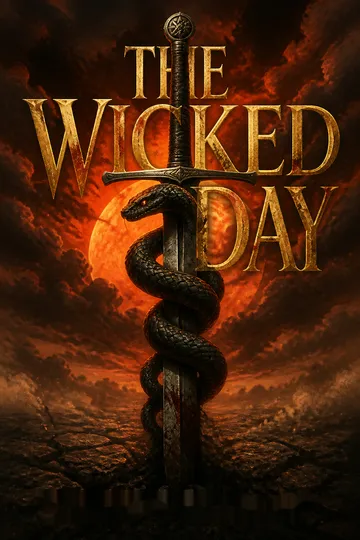
The adder at parley
A reflex becomes a battle signalArthur and Mordred place their swords aside while they negotiate a settlement between opposing armies. An officer steps on an adder and draws his sword to kill it. The flash is mistaken for the agreed signal that talks have failed, and the armies attack before their leaders can stop them. The small animal does not cause the political conflict, but its accidental timing makes the conflict irreversible.
Arthurian Saga Series

Download PDF
Download EPUB
.epub digital book format is ideal for reading ebooks on phones, tablets, and e-readers.








