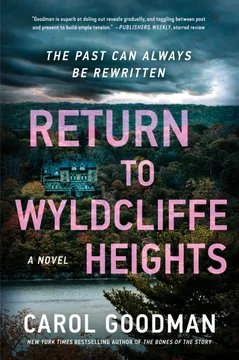


Plot Summary
A Letter to Wyldcliffe
Agnes Corey, a devoted reader working at the struggling Gatehouse Books, sorts fan mail for reclusive author Veronica St. Clair. One anonymous letter blames St. Clair’s novel for ruining a sister’s life; at the same time, publisher Kurtis Chadwick warns Agnes that the company may be sold and dismisses her.
Rather than accept the loss quietly, Agnes writes directly to St. Clair, asking her to tell readers what happened after the novel’s ambiguous ending. She mails it despite company rules and rumors that St. Clair resents requests for more. At the Josephine House, the strict residence where Agnes lives, someone steals her personal file. The violation sharpens her sense that the past is following her, even as her letter sets a new course.
Agnes’s appeal begins as a reader’s desire for narrative completion, but it also exposes her own need for a story that offers escape without erasing pain. Her job and housing are both precarious, so asking for a sequel is an act of self-assertion with real material risk. The stolen file turns that vulnerability into a mystery: Agnes’s private history is suddenly an object someone else wants. The novel links reading and survival from the outset, while quietly warning that identification with a book can blur the boundary between a character’s fate and a reader’s own.
The Author’s Impossible Offer
When Agnes’s letter reaches Veronica St. Clair, Chadwick calls Agnes back to his office with unexpected news: St. Clair wants her as an amanuensis, someone to take down her story by hand. The offer comes with a six-month contract, strict secrecy, and an urgent trip to Wyldcliffe Heights.
Atticus Zimmerman, Gatehouse’s copyeditor, warns Agnes that the estate was once a psychiatric hospital run by St. Clair’s father and that its history includes a girl’s death. Agnes is shaken, but she accepts.
At the Josephine, she discovers a photograph of a young St. Clair performing with another woman, dated shortly before the novel’s publication. Then she leaves New York with the photograph, her few belongings, and a question about what really happened at the house.
The offer converts Agnes’s admiration into labor: she is no longer merely interpreting a book but entering the author’s controlled world as its recorder. The contract promises financial security, yet its secrecy clauses and dictated-only process place her at a clear disadvantage. Atticus’s warning supplies counterpressure, while the photograph suggests that the public author biography has gaps. Agnes’s decision is not simple recklessness; it reflects the narrowed options of someone accustomed to institutions deciding where she belongs. The mansion represents opportunity and confinement at once, making her arrival feel like a choice made inside a trap.
A House with Two Histories
At Wyldcliffe Heights, the housekeeper Laeticia lays down rules: Agnes must avoid the ruined west wing and keep away from the cliff. Veronica St. Clair, blind and scarred, rejects the promised sequel and dictates a prequel from the secluded girl Violet’s perspective. The first story reaches back to the 1920s, when reformer Josephine Hale runs a refuge and school for women.
Bess Molloy, a young inmate accused of killing girls in a settlement house, becomes Josephine’s favorite. Dr. Edgar Bryce arrives, takes control of the school, and marries Josephine; soon after, Bess supposedly stabs him and hangs herself from the tower. St. Clair presents Bess’s violence as the frightening legend that shaped Violet’s childhood inside the same estate.
The first dictated history gives the mansion an institutional memory, where benevolent reform repeatedly becomes discipline and control. Josephine’s intentions are compromised when Bryce turns education into classification and labor, while Bess is reduced to an example used to justify the system. St. Clair’s narration initially seems to offer a clean gothic origin, but its emphasis on rumor and childhood fear makes certainty feel premature. Agnes’s role is already more than clerical: by writing down this account, she helps decide which version of the house’s past can survive.
Violet Finds the Outside
In St. Clair’s account, Violet grows up isolated under her father’s watch. Dr. Sinclair treats her as a patient, records her fantasies as symptoms, and hides the truth about her mother, Eliza, whose illness ended in a fatal fall from the cliff while she carried Violet.
Searching her father’s files, Violet finds a note suggesting Eliza meant to escape, not kill herself. She flees Wyldcliffe Heights and reaches the Josephine Hotel in New York, where Jayne, a charismatic young woman, takes her in.
In Agnes’s present, a walk through the estate’s overgrown grounds reveals a children’s cemetery with gravestones bearing the names Agnes Corey and Jane Corey. The discovery gives Agnes’s own family history an unsettling connection to St. Clair’s tale.
Violet’s story makes the archive an instrument of both diagnosis and resistance. Her father’s records convert ordinary childhood fears into evidence of illness, while the hidden note restores her mother’s intention to escape. Agnes recognizes the danger of accepting official files as neutral, since her own history has also been documented by institutions. The matching names in the cemetery do not prove a supernatural connection, but they destabilize the distinction between coincidence and inheritance. The novel’s central anxiety takes shape here: whether a person is defined by what happened, or by the account someone powerful preserves.
Jayne’s Violet Circle
At the Josephine, Jayne draws Violet into a circle of musicians and hangers-on, including the artist Gunn, the wealthy Casey, and Anaïs, a newcomer who wants to imitate Jayne. Violet changes her clothes, takes drugs, and acquires a violet tattoo as the group turns its shared fascination with Red Bess into performance.
During a drug-fueled séance, Anaïs is found dead beneath Jayne’s red cloak, with a needle nearby and Violet’s ribbon tied around her arm. Jayne tells Violet that she attacked Anaïs with broken glass, then insists that the group conceal Casey’s role in supplying drugs. Jayne takes responsibility for the overdose, and Violet’s father uses the incident to bring them both back to Wyldcliffe Heights.
Jayne offers Violet belonging by making her visible, but that recognition is conditional: Violet is welcomed as a reflection of Jayne and gradually loses a separate identity. The group’s costumes and ritual turn historical violence into a style they can inhabit, while the drugs weaken everyone’s ability to distinguish performance from consequence. Anaïs’s death reveals the cost of this arrangement. Jayne protects the group by controlling its story, but her account also leaves Violet with guilt and uncertainty. The scene establishes the novel’s recurring ethical problem: a compelling explanation may protect someone, yet also conceal who was harmed.
The Ward and the Manuscript
Back in the hospital wing, Violet and Jayne meet LeeAnn and other girls held under Dr. Sinclair’s treatment regime. Jayne teaches them to resist his hypnosis and to use the girls buried in the estate cemetery as identities for their sessions. In the attic, she finds a journal written in Bess Molloy’s name and begins shaping its story into a novel with Violet.
The journal describes Bess’s arrival at the refuge, Bryce’s growing authority, and Josephine’s increasing dependence on him, but it ends before explaining the murder. Jayne also becomes convinced that Bess’s spirit can help them escape. In the present, Agnes compares the novel’s violet ribbons with the old photograph and her mother’s keepsake, then secretly copies pages for Chadwick.
Jayne’s methods echo the doctor’s: both direct other people’s attention and supply frameworks for interpreting their past. The difference is that Jayne’s aim is resistance, yet her charisma can become coercive in its own right. By turning forgotten cemetery names into identities, she gives the girls a language the institution has denied them, while also encouraging them to inhabit stories they cannot verify. Agnes’s covert copying repeats this tension in the present. She wants to protect the manuscript, but she begins making decisions about its ownership before she knows whose experience it contains.
The Baby and the Missing Tape
As Halloween approaches, Jayne gives birth prematurely to a baby girl and returns from hospital determined to continue writing, while Violet grows alarmed that Jayne may surrender the child. Violet hears her agree to adoption and finds signs of an escape plan involving Casey and Gunn, including a false identity bearing the name Jane Corey.
She concludes that Jayne intends to leave without her and the baby. In the present, Agnes finds that her mother’s violet ribbon completes a design on one from the attic, and she learns that the girl who died in the fire was called Jane Rosen. A broken window, bloody fingerprints, and an online account posting as Red Bess then suggest someone is watching the house and trying to reclaim the story.
The baby’s arrival turns Violet’s fear of abandonment into a concrete moral crisis. She reads Jayne’s silence through her own history of confinement and interprets incomplete evidence as proof of betrayal. The same pattern governs Agnes’s investigation: the gravestones, ribbons, and online clues seem to form a coherent account, but their meaning remains untested. The novel does not treat paranoia as mere irrationality; it grows from real secrecy, coercion, and past abandonment. Yet once fear supplies the missing links, it can make a mistaken narrative feel more trustworthy than uncertainty.
Red Bess Comes Online
Agnes’s copied pages, sleepwalking, and recurring images of the cemetery make her doubt her own memory. After an intruder smashes the library window with a piece of a cemetery angel, she finds a message blaming Red Bess.
An Instagram account posts images from inside the estate, including Agnes sleepwalking among the graves. Agnes suspects the Gatehouse assistant Hadley, but cannot prove who is behind the account. During the village’s Halloween festivities, Agnes sees her mother dressed as Red Bess and follows her through a crack in the estate wall.
In the library, the woman Agnes has known as her mother confronts the blind author she has been transcribing. The two women reveal that they are Jayne and Veronica, whose identities and shared history were exchanged after the fire.
The technology Agnes uses to preserve the manuscript also becomes a means of surveillance and manipulation. Images that might have been evidence are difficult to interpret because Agnes is sleepwalking and already fears inheriting her mother’s illness. The identity revelation breaks the simple division between author and subject: the woman telling the story and the woman Agnes thought she knew have both lived under names shaped by trauma. Their reunion does not instantly resolve the past. Instead, it shows how years of estrangement were sustained by partial truths, misleading records, and a story each woman had reason to believe.
Casey Returns as Publisher
The reunion is interrupted by Kurtis Chadwick, who arrives armed and reveals that he is the Casey from the women’s New York years. He has read Agnes’s emails and used them to track the manuscript and manipulate the Red Bess posts. The long-hidden tape shows Casey assaulting Anaïs and injecting her with the fatal dose; Jayne had kept it as evidence, while Violet had wrongly believed she killed the girl.
Chadwick also admits that he killed Dr. Sinclair and set the fire that destroyed the tower, then let each woman believe the other had betrayed her. He intends to kill Agnes, Jayne, and Veronica and make the deaths look like a fire or a revenge plot. With Peter and Laeticia away, he forces them toward the attic.
Chadwick’s power comes from controlling distribution: he can publish a book, suppress evidence, and decide whose account appears credible. His history as a publisher is therefore not separate from his crimes; it is their continuation by other means. The tape matters because it records an event beyond the reach of competing memories, but even evidence needs someone willing to retrieve and interpret it. The women’s false beliefs were not simply personal failures. Chadwick engineered them, exploiting their shame and the authority attached to his money, gender, and institutional position.
Escape Through the Burning Roof
Agnes strikes Chadwick with the marble angel head and shoves him toward the banister, but he shoots her shoulder and locks her in the attic. Jayne and Veronica hide behind the wardrobe, then find Agnes as smoke fills the servant stairs. They break through a roof hatch and climb onto the old fire escape, which begins to fail beneath them.
The wounded Agnes tells them to go first, but the two women refuse to leave her behind. Together they step from the ladder toward the rhododendrons below. Firefighters and police arrive after Martha calls for help; the shrubs break the women’s fall, and rescuers carry all three to hospital. Chadwick is arrested fleeing the burning house, while the women survive with serious injuries.
The climax reverses the abandonment that has governed the women’s memories. Agnes’s first instinct is to take responsibility for everyone, but Jayne and Veronica refuse the familiar bargain in which one person is sacrificed to save another. The physical house becomes an active threat, its sealed passages and failing escape route embodying the systems that have trapped them. Yet survival depends on cooperation rather than a lone gothic heroine’s escape. The leap is dangerous and costly, but it is chosen together, transforming the ending image of the earlier novel into an act of mutual rescue.
Bess’s Confession Returns
In hospital, Agnes learns that both women survived and that Gatehouse will reopen under new management. Jayne hires Agnes to finish recording the book, and Agnes accepts an apartment in Wyldcliffe-on-Hudson.
During recovery, Jayne explains that the novel’s account of her and Veronica was shaped by what Veronica believed, not by the whole truth. Agnes later reads Josephine Hale’s confession: Bess had not murdered the settlement-house girls or Edgar Bryce.
Bryce was the Violet Strangler, and Josephine killed him when she found him attacking Bess, then staged Bess’s death to protect herself and her child. Jayne and Veronica plan to turn Wyldcliffe Heights into a women’s shelter or writing retreat. Agnes chooses to stay and hear the story from both women.
Josephine’s confession overturns the foundational legend, but it does not offer a simple replacement in which one truthful voice repairs everything. Josephine admits that she helped manufacture Bess as a murderer, using a false story to protect herself and her child. The revelation completes the book’s examination of narrative authority: institutions can preserve records while distorting the people inside them, and even acts of protection can injure the person they conceal. Agnes’s decision to remain with Jayne and Veronica marks a shift from seeking a perfectly resolved ending to helping create a more honest account.
Analysis
Return to Wyldcliffe Heights treats storytelling as both shelter and a form of power. Agnes first turns to Veronica St. Clair’s novel because it gave shape to experiences she could not control; later, her work as an amanuensis makes her responsible for preserving accounts that may be partial, self-protective, or wrong. The manuscript’s layered narrators resist the easy division between fiction and fact. Violet’s remembered childhood, Agnes’s present-day investigation, local legends, institutional records, and the women’s later testimony each carry different kinds of authority, none sufficient alone.
The novel’s Gothic architecture is inseparable from its social history. Wyldcliffe Heights changes from refuge to training school to psychiatric institution, but each version continues to confine women under the language of care or reform. The house does not need to be literally supernatural to feel haunted: its ledgers, locked wards, buried children, and ruined tower preserve the consequences of decisions that official accounts simplify. The story’s ghosts are also the people whom institutions have made difficult to remember accurately.
Its psychological tension comes from the understandable fear that a parent’s illness or a family’s history might determine a child’s future. Agnes repeatedly mistakes uncertainty for evidence of impending abandonment, while Violet and Jayne interpret one another through incomplete clues. These errors are not dismissed as foolishness; they grow from coercion, separation, and past betrayals. The revelation that the women have carried false versions of their shared history shows how trauma can be perpetuated by stories that seem plausible precisely because they confirm what each person already fears.
The ending offers no perfect restoration. Jayne and Veronica survive, but their bodies and relationships remain marked by what happened. What changes is their willingness to tell the story together, and Agnes’s willingness to stay and listen. The book suggests that repair begins not when the past becomes neat, but when those who were divided by it can share responsibility for its telling.
Review Summary
Reviews for Return to Wyldcliffe Heights are generally positive, averaging 3.59/5. Readers frequently praise its rich gothic atmosphere, compelling characters, and clever story-within-a-story structure, drawing comparisons to Jane Eyre and The Thirteenth Tale. Many appreciated the surprising twists, though some found the ending convoluted and characters difficult to track across timelines. The slow pacing divided readers, with some finding it atmospheric and others frustrated. Strong points include vivid setting, well-developed characters, and a satisfying climax, making it particularly recommended for gothic thriller enthusiasts.
Characters
Agnes Corey
Reader turned investigatorAgnes is an aspiring editor whose devotion to The Secret of Wyldcliffe Heights grows from a childhood marked by foster care, institutional confinement, and an unstable mother. She is observant, resourceful, and hungry for the security of a place where books matter, yet her history makes her alert to rejection and quick to expect betrayal. As an amanuensis, she must decide when fidelity means recording another person’s words and when it means questioning what those words leave out. Her attraction to gothic fiction is not merely escapism: it gives shape to feelings she has struggled to name. Agnes’s central strength is her willingness to keep investigating even when the evidence unsettles her sense of self.
Veronica St. Clair
Reclusive gothic authorVeronica is a celebrated but secluded novelist, blind and physically scarred after a fire at her family estate. She guards her privacy, distrusts technology, and insists that Agnes record her story by hand. Her controlled manner conceals a complicated relationship with memory, authorship, and the years she spent under her father’s authority. Veronica’s work is famous for its secrets, but she is wary of tidy explanations and resists being reduced to either a victim or a legend. Her frailty and authority coexist: she has limited physical power, yet her account can alter how Agnes understands the house and its past.
Jayne
Magnetic young runawayJayne enters the story within Veronica’s dictated account as a bold young woman who gathers outsiders around herself. She is theatrical, quick-witted, and gifted at making lonely people feel chosen. Her impulse to protect others is genuine, but her charisma can also turn into control, especially when she decides what story the group should believe. Jayne is drawn to gothic legend and performance, using both to challenge institutions that label vulnerable girls as dangerous or defective. Her relationship with Violet is intense and creative, bound by affection but complicated by imitation, jealousy, and unequal power.
Violet
Secluded daughter in the manuscriptViolet is the isolated girl at the center of Veronica’s new narrative. Raised inside Wyldcliffe Heights, she grows up under a father who interprets her imagination as illness and restricts her contact with the outside world. She turns to books for models of escape and is deeply susceptible to Jayne’s confidence and attention. Violet is neither simply passive nor reliably certain of her own memories; she is trying to understand herself through stories supplied by adults who hold power over her. Her perspective gives the manuscript its emotional intimacy and makes its account of the past deliberately difficult to separate from fact.
Kurtis Chadwick
Publisher with a hidden pastChadwick runs Gatehouse Books through a period of financial uncertainty and presents himself as a shrewd guardian of the company’s future. He speaks fluently about writers, markets, and editorial judgment, and knows how to make employees feel both chosen and indebted. His authority over Agnes’s job and the manuscript gives him influence beyond the office. He values commercial success and the appearance of control, traits that make him difficult to read. His polished manner contrasts with the old-fashioned, intimate publishing house he leads.
Atticus Zimmerman
Skeptical copyeditorAtticus is Gatehouse’s literary-minded copyeditor, quick with mockery and slow to admit when a book has frightened or moved him. His ironic posture shields a more vulnerable attachment to gothic fiction and to the people around him. He initially doubts Agnes’s judgment and warns her about Wyldcliffe Heights, sometimes in ways that sound patronizing. His work depends on precision, but his personal growth requires listening rather than correcting. He is a colleague whose complicated loyalty gives Agnes both friction and practical support.
Laeticia
Protective housekeeperLaeticia keeps Wyldcliffe Heights functioning and enforces its rules with severe efficiency. She is fiercely protective of Veronica, wary of outsiders, and attentive to the physical needs that Agnes initially overlooks. Her clipped manner can feel punitive, especially to someone with Agnes’s institutional past, but it also reflects years spent guarding a vulnerable household. Laeticia knows more about the estate than she is willing to discuss, and her loyalty makes her a powerful presence in Agnes’s investigation.
Peter Syms
Keeper of the estatePeter maintains the grounds at Wyldcliffe Heights, following his father’s long connection to the estate. He is blunt, locally rooted, and suspicious of wealthy newcomers, but he also shares practical knowledge about the house and its history. His rough humor can unsettle Agnes, though he is not simply an antagonist. Peter’s presence connects the mansion’s grand family story to the workers who have kept it standing through its many institutional lives.
Agnes’s mother
Absent, unsettled parentAgnes’s mother has lived with serious mental-health difficulties and an unstable relationship with her daughter. She can be affectionate, imaginative, and full of plans, but her illness and repeated disappearances leave Agnes without a dependable home. She loves The Secret of Wyldcliffe Heights and treats it as personally meaningful, a fact Agnes remembers without understanding its full significance. Their history is shaped by longing on both sides: Agnes wants safety, while her mother repeatedly tries to reconnect. Her presence in Agnes’s memories complicates the idea that leaving someone is always the same as not loving them.
Josephine Hale
Reformer with a secretJosephine Hale is a reformer who transforms her family estate into a refuge and training school for women. She believes education and humane treatment can restore lives, and she shows particular concern for Bess Molloy. Her ideals, however, exist within a system that classifies and confines the women she means to help. Josephine’s history is preserved through institutional records, family stories, and a private confession, each offering a different picture of her choices. She embodies the difficult distance between good intentions and the consequences of power.
Bess Molloy
Accused violet girlBess is a young Irish working-class woman whose life is caught up in the murders of violet sellers and the reform movement surrounding Wyldcliffe Heights. She loves reading and education, but poverty forces her into street work at an early age. Newspapers and authorities turn her into a sensational figure, while the women around her see a more complicated person. Her legend shapes both Violet’s childhood and Jayne’s imagination, making Bess a figure through whom the novel examines how a woman can be remembered inaccurately.
Edgar Bryce
Doctor and school wardenEdgar Bryce becomes warden of Josephine Hale’s school and brings a medicalized, hierarchical vision of reform. He favors testing, discipline, and domestic labor over the broad education Josephine first imagined. In Veronica’s account, he is also Violet’s father, a clinician whose authority reaches into the most private parts of family life. His professional confidence makes him difficult for the girls and women around him to challenge.
Casey
Wealthy scene regularCasey is a wealthy young man in Jayne and Violet’s New York circle. He carries a camera, provides money and drugs, and keeps a watchful distance from the group’s impulsive behavior. His privilege gives him access to resources the others lack, and his composed manner can look like responsibility. At the same time, his place in the group is ambiguous: he documents events while remaining partly outside their consequences.
Gunn
Artist and volatile allyGunn is an artist and member of Jayne’s circle, known for his strength, anger, and loyalty. He paints images inspired by Jayne and reacts violently when he feels she is threatened. His affection for her is tangled with protectiveness and possessiveness, while his history with the police makes him especially vulnerable when trouble comes. Gunn shows how devotion can become dangerous when it is expressed through force.
Anaïs
Newcomer to Jayne’s circleAnaïs is a stylish newcomer who admires Jayne and seeks acceptance among the group. She brings energy to their gatherings and joins a séance built around the Red Bess legend. Her presence intensifies the group’s rivalries and exposes the risks of treating real danger as theatrical play.
Hadley Fisher
Ambitious marketing assistantHadley is Gatehouse’s technologically adept marketing assistant and an aspiring true-crime writer. She is sharp, ambitious, and often dismissive of the gothic novel that made the company famous. Her research into the Josephine’s history gives Agnes useful leads, but Hadley’s confidence can make her appear more certain than the evidence warrants. She represents a modern publishing culture that treats old scandals as potential content.
Martha Conway
Local-history librarianMartha works at the Hale Memorial Library and delights in local history, especially the enduring Red Bess story. Friendly and curious, she connects Agnes to records and rumors unavailable inside the estate. Her enthusiasm can cross into gossip, but she also recognizes when the present danger exceeds a historical curiosity. Martha’s local knowledge helps counterbalance Agnes’s tendency to interpret every clue through the novel.
Gloria Morris
Gatehouse’s exacting managerGloria manages Gatehouse Books with strict routines, sharp memory, and an old-fashioned sense of professional responsibility. She initially insists that Agnes keep away from Veronica St. Clair, but she also notices Agnes’s competence and makes practical efforts to support her. Her brusque manner masks a capacity for loyalty and care that she rarely expresses sentimentally.
Diane Chastain
Editor in chiefDiane is Gatehouse’s experienced editor in chief, irreverent about publishing’s hardships and generous toward younger colleagues. She recognizes Agnes’s nerve and supports the opportunity to work with St. Clair. Her editorial authority is balanced by a practical understanding of how precarious the industry has become.
Roberta Jenkins
Josephine House managerRoberta runs the Josephine House, a residential program for people rebuilding their lives. She enforces rules firmly but does not treat residents as disposable; she holds Agnes’s rent money in reserve in case the new job falls through. Her cautious care contrasts with Agnes’s expectation that authority figures will only punish her.
Dr. Husack
Agnes’s former psychiatristDr. Husack treated Agnes at Woodbridge and helped her understand her nightmares and sleepwalking as responses to stress. His advice remains part of her internal vocabulary, especially when she fears that her mother’s illness may define her own future.
Spike Russo
Reporter turned taxi driverSpike is a former journalist who now drives a taxi in Wyldcliffe-on-Hudson. He knows the estate’s history through earlier reporting and offers Agnes practical help, though he remains an observer rather than a trusted confidant.
LeeAnn
Fire-setting patientLeeAnn is one of the girls held in Dr. Sinclair’s treatment wing. Her guarded hostility softens when Jayne treats her as more than her worst act. Through her, the manuscript shows how institutions can make a person’s past seem like the only truth about her.
Plot Devices
The Dictated Manuscript
Story inside the storyVeronica’s handwritten dictation supplies a second narrative about Violet, Jayne, and the earlier history of Wyldcliffe Heights. Its apparent memoir-like intimacy encourages Agnes to connect the manuscript to her own past, while its omissions and shifting point of view keep those connections uncertain. Agnes’s job as transcriber makes her both witness and mediator: she preserves the account, secretly copies it, and gradually recognizes that recording a story does not establish that it is complete.
The Violet Ribbons
Clues across generationsViolet ribbons recur as bookmarks, clothing, tattoos, and personal keepsakes. Their visual repetition first suggests the influence of the novel on its readers, then becomes evidence linking Agnes’s family to the people in the manuscript. The ribbons are useful because they carry both emotional and forensic meaning: they can mark affection or imitation, but a matching pattern can also challenge a character’s assumptions about who wrote, owned, or inherited a story.
The Children’s Cemetery
Buried names become evidenceThe cemetery holds unmarked histories of women and children who died at the estate. Its stones provide Agnes with the names that connect her family to Wyldcliffe Heights, while the broken angel head becomes both a recurring dream image and a physical object used during the climax. The graves also complicate the house’s official histories: each stone records a life, but the missing dates and sparse inscriptions show how little the institution chose to preserve.
The Session Tape
A recording challenges memoryCasey’s camera and Dr. Sinclair’s recordings establish a world in which vulnerable people are filmed, studied, and interpreted by those with authority. A missing tape later preserves evidence that contradicts the competing accounts of Anaïs’s death and the fire. The tape does not speak for itself; Jayne must keep it, Agnes must recognize its importance, and the women must risk exposing it. Its function is to test whether recorded evidence can counter the stories powerful people impose.
The Burning Tower
The past threatens to recurThe tower is at once Dr. Sinclair’s office, a site of confinement, the location of an earlier murder, and the ruin left by the fire. Its repeated appearance in dreams, stories, and physical exploration blurs inherited legend with immediate danger. The structure gives the novel a concrete center for its competing accounts of escape and betrayal. Its final burning forces Agnes, Jayne, and Veronica to act together rather than remain trapped inside the versions of the past they have inherited.
Download PDF
Download EPUB
.epub digital book format is ideal for reading ebooks on phones, tablets, and e-readers.








