

Plot Summary
The Locket’s False Ghost
At the Arcane Emporium, Dasha Avramov, a witch who can cross the veil and consume demons, examines a locket inherited by Emily Duhamel. Emily believes the presence that visits her dreams and holds her at night is her dead cousin Lettie, whose lock of hair is inside the heirloom.
Dasha finds a revenant demon impersonating Lettie, feeding on Emily’s memories and life. Emily agrees to an exorcism despite grieving the loss of those comforting visits. Dasha draws the demon out and devours it while her half-sister Amrita shields Emily. The locket is safe, but Emily must mourn Lettie again, this time knowing the familiar presence was an illusion.
The opening makes grief both the vulnerability the demon exploits and the reason Emily resists rescue. She is not simply fooled by a monster; she has been offered a counterfeit form of companionship that answers an old absence. Dasha’s work therefore has two consequences: she stops the physical predation, then stays beside Emily as the false comfort collapses. Her own history of losing her mother gives the scene a personal charge, but her professionalism keeps her from confusing empathy with consent. She warns Emily, then lets her decide whether to proceed.
A Festival Under Strain
After the exorcism, Dasha struggles with the euphoria and despair that follow every visit to the other side. Her family helped her recover from a past period of near-total withdrawal, but she now insists on learning to manage her dangerous gift without leaning on them each time. She focuses on planning the Cavalcade, Thistle Grove’s four-family festival, while Amrita reports that specific apothecary herbs are disappearing.
Their colleague Wynter, a self-styled witch with no known magical talent, has noticed the inventory problem. Dasha also learns that the lake’s weather has grown volatile. Though she suspects nothing yet, the missing ingredients and troubled lake become early signs that the festival’s magic is being disturbed.
Dasha’s recovery is not presented as a clean break from temptation. She remains drawn to the veil, and work, family, and daily routines are deliberate anchors rather than proof that the danger has vanished. Her choice to keep functioning independently carries both courage and risk: self-reliance can restore agency, but it can also conceal how much support she still needs. The festival and missing herbs introduce a second scale of threat, moving the story from private haunting toward communal danger. Dasha’s competence makes her useful to the town, even as her vulnerability makes her unusually exposed.
The Birds Turn Violent
At the Thorn family’s orchard, Dasha finds her ex-girlfriend Ivy overseeing the festival’s opening spectacle. Dasha admits she wants another chance, but Ivy reminds her that Dasha ended their relationship twice and proposed opening it rather than facing her fear of commitment. She refuses to risk her heart again.
Before they can part, the summoned birds turn on one another, disrupting the dancers and flowers. Thorn siblings Rowan and Linden regain control of the flock, while Dasha and her cousin Isidora sense a hostile presence retreating. The spectacle resumes, but the attack leaves Dasha wondering what could have corrupted the birds on ground so steeped in living magic.
The failed reconciliation and the birds’ sudden violence place two kinds of uncertainty beside each other. Ivy has grounds to distrust Dasha, whose promises cannot erase repeated harm; the disturbed flock similarly refuses the order the Thorns expect from their own land. Dasha reads the event through instinct, but she cannot yet prove what she senses. Her romantic impulse is to ask for reassurance, while her professional instinct is to register a threat. Both meet resistance. The scene marks a limit: love cannot be repaired by intensity alone, and magical confidence cannot substitute for evidence.
The Titan at The Bitters
That evening, Dasha’s carefully planned Avramov spectacle fills The Bitters’ grounds with aerialists and a shadow play made from ectoplasm. The magic swells beyond the performers’ control, forming a colossal winged figure behind a veil of fog. While tourists mistake it for elaborate effects, the witches feel its power.
Ivy recognizes the being as a destroyer and urges Dasha to stop it. Elena Avramov orders the family into formation and chooses Dasha to lead Alyona’s ancient banishing spell. The spell drives the figure away, but its force pulls Dasha across the veil. There, the entity appears as a beautiful, human-sized god, embraces her, and intensifies the other side’s intoxicating pull.
The spectacle’s failure is chilling because its actual magic has been designed to resemble performance. Tourists see a convincing show; witches feel an incursion that no craft can contain. Dasha becomes the necessary instrument precisely because her unusual talent makes her the strongest conduit for an extreme banishing spell. The victory is consequently compromised: saving the crowd also exposes her to the place she has struggled not to lose herself in. The god’s beauty and intimacy make danger psychologically persuasive. For Dasha, the threat does not arrive as terror alone, but as an invitation to feel more alive than she can bear.
Ivy Holds Her Here
Elena pulls Dasha back, but the return leaves her furious and desperate to cross again. Dasha strikes Elena and tries to force her way through the veil. Ivy, who has followed the danger, kneels beside her and kisses her, then uses her green magic to steady Dasha with breath, pulse, and living flowers.
Dasha admits that the other side feels more vivid than life, but promises not to leave that night. The next morning, still shaken by the god’s presence, she goes alone to Lady’s Lake. There she finds a sobbing young woman with no memory of her own name, carrying no phone or identification and terrified of hospitals or police.
Ivy does not reason Dasha out of the crisis; she gives her a bodily experience of life that can compete with the veil’s overwhelming intensity. Her magic works through pulse, breath, and touch, returning Dasha’s attention to a living body and a person who has chosen to stay. Yet Dasha’s promise is immediate, not a cure. The stranger at the lake extends the question of care beyond romance: Dasha protects someone whose identity is unknown, despite having only recently needed protection herself. Her first response to helplessness is no longer flight toward death, but practical attention to another person.
The Stranger Called Maya
Dasha takes the stranger to her cottage, buys her breakfast, and calls Ivy to examine her. The woman accepts the name Maya until she can recover her own. Ivy finds no ordinary injury, but touching Maya’s mind burns her as if she has met a magical wall. Dasha and Ivy agree not to send Maya to authorities against her wishes.
They begin to care for her while looking for clues, and Dasha tells Ivy why she concealed the full extent of her past: after her mother died, crossing the veil became an addiction that displaced food, sleep, work, and family. Ivy understands the history more fully, though she does not erase the pain Dasha caused her. The two rekindle their intimacy without deciding yet what their relationship will become.
Maya’s amnesia creates a mystery, but the narrative first treats it as a relationship of responsibility. Dasha’s reluctance to override Maya’s fear protects her agency, even as it leaves the situation unresolved. The hot barrier is a striking contradiction to the cold, deathly magic Dasha knows, signaling that familiar explanations will not suffice. In parallel, Dasha gives Ivy the truth she withheld while they were together. Confession does not demand instant forgiveness; Ivy remains cautious, and their renewed closeness is provisional. Trust begins here as a practice of disclosure and care, not as a reward for Dasha’s remorse.
A Wall of Light
At a family dinner, Maya delights in the Avramovs’ antique-filled home and Kira, Dasha’s young niece, notices a radiance around her that resembles the bright colors of a children’s show. Amrita, skilled in oblivion spells, examines Maya and recoils from a barrier that feels like solid light, not any glamour she recognizes.
Dasha suspects the Blackmoores, whose elemental magic can produce dazzling effects, and the family agrees to investigate. Maya also senses the absences left by Dasha’s dead parents, though no one has told her about them. Later, Dasha, Ivy, and Delilah search old books for the god’s identity, narrowing the possibilities to three ancient powers associated with darkness and winter.
The family dinner gives Maya a place in a network of ordinary affection before the mystery is solved. Kira’s perception and Amrita’s magical examination offer different kinds of evidence: one intuitive and childlike, the other trained but painfully incomplete. Neither can explain the light barrier, so Dasha must accept that the event exceeds her family’s known craft. Maya’s ability to sense grief also complicates her apparent helplessness. The research scene shifts the investigation from an isolated magical anomaly to a question about ancient powers, while the family’s willingness to help shows how communal knowledge can compensate for one person’s limits.
The Castle in the Veil
Dasha and Ivy decide that identifying the god matters more than obeying Elena’s order not to investigate. Ivy insists on accompanying Dasha across the veil, and Dasha binds her garnet to the cottage porch light so the spell will pull them both back. They find a castle that has never stood so close before, its walls carved from black blizzard stone, an affinity linked to Chernobog.
When Dasha touches it, she senses wormwood, blood, snakeskin, and a vast darkness. The god reaches her mind and addresses her as a child of darkness, promising to come for her. Ivy cannot hear his words, but she feels the same deathly force. They return before he can appear.
The shared crossing changes Dasha’s relation to the veil. For the first time, she brings someone she loves with her and remains responsible for both their safety. The tether to the porch light turns home into a literal return mechanism, a practical counterweight to the other side’s lure. Ivy’s presence does not cancel the euphoria, but it proves Dasha can experience it without surrendering her judgment. The castle converts abstract research into sensory evidence. Chernobog’s message singles Dasha out, making the investigation personal and raising the cost of her choice to keep seeking answers.
Maya Faces the God
At the next Avramov spectacle, Dasha brings Maya and Ivy, hoping the setting may restore Maya’s memories. Chernobog manifests again, now with antler-like horns and the unmistakable signs of winter and death. Maya recognizes him and answers with power that turns her body blue with light.
She blasts him back through the veil, then collapses in tears. Dasha and Ivy learn that Maya does not remember her own identity, but now knows who the woman inside her is and why Chernobog came. The Avramovs’ defenses have been overwhelmed, and the mystery has changed shape: Maya is not merely a victim of the spectacle’s magical fallout.
Maya’s sudden authority overturns the assumption that amnesia equals passivity. The power emerges through her, yet the grief afterward belongs unmistakably to the young woman Dasha has been protecting. Her forceful resistance does not make her circumstances simple or chosen. Chernobog’s recognition of her implies an intimate history, while the Avramovs’ inability to control the confrontation exposes the limits of family power. Dasha must now protect someone who may be far more powerful than she is, without treating that power as proof that Maya no longer needs care.
The Goddess and the Culprit
Maya explains that a fragment of Belisama, the goddess whose stone sleeps beneath Lady’s Lake, has taken refuge inside her. Belisama and Chernobog are divine counterparts, but his destructive love repeatedly threatens the life she protects. Their conflict once devastated a Scottish town; Elias Harlow later brought Belisama’s essence to Thistle Grove, where the town’s magic has helped her heal.
The Cavalcade’s founding reenactment strengthens that magic, but someone invited Chernobog through the town’s defenses. Dasha recalls Wynter’s strange excitement, missing herbs, and the wormwood scent clinging to her. Elena confronts Wynter, who admits she has been summoning Chernobog through an online occult group and is fired.
The revelation enlarges the town’s origin story: Thistle Grove is not simply a magical community, but part of a long recovery effort built around a wounded deity. That history makes the Cavalcade’s reenactment materially consequential rather than merely ceremonial. Wynter’s culpability is foolish and dangerous, but the story roots it in her desire to belong to a world of magic that has never accepted her as a witch. Her online community gives her access to real power without the knowledge that might have made her fear it. Dasha’s success comes from noticing small, concrete clues rather than possessing complete institutional authority.
Belisama Chooses a Champion
The families use Wynter’s invocation during a Blackmoore spectacle, hoping the moat and elemental magic will give Belisama an advantage. Chernobog arrives quickly and refuses to accept her demand for freedom. Belisama’s light cannot harm him; she is too weak, and burning more fiercely would destroy Maya’s body.
She asks Dasha to act as her champion, explaining that Chernobog is a devil magnified to divine scale. Dasha understands that her rare hunger may be the only weapon capable of consuming him. Ivy fears the cost, but Dasha promises to return and crosses the veil alone, choosing the danger because Belisama and Thistle Grove cannot survive Chernobog’s continued pursuit.
Belisama’s request is a decisive transfer of responsibility, but not a simple heroic summons. Dasha understands that the power she has spent years trying to control may be precisely what the crisis requires. Her choice is therefore neither pure destiny nor pure self-sacrifice: it draws on a capacity that has harmed her and may take something essential from her. Ivy’s fear makes the promise to return emotionally consequential, not ceremonial. For once, Dasha chooses the difficult act without pretending it will cost nothing, and she enters the danger with a clearer sense of what she stands to lose.
The God Is Consumed
In his crystal palace, Chernobog tempts Dasha with the chance to live beside him and see her dead parents again. Their likenesses strike directly at the grief that first drove her toward the veil. Dasha pretends to accept his offer, kisses him, and uses the contact to begin dissolving his essence.
She holds on as he fights back, breaks him down, and swallows what remains. The act destroys Chernobog, but leaves Dasha too exhausted and saturated with his power to return across the veil. She lies helpless among the black flowers, unable to reach Ivy or her family, and fears that this time the other side will be her permanent home.
Chernobog’s most effective weapon is not force but a promise tailored to Dasha’s unresolved loss. The offer of her parents exposes that grief is not a problem she has solved once and for all; it remains capable of reshaping her choices. Her decision to feign acceptance is a strategic use of intimacy, turning the god’s assumption of desire into the opening for resistance. Yet victory does not restore her immediately. The cost is physical, magical, and relational: Dasha has saved others but cannot know whether the people she loves can reach her.
The Heart Tree Brings Her Home
When Dasha cannot move, the Thorn orchard’s ancient hawthorn grows upside down through the veil and carries her back to the living world. Ivy and the other families combine Thorn growth, Blackmoore elemental magic, Harlow connection to the town, and Avramov ectoplasm to bring the tree across. Dasha wakes beside Ivy, alive but unable to cross the veil or eat demons.
Two weeks later, at the closing Sabbat, Belisama thanks Dasha and offers to restore her former power. Dasha declines, choosing to discover who she can be without it. Belisama leaves Maya, whose real name is Teyana, a traveling nurse. Dasha and Ivy face the future together as the Cavalcade ends.
Dasha’s return is a communal achievement, not an individual rescue performed by a stronger version of herself. Each family contributes a distinct form of magic, and the heart tree makes their interdependence visible as a living bridge. The loss of Dasha’s devil-eating power complicates the victory: freedom from its appetite also means mourning an identity she had carried since childhood. Refusing Belisama’s offer to restore it is not an uncomplicated rejection of power, but an assertion that she may choose a new self. The ending pairs that uncertainty with Ivy’s continued presence, not with a promise that recovery will be effortless.
Analysis
Rise and Divine treats addiction not as a moral flaw but as a pattern of relief that gradually narrows a person’s life. Dasha’s crossings answer grief with overwhelming sensation; the danger lies partly in how effectively they work. Her recovery depends on more than refusing the next crossing. She must build other forms of aliveness through work, family, bodily practice, honesty, and love, while accepting that no single relationship can function as a permanent cure.
The romance follows the same ethical logic. Ivy’s love does not entitle Dasha to another chance. Trust returns only when Dasha names the harm she caused and Ivy chooses, cautiously, to risk closeness again. Their bond is compelling because care and boundaries remain present together. Ivy helps Dasha stay, but Dasha must still choose to remain.
The divine conflict extends these questions into myth. Chernobog understands possession as devotion because his nature turns love into consumption. Belisama’s decision to separate from him recognizes that longing cannot make a destructive bond sustainable. Dasha’s power lets her end that cycle, but the cost is not framed as uncomplicated triumph: she loses the ability that has defined her, and must decide whether to regain it. By refusing Belisama’s offer, she chooses uncertainty over returning to a familiar identity. The ending’s strongest image is not the defeat of a god, but a community building a bridge to bring one exhausted person home.
Review Summary
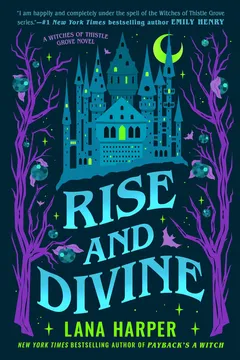
Rise and Divine is the fifth and final installment in the Witches of Thistle Grove series, following Dasha, a death-eating witch navigating dark and light forces. Reviews are mixed, averaging 3.71 stars. Many praise the darker themes, mental health representation, and satisfying series conclusion, while others feel the romance feels rushed and underdeveloped compared to earlier books. The writing style drew criticism for overuse of similes, though the world-building and characters remained highlights for fans.
Characters
Dasha Avramov
The veil-crossing exorcistDasha is an Avramov witch whose unusual magic lets her cross into the realm of the dead and consume demons. Quick-witted, theatrical, and devoted to the people she loves, she is also vulnerable to the euphoria of crossing, especially after the deaths of both parents. Her work at the Arcane Emporium and her event-planning skills give her ties to ordinary communal life, even when part of her yearns to leave it. Dasha’s central psychological struggle is not simply fear of death but dependence on intensity as relief from grief. She wants to be trustworthy, yet often mistakes escape for protection. Her courage is real, but growth requires her to accept limits, disclose her needs, and let others share responsibility.
Ivy Thorn
The life-giving exIvy is a powerful Thorn witch, skilled in healing and green magic, and Dasha’s former partner. Warm, self-possessed, and deeply attentive to other people, she is not endlessly forgiving: Dasha’s repeated breakups and proposal to open their relationship damaged her trust. Ivy values commitment, but she also protects herself when love becomes a reason to absorb avoidable hurt. Her magic expresses her temperament through patience, touch, and growth rather than force. She recognizes that Dasha’s struggle is more serious than the partial account she once received, while still insisting that understanding does not erase the consequences of Dasha’s choices. Ivy’s affection and boundaries are equally important to her.
Amrita Avramov
Dasha’s steady half-sisterAmrita is Dasha’s younger half-sister and a skilled witch who manages the Arcane Emporium. She is observant, affectionate, and more direct than her sister, often noticing distress Dasha tries to disguise. Amrita helped care for Dasha during her worst period of grief and remains a reliable source of grounding without demanding that Dasha surrender her independence. Her own vulnerabilities include the pain of raising her daughter without consistent support from the child’s father. Amrita’s protective instincts coexist with humor and a sharp tongue; she can challenge Dasha while still making room for her to return.
Maya
The amnesiac strangerMaya is the name a young woman accepts while she cannot remember her own. Found alone near Lady’s Lake, she is frightened by the prospect of hospitals and authorities but remains curious, humorous, and generous toward the people helping her. Her calmness can seem remarkable given her situation, though her memory loss leaves her unable to explain what has happened or who might be looking for her. Maya quickly forms attachments to Dasha’s family and responds to their warmth with visible delight. She is not merely a mystery to solve: her wishes, fears, and capacity to participate in decisions matter even when others suspect magic is involved.
Elena Avramov
The formidable family matriarchElena leads the Avramov family and the Arcane Emporium with authority, strategic intelligence, and a taste for intimidation. She takes responsibility for protecting Thistle Grove, sometimes making hard choices before everyone affected can consent. Her care for Dasha is genuine, shaped by having helped pull her back from a dangerous period, but she expresses it through rules and decisive intervention more readily than tenderness.
Chernobog
The pursuing dark godChernobog is an ancient power associated with darkness, winter, death, and chaos. He is magnetic as well as terrifying, able to present destruction as intimacy and devotion. His pursuit of Belisama reveals a being whose capacity to love is inseparable from the harm he causes. He does not understand why the object of his longing might refuse a bond that feels inevitable to him, making his tenderness another form of threat.
Belisama
The lake’s hidden goddessBelisama is the goddess associated with Lady’s Lake, light, water, and life. Her power has long shaped the magic of Thistle Grove, though the extent of her presence is not common knowledge. She is both formidable and wounded, with a history that binds her to Chernobog in a relationship she cannot safely continue. Her choices reveal the difficulty of separating love from a destructive bond, even for a divine being.
Wynter
The would-be witchWynter is a normie employee at the Emporium who presents herself as a glamorous solitary practitioner. She is ambitious, confident in her own expertise, and drawn to the status and drama of magical life. Her enthusiasm masks a serious lack of understanding about the forces she courts. She is neither a trained witch nor a harmless eccentric; her choices can endanger others even when she imagines herself serving a worthy cause.
Talia Avramov
The powerful Avramov scionTalia is Elena’s daughter and a formidable necromancer with the confidence to summon the family’s difficult ancestor for counsel. Her composure under pressure is matched by an irreverent, combative humor. She is skilled at using power directly, but also knows when to let another person take the lead.
Emmeline Harlow
The town’s Harlow VoiceEmmeline, usually called Emmy, leads the Harlow family and serves as the Voice of Thistle Grove. Her connection to the town gives her a distinctive role in its magic and its governance. She is pragmatic and commanding, able to move quickly from dry humor to decisive leadership when the community is threatened.
Genevieve Harlow
The meticulous event plannerGenevieve chairs the Cavalcade planning committee and brings exceptional care to its schedules, details, and contingencies. Her exacting style can irritate colleagues, but her organizational skill becomes a valuable form of protection when the crisis demands coordination across families.
Cat Quinn
The indebted half-faerieCat is a half-sith with faerie heritage, striking presence, and a pragmatic respect for debts and bargains. She is Delilah Harlow’s partner and has a complicated past outside Thistle Grove. Her assistance is valuable, but she measures obligation carefully and does not offer herself as an uncomplicated ally.
Delilah Harlow
The protective bookkeeperDelilah is an avid scholar of Thistle Grove’s history and the manager of Tomes & Omens. Loyal to Ivy, she has long resented Dasha for the hurt she caused. Her research skills help the investigation, while her gradual willingness to work with Dasha shows how practical cooperation can begin before personal warmth is fully restored.
Saanvi Avramov
Dasha’s steadfast stepmotherSaanvi is Amrita’s mother, Dasha’s stepmother, and a beloved member of the Avramov family. A successful accountant and generous host, she offers care through food, touch, and an open invitation to come home. Her relationship with Dasha is affectionate and secure, providing a model of family belonging that does not depend on blood alone.
Kira Avramov
Amrita’s perceptive daughterKira is Amrita’s young daughter and Dasha’s niece. Playful and affectionate, she sometimes notices magical details that adults miss. Her delight in Maya offers an early clue that the stranger carries an unusual radiance.
Rowan Thorn
The Thorn family scionRowan is a Thorn witch with a strong connection to birds and green magic. He works with his twin sister Linden to restore control of the flock when the orchard spectacle turns violent.
Linden Thorn
Rowan’s magical twinLinden is Rowan’s twin and a capable Thorn witch. Her shared command of the birds helps stop the orchard disturbance before it turns into a larger attack.
Isidora Avramov
The watchful necromancerIsidora, often called Issa, is a powerful Avramov witch and Rowan’s partner. She senses the hostile magic at the orchard and stands ready to intervene if the Thorn twins cannot control the flock.
Gareth Blackmoore
The reformed family leaderGareth leads the Blackmoore family after a history of selfishness and disorder. He is trying to govern more responsibly and contributes elemental skill when the four families must coordinate their magic.
Nina Blackmoore
The lake’s former chosenNina is a Blackmoore witch who once received Belisama’s favor. Her experience gives her insight into the goddess’s power, even though she no longer holds that special connection.
James Harlow
The family’s recordkeeperJames is Emmy’s father and the Harlow family’s master recordkeeper. He preserves the history and records that help explain Thistle Grove’s founding and its connection to the lake.
Teyana
The nurse behind MayaTeyana is a traveling nurse from Carbondale who enjoys witch-themed festivals and has a circle of friends despite growing up in foster care. Her resourcefulness and warmth remain evident even when she cannot recall her identity.
Plot Devices
The Veil
A dangerous second realmThe veil separates the living world from a bleak, deathly realm of black flowers, strange orchards, and a silent river. Dasha can cross it, and the euphoria she feels there makes it both a source of magical access and a serious temptation. Her ability to bring Ivy across, and her difficulty returning after consuming Chernobog, make the boundary central to the plot’s physical and emotional stakes.
Dasha’s Garnet
An anchor to lifeThe Avramov garnet grounds Dasha and helps protect her from the pull of the other side. In the early investigation, Dasha binds it to the light on her porch so that a spell will bring her and Ivy back after a limited time. It functions as a practical safeguard, but it cannot remove the deeper attraction that draws Dasha toward death.
The Cavalcade
A ritual disguised as festivalHeld every twenty years, the Cavalcade reenacts the four founding families’ arrival in Thistle Grove. Its spectacles let tourists witness magic, while its ceremonies renew the town’s connection to its origins. Because the festival concentrates magical power, Wynter’s invocation can reach Chernobog through it, and the same collective magic later helps the families protect the town.
The Oblivion Glamour
A magical memory curtainThistle Grove uses an oblivion glamour to keep non-witches from retaining memories of magic. During the first attack, the families modify it so tourists remember the festival only until Chernobog appears. The spell protects the town’s secrecy, but its effects leave Maya without her identity. Its limits and consequences force the witches to investigate carefully rather than assuming that a familiar spell explains every case of lost memory.
The Thorn Heart Tree
A living bridge homeThe ancient hawthorn in the Thorn orchards carries the history and magic of the family. When Dasha cannot return from the other side, the four families combine their powers to extend the tree through the veil and retrieve her. Its roots and branches turn family cooperation into a physical rescue, allowing Dasha to return when her own magic and will are exhausted.
Download PDF
Download EPUB
.epub digital book format is ideal for reading ebooks on phones, tablets, and e-readers.








