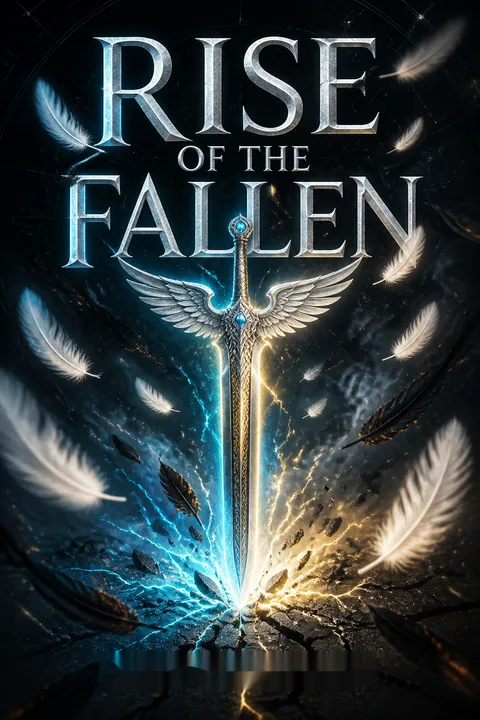


Plot Summary
A Commander Without a Map
In San Antonio, Validus, commander of the angelic forces in North America, pulls trapped warriors from a battle he cannot win and orders a retreat that costs them their foothold. Back at headquarters, a message delivered by the archangel Gabriel strips him of continental command and assigns him to assist Tren, a guardian protecting Drew Carter, a nineteen-year-old in Kansas.
Validus protests that he is a warrior, not a guardian, and worries that his replacement, Malak, is unready to face the Fallen. General Brandt insists Carter must be kept alive, though he is not a believer. Validus leaves his command bruised by the demotion and baffled by the importance of a stranger he has never heard of.
The assignment attacks Validus at the point where he has built his identity: competence in command. His protest is not mere vanity. He measures his worth through usefulness, and the abrupt move from directing tens of thousands to watching one person feels like a judgment on his failures. Yet the order also introduces a different scale of consequence. The book places a single endangered life beside the map of a continent, challenging Validus to discover whether leadership means controlling a battlefield or remaining faithful to a task whose significance is hidden.
The Last Angel Finds Brothers
Created last among heaven’s angels, Validus feels lesser and isolated until Niturni, one of the revered first angels, invites him into a circle with the compassionate Persimus and beautiful Cadriel.
Their friendship deepens when Validus saves Niturni from a black stairway whose cold darkness nearly swallows him. Years later, Niturni becomes fascinated by Lucifer’s claim that angels can rise above God. Validus refuses to join, but his friend leaves with the rebels, now led by Apollyon, and a third of heaven follows.
Persimus and Cadriel remain with Validus, who sees their former brotherhood split by allegiance. The loss teaches him that intimacy cannot protect anyone from pride, and that loyalty may require standing against someone he still loves.
The first friendship is built across status, then sealed through shared danger. That history makes Niturni’s departure more than an antagonist’s origin story: it turns cosmic rebellion into a breach inside Validus’s chosen family. The dark stairway also anticipates the book’s repeated image of a boundary crossed without understanding. Niturni reaches for knowledge and power, while Validus’s defining act is to hold on and pull another being back. His sense of being least begins to acquire moral weight, although he has not yet learned that humility and self-doubt are not the same thing.
Kish Falls, Noah Remains
For centuries, Validus watches the war from heaven rather than joining it. At Kish, the last major city resisting Apollyon’s Fallen, the angel army collapses despite Commander Danick’s skill, and Validus’s friend Cadriel is among those fighting below. The defeat leaves Validus questioning why evil appears to prevail.
Apollyon finds him alone and uses the battlefield’s losses to argue that God has abandoned the world, offering Validus power if he changes sides. Validus rejects him because the destroyer’s promises lack the love he recognizes in God. Soon a messenger reports that God has spoken to Noah. The news interrupts despair: Noah’s family will survive, and the war’s apparent ending is not the end of the plan.
The battle makes Validus confront the emotional hazard of witnessing suffering without being able to intervene. His crisis is not a loss of loyalty but an inability to reconcile loyalty with what he has seen. Apollyon’s persuasion works by offering an interpretation of events, not merely a reward: defeat becomes proof that God is weak. Validus resists by judging the character behind the argument. This establishes his moral method, though not a complete answer to suffering. Noah’s news then supplies a limited counterweight, turning hope from certainty about outcomes into trust that the story has not closed.
The Flood's Last Stand
As the Flood rises, Noah’s family enters the ark while the remaining angels defend its door against thousands of Fallen. General Jorill dies, and Commander Danick helps seal the ark as rain overwhelms the fighters. Cadriel falls, leaving Persimus grieving beside Validus.
At the final battle, Archangel Michael arrives and binds four surviving Fallen, including General Tarsis, with chains of judgment. Validus had expected punishment when Michael summoned him, but instead Michael gives him a chain and makes him part of the capture.
After the waters recede, Validus is named among the second generation of warriors sent to earth. He descends beside Persimus, survives the Fallen’s surprise attack, and enters a war where training and trust must be earned on the ground.
The flood sequence converts a distant conflict into bodily responsibility. Validus moves from watching the battle through a portal to standing inside it, where no amount of observation can spare him from loss. The deaths of Jorill and Cadriel also make victory an ethically complicated word: the ark survives, but its defense consumes nearly everyone around it. Michael’s chains redirect Validus’s fear of judgment into a commission, teaching him that his place is not granted by rank or age. His descent with Persimus carries both companionship and dread into a new generation of warfare.
Babel Splits Its Tongues
In Babel, Validus and Persimus notice Tamaral, a young woman who remains devoted to God while King Nimrod rallies the city behind a tower meant to unite humanity in defiance. Validus risks his detachment to protect her and encounters Niturni again. The Fallen commander wounds Persimus, and Validus’s impulsive choice costs another angel’s life before Persimus survives a painful healing.
General Danick then recognizes Tamaral’s importance and orders her protected. Her courage reaches Eber, a wealthy descendant of Noah’s son Shem, who is wavering over whether to support Nimrod. At a royal feast, Eber refuses the tower. God confuses the people’s languages, breaking Nimrod’s coalition, and Eber escapes with Tamaral and his followers.
Tamaral’s influence is political precisely because she possesses little formal power. She makes Eber recognize that comfort and responsibility cannot be separated, while her refusal to fear Nimrod gives his private doubts a public form. Validus’s earlier intervention, by contrast, shows how compassion without discipline can endanger the people he means to protect. His failure and Tamaral’s courage become complementary lessons: care needs judgment, and conviction can move history through a person whom institutions overlook. The divided languages dismantle Nimrod’s project not by defeating every soldier, but by disrupting the shared story that made his authority seem inevitable.
A Line Drawn Through History
After Babel, Danick abandons the attempt to defend every population and builds a strategy around preserving the lineage he believes will carry God’s promise. He traces families descended from Noah, with Tamaral’s marriage to Eber strengthening the line he has watched for generations.
Validus becomes Danick’s aide, learning to study births and choices rather than troop positions alone. In Babylon, the prophet Daniel’s prayers draw the Fallen into a vast battle to stop Gabriel from delivering a prophecy about the coming Messiah.
Validus and Danick help clear a path to Daniel, though thousands of warriors fall. The prophecy gives the long struggle a timeline and a destination: the Messiah will come, but the line leading to him remains exposed to attack.
Danick’s strategy is a response to scarcity. With no replacements for fallen warriors and humanity repeatedly returning to violence, universal protection becomes impossible; the commander chooses continuity over coverage. This is strategically intelligent but emotionally costly, since it requires accepting losses outside the chosen line. Validus’s role changes accordingly: he becomes an interpreter of lives and histories, not only a fighter. Daniel’s prophecy transforms an abstract plan into a future event, but its clarity does not remove danger. Instead, the promise gives the Fallen a more precise target and gives the angels a reason to endure uncertainty.
Bethlehem Burns Around the Child
When Apollyon begins influencing King Herod, Michael warns the angel commanders that the newborn Jesus is in immediate danger. Joseph and Mary prepare to flee, while Validus joins Commander Guilden’s defense around Bethlehem.
Herod’s soldiers begin killing young children as Fallen warriors shield the massacre. Validus leads five hundred angels into the attack, trying to stop the demons from reaching the road south. The line buckles under the numbers, and Validus fights through the grief of failing to save the children.
Persimus arrives with reinforcements, helping the remaining warriors hold long enough for Joseph, Mary, and Jesus to escape. By dawn, the child is safe, but Validus and the survivors can only mourn the families destroyed around them.
The protection of Jesus is not presented as a clean victory. The child escapes because the warriors hold a narrow route, yet their success coincides with the slaughter of other children they cannot save. That moral remainder prevents the mission from becoming triumphal spectacle. Validus’s leadership is tested not by whether he can prevent every loss, but by whether he can keep acting while fully registering the cost. The episode also clarifies the limits of power in this fictional spiritual war: even a great army cannot erase human cruelty, and preserving a future does not make present suffering less real.
The Cross Changes the Campaign
During Jesus’s ministry, Validus sees the Fallen unable to remain near the power of the Messiah, and General Danick recognizes that the Son of God needs no angelic defense. At Gethsemane, the warriors stand ready while Jesus is arrested, but they obey his choice not to call them. His death opens a new era; after the resurrection, the Holy Spirit fills the disciples, empowering believers to carry the message beyond Israel.
Danick accepts Brandt’s argument that the angels must now protect churches and Christians spreading across the world. He still keeps one legion to follow the Jewish lineages, and Validus remains at his side. The mission expands, but the old question of whom God is preserving remains unsettled.
The cross tests the warriors through restraint rather than combat. Validus has spent millennia understanding action as service, yet the most consequential moment requires him to keep his sword lowered. The Spirit’s arrival then changes the structure of the conflict: the work no longer depends on one protected ancestry, but spreads through communities of believers. Danick’s adjustment is a genuine act of adaptation, not repudiation of his past. He accepts a broader mission while retaining a narrower watch, holding open the possibility that history’s promises may still involve the people he has defended for ages.
Sobibor Breaks the Lineage
During the Holocaust, the Fallen target the lineages Danick has guarded for millennia. At Sobibor, he commits the remaining Lineage Legion to rescuing infant Anna Wiesenthal and her mother, Eva, from the death camp. Validus fights through the gates, but Eva and Anna are already inside a gas chamber.
Guardian Yortan and Danick are killed trying to reach them, and the legion retreats without knowing whether the last branch has survived. Danick’s final charge asks Validus to find the person he missed. After Israel is reestablished in 1948, Brandt assigns Validus command of North American forces, insisting that America will matter to Israel’s restoration. Validus accepts, carrying Danick’s unfinished search into his new command.
The destruction of Danick’s chart makes history feel brutally vulnerable: generations of careful work cannot guarantee the survival of one infant. His death leaves Validus with more than grief; it transfers an unfinished obligation without providing the missing answer. The narrative gives the Holocaust its human horror while also showing the danger of treating people as entries in a strategic lineage. Anna is a child, not merely a symbol, and the failure to save her presses against the logic that made the legion’s mission coherent. Validus inherits command at the point where certainty has collapsed.
A Kansas Assignment Begins
Decades later, after losing command of the North American forces to Malak, Validus investigates Drew Carter in Rivercrest, Kansas. He finds family photographs, a military connection through Drew’s late father and his mother’s friend Jake Blanchard, but not Drew himself.
At a grocery store, Validus narrowly avoids Fallen who have come searching for something in town, then meets Tren, Drew’s assigned guardian. Tren explains that Drew survived a car accident that killed a friend, lost his football future, and later was blinded in a university laboratory accident before recovering.
He also points out Sydney Carlyle, a believing student close to Drew. Validus and Tren agree to keep their distance, since any sign of their protection could draw the Fallen directly onto Drew.
Validus’s transition from commander to investigator strips away the visible rewards of his old identity. Instead of assessing armies, he reads photographs and fragments of a young man’s life, learning that protection begins with attention before it becomes force. Tren complicates this work: his resentment toward warriors reflects a history of guardians left alone with endangered children. Their uneasy partnership reveals that institutional divisions within the angelic orders have emotional consequences. Drew’s past accidents and Sydney’s faith establish contrasting forms of vulnerability and support, while the order to conceal their presence makes ignorance itself part of the danger.
Carter Sees the Unseen
At Drayle University, an armed attacker enters a building where Drew and Sydney are among the students. Validus fights Fallen outside while Tren engages another demon; inside, Drew helps barricade the classroom, disarms the gunman, and survives the assault.
He then disappears before authorities can question him. Validus follows him to a remote Minnesota lake, where a vexer torments him with ruined food, a collapsed shelter, and a bear. Drew studies the demon’s movements, hides a raft, and slips away while it reports to its commander.
Validus realizes Drew can track the Fallen’s presence with extraordinary precision. When the vexer possesses the bear and attacks, Validus kills it at great cost, confirming that Drew’s unusual ability is drawing a deliberate hunt.
Drew’s response to violence is neither simple bravado nor passive trauma. He escapes the campus, but in the wilderness he turns fear into observation, mapping the vexer’s routines until he can exploit them. Validus recognizes a form of tactical intelligence that resembles his own, which begins to make the assignment personally compelling. The bear attack also exposes the limits of Drew’s self-reliance: he can detect a threat but cannot yet understand the rules governing it. The episode converts a mysterious gift into a source of peril, because once the Fallen notice that Drew can perceive them, secrecy becomes harder to maintain.
The Church Becomes a Battlefield
In Chicago, Drew begins intervening when he sees gang members threaten young people, earning the nickname Guardian after he saves a boy named Danny from a drug gang. Meanwhile, Sydney comes to volunteer at Emmanuel Church, bringing the two young people back into each other’s orbit. The Fallen attack as the students leave the church, and Validus joins the fight while Tren tries to protect Sydney.
A droxan nearly overwhelms Validus; Drew sees the angelic battle, follows the van carrying the students, and forces Validus to translate into human form so they can communicate. Validus warns him that the Fallen are hunting him. Drew runs toward Sydney anyway. The attack leaves Validus badly wounded and makes concealment impossible.
Drew’s instinct to protect strangers appears before he understands the spiritual stakes, linking his ordinary moral choices to Validus’s military vocation. The church attack sharpens the contrast between them: Validus calculates the risk of revealing himself, while Drew acts because Sydney is in danger. Their first contact is therefore not a comfortable explanation but a collision between caution and care. Sydney’s presence also changes the mission from guarding an isolated target to defending a network of relationships. Validus’s injury makes the cost of secrecy visible, while Drew’s perception turns the hidden war into an undeniable part of his world.
Berg's Work Explains the Sight
After Validus recovers, veteran warrior Ral joins him and Tren in Chicago. Drew and Sydney search for Benjamin Berg, Drew’s former friend, whom the Fallen are trying to kill. They rescue Berg from surveillance and hide him in a taxi driven by Ral, who evades the demons long enough to get him clear. Tren discovers Berg had worked on a light-acceleration device before the laboratory accident that blinded Drew.
The angels suspect that the accident altered Drew’s vision, allowing him to see the spiritual realm. That possibility explains why the Fallen consider him an exceptional threat, though it does not yet explain their urgency. When Drew later returns for Berg’s computer and notes, Durgank’s forces are waiting.
The discovery gives Drew’s perception a material history without reducing it to a mere technical accident. Berg’s device offers a plausible mechanism, but the angels still cannot explain why the ability has become so consequential. This gap preserves uncertainty and makes scientific inquiry part of the spiritual conflict rather than its opposite. Ral’s disguise also demonstrates that survival depends on cooperation across orders and skills: a warrior can protect by becoming unremarkable. Yet the team’s success invites retaliation. Every new piece of knowledge brings the group closer to the truth while making its members easier for Durgank to locate.
Ral Falls at the Apartment
Drew and Sydney return for Berg’s research, but Durgank’s ambush catches the angel team in the apartment building. Ral stays behind to buy Drew time and is killed by Durgank, leaving Validus with grief he cannot afford to show during the mission. Durgank then escalates: the Dragons seize Sydney and the Branson children, while Reverend Branson is shot.
Federal agents arrest Drew outside the church, hoping to take him into custody before the Fallen can. Validus sees that detention would keep Drew away from the people in immediate danger, so he cuts his handcuffs and enables Drew to escape. Tren, Teriel, and Validus prepare to attack the gang’s warehouse, despite having far fewer warriors than the enemy.
Ral’s death turns a tactical conflict into a personal debt, but Validus must suppress vengeance long enough to protect the living. The hostage crisis then forces him to choose between the safest interpretation of his duty and the riskier rescue Drew believes he must attempt. The federal agents represent a human form of containment: they may not be malicious, yet their custody would prevent the action needed to save Sydney and the children. Validus’s choice to free Drew marks a decisive break from procedural certainty. He accepts that command sometimes means authorizing danger because every available alternative carries its own cost.
The Dragon's Warehouse
Validus’s small team enters the Dragon warehouse and finds Sydney and the Branson children surrounded by gang members and Fallen. Tren and Teriel reach the hostages as Validus fights Durgank, while Drew takes up two angelic guns and defends himself against the gang. A droxan attacks Validus from behind, but Drew spots it and fires, giving Validus the opening to kill Durgank.
The demon’s defeat breaks the Fallen’s assault, and the remaining gang members scatter as police sirens approach. The hostages survive, but the FBI arrests Drew. Before the agents take him away, Validus translates to human form and warns him that the Fallen know his identity and will keep coming. Drew’s rescue mission ends with his danger newly exposed.
The climax pays off the story’s paired forms of competence. Validus defeats the commander through battlefield experience, while Drew’s ability to see the droxan lets him save the angel who has repeatedly saved him. Their cooperation is reciprocal at last, though neither fully understands the other’s world. Malak’s reinforcements arrive after Validus has already committed to the fight, preserving the tension between institutional support and personal initiative. The rescue succeeds in its immediate aim, but capture by the FBI prevents the scene from offering a false resolution. The human authorities may protect Drew from one threat while placing him closer to another.
Barob Names the Last
Seeking an explanation, Validus travels to Brazil to find Tinsalik Barob, a demon who has fallen out of favor with Apollyon. In a Rio favela, Validus disguises himself as a boy and finds unexpected help from José, Paulo, Luiz, and Matheus.
Matheus reveals himself as Persimus, Validus’s ancient friend, who has spent years protecting vulnerable children in human form. Together they confront Barob, who claims Apollyon is trying to alter the timing of the End of Days.
He identifies Drew as the last person who must be saved and says the Fallen intend to kill him before that happens. Validus fears he has learned what God meant to keep hidden, but receives reassurance to rise and fight. Tren then arrives with news that the United States government poses a new danger to Drew.
The revelation reframes the assignment: Drew is not important because he commands an army or understands the war, but because his salvation is tied to the conflict’s final timetable. The explanation raises the stakes while leaving the central human choice unresolved. Persimus’s work among neglected children also brings the ancient friendship into the present through a different kind of service, one based on patient proximity rather than battlefield command. Barob’s information is morally dangerous because knowing the answer may itself cross a boundary. Validus’s fear gives way only when he understands that divine reassurance does not remove the threat; it commands him to continue despite uncertainty.
Analysis
Rise of the Fallen builds its central conflict around a distinction between control and fidelity. Validus begins as a commander who understands danger through positions, numbers, and orders. Across millennia, he encounters situations those tools cannot settle: the collapse of Kish, the deaths surrounding the ark, Tamaral’s influence on Eber, and the escape of Jesus from Herod’s forces. The book does not make strategy irrelevant; it shows that strategy must serve lives rather than replace them.
Its most consequential pairing is Validus and Drew. The angel has centuries of experience but cannot explain why one human matters, while Drew acts with courage before he understands the spiritual reality around him. Their relationship unsettles the hierarchy between protector and protected. Drew saves Validus from the droxan, then becomes the object of a revelation Validus cannot safely deliver for him. The connection is reciprocal, yet incomplete, because belief remains a choice Drew must make for himself.
The historical chapters place this personal story inside a theology of repeated failure and renewed purpose. The Flood does not erase human corruption; Babel’s division does not end ambition; the cross and the indwelling of the Spirit change the angels’ mission without ending conflict. Danick’s lineage strategy is both powerful and fragile, as Sobibor demonstrates. Its failure forces Validus to inherit not certainty but an unfinished question.
The novel’s emotional argument is that duty cannot guarantee visible success. Validus loses friends, fails to save people, and repeatedly discovers that an enemy has anticipated him. What sustains him is not mastery but a willingness to return to the work after grief and doubt. The ending extends rather than closes that test: knowing why the Fallen want Drew does not make him safe, and the new threat from human authorities suggests that protection must navigate more than one kind of power.
Review Summary
Rise of the Fallen receives overwhelmingly positive reviews, praised for its unique perspective on spiritual warfare from an angel's viewpoint. Readers appreciate the blend of biblical events with fictional elements, finding it thought-provoking and spiritually enriching. The book's action-packed narrative and character development, particularly of the angel Validus, are highly commended. While some readers express minor theological concerns, most find the story captivating and impactful, eagerly anticipating the next installment in the series.
Characters
Validus
Last-created angelic commanderValidus is an ancient warrior angel, created last and long accustomed to feeling that rank determines worth. He studies tactics, trusts disciplined preparation, and measures himself by whether he can protect those under his command. His compassion complicates that martial identity: he is drawn to vulnerable people and struggles when orders require him to leave them exposed. His closest relationships, especially with Persimus and the absent Niturni, keep his duty from becoming pure calculation. In the present, being assigned to guard Drew forces him to reconsider what leadership looks like when he cannot command the scale of events. He is courageous and perceptive, but also prone to guilt and to treating every unexplained setback as evidence of personal failure.
Drew Carter
Unwilling spiritual witnessDrew is a college-age former athlete whose life has been marked by accidents, loss, and a damaged future. He is intelligent, physically disciplined, and inclined to act when someone nearby is threatened, even when he has little understanding of the danger. His connection to Sydney and his search for Benjamin Berg give his flight from authorities a purpose beyond self-preservation. Drew does not begin with Validus’s religious framework, and his courage should not be confused with certainty: he is trying to make sense of events while still choosing to help. His unusual perception places him between ordinary human experience and the hidden conflict around him, making him both unusually capable and intensely vulnerable.
Niturni
Brilliant old companionNiturni is one of the first and most powerful angels, admired for his intelligence, confidence, and appetite for discovery. He becomes Validus’s closest companion when he welcomes the younger angel into an intimate circle with Persimus and Cadriel. Niturni is drawn to exploration and ambitious ideas, qualities that make him exciting to follow but also leave him vulnerable to arguments that confuse freedom with superiority. His bond with Validus gives their ideological differences an unusually personal charge. He is not a simple embodiment of malice: the memory of their genuine friendship remains important to Validus, even as Niturni’s choices become a measure of how thoroughly trust can be changed.
Persimus
Compassionate field warriorPersimus is Validus’s closest enduring friend, known for gentleness, patience, and a keen concern for others. He can steady Validus when duty turns into self-reproach, while his own compassion sometimes makes him hesitate when decisive action is needed. Their bond began among four friends and survives separation, battle, and long stretches without contact. Persimus is not a warrior because he lacks tenderness; his empathy is the source of his courage, particularly in the presence of children and people whom larger systems overlook. He adapts to human life in ways Validus does not expect, showing that service can take forms quieter than command or combat.
Apollyon
Rebel prince of darknessApollyon, formerly known as Lucifer, leads the Fallen and seeks dominion over both the spiritual and human realms. His strength lies as much in interpretation as in violence: he turns defeat into apparent proof of divine failure and offers power as an answer to uncertainty. He exploits human cruelty, ambition, and despair rather than inventing those impulses himself. To Validus, Apollyon is especially dangerous because he once possessed beauty, rank, and influence, making his rebellion a warning about pride rather than an alien exception. His long campaign against the promised plan gives the supernatural war a strategic purpose, even when its consequences appear as human history.
Danick
Strategist of the lineageDanick is a veteran angel commander whose patience and strategic vision shape Validus’s understanding of warfare. While other commanders want to defend every region, Danick studies families and tries to preserve the lineage he believes is connected to God’s promise. His decisions can seem severe because he weighs individual risks against a long historical mission. He recognizes Validus’s abilities before Validus trusts them himself, giving the younger warrior responsibility and honest counsel. Danick’s authority is not effortless certainty: he questions his own understanding, consults other commanders, and adjusts when the spiritual landscape changes. His example teaches Validus that effective leadership requires both conviction and a willingness to revise a strategy.
Jesus, Ben Elohim
Son of God and MessiahKnown to the angels as Ben Elohim, Jesus is the center of the promise that has directed their long conflict. Validus witnesses his ministry, his refusal to summon angelic armies at his arrest, and the events that reshape the angels’ mission. The character’s defining power in this account is not merely the ability to command; it is the deliberate restraint with which he accepts human vulnerability. His presence changes the spiritual balance around him and redirects the strategies of both heaven’s commanders and the Fallen. The story treats him as divine and human history’s decisive figure, while keeping the angels’ perspective focused on what his actions mean for their service.
Tren
Assigned child protectorTren is Drew’s guardian, assigned to protect him through childhood and later returned to his side as an adult. Experienced in close observation, he is more comfortable reading people than commanding warriors. His past has left him resentful toward warrior angels who once prioritized other objectives while guardians faced danger alone. He voices that grievance rather than allowing it to poison the partnership, and Validus’s promise not to abandon him begins to repair their trust. Tren is cautious, perceptive, and capable in a fight, though his deepest strength is the persistence required to remain with one vulnerable person.
Sydney Carlyle
Believing friend of DrewSydney is a student whose Christian faith shapes her concern for Drew and the people around her. She has a calm conviction that distinguishes her from characters driven chiefly by fear, status, or self-protection. Her relationship with Drew is affectionate but complicated by his withdrawal and the danger surrounding him. She returns to his orbit through service at Emmanuel Church, where her presence makes the mission harder to conceal and more worth the risk. Sydney’s steadiness gives Drew a human source of moral and emotional connection, while her faith offers Validus a visible example of the power he believes can change lives.
Ral
Loyal veteran warriorRal is an experienced angel warrior whose awkward humor lightens the pressure of Validus’s mission without making him careless. He volunteers to join the Chicago operation and proves willing to take personal risks when Drew or the others need cover. Ral’s manner can seem playful, but his long service gives his choices weight. He recognizes that guardians carry a different kind of burden from warriors and does not dismiss Tren’s pain. His loyalty makes him a natural member of Validus’s small team, where trust must be earned through action rather than rank.
Cadriel
Beautiful warrior friendCadriel is one of Validus’s first close friends, admired for his striking appearance and serious nature. Beneath that elegance is a capable and committed warrior, serving in the long conflict against the Fallen. His bond with Persimus adds emotional depth to the group of four friends and makes their separation a lasting ache. Cadriel represents the life Validus might have shared with his companions before rebellion divided them. His presence in the ancient battles strengthens Validus’s sense that the war is fought not by anonymous forces but by individuals whose courage and relationships are at stake.
Brandt
Pragmatic angel generalBrandt is a powerful commander who values operational discipline and clear-eyed assessment. He is willing to challenge Danick when he believes the army’s strategy leaves guardians and expanding churches too exposed. Later, he entrusts Validus with command in North America and insists that the assignment has purpose even when Validus sees it as demotion. Brandt’s practicality can make him seem severe, but he understands the cost of committing forces without adequate support. He provides a counterweight to Danick’s lineage-focused vision and helps the angelic command adapt to changing circumstances.
Michael
Leader of heaven's warriorsMichael leads the Warrior Order and appears at pivotal moments when the scale of a decision exceeds ordinary command. He is direct, disciplined, and imposing, but his authority is paired with a clear commitment to the orders he serves. He recruits Validus for a task when Validus expects punishment and later leads the angelic response in defining battles. Michael’s presence gives the story a visible structure of command while reminding Validus that assignments may have reasons hidden from those carrying them out.
Gabriel
Bearer of divine messagesGabriel leads the Messenger Order and carries revelations that alter the course of the angels’ work. His delivery of Validus’s new assignment signals that the task involving Drew is unusually important. In earlier eras, he bears a prophecy concerning the Messiah and becomes a target the Fallen try to stop. Gabriel is swift and authoritative, but his significance rests on the messages he protects, not on personal ambition. He connects the strategic decisions of heaven to events unfolding among human beings.
Tamaral
Defiant believer of BabelTamaral is a young woman in Nimrod’s Babel who remains devoted to God despite poverty, coercion, and public contempt for her beliefs. Her courage is not theatrical: she gives help to others, speaks against the tower, and refuses to let social power define what is right. She challenges Eber to take responsibility for the influence and wealth he possesses. Validus notices her because her conviction persists in a city designed to overwhelm it. Her character helps Danick recognize that a single person’s moral clarity can affect the direction of a whole community.
Eber
Hesitant heir of NoahEber is a wealthy descendant of Noah who enters Babel for trade and political advantage. He is intelligent and cautious, aware that refusing Nimrod could endanger the people who depend on him. Tamaral’s directness forces him to examine whether maintaining comfort and peace would make him complicit in the king’s defiance. Eber is not initially a public hero; his importance lies in the decision he must make when private faith conflicts with inherited responsibility. His relationship with Tamaral grows from that moral confrontation.
Durgank
Ruthless regional commanderDurgank commands Fallen operations in the Midwest and uses gangs, possessors, and organized attacks to pursue his aims. He is strategic enough to turn surveillance into traps and dangerous enough to confront Validus directly. His presence changes the Chicago mission from a series of scattered threats into a coordinated campaign against Drew. Durgank’s violence is personal as well as tactical, particularly for Validus and his team, but he remains a commander serving Apollyon’s larger effort.
Tinsalik Barob
Twice-fallen informantBarob is a demon who has lost favor with Apollyon and survives by trading in information. His reputation makes him both a possible source of answers and an obvious danger to anyone who approaches him. He understands the power structures of the Fallen well enough to exploit their rivalries, but his knowledge comes with no promise of honesty or safety. Validus seeks him because ordinary investigation has failed to explain the urgency of the hunt for Drew.
Malak
New continental commanderMalak takes over the North American angelic forces when Validus is reassigned. He is capable, if initially anxious about inheriting a vast and difficult command. His relationship with Validus combines respect with the pressure of succession: he must prove himself without simply imitating the commander before him. Though limited by demands across the continent, Malak ultimately responds to the scale of the Chicago crisis.
Benjamin Berg
Student researcher in hidingBenjamin Berg is Drew’s friend from university and a physics student whose work becomes important to the events surrounding the laboratory accident. After the accident, he is blamed and expelled, then disappears. Drew’s search for him suggests their connection has not been broken by fear or accusation. Berg is primarily encountered through the danger surrounding his research, which makes him a human link between scientific ambition and the unexplained spiritual conflict.
Nimrod
King who builds BabelNimrod is a powerful ruler who uses the tower at Babel to rally people around self-rule and human greatness. His authority depends on making defiance feel like unity, and his ambitions attract support from the Fallen. He serves as the political force Tamaral and Eber must confront.
Noah
Righteous survivor of the FloodNoah is the one righteous man whose obedience gives the angelic defenders a purpose when humanity faces judgment. He builds the ark, prays, and warns the people around him. Validus sees in him a model of faith that persists even when the surrounding world refuses to listen.
José
Merciful favela boyJosé lives in a poor favela with other boys and shares what little food and safety he has with Validus, whom he believes is a lost child. His generosity and courage make him an unexpected source of help in Validus’s search for Barob.
Plot Devices
The spiritual war
Hidden battle behind historyThe story imagines angels and Fallen fighting alongside human history, often without people noticing. Their battles influence events, but they cannot simply override human choices or freely take human lives. The conflict explains why a campaign may appear in one realm as an ordinary political struggle and in another as a fight with swords, guns, and spiritual beings. This device lets Validus interpret familiar events, from Babel to Chicago, through a military lens while forcing him to reckon with the limits of that lens. It also establishes that human action matters: the Fallen exploit human cruelty, while believers can change the balance through faith and service.
The angelic accords
Rules that limit interventionThe Genesis and Noahidic Accords set boundaries for angelic and demonic activity, including limits on killing humans, possessing them, and intervening in the physical realm. They help explain why Validus cannot solve every danger with force and why guardians often must protect children without being able to control the adults around them. The rules also give battles a tactical structure: warriors can fight one another, but important human decisions remain their own. These fictional laws create recurring pressure between duty and restraint, especially when a rule seems to leave innocent people exposed. The accords are an invented framework within the novel, not a claim that the Bible explicitly describes such agreements.
Translation and perception
Crossing between physical realmsAngels can move through physical barriers, translate objects between spiritual and material forms, and sometimes assume human bodies. Each ability has limits: translation demands concentration, dulls perception, and can expose an angel to physical injury. Drew’s strange ability to perceive the angelic realm becomes central to the present-day plot. Berg’s light-acceleration research offers the team a possible explanation for how the university accident affected Drew, but the explanation remains a theory rather than a complete account of his importance. The device turns scientific investigation into a plot hinge and makes visibility itself dangerous: once the Fallen realize what Drew can see, they intensify their efforts to find him.
Danick's lineage chart
A map of the promised lineDanick’s chart follows families he believes are connected to God’s plan, beginning with Noah and continuing through generations of human history. It gives the angelic war a long-term strategic objective when defending all humanity is impossible. Validus learns to treat genealogies, marriages, and individual acts of faith as battlefield intelligence. The chart also creates a vulnerability: the Fallen can target the people on it, and the destruction of its branches tests whether the angels have understood the plan correctly. Its meaning changes as the story moves from protecting one lineage toward supporting believers and churches across the world.
The approaching End of Days
A deadline behind the huntProphecies and the Book of Life give the angelic war a temporal horizon. The Fallen do not only seek territory or influence; they want to delay the judgment they believe is approaching. Barob’s warning connects their urgency to Drew, whose salvation is said to matter to the coming events. This revelation changes Validus’s assignment from an unexplained protection detail into a struggle with consequences for humanity’s future. It does not resolve what Drew will choose or how events will unfold. Instead, the deadline intensifies the present danger and gives the final pages their unsettled forward motion.
Download PDF
Download EPUB
.epub digital book format is ideal for reading ebooks on phones, tablets, and e-readers.








