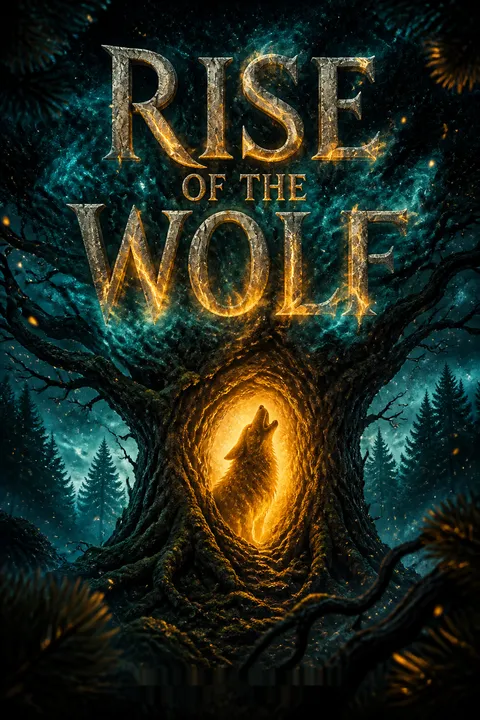


Plot Summary
The Ram Falls First
Sixteen-year-old Drew Ferran is the quieter, smaller twin on a Cold Coast farm, but his instinct for animals is uncanny. For days, the sheep grow skittish under a predator he cannot see, and Drew becomes feverish as the full moon rises. When a panicked ram backs over the cliff, he blames himself, though his mother, Tilly, reassures him.
His father, Mack, dismisses Drew’s fears and presses him to finish loading grain for market with his brother Trent. Yet even the horse senses danger. As Mack and Trent leave through the gathering storm, Drew stays behind to watch the flock, unaware that the strange sickness is not an illness he can simply wait out.
Drew’s sensitivity first appears as practical skill, a shepherd’s ability to notice what others miss. The fever turns that gift inward: his body reacts to a danger his mind cannot name. Meanwhile, Mack’s impatience and Tilly’s tenderness establish competing versions of care. Drew has learned to distrust his own importance, but the animals respond to him as if he belongs to their world. The ram’s death makes the family’s ordinary livelihood feel suddenly exposed, foreshadowing how a private bodily change will rupture the home that defines him.
Blood in the Farmhouse
That night, as Tilly hints that Drew is unlike Trent, a huge black creature smashes through the farmhouse window. Drew takes his father’s sword and wounds it, but the beast slashes his chest before killing Tilly. Its arrival triggers the transformation that has been building inside him: Drew becomes a wolf-like creature and tears into the attacker, badly damaging its face before it escapes.
Mack and Trent return to find Tilly dead and Drew bloodied beside her. Mack assumes Drew killed her and runs him through with the same sword. Drew survives the wound, realizes his father intends to strike again, and flees into the rain. Mack sounds the hunting horn, sending dogs after the boy who was once his son.
The attack makes Drew’s first transformation inseparable from grief and accusation. He does save his mother’s killer from an easy victory, but his new body gives his father a reason to see him as the danger. Mack’s mistaken judgment does not erase his love for Tilly, yet grief turns that love into violence. The sword becomes an especially bitter inheritance: it is both the tool that wounds Drew and his sole protection as he escapes. The scene leaves him alive, but cuts him off from the family whose care had been his only home.
The Scout’s Quarry
Months later, in the Dyrewood, apprentice scout Whitley falls from a spooked horse and faces a shaggy creature with glowing eyes. The beast, Drew, folds his arms instead of attacking.
When Whitley’s master, Hogan, returns, he mistakes Drew for a threat and knocks him unconscious, then binds him for transport to Duke Bergan’s city. Drew’s broken arm begins healing unnaturally, and he eventually speaks. He warns Hogan that the Wyldermen are approaching. Hogan frees him, but an arrow strikes the scout, while Whitley is injured in the chaos.
Drew could run; instead, he returns to fight the tribesman attacking them. He carries the poisoned Hogan and helps Whitley reach the Dymling Road, where the Woodland Watch arrests him after reading Hogan’s journal.
Drew’s restraint is the first evidence that survival has not erased his capacity for care. He has lived by animal instinct, yet chooses not to kill a frightened apprentice who might have seemed like prey. His return to the fight makes that choice costly and public. Whitley and Hogan respond to what Drew does, not merely to what he looks like, but the journal gives the Watch grounds to treat him as a dangerous specimen. His instinctive compassion earns him a new human connection while also carrying him toward another cage.
A Wolf in Brackenholme
In Brackenholme, Drew is locked in the Garrison Tree and questioned by Duke Bergan, who explains that he is a therianthrope, a shape-shifter like Bergan himself. Prince Lucas arrives with the Ratlord Vankaskan and claims Drew for King Leopold, ordering him taken to Highcliff. Vankaskan tortures Drew on the journey, while his young apothecary, Hector of Redmire, quietly treats the injuries.
When Wyldermen attack the caravan, Hector frees Drew and Duke Bergan’s men help him escape. Bergan then gives Drew back his sword and reveals that Drew is the son of Wergar, the former Wolf King. Drew’s flight into the forest was not the end of his old life. It has placed him at the heart of Lyssia’s royal conflict.
Drew’s new identity arrives through institutions that want to define and control him. Bergan offers recognition, but Lucas and Vankaskan turn that recognition into custody and pain. Hector’s care provides the first alternative: knowledge used to preserve rather than dominate. The revelation about Wergar expands the stakes beyond Drew’s survival, yet it does not make him feel prepared to rule. Instead, it sharpens the conflict between inherited identity and chosen character. The Wolf is now a political symbol, but Drew still experiences himself as an injured farm boy trying to escape harm.
Shelter at Redmire
Drew and Hector travel to Redmire, where Baron Huth welcomes his son and gives Drew shelter. Hector introduces Drew to his twin Vincent and their cousin Gretchen, a Werefox promised to Prince Lucas. Gretchen mocks Drew’s wild appearance, and he finally answers her contempt with anger.
Baron Huth stops the quarrel and offers Drew a week to recover, while Hector explains the court’s old lore, the Werelords’ political marriages, and the hardship King Leopold’s taxes have brought to ordinary people. Drew trains in swordplay with Redmire’s guards and begins practicing control over the Wolf. He and Hector plan for Drew to flee east to Omir, beyond the king’s reach, while Hector is to seek refuge in Icegarden.
Redmire briefly gives Drew the ordinary protections he has lost: food, a bed, instruction, and people willing to hear him. Yet its welcome is conditional, because the king’s power reaches even into a household that values healing and hospitality. Gretchen’s contempt and Drew’s refusal to accept it expose two forms of defensiveness: her reliance on rank and his raw sensitivity to humiliation. Training offers him a third path, discipline rather than denial. The planned separation from Hector makes the fragile refuge feel temporary before either boy is ready to leave it.
Redmire Burns
As Drew prepares to leave Redmire, Captain Brutus and the Lionguard break into the hall. Vincent has alerted the king, hoping to protect his family’s position. Brutus calls Drew the last Wolf and kills Baron Huth with a silver-runed sword when the old Boarlord changes to defend his home.
Drew grabs Gretchen and jumps from the balcony to the Redwine River, while Hector follows and steers a boat into the current. They escape as Brutus orders Redmire Hall burned. Hector has lost his father and home; Drew has lost the possibility of a quiet departure. Gretchen is now a fugitive too, though she resents Drew for taking her and remains convinced that Lucas will make her queen.
Vincent’s choice illustrates how fear makes collaboration look like prudence: he hopes submission will spare Redmire, but the king’s men kill Huth and burn the household anyway. Silver changes the rules of Werelord power, making the supposedly protected nobles vulnerable to ordinary weapons. Drew’s abduction of Gretchen is both rescue and violation, a decision that preserves her life while taking away her agency. Hector’s grief then binds the trio together more deeply than affection alone could. Their escape begins as a flight from capture and becomes a test of whether loyalty can survive coercion.
The Wolf at Oakley
The fugitives follow the Redwine toward the marshes, while Hector explains how Wergar lost the throne after Duke Bergan and other allies urged him to surrender to Leopold. At Oakley, Gretchen slips away during the night, leaving a note that she intends to reach Highcliff alone. Drew and Hector join villagers searching for her, but first Drew sees militia soldiers attack an old veteran, Ebert, for criticizing the king.
Drew draws his Wolfshead sword and defeats the men, then partially transforms to throw their sergeant away from Ebert. The villagers cheer and mistake him for Wergar returned. Drew rejects their worship, insisting that they must resist oppression themselves, but the Wolf’s appearance has made their hidden hopes visible.
Drew’s action in Oakley converts inherited symbolism into a public event. He intervenes for Ebert because the old man is being hurt, not because he intends to claim political authority. The villagers nevertheless read the Wolf as a promise that someone powerful has returned to protect them. Drew’s refusal of the crown is ethically sincere, but it cannot undo the effect of what they have witnessed. Gretchen’s escape also changes the rescue dynamic: the group must now follow her choice, even as Drew and Hector fear the dangers she cannot see.
The Shaman’s Answer
Drew, Hector, and seven Oakley volunteers track Gretchen’s trail to a Wylderman village in the Wyrmwood. The villagers say she has been offered to Vala, their serpent goddess. When the shaman orders Drew sacrificed, he drives a knife toward Drew’s heart, but Drew transforms and kills him.
The Oakley men join the fight, suffering deaths and injuries before the surviving Wyldermen retreat. With Gretchen’s location still unknown, Hector uses forbidden magick to summon the shaman’s spirit.
The corpse identifies a path to the Serpent’s Tree, but Hector’s protective circle is broken. The shaman attacks him after answering, and Drew cuts off its head. The friends now know where Gretchen was taken, but have lost time and exposed themselves to the haunted forest.
Hector’s decision to use necromancy grows from his belief that healing means taking responsibility for the living, even when the only useful knowledge lies with the dead. Drew’s transformation saves him from sacrifice but brings an unavoidable act of killing, which he cannot treat as a simple victory. The Oakley volunteers choose solidarity despite their fear, and their losses make the rescue more than a private adventure. The failed ward shows that knowledge without practiced discipline can endanger the very people it is meant to help. Their next step rests on a dangerous answer.
Vala in the Mist
Following the shaman’s directions, Drew climbs the Serpent’s Tree and finds Gretchen bound inside its hollow trunk, bruised and barely conscious. As he carries her down, a serpent drags him into a swamp and attacks. Vala, the legendary Wereserpent, reveals herself and coils Hector in her body. Drew changes, cuts Vala with his sword, and bites into her underside until she drops Hector.
The serpent thrashes, apparently dying, while the friends flee with Gretchen. Drew retrieves the sword from the clearing, but Vala’s venom has entered his body. Hector carries Gretchen and guides the three out of the Wyrmwood. By dawn, Drew collapses, leaving Hector to keep them moving and use his medicines to save both wounded companions.
The rescue reverses the earlier powerlessness of the farmhouse: Drew now enters danger deliberately and acts to protect others. But Vala’s scale overwhelms his confidence, and the Wolf’s strength exacts a physical cost. The serpent embodies a form of shapeshifting taken beyond human reciprocity, a being that has abandoned every limit except hunger. Drew’s victory is not mastery; it is a narrow survival won through improvisation and pain. Hector’s knowledge then becomes indispensable, shifting the group’s dependence from Drew’s force to the healer’s patient work.
The Captain’s Sweet Wine
Hector buys an old horse and cart, then tends Drew and Gretchen through the week-long journey toward All Hallows Bay. Gretchen recovers first; Drew remains feverish from Vala’s venom. Their arguments soften, and she begins to recognize Hector’s courage, though neither abandons their destination.
At the port, Hector negotiates passage south with Captain Cane, who offers the Shanti Isles. Drew distrusts the charming stranger, but Hector has already agreed to the fare.
Cane drugs their drinks, reveals that he is Count Vega, and confines them aboard the Maelstrom. He intends to deliver all three to King Leopold in exchange for restoration to his island title. Drew wakes in chains, and the route meant to carry them away now leads directly to Highcliff.
The road gives the trio a brief interval in which care can repair what violence has damaged. Gretchen’s guarded gratitude and Hector’s persistence make their bond less dependent on circumstance, while Drew’s lingering fever reminds them that survival has limits. At the port, their exhaustion and lack of choices make Vega’s promise persuasive. Drew’s suspicion is accurate but insufficient to stop the deal, showing how vulnerability can defeat good judgment even when it is present. Their confinement repeats the novel’s central pressure: powerful people keep converting the protagonists’ bodies and identities into bargaining currency.
The Shark’s Bargain
During their captivity, Hector hides in his cabin and uses a carefully prepared ritual to commune with his dead father. He learns that his father wants him to forgive Vincent, though Hector is not ready to do so.
Drew discovers the ritual and asks him to stop risking another encounter with the dead. Days later, pirates board the Maelstrom at Cutter’s Cove and seize Gretchen. Drew, still manacled, attacks to save her. He also dives into the sea after Casper, the young lookout whose stories have made Drew see beyond the boy’s swagger.
Vega joins the fight and transforms into a Wereshark, retrieving Gretchen from the rival pirates. Casper survives Drew’s rescue. Vega thanks Drew but refuses to abandon his plan to take the prisoners to Leopold.
Hector’s private ritual is an attempt to settle grief through knowledge, but the answer he receives cannot erase the betrayal that caused it. His father’s request for forgiveness becomes a future possibility, not a command. Meanwhile, Drew’s choices aboard the Maelstrom clarify the kind of person he is becoming: he risks himself for Gretchen and for a boy who has little reason to deserve his trust. Vega’s transformation exposes a hidden kinship between captor and captive, yet shared nature does not produce shared ethics. He can save them from pirates and still deliver them to the king.
The Lion’s Sentence
The Maelstrom brings its prisoners to Highcliff, where Gretchen is taken to the palace and Drew is marched into the court in silver restraints. King Leopold welcomes Hector as a loyal servant, then publicly accuses Drew of murdering Baron Huth and plotting to seize the throne.
Duke Bergan and Duke Manfred object, arguing that killing a Werelord outside battle violates ancient law. Leopold claims Drew’s actions amount to war and announces that he will execute him the next day.
The court’s silence and scattered protests reveal how carefully fear has divided the nobles. Drew is beaten and locked away, while Hector remains under guard. The judgment is presented as justice, but Leopold’s own silver sword and manufactured charges expose the ceremony as political theater.
Leopold understands that power is sustained not only by force but by controlling the story that force appears to confirm. By framing Drew as a murderer and rebel, he turns the king’s own violence into a defense of order. The objections from Bergan and Manfred matter, but their caution also shows how thoroughly the court has learned to calculate the cost of dissent. Drew’s public sentence is designed to isolate him before killing him. His restraints make literal the political strategy: remove his capacity to act, then make the audience accept that helplessness as proof of guilt.
The Queen’s Living Son
Gretchen visits Drew in his cell and tries to give him hope by describing the nobles working to save him. Drew refuses to believe Leopold will spare him. As they speak about their families, Gretchen recognizes the creature Drew describes from the farmhouse as a Wererat. She concludes that the attack was not a random assault: Drew’s birth mother must be Queen Amelie, Wergar’s wife, whom Leopold married after taking the throne.
She tells Drew that Amelie is alive inside the castle. Drew asks to contact her, but Lucas strikes him and forbids him from speaking of the queen as his mother. Gretchen is taken away. Drew is left with the knowledge that the woman he has mourned as lost may be within reach, while his execution is only hours away.
The revelation reopens Drew’s past without diminishing the love he holds for Tilly. His identity is not a choice between a birth mother and the woman who raised him; both relationships shape the person he has become. Gretchen’s insight also recasts the farmhouse attack as an act connected to the political purge of Wergar’s family. Yet knowledge arrives too late to offer comfort. Lucas’s blow turns the discovery into immediate danger, and Drew must face the possibility that he may die before his mother can know he survived.
The Wolfguard Returns
On the morning of the execution, Leopold presents Drew to the gathered city and repeats his false account of the boy’s crimes. As the king raises his silver sword, disguised Wolfguard soldiers rush the scaffold and knock him aside.
One cuts Drew’s bonds while other former Wolfguard reveal their old colors and fight the Lionguard. Leopold transforms and attacks, killing several rescuers. Mack Ferran, now among the king’s soldiers, is revealed as the man who freed Drew.
Duke Bergan’s explanation has shown Mack that a Wererat killed Tilly, not Drew, and Mack dies protecting the boy he once mistook for her murderer. Drew forgives him. As Bergan and Manfred try to lead Drew to safety, Drew sees the king retreating into the keep and breaks away to pursue him.
The scaffold turns private guilt into public action. Leopold’s spectacle is interrupted by people who remember an older loyalty, while Mack’s final choice repairs, without erasing, the terrible misunderstanding that divided him from Drew. Drew’s forgiveness is not a denial of what his father did; it recognizes the fear and grief beneath it. But the pursuit that follows reveals how difficult it is for him to separate justice from revenge. He has been offered escape and community, yet the sight of Leopold withdrawing pulls him back toward the danger that has governed his life.
Fire on the Battlements
Inside the keep, Leopold’s chancellor, Vanmorten, reveals the ruined side of his face and admits he attacked the farmhouse, searching for Tilly and the child she hid. Drew’s fear nearly overwhelms him, but he fights back as the Ratlord transforms and drives him toward the battlements.
Drew is badly injured and cannot summon the Wolf reliably. When Vanmorten reaches for the Wolfshead sword, Drew throws a flask of Spyr Oil at him and kicks him into a brazier. The oil ignites, setting the Ratlord ablaze.
Drew retrieves his sword, then sees the other Ratlords advancing through the fire. With no strength left and nowhere to retreat, he falls backward from the wall into the sea. The crowds below see him disappear, and his friends cannot tell whether he has survived.
Vanmorten’s confession gives Drew a target for years of grief, but the confrontation denies him an easy revenge. He is physically broken, frightened, and unable to rely on the Wolf as a guaranteed solution. His victory comes through attention to the materials around him, including the same Spyr Oil that once endangered him aboard the Maelstrom. The fall is both escape and apparent self-destruction, a final refusal to let the enemy dictate how he dies. Yet the image leaves his companions and the crowd with uncertainty rather than triumph.
A Name Over Highcliff
Drew wakes aboard the Maelstrom with nearly every bone broken, his little finger missing and his body wrapped in Hector’s bandages. Vega had pulled him from the harbor after the fall; the captain also recovered the Wolfshead sword.
Whitley, now revealed as Duke Bergan’s daughter and Hogan’s apprentice, is tending him beside Hector and Gretchen. Queen Amelie enters and recognizes him as her surviving son, Willem, while Drew insists that he is still the farm boy Tilly raised.
Bergan explains that Leopold is trapped in the keep as Brackenholme and Stormdale forces besiege it. From the ship, Drew sees the city celebrating and hears the people chant his name and call for the Wolf. His private wish to disappear now collides with a public claim he did not seek.
The ending offers reunion without pretending that identity can be made simple. Amelie names the child she lost, while Drew keeps faith with the mother who raised him; his life can contain both histories. Whitley’s reveal likewise reminds us that the people around Drew have been more complex than their first appearances suggested. The city’s acclamation transforms him into a symbol before he has chosen what to do with that power. Unlike the execution spectacle, this public voice rises from below. Drew survives, but the demand of leadership remains unresolved.
Epilogue
Drew survives the fall, though his body is shattered and his sword is lost in the harbor until Vega retrieves it. His friends gather around him aboard the Maelstrom, and Queen Amelie comes to recognize the son she believed dead. Drew does not know whether he can accept the royal life she offers; he still thinks of himself as Tilly’s farm-raised boy.
Outside, Leopold remains besieged in Highcliff Keep, and the city’s bells ring as crowds chant for Drew and the Wolf. The story closes not with a settled throne, but with a wounded young man hearing that the people have begun to imagine him as their king.
The recovery scene resolves the immediate question of survival but deliberately leaves the political future open. Drew is restored to consciousness by the people who have become his chosen family, while his birth family offers a new claim on him. The distinction between those forms of belonging is not solved by bloodline or title. Nor does public enthusiasm equal consent: the crowd assigns Drew a role before he decides whether he can bear it. His survival therefore marks a transition from private endurance to public responsibility, but the novel ends before he can accept or refuse that burden.
Analysis
Rise of the Wolf makes political inheritance collide with the intimate experience of being raised. Drew’s royal ancestry does not erase his attachment to the Ferrans, and the novel refuses to treat birth as a complete explanation of character. Mack’s care and suspicion, Tilly’s tenderness, and Drew’s memories of farm life remain psychologically real even after the court names him as Wergar’s son. This conflict gives the succession plot an emotional cost: recovering a lost lineage means risking the family identity that formed him.
The book also contrasts two uses of power. Leopold stages punishment, taxes the poor, and weaponizes law to make domination appear legitimate. Drew’s most consequential acts begin smaller: saving Whitley, protecting Ebert, returning for Hector, and risking himself for Casper. These choices do not make him a ready ruler, but they build a different kind of authority, one grounded in reciprocal care. The villagers’ response shows that symbolic power can arise from actions before a person consents to lead.
Shapeshifting externalizes the struggle between impulse and responsibility. The Wolf is neither a separate evil nor an uncomplicated gift. It magnifies Drew’s capacity to defend others and his capacity for violence, so mastery depends on recognizing his own motives rather than denying his animal nature. Hector’s healing and experiments with necromancy offer a parallel study: knowledge can serve compassion, but only discipline keeps it from causing further harm.
The ending offers no completed revolution or settled kingship. Leopold remains inside the keep, the city’s allegiance is shifting, and Drew wakes injured beneath a crowd’s expectations. The novel’s hopeful claim is therefore modest but meaningful: resistance begins when people stop accepting cruelty as inevitable. Its caution is equally clear. A just cause cannot be secured by bloodline or prophecy alone. Drew must still decide what kind of power he will choose to exercise.
Review Summary
Wereworld: Rise of the Wolf receives mostly positive reviews for its imaginative world-building, engaging characters, and fast-paced adventure. Readers praise the unique concept of various werecreatures as nobility and the protagonist Drew's compelling journey. Some critics note predictable plot elements but still find the story enjoyable. The book is recommended for young adult fantasy fans, with caution advised for younger readers due to some violent scenes. Many reviewers express excitement for the sequels and appreciate the author's storytelling skills.
Characters
Drew Ferran
Reluctant young shape-shifterA sixteen-year-old shepherd raised on the remote Cold Coast, Drew is observant, gentle with animals, and more at home outdoors than in courts or barracks. He has spent much of his life feeling less impressive than his stronger brother and less valued by his father. His instinct to protect others is stronger than his desire for recognition, even when acting on it risks his safety. As his shape-shifting emerges, he must learn to distinguish his own choices from the violent impulses of the Wolf. Drew’s deepest struggle is not whether he has power, but whether power can serve care without turning him into the monster he fears.
Hector of Redmire
Healer with a conscienceA young Boarlord and trained apothecary, Hector has grown up among books, medicines, and courtly obligations. He is physically unprepared for life on the road, but learns quickly and repeatedly risks his safety to treat Drew and Gretchen. His habit of obeying authority conflicts with his vocation to heal, especially when he is ordered to serve a cruel master. Hector’s friendship with Drew gives him a model of moral action that does not depend on rank. His curiosity about old magicks reflects both intellectual courage and a wish to find answers that ordinary medicine cannot provide.
Lady Gretchen
Fox heir and royal brideA young Werefox and the heiress of Hedgemoor, Gretchen has been trained from childhood to occupy a powerful place at court. She is sharp, proud, and accustomed to being obeyed, yet her confidence conceals grief and anxiety about the future arranged for her. Drew initially meets her at her most dismissive, and their clashes expose how differently each understands dignity and freedom. Gretchen is politically perceptive and cares about the people her family is meant to serve, even when she struggles to reconcile that duty with her own safety. Her complexity emerges most clearly when she is removed from the audience that usually rewards her status.
Duke Bergan
Bearlord of BrackenholmeThe powerful Werebear who rules Brackenholme, Bergan is a seasoned leader who measures every act of defiance against the safety of his people. He recognizes the danger facing Drew and offers guidance, but his caution reflects years of political defeat and unresolved guilt. Bergan believes responsibility means protecting a community, even when that requires compromise with a cruel king. His warmth toward Drew coexists with his reluctance to risk Brackenholme in open revolt. He is both mentor and warning: courage matters, but so do the lives that depend on the person who chooses to fight.
King Leopold
Lion ruling through fearThe Werelion who rules the Seven Realms, Leopold presents himself as a generous monarch while using the Lionguard, taxes, and public spectacle to control his subjects. He understands the value of ceremony and turns legal language into a weapon against anyone who threatens his authority. His cruelty is not impulsive alone; it is organized, performed, and meant to teach witnesses what resistance costs. The court’s dependence on his favor allows him to make fear look like loyalty. Leopold’s central drive is to preserve his rule and erase the rival legacy he believes could endanger it.
Vanmorten
Ratlord and royal chancellorOne of the five Ratlords, Vanmorten serves as King Leopold’s chancellor and helps turn the king’s suspicions into policy. He is secretive, calculating, and comfortable using pain to extract information. His position depends on access to the machinery of court, but he also carries the physical marks of old violence. Vanmorten embodies the way personal vendettas can hide inside official authority: his actions are presented as service to the crown, though his motives are more private and persistent. He is a patient pursuer, willing to wait years for unfinished business.
Mack Ferran
Farmer and former soldierDrew and Trent’s father, Mack is a practical farmer and former member of the Wolfguard. He values discipline, physical competence, and steady work, and his disappointment in Drew is often expressed through impatience rather than explanation. He loves his family but carries knowledge about Drew’s nature that he has not found a way to share. His military past connects the farm’s quiet life to Lyssia’s old political conflicts.
Tilly Ferran
Drew’s tender-hearted motherTilly is the emotional center of the Ferran household, offering Drew reassurance where Mack offers demands. Thoughtful and perceptive, she senses the secret surrounding her son before he understands it himself. Her earlier service in Highcliff gives her a connection to the royal world that her family’s farm life seems to have left behind. She treats compassion as a form of strength and helps shape Drew’s instinct to care for others.
Trent Ferran
Drew’s ambitious brotherDrew’s stronger, more athletic brother, Trent dreams of leaving the farm to join the military. He is confident around horses and weapons, qualities that make him resemble Mack more than Drew does. Despite their differences, the brothers share an affectionate closeness. Trent represents the future Drew once expected to watch from home, a life shaped by familiar loyalties rather than royal conflict.
Queen Amelie
Grieving queen of HighcliffA former queen whose life at court is marked by long grief, Amelie has become quiet and withdrawn under Leopold’s rule. Her black clothing and public reserve conceal a past in which she was known for warmth and sociability. She is closely connected to the older royal order that Leopold displaced, and her presence carries the memory of losses the court prefers not to discuss. Amelie’s gentleness is not passivity; it is the remnant of a powerful attachment to family and a life that was taken from her.
Prince Lucas
Volatile heir to the LionLeopold’s son and Gretchen’s intended husband, Lucas is handsome, entitled, and accustomed to the obedience his royal position guarantees. He treats people around him as possessions or instruments, especially when they cannot challenge his power. His polished appearance masks a temperament quick to anger and humiliation. Lucas has inherited the privileges of the new regime without developing the restraint or judgment that might make those privileges bearable to others.
Baron Huth
Boarlord of RedmireHector’s father and ruler of Redmire, Baron Huth is an aging healer and host who values hospitality, learning, and the stability of his people. He offers Drew temporary shelter while understanding the danger that such kindness brings. Huth is politically cautious but not indifferent, carrying memories of the old Werelords and the choices that helped shape the present order. His household gives Hector a home whose traditions are gentler than the royal court’s.
Hogan
Veteran Dyrewood scoutAn experienced ranger in Duke Bergan’s service, Hogan knows the Dyrewood’s hazards and trusts practical skill over speculation. He initially treats Drew as a threat, but observes his restraint and healing with growing unease. Hogan’s experience gives Whitley a demanding model of fieldcraft and discipline. His injuries during the Wyldermen attack expose how quickly a routine scouting mission can become a struggle for survival.
Whitley
Idealistic scout apprenticeWhitley is Hogan’s young apprentice, drawn to the forest by a love of adventure and stories of heroic deeds. Their first dangerous encounter with Drew frightens them, but Whitley remains observant and resourceful, tending injuries and learning quickly under pressure. The apprentice’s privileged background sits uneasily beside the demanding life of a scout. Whitley is eager to prove that a chosen vocation can matter more than a family’s expectations.
Count Vega
Sharklord of the White SeaA charismatic sea captain and Wereshark, Vega is an opportunist who treats loyalty as a negotiable asset. He can be charming, ruthless, and unexpectedly brave, sometimes within the same encounter. Banished from his island home, he hopes to regain the king’s favor by delivering valuable prisoners. His attachment to his ship and crew is real, but it does not prevent him from exploiting those he carries. Vega’s shifting loyalties make him difficult to trust, even when he acts generously.
Vankaskan
Ratlord interrogatorThe eldest of the Ratlords, Vankaskan is an ailing courtier whose authority depends on fear and expertise in coercion. He accompanies Prince Lucas and takes charge of questioning captives. His dependence on Hector’s medicines contrasts with the violence he inflicts on others, revealing a man who treats care as a service to be commanded rather than a moral obligation.
Vincent
Hector’s court-minded twinHector’s twin brother, Vincent is more interested in court politics and family position than in a life of healing or adventure. He is perceptive about the danger posed by the king and believes careful alignment with power can protect Redmire. His ambition and his affection for his family pull in conflicting directions, making him a study in how fear can be mistaken for sound judgment.
Captain Harker
Fair-minded Watch captainA captain in Brackenholme’s Woodland Watch, Harker treats Drew firmly but with more fairness than the royal forces do. He respects Hogan and takes Whitley’s safety seriously. Harker’s brief assistance shows that some soldiers still understand service as protection rather than intimidation.
Captain Brutus
Silver-armed Lionguard officerA hard-edged captain of the Lionguard, Brutus carries out the king’s commands with confidence and little concern for the people harmed along the way. His silver-runed sword represents the regime’s willingness to violate old laws when doing so secures its authority. He is a disciplined enforcer whose brutality is protected by rank.
Casper
Young lookout aboard shipA ten-year-old lookout aboard the Maelstrom, Casper has learned to survive by acting brash and self-assured. He regards the captain as the closest thing he has to family, despite the violent world around them. Drew’s conversations with him reveal a boy still capable of questioning the life he has inherited.
Duke Manfred
Staglord and old allyThe Werestag ruler of Stormdale, Manfred is a veteran of the old conflicts and a principled ally of Duke Bergan. He objects when the king uses law to justify killing another Werelord. His knowledge of Lyssia’s history gives him a clear view of how far the present court has strayed from its older codes.
Vala
Legendary WereserpentA Wereserpent associated with the Wyrmwood, Vala is worshipped by local Wyldermen as a goddess. Stories describe a shape-shifter who surrendered almost entirely to her serpent nature. Her legend influences the rituals and fears of the marshlands, even before Drew and Hector discover what waits within the mist.
Ebert
Veteran who defies the militiaAn elderly resident of Oakley and former soldier in Wergar’s army, Ebert openly criticizes the king’s men after years of watching them exploit his neighbors. His courage is real, but drink leaves him vulnerable when the militia turns on him. Drew’s intervention gives the village a reason to reconsider its silence.
Plot Devices
Therianthropy and the moon
Power with a dangerous costWerelords can take animal forms, but the capacity to change does not guarantee control. Drew’s illness, the full moon, and his heightened senses introduce the Wolf before he understands it. Transformation gives him speed, strength, healing, and the ability to survive attacks that would kill an ordinary person. It also brings rage, hunger, pain, and the risk of harming allies. The moon acts as a source of heightened power and a reminder that his body is tied to forces beyond ordinary intention. Drew’s central challenge is learning that the Wolf is part of him, not an excuse to surrender his choices.
Silver weapons
A breach in immortalitySilver is outlawed across Lyssia because it can injure or kill Werelords who would otherwise heal from mortal wounds. The silver thread in Drew’s restraints prevents him from changing freely, while silver embedded in the Lionguard’s weapons makes the king’s power more dangerous than the other nobles realize. The device raises the political stakes: Leopold’s regime is not merely using force, it is quietly changing the rules that once protected the Werelords. Drew’s vulnerability also makes his escape dependent on allies, planning, and ordinary tools rather than brute strength.
The Wolfshead blade
A link to an erased pastThe sword Drew takes from his family home is an old weapon associated with the Wolfguard. At first it is simply the only protection he owns, and its presence helps connect him to the soldiers and rulers of an earlier Lyssia. Unlike silver weapons, it cannot permanently kill a Werelord, so Drew must use it with skill and judgment. Its repeated return to his hand links his childhood under Mack Ferran to the political history he never knew. The blade serves as both a practical tool and a physical reminder that family, loyalty, and inheritance are not always the same thing.
Necromantic rites
Knowledge borrowed from deathHector studies forbidden magicks that allow a living person to question the dead. He uses the practice first on the Wylderman shaman to discover where Gretchen has been taken, then later to speak with his father. The rites require precise preparation and physical safeguards, and Hector’s mistake in the first attempt lets the shaman’s corpse attack him. His later ritual is an intimate attempt to grieve rather than a way to gain political power. The device makes knowledge costly: the dead can answer questions, but they cannot restore what the living have lost or remove the burden of acting on what they learn.
Prophecy of the Champion
A future imposed on DrewOld scriptures predict a Champion of Light who will appear during an age of broken realms, conflict between brothers, and the return of the dead. Hector reads Drew’s unexpected arrival and influence on others as evidence that he may fit the prophecy. The prediction gives the fugitives a language for imagining resistance to Leopold, but it also risks turning Drew into a symbol before he has chosen any role. Drew distrusts prophecy and remains focused on immediate acts of protection. The tension between Hector’s hope and Drew’s reluctance keeps destiny from replacing character as the force behind his choices.
FAQ
Synopsis & Basic Details
What is Rise of the Wolf about?
- A Shepherd's Shattered Life: Rise of the Wolf introduces Drew Ferran, a seemingly ordinary farm boy on the Cold Coast, whose life is violently upended when a monstrous beast attacks his home, killing his mother. This traumatic event triggers a terrifying transformation within Drew, revealing his hidden lycanthropic nature.
- Flight into the Wilds: Believed by his adoptive father to be his mother's murderer, Drew flees into the vast and dangerous Dyrewood, where he struggles to control his emerging wolf form and survive as a hunted outcast. His journey becomes a desperate quest for understanding and a battle against the beast within.
- Unveiling a Royal Destiny: Along the way, Drew encounters a diverse cast of Werelords—shape-shifting nobles—and uncovers a shocking truth about his own lineage: he is the last son of the deposed King Wergar the Wolf, making him the rightful heir to the throne of Lyssia, now ruled by the tyrannical King Leopold the Lion. The narrative follows Drew's reluctant path from fugitive to a potential symbol of rebellion and hope for a fractured realm.
Why should I read Rise of the Wolf?
- Deep Psychological Exploration: The novel offers a compelling psychological analysis of trauma, identity, and the struggle to accept one's true nature. Drew's internal conflict between his human self and his monstrous wolf form provides a rich metaphor for self-acceptance and control.
- Rich Fantasy World-building: Curtis Jobling crafts a vibrant and detailed world of Lyssia, populated by diverse Werelord races (Werebears, Wereboars, Werefoxes, Wererats, Weresharks, Werestags, and Werewolves) each with unique cultures and political dynamics, making for an immersive reading experience.
- Themes of Betrayal and Loyalty: Beyond the action, the story delves into complex themes of loyalty, betrayal, and the possibility of redemption, particularly through Drew's relationships with his adoptive father, Mack Ferran, and unexpected allies like Hector and Gretchen.
What is the background of Rise of the Wolf?
- A Fractured Political Landscape: The story is set in the Seven Realms of Lyssia, a continent under the iron paw of King Leopold the Lion, who seized power by overthrowing and allegedly killing the previous monarch, Wergar the Wolf. This historical event casts a long shadow, creating deep-seated animosities and political instability.
- The Werelord Hierarchy: Society is dominated by Werelords, powerful shape-shifters whose animal forms often reflect their inherent traits and social standing. This system, while seemingly stable, is rife with internal conflicts, ancient laws (like the prohibition of Werelord killing Werelord outside battle), and shifting allegiances.
- Cultural and Mythological Underpinnings: The narrative draws on classic werewolf mythology, but expands it into a broader "therianthropy" concept, where various animal forms exist. It also incorporates elements of prophecy and ancient magicks, hinting at a deeper, mystical history for Lyssia and its inhabitants, guided by figures like Brenn, the Great Maker.
What are the most memorable quotes in Rise of the Wolf?
- "You are the last of the Werewolves, Drew. Don't fight it, son; embrace it. Conquer it. It may be the only thing that keeps you alive.": Duke Bergan's pivotal words to Drew in Chapter 8, Part II, encapsulate the central theme of embracing one's identity and power, even if it's terrifying. This quote defines Drew's reluctant journey towards self-acceptance and leadership.
- "I am the Lion. I am the king of all the Seven Realms and the only lord and master these people will ever know. You are the Wolf. You are an outcast, a dead breed, a relic of a time long gone that shall never return.": King Leopold's chilling declaration to Drew in Chapter 5, Part VI, starkly outlines the core conflict and the king's absolute tyranny. It highlights the symbolic clash between the old and new orders, and Leopold's deep-seated hatred for the Wolf lineage.
- "I am the son of Wergar, the son of Amelie, last in the line of the Werewolves of Lyssia, and the Lion is a thief and a murderer!": Drew's defiant cry during his execution in Chapter 5, Part VI, marks his full acceptance of his hidden lineage and a powerful emotional turning point. This quote signifies his transformation from a fearful farm boy to a courageous symbol of rebellion, directly challenging Leopold's legitimacy.
What writing style, narrative choices, and literary techniques does Curtis Jobling use?
- Immersive Third-Person Perspective: Jobling primarily employs a close third-person perspective, often focusing on Drew's internal thoughts and sensory experiences, particularly during his transformations or moments of heightened instinct. This narrative choice allows for deep psychological immersion into Drew's trauma and evolving identity.
- Sensory-Rich and Visceral Prose: The author uses vivid, often visceral descriptions, especially during action sequences or when depicting Drew's lycanthropic changes. Phrases like "blood thundered through his veins," "foul-stinking pelt," and "jagged inches of flesh had been torn apart" create a raw and immediate experience for the reader, emphasizing the brutal realities of Drew's world and his transformations.
- Foreshadowing and Symbolic Imagery: Jobling subtly weaves in foreshadowing, such as Drew's early "uncanny ease" with animals or his parents' hushed arguments, which gain significance later. Recurring symbolic imagery, like the moon's influence, the Wolfshead blade, and the contrasting animal forms of the Werelords, enriches the thematic depth and adds layers of meaning to the narrative.
Hidden Details & Subtle Connections
What are some minor details that add significant meaning?
- Drew's Innate Animal Connection: From the very first chapter, Drew is described as having an "innate understanding of the countryside and the creatures within it," able to "pick up the scent of a predator." This seemingly minor detail subtly foreshadows his true nature as a Werewolf, suggesting his lycanthropy isn't just a sudden curse but an inherent part of his being, explaining his unique sensitivity to the sheep's distress before his first transformation.
- Mack Ferran's Wolfguard Past: The revelation that Mack Ferran was a "member of the old king's Wolfguard" (Chapter 1, Part I) is initially a throwaway line explaining his combat skills. This detail gains immense significance when the Wolfguard, still loyal to Wergar's line, stage Drew's rescue, revealing a hidden network of allegiance that Mack himself eventually rejoins, highlighting the enduring legacy of the old king and the deep-seated divisions within Lyssia.
- The Silver-Laced Weapons: The outlawing of silver is mentioned early by Hector, but the true horror of its use is revealed when Captain Brutus's sword, "embedded silver runes," fatally wounds Baron Huth. This detail, initially subtle, underscores King Leopold's ruthlessness and his willingness to break ancient laws to maintain power, turning a forbidden element into a weapon of Werelord genocide and revealing the true extent of his tyranny.
What are some subtle foreshadowing and callbacks?
- The Ram's Panic and Drew's Illness: Drew's initial "awful sense of foreboding" and the ram's panicked leap off the cliff (Chapter 1, Part I) subtly foreshadow his own impending transformation and the violent, uncontrollable nature of his first shift. The ram's "stricken terror" mirrors Drew's own fear and confusion as his body begins to betray him, linking his animal empathy to his emerging lycanthropy.
- The Wolfshead Blade's Recurring Role: The Wolfshead blade, initially Mack Ferran's hunting knife, becomes the instrument of Drew's perceived betrayal and later his only protection in the Dyrewood. Its repeated appearance—from Mack's attempt to kill Drew, to its recovery by Hogan, its return by Bergan, and finally its use by Drew against Vanmorten and Leopold—serves as a powerful callback to Drew's origins and a symbol of his inherited destiny, linking him directly to the Wolfguard and his true father.
- Hector's "Truffling" and Healing Burn: Hector's seemingly innocuous habit of "truffling" for herbs (Chapter 1, Part V) and his persistent, unhealing burn from the shaman's wax (Chapter 1, Part V) subtly foreshadow his later use of necromancy and the lingering consequences of dabbling in dark magicks. The burn acts as a physical manifestation of his moral compromise and the dangers of his forbidden knowledge, hinting at a deeper connection to the spiritual realm.
What are some unexpected character connections?
- Whitley as Duke Bergan's Daughter: The revelation that Whitley, the seemingly ordinary scout apprentice, is actually Duke Bergan's daughter (Chapter 6, Part VI) is a significant and unexpected connection. This twist not only subverts gender expectations within the scout profession but also deepens the personal stakes for Duke Bergan, explaining his profound gratitude and loyalty to Drew for saving his child.
- Mack Ferran's Wolfguard Loyalty: Mack Ferran's past as a Wolfguard soldier, initially presented as a simple background detail, becomes a crucial connection when he leads the disguised Wolfguard in Drew's rescue. This unexpected act of loyalty, despite his earlier betrayal, reveals that his allegiance to the Wolf line ran deeper than his personal grief, highlighting the enduring power of old loyalties in a fractured realm.
- Count Vega's Redemption Arc: Count Vega, initially introduced as a treacherous pirate who betrays Drew and his friends to King Leopold, unexpectedly rescues Drew from the sea after his fall from the castle. This surprising act of "reborn" loyalty, despite his opportunistic nature, creates a complex character connection, suggesting that even the most self-serving individuals can be swayed by genuine heroism or a shift in political tides.
Who are the most significant supporting characters?
- Mack Ferran: Beyond his role as Drew's adoptive father, Mack Ferran is a tragic and pivotal supporting character. His initial betrayal of Drew, driven by grief and misunderstanding, sets Drew's journey in motion. His ultimate sacrifice, leading the loyal Wolfguard to save Drew, provides a powerful moment of redemption and forgiveness, cementing his role as a symbol of fractured family bonds and enduring loyalty.
- Whitley (Duke Bergan's Daughter): Whitley's role as Drew's first true friend and a disguised female scout is crucial. Her unwavering belief in Drew's humanity, despite his monstrous transformations, offers him vital emotional support and acceptance. Her connection to Duke Bergan also provides Drew with a powerful ally and a safe haven, highlighting the importance of genuine friendship and hidden strength in a world of political intrigue.
- Count Vega: The Wereshark pirate, Count Vega, serves as a morally ambiguous but highly significant supporting character. His initial betrayal underscores the pervasive opportunism in Lyssia's political landscape. However, his later acts of assistance, culminating in Drew's rescue, introduce a nuanced perspective on loyalty and self-interest, suggesting that even villains can be swayed by respect or a changing power dynamic.
Psychological, Emotional, & Relational Analysis
What are some unspoken motivations of the characters?
- Drew's Reluctance to Lead: Beyond his stated desire for a simple life, Drew's deep-seated reluctance to embrace his destiny as king stems from profound trauma and a fear of his own power. His repeated attempts to flee and his self-identification as "just a boy" or "a common man with an uncommon illness" (Chapter 9, Part III) reveal an unspoken fear of the responsibility and the monstrous potential that comes with his lycanthropy and royal lineage.
- Gretchen's Haughtiness as a Shield: Lady Gretchen's initial "haughty" and "spoiled" demeanor is an unspoken defense mechanism. Her privileged upbringing and impending political marriage to Prince Lucas have forced her into a role where she must project strength and disdain to maintain control and hide her underlying anxieties about her future and the king's court. Her vulnerability, seen when she sings alone or expresses fear, reveals this hidden motivation.
- Leopold's Obsession with Eradicating the Wolf Line: King Leopold's extreme hatred for the Wolf line, beyond mere political ambition, is driven by an unspoken insecurity and a need to legitimize his usurpation. His desire to "remove the last stain of the Wolf from that great lady" (Queen Amelie, Chapter 5, Part VI) suggests a deep-seated psychological need to erase the past and solidify his own narrative of power, even at the cost of his own family.
What psychological complexities do the characters exhibit?
- Drew's Identity Crisis and Self-Loathing: Drew grapples with a profound psychological complexity rooted in his dual nature. He views his lycanthropy as a "curse" and an "illness," leading to self-loathing and a struggle to reconcile his human empathy with his animalistic urges. His internal monologue, "He was no animal, no matter how long he'd lived among the beasts of the Dyrewood" (Chapter 4, Part II), highlights his constant battle for self-acceptance and control over his monstrous side.
- Hector's Moral Cowardice vs. Conviction: Hector exhibits the psychological complexity of a character torn between ingrained obedience and a burgeoning moral conscience. Initially a "coward" who "had no choice" but to serve Vankaskan, his exposure to Drew's plight and his father's murder ignites a fierce conviction. His dabbling in necromancy, despite its dangers, reflects his desperate need for answers and closure, showcasing a hidden strength beneath his gentle exterior.
- Mack Ferran's Grief-Induced Delusion: Mack Ferran's psychological state is complex, driven by overwhelming grief and a tragic misunderstanding. His immediate assumption that Drew murdered Tilly, despite their close bond, reveals how trauma can distort perception. His later realization and desperate attempt to "make amends" by sacrificing himself for Drew illustrate the profound psychological impact of guilt and the redemptive power of love, even in death.
What are the major emotional turning points?
- Drew's First Transformation and Father's Betrayal: The most significant emotional turning point occurs when Drew first transforms and his adoptive father, Mack Ferran, attacks him, believing him to be his mother's killer. This moment shatters Drew's innocence, replacing his quiet farm life with profound trauma, guilt, and a desperate sense of abandonment, setting the stage for his entire journey.
- Hector's Decision to Free Drew: Hector's choice to defy Vankaskan and free Drew during the Wylderman attack is a major emotional turning point for the Boarlord. This act of courage, driven by his burgeoning conscience and empathy for Drew's suffering, marks his break from servitude and the beginning of his own path towards self-determination and loyalty.
- Drew's Defiance at Execution: Drew's defiant cry to King Leopold during his execution, "I am the son of Wergar, the son of Amelie, last in the line of the Werewolves of Lyssia, and the Lion is a thief and a murderer!" (Chapter 5, Part VI), is a powerful emotional climax. It signifies his full acceptance of his identity and lineage, transforming him from a reluctant victim into a symbol of resistance, inspiring both allies and the common people.
How do relationship dynamics evolve?
- Drew and Mack Ferran: From Love to Betrayal to Redemption: Their relationship undergoes a devastating evolution. Initially loving, it shatters when Mack believes Drew killed Tilly, leading to a hunt. The dynamic shifts to one of tragic misunderstanding, culminating in Mack's selfless sacrifice during the rescue, which brings a poignant, albeit brief, moment of forgiveness and understanding, transforming their bond into one of ultimate redemption.
- Drew and Gretchen: From Antagonism to Reluctant Respect: Their dynamic begins with open hostility, marked by Gretchen's disdain and Drew's resentment. Through shared peril (the Redwine escape, Wyrmwood), their relationship evolves into reluctant respect and even a hint of unspoken affection. Gretchen's eventual gratitude and concern for Drew, despite her initial prejudices, highlight her growth and the power of shared experience to forge unexpected alliances.
- Hector and Vincent: From Brotherhood to Betrayal: The relationship between Hector and his twin brother, Vincent, tragically devolves from familial bond to bitter betrayal. Vincent's ambition leads him to sacrifice his father and brother for political gain, shattering Hector's trust and forcing him into exile. This dynamic underscores the corrupting influence of power and the devastating impact of familial treachery.
Interpretation & Debate
Which parts of the story remain ambiguous or open-ended?
- The Full Extent of Wergar's "Tyranny": While Hector attempts to reframe Wergar's image, calling him a "warmonger" but also inspiring "faith and courage," the true nature of his rule remains somewhat ambiguous. The narrative hints that Leopold's portrayal of Wergar as a "cruel and barbaric tyrant" might be propaganda, but the extent of Wergar's actual ruthlessness is left open to interpretation, allowing readers to debate the true "goodness" of the old regime.
- The Future of Lyssia Under Drew's Leadership: The ending, while triumphant, leaves the future of Lyssia open-ended. Drew, despite accepting his role, remains a "reluctant hero" who "likes to be outdoors" and finds "responsibility does not sit easily." This ambiguity invites debate on whether he will truly embrace the political complexities of kingship or if his reign will be marked by continued conflict and personal struggle, hinting that the "new dawn" might not be a simple, peaceful resolution.
- Count Vega's True Motivations: Despite his heroic rescue of Drew and his stated desire for "redemption," Count Vega's ultimate motivations remain somewhat ambiguous. His character is consistently portrayed as an "opportunist" and "businessman." It's debatable whether his final acts are truly selfless or if he simply recognized a new, more profitable alliance in the rising Wolf, leaving his long-term loyalty open to question.
What are some debatable, controversial scenes or moments in Rise of the Wolf?
- Mack Ferran's Attack on Drew: The scene where Mack Ferran, Drew's adoptive father, immediately attacks him after Tilly's death, believing Drew to be the murderer, is highly controversial. It sparks debate about the nature of parental love versus fear, and whether Mack's actions, driven by grief and the shock of Drew's transformation, are understandable or an unforgivable act of betrayal. This moment is central to Drew's trauma and his initial self-perception as a monster.
- Hector's Use of Necromancy: Hector's decision to use necromancy to commune with the dead shaman, and later his father, is a debatable moment. While presented as a means to an end (finding Gretchen, gaining closure), it involves "dark arts" that are "outlawed" and "dangerous." This raises questions about the morality of using forbidden magic, even for good intentions, and whether Hector's actions truly align with his "gentle healer" persona or if he crosses a moral line.
- Drew's Kidnapping of Gretchen: Drew's impulsive decision to "manhandle and kidnap" Lady Gretchen from Redmire Hall, using her as a shield against the Lionguard, is a controversial act. While it saves his and Hector's lives, it forces Gretchen into a terrifying
Download PDF
Download EPUB
.epub digital book format is ideal for reading ebooks on phones, tablets, and e-readers.








