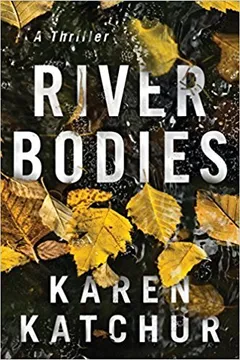


Plot Summary
A Body in the Current
On her morning run beside the Delaware, Becca Kingsley spots John Jackson, the older family friend who has watched her from across the river for years. His camouflage clothes are wet, and a glove covers one hand. She cannot explain why his stillness unsettles her. Farther along, something heavy drifts near the pedestrian bridge, but she cannot make herself cross to investigate.
John has just shot a young man in the woods, stripped and field-dressed him, then released his body into the river as a warning from the Scions, the motorcycle club that controls his life. He watches Becca from the opposite bank, then vanishes into the trees. Neither knows yet how much the morning has exposed.
The opening makes looking and not looking equally consequential. Becca notices details but cannot yet assemble them; John counts on the river to carry away evidence while choosing to watch her instead of fleeing. The water is both a physical route for the corpse and a boundary between the lives Becca has built and the town she left. His decision to let her see him creates the story's first dangerous contradiction: the man who has quietly watched over her may also be the person she most needs to fear.
The Call Across the River
At home, Becca finds Matt Goode, her patent-attorney partner, returning from a night out after a major court victory. His account of celebrating with a flirtatious client does little to ease her suspicion that he has been unfaithful before. A strange, coughing caller from Pennsylvania deepens her unease, and a message from her mother finally draws her back to Portland: her estranged father, Clint, is dying of cancer.
Becca delays facing him until a veterinary surgery is finished, then arrives to find him frail and dependent on Jackie, his longtime companion. When Clint manages only to say John's name, Becca cannot tell whether she has heard him correctly. She leaves Matt and Romy behind and stays in her childhood home.
Becca's return is not a clean choice between a bad relationship and a family duty. She has learned to manage uncertainty by keeping emotional distance, but Matt's evasions and Clint's failing body make that strategy impossible. Her work as a veterinarian gives her a practical role in emergencies, while her own family's distress leaves her unsure how to act. Clint's single mention of John links the new crisis to an older, unnamed history before Becca is ready to examine either one.
A Second River Body
The corpse Becca glimpsed is recovered beneath the pedestrian bridge. State Police detective Parker Reed, her childhood friend, leads the investigation and learns that the victim was shot in the chest, gutted like hunted game, and dumped in the river. The method recalls a 1994 unsolved murder from the same town, whose victim was also shot and field-dressed.
Parker meets Becca near the scene after more than a decade apart; she learns he is now a homicide investigator, while he learns she has returned to care for Clint. He cannot discuss the case, but the old similarities make the discovery feel less like a random river tragedy and more like a crime revived. Becca agrees to meet Parker again.
Parker's case turns the river from a local hazard into an archive: the new body's injuries point directly toward a buried investigation. His professional return to Portland also reopens his personal connection with Becca, but his refusal to share details places him on the same side of secrecy as her father. The repeated method matters because it converts an apparently isolated killing into a pattern, while the town's habit of looking away threatens to make that pattern difficult to prove.
The Girl Sent Away
Becca's childhood memories explain why John's presence has always carried both comfort and danger. He once gave her a stray cat when she needed a companion, while her father, Clint, taught her to shoot and expected obedience without explanation.
As a teenager, Becca wanders into Sweeney's Bar after seeing Parker kiss another girl. Two Scions begin dragging her toward the door, but John intervenes and drives her home. Clint responds not with gratitude but fury: he orders Becca to pack for boarding school, refusing to explain why John is forbidden territory.
Becca leaves believing her father has punished her for trusting the wrong person. Years later, she still cannot separate her resentment of Clint from her longing for the friend who once made her feel safe.
The memory complicates the simple roles of protector and threat. John acts decisively when Becca is vulnerable, while Clint's protection takes the form of removal and silence. To a teenager, the banishment reads as punishment; to the adult Becca, it remains an unexplained rupture that shaped her distrust of both men. The cat, the gun lessons, and John's rescue are concrete acts of care, but none can undo the emotional cost of a father who refuses to explain what he fears.
The Scions' Convenient Alibi
The murdered man is identified as Judd Cafferty, a New Jersey criminal connected to the Scions' weapons business. John had killed him after Cafferty skimmed from the club and hurt Candy, Beth Jackson's niece, whose bruised face and drug use trouble John.
Candy storms into the club meeting and accuses her uncle of killing the man she loved; John lets her strike him rather than deny it. The club, led by its aging senior member Hap, protects John and treats the killing as necessary business.
It has also staged a public disturbance so John can appear on an arrest report and claim he was jailed during the murder. Chief Toby Bryant eventually admits John's name was added to the report after the fact, giving Parker reason to doubt the club's convenient alibi.
John's violence is framed as both a personal response to Candy's suffering and an act demanded by a criminal organization. That double motive lets him call the killing loyalty, even as Candy's grief exposes the human cost of his choices. The forged alibi shows how the Scions' power extends beyond their meetings and weapons: they can enlist local authority in making a false version of events appear ordinary. Parker must investigate not only a killer but a community practiced in concealment.
Blood Beneath the Trail
Parker invites Becca to fish at his cabin and asks whether Clint might help with the investigation. Their old ease returns briefly, but Parker's request makes her wonder if he wants her or access to her father. Walking with Romy near the river, Becca finds the edge of the crime scene, including cut police tape and trampled ground.
Parker arrives and orders her away, explaining only that investigators are dragging the river. The search confirms the killing happened on the Pennsylvania bank, where blood and discarded remains point to the place the body was prepared. Becca realizes that John, a hunter and Scion, stood by the water before the corpse surfaced. She runs from the scene, shaken by what that connection might mean.
The physical trace of the crime makes Becca's private suspicion harder to dismiss, while Parker's refusal to explain forces her to interpret what she sees alone. Her instinct as a veterinarian is to notice bodily evidence, but here observation implicates a person she has trusted. The scene also shifts the investigation's geography: the river did not simply deliver a body from elsewhere. It concealed a local act, tying the town's familiar landscape to the violence it has tried to keep out of sight.
The Kiss and the Warning
Becca waits for Parker at the diner, then follows him home after meeting retired detective Rick Smith, who worked the 1994 murder. At Parker's cabin, their long separation finally gives way: he explains that he searched for her after Clint sent her away, and that he later sought women who resembled her.
Becca tells herself she came to talk about the case, but she and Parker sleep together. As she drives home, John pulls alongside her in his motorcycle and watches her through the window. The encounter feels less like a greeting than a warning. Becca has not yet told Parker she saw John at the river, and now she fears that telling him could put both men on a collision course.
The intimacy offers Becca a glimpse of the life she might have had with Parker, but it arrives before either has established trust in the present. Her silence about John is not merely a withheld clue; it reflects how long she has survived by compartmentalizing painful knowledge. John's appearance outside her car turns that private choice into immediate danger. The moment joins desire and threat without making them equivalent: Parker asks her to share a past, while John silently signals that he is monitoring her present.
The First Shot
Parker's review of the 1994 file reveals that the first river victim was shot with a .30-06 rifle, then gutted and dumped. John's memories supply the hidden event: his father, Russell, had trapped a man the club considered a traitor, but Russell's rifle failed. John shot the man instead.
In a dissociated state, he treated the corpse like an animal and helped dispose of it with Hap. Becca, meanwhile, begins recovering her own childhood memory of finding John in the barn with a bloodied knife and sweatshirt after her dog Sheba was attacked. John saved the puppy, and Becca mistook the bloody evidence for a deer. Clint then forced her to promise she would tell no one.
The revelation connects the two murders through more than a copied technique. John learned to make a human body fit the hunting ritual that had organized his life, and Russell's demand turned a son's first killing into a test of belonging. Becca's childhood memory shows how adults converted her fear into a family secret rather than helping her understand it. Both characters were made to carry knowledge they could not name, though only John was armed with the power to repeat the violence.
The Paper in the Basement
Matt arrives in Portland hoping to repair their relationship, and Parker comes to question Clint about the old murder. Clint refuses to help, while Becca sees Matt pacing the yard and riding her father's mower as if he belongs there. In the basement, she searches among Clint's lawn-care chemicals and finds a locked box containing a police note dated 1994.
It records that an unidentified witness last saw the victim wearing a blue sweatshirt and jeans, matching the clothes Becca remembers at John's feet. The discovery makes her childhood memory harder to dismiss as confusion. When Clint sees the note, he becomes agitated and falls from bed. Becca cannot get the explanation she needs from him.
Clint's basement materializes the habits that defined his family: control the lawn, lock away evidence, and ask a child to forget what she saw. Becca's discovery does not yet prove John's guilt, but it gives her memory an external anchor and exposes her father's concealment as more than personal shame. Matt's effort to make himself useful echoes Clint's domestic routines, helping Becca recognize how attraction and familiarity can disguise patterns she no longer wants to repeat.
A Daughter's Last Morning
As Clint's condition worsens, Becca stays beside him through the night while Jackie manages his pain. Becca presses him about his betrayals, and he finally admits that his authority as police chief fed his selfishness and damaged his marriage. He does not explain the old murder or the deal he made with Russell.
By morning, Clint has died, leaving Becca with more questions than answers and a childhood memory she can no longer keep buried. She takes the small Ruger he taught her to use and leaves for the woods. The gun is both a practical safeguard and the last lesson he gave her, though she does not yet know whether she can use it against John.
Clint offers an honest account of his infidelity, but not the explanation Becca most needs. His partial confession distinguishes remorse from repair: naming his selfishness cannot restore the truth he withheld or the time he lost with his daughter. Becca's decision to take the Ruger turns her father's old instruction into something newly independent. She is no longer carrying the weapon simply because Clint said she should; she must decide what responsibility to take for the knowledge he left behind.
Three Guns at the River
Becca runs to the river, following the route that leads back to the place where John watched her before Cafferty's body surfaced. John waits nearby with a .30-06, and Hap arrives with another rifle, insisting that Becca must be killed to protect the club. Becca raises Clint's Ruger while Romy guards her.
She tells John that Clint is dead and that she will give Parker the truth. John lowers his weapon rather than shoot her, but Hap keeps his aim fixed on Becca. The guns fire. Hap falls at the water's edge, and John turns away without harming Becca. She does not know whose shot struck Hap, but understands that John's choice has broken his loyalty to the club.
The confrontation makes loyalty visible as a choice rather than an inherited identity. John has spent his life obeying the Scions, yet he cannot repeat Russell's coercion by killing Becca. Hap's weapon turns the club's abstract demands into a direct threat, while Becca's Ruger gives her a chance to act without making her invulnerable. The river witnesses a reversal: John once used it to erase a victim, but now he refuses to make Becca another secret carried downstream.
The Alibi Falls Apart
Becca reaches Parker's cabin and tells him about the barn, her father's hidden note, and the confrontation by the river. Parker cannot bury her account, but promises to protect her while he investigates.
Rick arrives with the cup and spoon John discarded at the farmers market; their prints match the partial print lifted from the ammunition casing. The evidence gives Parker grounds to move against John, while Becca explains that Hap is dead and she dropped the Ruger on the way to the cabin.
As officers surround John's property, he removes the Scions' patches from his leather cut and sets aside the life he inherited. He refuses to surrender. Instead, he kills himself with the rifle, ending the immediate threat and leaving Becca to face the consequences.
The case turns on ordinary objects and a witness's willingness to stop protecting the past. A discarded tasting cup supplies physical proof, while Becca supplies the history that explains why the evidence matters. Parker's promise to protect her coexists with his duty to record what she knows, a tension he cannot solve through affection alone. John's suicide is not a clean moral resolution: it prevents his arrest and silences him, while leaving the people he harmed to assemble meaning from what remains.
Ashes and Open Water
After the police operation, Becca returns to Clint's house and learns from Jackie that the unidentified witness in his old notes was Jackie herself. As a young stripper, she had last seen the 1994 victim at a club; Clint hid her statement, and she never pressed him to explain why. Becca tells Matt she will not return to their condo.
She leaves him, collects Lucky the cat, and stays in Portland. When her mother arrives, Becca, her mother, and George scatter Clint's ashes across the yard he once guarded so fiercely. Weeks later, Becca brings Parker a smiling carved pumpkin. He tells her he has been assigned a partner, and they sit together by the water, without pretending the past has disappeared.
The resolution replaces the town's old arrangements of secrecy with imperfect acts of disclosure. Jackie explains why she withheld her testimony, and Becca can understand her without endorsing the concealment. Ending her relationship with Matt is not a simple reward for choosing Parker; Becca first names that she cannot trust Matt and chooses to leave a life that has narrowed around his needs. Scattering Clint's ashes over his untended lawn lets the family remember him without restoring the image he tried to maintain.
Epilogue
Months later, Becca wakes from a memory of hiding the bloodied knife she took from John's barn when she was ten. She returns to the oak tree, counts twelve steps to the left, and digs beneath the stone she once rolled over the hiding place.
The rotten remains of the shirt give way to the old knife. Becca turns it in her muddy hands, understanding that she had carried the missing evidence out of John's barn and buried it herself. Her father's demand for silence had shaped the secret, but her own childhood fear had kept it hidden.
The buried knife changes the meaning of Becca's childhood without undoing the choices made by the adults around her. She was not merely a witness whose memory failed; she physically removed evidence, then concealed it using the same routine her family already knew, burying a dog's toy in a designated patch of ground. The discovery gives her a measure of agency, but it also shows how a child can participate in a cover-up without understanding its stakes. The past was not lost in the river. It was waiting under her own feet.
Analysis
River Bodies treats secrecy as a family inheritance that changes shape across generations. Russell teaches John that loyalty requires violence; Clint responds to danger by burying evidence and controlling what his daughter may know; Becca learns to suppress memories before she can understand them. These choices do not have equal moral weight, but they create a chain in which protection repeatedly becomes concealment. The plot's central question is therefore not simply who killed the men. It is how a community decides which truths are safe enough to tell, and who is forced to carry the cost when they are hidden.
The river gives this pattern a physical form. It crosses state lines, carries bodies, and preserves the memory of earlier crimes through repeated discoveries. Its presence also marks Becca's emotional geography: she once crossed away from Portland to escape her father's control, then returns and finds that distance has not dissolved the past. Fishing beside Parker offers a different way of inhabiting the same landscape, one based on attention rather than domination.
Becca's work as a veterinarian sharpens the novel's contrast between repair and responsibility. She can operate on an animal and see the result of her action, but human relationships resist such clean interventions. Her final movement is not toward a perfect cure. She ends a relationship she cannot trust, tells Parker what she knows, and accepts that caring for her father cannot undo his choices. The buried knife makes that reckoning literal: evidence survives even when a child is ordered to forget. Memory alone is fallible, but material traces and honest testimony can interrupt the repetition that silence protects.
Review Summary
River Bodies receives mixed reviews, averaging 3.78/5. Many readers praise Karen Katchur's evocative writing style and vivid sense of place along the Delaware River. The book is widely noted as more of a character-driven relationship study than a traditional thriller, with reviewers frequently pointing out that the killer's identity is revealed early. Strengths include atmospheric setting, complex character dynamics, and emotional depth. Common criticisms cite predictability, plot holes, underdeveloped motives, and unmet thriller expectations. Most agree it's an engaging, fast read ideal for fans of slow-burn, character-focused mysteries.
Characters
Becca Kingsley
The returning veterinarianBecca is a skilled veterinarian who finds it easier to repair an animal's body than to confront the damaged relationships in her own family. She has built a life across the river from Portland, where she is not simply known as the police chief's daughter. Her independence is real, but so is her habit of withholding anger until it becomes a wall. She is drawn to the woods, animals, and quiet routines that let her think without being watched. Returning to care for Clint forces her to face the memories she has kept sealed away, as well as the difference between protecting someone and protecting a harmful secret.
John Jackson
The Scions' enforcerJohn is a lifelong outdoorsman and a senior member of the Scions, the motorcycle club that shaped his family and his sense of duty. He is a hunter, a widower, and a man who has spent decades measuring his worth by whether he can be relied upon. His tenderness toward Becca and his affection for his late wife, Beth, sit uneasily beside the violence demanded by the club. John treats loyalty as a moral rule, even when that rule asks him to act against his own conscience. His grief and age have made him question the life he once accepted without hesitation.
Parker Reed
The hometown detectiveParker is a state police homicide investigator who grew up beside Becca and the Delaware River. He is steady, private, and more comfortable outdoors than in the public-facing world his job requires. His return to Portland is professionally motivated, but his old bond with Becca makes the case difficult to keep impersonal. Parker believes in evidence and procedure, even when his loyalty to the town and his wish to protect Becca pull him toward silence. He has worked to become sober and to understand the man he was when he relied on alcohol to feel confident. Fishing remains one of the few places where he can stop performing competence.
Clint Kingsley
The guarded former chiefClint is Becca's father and Portland's retired police chief. In Becca's childhood, he could be commanding and affectionate, then distant or unfaithful without explaining himself. He values discipline, marksmanship, and a carefully maintained lawn, habits that reveal his appetite for order. His relationship with his daughter is burdened by what he refuses to tell her, and his protective instincts often take the form of decisions made without her consent. Even as illness strips away his physical authority, he remains a difficult figure for Becca to approach because affection and resentment have grown together.
Matt Goode
Becca's polished partnerMatt is a successful patent attorney whose charm and immaculate appearance conceal a strong appetite for attention. He is generous with money and can be tender toward animals, as when he rescued the stray cat he named Lucky. He also expects closeness on his terms and evades Becca's questions about his nights away. Matt's polished life offers Becca comfort and access to a world she could not afford alone, but that comfort comes with a cost: she has learned to doubt her instincts in order to preserve the relationship.
Jackie
Clint's steadfast companionJackie is Clint's companion and caregiver, a former dancer who later trained as a nurse. She is practical in a crisis and willing to ask Becca to help even when the request is uncomfortable. Her loyalty is neither naïve nor selfless in a simple way; she understands Clint's flaws and chooses to remain connected to him. Jackie also carries her own reasons for keeping quiet about what she witnessed in Portland, which gives her sympathy for secrets without making secrecy harmless.
Hap
The Scions' elderHap is the oldest and most respected member of the Scions, a longtime friend of Russell and a mentor to John. He speaks for the club when its members face danger and believes its survival requires loyalty above personal doubt. Age has not diminished his authority, though his health and years of hard living are beginning to show. Hap understands how to make a group's demands feel like a family obligation.
Russell Jackson
John's hard-edged fatherRussell is John's father, a Vietnam veteran and an influential member of the Scions. He teaches his son to hunt, to endure discomfort, and to put the club before himself. His conflict with his stepbrother Clint reaches into the next generation, binding Becca and John to decisions made by men who refuse to explain themselves. Russell's idea of principle is severe: loyalty matters, and those who threaten the club may be treated as enemies.
Beth Jackson
John's remembered wifeBeth was John's wife for fifteen years and remains central to how he measures tenderness and loss. She was well read, intellectually curious, and capable of entering the Scions' rough social world without looking down on its members. Her illness taught John that love cannot erase another person's private suffering. Her warmth and frankness continue to challenge his assumption that loyalty to the club is the same thing as caring for a family.
Candy
The grieving nieceCandy is Beth's niece and John's relative through marriage. She is young, vulnerable, and caught in a destructive relationship with a man whose violence and drug use have damaged her. Her grief makes her confront John and the Scions directly, even though she understands how dangerous that can be. Candy exposes the distance between the club's language of family protection and the harm its members allow inside their own circle.
Toby Bryant
The compromised chiefToby is Portland's police chief, promoted after Clint retired. He wants to see himself as a decent public servant, but the Scions' influence and the town's long habit of accommodation test his boundaries. Toby is less commanding than Clint and knows it; his insecurity helps the club pressure him into choices he would rather describe as unavoidable. He offers Parker warnings, though not always the clean truth the investigation requires.
Rick Smith
The retired investigatorRick is a retired detective who worked the first river-body case and never stopped wondering what Clint had concealed. He is experienced, skeptical, and alert to the ways small-town fear can make witnesses disappear. Rick's persistence gives Parker a link to the old investigation, while his bluntness contrasts with the careful speech of Portland's residents. He knows that a case can remain open in a detective's mind long after the official file has gone cold.
Jane Kingsley
Becca's distant motherJane is Becca's mother and Clint's former wife. After years in an unhappy marriage, she leaves Portland and builds a new life with George in San Francisco. She encourages Becca to confront her father before it is too late, while recognizing that her own presence could complicate their final chance to speak. Jane's gentleness is not the same as passivity: she eventually chooses to leave a marriage that had trained her to keep the peace.
Romy
Becca's trusted dogRomy is Becca's German shepherd and constant companion on runs through the woods. Alert and affectionate, she reads the people around Becca through scent and behavior, offering a kind of uncomplicated trust that Becca rarely finds in human relationships. Romy also makes the forest feel like a lived-in place rather than a backdrop, accompanying Becca through both ordinary routines and dangerous discoveries.
Vicky
Becca's clinic allyVicky is Becca's veterinary-clinic colleague and closest friend outside the animals she cares for. She helps prepare patients for surgery and notices when Becca is troubled, even when Becca insists she is fine. Her concern gives Becca one dependable connection to the life she has built across the river.
Plot Devices
The Delaware River
A moving boundaryThe river separates Pennsylvania from New Jersey while connecting Becca's childhood home to the life she has built across the water. Its rapids can hide a body, complicate a search, and make a person on one bank difficult to hear from the other. Parker and Becca also associate the river with fishing, childhood, and private reflection. Because it holds both the town's pleasures and its violence, the river becomes an active part of the mystery rather than mere scenery.
Field Dressing
A killer's signatureBoth river victims are shot and cut open in a manner associated with dressing hunted animals. The method links the 1994 murder to the present killing and directs Parker toward hunters familiar with the woods. For John, the ritual also carries personal meaning, joining his upbringing in the wilderness to the club's demand for violence. What first appears to be a gruesome flourish gradually becomes the clue that connects two different moments in the same town.
The Arrest Report
A manufactured alibiThe Scions stage a public disturbance so John can appear to have been arrested and jailed during the latest murder. The club relies on the police record to make a false timeline look official, and Toby's involvement exposes the pressure local law enforcement faces. Parker spots the problem when John's name appears to have been added after the other arrests. The report represents the town's broader habit of turning a suspicious arrangement into an accepted fact.
Clint's Hidden Note
A buried witness accountClint keeps a handwritten 1994 police note in a lockbox in his basement. It records that an unnamed witness last saw the first victim wearing a blue sweatshirt and jeans, details that match Becca's childhood memory of bloody clothing in John's barn. The note gives Becca's recollection an external point of comparison and shows that Clint concealed information rather than resolving the mystery. It also leads her toward Jackie, the witness whose reason for silence was different from Becca's.
The Buried Knife
A child's hidden evidenceAs a child, Becca takes a bloodied knife from John's barn and hides it beneath a shirt near the oak tree, fearing the trouble that will follow if adults discover it. She later buries it under a stone, using the familiar routine of hiding dog toys as cover. The knife remains outside the official investigations, its absence helping the original case stay unresolved. In the epilogue, Becca uncovers it and recognizes how fear and adult pressure shaped her part in the concealment.
Download PDF
Download EPUB
.epub digital book format is ideal for reading ebooks on phones, tablets, and e-readers.








