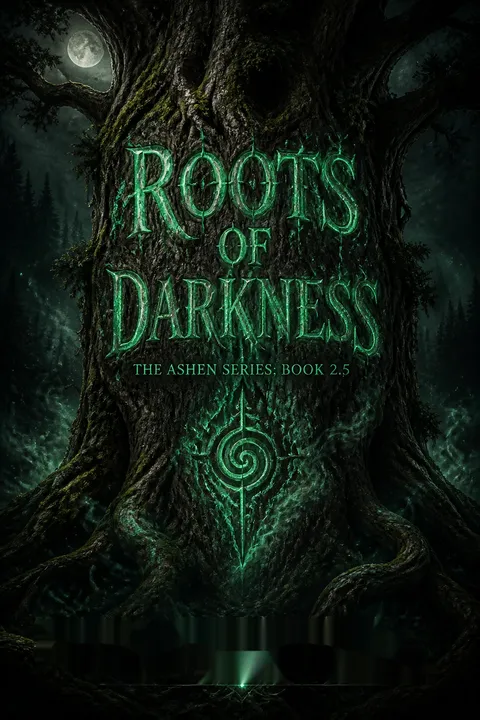


Plot Summary
The Crew After Ilías
In Istré, Hekla has inherited command of the Bloodaxe Crew while its leader, Reynir, is away protecting Silla. The change comes amid grief: Ilías is gone, his brother Gunnar has shut himself away, and Sigrún keeps her distance from strangers. Outside the town, a mist with the pulse of a heartbeat has taken people from isolated farms.
The King’s Klaernar sent to investigate were found dead, bound to pillars and marked with a strange symbol. Hekla wants to search the woods, but Istré’s chieftain, Loftur, dismisses her proposals and carries on with a week of Winter Nights feasting. A letter announces reinforcements from House Hakon. Hekla hopes their arrival might finally move the investigation forward.
Hekla’s first crisis is both practical and relational. The missing people demand action, but the people who would normally share the work are either grieving or absent, leaving her to lead without the reciprocal trust that made the crew function. Loftur’s refusal to hear her is not simply an obstacle to solving the mystery; it recreates the gendered dismissal she has learned to resist. Her competence is clear, yet she must keep proving it to men who control access and authority. The dead Klaernar and the recurring symbol establish a mystery larger than a predator hunt, while the festival shows how denial can masquerade as communal hope.
The Fox at the River
The night before the reinforcements arrive, Hekla watches Istré’s drunken fighting games, barred from entering by Loftur. A red-cloaked stranger defeats the town blacksmith while clearly holding back.
When spilled ale drives Hekla away from the crowd, she finds the stranger at her quiet stretch of riverbank and challenges him. Their sparring gives her the worthy opponent she has missed, and her prosthetic arm’s detachable trick sends him tumbling into the shallows. Laughter turns into desire.
They agree to use private names, Fox and Lynx, and keep their real identities unknown. Hekla breaks her rule against spending the night with a lover. By morning she has escaped his room, only to discover the stranger is Eyvind Hakonsson, the commander sent to take charge of the job.
The river encounter lets Hekla choose pleasure and risk on her own terms. Combat is the language in which she first trusts the stranger: he recognizes her skill rather than treating her as a novelty, and she can answer his strength with wit and the practical ingenuity of her prosthesis. Yet the secrecy that protects her from judgment also creates a trap. By refusing names, Hekla can briefly experience intimacy without the social consequences attached to it. Dawn collapses that separation. The man she met as a rival is also the leader who will evaluate her in public, forcing her to confront how easily private vulnerability can become professional exposure.
The Commander in Red
At the mead hall, Hekla recognizes Eyvind before he introduces himself, then has to present the investigation to him and his retinue as though they were strangers. She describes the mist’s limits, the empty farms, the altered animals, and the slain Klaernar.
Eyvind chooses to inspect a farm already examined and forbids entry into the woods. He backs Loftur’s plan to hold the feast, citing the chieftain’s standing with his own father. In private, he promises to try persuading Loftur to investigate the first attack, but asks Hekla to cooperate.
She agrees cautiously. The next morning, Thrand, Eyvind’s second, dismisses her challenge because she is a woman. Hekla beats him in hand-to-hand combat, making the retinue acknowledge her strength before they ride to another farm.
Eyvind’s authority initially looks like a solution to Hekla’s isolation, but his first decisions reveal the limits of that hope. He has tactical patience and political access, while she has field knowledge that the men around him repeatedly interrupt. His public deference to Loftur makes Hekla’s intimate knowledge of him feel useless, even dangerous. The private agreement offers a narrow opening, though it asks her to tolerate the same delay she has already endured. Her fight with Thrand is more than a display of strength: she makes the retinue’s assumptions costly, turning her body from an object of scrutiny into evidence of her professional authority.
The Spiral Stave
At the Braksson farm, Hekla spots a Spiral Stave carved into a tree at the forest’s edge. She slips away from Loftur’s inspection and follows more marks into a wood where the small plants have withered, though the larger trees still stand. In a green clearing, an enormous tree gives her a rush of memories that are not her own: a living forest, then a consuming force draining it into dormancy.
The distant heartbeat grows louder. White mist surrounds Hekla, invades her senses, and begins to break her will. A huge, luminous grimwolf appears, drives the mist back, and leaves her unconscious. Eyvind finds her feverish and carries her to Istré. After days in bed, she wakes to Gunnar and Sigrún at her side, ready to share the burden again.
The forest encounter changes the mystery from a pattern of attacks into an ecological catastrophe. Hekla experiences the woods as a network of interdependent life, then feels that system being stripped of nourishment by a force with no reciprocal purpose. The vision is frightening partly because it makes her body a site of invasion: the mist does not merely threaten to kill her but tries to remake her agency. The grimwolf’s intervention introduces a counterforce without explaining it, leaving survival dependent on more than Hekla’s combat skill. Her recovery also marks a relational shift. Gunnar and Sigrún recognize that their grief has left her carrying the crew alone, and their renewed commitment makes her next risks less solitary.
Kritka’s Unwanted Gift
After Hekla returns to the investigation, a red squirrel called Kritka appears and guides her, in a strange dreamlike journey, to the forbidden Hagensson farm. There she breaks into a locked barn and finds the missing families chained inside, changed into draugur with gray flesh and burning red eyes.
Their wounds, collars, and food stores show that someone has been keeping them there. Hekla realizes Loftur concealed the victims while hoping his promised feast would restore them. The mist’s heartbeat returns before she can escape.
A torch keeps it from reaching her, and the moonlight makes it recede, but her horse has been transformed. Hekla kills the creature after a brutal struggle, then walks through the night carrying the knowledge that the mist can remake people and animals alike.
The barn makes Loftur’s secrecy morally legible without making it harmless. He has hidden the victims because he cannot accept that the people he loves may be beyond recovery; his ritual is a desperate attempt to convert grief into a promise of repair. Hekla sees the cost of that hope in the chained families and in the child’s toy among them. The revelation also clarifies the threat’s method: it consumes existing life and repurposes it. Fire and moonlight become practical forms of resistance, but neither prevents the loss of Hekla’s horse. Her act of killing it is a grim test of care, since mercy now requires destroying the familiar body the mist has corrupted.
Dismissed Before the Crew
Eyvind finds Hekla the next morning, and she reports the draugur, the mist’s transformations, and Loftur’s concealment. Instead of surprise, Eyvind shows that he already knew about the barn: his father sent Konal to perform old rites during the coming double black moon, hoping to cure the captives. Hekla tells Eyvind that the mist is deceiving Loftur, but Konal insults her and Eyvind has her removed from the job in front of his men.
He claims her defiance has left him no room to maneuver. Hekla returns to the inn humiliated and ready to abandon Istré. Gunnar and Sigrún refuse to leave her to face the crisis alone. Together, they connect the mist’s vulnerability to the moon and fire, then begin planning how to save the townspeople.
Eyvind’s dismissal is painful because it joins personal disappointment to institutional exclusion. Hekla has brought him evidence that should alter the investigation, yet his family’s secret agenda has already shaped what information he shares and what risks he permits her to take. Konal’s attack on her credibility is bluntly gendered; Eyvind’s response is subtler, using command procedure to impose the same silencing. Hekla’s near-retreat shows the psychological cost of being publicly discredited after surviving a real threat. Gunnar and Sigrún’s return prevents that injury from becoming isolation. Their trust does not erase her anger, but it gives her a team with which to act independently.
A Plan Beneath the Walls
Hekla and her two Bloodaxe companions decide that the approaching double black moon makes evacuation more urgent than confronting the mist. She sneaks back into Istré through the river culvert and discovers Eyvind gathering wagons, horses, food, and weapons with Halldora’s help.
He has not dismissed Hekla because he trusts Loftur’s ritual; sending her away bought time to prepare without alerting Loftur and Konal. Eyvind admits he has been listening to her, though his deception has already damaged their trust.
Hekla accepts his supplies and lays out her plan: Eyvind will guide residents to safety, while she and her allies prepare a fire barrier to contain the mist. Eyvind agrees to the division, and Hekla returns to the town ready to lead the defense.
The secret evacuation complicates the meaning of Eyvind’s betrayal without canceling it. He has acted against his father’s plan, but he chose to protect the operation by sacrificing Hekla’s standing and leaving her to believe he had rejected her evidence. Their renewed cooperation is therefore practical before it is intimate. Hekla does not need to forgive him in order to use the resources he has gathered. More importantly, she defines the assignment herself: protect people first, defeat the mist only if possible. Her leadership becomes collaborative rather than solitary, with Eyvind managing the residents and Hekla directing the defense.
The Feast Turns Against Loftur
Under the moonless double black sky, Loftur and Konal lead Istré through offerings of weapons, meat, and mead, believing their rites will heal the chained families. When the mist’s heartbeat reaches the town, Loftur reveals that he has been bargaining with the force in the woods, not receiving instructions from a god.
The citizens panic, and Eyvind directs them toward the prepared wagons. Hekla lights torches on the stockade wall; the flame repels the mist as it pours into Istré.
Once it passes, Gunnar’s pitch-soaked trail and the crew’s timing help trap it in a ring of fire. Sigrún aims a flaming arrow at the dais, but the shot falls short. Turned wolves, bears, draugur, and other creatures emerge through smoke, forcing Hekla’s small defense into close combat.
The feast transforms private delusion into public danger. Loftur’s confession shows that his faith has become transactional: he has offered the town’s provisions and rituals in exchange for the restoration of loved ones. The mist exploits precisely that desire, turning the chieftain’s grief into a threat to everyone he meant to protect. Eyvind’s evacuation gives the villagers a route out, while Hekla’s fire plan converts a vulnerability into a temporary boundary. Yet the boundary is costly and unstable. Sigrún’s missed shot and the attackers’ arrival make clear that preparation cannot remove uncertainty. The scene places leadership under pressure: people must be moved while the threat is already among them.
Fire Inside the Ring
As Turned creatures throw themselves onto the flames to open gaps, Hekla and the remaining fighters struggle to keep the barrier intact. Eyvind returns with his retinue and sends fire from his hands into the failing wall, revealing that he is a Galdra Ashbringer.
Hekla holds off attackers beside him, then enters the ring to draw the mist’s attention while Eyvind turns his power on the pitch barrels and dais. He and his men bring the structure into a devastating blaze. The blast destroys the mist’s hold over the square and throws Hekla down.
Eyvind shields her with his body, and both survive, though fire consumes Istré’s buildings. The evacuated townspeople are beyond the flames. For the first time, Hekla and Eyvind meet as themselves rather than as the Fox and Lynx.
The climax turns the story’s earlier forms of protection into a collective defense: Hekla’s tactical courage, Sigrún’s archery, Gunnar’s preparation, Eyvind’s magic, and the retinue’s return all matter. Hekla’s decision to enter the ring is not simply self-sacrifice; she uses the attention she can command to create the opening Eyvind needs. His concealed power then revises her understanding of his capacity without making his earlier choices disappear. The destruction of Istré is an ambiguous victory. The mist is defeated in the immediate crisis and the people escape, but the town itself is lost. Survival here is not clean triumph; it is the costly result of choosing lives over property and reputation.
Kopa, Not Courtship
Outside the burning town, Hekla reunites with Gunnar and Sigrún, and the survivors travel to a nearby village. While recovering, she admits to herself that her feelings for Eyvind have changed. Gunnar then asks her to marry him; Hekla cares for him but cannot return the commitment and asks for time.
Before she can seek Eyvind, she overhears that he is already betrothed to Liv, and retreats behind the defenses she had begun to lower. Kritka appears with a final request: its mistress sent the Spiral Staves to find Hekla, whom the squirrel believes can help stop the mist.
The mist is growing strong enough to leave the woods. Hekla agrees to seek the imprisoned mistress, but first chooses to return to Kopa for reinforcements and warn the others.
The ending refuses to let romantic survival stand in for emotional resolution. Hekla and Eyvind have shared danger and tenderness, but his betrothal exposes how little of his life she knows and reactivates her fear of being made vulnerable without informed consent. Gunnar’s proposal presents a different pressure: the familiarity of shared history cannot create desire on demand. Hekla’s request for time is a partial assertion of choice, even as she avoids the harder answer. Kritka’s appeal then gives her a task larger than either man. By choosing reinforcements before entering the woods, Hekla turns personal hurt into deliberate preparation rather than retreat.
Analysis
Roots of Darkness makes the investigation inseparable from the question of who is allowed to define reality. Hekla sees that the mist is dangerous, that the woods need examination, and that Loftur’s celebration cannot protect Istré. Yet male authority repeatedly reframes her evidence as impatience or instability. The story does not present her anger as a flaw to be cured; it shows the cost of having to make sound judgments in institutions predisposed to distrust her.
The mist’s violence has an ecological logic. It does not simply kill: it drains a living network and turns its former inhabitants into instruments of further consumption. The forest vision, the chained draugur, and Hekla’s transformed horse make this pattern legible at different scales. Loftur’s bargain mirrors the mist in a human register. His wish to restore his kin becomes a willingness to endanger the living, because grief has narrowed his sense of what counts as rescue.
Against that narrowing, the novella sets forms of care that preserve choice. Hekla gives Halldora resources without dictating when she must leave. She supports Gunnar and Sigrún, but learns that protecting them cannot mean carrying every burden alone. Her prosthetic and combat skill likewise resist a simple narrative of overcoming: they are tools she has incorporated into a life shaped by violence, not proof that injury has made her stronger by itself.
The romantic plot tests whether intimacy can coexist with autonomy. Hekla’s desire for Eyvind does not dissolve her need for honesty, and his protective actions do not erase the humiliation of his decisions. Gunnar’s proposal shows that affection and compatibility are not the same as consent. The ending therefore gives Hekla no completed romance or final victory over the forest. It gives her a choice: gather help, return to the source of the danger, and continue on terms she has begun to set herself.
Review Summary
Roots of Darkness receives high praise for its rich world-building, complex characters, and engaging plot. Readers appreciate Hekla's character development, the exploration of feminine rage, and the novella's connection to the larger Ashen series. Many find it a perfect companion to the series, offering deeper insights into side characters. The Viking-inspired setting and magical elements are well-received. While some readers found Hekla's mindset challenging, most consider it a compelling addition to the series, eagerly anticipating the next installment.
People Also Read








Characters
Hekla
Scarred field commanderA Bloodaxe mercenary known as Rib Smasher, Hekla is a skilled fighter with an above-elbow amputation and a specialized prosthetic she has learned to use as both tool and weapon. She prizes independence because experience has taught her that trust can expose her to control and harm. Her bluntness is often judged as temper, especially by men who resent her authority, but it also lets her name dangers others would rather ignore. She protects people with fewer choices than she has, including women trapped in abusive homes. Beneath her hard-earned defenses, she remains capable of tenderness, humor, and pleasure, though allowing those qualities room feels more dangerous to her than facing an enemy.
Eyvind Hakonsson
Jarl’s politically bound sonEyvind is a second son of House Hakon, sent to Istré with a retinue and the authority to direct the investigation. Charming and physically confident, he also understands that his family’s standing gives him access Hekla does not have. He approaches leadership through diplomacy and calculation, sometimes mistaking control of information for responsible caution. His attraction to Hekla grows from her candor and competence, qualities that unsettle the careful persona he presents to his men. He is shaped by a painful need to be recognized by his father, yet he is not simply obedient: the tension between family expectation and his own judgment drives many of his choices.
Gunnar
Grieving crew brotherA broad, warm-hearted Bloodaxe warrior, Gunnar is Hekla’s trusted comrade and the older brother of Ilías. Their shared history includes sparring, dangerous work, and a casual sexual relationship that both initially keep free of romantic promises. After loss leaves him withdrawn, Hekla tries to care for him even as she shoulders the crew’s responsibilities. His humor and loyalty return gradually, and he becomes one of the people willing to act on Hekla’s judgment. Gunnar’s wish for stability grows from real affection and exhaustion, but affection does not guarantee that he understands what Hekla wants.
Sigrún
Quiet, scarred warriorA petite Bloodaxe fighter with extensive burn scars, Sigrún communicates through sign and has spent years working beside Hekla. Private and wary around strangers, she feels the loss of familiar companions keenly and struggles to trust a new retinue that cannot easily communicate with her. Her reserve is not passivity: she observes carefully, offers direct judgment, and can take on difficult responsibilities when the group needs her. Hekla’s instinct to help sometimes risks speaking for Sigrún, but their bond allows them to acknowledge that tension and rebuild their partnership through mutual respect.
Loftur
Istré’s stubborn chieftainThe aging chieftain of Istré, Loftur controls the town’s response to the disappearances and dismisses Hekla’s repeated requests to search the Western Woods. He is proud of local tradition and determined to restore what he believes his people lost when worship of the old gods was suppressed. His confidence in ritual gives him a way to act in a crisis, but also makes him vulnerable to promises that confirm what he desperately wants to believe. Loftur is neither a detached villain nor a reliable protector; his authority and grief become dangerously entangled.
Konal
House Hakon’s hard adviserKonal is an older adviser who accompanies Eyvind from House Hakon and carries the authority of the jarl’s household. He watches Hekla with suspicion and favors decisions that preserve the hierarchy around him. His knowledge of old rites gives him influence over Loftur’s plans, while his contempt for women who claim authority makes him an obstacle to Hekla’s work. Konal’s severity is not the same as Eyvind’s diplomatic caution: he uses intimidation and convention to police who is permitted to speak.
Thrand Long Sword
Eyvind’s resistant secondThrand is Eyvind’s second-in-command, a large and capable warrior whose confidence is tied to the authority of his position. He initially underestimates Hekla and treats her presence in a war band as a challenge to custom. Her skill forces him to revise that judgment, and his later actions show that he can stand beside people he once dismissed. Thrand’s bluntness makes him an irritant, but it also gives Hekla a clear measure of how the retinue’s attitudes are changing.
Kritka
Uncanny woodland envoyA russet squirrel who repeatedly crosses Hekla’s path, Kritka behaves with an intelligence and persistence that ordinary explanations cannot account for. Its strange messages unsettle Hekla, who is more comfortable trusting the evidence of a battlefield than an impossible voice in her mind. Kritka seems to know the forest’s danger and insists that Hekla has a role in confronting it. Its mixture of urgency and squirrel-like stubbornness makes it both a guide and a disruption to Hekla’s carefully defended sense of what is real.
Reynir Bjarg
Absent Bloodaxe captainKnown to his crew as Axe Eyes, Reynir is the Bloodaxe leader whose absence leaves Hekla in command. His judgment and habits of listening have shaped how the crew works together, and his confidence in Hekla gives her a standard against which she measures the new leadership in Istré. He is also connected to Eyvind through an old friendship, which is why House Hakon enters the investigation. Although away from the action, Rey remains a practical and emotional reference point for Hekla.
Ilías
Gunnar’s younger brotherA Bloodaxe warrior and Gunnar’s younger brother, Ilías is remembered by the crew for his humor and closeness with them. His absence weighs heavily on Gunnar and alters the crew’s sense of itself. Hekla invokes the memories they share not to erase grief, but to find a moment when the surviving companions can laugh together.
Halldora
Barmaid seeking choiceHalldora works at the Hungry Blade and lives with the bruises of an abusive relationship. Hekla gives her money so she can choose to leave when she is ready, offering practical help without demanding a decision. Later, Halldora helps gather supplies for Istré’s evacuation. Her role links Hekla’s personal history to the wider work of protecting women whose danger is often dismissed as private.
Rothna
Hekla’s violent former husbandRothna is Hekla’s former husband, whose abuse shaped her fierce insistence on bodily autonomy and self-protection. Memories of his violence can still intrude when a man’s grip or command echoes their marriage. Hekla’s training and hard boundaries are not innate coldness; they are adaptations built after surviving him.
Plot Devices
The murderous mist
A threat that remakes lifeThe mist announces itself with a heartbeat and advances from the Western Woods, taking people and animals into a force that can alter them. At first, its limits and purpose are unknown, so Hekla’s investigation depends on observing attacks, collecting clues, and challenging Loftur’s assumptions. Its transformation of living beings into hostile creatures expands the danger beyond disappearance, while its sensitivity to flame and moonlight supplies the practical clues behind the defense of Istré. Its growing reach also means that the immediate victory cannot be treated as proof that the danger has ended.
The Spiral Staves
A trail into hidden historyThe spiral symbol appears in blood around the dead Klaernar and carved into trees along Hekla’s route through the Western Woods. The repetition makes it both evidence and invitation, connecting the murders to a place and intelligence that Loftur’s investigation avoids. Following the marks leads Hekla to an ancient tree and later to the forbidden farm. The symbols give the story a detective structure, but their deeper purpose remains beyond Hekla’s knowledge when she reaches the end of the novella.
Fire and moonlight
The mist’s fragile defensesHekla discovers that a torch can keep the mist from engulfing her and that moonlight causes it to thin and withdraw. These observations turn survival into an actionable plan, especially because the double black moon will leave Istré without moonlight during the feast. Hekla and her allies use flame to hold the mist inside a perimeter while preparing a more destructive attack. The device makes the climax depend on tested evidence rather than a sudden magical solution, while the approaching darkness gives their preparations a precise deadline.
The double black moon
A deadline disguised as ritualThe rare alignment of the sister moons creates a night without moonlight, removing one of the mist’s known restraints. Loftur interprets that night as the culmination of a religious feast intended to restore the old gods and heal the transformed captives. Hekla recognizes that the celebration may instead give the mist an opportunity to spread. The approaching event concentrates the conflict: while the town prepares offerings, Hekla must organize evacuation and defense before the darkness arrives.
Hekla’s prosthetic claws
Adaptation turned into advantageHekla’s specialized prosthetic gives her mobility and a set of retractable claws, but it also requires the kind of practical adaptation others may mistake for limitation. She uses it in combat, removes it strategically during sparring, and relies on its light construction while swimming through Istré’s culvert. During the defense, her sword and prosthetic let her attack in different ways, turning an instrument associated with injury into a deliberate extension of her fighting skill. It is a concrete part of her method, not a symbol that replaces her experience or training.
About the Author
Other books by Demi Winters


Download PDF
Download EPUB
.epub digital book format is ideal for reading ebooks on phones, tablets, and e-readers.








