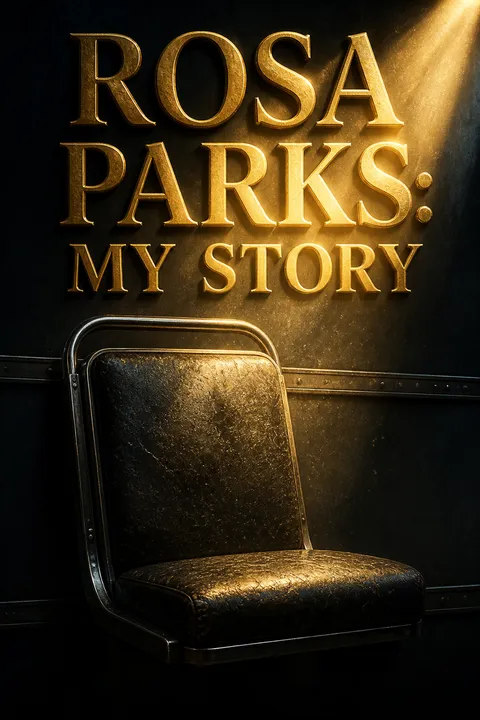


Key Takeaways
Learn dignity early, because unjust rules depend on people accepting less
Dignity was taught at home. Parks grew up hearing stories of slavery, racial violence, and her grandfather’s brutal treatment by a white overseer. Her grandfather taught his family not to accept degrading treatment. Her mother and teachers reinforced the belief that being Black did not make a person less worthy or less capable. These lessons shaped Parks before she became an activist.
Pride carried real risks. At about ten, she picked up a brick when a white boy threatened her. Her grandmother scolded her, not because Parks was wrong to defend herself, but because a Black child could be killed for resisting a white person. Parks later understood the warning as protection, while keeping the conviction that unfair treatment should be challenged.
What's striking is how the memoir holds two truths together: self-respect can resist humiliation, and survival may require caution. The grandmother’s warning is not a lesson in submission. It is a clear-eyed reading of unequal power, passed from one generation to another. That distinction matters whenever courage is praised without acknowledging its cost. Parks’s account suggests that dignity is both an inner standard and a family practice, shaped by what adults teach children about their worth and the dangers around them.
See segregation as a system, not a string of isolated insults
Inequality reached into daily life. In Pine Level, Black children attended a one-room school for only five months of the year, while white children went for nine. Black families had to supply and carry firewood for their school, although public money, including Black taxpayers’ contributions, supported a better-equipped white school. Black children walked while white children rode buses, sometimes throwing trash at them.
The rules were backed by fear. Parks remembers the Ku Klux Klan riding through her community and her grandfather keeping a shotgun nearby in case the family home was attacked. These were not unrelated hardships. Segregated schooling, restricted movement, economic dependence, and racial terror reinforced one another, making unequal treatment seem both normal and difficult to oppose.
The system-level view changes the question from whether individual white people were kind to whether Black families had equal access, safety, and choice. Parks remembers some white neighbors who treated her well, but personal decency could not repair a school system that gave children different resources and time to learn. That distinction guards against a familiar error: using isolated acts of kindness to obscure institutional arrangements. The memoir makes inequality concrete through ordinary details, such as who heated a classroom and who could ride to school.
A celebrated refusal rested on years of organizing and casework
Activism preceded the bus. Parks met Raymond Parks in 1931, when he was helping raise money and find legal support for the Scottsboro Boys, nine Black youths accused of raping two white women. Their trials were rushed, their defense was inadequate, and the case exposed how easily Black lives could be endangered by a racially biased justice system. His work introduced Parks to organized resistance and its risks.
She built practical experience. Parks joined the Montgomery NAACP in 1943 and became its secretary. She recorded cases of discrimination and violence, wrote letters, managed membership records, and helped support people seeking justice. This long, often unglamorous work formed part of the foundation for the 1955 protest. Her refusal was personal, but it took place within a community that had spent years documenting abuses and organizing against them.
The memoir pushes against the tidy story of one isolated act suddenly creating a movement. Parks’s arrest became a turning point because a network already existed: people knew how to communicate, record abuses, seek legal help, and convene meetings. This is a useful model of social change. Public moments are easier to recognize than the relationships and administrative work that make them consequential. At the same time, preparation alone does not guarantee a breakthrough. Organizing creates capacity, but circumstances still shape when that capacity can be used.
Make political rights usable, not merely promised
Registration was designed to exclude. Alabama officials restricted when Black residents could register, used literacy tests, and could reject applicants without explaining why. Parks first tried to register in 1943 and was turned away. She tried again, then made a handwritten copy of her answers on her third attempt in 1945, preparing to challenge the decision if rejected. This time she received her certificate.
The costs accumulated. At age thirty-two, Parks had to pay eleven years of back poll taxes at $1.50 per year, a total of $16.50. She recalls that only thirty-one Black voters were listed in Montgomery, including some who had died. The right to vote meant little if officials could block registration through arbitrary procedures, lost wages, testing, and fees.
Parks’s account shows how a right can be narrowed without being formally erased. The obstacle was not simply whether a person could read or understand the Constitution. Officials controlled access to the test, the judgment of answers, and the timing of registration. In practical terms, this turned a public right into a permission granted selectively. The episode also shows why documentation matters: Parks copied her answers because she anticipated that an official decision might need to be challenged. Procedural fairness is a core part of political equality, not a technical afterthought.
An unplanned act can become a test case when organizers are ready
Parks did not board as a symbol. On December 1, 1955, she took a seat in the Black section of a Montgomery bus. When the driver demanded that Black passengers move so a white man could sit, she remained seated. She was forty-two, not physically exhausted, and had not planned to be arrested or become a legal test case. She later explained that she had grown tired of repeatedly yielding to unjust demands.
Organizers responded quickly. Earlier that year, teenager Claudette Colvin had also refused to give up her seat, but pregnancy made her vulnerable to attacks on her character in the white press. Parks’s established reputation and activism made her a stronger plaintiff. After her arrest, Jo Ann Robinson and the Women’s Political Council circulated 35,000 boycott leaflets, helping turn one arrest into a mass action.
The difference between a spontaneous act and a prepared movement is not a contradiction. Parks’s refusal was not scripted, yet organizers could recognize its political significance and act at once. The episode also complicates the idea that a movement selects its heroes solely for symbolic purity. Leaders weighed how racist audiences might discredit a plaintiff, a calculation that reveals the unfair burden placed on people challenging injustice. Read together, the personal decision and the strategic response show how individual agency and collective organization can amplify one another.
Build the transportation, money, and communication that make protest durable
A boycott needed an alternative. Black residents made up more than two-thirds of Montgomery bus riders, but staying off the buses required a way to reach work and school. Black-owned cab companies initially charged the bus fare. When police threatened the drivers, the Montgomery Improvement Association organized volunteer cars and church station wagons. The system eventually used twenty private cars, fourteen station wagons, and thirty-two pickup and transfer locations.
Daily coordination kept it going. Scheduled rides ran from 5:30 in the morning until 12:30 at night, carrying roughly 30,000 people to and from work each day. Volunteers dispatched cars, churches raised funds, and supporters shared rides or walked. The boycott lasted more than a year despite arrests, job losses, intimidation, and attacks. Moral resolve mattered, but so did the practical infrastructure that let people keep participating.
The transportation network makes collective action look less like a spontaneous crowd and more like a service people depended on. That is an important shift in perspective: participation becomes possible when organizers reduce the everyday costs of joining. Work schedules, distance, money, and safety are not distractions from protest; they determine who can sustain it. The account also suggests why visible unity was powerful. Empty buses demonstrated lost revenue, while the carpool system showed that the community could coordinate around a shared demand.
Use nonviolence as strategy, not as a demand for passivity
Resistance had different forms. Parks grew up believing that speaking firmly, and sometimes defending oneself, could be necessary for survival. She had seen her grandfather resist racial deference and had learned that fear could invite further mistreatment. The movement’s organized nonviolence, associated in her account with Martin Luther King Jr. and inspired in part by Gandhi’s example, was a different approach: disciplined collective protest rather than an individual response to an immediate threat.
Parks valued its effectiveness. She believed nonviolent action helped the movement win major victories by showing the injustice of segregation and mobilizing wider support. But she did not claim that nonviolence was the only acceptable response in every situation. Her qualification matters: the strategy was powerful for a mass movement, while people facing danger still had to make difficult judgments about protecting themselves.
Parks avoids turning nonviolence into a simple test of moral worth. In her telling, it is a collective political strategy, not proof that a person who resists physically is cowardly or ethically inferior. That distinction allows the tactic to be assessed by its purpose and conditions: what can coordinated discipline accomplish that scattered retaliation cannot? Her account also makes room for the unequal burden of restraint. A movement may choose nonviolence for strategic reasons, but people confronting immediate violence should not be reduced to symbols of that choice.
Credit women for the movement's organizing, not only its symbols
Women did essential organizing. Parks served as Montgomery NAACP secretary, helped record cases of racial violence, advised the NAACP Youth Council, and later dispatched cars during the boycott. Jo Ann Robinson and the Women’s Political Council had already protested bus treatment and helped circulate the leaflets calling for the first boycott day. Women’s work connected planning, communication, transportation, and support for families.
Recognition did not match contribution. Parks recalls being one of only two women who regularly attended early Montgomery NAACP meetings. At the 1963 March on Washington, women were kept largely out of the main program, and the wives of male leaders were assigned a separate procession. The movement needed women’s labor, even when its public leadership and historical images often placed men at the center.
This account separates visibility from influence. A speech or photograph is easy to preserve; typing leaflets, maintaining records, and arranging rides are less visible, though a protest may depend on them. The mismatch helps explain why accounts centered on a few prominent leaders can understate how movements function. Parks’s story does not require replacing one heroic figure with another. It invites a fuller picture of leadership as distributed work, while recognizing that women could face marginalization within organizations fighting a different form of exclusion.
Win legal protection without assuming prejudice has disappeared
The boycott changed the law. In November 1956, the Supreme Court ruled Montgomery’s bus segregation unconstitutional, and boycott participants returned to integrated buses the following month. Parks describes the victory as real, but not as a sudden reconciliation. Buses faced gunfire, ministers’ homes and churches were bombed, and harassment continued. Parks and her family moved to Detroit in 1957, partly because they feared for their safety and future prospects in Montgomery.
Rights still needed enforcement. The Civil Rights Act of 1964 and Voting Rights Act of 1965 offered additional protections, but Parks remained concerned about racial violence and discrimination. In her view, changing law could restrain unfair treatment even when it did not change people’s beliefs. Legal victories mattered precisely because they gave people a stronger basis for challenging what prejudice continued to produce.
The distinction between law and belief is not an argument that law is weak. It identifies what law can do: set enforceable limits, provide grounds for complaint, and reduce the power of local officials to decide who deserves equal treatment. But formal change does not automatically produce trust or equal opportunity. Parks’s account is especially useful because it refuses both easy celebration and cynicism. A legal victory can be incomplete and still alter the conditions under which people live and organize.
Turn hard-won memory into opportunity for the next generation
Parks resisted being reduced to one moment. She understood that the bus arrest made her a symbol, but her memoir also records decades of work: voter registration, NAACP casework, the boycott, civil-rights demonstrations, and service in Congressman John Conyers’s Detroit office. Her later life remained connected to the practical needs of other people, including helping constituents find housing.
She invested in young people. In 1987, Parks founded the Rosa and Raymond Parks Institute for Self-Development. She hoped it would help young people continue their education and build skills in communication, economics, politics, and health. The goal reflected what she valued in her own life: the dignity and ambition her family and teachers had encouraged, and the educational opportunities her husband had been denied.
The institute gives the memoir a concrete ending: remembrance becomes a program rather than a plaque. That choice broadens the meaning of legacy. Instead of treating the past as a finished triumph, Parks connects it to capabilities young people need in the present. The emphasis on education and practical skills also echoes the barriers she describes from childhood, when unequal schools narrowed Black children’s options. Commemoration is most useful when it helps people inherit not only a story, but also resources and room to act.
Analysis
The book’s central achievement is to correct the scale of the familiar Rosa Parks story. The bus refusal is the narrative hinge, but it is not presented as a miraculous beginning. Parks traces the habits of resistance through family history, childhood encounters with racial danger, uneven schooling, work, voter-registration campaigns, NAACP casework, and years of organizing. The result is a political biography in which courage is personal but never solitary.
That structure also complicates the public image of Parks as an elderly, tired passenger whose action arrived without context. She is a working woman and experienced organizer, and she explicitly rejects physical exhaustion as the reason she stayed seated. Yet she also says she had not intended to become a test case. The distinction protects two truths at once: her decision was her own, and the movement’s response depended on people prepared to turn an arrest into collective action. The book therefore offers a more useful model of social change than either the lone-hero story or the claim that individuals matter only as symbols.
Its strongest evidence is often administrative rather than dramatic. A handwritten record of test answers, the preservation of abuse reports, thousands of leaflets, and an elaborate ride network reveal the labor that converted grievance into leverage. These details make organizing legible as a craft. They also show that movements must accommodate the material lives of participants, from work schedules to transportation and lost wages.
The memoir’s moral perspective is similarly grounded. Parks supports nonviolent protest as an effective movement strategy without declaring it the sole legitimate response to violence. She celebrates legal victories while insisting they did not erase prejudice. That refusal of simple conclusions is a strength. As a retrospective personal account, it remains one witness’s view, not a complete history of every participant or disagreement. Its value lies in showing how one life connects private memory, institutional injustice, collective strategy, and the unfinished work of equal rights.
Review Summary
Rosa Parks: My Story receives mostly positive reviews for its straightforward, authentic narration of Parks' life and role in the civil rights movement. Readers appreciate learning about her background, experiences with racism, and involvement in activism beyond the famous bus incident. Many find it inspirational and eye-opening, praising Parks' courage and dignity. Some note the writing style is simple but effective. A few reviewers wished for more emotional depth or literary flair, but most recommend it as an important historical account.
People Also Read
Glossary
NAACP
Civil-rights organizationThe National Association for the Advancement of Colored People is the organization Parks joined in Montgomery. Its local branch recorded cases of discrimination and violence, supported people seeking justice, and worked on voter registration and civil-rights campaigns. Parks served as branch secretary, managing records, correspondence, membership payments, and communications with newspapers.
Scottsboro Boys
Nine defendants in a racial injustice caseThe Scottsboro Boys were nine Black young men arrested in Alabama in 1931 after being accused of raping two white women. The memoir describes rushed trials, weak legal representation, and death sentences that were later challenged. Raymond Parks and other activists helped raise money and support their defense, an early connection between Rosa Parks and organized activism.
Women's Political Council
Montgomery women's civic organizationThe Women's Political Council was a Montgomery organization founded in 1946 by women including Jo Ann Robinson. It protested the treatment of Black bus passengers and pressed for changes such as more reliable bus stops in Black neighborhoods. After Parks’s 1955 arrest, Robinson and her colleagues rapidly distributed leaflets calling for a one-day boycott.
Montgomery Improvement Association
Boycott leadership organizationThe Montgomery Improvement Association was formed after Parks’s arrest to coordinate the Montgomery bus boycott. Its leaders organized mass meetings, presented demands to city and bus officials, arranged transportation, and sustained community participation. Martin Luther King Jr. became its president. The organization provided a structure for a protest that reached far beyond Parks’s individual court case.
Highlander Folk School
Leadership and adult education schoolThe Highlander Folk School in Tennessee offered workshops for people addressing labor and civil-rights issues. Parks attended a 1955 workshop on desegregation, where she experienced interracial learning and community life. The school also hosted citizenship education, including classes that helped adults learn basic literacy and prepare to register to vote.
literacy test
Voting registration examinationA literacy test was an examination used by Alabama officials as a condition for voter registration. Applicants could be asked to read, write, and demonstrate understanding of the Constitution. Parks describes officials using the tests and their discretion to deny Black applicants without a clear explanation, making a formal voting right difficult to exercise.
FAQ
1. What is "Rosa Parks: My Story" by Rosa Parks about?
- Personal memoir of Rosa Parks: The book is an autobiographical account of Rosa Parks’ life, focusing on her experiences growing up in the segregated South and her pivotal role in the civil rights movement.
- Detailed context of the bus boycott: It provides a firsthand narrative of the events leading up to and following her refusal to give up her seat on a Montgomery bus in 1955.
- Broader civil rights history: The memoir also covers the broader struggle for civil rights, including the challenges faced by African Americans in education, voting, and daily life.
- Legacy and reflection: Parks reflects on the impact of her actions and the ongoing fight for equality, offering insights into her motivations and the movement’s legacy.
2. Why should I read "Rosa Parks: My Story" by Rosa Parks?
- Firsthand historical perspective: The book offers a unique, personal view of a key moment in American history from the woman at its center.
- Inspiration and empowerment: Parks’ story demonstrates the power of individual courage and the importance of standing up for justice.
- Educational value: Readers gain a deeper understanding of the realities of segregation, the civil rights movement, and the strategies used to challenge injustice.
- Humanizes a historical icon: The memoir reveals Parks as a complex, relatable person, not just a symbol, making her story accessible and moving.
3. What are the key takeaways from "Rosa Parks: My Story" by Rosa Parks?
- Ordinary people can spark change: Parks emphasizes that she was a regular person whose small act of defiance helped ignite a mass movement.
- Systemic injustice and resistance: The book details the daily indignities of segregation and the various forms of resistance, both large and small.
- Importance of community and organization: The success of the Montgomery Bus Boycott was due to collective action, planning, and support from many individuals and groups.
- Ongoing struggle for equality: Parks notes that while progress has been made, the fight against racism and inequality continues.
4. How does Rosa Parks describe her early life and family background in "Rosa Parks: My Story"?
- Roots in Alabama: Parks was born in Tuskegee, Alabama, and raised in Pine Level by her mother and grandparents, who instilled in her a sense of dignity and self-respect.
- Family history of resilience: Her family included former slaves and people of mixed heritage, and their stories of survival and resistance shaped her worldview.
- Early experiences with racism: Parks recounts witnessing and experiencing racial discrimination from a young age, including segregated schools and threats from the Ku Klux Klan.
- Value of education: Despite limited opportunities, her family prioritized education, and Parks’ mother was a teacher who encouraged her learning.
5. What led to Rosa Parks’ act of defiance on the Montgomery bus, according to "Rosa Parks: My Story"?
- Accumulated frustration: Parks describes being tired of giving in to unjust treatment and the daily humiliations of segregation.
- Previous activism: She was already involved in civil rights work, including the NAACP and voter registration efforts, before her arrest.
- Not a planned protest: Parks clarifies that her refusal to give up her seat was not premeditated as a test case, but a spontaneous decision rooted in her sense of justice.
- Context of ongoing incidents: The book details earlier cases of black women being mistreated on buses, and the community’s search for a suitable plaintiff to challenge the law.
6. How does "Rosa Parks: My Story" portray the Montgomery Bus Boycott and its organization?
- Community-wide effort: The boycott was organized by local leaders, including E.D. Nixon, Jo Ann Robinson, and the newly formed Montgomery Improvement Association (MIA).
- Role of women: Women’s groups like the Women’s Political Council played a crucial role in mobilizing support and spreading the word.
- Alternative transportation: The black community set up carpools, used black-owned cabs, and walked to sustain the boycott for over a year.
- Facing opposition: Boycotters faced threats, job loss, violence, and legal challenges, but maintained nonviolent discipline and solidarity.
7. What challenges did Rosa Parks and other activists face during the civil rights movement, as described in "Rosa Parks: My Story"?
- Violence and intimidation: Parks recounts threats from the Ku Klux Klan, bombings, and harassment by police and white citizens.
- Legal and economic reprisals: Activists were arrested, indicted, and often lost their jobs or faced economic hardship for their involvement.
- Internal community divisions: Some black community members were reluctant to participate due to fear or desire to maintain favor with whites.
- Limited legal resources: There were few black lawyers, and those who helped faced their own risks and obstacles.
8. How does "Rosa Parks: My Story" address the broader struggle for voting rights and education?
- Barriers to voting: Parks details the literacy tests, poll taxes, and arbitrary denials that kept most black people from registering to vote in Alabama.
- Personal struggle to register: She describes her own repeated attempts and eventual success in becoming a registered voter.
- Inequality in education: The book highlights the disparities between black and white schools, including shorter school years, poor facilities, and lack of resources.
- Role of activism: Parks and others worked through organizations like the NAACP to challenge these injustices and support legal cases for equality.
9. What role did nonviolence and community solidarity play in the events described in "Rosa Parks: My Story"?
- Adoption of nonviolence: Inspired by Dr. Martin Luther King, Jr. and the example of Gandhi, the movement embraced nonviolent protest as a strategy.
- Collective action: The success of the boycott and other campaigns depended on the willingness of thousands to act together, often at great personal risk.
- Moral and spiritual foundation: Parks emphasizes the importance of faith, dignity, and a sense of justice in sustaining the movement.
- Limits and challenges: She acknowledges that nonviolence was controversial and not always easy to maintain, especially in the face of violence.
10. How does Rosa Parks reflect on her legacy and the ongoing fight for civil rights in "Rosa Parks: My Story"?
- Reluctant symbol: Parks expresses humility about being called the "Mother of the Civil Rights Movement," emphasizing that she was part of a larger collective effort.
- Progress and setbacks: She notes significant legal and social advances, but also ongoing racism, violence, and the need for continued vigilance.
- Commitment to youth: Parks founded the Rosa and Raymond Parks Institute for Self-Development to support and inspire young people.
- Hope and perseverance: Despite challenges, she advocates for love, brotherhood, and the ongoing pursuit of justice and equality.
11. What are some of the most powerful quotes from "Rosa Parks: My Story" and what do they mean?
- "The only tired I was, was tired of giving in." – Parks clarifies that her act was not about physical exhaustion, but emotional and moral fatigue from constant injustice.
- "I was a regular person, just as good as anybody else." – She asserts her inherent dignity and challenges the notion of black inferiority.
- "You may do that." – Her calm response to the threat of arrest reflects her quiet strength and resolve.
- "Everyone living together in peace and harmony and love . . . that's the goal that we seek." – Parks articulates her vision for a just and inclusive society.
12. How does "Rosa Parks: My Story" provide insight into the personal side of Rosa Parks beyond her famous bus protest?
- Family and upbringing: The memoir delves into her childhood, family relationships, and the values that shaped her character.
- Marriage and partnership: Parks describes her supportive relationship with her husband, Raymond, and their shared commitment to activism.
- Everyday struggles: She recounts the economic hardships, health issues, and personal losses she endured throughout her life.
- Continued activism: Even after the boycott, Parks remained active in civil rights, community work, and mentoring young people, showing her lifelong dedication to justice.
Download PDF
Download EPUB
.epub digital book format is ideal for reading ebooks on phones, tablets, and e-readers.








