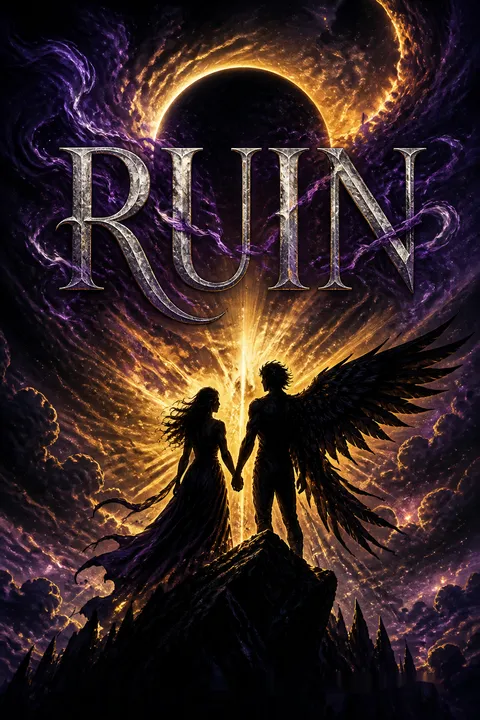


Plot Summary
The Orchard Turns Ash
Oralia has spent centuries confined to King Typhon’s golden kingdom, feared for the dark power left by a daemoni bite in childhood. On her mother Peregrine’s birthday, she asks to spend the day beneath the tree Peregrine once cultivated. Typhon refuses, sending her to revive the kingdom’s barren apple orchard instead.
Oralia’s song brings blossoms and ripe fruit to the branches, but as her magic swells, shadows spill from her and reduce one tree to ash. Above her, a raven watches. Its hidden observer, Renwick, king of neighboring Infernis, recognizes that Oralia can both create life and destroy it. With Typhon’s lands already suffering from Infernis’s blight, her power could decide the fate of both kingdoms.
The orchard makes Oralia’s contradiction tangible before anyone can explain it: the same body that feeds a kingdom can extinguish a living tree. Her power is not simply a gift corrupted by an outside curse; it is an unstable capacity for creation and destruction. Typhon treats that instability as a problem of obedience, ordering her to serve while denying her ordinary freedom. Ren’s distant observation introduces another possibility: the feared darkness may have a purpose beyond the weapon Typhon wants.
A Table of Ashes
At dinner, Oralia’s friend Caston urges Typhon to let her use her life-giving magic to help starving people near the border. Typhon rejects the idea and, in anger, blames Oralia for her mother’s death. The accusation breaks what remains of her trust. Her shadows surge through the room, killing Caston’s beloved Michalis and a servant before Typhon burns the darkness away.
Oralia flees into the night, pursued by soldiers carrying kratus chains. At the ward that has kept her inside the palace grounds, her power cannot break through alone. Ren leaves his raven form, joins his shadows to hers, and tears open an exit. When Oralia tries to stab him, he disarms her and carries her unconscious toward Infernis.
The catastrophe grows out of a cruel system, not a random loss of control. Typhon first denies Oralia the chance to help, then uses her deepest shame to discipline her, making the disaster both foreseeable and devastating. Her flight is therefore more than escape from punishment: it is the first action she takes against a life defined by containment. Ren’s rescue is ethically uneasy. He offers a way out, but he controls her body and silences her fear, repeating the coercion she has just fled even as he protects her from Typhon’s soldiers.
The Bone Castle
Oralia wakes in Infernis, where the souls of the dead travel toward healing rather than serving as the Under King’s army, as Typhon’s court has taught her. Renwick’s castle is built from ancient gods’ bones, and his missing wings survive only as trophies in Aethera. Oralia believes she has been kidnapped by the enemy who once sought her mother’s death.
In the throne room, she reaches out barehanded, hoping her destructive power will kill Ren. It does nothing. The failure exposes her terror and leaves Ren with a clearer reason to keep her close: Typhon may turn her into a weapon. Sidero, a gentle soul in Ren’s court, guides Oralia to the chambers prepared long ago for Peregrine.
The bone castle and the failed touch overturn Oralia’s inherited map of danger without making Ren immediately trustworthy. Infernis is not the torture camp she expects, yet its ruler still takes her there against her will. Her power’s inability to harm him creates an intimate exception to the isolation that has governed her life, but at first that exception feels like helplessness. Sidero’s care offers a less coercive model of contact: Oralia can refuse an offered arm, choose her name, and begin forming a relationship on her own terms.
A Hand in Pyralis
Sidero takes Oralia to Pyralis, where souls confront grief before moving toward healing. When Oralia sees Lana collapsing under her sorrow, she ignores Sidero’s warning not to interfere and holds the grieving soul. Lana’s touch awakens a cherished memory of autumn, and she moves forward in her journey far sooner than expected.
Ren is angry that Oralia has disrupted the process, while Oralia insists that witnessing suffering without offering comfort is wrong. He shows her Typhon’s message promising forgiveness if she returns, but Oralia doubts that home is safe. Ren gives her the journal of her birth father, Zephyrus, and tells her it contains truths she has not been allowed to see.
Oralia’s impulse to comfort Lana is morally generous, but Ren’s objection complicates the easy equation of kindness with harmlessness. His kingdom has built a process around grief, and Oralia changes that process without understanding its costs. Lana’s renewed memory suggests that Oralia’s touch can restore more than physical life, yet the speed of the change leaves genuine uncertainty. Their argument exposes competing forms of care: a ruler’s responsibility to protect a system, and a witness’s refusal to let procedure excuse abandonment.
The Mother’s False Death
Oralia reads Zephyrus’s journal and discovers that he and Peregrine loved each other and planned to escape Aethera before Typhon could claim their child. Renwick confirms the truth: Peregrine survived Oralia’s birth, but Typhon kept her imprisoned and later arranged her death to look like childbirth had killed her. Renwick had tried to guide Peregrine and Zephyrus to safety.
Typhon shot Zephyrus with a kratus arrow, cut off Renwick’s wings, and killed him; Renwick’s immortality brought him back, but each death took part of his soul. Oralia’s belief that she killed her mother begins to crack. Ren offers to teach her the darkness within her, but she refuses, afraid of what it has already done.
The journal transforms inherited shame into political evidence. Oralia has organized her identity around the belief that her birth destroyed her mother, but the record reveals that Typhon shaped both the event and its official explanation. Ren’s history mirrors hers: each has been made to carry consequences created by Typhon’s violence, though Ren also bears guilt for failing to save the people he loved. Oralia’s refusal of training is not simple denial. It is an attempt to retain moral agency when power has repeatedly made her a danger to others.
The Storm Takes Her
As Oralia and Ren begin tending Infernis’s dead ground, their arguments soften into a tentative alliance. Ren urges her to learn her magic because Typhon wants to use it, but she still doubts her ability to control it. Aelestor, the storm god Typhon intends to marry her to, appears in Infernis and tries to drag her back.
He has been ordered to retrieve her and carries a kratus blade to overcome her touch. Rather than let Typhon regain control of her, Oralia throws herself onto the blade. Ren arrives and hurls Aelestor away before Oralia collapses. Wounded and frightened, she asks Ren to teach her. He promises to stay beside her while Sidero removes the resin so her body can heal.
Oralia’s choice to take the blade is a terrible form of self-determination: she would rather risk death than let Typhon turn her into an instrument. It also marks a shift in how she understands responsibility. Earlier, she feared that using power made her dangerous; now she recognizes that refusing to act can leave others exposed to the plans of a tyrant. Ren’s care after the injury matters because he does not treat her decision as a failure to obey. He answers her request with a promise of partnership in learning.
The Raven Revealed
Ren begins training Oralia near the Tylith Mountains, where she learns that fear intensifies her dark magic. During practice, the three-headed daemoni that bit her appears and greets Ren like a familiar creature.
Oralia realizes that Ren sent it into Aethera and watched over her afterward in raven form, yet never told her. He explains that the creature was meant for Typhon and that he did not know Oralia was nearby. She feels the years of isolation and blame rush back, and Ren leaves rather than defend himself.
Her betrayal forces him to confront the old punishments he administers in Infernis. He releases the condemned souls from the tunnels and begins directing them toward paths better suited to healing, then returns to Oralia, admits his responsibility, and asks forgiveness.
The revelation refuses a clean division between villain and victim. Ren did not intend Oralia’s injury, but intention does not cancel the decades of consequence, especially when his secrecy left her trapped inside Typhon’s false account. Her anger supplies the moral pressure that Ren’s own grief had failed to generate: he changes the machinery of punishment only after she challenges what he calls necessary. Forgiveness is possible here because it follows acknowledgment and concrete reform, not because Oralia is asked to soothe Ren’s guilt.
Learning to Choose
As Oralia and Ren grow closer, their first private sexual encounter in the library intensifies her fear that her power could destroy him. She avoids him and asks Morana, the enigmatic goddess of night, to teach her instead. Ren withdraws to the tunnels, while Oralia struggles to distinguish her attraction from a lifetime of hunger for touch.
When he confronts her, she admits that a human companion once died after kissing her, the memory that made intimacy seem lethal. Ren does not blame her. He asks her to choose what she wants, and she returns to him. Their first full sexual encounter becomes an act of explicit trust: Oralia names her desire, Ren checks her comfort, and she discovers that closeness need not end in ashes.
The romance is shaped by a specific trauma, not by a generic fear of intimacy. Oralia’s body associates desire with the moment an innocent human died in her hands, so passion activates both longing and anticipatory grief. Ren’s insistence that she speak her wishes counters the history in which Typhon made choices for her. Their intimacy becomes consequential because it changes the meaning of touch: not a test of whether she is safe for others, but a choice she can make without surrendering control.
The Darkness Answers
A gilded soldier slips through the mist and attacks Oralia in her chambers, trying to carry her back to Aethera. She summons her shadows long enough to escape his grip, but Ren arrives before she can finish the fight.
When the soldier boasts that he found a way through the border, Oralia kills him with her bare hand, choosing to act rather than wait for Ren’s decision. The breach means Typhon’s army may follow. During renewed training, Oralia reaches too far into her magic and is engulfed in darkness.
Within it, she encounters a vision of Asteria, an ancient goddess whose song has accompanied her life-giving magic. Oralia accepts the darkness as part of herself and wakes with new control. Ren then empties the punishment tunnels, ending their old function.
The attack turns training from an abstract preparation into an immediate question of survival. Oralia’s decision to kill the soldier is not celebrated as uncomplicated empowerment: it carries the danger of becoming the weapon Typhon wants. The vision offers a counterinterpretation of darkness, not as contamination but as a force that can protect when acknowledged. Ren’s decision to dismantle the tunnels answers this lesson politically. Both characters begin changing the systems they inherited instead of asking their victims to adapt to them.
Josette Remembers Aelestor
Oralia offers to help Josette, a soul who has lived for centuries with grief she cannot explain. Her touch brings Josette’s memories back, including the truth that Typhon took her from Aelestor and forced her into his harem. Aelestor had remained close to Infernis through a secret arrangement with Ren, hoping for another chance to reach her.
When Josette recognizes him, Aelestor kneels before her and they reunite. The memory also reveals Typhon’s use of a falsely accused demigod to give Aelestor someone to punish. Oralia has not simply eased grief, as she did with Lana; she has restored the knowledge needed to name its cause. Her power gives Josette the choice to face a painful past rather than remain trapped in its effects.
Josette’s recovery develops the book’s distinction between relief and healing. Forgetting spared her direct access to the events that hurt her, but it did not erase the fear that shaped her life. Oralia restores memory without treating it as automatically beneficial; she makes the possibility available, and Josette must choose whether to face it. This encounter also exposes Typhon’s manipulation of grief into violence, making Aelestor’s reunion with Josette a small recovery of agency from the political crimes that separated them.
Typhon Shoots His Heir
Mecrucio and Dimitri bring Caston to Infernis with a kratus arrow through his body. Thorne saves him, while Oralia recognizes the weapon as one used by Typhon. Once Caston wakes, he learns that his father ordered a staged storm ambush and personally shot him, hoping to turn Oralia against Ren and force her return. Aelestor confirms the scheme, explaining that Typhon used him to create the storm.
Caston’s faith in his father collapses, while Oralia tells him she does not blame him for the years he failed to understand her isolation. The group concludes that Typhon wants Oralia’s combined power and Infernis’s souls for an immortal army. With war approaching, Oralia decides to return to Aethera and confront the king who raised her.
Typhon’s attack on Caston strips away the last plausible distinction between family authority and political violence. He is willing to wound his own heir because Oralia’s power matters more than Caston’s life. Caston’s shock echoes Oralia’s earlier discovery about Peregrine, but his ability to recognize the evidence gives him a possible route out of obedience. Oralia’s decision to return is not reconciliation with Aethera. It is a calculated move to prevent Typhon from choosing the battlefield and the terms of her captivity.
A Queen Returns Home
Before leaving, Oralia and Ren bind their souls through an old rite involving pomegranate seeds and vows to protect Infernis and its people. Ren crowns her Queen of the Dead, and the souls of his kingdom welcome her as their ruler. The ceremony does not erase the danger waiting across the mist. Oralia travels back with Caston, while Ren stays behind to protect Infernis and prepare for the coming war.
Mecrucio and Aelestor help make her return look like an escape from captivity, giving her a chance to approach Typhon’s court. At the edge of Aethera, Oralia braces herself against the kingdom’s blinding golden light. Typhon greets her as though she has come home, leaving the confrontation still ahead.
The coronation gives Oralia a political identity built from consent and reciprocal obligation, in sharp contrast to the titles Typhon withheld or imposed. Her return is therefore not a restoration of her old place but a deliberate crossing by someone who now has a kingdom, a partner, and a chosen purpose behind her. The ending withholds the military resolution: the threat has not been defeated, and Typhon still controls the homecoming scene. That unfinished tension makes the final welcome sound less like safety than the opening move in a contest over who defines home.
The Threshold Remains Open
Oralia enters Aethera with Caston and Ren’s allies after leaving Ren on the Infernis side of the boundary. The mist has allowed them to cross, but Ren cannot accompany her without exposing the plan. She wears gloves again, not because she has returned to believing she is a monster, but because she must conceal her power while approaching Typhon.
Caston supports her as they emerge from the forest into the kingdom’s punishing sunlight. Typhon’s welcome offers no apology for the deaths, confinement, or schemes that brought her back. The novel ends before Oralia answers him or uses her newly discovered strength. Her return has begun the reckoning, but its outcome remains unresolved.
The ending refuses the comfort of a completed victory. Oralia has gained self-knowledge, chosen kinship, and public authority, but none of these has yet dismantled Typhon’s rule. The gloves return as a changed symbol: once they represented imposed shame and permanent isolation; now they are a temporary strategy chosen by someone who understands what her hands can do. By stopping at the threshold, the novel keeps the central conflict active. The question is no longer whether Oralia can escape, but what she will decide to do with power when she stands before its original source.
Analysis
Ruin turns the familiar fantasy romance opposition between light and darkness into a conflict over who gets to define danger. Typhon calls Oralia’s power a curse and uses that label to justify isolation, yet the same power can restore crops, return a soul’s memory, and defend her from capture. Renwick initially appears to occupy the opposite pole, but he too has inherited systems that convert suffering into order. Oralia challenges both rulers by refusing the claim that established practice is automatically just. The book’s emotional architecture depends on shame being mistaken for moral responsibility. Oralia believes she caused her mother’s death and treats every loss of control as proof that she is irredeemable. Renwick carries a parallel burden: he survived the violence that killed those he loved, then accepted a punishing role in Infernis as though guilt were a form of governance. Their bond becomes restorative not because love magically cancels harm, but because each is forced to name the harm accurately. Ren admits that the daemoni was his responsibility and changes the treatment of condemned souls; Oralia accepts her darkness without surrendering her judgment.
Memory and consent form the story’s deepest ethical questions. Lana’s restored recollection and Josette’s return to painful knowledge show that healing is not identical to forgetting. Oralia offers contact and possibility, but the soul’s choice remains important. The same principle shapes her intimacy with Ren: after a life in which Typhon controlled her body and future, desire becomes meaningful only when she can state it herself. The ending carries that recovered agency into politics. Oralia returns to Aethera not as the frightened dependent who fled, but as a ruler choosing to confront the source of her confinement. Yet the novel stops before that confrontation resolves, preserving the cost and uncertainty of her choice.
People Also Read




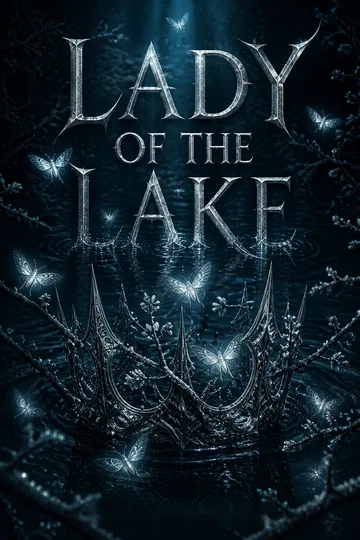


Characters
Oralia
The life and death bearerOralia is a god raised in Aethera under the protection and control of King Typhon. A daemoni bite left her with destructive magic alongside her ability to make crops and plants flourish, and fear of harming others has shaped her habits, relationships, and sense of self. She is compassionate, quick to intervene when someone suffers, and often harder on herself than on anyone else. Her isolation has made ordinary touch unfamiliar, but it has not extinguished her desire for connection or justice. Oralia’s central struggle is learning to distinguish responsibility from shame: she must face the consequences of her power without accepting Typhon’s claim that she is inherently monstrous.
Renwick
The grieving death kingRenwick rules Infernis, the neighboring realm where souls undertake journeys toward healing and eventual ascension. His reputation as a murderer and tyrant conceals a ruler burdened by centuries of loss, guilt, and inherited customs he has rarely challenged. He has lost his wings and, through repeated deaths, much of his capacity to feel. Renwick is fiercely protective of his people, yet his instinct to control danger can make him harsh with Oralia. Her compassion presses him to question the punishments and policies he once accepted as inevitable. His relationship with power is inseparable from his grief, his responsibility as a ruler, and his fear of failing those he loves.
Typhon
Aethera’s golden rulerTyphon is the ancient king of Aethera and the figure who raised Oralia while keeping her under strict control. He presents himself as protector of his people, whose crops and safety are threatened by Infernis, but his authority depends on obedience and a carefully managed account of the past. He fears Oralia’s uncontrolled power and treats that fear as justification for confinement. Typhon is politically shrewd and willing to use intimate relationships as instruments of rule. His version of protection leaves little room for another person’s consent, making his kingdom’s brilliance inseparable from its less visible forms of coercion.
Caston
The soldier princeCaston is Typhon’s heir and a soldier who has spent much of his life away from the palace, learning the costs of defending Aethera. He is Oralia’s chosen brother, a relationship sustained by loyalty rather than blood. Caston is warm, principled, and attentive to people around him, qualities that distinguish him from the colder political habits of court. His emerging authority depends on listening and judgment, though his trust in the family and kingdom that raised him can leave him unaware of what Oralia has endured. He values compassion but understands that leadership sometimes requires difficult action.
Aelestor
The storm godAelestor is a powerful god who can summon and disperse storms, making him useful to Aethera’s court. His confidence and appetite for influence often cover insecurity and resentment, especially when others refuse the future he imagines for them. His planned marriage to Oralia reflects the court’s habit of arranging power through bodies and alliances. Aelestor can be cruel when he feels threatened, but his choices are shaped by losses and dependencies he rarely speaks about openly. His ties to both kingdoms make him a volatile figure whose loyalties cannot be understood from his public manner alone.
Sidero
The observant soul guideSidero is a soul in Renwick’s court who helps Oralia navigate Infernis. A former warrior, they are attentive to danger and unusually perceptive about the injuries people carry beneath their behavior. Sidero offers practical care without demanding immediate trust: they bring food, explain the customs of the realm, and respect Oralia’s boundaries around touch and address. Their own history gives them a keen understanding of guilt and recovery. Sidero serves as a quiet counterweight to the rulers’ forceful personalities, often recognizing the emotional truth of a situation before either Oralia or Renwick is ready to admit it.
Peregrine
The lost harvest goddessPeregrine is Oralia’s mother, a god associated with harvest, food, and the cultivation of the land. Though absent from Oralia’s childhood, she remains present through the tree she grew at the palace and the crown Oralia inherited. Stories and records describe a strong, vivid person whose love of the natural world shaped her magic. Oralia’s longing to remember her is also a longing for an identity not defined by Typhon. Peregrine’s legacy links creation to care, making the flourishing orchard and the later renewal of Infernis echo the life she once cultivated.
Zephyrus
The god of windZephyrus is a god associated with wind, cooling breezes, and nourishing rain. His history is preserved through his journal and through Renwick’s memories of Aethera’s earlier conflicts. Zephyrus values freedom and a life beyond the reach of court politics, though his efforts to secure safety for those he loves take place within a world shaped by powerful rulers. His written record offers a more intimate account of the past than official histories do, revealing how private hopes can survive even when a kingdom tries to erase them.
Morana
The goddess of nightMorana is an ancient goddess whose association with night gives her a presence that feels removed from ordinary time. She is mysterious, composed, and capable of teaching Oralia to approach the darkness in her magic. Her methods are less reassuring than Renwick’s, which forces Oralia to confront what kind of guidance she needs rather than simply accept the nearest authority. Morana’s knowledge reaches beyond practical instruction, and her observations suggest that the powers shaping Oralia’s life may have meanings neither kingdom fully understands.
Drystan
Oralia’s steadfast guardDrystan has guarded Oralia since infancy and offers the kind of paternal care she rarely receives elsewhere in Aethera. He remains watchful, loyal, and gentle, even when her dangerous magic prevents him from helping physically. Drystan does not mistake her fear for weakness and tries to reassure her without excusing the restrictions placed upon her. His presence gives Oralia a durable connection to her childhood, while his concern for her safety reflects the painful limits of affection inside Typhon’s court.
Dimitri
Renwick’s second in commandDimitri is Renwick’s trusted military second, a disciplined fighter who has stood beside him through long political conflicts. He is blunt when Renwick’s grief or rigidity threatens to obscure another person’s needs. His loyalty is not mere obedience; he is willing to challenge his king when the situation demands it. Dimitri’s practical steadiness supports Infernis’s defenses while his candid advice helps Renwick recognize that protecting Oralia requires more than keeping her alive.
Mecrucio
The court’s travelerMecrucio is the God of Travelers, a capable political observer who moves easily among courts and kingdoms. His humor can soften tense rooms, but he becomes precise and serious when lives or alliances are at stake. Mecrucio understands the risks of serving a ruler whose court is built around power, and he knows how information can protect those who cannot defend themselves openly. His long connection to Renwick gives him a role in Infernis’s strategy as well as its daily life.
Horace
The magistrate of soulsHorace guides newly arrived souls toward the part of Infernis best suited to their healing. His ability to perceive the complicated contents of a soul makes him a judge, but not a simple dispenser of punishment. He is measured and patient, attentive to both wrongdoing and the suffering that surrounds it. Horace’s role connects the realm’s vast afterlife system to individual lives, and his presence helps Renwick confront the difference between justice that repairs and punishment that merely repeats harm.
Thorne
The realm’s healerThorne is a powerful healer who also helps train those protecting Infernis and welcomes new souls to the realm. His broad presence and booming warmth make him an anchoring member of Renwick’s court. Thorne’s commitment to healing is personal as well as practical, shaped by losses that have taught him the value of preserving life. He brings a plainspoken kindness to moments of crisis and helps create a community where service is not mistaken for subservience.
Josette
A soul seeking memoryJosette is a human soul in Infernis whose grief persists even when much of her personal history is inaccessible to her. She is vulnerable but not passive, and her unease about what she cannot remember makes her search for understanding complicated. Her story explores the difference between losing painful memories and recovering from the pain they leave behind. Josette’s choices matter because healing cannot be reduced to someone else deciding what she should know.
Asteria
An ancient goddessAsteria is an ancient goddess connected to the world’s earliest powers and the creation of the stars. Her presence is felt through an old song and through the history of the gods who shaped the realms. She represents a form of power that does not belong to the rulers who claim sole authority over creation. Asteria’s influence is quiet but consequential, linking Oralia’s magic to a deeper history than the official stories of either kingdom acknowledge.
Michalis
Caston’s beloved companionMichalis is Caston’s beloved and a member of his close circle. His affection for Caston is open and easy, offering Oralia a glimpse of the mutual tenderness she has been denied. Their relationship makes Caston’s private life visible beyond his duties as heir and soldier.
Lana
A grieving soulLana is a human soul processing the grief of a life shaped by betrayal and loss. Her encounter with Oralia shows how memory can restore parts of the self that pain has obscured. Lana is grateful for companionship, but her journey remains her own.
Vakarys
The ferrier of soulsVakarys is a skeletal ferrier who pilots the boat carrying souls across the river into Infernis. Her manner is calm and attentive, and she performs a necessary threshold duty with quiet dignity. She connects the living world to the afterlife without turning the crossing into spectacle.
Plot Devices
Life and death magic
Creation joined to destructionOralia carries the power to make plants flourish and to destroy living things through touch, with the two capacities often rising together under emotional stress. The contrast drives her shame, gives Typhon a reason to covet her, and makes her relationship with Ren unusually intimate because her darkness cannot kill him. Her magic also affects souls, bringing memories and movement toward healing. It is therefore both a source of danger and a means of restoring agency, depending on how Oralia approaches it.
The mist and its borders
A living political barrierThe mist separates Aethera from Infernis and protects Renwick’s kingdom from invasion. It is an extension of Renwick’s magic, shifting over time and making ordinary crossing perilous. Its barrier also confines Oralia within Aethera until Ren helps her break through, then becomes a defense Typhon’s forces try to penetrate. When a soldier discovers a way across, the mist turns from a distant border into an urgent military problem.
Kratus resin
A weapon against immortalsKratus wood and resin can injure or kill gods, making it one of the few materials capable of overcoming their healing and immortality. Typhon’s forces use it in restraints and arrows, while Ren’s history bears the marks of a kratus attack. Its presence makes political violence physically consequential: a wound from a kratus weapon demands urgent care, and even powerful gods cannot dismiss it as temporary.
The soul’s journey
An afterlife built around healingSouls in Infernis move through places that address grief, isolation, fear, memory, and guilt before they may choose ascension. Pyralis brings grief to the surface, Isthil offers isolation, and the Athal river can remove memories. This structure gives the story a second landscape for exploring trauma and accountability. Oralia’s interventions challenge Renwick’s assumption that suffering must follow an established schedule, while the souls’ individual experiences help him reconsider punishment as the only route to change.
The pomegranate rite
A binding vow between rulersAn old rite uses a pomegranate and shared vows to join two people’s souls and formalize a bond deeper than a political marriage. The fruit’s seeds carry the story’s recurring connection between life, decay, and renewal. Oralia and Renwick use the rite to make their commitment reciprocal and public, while Oralia’s coronation gives that personal bond a political dimension. The ceremony establishes her authority in Infernis as she prepares to face the ruler who once defined her place in Aethera.
Download PDF
Download EPUB
.epub digital book format is ideal for reading ebooks on phones, tablets, and e-readers.








