


Plot Summary
Prologue
Ten years before Dahlia arrives in New York, six crime families make a treaty to end their war. Each boss must surrender a daughter to marry an heir from another family, binding peace to the next generation.
At the meeting, young Lucian Rossi draws the Butcher family name and understands that he has been assigned a bride he will not choose. His father turns the bargain into an oath of honor, but Lucian sees the truth beneath it: powerful men have made their daughters the price of their survival.
The treaty makes private lives into political instruments, then uses the language of honor to disguise the coercion. Its neat procedure, a name drawn from a bowl, reduces a woman to a negotiable outcome while allowing the men to imagine themselves as guardians of peace. Lucian’s early resentment matters because he recognizes the injustice before he has the power to oppose it. Yet recognition is not resistance: the oath binds him too. This opening establishes the story’s central contradiction, that a marriage can be presented as protection for a family while functioning as a transfer of ownership.
A Girl Sent Across
At eight, Dahlia is abused by her uncle Robert, her father’s trusted enforcer. Fear and disbelief silence her, and she learns to hide the damage rather than seek help. Twelve years later, her father is dead and her brother Benny sends her from England to New York to fulfill the marriage bargain.
On the journey, she tries to imagine a life beyond the family that has failed her. At Heathrow, a stained blouse sends her into a shop, where she reaches for the same absurd souvenir shirt as a striking American stranger. Their brief encounter gives her an unfamiliar rush of attraction, even as she boards the plane toward a husband she has never met.
Dahlia’s departure is both escape and repetition. She leaves the household that failed to protect her, but the treaty still treats her body as family property. Her private coping habits, the imagined escape and careful social obedience, show how survival can resemble compliance from the outside. The airport encounter briefly interrupts that pattern: desire arrives without a family directive, and Dahlia experiences it as her own choice. That distinction will matter, even though she does not yet know the stranger’s identity or the danger attached to her new marriage.
The Brother Beside Her
On the overnight flight, the stranger introduces himself as Raphael, and his easy attention distracts Dahlia from a threatening message from her uncle. She chooses to sleep with him, seeking a moment in which her body answers to her own desire. The plane lands, and the men waiting for her identify her future husband as Lucian Rossi.
Raphael appears beside him: he is Lucian’s half brother, and Lucian arranged for him to escort Dahlia. Raphael privately admits that his affection was false, leaving her to understand that he knew who she was before he touched her. Lucian offers no comfort or explanation. Dahlia has crossed an ocean to begin a marriage, but her first connection in New York has become a betrayal.
The flight gives Dahlia an experience of agency that is immediately contaminated by Raphael’s deception. Her choice was real, but he concealed the information that would have shaped it, making consent emotionally compromised without erasing her own desire. The revelation also establishes the Rossi brothers as distinct forms of danger: Raphael manipulates intimacy, while Lucian controls the larger arrangement through silence. Dahlia’s shock is not simply that she slept with her fiancé’s brother. She is forced to reconsider whether the warmth she felt was ever hers to trust.
A Welcome Made Of Pasta
Lucian drives Dahlia to the Rossi penthouse, tells her the wedding is a week away, then leaves her on the pavement with her luggage. The building staff have not been told she is coming, and she enters an enormous, impersonal home alone. A panic attack sends her to a kitchen knife and the familiar relief of self-injury.
Gabriel Rossi, Lucian’s younger brother, finds her after arriving home and makes her a meal instead of demanding an explanation. He discovers that she has no prepared bedroom, arranges a place for her to sleep, and stays nearby while she watches a film. The next day, he cooks breakfast. His ordinary kindness gives Dahlia her first reason to feel less like a discarded parcel in New York.
The contrast between the brothers is first rendered through practical behavior, not declarations. Lucian’s neglect leaves Dahlia managing panic alone; Gabriel notices her immediate needs and responds with food, space, and company. That care is meaningful partly because it is ordinary. Dahlia has learned to expect that other people will look past her distress, so small acts can feel disproportionately intimate. Her self-injury also shows that the apparent calm she presents is maintained through pain, not inner stability. Gabriel’s attention offers relief, but it does not yet make him safe to trust.
Two Weeks Of Borrowed Light
Lucian leaves on family business and delays the wedding by two weeks. Gabriel fills the interval with New York outings, including a view from Rockefeller Center, a steakhouse, and a performance of Hamilton. Dahlia begins to fall for his curiosity and the way he listens. Then Lucian explains that Gabriel has obsessive-compulsive disorder and has repeatedly mistaken short-lived fixations on women for love.
Fearing she is only the latest obsession, Dahlia pulls away and refuses Gabriel’s attempts to keep seeing her. At the engagement celebration, she watches Lucian behave like an attentive fiancé while pursuing Madison in private. When Dahlia escapes the party, Carlo corners her outside; Raphael finds her in the storm and drives her home.
Gabriel’s courtship gives Dahlia pleasure, but Lucian’s warning reframes that pleasure as a possible symptom of Gabriel’s condition. The fear is psychologically credible because Dahlia already has reason to distrust attention: she has been watched, used, and misled by men who had power over her. At the same time, Lucian’s intervention protects his authority over the marriage and discourages a bond he cannot control. The engagement party exposes the difference between public performance and private conduct, while Carlo’s predatory presence reminds Dahlia that danger is not confined to the brothers she is learning to read.
The Engagement’s Dead Frog
Back at the penthouse after the party, Dahlia and Raphael find a wedding present containing a dissected frog and a tiny crown. Its note twists the familiar Frog Prince story into a threat. Raphael leaves to track down the person who delivered it, while Dahlia tries to recover from the evening without knowing who has entered their home.
The warning joins the danger she felt at the party to a more deliberate campaign aimed at the Rossi family. Lucian remains absent from the penthouse, and the wedding date still approaches. Dahlia is surrounded by men who treat violence as routine, but this message is different: someone has made a private, theatrical threat and knows how to bring it inside.
The frog transforms a wedding gift into an act of psychological intrusion. Its fairy-tale reference makes the threat legible as a message rather than random violence, while the corpse strips away the story’s promise of transformation. The choice of a domestic present also violates the distinction between the outside world and the home. Dahlia has not yet learned who is behind the warnings, but the package gives her fear an external object. It is a crucial shift from enduring the harms of her family and future husband to confronting an unknown enemy who is targeting her through the marriage itself.
A Wedding Under Gunpoint
On the wedding day, Raphael finds Dahlia alone and marks her beneath the white lingerie she will wear under her dress. Before the ceremony, her former lover Leo appears through a hidden passage, claiming he has arranged a bomb scare to help her escape. He kisses her despite her resistance. Lucian enters, kills Leo with a knife, and drags Dahlia to the altar in the bloodied gown.
When she hesitates at the vows, he threatens the priest with a gun until she agrees. The ceremony proceeds before the stunned guests. A second fairy-tale package, a rotten apple accompanied by a Snow White warning, confirms that the unseen attacker has not stopped. Dahlia becomes Lucian’s wife through violence, not consent.
The wedding compresses the book’s central power conflict into one public scene. Leo’s supposed rescue becomes another violation when he ignores Dahlia’s refusal, while Lucian’s response substitutes possessive violence for protection. The ceremony then turns the treaty’s coercion into an immediate, personal fact: Dahlia is made to say yes under threat. The blood on her dress makes the cost visible to the witnesses, even as the marriage is publicly performed as a legitimate alliance. The fairy-tale warning adds a parallel threat, suggesting that the family’s private brutality is being watched and answered by an outside hand.
Bound Before Dawn
After the reception, Lucian brings Dahlia to his bedroom and tries to turn their wedding night into an encounter governed by his need for control. When he begins to bind her, a memory overwhelms him; he stops, leaves her tied to the bed, and does not return until morning. Dahlia lies there through the night, frightened and physically numb.
Lucian wakes from a nightmare and orders her to forget what she witnessed, then leaves again. Gabriel enters, cuts her free, and tends to her without pressing for details. The failed intimacy becomes another breach between husband and wife. Dahlia has been married into a household full of men who conceal their damage, but Lucian’s panic makes clear that his cruelty is not the only force governing him.
The scene exposes control as a defense that can collapse under the pressure of memory. Lucian’s abrupt withdrawal does not make the abandonment harmless; Dahlia remains trapped and must depend on Gabriel to release her. His demand for secrecy protects his shame rather than her wellbeing. The episode also complicates the brothers’ roles without excusing their actions. Gabriel can provide immediate care, while Lucian’s vulnerability remains inaccessible even when Dahlia witnesses it. For Dahlia, the result is not trust but uncertainty: the man who claims authority over her cannot yet stay present when intimacy makes him feel exposed.
Fairy Tales Turn Venomous
As wedding presents continue to arrive, a rotten apple and later a severed braid carry increasingly explicit fairy-tale threats. Dahlia asks Lucian for money and permission to leave the penthouse; he refuses college but allows her to volunteer at an animal shelter.
There she finds useful work and begins building friendships with Megan and Shelby Ray. Raphael trains her in self-defense, discovering that she already knows how to fight. During a later nightmare, Dahlia tells Lucian that her uncle abused her as a child and threatened her family to keep her silent.
Lucian listens and promises protection, while the brothers tighten security. Her new routine gives her a measure of independence, but the packages show that someone can still reach into the Rossi home.
Dahlia’s request for work marks a change from surviving the household to trying to construct a life inside it. The shelter is not a cure for trauma; it gives her choices, relationships, and responsibilities that do not belong to the Rossi family. Her disclosure to Lucian is another form of agency, because she decides when to name what happened rather than being forced to explain it. Meanwhile, the fairy-tale packages convert childhood stories into instruments of menace. They suggest that the attacker knows both Dahlia’s vulnerabilities and the family’s security weaknesses, making the home’s apparent protection increasingly unreliable.
Carlo’s Last Visit
Carlo enters Dahlia’s bedroom when the others are away dealing with a warehouse fire. He insults her, attacks her, dislocates her shoulder, and tears her clothing while she struggles to escape. Lucian arrives before Carlo can go further and beats him, then shoots him in the chest. Raphael enters and reacts with grief and rage, revealing that Carlo’s death was meant to be his own act of revenge.
Gabriel resets Dahlia’s shoulder and stays close while Lucian and Gabriel secretly remove the body, staging Carlo’s death as a fatal accident at the burned warehouse. Dahlia has survived another assault, but the family’s response binds her more tightly to its violence and exposes a grief Raphael has kept hidden.
Carlo’s attack reveals that the family’s hierarchy offers no dependable protection for women. Dahlia’s position as Lucian’s wife does not deter the man at the top; it merely gives him another excuse to claim access. Lucian’s intervention saves her, but it also creates a secret that could destabilize the organization. Raphael’s reaction shows that Carlo’s violence shaped each son differently, and that Lucian has taken from Raphael the revenge he had planned for himself. Dahlia is therefore placed at the center of a family conflict whose emotional history predates her arrival.
A Funeral Escape
At Carlo’s crowded funeral, Raphael arrives drunk, disrupts the service, and struggles to remain composed beside the family he blames for his childhood. Lucian leaves the reception early with Dahlia and takes her to Nana’s Kitchen, the bed-and-breakfast where a woman once sheltered him as a boy.
Over a long meal, Dahlia sees Lucian relax and begins to suspect he has been sending her the thoughtful gifts she found in her room. He admits he chose the gifts and helped plan the wedding. Their quiet intimacy ends when he receives news that Rossi Inc.’s headquarters is burning. He rushes back to the city, and Dahlia watches the building that represents his public empire disappear in flames.
The funeral exposes the family’s official story as a performance: the eulogy praises Carlo, while his sons carry private memories that cannot fit the public ceremony. Lucian’s visit to Nana’s offers a rare counterhistory, one in which a stranger’s kindness mattered more than wealth or power. Dahlia’s discovery that Lucian has been trying to anticipate her preferences complicates his earlier indifference, though it does not erase it. The fire then reasserts the cost of their criminal world. Even a brief interval of tenderness is vulnerable to the demands of empire and the threats gathering around it.
Taken From The Office
At the rebuilt Rossi offices, Dahlia leaves Gabriel to use the bathroom. A fake deliveryman drugs her and carries her to a van after other staff members are knocked unconscious. Lucian, Gabriel, and Raphael track the vehicle by surveillance and take a helicopter toward the warehouse where it stops.
When the captors open the van, Dahlia attacks one man and breaks his neck, using the training Raphael gave her. Raphael detonates the warehouse, killing the armed men who emerge, and Lucian pulls Dahlia from the wreckage after debris hits her head.
She wakes later in Gabriel’s bed, bruised but alive. The kidnapping confirms that the enemy can penetrate the Rossi operation, while Dahlia’s resistance proves she is no longer only waiting to be rescued.
The abduction makes the security failures concrete: the attacker can incapacitate staff, impersonate a delivery worker, and move Dahlia through the company’s own building. The brothers’ response is ruthless, but Dahlia’s action changes the rescue’s meaning. She kills a captor before help arrives, applying skills that were treated as an exercise and making them part of her survival. The event also shifts the emotional balance in her relationships. Her life is no longer simply protected by the Rossi men; she can act under pressure, even while needing their help to escape the larger ambush.
The Heart Wakes Twice
After the kidnapping, Dahlia and Gabriel stop pretending their connection is only friendship and become lovers. Their intimacy gives her a place to choose closeness rather than submit to a family arrangement.
Soon afterward, a blue box arrives containing shards of glass and a note invoking Cinderella and midnight. The message suggests that the attacker is escalating from grotesque gifts to threats directed specifically at Dahlia. Gabriel reassures her, but the reassurance cannot remove the evidence that someone has been inside their defenses.
Dahlia continues working at the shelter and tries to hold onto the life she has begun there. Love offers comfort, not immunity; the new threat follows her into the home and interrupts the fragile safety she has built.
Dahlia’s relationship with Gabriel becomes meaningful when it moves from his pursuit to her active choice. She has reasons to doubt his capacity for lasting attachment, yet she decides that the care he has shown is worth risking trust. The timing of the Cinderella box undercuts any easy romance resolution. The attacker turns fairy-tale symbols into a countdown, placing danger beside the couple’s new intimacy. The chapter therefore refuses to treat love as a magical cure for trauma or criminal violence. Dahlia can claim pleasure and still remain afraid; those experiences coexist rather than cancel one another.
Three Brothers, One Dance Floor
After a successful week at the shelter, Dahlia celebrates with Gabriel, Megan, and Shelby Ray at a bar. Gabriel leaves for urgent family business, and Raphael arrives to take his place. He admits he has been watching over Dahlia and cannot stay away. They dance, then return to the penthouse, where Lucian joins Raphael in pleasuring her.
The encounter changes the brothers’ unspoken arrangement: neither Lucian nor Raphael can claim indifference, and Dahlia no longer treats her desire for them as something she must deny. The next evening, the three brothers accompany her to a benefit supporting children affected by abuse. Her choice to attend brings her private history into a public space, where the family’s enemies can reach them.
The bar scene gives Dahlia a social world beyond the penthouse and the shelter, but it also brings her into a relationship structure she had feared would make her a possession passed among brothers. The difference is that she participates by choice, with her desire no longer hidden from herself. That choice does not remove the power imbalance or make the arrangement simple; it creates an intimacy negotiated amid danger and rivalry. Her decision to attend the child-abuse benefit is equally significant. She enters a public setting connected to her history, turning private survival into a reason to act rather than a secret she must conceal.
The Cinderella Box
At the benefit, masked gunmen storm the ballroom. Lucian and Gabriel return fire while Dahlia escapes through a side exit and finds Raphael outside. The brothers regroup, but the violence follows them home: a box contains the severed head of the event’s host and a pair of Dahlia’s stolen knickers.
Lucian recognizes the attacker’s deliberate use of fairy-tale imagery, while the intimate stolen item proves the intruder has watched Dahlia closely. Later, Dahlia finds Lucian trapped in a nightmare and approaches him on her own terms, offering a way to reclaim control through consensual restraint. He accepts her trust, but afterward withdraws again. The attack has ended; the threat and the brothers’ unresolved trauma have not.
The public attack turns the family’s private war into immediate physical danger, while the package that follows makes the threat intimate and theatrical. The stolen underwear is not merely a clue; it is an attempt to make Dahlia feel observed and claimed. Her response to Lucian’s nightmare reverses their earlier pattern. Rather than being helplessly bound by him, she offers a form of intimacy with conditions and purpose. His retreat afterward demonstrates how difficult it is for him to tolerate vulnerability even when it is welcomed. Trust begins here as an action, but it remains fragile and uneven.
Raphael’s War Inside
In Lucian’s office, Dahlia overhears him confront Raphael over stolen shipments and attacks on the Rossi operation. Raphael admits he has been dismantling the empire to avenge his mother, whom Carlo killed when Raphael was a child. He plans to finish by killing Lucian. When Raphael raises his gun, Dahlia steps between the brothers and is shot in the chest.
Raphael immediately panics and tries to stop her bleeding, while Lucian calls for help. The bullet damages her heart and lung, leaving her in critical condition. Raphael’s betrayal is no longer an abstract war against the family: it has nearly cost Dahlia her life, and all three men must face what their loyalty, vengeance, and love have done.
Raphael’s revelation converts the family’s criminal sabotage into a response to a specific childhood atrocity, but motive does not undo consequence. He has tried to destroy Carlo’s legacy and instead becomes the immediate source of danger to the person he claims to love. Dahlia’s intervention is an act of protection, yet it also risks repeating the old pattern in which she absorbs violence to preserve other people. The shooting strips away the brothers’ strategic roles and leaves them with an irreversible human cost. Their conflict can no longer be managed as business or sibling rivalry.
The Rooftop Confession
Dahlia spends thirteen days unconscious while Gabriel and Lucian keep vigil. When she wakes, she suffers a seizure, then begins a slow recovery. Raphael has vanished, leaving a note that makes Lucian fear he may take his own life. Though still weak, Dahlia insists they search for him. They find him on the roof of Carlo’s abandoned home, sitting near the edge.
Lucian finally tells Raphael that Carlo’s men abused him when he was a child and that he hid the truth for years. The confession helps Raphael understand the damage he blamed on Lucian. Lucian apologizes, Gabriel punches Raphael and forgives him, and Dahlia asks Raphael to return. The brothers leave the rooftop together, no longer pretending their shared past is simple.
The rooftop scene makes reconciliation possible through disclosure, not absolution alone. Lucian’s account gives Raphael new evidence about the brother he believed had been protected while he suffered. That revelation does not erase Raphael’s betrayal, and Gabriel’s punch preserves the injury rather than smoothing it away. Dahlia’s insistence on searching for Raphael reflects her refusal to let shame make the final decision for him. Her recovery is still incomplete, but she can now influence the family’s choices. The brothers’ reunion begins with grief and accountability, not with a claim that everything has been repaired.
The Monster’s Last Visit
A month after leaving the hospital, Dahlia is working at the animal shelter when her uncle Robert appears and attacks her. He reveals that the fairy-tale packages were drawn from the stories he used to torment her as a child. He knocks her against a locker and begins tearing at her clothes.
Dahlia finds a screwdriver beside her and, remembering that she is no longer powerless, drives it into his neck. She keeps her eyes on him until he dies, then hears Riccardo and the shelter staff rushing to help. The Rossi brothers arrive, but Dahlia has already ended the danger herself. For the first time, she does not need a man to defeat the monster from her past.
The reveal ties the novel’s external threat to Dahlia’s childhood abuse, showing how the attacker has turned intimate memory into a weapon. The confrontation deliberately echoes the old pattern of being trapped and disbelieved, but Dahlia’s action changes its ending. Her use of the screwdriver is not presented as a cure for trauma; it is a decisive refusal to surrender her agency to the person who taught her to fear. The brothers’ arrival matters as support, not rescue. The final victory belongs to Dahlia because she recognizes danger, acts, and survives without waiting for permission.
Epilogue
Later, Lucian asks Dahlia to marry him again, this time without the treaty or their families deciding for her. She accepts, and the new ring represents a promise freely made rather than a contract imposed. Gabriel and Raphael have rings for her too, reflecting the relationship she has chosen with all three brothers.
Dahlia is preparing to begin college classes while continuing her life beyond the penthouse. Lucian still carries his nightmares, but Dahlia can touch him without fear, and he trusts her enough to let her take the lead. Their future remains unusual and complicated, but it now rests on choice.
The second proposal revises the novel’s opening bargain. The first marriage made Dahlia a means of preserving a criminal alliance; the later promise asks her to decide whether she wants the bond at all. That reversal cannot undo the coercion, the violence, or the betrayals that came before. Instead, it changes the terms on which the characters try to live afterward. Dahlia’s college plans matter as much as the rings because they make her future larger than the romance. Lucian’s willingness to accept touch and vulnerability signals progress, while the continuing presence of his nightmares prevents healing from being mistaken for a clean ending.
Analysis
Ruining Dahlia builds its romance inside structures that repeatedly confuse protection with possession. The treaty makes women into instruments of peace; Carlo treats power as permission; Lucian initially imitates the same logic even when his feelings for Dahlia are genuine. The novel’s emotional movement depends on distinguishing attachment from entitlement. Dahlia’s choices become more consequential as she gains room to work, form friendships, defend herself, and set terms for intimacy. Her agency does not arrive because the men discover how to love her. It grows through action, including choices that do not depend on their approval.
The three brothers represent different responses to pain. Lucian hides it behind control, Raphael converts it into vengeance, and Gabriel tries to turn intense attachment into care. None is automatically safe simply because he is wounded or devoted. Their histories explain their behavior, but the story’s strongest moments insist that explanation is not absolution. The brothers must face what they have done, disclose what they have concealed, and accept that Dahlia’s trust cannot be demanded.
Fairy tales provide the novel’s most pointed symbol. Their familiar images are stripped of rescue and used to threaten a woman whose childhood was already shaped by a monster hiding within the family. The final confrontation answers that motif without offering a prince as the solution: Dahlia kills the man who has pursued her, using her own judgment and strength. The romance can then become a chosen bond rather than another rescue fantasy. The ending’s second proposal matters because it reverses the treaty’s original bargain, while Dahlia’s college plans insist that a shared future must leave room for a life that is hers alone.
Review Summary
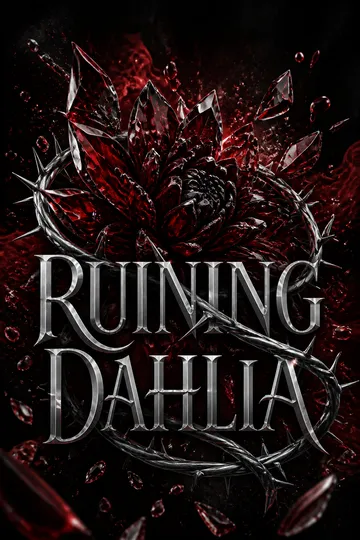
Ruining Dahlia is a dark mafia romance with reverse harem elements. Readers found it captivating, praising the complex characters and intense plot. The book explores themes of trauma, self-harm, and unconventional relationships. While some appreciated the emotional depth and steamy scenes, others felt the character development and pacing could be improved. The novel's dark content and triggers were noted, with mixed reactions to the love dynamics. Overall, it received mostly positive reviews, though some readers found it disappointing or problematic.
People Also Read




Characters
Dahlia Butcher
The bruised brideDahlia is the daughter of an English crime family, sent to New York to marry Lucian Rossi under a treaty she never chose. She is observant, guarded, and trained to make herself easy to overlook, yet she has a fighter’s discipline and a stubborn appetite for ordinary pleasures: books, animals, food, and the possibility of education. Childhood abuse has taught her to distrust both attention and her own responses to it. Her self-injury is a way to regulate pain she cannot otherwise name. Dahlia’s deepest drive is not simply to be loved, but to recover the right to decide what happens to her body and future.
Lucian Rossi
The guarded heirLucian is the eldest Rossi brother and the organization’s powerful, controlled heir. He thinks in systems: security, loyalty, leverage, and the consequences of a single weakness. His composure is partly an instrument of command and partly a defense against experiences he has buried. Dahlia unsettles the distance he has maintained between power and need. He is capable of tenderness, but often expresses attachment as possession or protection, confusing control with safety. His central struggle is whether he can be known without feeling that he has surrendered all control. Beneath the polished authority is a man who wants connection but has few healthy ways to ask for it.
Raphael Rossi
The beautiful dangerRaphael is Lucian’s half brother, a feared enforcer whose beauty makes his cruelty easier to underestimate. He is restless, provocative, and drawn to pain, with a fiercely fixed attachment to the few things he allows himself to care about. His cynicism protects a history of loss and betrayal, but it also gives him permission to hurt people before they can hurt him. Dahlia sees both the threat and the vulnerability in him, which makes their connection volatile. Raphael’s relationship with his brothers is shaped by resentment, rivalry, and a longing to be recognized as more than the family’s weapon.
Gabriel Rossi
The devoted charmerGabriel is the youngest Rossi brother, a skilled negotiator who is known for warmth, charm, cooking, and an intense capacity for fixation. His obsessive-compulsive disorder affects how he experiences attachment, and he has often mistaken the force of an obsession for lasting love. With Dahlia, he tries to make care tangible: he cooks, asks questions, and helps her build a life outside the penthouse. His sunny manner does not mean he is harmless; he is a Rossi, capable of violence when his family is threatened. Gabriel wants to be chosen for more than his attention, and he must learn that devotion is proven through respect as well as intensity.
Carlo Rossi
The decaying patriarchCarlo is the Rossi father and nominal head of the Cosa Nostra, a powerful man whose public authority conceals a deteriorating family legacy. He sees people as tools and treats control as his natural right. His relationship with his sons is marked by cruelty, manipulation, and contempt, while his role in the marriage treaty shows how readily he spends other people’s futures to protect the organization.
Robert
The family enforcerRobert is Dahlia’s uncle and a feared operative in her father’s criminal organization. His place close to the family gives him access others would not have, making him a figure associated with the danger hidden behind respectable loyalties. He embodies the threat of harm being concealed by a family’s demand for silence.
Emilia Bianchi
The household’s heartEmilia manages the Rossi homes and knows how to turn a neglected room into a welcoming one. Warm, practical, and difficult to deter once she decides someone needs help, she gives Dahlia everyday care without demanding that she earn it. Her attention to food, clothes, and comfort offers a domestic counterweight to the family’s violence.
Benny Butcher
The protective brotherBenny is Dahlia’s brother, recently released from prison and determined to wrest control of the Butcher organization from their brother Danny. He is blunt, forceful, and more protective than he knows how to be emotionally. His distance from Dahlia has left wounds, but he still understands the cost of the treaty and the danger of breaking it.
Rosemary Butcher
The distant motherRosemary is Dahlia’s mother, a society-minded woman whose affection does not translate into clear-eyed attention. She prefers appearances, ceremonies, and social obligations, often missing what her daughter most needs. Her failure is less an active cruelty than a practiced inability to see beyond the surface.
Valentina Rossi
The cherished sisterValentina is Lucian, Raphael, and Gabriel’s younger sister, raised within the same criminal world but protected by her brothers’ strong attachment to her. She is lively and direct, with a warmth that draws the family into a softer register. Her own treaty marriage connects the Rossi family to another powerful crime family.
Leo
The former loverLeo is Dahlia’s former lover from England, a familiar presence she once used to escape her thoughts. He assumes that their connection gives him a claim on her and mistakes persistence for devotion. His role shows how even a past relationship can become another source of pressure when Dahlia tries to choose a different future.
Megan
The shelter’s founderMegan runs the animal shelter where Dahlia volunteers. She is sociable, energetic, and committed to making room for neglected animals and people alike. Her easy acceptance gives Dahlia a foothold in New York that is not controlled by the Rossi family.
Riccardo
The watchful driverRiccardo is the Rossi family’s driver and security man, usually quiet and intensely observant. He handles transport, protection, and emergencies with steady competence. His reliability becomes a small but important form of safety in a world where nearly everyone has an agenda.
Church
The steady family friendChurch is a trusted friend of the Butchers who helped Dahlia continue learning to fight after Benny went to prison. He offers her practical support and a sympathetic ear, though he cannot undo the family’s failures.
Shelby Ray
The shelter’s young helperShelby Ray works at the animal shelter and becomes one of Dahlia’s first friends in New York. Cheerful and openly impressed by Gabriel, she helps make the shelter feel like a community rather than another assignment.
Plot Devices
The marriage treaty
Peace through forced marriageThe treaty requires powerful crime families to exchange daughters in arranged marriages so their heirs will be bound to one another. It gives the story its inciting political pressure and makes Dahlia’s move to New York unavoidable within her family’s logic. Its promise of peace is compromised from the start because the men negotiate without the daughters’ consent. The treaty continues to shape the brothers’ responsibilities and Dahlia’s legal status, even as their private relationships begin to challenge the arrangement’s original terms.
Fairy-tale packages
Warnings disguised as giftsA dead frog, a rotten apple, a severed braid, broken glass, and later a victim’s head turn familiar fairy-tale images into threats. Each package suggests that the sender knows the Rossi household, can evade its security, and is deliberately targeting Dahlia. The repeated motif creates an escalating trail of clues and makes the home feel unsafe. The stories also connect the attacker's methods to Dahlia’s private past, changing the packages from strange warnings into a personal form of psychological warfare.
Dahlia’s scars
Pain as private regulationDahlia uses self-injury to interrupt panic and regain a sense of control when emotional pain becomes overwhelming. The scars function as a visible record of what she has survived and as a private coping mechanism she hides from the people around her. As the story progresses, others discover the behavior and respond in different ways, forcing Dahlia to confront the difference between being cared for and being controlled. The device keeps trauma present in the narrative without reducing her to it.
The Rossi supply chain
A criminal empire under siegeStolen shipments, compromised staff, warehouse fires, and failures in surveillance reveal that the Rossi organization is being attacked from within and from outside. The business threats give Lucian a parallel plot beyond his marriage and establish why he is often absent from Dahlia. They also create the conditions for the brothers’ suspicions to grow and for the eventual betrayal to have practical consequences. The criminal network is not merely atmosphere; it is the machinery that turns family conflict into escalating physical danger.
Mafia Wars Series Series



About the Author









Download PDF
Download EPUB
.epub digital book format is ideal for reading ebooks on phones, tablets, and e-readers.








