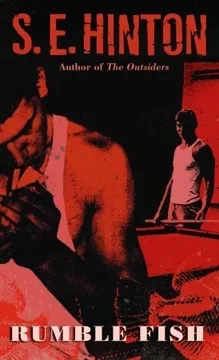


Plot Summary
Biff's Vacant Lot
At fourteen, Rusty-James measures life by fights and by the Motorcycle Boy, his older brother, whose gang once ruled the neighborhood. While Rusty-James plays pool at Benny's, word arrives that Biff Wilcox wants him dead because Rusty-James insulted Biff's girlfriend.
His careful friend Steve Hays warns the challenge could draw both gangs, but Rusty-James gathers allies and heads for the vacant lot anyway. He expects fists; Biff pulls a switchblade. Rusty-James disarms him after a brutal struggle and nearly keeps beating him, until the Motorcycle Boy returns from a two-week absence.
Biff then stabs Rusty-James from behind. The Motorcycle Boy breaks Biff's wrist and ends the fight, while Steve helps the bleeding Rusty-James home. His brother's return feels like proof Rusty-James can still become him.
Rusty-James treats violence as both a language and a measure of worth. He can read the crowd, count Biff's allies, and improvise when the knife appears, but he cannot control what the fight becomes. The Motorcycle Boy's arrival saves him physically while strengthening his fixation on becoming an imitation of his brother. Steve's caution offers another possible way to live, yet Rusty-James hears restraint as a threat to reputation. The scene establishes the trap at the heart of his admiration: the older brother's authority is real, but Rusty-James mistakes the power to end a fight for a model of how to live.
Steve Jumps the Roofs
Though his side keeps bleeding, Rusty-James goes to school and learns Steve has missed class because his mother is hospitalized. Coach Ryan offers him money to assault an annoying student, treating Rusty-James's fists as a service he can hire; Rusty-James declines because his wound makes fighting impossible.
Later, he attempts to steal hubcaps with Steve, hoping for cash. The car's owners chase them onto rooftops. Steve freezes at a gap, then jumps only after Rusty-James promises to catch him; Rusty-James hauls him up, but the exertion makes him pass out.
Steve fetches help, and when Rusty-James wakes and scolds him for leaving, he notices Steve crying. The day exposes what their usual roles conceal: Steve can act under terror, and Rusty-James's toughness cannot protect either of them from consequences.
The rooftop chase turns the friendship's familiar imbalance into a physical test. Rusty-James assumes Steve needs his protection, but Steve makes the jump and then seeks help when Rusty-James collapses. Each boy's courage looks different: Rusty-James risks his body without much forethought, while Steve acts only after confronting fear and responsibility. The sick mother behind Steve's absence adds pressure he cannot explain to his friend. Rusty-James notices the tears but lacks the emotional vocabulary to ask what they mean. Their bond is loyal, but loyalty has become confused with control, and both boys are beginning to feel the cost.
Expelled, Then Abandoned
After cutting class, Rusty-James is expelled and ordered to transfer to Cleveland High, Biff's territory, or face detention if he refuses. He leaves without a plan, then waits at Patty's bus stop, expecting reconciliation.
Patty instead ends their relationship after hearing he went to a lake party with another girl; he cannot grasp why the episode matters until he realizes he will lose their quiet evenings and the place he can be held without performing toughness. He finds the Motorcycle Boy in a drugstore, where a national magazine has printed a California photograph of him.
The Motorcycle Boy forbids Rusty-James from spreading the news, weary of being treated as a local legend. Across the street, Officer Patterson watches the brothers, keeping police pressure in view as Rusty-James asks his brother to spend the night downtown.
The day's losses are different in scale but converge on Rusty-James's need to be chosen. School removes his routine and places him in enemy territory; Patty withdraws the private affection he took for granted; his brother rejects the public legend Rusty-James wants to inherit. Rusty-James can describe each event as someone else's unreasonable decision, which protects him from recognizing his own part in them. The photograph makes the Motorcycle Boy's image portable, but his request for privacy resists Rusty-James's habit of turning admiration into possession. Patterson's watchful presence adds a danger the brothers cannot dismiss as neighborhood theater.
Mother on the Television
Across the bridge, Rusty-James leads Steve and the Motorcycle Boy into the bright nightlife he loves, while Steve drinks for the first time and grows unsteady.
The older brother stays sober, watches the crowd instead of the movie, and reveals family history Rusty-James never knew: their mother left when Rusty-James was two, and their father abandoned him at home for days in the aftermath. This, the Motorcycle Boy suggests, may explain Rusty-James's terror of being alone.
Then he adds that he recently found their mother in California and she welcomed him, but he never told his younger brother. Rusty-James's excitement collapses into anger; he punches a drunk man and tries to drown the hurt in more noise. Steve, grieving his hospitalized mother, eventually cries at a party.
The revelation gives Rusty-James's fear a history, but knowledge does not immediately soothe him. His brother has named an early abandonment that Rusty-James could not remember, then disclosed a living mother as if the discovery belonged only to him. That withholding makes the older brother seem less like an unreachable ideal and more like someone who controls what Rusty-James is allowed to know. Rusty-James converts hurt into aggression because anger restores a familiar sense of action. Meanwhile, Steve's drinking and tears expose another form of distress: he is losing the safety of home even as Rusty-James seeks escape in crowds.
The Alley Without Color
Hours later, Rusty-James and Steve realize the Motorcycle Boy has vanished from a smoky pool hall and try to find their way back through unfamiliar streets. In an alley, two men block them and demand money.
Steve locks up; Rusty-James is struck across the head and experiences a floating, detached vision in which he believes he is watching his own death. The Motorcycle Boy returns, beats one mugger badly, and drives the other away, then holds Rusty-James as he regains consciousness.
The rescue gives way to an argument about old gang fights: Rusty-James insists they mattered, while his brother calls them temporary entertainment and Steve condemns their violence. Rusty-James hears a harder truth in the Motorcycle Boy's calm: his brother has never needed a gang, or any group, to belong.
The attack briefly strips Rusty-James of the agency he associates with toughness. From outside his body, he sees Steve unable to move and confronts the possibility that no reputation can protect them. The Motorcycle Boy's rescue restores safety, but his account of the gangs refuses to validate Rusty-James's cherished version of their past. Steve calls the violence what it was, while Rusty-James clings to its meaning because belonging mattered to him. The brothers therefore share the memory but not its emotional value. The Motorcycle Boy can leave groups without grief; Rusty-James experiences that independence as both greatness and an unthinkable loneliness.
Steve Refuses the Watch
The next day, a clinic doctor urges Rusty-James to get hospital X-rays after his head injury causes dizziness. Rusty-James refuses and goes to Steve's house instead. Steve has been beaten by his father for staying out until morning, but plans to hide the cause and avoid worrying his hospitalized mother.
Rusty-James, furious on Steve's behalf, asks him to help follow the Motorcycle Boy. Steve refuses. When Steve calls the older brother unstable, Rusty-James shoves him against a wall, then nearly collapses as the head injury overwhelms him.
He asks his oldest friend for help, but Steve says he can no longer keep thinking for both of them. Steve walks him to the door, and Rusty-James leaves without understanding that this is their last meeting as boys.
Steve's refusal is not a sudden betrayal but an attempt to stop living as Rusty-James's unpaid conscience and bodyguard. His father's violence has made home less safe, while Rusty-James's demand that he trail the Motorcycle Boy offers no protection or purpose. Rusty-James reacts to criticism with force, then exposes his dependence when he asks for help. Steve's boundary forces him to see that loyalty cannot mean surrendering his own judgment. Yet Rusty-James hears the decision mainly as abandonment, repeating the wound his brother has just explained. His injury makes this dependence visible: the body he trusts to fight is faltering, and the friend he trusted to stay is leaving.
Smokey Claims the Booth
Back at Benny's, Rusty-James retells the previous night's adventure, turning fear into a story the neighborhood can admire. Patty arrives and sits with Smokey Bennet, the ambitious rival who admits he helped the lake-party story reach her so he could move in while Rusty-James was injured.
Smokey explains that being the toughest is not enough to lead; others follow someone who can think ahead. Rusty-James lets him return inside without a fight. B.J. then reports that Cassandra, the Motorcycle Boy's former student-teacher girlfriend, has returned to teaching and left Rusty-James a message about continuing with life.
He finds his brother at the pet store, studying Siamese fighting fish that would attack their own reflections. At home, their father describes the Motorcycle Boy as gifted but out of place, and warns Rusty-James against copying him.
Rusty-James's old measures of status fail in quick succession. Smokey has outmaneuvered him without beating him, and Rusty-James's refusal to fight is a first sign that he may be loosening his grip on reputation. Yet the new understanding does not arrive cleanly: Patty is gone, Steve has left, and Rusty-James still waits for meaning from his older brother. The fish offer a precise image of hostility turned inward, while the father's account complicates the Motorcycle Boy's glamour. He is not simply the successful version of Rusty-James; he is a person whose abilities have no satisfying place to land.
The Pet Store Break-In
That night, the Motorcycle Boy breaks into the pet store while Rusty-James follows, frightened but unable to stop him. He opens cages and releases the animals, then carries the fighting fish toward the river. Rusty-James has tried to offer money and alternatives, but his brother ignores him.
Officer Patterson arrives with other police, and the Motorcycle Boy, who is often deaf, fails to respond to a warning. Patterson shoots him before he can reach the water. Rusty-James reaches the riverbank as his brother lies dead beside the fish, still trapped in their bowls.
The shock makes the flashing police lights seem gray and the scene soundless. When Patterson dismisses him as drugged, Rusty-James punches through a police-car window and slashes his wrists on the broken glass, forcing the officers to take him to the hospital.
The break-in converts the fish from an emblem Rusty-James cannot quite understand into the center of an irreversible act. His brother tries to free creatures made dangerous by confinement, but his chosen rescue is also a crime that draws the police he has long ignored. Patterson's shot arrives through the Motorcycle Boy's impaired hearing, turning a known vulnerability into fatal consequence. Rusty-James's altered perception makes grief feel like exile from the world, then his attack on the police car gives that isolation a bodily form. His brother's last gesture cannot deliver the fish to open water, and Rusty-James cannot yet imagine a way to live beyond the scene.
Five Years Later
After the shooting, Rusty-James is sent to a reformatory, where he spends five years and acquires the scars Steve notices when they meet again on a beach. He remembers little without help, and Steve's appearance pulls the old fight, the Motorcycle Boy, and the loss he has tried to bury back into focus.
Steve has moved on to college and plans to teach; Rusty-James lives nearby with Alex, a friend from the reformatory, and describes himself as having no destination.
Steve invites him to dinner to revisit their youth, but Rusty-James does not go. He prefers the ocean's steady return of waves to reopening the past with someone who escaped it differently. As Steve walks away, Rusty-James lets the meeting fade, though forgetting takes longer than he expects.
The frame closes without offering a conventional recovery. Steve has turned his desire to leave into education and a profession, while Rusty-James has survived through distance, companionship, and selective memory. Their reunion makes the past briefly available, but neither man can restore the friendship to its adolescent shape. Rusty-James's refusal of dinner is not triumph; it is a boundary built from a fear that remembering will pull him back into grief he cannot organize. The ocean provides a rhythm he can accept without interpreting. Even so, memory resists his plan to let the old life disappear, suggesting that survival may require more than simply forgetting.
Analysis
Rumble Fish follows a boy who mistakes visibility for understanding. Rusty-James believes toughness is a readable fact: the strongest fighter should lead, the admired brother should be copied, and danger should yield to whoever is willing to meet it. The people around him repeatedly complicate that arithmetic. Steve's caution contains courage; Smokey's ambition relies on strategy; Patty expects loyalty to involve more than affection; and the father Rusty-James dismisses proves capable of seeing the family with painful clarity.
The Motorcycle Boy draws Rusty-James because he seems to have escaped the ordinary rules of belonging. Yet his distance is not simple freedom. He can attract followers without joining them, notice the crowd without participating, and appear masterful while remaining detached from any future he wants. Rusty-James reads these traits as proof of greatness, but the story gradually reveals their cost. The fish sharpen that tension: creatures built to fight their own reflections suggest what happens when identity is shaped by conflict until no other response seems possible.
The novel's frame gives this coming-of-age story an unusual emotional afterlife. Rusty-James survives by forgetting, but Steve's return shows that forgetting is neither complete nor the same as healing. Their divergent paths do not produce a clean verdict on who chose correctly. Steve has made a destination through effort; Rusty-James has not found one. What remains is the possibility that a life cannot be built by borrowing another person's legend. The deepest change is not that Rusty-James becomes wiser all at once, but that he begins to see the distance between the person he worshipped and the person he must become.
Review Summary
Rumble Fish receives mixed reviews, with an average rating of 3.80/5. Many praise Hinton's ability to capture teenage angst and complex themes like belonging and hero worship. Readers appreciate the raw emotion and atmospheric writing, comparing it favorably to The Outsiders. Some find the story underdeveloped and confusing, wishing for more character depth and plot resolution. The book's brevity and open-ended nature divide opinions, with some finding it thought-provoking and others unsatisfying. Overall, it's seen as a memorable, if flawed, exploration of youth and identity.
People Also Read

Characters
Rusty-James
A fighter seeking a modelRusty-James is a fourteen-year-old neighborhood fighter who narrates the story with blunt confidence and uneven memory. He measures himself through physical courage, loyalty, and his resemblance to his older brother, the Motorcycle Boy. His quick temper often masks fear, especially his dread of being alone and his difficulty recognizing emotional pain until it erupts as anger or violence. He is not unintelligent so much as poorly served by school and impatient with reflection; he notices bodies, rivalries, and shifts in a crowd with sharp instinct. His attachment to friends and family is intense, though he often mistakes possession for closeness. The gap between what he believes about toughness and what his relationships require drives his coming-of-age story.
The Motorcycle Boy
A brother beyond imitationKnown throughout the neighborhood by his devotion to motorcycles, Rusty-James's older brother is a magnetic former gang leader who seems to move beyond ordinary rules. He is intelligent, talented, and difficult to read, with a dry humor that can feel like distance. Color-blind and periodically deaf after motorcycle accidents, he experiences the world differently, but he rarely explains himself in ways his younger brother can follow. He rejects ownership, drugs, and the need to belong to a group, even as people gather around his reputation. Rusty-James treats him as a blueprint for manhood; the Motorcycle Boy's choices reveal someone whose freedom carries its own isolation. His refusal to settle into the life others admire makes him both an ideal and a warning.
Steve Hays
The cautious oldest friendSteve is Rusty-James's longtime friend, a thoughtful student whose caution and reading habit contrast with Rusty-James's appetite for risk. He worries about consequences, dislikes the old gang culture, and tries to imagine a future beyond their neighborhood. His gentleness is not simple timidity: when danger arrives, he can act despite fear, and he is capable of challenging Rusty-James when their friendship becomes unequal. His mother's illness and the strictness of his home leave him carrying pressures he rarely shares. Steve admires the Motorcycle Boy's unusual presence but sees more clearly than Rusty-James that admiration can become a trap. His need to make choices for himself is central to his relationship with Rusty-James.
Rusty-James's father
The absent-minded fatherA former lawyer living on welfare, Rusty-James's father spends much of his time drinking, reading, and visiting bars. He and his sons share a home but little ordinary conversation, leaving Rusty-James unsure whether he loves or respects him. His education appears in his formal speech and abstract observations, which often frustrate his younger son. Beneath the passivity, he has a history and an ability to see his sons as separate people. His comments about their mother and the Motorcycle Boy offer Rusty-James rare glimpses of the family before his own memories began.
Patty
Rusty-James's first lovePatty is Rusty-James's girlfriend, a lively and stubborn girl who cares for her younger brothers and lives under her mother's rules. She loves Rusty-James but does not simply accept his habits; she challenges his fighting and expects fidelity. Their relationship gives him a softer kind of intimacy than the public admiration he seeks, though he struggles to understand what maintaining it requires. Patty can be affectionate, jealous, and forceful, and she holds her own in a neighborhood where Rusty-James's reputation often dominates.
Smokey Bennet
The calculating rivalSmokey is a tough neighborhood peer who often stands beside Rusty-James, though their friendship contains competition. He is quieter and more strategic, able to consider how influence is won rather than assuming physical strength will settle everything. His ambition makes him a useful counterpoint to Rusty-James's impulsiveness: both want standing among their peers, but Smokey thinks in terms of timing and opportunity. He is capable of loyalty, yet he also treats social relationships as pieces in a contest.
Biff Wilcox
The knife-wielding rivalBiff is an older, powerful neighborhood fighter who has a reputation for toughness and resents being challenged. He escalates a personal insult into a potentially lethal confrontation by bringing a knife to a fight Rusty-James expects to settle with fists. Biff represents the danger of a local code whose rules can be discarded whenever someone fears losing face. His pride and aggression make him a credible threat, not merely a rival seeking attention.
Cassandra
The unsettled admirerCassandra is a former student-teacher who became fascinated by the Motorcycle Boy and moved into his neighborhood. She comes from a more privileged background but seeks proximity to the rougher, less legible world he represents. Her attachment can look theatrical to Rusty-James, who dislikes her, yet she has her own wit and resilience. Her relationship to the Motorcycle Boy exposes the difference between admiring someone and understanding what draws them away from ordinary life.
Officer Patterson
The persistent police threatPatterson is a local police officer who has watched the brothers for years and is particularly suspicious of the Motorcycle Boy. He has a reputation as a capable officer with a personal fixation that colors how Rusty-James sees him. Patterson's presence links neighborhood mischief to the authority beyond it, reminding the boys that their actions are noticed even when they assume no one can touch them.
B.J. Jackson
A steady neighborhood friendB.J. is one of Rusty-James's companions at Benny's, a familiar presence in the neighborhood's pool games and gossip. He offers information about Cassandra and the Motorcycle Boy when Rusty-James has few people left to turn to. His loyalty is uncomplicated, but he is not as central to Rusty-James as Steve.
Coach Ryan
The boundary-testing coachCoach Ryan tries to befriend Rusty-James and believes his reputation might rub off on him. He sometimes treats the boy's aggression as useful rather than troubling, revealing how adults can encourage the very behavior they claim to manage. He also shows flashes of concern when Rusty-James is hurt or in trouble.
Midget
The neighborhood messengerMidget is a tall, skinny boy who brings Rusty-James news that Biff is looking for him. His nickname and brief appearance capture the neighborhood's habit of turning a visible trait into a lasting identity.
Alex
A reformatory companionAlex is a friend Rusty-James met in the reformatory. By the time of the beach reunion, the two have left that institution and are living together. Alex appears briefly, but his presence shows Rusty-James has formed a connection beyond his old neighborhood.
Steve's mother
The hospitalized parentSteve's mother suffers a serious medical crisis and is hospitalized, leaving Steve frightened and more vulnerable than he admits. Her illness alters his sense of home and contributes to his reckless night out. Though she appears only through Steve's worry, her absence shapes his choices.
Mr. Dobson
The weary pet-store ownerMr. Dobson runs the struggling pet store where the Motorcycle Boy studies the fish. He is an ordinary shopkeeper surrounded by animals waiting to be sold, and his unease around the brothers hints at the tension building inside the store.
Plot Devices
The Rumble Fish
A mirror for confinementThe Siamese fighting fish are kept in separate bowls because they would attack one another, even when their apparent opponent is only a reflection. Their isolation makes them a compact image of the neighborhood's rivalries and of characters who turn conflict inward. The Motorcycle Boy notices that they seem trapped by the very conditions that define them, and their presence at the pet store gives his final action a concrete focus. The fish are not merely decorative symbolism: they connect his interest in freedom to Rusty-James's struggle to understand why people fight and what it means to belong.
The River and Bridge
A border between worldsThe river divides Rusty-James's neighborhood from the brighter district across the bridge, making movement between them feel like escape without requiring a true departure. The Motorcycle Boy repeatedly pauses to watch the water, while Rusty-James crosses it for nightlife and color. Their different responses reveal how one brother seeks sensation and the other observes from a distance. The river also gives the fish a possible destination and frames the story's contrast between confinement and open space. It is a recurring physical place whose meaning changes with the brothers' attention.
Rusty-James's Memory
A fractured narrative lensThe story is framed by Rusty-James meeting Steve years later, and Rusty-James admits that his memory is damaged. His account moves through vivid physical sensations and missing stretches, then returns to the beach where Steve's presence prompts recollection. This structure makes the past feel less like a settled record than an experience Rusty-James can approach only in pieces. The reader sees how he converts frightening events into stories for an audience, while the frame shows that some experiences resist being forgotten. Memory is both a narrative method and a defense against grief.
Gang Reputation
A borrowed identityThe old gang order supplies Rusty-James with a hierarchy he understands: strength, loyalty, territory, and public respect. The Motorcycle Boy once led that world and is still treated as a legend, so Rusty-James assumes that resembling him will secure the same authority. But the neighborhood's gang culture has faded, and Smokey demonstrates that leadership depends on calculation as well as force. Reputation therefore works as both social currency and a misleading inheritance. It gives Rusty-James a role to perform, but it cannot protect him from betrayal, injury, or the demands of friendship.

Download PDF
Download EPUB
.epub digital book format is ideal for reading ebooks on phones, tablets, and e-readers.








