

Key Takeaways
Let new experiences revise old memories without pretending the past disappeared.
Memory keeps changing. Polley’s essays move between childhood events and adult life, showing how each can alter the other’s meaning. At fifteen, she played Alice in a production of Through the Looking-Glass, while struggling with grief, a changing body, and a childhood in which adults had blurred boundaries. As an adult, she recognized how her father’s interpretation of Lewis Carroll’s story had shaped her sympathy for the grown man, not the child. Revisiting the story changed what she could see, but did not erase what she had felt.
The present adds context. Polley argues that memory is not a sealed record. New experiences, relationships, and language can make old events newly legible. Telling a story is one way to approach what was avoided, not a guarantee of a complete or final account.
This view fits the idea that personal identity is partly built through stories people tell about themselves. A memory can remain factually uncertain while its emotional meaning becomes clearer. That distinction matters: reinterpretation need not mean inventing a different past. At the same time, narrative coherence can tempt people to overstate certainty or force every event into a single explanation. Polley’s strongest safeguard is her willingness to leave some questions unresolved. The past can be re-read without being made tidy.
A capable child still needs adults to enforce safety and boundaries.
Professional is not protected. At eight, Polley worked on Terry Gilliam’s The Adventures of Baron Munchausen. The production involved long hours, cold water, and explosions. In one scene, an explosive detonated close to the boat carrying her and other actors; she remembers being taken to hospital afterward. She was expected to keep working, and learned to hide her fear rather than rely on adults to notice it.
Adaptation can mislead. Polley was disciplined, prepared, and eager to please. Those traits made her seem more mature than she was, but they did not make her responsible for her own safety. The same industry later treated her childhood grief as material for a television performance. Her account asks adults to look past a child’s competence and ask whether the child can freely refuse, understand risks, and receive protection.
Child development and workplace ethics point to the same principle: apparent maturity does not transfer adult responsibility to a minor. A child may comply because adults control the opportunity, the schedule, and the consequences of objection. Polley’s account also complicates the comforting idea that a loving family is automatically an effective safeguard. Good intentions can coexist with deference to a powerful production. Protection requires clear authority to stop the work, not merely adults who care.
Artistic brilliance never makes other people disposable.
Genius can excuse harm. For years, Polley understood Gilliam mainly as a brilliant, playful filmmaker and accepted the familiar myth of the reckless creative genius. As she reconsidered the production, she saw how the industry’s admiration for his vision made it easier to minimize fear, exhaustion, and danger. Gilliam’s film was ambitious and visually inventive, but the work’s artistic value did not undo the cost borne by the people making it.
A different set is possible. Years later, director Jaco Van Dormael saw Polley become frightened before a fire effect. He demonstrated the effect, listened when she remained scared, and changed how the scene would be shot. The film lost nothing essential by making that adjustment. His example shows that care and creative ambition are not opposites. The central question is not whether art matters, but who is expected to pay for it.
The genius myth is a workplace story as much as an artistic one. It turns preventable failures into signs of passion and makes workers’ discomfort seem like the price of significance. Polley’s contrast between directors is valuable because it shifts attention from personality to practice: one director treats fear as an inconvenience, another adapts the work. The analysis need not deny that difficult productions sometimes involve risk. It insists that risk be justified, disclosed, and never romanticized at a child’s expense.
Trauma can hide inside a funny story long after the event.
The punchline concealed pain. For years, Polley told friends a humorous version of a date with Jian Ghomeshi. She left out that she was sixteen and he was about twenty-eight, and described awkward behaviour as the whole story. After allegations against Ghomeshi became public, her siblings reminded her that she had previously told them he had choked her. She began to recall the encounter differently, including saying she wanted him to stop and feeling pain.
Omission can be protective. Polley does not present her memory as perfectly complete. She describes how embarrassment, fear, and the wish to make an encounter seem normal shaped what she could say about it. Her silence was also influenced by the legal and personal risks of coming forward, including caring for two young children. The essay shows how a polished anecdote can make a painful experience easier to carry while hiding what it cost.
Humour can create distance from experiences that are difficult to name, and social settings reward stories that are brief, entertaining, and easy to understand. That makes a funny retelling poor evidence that nothing serious happened. Polley is also careful about the limits of retrospective memory: clarity about distress does not guarantee certainty about every detail. This distinction is essential in both personal conversations and public judgment. A person can be credible about harm without possessing a flawless chronology.
Judge survivors by human behavior, not by a perfect-victim script.
People act inconsistently after harm. During the Ghomeshi trial, complainants faced questions about later contact, friendly messages, and details they had not initially disclosed. Polley recognized the same patterns in her own conduct: she had sent Ghomeshi ingratiating emails and later appeared cheerful in interviews with him. She describes trying to restore normality, avoid conflict, or manage a relationship with someone who had hurt her.
Courtroom logic has limits. Criminal trials must protect the accused and require proof beyond a reasonable doubt. Yet the expectation that a harmed person will remember every detail, report promptly, and behave with consistent hostility can mistake common human responses for evidence of fabrication. Polley does not argue that inconsistency should be ignored. She asks whether courts can assess it with a more informed understanding of trauma, memory, and the pressures on complainants.
The tension here is real: fair trials require rigorous testing of testimony, while credibility judgments can smuggle in cultural expectations about how a victim ought to behave. Trauma-informed practice can help distinguish a material contradiction from an ordinary gap, but it cannot replace evidence or eliminate uncertainty. The useful standard is not automatic belief or automatic suspicion. It is disciplined interpretation, with explicit awareness that post-event behavior may have several plausible explanations.
Good care notices the fear beneath the stated medical problem.
Care is more than treatment. During a high-risk pregnancy, Polley faced placenta previa, gestational diabetes, pain, and the possibility of an early delivery. Her obstetrician, Dr. Bernstein, helped her feel seen by taking her concerns seriously and explaining when he was worried. On the hospital ward, staff noticed her anxiety and treated it as part of her care, not as a distraction from the physical facts.
The right help may be practical. After her premature baby Eve entered the neonatal intensive care unit, Polley became exhausted trying to produce breast milk. A nurse told her to eat and sleep because her baby needed a functioning mother, not a martyr. Later, another doctor praised her effort while making clear that it had taken a toll. These moments show skilled care as a blend of competence, honest limits, emotional attunement, and useful action.
This account anticipates a core idea in person-centered medicine: clinical care works better when a patient is treated as a person living through an illness, not as a collection of symptoms. The ward’s support also counters the fantasy that resilience means enduring everything alone. Still, care should not depend on finding an unusually gifted doctor or nurse. The larger challenge is building systems that make listening, clear communication, and practical support routine rather than fortunate exceptions.
When avoidance deepens injury, run toward danger with expert guidance.
A concussion altered daily life. After a fire extinguisher struck Polley’s head, light, noise, conversation, and ordinary errands became difficult. For three and a half years, conflicting advice and her growing avoidance left her limited and uncertain. At a Pittsburgh concussion clinic, Dr. Michael Collins explained how vestibular problems, anxiety, and migraines could reinforce one another. He prescribed a structured program of exercise and gradual exposure to activities that triggered symptoms.
Challenge was specific, not reckless. Polley followed daily physical and vestibular exercises, resumed social situations, and increased activity instead of retreating at the first discomfort. She reports major improvement within six weeks. In this context, “run towards the danger” means confronting triggers as part of a clinician-guided rehabilitation plan. It is not a general instruction to ignore pain, skip rest, or push through an undiagnosed injury.
The rehabilitation story resembles exposure-based learning: repeated, controlled contact with a feared or avoided stimulus can help a person update predictions about danger. Its force comes from the clinical structure around it, including assessment, individualized exercises, and professional follow-up. The phrase can be misused if detached from those conditions. Some symptoms signal genuine risk, and some injuries require rest or different treatment. The lesson is not that every limit is imaginary, but that avoidance itself can become part of the problem.
Let witnesses support your memory without making them its owner.
Confirmation can loosen shame. As an adult, Polley watched The Adventures of Baron Munchausen with special-effects artist Richard Conway, who remembered her terror after the boat explosion and apologized. Eric Idle later confirmed publicly that she had been in danger during filming. Their accounts helped validate memories she had questioned for years. Director Jaco Van Dormael also recognized that her fear of a fire effect was connected to her childhood experience and changed the scene.
Being believed changes the story. These moments did not give Polley a complete record of every event. They gave her evidence that her reactions made sense and that other people had noticed what happened. The book repeatedly shows how a trusted listener, relative, caregiver, or colleague can help someone approach a memory that felt impossible to hold alone.
Social support can help people interpret distress and reduce the isolation that often surrounds painful memories. But corroboration should not become a prerequisite for taking someone seriously, since many events leave no witnesses and memories are rarely shared in identical form. Polley’s examples show a more careful role for witnesses: they can add context, acknowledge harm, and correct a person’s sense that they imagined everything, without claiming total authority over the past.
Give children creative play without turning talent into adult work.
The setting matters. Polley’s childhood acting involved professional schedules, commercial pressures, and adults who sometimes treated her work as more important than her need for ordinary childhood. Years later, she watched her daughter enjoy a short musical-theatre camp built around the children’s pleasure, not a production’s profit. Polley supported the camp but remained unwilling to let her young daughter enter professional acting.
Talent is not an obligation. On a family trip to Prince Edward Island, Polley also revisited the place where fans had once followed her as a child performer. This time, she experienced the island with her children, discovering that the same landscape could hold a different life. Her daughter argued that Polley’s bad experience did not prove acting would be bad for her. Polley acknowledges the possibility, while deciding that the risk is not one she wants to impose during childhood.
This distinction separates an activity from the system built around it. A child may love performing, while professional work introduces unequal power, commercial incentives, and pressure to please adults. The account does not settle every family’s decision, nor does it deny that some children find performance joyful. It offers a practical test instead: who benefits, who sets the limits, and can the child stop without disappointing the people who control the opportunity?
Analysis
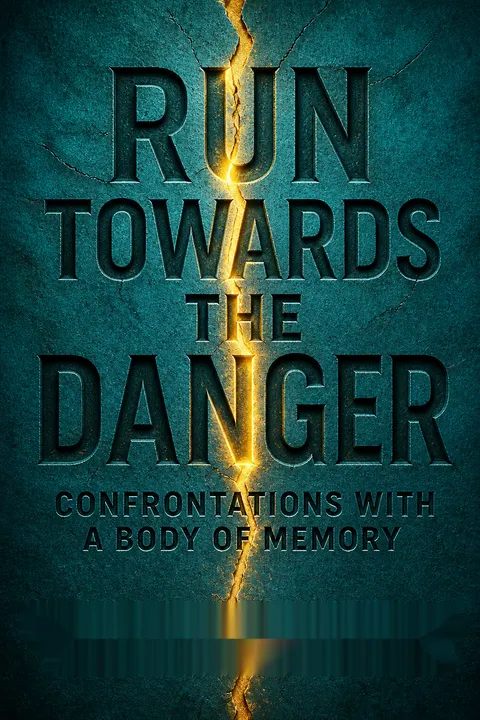
Run Towards the Danger is a memoir in linked essays, not a linear life story or a step-by-step recovery manual. Its organizing idea is that memory and present experience continually shape one another. Polley revisits childhood acting, bereavement, sexual harm, pregnancy, and concussion, but each story changes meaning as she gains new language, relationships, and evidence. The essays resist the false comfort of a single verdict: a person can love a parent and be failed by them, be harmed and later friendly, or be grateful for a career while condemning its conditions.
The book’s strongest contribution is its insistence on human complexity where institutions prefer clean categories. Courts want reliable testimony; productions want dependable child performers; medicine often wants symptoms that fit a familiar pathway. Polley shows how easily those demands can turn a person’s adaptive behavior into evidence against them. Her accounts do not make uncertainty disappear. They make uncertainty harder to weaponize.
The concussion story supplies a striking counterpoint to the other essays. In one setting, pushing through fear and symptoms worsened the problem. In another, clinician-guided exposure helped restore function. That contrast prevents a simple moral such as always rest or always persevere. The appropriate response depends on what is happening, what expertise is available, and whether challenge is safe and structured. The title phrase is powerful precisely because it describes a particular rehabilitation plan, not a universal cure.
The book also complicates the idea that healing means recovering an untouched former self. Polley’s past remains part of her, but it becomes less controlling as she can tell it, question it, and encounter better responses in the present. This is a humane, unsentimental account of recovery: not forgetting, not proving every detail, and not forcing every wound into a neat ending, but gaining more room to live alongside what happened.
Review Summary
Run Towards the Danger by Sarah Polley receives mostly glowing reviews (4.3/5 stars). Readers praise this essay collection exploring traumatic events from her life as a child actor, including stage fright, scoliosis, sexual assault by Jian Ghomeshi, a high-risk pregnancy, and a debilitating concussion. Most reviewers admire Polley's courageous, honest writing and her willingness to re-examine memories. The essays explore themes of trauma, memory, and healing. Several readers found the work emotionally resonant and beautifully crafted. A few reviewers felt disconnected or found the present-tense narration tedious, though they remain outliers among predominantly five-star reviews.
People Also Read
Glossary
run towards the danger
Guided exposure during recoveryA rehabilitation principle Polley applies after prolonged post-concussion symptoms. Rather than avoiding activities that trigger symptoms, she gradually re-enters them while following a clinician’s individualized exercise and exposure plan. The aim is to retrain the systems involved in balance, sensory processing, and anxiety. The phrase is specific to her treatment context, not advice to ignore symptoms or face danger without medical guidance.
Download PDF
Download EPUB
.epub digital book format is ideal for reading ebooks on phones, tablets, and e-readers.








