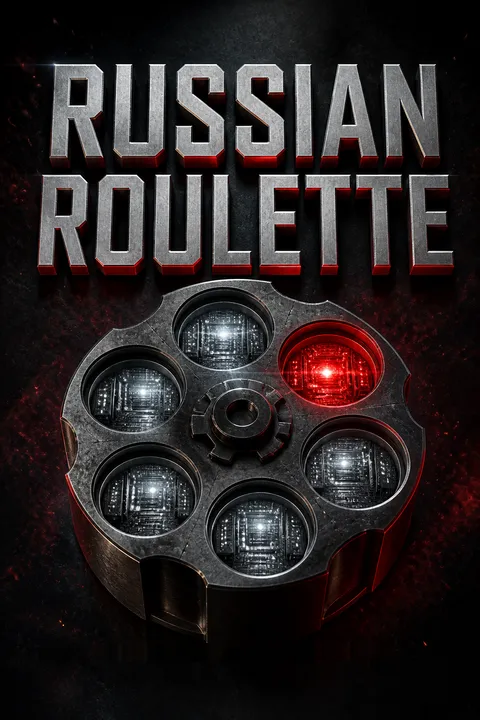


Key Takeaways
Treat election interference as a campaign, not a single cyberattack.
More than stolen files. The book traces a Russian operation that joined cyber espionage, leaked material, state media, and fabricated online identities. Hackers penetrated Democratic networks; WikiLeaks published stolen emails; and the Internet Research Agency, a St. Petersburg troll farm, seeded social media with divisive messages. The intelligence community ultimately judged that Russian officials directed the interference and that Putin preferred Trump, though it did not establish that the operation changed the vote count.
Old tactics, new channels. The authors connect this activity to “active measures,” the Soviet practice of spreading false stories and sowing distrust. Social platforms made those tactics cheaper, faster, and easier to disguise as ordinary political speech. The operation was not one dramatic breach, but a sustained effort to exploit American institutions and arguments.
What's striking is how the operation combined secrecy with visibility. Intrusions gathered material quietly, while leaks and fake accounts made the resulting conflict public and noisy. That is a useful model for understanding modern influence campaigns: the aim may be less to persuade everyone than to make shared facts and institutional trust harder to maintain. The distinction matters because attributing a hack does not, by itself, establish how much it affected voters. The book is strongest when it separates the well-supported finding of Russian activity from the harder question of electoral impact.
A reset with Moscow cannot substitute for reading Putin's incentives.
Engagement met resistance. The Obama administration’s “reset” sought practical cooperation with Russia, including arms control and work on Iran. But Putin remained the central power, while President Medvedev’s more cooperative posture proved temporary. Russian spies were still operating in the United States, and the Kremlin retaliated against American criticism of election fraud and human-rights abuses.
Warnings accumulated. Putin blamed Hillary Clinton for protests after Russia’s disputed 2011 parliamentary election. He later treated the U.S.-backed change of power in Ukraine as another Western assault and annexed Crimea. The book shows U.S. officials repeatedly weighing cooperation against evidence that Putin viewed politics as a contest for power, not a path toward partnership. Some officials, including Russian dissidents, warned that concessions would not change that basic calculation.
The reset story illustrates a familiar problem in diplomacy: cooperation on one issue can be mistaken for convergence in interests. Negotiations may produce concrete gains without changing how a government understands its security or its rivals. The book’s account is persuasive because it tracks accumulating evidence, rather than treating one failed policy as proof that engagement is always futile. The harder question is how to preserve useful channels while imposing costs for coercive behavior. A policy that offers only accommodation invites exploitation; one built only on confrontation can foreclose practical agreements.
Business ambition can create political vulnerabilities before any secret bargain.
Moscow was a long pursuit. Trump repeatedly sought a project in Russia, where a major tower could extend his brand and bring new partners and profits. His 2013 Miss Universe visit connected him with developer Aras Agalarov, a Putin-connected oligarch; a Trump Tower proposal followed, but collapsed amid economic and political obstacles.
The pursuit continued. In 2015, while running for president, Trump signed a letter of intent for another Moscow tower. His lawyer Michael Cohen and former associate Felix Sater pursued financing and permits, with Sater claiming links to Russian banks and officials. Trump publicly minimized his relationship with Sater while the project was active. These business efforts do not, by themselves, prove a political bargain. They do show how private interests can complicate a candidate’s ability to speak independently about a foreign government.
The central issue is not simply whether a deal closed. Even an unrealized venture can create incentives, dependencies, and questions about whose interests a public figure is serving. In ethics, this resembles a conflict-of-interest problem: the risk arises when private gain could reasonably influence public judgment, not only when a corrupt exchange is proven. The book’s account supports scrutiny of opaque business arrangements, while also requiring care not to treat every Russian customer or proposed project as evidence of coordination. Transparency is the practical remedy because it lets the public evaluate competing explanations.
Separate suspicious contacts from proof of a coordinated conspiracy.
Several channels raised concern. Trump adviser George Papadopoulos pursued a meeting with Russian officials after an intermediary told him Russia had damaging information about Clinton. Carter Page traveled to Moscow and met Russian figures, although he denied the more consequential meetings alleged in intelligence reporting. Trump Jr., Jared Kushner, and campaign chair Paul Manafort attended a 2016 meeting with a Russian lawyer after being told the Kremlin could provide damaging information on Clinton. Trump Jr. welcomed the prospect, but the meeting produced no usable evidence against her.
Context is not proof. The book also describes Michael Flynn’s paid appearance at RT, Russian outreach through NRA contacts, and Manafort’s extensive work for pro-Russian Ukrainian clients. These facts created legitimate counterintelligence concerns. They did not establish that every participant shared one plan or knowingly coordinated with Russian intelligence.
A disciplined reading distinguishes contact, intent, coordination, and outcome. Each is a different evidentiary claim, and proof of one does not automatically establish the next. This distinction is standard in both intelligence analysis and criminal investigation, where a hypothesis must be tested against alternative explanations and corroborated independently. The book assembles a troubling pattern of access and opportunity, but readers should resist collapsing that pattern into a single proven conspiracy. That caution does not excuse secrecy or poor judgment. It makes the argument more credible by keeping its strongest conclusions proportional to its evidence.
A warning that never reaches decision-makers is not a defense.
The alarm arrived early. In September 2015, FBI agent Adrian Hawkins contacted a low-level contractor at the Democratic National Committee about a suspected intrusion. The contractor was unsure the caller was genuine, and the warning did not prompt urgent action by party leaders. The FBI later provided an IP address and further evidence, but the DNC’s technology staff still could not find the breach.
The breach deepened. By April 2016, the security firm CrowdStrike found two separate Russian groups inside the DNC network. One had been present since at least July 2015. Meanwhile, a phishing email tricked campaign chairman John Podesta into entering his password on a fake site, giving attackers access to his messages. The book also describes confused communication between the FBI, party officials, and campaign staff, with secrecy intended to protect the investigation leaving key people uninformed.
This episode is a lesson in organizational resilience: technical detection is only one link in a chain that also requires trusted communication, clear responsibility, and rapid escalation. A warning that sounds vague or unverified can be ignored, especially in a busy organization already managing other crises. Security teams need procedures that make it easy to authenticate alerts and get them to decision-makers without broadcasting sensitive details. The account also shows the tradeoff in keeping an investigation secret. Secrecy can protect a response, but excessive compartmentalization can leave the intended target exposed.
A foreign influence campaign wins by amplifying fractures already at home.
The troll farm impersonated Americans. Former employee Lyudmila Savchuk described the Internet Research Agency as a workplace where staff created fake profiles, posted on social media, and were measured by engagement. Their assignments included promoting Putin, attacking opponents, and spreading racial or political insults. The operation also pushed fabricated events, such as a nonexistent chemical-plant explosion in Louisiana.
Contradiction was useful. Russian accounts supported causes across ideological lines, from Black Lives Matter to the armed Bundy ranch standoff. Facebook later estimated that Russian-linked posts reached about 126 million Americans; Twitter identified more than 36,000 possibly Russian-linked automated accounts that generated 1.4 million election-related tweets. These figures show reach, not how many people changed their votes. The operation’s broader aim, as described in the book, was to provoke conflict and distrust.
The strategy resembles political “trolling” at scale: provoke reactions, intensify group identity, and make hostile content appear to come from within the target society. Research on social networks suggests that emotionally charged material can travel far because people share it to signal allegiance, not merely because they believe it. That helps explain why contradictory messages can serve a common purpose. Still, reach is not persuasion, and exposure does not establish a change in behavior. The book’s strongest claim is that the campaign exploited existing divisions, not that it invented them or controlled how every audience responded.
The leak's timing can matter more than the leak's revelations.
The convention became the target. In July 2016, WikiLeaks released thousands of stolen Democratic National Committee emails just before the party’s convention. Some showed senior officials privately favoring Clinton over Bernie Sanders. The disclosures fueled Sanders supporters’ anger and forced DNC chair Debbie Wasserman Schultz to resign. The leak’s political force came from its timing and the party’s existing division, even though the emails did not demonstrate that the DNC had carried out every proposed attack on Sanders.
The drip kept attention fixed. In October, WikiLeaks published John Podesta’s emails in installments. The releases repeatedly redirected campaign coverage toward Clinton’s private speeches, fundraising, and judgment. The first major dump coincided with the release of a damaging Trump video and an official U.S. statement attributing election-related hacks to Russia. The competing stories struggled for attention, and the emails became a recurring campaign event.
In an attention economy, publication is an intervention, not a neutral act of disclosure. Timing can turn otherwise familiar or limited material into a crisis by placing it where an organization is least able to respond. Staggered releases also create a serial news cycle, giving each batch a fresh moment of prominence. This does not mean the documents were irrelevant or that journalists should ignore authentic material. It means reporting should examine provenance, selection, and timing alongside content, especially when a source may be trying to shape the public agenda.
Defend election trust without letting caution become paralysis.
Officials feared making matters worse. The Obama administration weighed sanctions, public warnings, and cyber retaliation while trying to protect election systems. Officials worried that a public accusation could be dismissed as partisan, amplify Russian goals, or weaken cooperation with state election officials. Some states resisted federal cybersecurity assistance. The administration also delayed a public attribution while seeking bipartisan support, which never produced a clear warning naming Russia.
The response came in pieces. In October 2016, the intelligence community publicly stated that Russia’s senior officials had authorized interference. The announcement was overshadowed by the Access Hollywood tape and WikiLeaks’ first release of Podesta emails. After the election, Obama imposed sanctions and expelled Russian diplomats, but the authors describe senior officials who believed the response was too limited or too late.
The dilemma is real: publicly naming an adversary can strengthen deterrence, but it can also politicize intelligence and deepen distrust if audiences see the statement as campaign maneuvering. Yet silence has costs of its own. It leaves targets less prepared and allows an attacker to define the story. A credible response requires more than an announcement: consistent evidence standards, bipartisan communication, and practical defensive measures that can be explained without exposing sources. The book shows the danger of treating nonpartisanship as a reason to avoid clarity, especially when an adversary is already exploiting public uncertainty.
Measure influence as accumulated pressure, not proof one cause decided everything.
The result was close, not self-explanatory. Hillary Clinton won the popular vote, but Donald Trump won the Electoral College by narrow margins in Wisconsin, Michigan, and Pennsylvania. A shift of about 77,000 votes across those states would have reversed the outcome. Russian hacking, leaks, and social media activity formed part of the campaign environment, alongside Clinton’s own vulnerabilities, campaign decisions, and FBI Director James Comey’s late intervention in the email investigation.
The book does not calculate a Russian vote effect. It argues that the operation damaged trust, amplified conflict, and benefited Trump’s campaign, while acknowledging that its precise effect on the result cannot be isolated. After the election, Trump repeatedly rejected the intelligence community’s findings and attacked the investigations. That response, the authors argue, helped shield Moscow from accountability and left the possibility of future interference unresolved.
Close elections invite tidy explanations, but political outcomes are usually produced by interacting causes rather than one decisive lever. The narrow margins make Russian activity consequential enough to investigate, not measurable enough to credit with a specific number of votes. This is a causal-inference problem: a plausible mechanism is not the same as a demonstrated effect, and the counterfactual election without interference cannot be observed. The book’s lasting concern is therefore broader than who would have won otherwise. Repeated attacks on evidence, institutions, and electoral legitimacy can weaken democracy even when their precise effect on a single result remains unknowable.
Analysis
Russian Roulette is an investigative history of a campaign that moved from Moscow’s strategic grievances to the mechanics of the 2016 election, then into the first year of Trump’s presidency. Its narrative power comes from linking episodes that initially looked unrelated: Trump’s pursuit of Russian business, Putin’s anger at perceived Western interference, the DNC intrusion, the campaign’s contacts with Russian intermediaries, and the eventual use of stolen material in public. The resulting account makes information warfare legible as a sequence of choices and missed signals, rather than an abstract cyber threat.
The essential analytical distinction is between evidence of Russian activity and evidence for particular claims about its reach or effect. The book presents a strong case that Russian actors hacked Democratic targets, distributed stolen material, and ran an online influence effort. It also details contacts and business dealings that warranted scrutiny. But the Steele dossier’s most sensational allegations were unverified, and the account does not establish that Russian activity changed enough votes to decide the election. Those propositions should not be bundled together. The strongest interpretation is neither that the entire scandal was proven in every detail nor that uncertainty about specific allegations invalidates the documented operation.
The book’s account of institutional response is especially valuable because it shows competing risks, not a simple choice between action and inaction. Officials feared partisan misuse of intelligence, escalation with Russia, and damage to public confidence. Those concerns were legitimate, but delay also gave the operation room to proceed and complicated a clear public explanation. The episode exposes a structural vulnerability: open societies must protect free political debate while identifying covert manipulation that disguises itself as ordinary debate.
The result is a cautionary portrait of asymmetric conflict. A foreign government did not need to control American politics to exploit its divisions. It needed access, plausible deniability, and a domestic environment already primed for suspicion. The central lesson is therefore institutional: security depends on technical defenses, credible public communication, and a political culture capable of distinguishing warranted scrutiny from unsupported certainty.
Review Summary
Russian Roulette provides a comprehensive account of Russia's interference in the 2016 U.S. election and Trump's connections to Russia. Reviewers praise the book's detailed chronology and investigative journalism, noting it connects many pieces of the complex story. While some find it lacks new revelations for those following the news closely, many appreciate its organization of known information. Critics argue it presents speculation as fact and shows political bias. Overall, most reviewers consider it an important, well-researched work that illuminates a critical moment in U.S. history.
People Also Read



Glossary
Active measures
Covert influence operationsA Soviet-era term for covert efforts to influence public opinion or weaken an adversary through false stories, fabricated documents, planted narratives, and other forms of political manipulation. The book uses it for Russian operations that adapted these methods to online media, including fake accounts and coordinated disinformation.
Gerasimov doctrine
Nonmilitary coercion strategyThe book’s label for ideas in a 2013 article by Russian military chief Valery Gerasimov. The article described how political, economic, and informational tools could be used alongside or instead of conventional military force. In this account, it anticipates exploiting social divisions and information channels as instruments of conflict.
kompromat
Compromising informationRussian shorthand for damaging or embarrassing material that can be used to pressure, discredit, or control someone. The book describes kompromat as a recurring instrument of Russian political and intelligence practice, including alleged sexual recordings. The existence of a particular kompromat claim does not establish that the material is genuine or was used.
Internet Research Agency
Russian troll operationA St. Petersburg organization described in the book as employing workers to create fake online identities and circulate politically directed posts. Staff promoted Kremlin messages, attacked opponents, and posed as ordinary social media users. The operation combined paid human activity with platform tools to spread propaganda and inflame divisions.
Advanced Persistent Threat (APT)
Long-running cyber threatA cybersecurity label for a sophisticated actor or group that gains access to computer networks and maintains that access over time, often to collect information. In the book, APT 29 and APT 28 are associated with Russian intelligence services and with separate intrusions into Democratic networks.
Cozy Bear
APT 29 hacker groupThe cybersecurity community’s name for a Russian hacking group also called APT 29. The book links it to Russia’s foreign intelligence service and reports that it had been inside the Democratic National Committee’s network since at least July 2015. It was one of two Russian groups found in the DNC system.
Fancy Bear
APT 28 hacker groupThe cybersecurity community’s name for a Russian hacking group also called APT 28, associated in the book with the GRU, Russia’s military intelligence service. It entered the DNC network in 2016 and was known for stealing information and using fake identities or leaks to publish it.
Spearphishing
Targeted deceptive emailA targeted form of phishing in which an attacker sends a deceptive message designed to trick a particular person into revealing credentials or opening a malicious link or attachment. The book describes a fake Google security email that led John Podesta to enter his password on a fraudulent site, exposing his email account.
FAQ
What's Russian Roulette about?
- Focus on Trump and Russia: The book explores the connections between Donald Trump, his campaign, and Russia during the 2016 presidential election, highlighting Russian interference aimed at disrupting American democracy.
- Investigative Journalism: Authors Michael Isikoff and David Corn use investigative journalism to piece together events, revealing the extent of Russian influence and the responses from political figures and agencies.
- Historical Context: It provides a historical backdrop of U.S.-Russia relations, examining Trump's business dealings in Russia and their implications on his political career.
Why should I read Russian Roulette?
- Insightful Analysis: The book offers a detailed analysis of political and intelligence failures that allowed Russian interference, providing a deeper understanding of modern political campaigns.
- Relevance to Current Events: It is timely and relevant, given ongoing discussions about election security and foreign interference, helping readers grasp the complexities of international relations.
- Engaging Narrative: The authors craft a compelling narrative that reads like a thriller, making it both informative and entertaining for those interested in politics and current events.
What are the key takeaways of Russian Roulette?
- Russian Interference: The book confirms that Russian intelligence agencies actively interfered in the 2016 election, aiming to benefit Trump and undermine Clinton.
- Trump's Connections to Russia: It highlights Trump's longstanding business interests in Russia and his campaign's interactions with Russian officials, raising ethical and legal questions.
- Impact on Democracy: The narrative emphasizes the threat posed by foreign interference to democratic processes, urging vigilance and reform to protect electoral integrity.
What are the best quotes from Russian Roulette and what do they mean?
- “It’s a shakedown.”: Reflects Trump's reaction to the intelligence briefing on Russian interference, showcasing his paranoia and belief of being targeted by the establishment.
- “We’ve been ratfucked.”: Captures the sentiment of those within the Democratic Party who felt blindsided by the extent of Russian interference and the fallout during the election.
- “This is the real reset of the Western world.”: Highlights the significant geopolitical shift resulting from the 2016 election, suggesting Trump's presidency would alter the global landscape.
How did Russian interference manifest during the 2016 election?
- Cyberattacks on Democratic Institutions: Russian hackers infiltrated the DNC and other political organizations, stealing sensitive information to damage Clinton's campaign.
- Social Media Manipulation: A coordinated effort spread disinformation and propaganda on social media, polarizing American voters and sowing discord.
- Direct Contacts with Trump Campaign: Various meetings and communications between Trump campaign officials and Russian representatives suggested a willingness to engage with foreign powers.
What role did the FBI play in the events described in Russian Roulette?
- Investigation of Russian Ties: The FBI launched a counterintelligence investigation into potential links between the Trump campaign and Russian officials.
- Comey’s Controversial Actions: James Comey faced criticism for his handling of the investigation, particularly his decision to announce the reopening of the Clinton email investigation.
- Challenges of Transparency: The book discusses the tension between the FBI's need for confidentiality and the public's right to know about foreign interference.
How did the Trump campaign respond to allegations of Russian interference?
- Denial and Dismissal: Trump and his aides consistently denied any connections to Russia, labeling the allegations as “fake news” or a “witch hunt.”
- Utilizing Russian Leaks: The campaign capitalized on information released by Russian hackers, using it to attack Clinton and bolster Trump's narrative.
- Public Relations Strategy: The campaign focused on undermining the credibility of the media and intelligence agencies, maintaining support among Trump's base.
What specific methods did Russia use to interfere in the 2016 election?
- Cyberattacks: Russian hackers infiltrated the DNC and other political organizations, stealing sensitive information to undermine Clinton's campaign.
- Disinformation Campaigns: Russia employed social media and fake news to spread disinformation, creating division and confusion among American voters.
- Kompromat: The concept of kompromat, or compromising material, was used by Russian intelligence to manipulate and control individuals, particularly in the context of Trump’s alleged activities in Moscow.
What were the implications of the DNC email leaks?
- Damage to Clinton’s Campaign: The leaks revealed internal communications showing bias against Bernie Sanders, creating divisions within the Democratic Party.
- Public Perception of Corruption: The emails fueled narratives about corruption within the Democratic establishment, which Trump and his allies exploited.
- Long-term Effects on Trust: The leaks eroded public trust in the Democratic Party, affecting its image and ability to connect with voters.
How did the U.S. government respond to Russian interference according to Russian Roulette?
- Delayed Reaction: The U.S. government was slow to recognize the severity of the Russian threat, with intelligence agencies initially downplaying the attacks.
- Political Infighting: Internal conflicts within the Obama administration regarding how to address the interference are highlighted.
- Lack of Accountability: The failure to hold individuals accountable allowed the situation to escalate, emphasizing the need for a robust defense against future threats.
How did the authors conduct their research for Russian Roulette?
- Extensive Interviews: Isikoff and Corn conducted over 100 interviews with key figures, including intelligence officials and campaign staffers.
- Access to Documents: They utilized public records, intelligence reports, and leaked documents to substantiate their claims.
- Collaboration with Experts: The authors consulted with cybersecurity experts and political analysts to understand the implications of Russian interference.
What are the potential consequences of the events described in Russian Roulette?
- Erosion of Democratic Norms: The book warns that foreign interference poses a significant threat to democratic institutions and processes.
- Ongoing Investigations: Investigations into Trump’s ties to Russia continue to have ramifications for his presidency and the Republican Party.
- Geopolitical Tensions: The events of 2016 have contributed to a more adversarial stance between the U.S. and Russia, affecting international diplomacy and security.
Download PDF
Download EPUB
.epub digital book format is ideal for reading ebooks on phones, tablets, and e-readers.








