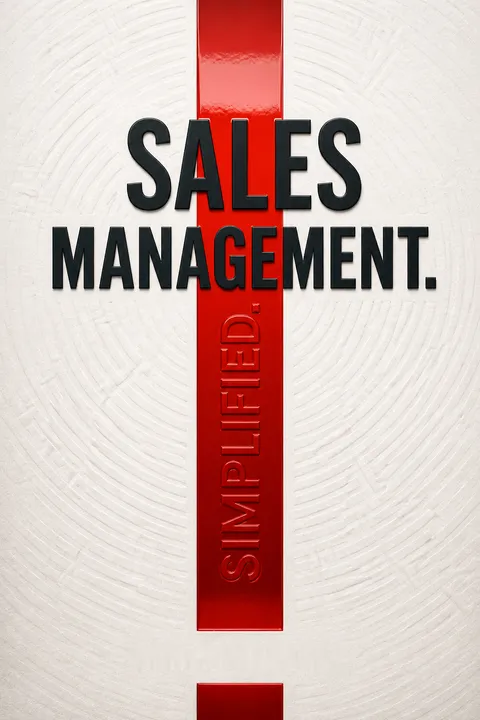


Key Takeaways
Fix the leadership system before sending another round of sales training.
Performance starts at the top. Weinberg opens with his own painful promotion from star salesperson and sales coach to struggling sales manager. Overwhelmed by demands from executives, customers, and other departments, he called his father, who pointed out that the job required clear priorities, not merely longer hours. The larger lesson is that improving individual selling skills cannot, by itself, repair an organization where leadership and culture work against the sales effort.
A capable sales team needs a capable leader: someone who sets direction, establishes expectations, and removes barriers to selling. Weinberg argues that organizations too often spend heavily training salespeople while neglecting the people responsible for leading them.
The systems perspective is the book's most important correction to the reflex of blaming the salesperson. Performance depends not only on individual skill but also on the conditions leaders create: time, clarity, incentives, and access to coaching. That does not make individual accountability irrelevant. It means the diagnosis should distinguish a person's ability from a broken operating environment. Leaders gain a more useful question than who is failing: what in the system repeatedly makes success harder?
Score salespeople on revenue goals, not how busy their calendars look.
Make results visible. One company had healthy growth from existing customers but weak new-account development. Its sales leader had reports and technology, yet could not name individual goals for acquiring new customers or show progress against them. The first management fix was not another tool. It was defining the outcome and tracking it.
Weinberg describes companies that stopped publishing sales results during the 2008-2009 downturn, then failed to restore accountability after markets recovered. Goals and reports make performance legible: managers can recognize strong results, spot trouble, and discuss gaps without public humiliation. Activity still matters, but a full calendar is not proof of effective selling. Start with outcomes, then investigate the work behind them.
Visible measures can align a team around a shared definition of success, especially when goals separate new growth from routine account maintenance. They can also distort behavior if the measured outcome is too narrow or depends heavily on market conditions. A sound scorecard therefore pairs revenue outcomes with relevant evidence about future opportunities. The key distinction is between using metrics to guide a candid conversation and treating a number as a complete explanation of performance.
Protect the sales manager's calendar from every job except leading.
Urgency can crowd out leadership. Weinberg recounts a sales director with 22 direct reports, no administrative help, more than 200 emails a day, and a calendar packed with meetings unrelated to sales. He had no time for field coaching, pipeline reviews, or regular conversations with his team. The company expected sales improvement while making core sales management nearly impossible.
The same problem appears when a manager is also expected to carry a personal quota. Selling rewards protected focus on one's own deals; leading requires availability, coaching, and attention to other people's results. Combining the roles can leave both neglected, and can create mistrust if the manager competes with the team for leads or accounts. Senior leaders must protect management time, not simply demand better results from an overburdened manager.
This is a classic opportunity-cost problem: every committee, customer-service escalation, and personal deal consumes time that cannot also be spent developing the team. The solution is not to declare every internal task worthless. Some operational emergencies genuinely affect customers. The useful test is whether the sales manager is routinely the default owner of work another role could handle. If so, the organization is spending its most leveraged sales resource on tasks with a weaker connection to growth.
Use CRM to inform leadership, not to impersonate it.
Software cannot observe a conversation. Customer relationship management systems can organize opportunities, support reporting, and help a team coordinate. But Weinberg warns that managers can become so focused on clean records and overdue tasks that updating the system appears more important than advancing a sale. A CRM can also impose stages that do not match how customers actually buy.
The deeper loss is human observation. A screen cannot reveal whether a salesperson listens, asks useful questions, or earns the buyer's trust. Weinberg urges managers to spend time where selling happens, including alongside inside sales teams. Use technology to see patterns and prepare better questions, then confirm what the numbers mean through direct conversation and observation.
A management dashboard is a representation of work, not the work itself. The distinction matters because organizations often optimize what is easiest to count, especially when leaders are distant from daily customer interactions. Data is most useful when it prompts inquiry rather than substitutes for it. At the same time, direct observation can be biased or episodic. The strongest judgment combines consistent records with real encounters, allowing each source to correct the blind spots of the other.
Build a culture where high standards and genuine backing coexist.
Trust makes candor usable. Weinberg describes a company whose sales culture was energetic, competitive, and unusually supportive. Its CEO set goals with each salesperson, coached them, and celebrated wins, including taking the team to a Rolling Stones concert after a strong run. In meetings, people could challenge one another bluntly because the feedback was understood as an effort to help the team improve, not to embarrass individuals.
The opposite culture blames salespeople for problems, withholds credit for wins, or lets executives take over customer conversations to display their expertise. Weinberg urges managers to develop people rather than make themselves the hero of every deal. Team meetings should align, equip, and energize; public praise belongs with success, while difficult performance conversations belong in private.
The combination of psychological safety and demanding standards is more powerful than either alone. Support without challenge can become indulgence; challenge without trust can become threat. The concert story is a vivid signal of recognition, but culture is built more by repeated decisions: who receives credit, whether feedback is fair, and whether leaders keep commitments. Celebration cannot compensate for an unfair system, and bluntness is constructive only when people believe the speaker is invested in their success.
Pay more for new growth than for inherited business.
Compensation teaches priorities. Weinberg argues that salespeople adapt their effort to the rewards on offer. In one company, a complex plan tied commissions mostly to total territory sales. New deals barely changed earnings, so salespeople had little financial reason to pursue them. A flat plan can also over-reward weak performers while making top producers question why extra effort pays so little.
The book distinguishes new revenue from recurring business that would likely continue anyway. Both may matter, but they do not represent the same selling effort. A plan that pays equally for finding a customer and maintaining an established account can encourage sellers to protect comfortable portfolios instead of hunting. Commission should be genuinely variable and connected to the behavior the company needs, rather than functioning as a predictable bonus by another name.
Compensation is a practical expression of strategy. If leaders say new customers matter but reward only aggregate territory volume, employees are responding rationally when they favor the work that pays reliably. Yet sharper incentives need safeguards: sellers should not be pushed toward poor-fit deals, unnecessary discounting, or neglect of valuable current customers. A good plan makes desired priorities economically visible while preserving basic standards for profitability, customer fit, and service.
Separate hunting from account care instead of demanding one super-rep.
Sales roles require different strengths. Some sellers are energized by opening doors, handling rejection, and creating opportunities. Others excel at maintaining relationships, solving technical problems, or serving established customers. Weinberg calls it a mistake to assume one generic job can combine all these demands equally well. He uses the contrast between hunters and account-care specialists, and jokes that a zookeeper is unlikely to become a hunter simply because management asks.
A flooring distributor expected salespeople to build displays, manage territories, and negotiate large accounts. The role bundled incompatible tasks and frustrated both employees and leadership. By contrast, one company freed a strong hunter from much of the account-management work and paired him with account managers. The team sold more than $7 million, compared with the usual individual range of roughly $1.5 million to $2.5 million.
Role design is a way to make talent complementary rather than asking every employee to be equally good at every stage of a sale. The hunter and farmer distinction is useful, but it should not become a fixed personality label. Skills can develop, and customer continuity can suffer if acquisition and service teams are poorly coordinated. The practical task is to identify which work creates the most value, who is best suited to it, and how handoffs preserve the customer's experience.
Invest in stars, coach recoverable underperformers, and replace poor fits.
Manage talent deliberately. Weinberg estimates that consistent top producers make up about 10 to 20 percent of a sales population. Their success does not mean they need no attention. Managers should learn what keeps each person engaged, remove obstacles, and avoid assuming that money or public praise alone will retain them.
For struggling sellers, repeated misses require action. Weinberg's talent model covers role fit, retention, coaching or replacing underperformers, and recruiting. Start with a clear private conversation and specific expectations. If a person has potential, provide closer support and assess progress; if the role is a clear mismatch or performance does not improve, move toward a respectful exit. In interviews, ask candidates to explain recent deals they personally won and how they would approach their first 90 days.
Differentiated investment is not favoritism when it is tied to contribution and potential. High performers can often turn added support into growth, while a struggling employee may need a fair, concrete opportunity to improve. The risk lies in confusing confidence with evidence: stars can be overestimated, and a weak quarter can conceal a strong long-cycle pipeline. Clear expectations, repeated observation, and specific deal histories make talent decisions less dependent on charisma, reputation, or managerial instinct.
Review results first, pipeline next, and activity only when needed.
Accountability should follow a clear logic. In monthly one-on-ones, Weinberg's former manager began with the sales report, then examined upcoming opportunities, and asked about activity only if results and pipeline were weak. The sequence matters: it keeps the conversation focused on outcomes and avoids treating a salesperson like a time-clock employee.
Two questions help reveal whether the pipeline is moving: What new opportunities appeared since the last meeting? Which existing opportunities advanced? Weinberg describes a seller who repeatedly had poor results, an empty pipeline, and no new opportunities. After three monthly conversations, the pattern made the next management decision difficult to ignore. The purpose is not to shame someone, but to distinguish a temporary miss from sustained failure and to offer help before the situation becomes worse.
This sequence separates lagging indicators from leading ones. Results show what has happened; pipeline health and opportunity movement suggest what might happen next; activity can help explain a shortfall when both are poor. That ordering makes scrutiny easier to justify and less arbitrary. It still requires judgment: a long, uncertain sales cycle can make monthly comparisons noisy. Managers should set a cadence suited to the business, while keeping the conversation anchored in observable evidence rather than excuses or suspicion.
Choose fewer targets, arm reps with a clear story, and inspect execution.
Turn strategy into a workable attack. Weinberg's sales process begins with selecting named customers and prospects worth pursuing. A shorter, realistic list can help sellers make repeated, thoughtful attempts instead of scattering one-off calls across an enormous territory. Managers should challenge stale account lists and focus effort on customers with real growth potential.
Then equip the team with a concise sales story: a clear explanation of the problems the company addresses and why its approach matters to the buyer. Reps need practice with discovery calls, presentations, and follow-up, not just product information. Individual business plans help turn goals into actions, identify obstacles, and create a record to revisit. Reports, meetings, and direct observation let managers check whether the planned work is actually happening.
The strength of this operating rhythm is its connection between direction, capability, and review. A target list without a relevant message produces activity without traction; a compelling story without follow-through stays hypothetical. The approach also recognizes that sellers need management input rather than unlimited autonomy over where to spend time. Its limit is that a list or plan can become ritual paperwork. Managers should keep both adjustable as market evidence changes, and reward learning as well as closed revenue.
Analysis
The book's central argument is that weak sales results are often misdiagnosed as a problem with individual effort. Weinberg redirects attention to the system around the seller: leadership priorities, culture, role design, compensation, coaching, and the discipline of pursuing the right customers. This makes the book more than a collection of sales tips. Its stories show how ordinary management choices accumulate into a team's daily conditions, from a CRM that punishes late updates to a compensation plan that makes prospecting irrational.
The practical strength is the way it turns broad complaints into observable management routines. Goals become reports. Accountability becomes a sequence of questions. Talent becomes a set of decisions about role fit, development, retention, and recruitment. Strategy becomes named targets and a usable sales story. The advice is memorable because it attaches abstractions to scenes: an overwhelmed director with a calendar full of meetings, a manager who reviews results with a yellow pad, and a team whose trust allows candid feedback.
The book's bluntness is both an asset and a limitation. It challenges the common habit of calling every missed target a market problem or a seller's fault. But its results-first language can sound overly absolute in businesses where outcomes depend on long cycles, product constraints, or uneven territories. The book does acknowledge pipeline and activity as diagnostic evidence, yet leaders still need to distinguish controllable effort from external conditions. Similarly, a preference for variable pay and competitive scorekeeping can motivate some teams while alienating others if goals feel unfair or incentives reward the wrong behavior.
The most durable lesson is therefore not simply to demand more. It is to build a coherent environment in which the desired work is clear, supported, visible, and rewarded. The manager's calendar, the team's culture, and the company's compensation design are not administrative details around sales. They are part of the sales engine itself.
Review Summary
Sales Management Simplified receives high praise for its practical, straightforward advice on leading sales teams. Readers appreciate Weinberg's candid approach and real-world insights. Many find the book's two-part structure effective, with the first half highlighting common mistakes and the second offering actionable strategies. Sales professionals at all levels report finding value in the book's guidance on goal-setting, coaching, and creating a results-driven culture. Some readers note that while the advice is simple, it's often overlooked in practice, making this book a valuable resource for refocusing on sales fundamentals.
People Also Read








Glossary
Four Rs of Sales Talent Management
Talent decisions frameworkA model for managing sales talent across four responsibilities: placing suitable people in suitable roles, retaining strong performers, addressing underperformance through coaching or replacement, and recruiting. It encourages managers to treat hiring, development, retention, and performance decisions as connected parts of the sales leader's job rather than isolated emergencies.
Sales Management Accountability Progression
Results-to-activity reviewA sequence for private manager-salesperson reviews. The manager first examines actual results, then checks whether the pipeline contains enough credible future opportunities, and turns to activity when results and pipeline are both weak. The order grounds questions about a seller's time in performance evidence, instead of beginning with surveillance of daily behavior.
sales story
Customer-focused sales explanationA concise set of talking points that explains the customer problems a company solves and why its approach is relevant or distinctive. Weinberg treats it as a central selling tool because its ideas can be adapted for prospecting, calls, presentations, and proposals. A useful story focuses on customer concerns rather than opening with company history or a product catalogue.
selfishly productive
Protecting high-value workWeinberg's term for deliberately protecting time for the work that most directly produces results. For a sales manager, that means resisting low-value meetings, excess email, and unrelated tasks so time remains for coaching, team leadership, and customer-facing work. The phrase describes disciplined prioritization, not disregard for colleagues or legitimate responsibilities.
zookeepers
Relationship-focused account caretakersA metaphor for salespeople who are especially comfortable maintaining relationships, serving current customers, and caring for established accounts. Weinberg contrasts them with hunters, who are more inclined to pursue unfamiliar prospects and tolerate rejection. The image warns managers not to assume that an account-care specialist will naturally thrive in a new-business role without assessing fit, support, and motivation.
FAQ
What's Sales Management. Simplified. about?
- Focus on Leadership: The book highlights the pivotal role of sales leadership in enhancing sales performance, suggesting that many sales issues are rooted in leadership and cultural challenges rather than the sales team itself.
- Two-Part Structure: It is divided into two sections; the first part addresses the reasons behind sales failures, while the second part offers practical strategies for improving sales management.
- Actionable Framework: Mike Weinberg provides a straightforward framework focusing on leadership, culture, talent management, and sales processes to help organizations achieve exceptional sales results.
Why should I read Sales Management. Simplified.?
- Real-World Insights: The author shares his extensive experience in sales management and consulting, offering practical advice and relatable examples for sales leaders.
- Transformative Approach: The book encourages sales managers to rethink their roles, focusing on building a healthy sales culture and developing their teams.
- Straightforward Language: Weinberg's direct writing style simplifies complex concepts, making it a valuable resource for both novice and seasoned sales managers.
What are the key takeaways of Sales Management. Simplified.?
- Leadership Matters: Effective leadership is crucial in shaping a successful sales culture, as highlighted by the phrase, "As goes the leader, so goes the organization."
- Accountability is Crucial: The book emphasizes the importance of accountability, with clear goals and regular performance reviews as core components of sales management.
- Focus on Results: Establishing clear, measurable objectives is essential for driving performance, as a sales culture without goals is a sales culture without results.
What are the best quotes from Sales Management. Simplified. and what do they mean?
- "You can’t effectively run a sales team when you’re buried in crap." This quote stresses the importance of prioritizing high-value activities over administrative tasks for sales managers.
- "Sales is about results. Period." It underscores that the primary function of salespeople is to drive revenue, with performance measured against clear sales goals.
- "Sales leaders chase shiny new toys searching for the magic bullet." This reflects the tendency to seek quick fixes instead of addressing fundamental issues within sales organizations.
What are the common reasons sales organizations fail according to Sales Management. Simplified.?
- Lack of Clear Goals: Many organizations fail to set specific, measurable goals for their sales teams, leading to confusion and lack of direction.
- Poor Leadership: Ineffective sales leadership can create a toxic culture, demotivating salespeople and hindering performance.
- Inadequate Coaching: A lack of coaching and mentoring results in underdeveloped sales skills, leaving salespeople ill-equipped to meet their targets.
How does Mike Weinberg define a healthy sales culture in Sales Management. Simplified.?
- Supportive Environment: A healthy sales culture is characterized by support, appreciation, and recognition of sales efforts, fostering engagement and motivation.
- Clear Expectations: It involves having clear goals and expectations communicated effectively to the sales team, ensuring everyone understands their roles.
- Celebration of Success: Regularly celebrating victories, both big and small, helps build morale and reinforces a results-oriented mindset within the team.
What is the significance of talent management in Sales Management. Simplified.?
- Right People in Right Roles: Ensuring that salespeople are well-suited for their specific roles is crucial for maximizing performance and achieving sales goals.
- Retention of Top Producers: The book emphasizes retaining high-performing salespeople by providing them with the support and resources they need to succeed.
- Addressing Underperformance: Sales leaders must proactively address underperformers, either by coaching them to improve or making the difficult decision to replace them.
What practical advice does Weinberg offer for improving sales meetings in Sales Management. Simplified.?
- Focus on Results: Sales meetings should be results-oriented, with a clear agenda that aligns with the team's goals and objectives.
- Engagement and Energy: Meetings should energize and equip the team, fostering a collaborative environment where ideas and strategies can be shared.
- Regular One-on-Ones: Conducting regular one-on-one meetings between sales managers and team members can significantly enhance accountability and performance.
How does Sales Management. Simplified. address the use of CRM systems?
- Avoiding CRM Overload: The book warns against sales managers becoming overly focused on CRM tasks at the expense of actual selling activities, which can decrease productivity.
- Data vs. Action: While CRM systems are valuable for tracking sales activities, they should not replace personal leadership and direct engagement with salespeople.
- Balancing Administrative Tasks: Sales leaders should ensure that CRM usage supports sales efforts rather than becoming a burden that distracts from core selling activities.
What is the role of coaching in sales management according to Sales Management. Simplified.?
- Essential for Development: Coaching is vital for developing the skills and capabilities of salespeople, helping them improve performance and achieve goals.
- Field Engagement: Sales managers should spend time in the field with their salespeople, providing real-time feedback and guidance during actual sales interactions.
- Creating a Learning Culture: A strong coaching culture encourages continuous learning and improvement, essential for maintaining a competitive edge in sales.
How does Sales Management. Simplified. suggest addressing underperformance in sales teams?
- Proactive Approach: Sales leaders should be proactive in identifying and addressing underperformance, rather than waiting for issues to escalate.
- Coaching and Development: Providing targeted coaching and development opportunities can help underperformers improve their skills and meet targets.
- Difficult Decisions: When necessary, sales leaders must make tough decisions, such as replacing underperformers, to maintain team effectiveness and morale.
What strategies does Sales Management. Simplified. recommend for creating a results-oriented sales culture?
- Clear Goals and Metrics: Establishing clear, measurable goals and metrics is essential for driving performance and accountability within the sales team.
- Regular Performance Reviews: Conducting regular performance reviews helps ensure that salespeople are meeting expectations and provides opportunities for feedback and improvement.
- Celebrating Achievements: Recognizing and celebrating achievements, both big and small, reinforces a focus on results and motivates the team to continue striving for success.
About the Author

Download PDF
Download EPUB
.epub digital book format is ideal for reading ebooks on phones, tablets, and e-readers.








