

Key Takeaways
Build a healthier home through small changes, not eco perfection.
Practice before products. Sara Snow grew up in a family that gardened, composted, conserved water, and heated its home with a woodstove and passive solar design. Even a child’s compost chore came with a small reward: mint leaves on the walk back. The point was not that every household should copy this rural life, but that ordinary routines can teach care for resources and make it feel normal.
Progress can restart. Snow also describes leaving a demanding morning television job after years of three a.m. wake-ups left her exhausted. Better food and a healthy home could not undo an unhealthy schedule. Her practical advice is to change a few things at a time, rather than treating greener living as an all-or-nothing test.
What's valuable here is the shift from virtue to practice. A compost bowl, shared chores, or a calmer bedtime makes environmental responsibility tangible instead of abstract. This resembles how children learn norms in families: by participating in repeated routines, not merely hearing lectures. The account also resists a common trap in wellness culture, which is to optimize food and products while ignoring work, sleep, and stress. The rural model is not practical or desirable for everyone, though. The transferable idea is to make care fit the household, not to mistake one family's way of living for the only right one.
Prioritize organic for the foods your family eats most often.
Spend with a target. Snow recommends starting with produce that tends to carry more pesticide residues, especially items eaten frequently by children. She cites an Environmental Working Group analysis of government tests that ranked common fruits and vegetables, and suggests using its higher-residue list as a guide, not as a reason to avoid produce altogether.
Small shifts can matter. The book describes a study of 23 schoolchildren whose urine was tested before, during, and after five days on an organic diet. Markers of organophosphate insecticide exposure nearly disappeared during the organic-food period. Snow also argues that organic farming benefits soil and water by avoiding prohibited synthetic pesticides and fertilizers. Organic food may cost more, so replacing the most frequently eaten items first is a practical way to manage the expense.
The strongest case here is targeted exposure reduction, not the idea that conventional produce should be feared. The five-day study offers a concrete example of how diet can change measured exposure, while the ranked list gives shoppers a usable way to allocate limited budgets. Claims that organic produce is reliably more nutritious or tastier are less decisive than this exposure argument and should not be treated as guaranteed benefits. The more general lesson is to compare choices by likely exposure, frequency, and affordability, rather than demanding that every item in a grocery cart meet one ideal standard.
Ask local growers how they farm before assuming their produce is organic.
Make food nearby. Snow notes that the average American meal travels about 1,500 miles, with transport costing fuel and time that can reduce freshness. Farmers’ markets and community-supported agriculture offer alternatives. A CSA, or community-supported agriculture, is a farm-share arrangement: members pay at the start of a season and receive regular portions of the harvest. The changing produce box can also prompt cooks to try unfamiliar vegetables.
Ask before buying. Market food is not automatically organic. Some small growers follow organic methods without paying for certification, while others use conventional practices. Snow advises asking about sprays, crop variety, animal feed, and how products are made. Local sourcing can mean fresher food and a closer relationship with its producer, but the grower’s answers matter more than the market setting alone.
The market visit is more than a shopping trip. It gives consumers a chance to ask questions that a package label cannot answer and helps make food production visible. A CSA also changes the relationship from choosing only familiar items to sharing some of a farm’s seasonal uncertainty. Local, however, is not a synonym for sustainable: distance alone does not reveal production methods, labor conditions, or total environmental costs. Snow’s emphasis on conversation is therefore important. It replaces a simplistic local-versus-distant rule with a more useful habit of asking who produced the food and how.
Read environmental claims closely, because “natural” can mean almost nothing.
Distinguish the labels. Snow explains that the USDA Organic seal is backed by national rules and certification, while “natural” is generally not a comparable guarantee. Terms such as “free range” can also describe less than shoppers assume: the book says poultry may qualify if given outdoor access for an unspecified period, whether or not the birds actually go outside. “Greenwashing” means making an environmental claim that is misleading or unsupported.
Look behind the package. Snow recommends checking ingredient lists, certification details, and producer information rather than relying on attractive wording. For meat and dairy, she contrasts organic standards with less clearly defined claims. She also points readers toward Fair Trade products, which are intended to support fair wages and safer working conditions for producers. Labels can help, but only when their standards are understood.
Labels are a form of compressed governance: they let a shopper rely on rules, inspections, and public standards instead of investigating every product from scratch. That convenience is useful, but the same package can also make vague claims look authoritative. Snow’s examples encourage a healthy skepticism without suggesting that every label is a scam. A useful extension is to ask what a claim actually measures: farming inputs, animal access, labor practices, or environmental impact. A single word rarely answers all four questions, so informed shopping means matching the label to the concern that matters.
Reduce indoor pollution at its source before trying to clean the air.
Choose materials carefully. Snow describes volatile organic compounds, or VOCs, as chemicals that can become gases at room temperature. Paints, pressed-wood furniture, finishes, and some household products can release them indoors. Her practical suggestions include choosing low- or no-VOC paint, sealing exposed pressed wood, ventilating rooms, and allowing new furnishings time to air out before use. In a nursery, she recommends doing major work well before a baby arrives.
Make the bedroom restorative. She favors simple furnishings and fewer electronics, and describes how years of sleeping roughly five hours while working an early-morning television schedule damaged her health. The book also suggests plants as one way to address indoor pollutants, based on a NASA study. Plants can be part of a room, but avoiding or ventilating pollution sources is the more direct intervention.
The useful principle is source control: preventing a contaminant from entering a room is often more dependable than trying to remove it afterward. This is familiar from occupational health, where exposure is reduced first through safer materials and processes, then through ventilation and other controls. The plant discussion is memorable, but NASA’s controlled study does not by itself establish that ordinary numbers of houseplants can substitute for ventilation or low-emission materials in a home. Snow’s broader advice holds up better when plants are treated as a complement, not a purifier with guaranteed results.
Reuse what still works before buying a greener replacement.
Renovate with restraint. When Snow and her husband wanted a new eco-home, they instead renovated an existing house built in 1920. They reused sound tile, moved old kitchen cabinets into the laundry room, and replaced only the windows that needed it. The choice avoided making a new building the price of having a healthier home.
Extend useful lives. The same logic applies to furniture, clothes, and household goods. Snow’s family handed down clothing, and she recommends secondhand furniture and vintage items because they avoid the demand for newly manufactured materials. For a baby’s room, she supports many secondhand items but singles out car seats and crib mattresses as exceptions, citing safety concerns. Reuse is not an excuse to keep unsafe or unusable things; it is a reason to question replacement before making it.
This section quietly challenges the consumer habit of equating improvement with replacement. Life-cycle thinking asks what resources are required to make, transport, use, and discard an item, rather than judging only its newness or label. Reusing a functioning cabinet can avoid more material demand than buying a newly certified one. Still, “used” is not automatically safer or better: condition, contamination, and product safety matter, especially for children’s equipment. The sensible rule is not to preserve everything, but to avoid manufacturing and waste when an existing item can safely do the job.
Save water through daily habits before waiting for expensive upgrades.
Make routine count. Snow points to the shower, toilet, and sink as major places to reduce household water use. A standard showerhead in her example uses five gallons a minute, so cutting a ten-minute shower to five minutes saves 25 gallons each time. A low-flow showerhead can reduce use further. She also recommends turning off the tap while brushing teeth and running dishwashers only when full.
Fix hidden waste. Older toilets can use several gallons per flush, and a leaking toilet may waste as much as 200 gallons a day, according to the figures cited in the book. A few drops of food coloring in the tank can reveal a leak if color appears in the bowl without flushing. These habits conserve water and can lower utility bills, particularly where water is heated.
The emphasis on habits is persuasive because it connects environmental impact to activities people already repeat. It also makes conservation measurable: timing a shower or checking for a toilet leak turns a vague intention into a concrete test. The book’s household figures are useful as illustrations, but actual water use varies by fixture and model, so readers should check their own equipment rather than assume the example applies exactly. The larger point remains: low-cost maintenance and changed routines can produce savings while a household waits for a more efficient appliance.
Use fewer cleaning and personal-care products, and check what they contain.
Simplify the cupboard. Snow argues that homes rarely need a separate bottle for every surface. She recommends multipurpose cleaners and simple options such as diluted white vinegar, baking soda, and plant-based soap. She also challenges routine use of antibacterial cleaners, noting that a study of 220 New York City families found similar hand bacteria after a year whether families used antimicrobial or standard cleaners.
Buy with care. The book urges readers to examine cosmetic and cleaning ingredients, and to reduce the number of products they use. It warns that “natural” personal-care claims are not necessarily regulated and that cosmetic safety oversight is limited. Snow’s lists of suspected harmful ingredients are intended as shopping prompts, not proof that every exposure causes illness. A product’s dose, route, and actual evidence matter, as does following its safety directions.
Less can be a strong default here. Fewer specialized products mean fewer purchases, less packaging, and fewer ingredients to assess. The section also points to a broader scientific distinction: identifying a chemical hazard is not the same as demonstrating that a particular use creates a meaningful risk. That distinction matters because alarmist lists can overwhelm readers and obscure better-established priorities. The most practical approach is proportionate caution: reduce unnecessary products, use simple cleaners where they work, and avoid turning uncertainty into either panic or complacency.
Compost scraps and grow food your household already enjoys.
Return scraps to soil. Composting turns suitable kitchen and yard waste into material that can improve garden soil instead of sending it to a landfill. Snow explains that a pile needs both “browns,” such as leaves and shredded paper, and “greens,” such as fruit and vegetable scraps. Too much green material can make a pile smell; adding more brown material helps restore the balance. She advises keeping meat, dairy, fats, pet waste, and chemically treated yard trimmings out.
Start at your scale. A large garden is not required. A few pots of herbs or a container of lettuce can connect a household to food production. Snow suggests planting what people actually eat, so the garden is more likely to be tended and harvested. For outdoor space, she favors smaller lawns, native plants, and less reliance on chemical treatments and watering.
Composting makes a household’s waste stream legible: scraps that looked useless become inputs for soil, and that soil can support food or plants. This is a small example of circular systems, where one process’s residue becomes another process’s resource. The scale matters. A modest herb pot can be more sustainable than an ambitious garden that consumes water and time but goes untended. Snow’s advice to grow familiar foods is therefore more than a convenience; it makes the practice durable. Local climate and available space still shape what is sensible to grow.
Cut energy use before replacing a working car or appliance.
Improve what exists. Snow recommends replacing incandescent bulbs with efficient options as they burn out, adjusting thermostats modestly, line-drying some laundry, and choosing efficient appliances when replacement is necessary. She also warns about “phantom draw,” the electricity used by devices left plugged in or on standby, and suggests switching off a power strip for groups of electronics.
Drive more efficiently. The book’s car advice includes keeping tires properly inflated, maintaining the engine, removing unnecessary weight, avoiding aggressive acceleration, and turning off a vehicle when stopped for more than a short wait. It also favors carpooling, public transit, and fewer trips. A hybrid may use less fuel than a comparable conventional car, but Snow cautions that replacing every working car would itself create waste.
The strongest element is sequencing: reduce demand, improve maintenance, then consider replacement. That order avoids the common mistake of buying a more efficient device while overlooking easy savings from existing equipment and habits. It also aligns environmental action with household finances, which makes the advice easier to sustain. Efficiency is not the same as sufficiency, however. A more efficient car can still encourage more driving, and a power strip cannot compensate for high overall use. The book’s best message is to treat efficiency as one lever among several, not a permission slip for unlimited consumption.
Reward businesses that support workers and ecosystems, then explain why.
Purchases carry values. Snow profiles Drake Sadler, who founded an herbal-tea company and sought to improve conditions for people gathering medicinal plants in places such as Guatemala and India. She also describes Olowo-n’djo Tchala, who organized a Fair Trade shea-butter cooperative in Togo, helping women earn income and support their families. These stories illustrate the book’s “triple bottom line”: evaluating a business by its effects on people and the planet, as well as its financial performance.
Invite, don’t shame. Snow’s father introduced people to natural foods through persistence and encouragement rather than scolding them. The book applies that approach to family meals, shopping, and everyday conservation. Buying responsibly can help support better practices, but explaining a choice without turning it into a moral lecture can make others more willing to consider it.
The examples connect household consumption to labor and community development, preventing sustainability from shrinking into a checklist of personal purity. A purchase can reward a business model that treats producers as partners rather than invisible inputs. Yet individual shopping has limits: fair-minded choices cannot replace public standards, worker protections, or corporate accountability. Snow’s emphasis on persuasion adds a useful social dimension. People are more likely to discuss a choice when they are not being judged for failing to make it. The strongest consumer influence combines informed purchases with collective expectations and clear, respectful explanation.
Analysis
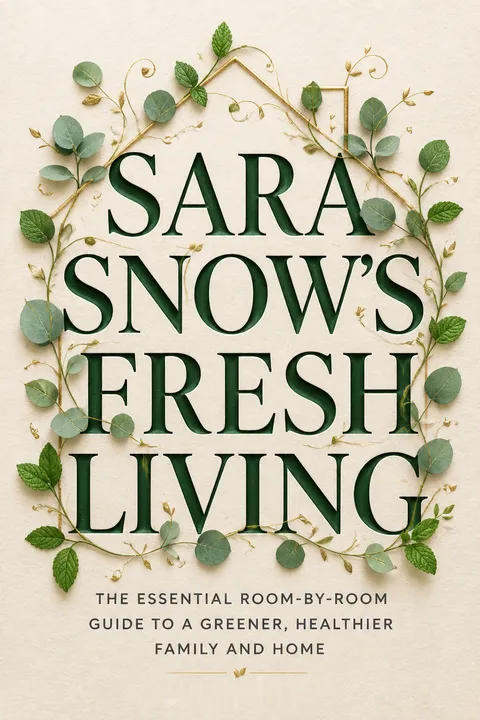
Fresh Living is part memoir, part practical household guide, organized room by room but held together by one argument: care for personal health and care for the planet are not separate projects. Snow’s childhood makes that argument vivid. Passive solar heat, homegrown food, compost, reused clothing, and shared family work were not presented as trendy purchases, but as ordinary ways of running a home. Her own period of exhaustion adds an important complication: healthy products cannot compensate for a life organized around chronic sleep loss. The book’s best advice is therefore broader than a shopping guide. It asks readers to examine routines, materials, food systems, and the values embedded in consumption.
Its strongest practical method is incremental prioritization. Readers are not asked to purge every cupboard or rebuild a house, but to choose manageable changes: buy organic where it matters most to a family, ask farmers about their practices, conserve water, reuse sound materials, and reduce unnecessary products. Stories about CSAs, cooperatives, family habits, and an older home renovation help translate environmental concern into decisions with visible consequences. This room-level approach makes an immense subject easier to act on.
The book also reflects the environmental and health discourse of 2009. Its statistics, product advice, labels, and regulations should be treated as historically situated rather than current reference material. More importantly, some passages move quickly from evidence that a substance can be hazardous to the suggestion that ordinary exposure is harmful. Hazard, dose, and actual risk are different questions. Readers should preserve the book’s useful instinct to reduce unnecessary exposure while checking current, authoritative sources before making medical or safety decisions.
The adaptation’s lasting framework is to ask three questions before changing a household practice: Does it improve health or reduce resource use? Can an existing item or routine do the job with less waste? And does the choice support people beyond the household? No single answer makes a home perfectly green. The point is to make daily life more attentive, and then to let those choices accumulate.
Review Summary
Sara Snow's Fresh Living receives generally positive reviews for its approachable introduction to green living. Readers appreciate Snow's personal anecdotes and room-by-room organization. The book offers practical tips for beginners, though some find the information basic. Highlights include lists of high-pesticide produce and air-purifying plants. Many reviewers find Snow's writing style warm and encouraging, making eco-friendly living seem achievable. While some desire more detailed information, most agree it's a good starting point for those interested in adopting a greener lifestyle.
Glossary
Fresh living
Low-impact home lifeSnow’s term for a way of living that links family health with care for natural resources and future generations. It describes everyday choices across food, home materials, cleaning, energy, and outdoor spaces. The emphasis is on practical, gradual changes rather than a perfect lifestyle or a single checklist.
Community-supported agriculture (CSA)
Farm-share subscriptionA direct arrangement between a farm and its members. Members typically pay at the beginning of a season and receive regular shares of the farm’s harvest. Snow presents CSAs as a way to obtain fresh, seasonal produce, support a local grower, and try foods that shoppers might not choose on their own.
Greenwashing
Misleading green marketingA company or group’s unsupported or misleading claim that a product or practice is environmentally responsible. Snow uses the term to warn shoppers that attractive wording such as “natural” or other green-sounding claims may not be backed by clear standards. Consumers should look for specific evidence and understand what a label actually certifies.
Volatile organic compounds (VOCs)
Airborne chemical compoundsCarbon-containing compounds that can become gases at room temperature. In the book, VOCs are associated with products and materials such as paint, finishes, and pressed-wood furniture, which can release them into indoor air. Snow recommends choosing low- or no-VOC products and ventilating rooms when using materials that may emit them.
Off-gassing
Chemical release into airThe release of gases from materials or products into surrounding air. Snow discusses off-gassing in relation to new furniture, paints, finishes, and pressed wood. The book’s practical responses include choosing lower-emission materials, sealing exposed pressed wood, ventilating rooms, and allowing new items time to air out before a baby uses a room.
Phantom draw
Standby electricity useElectricity consumed by devices that remain plugged in or in standby mode when they are not actively being used. Snow recommends turning devices off or using a power strip that can disconnect several at once. The concept draws attention to energy use that continues in the background and is easy to overlook.
Triple bottom line
People, planet, profitA way of judging business performance by considering social and environmental effects alongside financial results. Snow uses it to describe companies that aim to support workers and communities, reduce environmental harm, and remain financially viable. The idea widens consumer evaluation beyond a product’s ingredients or price to include how and by whom it is produced.
Download PDF
Download EPUB
.epub digital book format is ideal for reading ebooks on phones, tablets, and e-readers.








