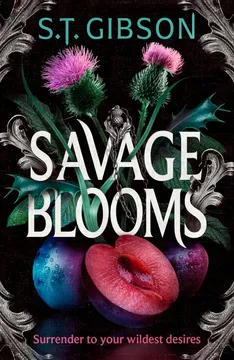


Plot Summary
Prologue
Before Adam Lancaster reaches Scotland, Craigmar has been waiting for him. When the young American and his red-haired companion step onto the estate, the land stirs beneath their feet: grasses bow, branches tremble, and an old magic wakes.
The pair head toward a cave, though neither understands what waits there. The prologue casts their arrival as the return of a story that has circled through generations, with Adam’s name beginning a new turn.
The prologue gives the landscape agency before the human characters can interpret it. Craigmar is not merely a setting Adam has sought for comfort; it is an active force that recognizes him and draws him toward a predetermined encounter. The contrast between the land’s ancient awareness and the visitors’ ordinary excitement establishes the novel’s central uncertainty: whether the characters are choosing their path or being absorbed into one already written. Its circular image also makes inheritance feel less like a gift than a recurrence, a story that renews itself through newcomers who believe they are arriving freely.
The Letter to Craigmar
After dropping out of college and losing the grandfather who had filled his childhood with stories, Adam clings to a letter addressed to Arabella Kirkfoyle at Craigmar. He travels to the Scottish village of Wyke with Nicola Fairweather, his closest friend, hoping to learn what his grandfather never explained.
The address leads nowhere until a pub owner tells them the Kirkfoyles own the town and points them toward Eileen. At the Hound and Grouse, groundskeeper Finley Buchanan recognizes the name Craigmar and offers to guide them there. Adam follows, though the stranger’s invitation makes Nicola wary. For Adam, the journey is an attempt to recover both family history and the sense of wonder he has lost.
Adam’s quest begins in grief, but the letter gives that grief a practical direction. He is not simply nostalgic for his grandfather; he wants evidence that the stories they shared belonged to a real past, and that their closeness gave him access to a part of the old man’s life. Nicola’s presence makes the journey possible while also revealing Adam’s reliance on her: he takes risks because she follows. The pub encounter shifts the quest from solitary research to social entanglement. Finley is both guide and threshold figure, ushering the travelers toward a house whose owners already seem to know more about Adam than he knows about himself.
A House Above the Sea
Finley leads Adam and Nicola to Craigmar, a vast, weathered estate above the coast. Its young owner, Eileen Kirkfoyle, recognizes the name on Adam’s letter and explains that she is Arabella’s granddaughter. She cannot recall Adam’s grandfather, Robert, but offers access to the family’s records. A sudden downpour makes the narrow road unsafe, so Eileen invites both travelers to stay.
Over dinner, she admits that Kirkfoyles have suffered illness and early deaths, including the drowning of her parents. Adam hopes the archive will reconnect him with his grandfather; Nicola is drawn to Eileen and Finley’s private world. That night, Adam wakes and discovers Finley striking Eileen with a riding crop, then kissing her with tenderness.
The shelter functions as a trap without needing to be one yet. Weather, hospitality, and the promise of information all make staying seem reasonable, but each also narrows the visitors’ choices. Eileen’s family history gives the estate a human cost, complicating its beauty with chronic illness and bereavement. The scene Adam witnesses supplies an intimate model of power that unsettles his assumptions while awakening his interest. The novel links gothic menace to desire from the beginning: what frightens Adam is also what holds his attention, and the distinction between invitation and manipulation is already difficult to see.
The Woods Look Back
At breakfast, Eileen acknowledges that Adam saw her and Finley together and assures him their encounter was consensual. She also hints that Craigmar holds an older, stranger secret. While Adam talks with Eileen, Finley takes Nicola across the grounds, introduces her to his dogs and shows her the sea-facing cliffs.
They kiss, but their closeness is interrupted when Nicola spots a pale figure watching from the woods; it disappears without crossing behind a tree. Finley confirms he saw it too. Back at the house, Eileen reveals that she and Finley are lovers and that strange sightings are part of life at Craigmar. Adam and Nicola consider leaving, but the apparition and Eileen’s promise of proof persuade them to hear more.
The supernatural enters first through Nicola’s perception, not through Adam’s rational investigation. Her sensitivity to stories makes her an effective witness, but it also leaves her vulnerable to being dismissed as imaginative. Finley’s confirmation matters because it turns her fear into shared evidence. Meanwhile, Eileen’s candor about her relationship with Finley removes one secret while preserving a larger one, a pattern that encourages trust without giving the visitors full knowledge. The scene also establishes the difference between Adam and Nicola: he wants proof before belief, while she recognizes that folklore may preserve practical knowledge about dangers that modern skepticism overlooks.
The Cave Takes a Taste
Eileen leads Adam, Nicola, and Finley to a cave older than Craigmar, carrying bread and milk as offerings. Nicola pours the milk after turning her sweater inside out for protection, drawing on folklore Adam has treated as entertainment.
When the bells Eileen hangs from a branch begin to ring in a rising storm, Adam feels an irresistible pull toward the entrance. He ignores Eileen’s warning and reaches inside; something bites his hand. Eileen holds up her iron clan badge and demands that the unseen creature leave him alone, while Finley drags Adam away.
Back at Craigmar, Nicola bandages the wounds and identifies faeries as the likely cause. Eileen explains the old treaty that keeps them underground, then gives both visitors iron charms and asks them to stay.
The cave converts folklore from an interpretive hobby into a survival system. Nicola’s inside-out sweater and Eileen’s iron badge are not decorative symbols; they are actions that may keep the fae at bay. Adam’s injury follows directly from his refusal to respect a warning, so his rationalism is shown as a form of pride as well as caution. Eileen’s explanation reveals a political arrangement embedded in the landscape: the Kirkfoyles retain their land only while a family member lives at Craigmar. The charms make protection material and personal, while the decision to stay turns curiosity into an obligation with consequences.
A Face in the Photograph
Eileen brings boxes of letters, photographs, and legal documents into the library. Adam and Eileen find a photograph of his grandfather Robert as a boy beside Eileen’s grandmother Arabella, then discover an adoption certificate identifying Robert as a Kirkfoyle child.
The discovery gives Adam a living connection to the place he came to investigate, and Eileen embraces him as family. Nicola, who has spent years beside Adam, feels pushed outside their sudden reunion.
She researches the local folklore and warns Adam that Craigmar may be making his return feel like a fairy-tale homecoming. Adam dismisses her concern as jealousy and asks her to let him enjoy the discovery. Hurt, Nicola leaves to walk alone, while Adam remains caught in the promise of belonging.
The adoption certificate changes the emotional stakes without yet explaining the supernatural ones. Adam’s search for a dead grandfather becomes a claim to a living household, and Eileen’s response offers him the family recognition he did not know he lacked. Nicola sees the danger in the speed of that transformation, but her warning is entangled with her fear of losing Adam, making her insight easier for him to discount. This is a precise portrait of how attachment can distort judgment on both sides: Adam interprets caution as envy, while Nicola struggles to separate sound suspicion from abandonment anxiety. Their friendship is tested by the very discovery that seems to repair Adam’s past.
Confession Opens the Circle
After Nicola returns from her walk, Adam and Eileen prepare a family-style dinner, and the four begin to feel briefly like a household. Eileen then gathers them for Confession, a game in which every answer must be honest. Adam admits he has imagined sleeping with Nicola, and Nicola kisses him, ending years of unspoken restraint.
Finley and Nicola also kiss, while Finley’s jealousy surfaces when Eileen presses him about his desire for Nicola. The shifting encounters expose how strongly all four are drawn to one another, though their boundaries remain unsettled. When Adam asks what lies in the cave, Eileen gives him a first, cryptic answer: the past. The game turns flirtation into a dangerous exchange of truths.
Confession makes erotic disclosure a method of reorganizing the group. The characters do not arrive at intimacy through a stable agreement or a clean declaration; they use a game that rewards honesty while allowing Eileen to control its terms. Adam’s admission frees Nicola to act, while Finley’s reaction reveals that the existing bond between him and Eileen is not emotionally simple, even when it permits outside partners. The game produces connection and asymmetry at once. Eileen can extract what she wants from others, yet her answer about the cave suggests that her own most consequential truth remains withheld.
The Mushroom Ring
Adam follows Eileen through the grounds after their first night of shared desire. He finds her examining a circle of pale mushrooms and learns that stepping inside such a ring could carry someone away from ordinary time. Eileen takes his hand, and they kiss.
Adam admits that he is aroused by both control and submission, then follows Eileen’s carefully stated boundaries into rough, consensual sex in the grass. The encounter leaves him exhilarated, but the woods seem to watch them.
Elsewhere, Nicola asks Finley to play a chase game, and he catches her in the house; their rough play becomes sex, followed by tenderness. Adam and Nicola later share an intimate scene with Finley guiding them. Desire deepens their attachment, but does not settle what each person expects.
The mushroom ring gives physical form to the story’s unstable border between desire and danger. Adam and Eileen’s encounter is negotiated, but its setting places their chosen surrender beside an older force that neither can control. At the same time, Nicola’s pursuit of Finley reverses her usual fear of being left: she chooses the chase and asks for the kind of intensity she wants. The four-person dynamic offers each character a provisional experience of being wanted, yet the scenes do not resolve questions of trust, exclusivity, or consent beyond the moment. Craigmar’s enchantment amplifies appetite, making emotional closeness feel both liberating and perilously fast.
The Ring Comes Off
After several days at Craigmar, Adam swims alone in the loch and removes the iron ring Eileen gave him, afraid it might slip away in the water. A hidden force grabs him and drags him below the surface. Finley dives in and hauls him out, then forces the ring back onto his finger. Adam returns shaken and demands that Eileen explain why the house keeps exposing him to danger.
She tells him to stay indoors but still refuses to explain what happened to Arabella. Later, Finley admits that the cave is a gate to the faery world and suspects the creatures tried to take Adam rather than kill him. Nicola connects the attempted abduction to the treaty’s threat against the Kirkfoyle line.
The ring’s removal turns protection into a choice Adam has misunderstood. Iron works only if he accepts its constant constraint, and the water becomes a second threshold where ordinary independence is dangerous. Finley’s rescue complicates his role: he is not merely Eileen’s accomplice but someone who risks himself for Adam. Yet Eileen’s evasions deepen the distrust that her hospitality had softened. Nicola’s interpretation shifts the threat from random violence to political strategy. Adam may be wanted alive because his family identity matters to the fae, which makes belonging at Craigmar both a source of protection and a reason he is being pursued.
A House Full of Want
After a bitter argument with Eileen over repairs and his place at Craigmar, Finley lets Adam accompany him to the village pub. They drink together, kiss, and become lovers, while Nicola stays behind with Eileen. In the quiet house, Nicola and Eileen share wine, discuss their lonely childhoods, and kiss as well. The tenderness feels unusually direct for Eileen, who usually hides behind games.
Then drums, bells, and laughter approach from outside. Eileen shuts the windows and locks the doors as the sound batters the house. When Adam and Finley return, they have heard nothing, but the front door has been forced open. The supernatural assault has entered the home, turning their new intimacies into a fragile refuge.
The expanding relationships are not a simple solution to loneliness; they create a network of mutual care that is also vulnerable to secrecy. Adam and Finley’s connection grows out of rescue, friction, and a long-suppressed attraction, while Nicola and Eileen’s grows through direct attention rather than performance. The contrast between those private encounters and the fae assault is deliberate: the characters are building a chosen household just as an older power presses against its boundaries. The fact that only some of them hear the attack leaves open whether the threat is selectively perceptible, psychologically mediated, or both. Their intimacy offers comfort, not certainty.
Arabella’s Hidden Journal
Once Adam, Nicola, and Finley return, Eileen brings out Arabella’s hidden journal and reveals what she has concealed. Adam’s grandfather, adopted into the Kirkfoyle family, left Craigmar before Arabella’s arranged wedding.
As children and young adults, Robert and Arabella shared a charged attachment that Robert wanted to make permanent; he left after she refused to abandon the marriage expected of her. Years later, Arabella ran into the cave and never returned. Eileen admits she planted a photograph and arranged for Adam to receive the old letter so he would come to Craigmar.
Believing the family needs another Kirkfoyle to preserve the treaty, she asks Adam to marry her and presents prepared paperwork. Adam refuses. Nicola realizes Finley knew of the plan, and her trust in him breaks.
The journal converts the mystery of Robert’s departure into a history of coercion, shame, and lost choice. His escape was not simple rejection of Craigmar; it followed an impossible attachment and a future imposed on Arabella. Eileen repeats the family’s coercive logic when she asks Adam to marry her, treating his presence as a solution to an inherited crisis. Her confession complicates any easy judgment: she has genuinely grown attached to the others, but she also engineered their arrival. Finley’s silence makes loyalty indistinguishable from complicity. Nicola’s anger marks the moment when emotional intimacy can no longer substitute for informed consent.
The Ground Opens
Adam rejects Eileen’s proposal and leaves the room, while Nicola confronts Finley for drawing her into a scheme he had helped conceal. Eileen signs the marriage certificate herself, but Adam throws away his iron ring and storms outside. He feels Craigmar pulling at him even as he tries to escape.
Eileen, Finley, and Nicola run after him, with Nicola shouting a warning he cannot make out. The ground gives way beneath Adam, and a sinkhole swallows him. His choice to leave does not restore his freedom; it removes the protection Eileen’s iron had provided at the very moment the land claims him. The others are left aboveground, watching the family crisis become immediate and physical.
Adam’s flight is an act of self-preservation and a rejection of the role Eileen has written for him, but the landscape makes clear that refusal alone cannot undo the bargain. Throwing away the ring is emotionally legible: he rejects not only Eileen’s proposal but the protection and identity attached to it. The sinkhole transforms the novel’s recurring attraction to caves, water, and mushroom rings into an irreversible capture. The ending refuses the conventional reward for exposing a manipulation. Adam gains knowledge but loses control of his location, while those who care for him are left with the consequences of their divided loyalties.
Epilogue
Adam wakes in a chamber beneath the earth, injured but alive. A faery king appears, wearing the same dark eyes as Eileen, and calls Adam home. He claims to have watched Adam for years and offers answers, a future, and a place in the underworld.
Adam demands release, but the king insists there is nowhere else to go. With no visible route back to the surface, Adam accepts the hand offered to him and rises beside the ruler of the realm below.
The epilogue reverses the familiar rescue story. Adam has spent the novel believing that knowledge and choice might let him escape a dangerous inheritance; underground, he faces a captor who frames captivity as belonging and offers understanding as bait. The king’s claim to have watched him collapses the distance between the prologue’s awakening land and Adam’s present peril. His acceptance of the offered hand is not a settled allegiance or a happy resolution. It is a coerced decision made under conditions of isolation, leaving the reader inside the same uncertainty that has governed Craigmar: whether intimacy can be freely chosen when one party controls the world around it.
Analysis
Savage Blooms treats inheritance as an active pressure rather than a passive family legacy. Craigmar’s treaty, the Kirkfoyle archive, and Robert’s stories all pass history forward, but none gives the next generation a neutral starting point. Adam arrives hoping that knowledge will restore his grandfather to him; instead, every discovery makes him more implicated in the family’s unfinished obligations. The novel’s supernatural mechanics sharpen a psychological question: when belonging is urgently desired, how easily can care become control?
The relationships complicate that question rather than resolving it. Eileen’s need to survive explains her scheme but does not erase its violation of Adam and Nicola’s consent. Finley’s loyalty makes him loving and culpable at once. Nicola’s fierce attachment can appear jealous, yet it also lets her notice dangers others dismiss. Their erotic negotiations offer moments of chosen vulnerability, but desire cannot compensate for withheld information. The book distinguishes consensual power exchange from coercion by showing that consent requires more than willingness in the moment; it depends on knowing what is being asked and what is at stake.
Folklore operates as a practical archive. Turning clothes inside out, carrying iron, respecting the cave, and avoiding mushroom rings are forms of inherited knowledge that survive even when their origins are forgotten. Adam’s skepticism is not simply foolish, nor is Nicola’s belief automatically sufficient. Both must revise their understanding as physical evidence accumulates. The tragedy is that knowledge arrives unevenly, often after a character has already crossed a threshold.
The ending withholds resolution on purpose. Adam rejects a future chosen for him, but the land takes him anyway, and the faery king recasts captivity as homecoming. The novel therefore closes on a question rather than a victory: whether anyone can break a cycle when the language of love, family, and protection has already been shaped by the forces enforcing it.
Review Summary
Savage Blooms receives mixed reviews, averaging 3.36/5. Readers praise its gothic atmosphere, Scottish setting, and complex characters, but many feel the fantasy and faerie elements are underdeveloped, taking a backseat to the erotic content. While some appreciate the spicy polyamorous dynamics and queer representation, others find the plot thin, pacing inconsistent, and characters unlikable. Compared unfavorably to Gibson's A Dowry of Blood, many readers still express curiosity about the sequel due to an intriguing cliffhanger epilogue.
Characters
Adam Lancaster
The grieving seekerAdam is a young American freelance designer whose closeness to his late grandfather shapes his search for Craigmar. He is curious, adventurous, and prone to treating uncertainty as an invitation to investigate, even when caution might serve him better. His friendship with Nicola is a source of courage and emotional steadiness, though he can take her loyalty for granted when a new possibility captures his attention. Adam wants evidence before belief, but he is also hungry for experiences that make life feel vivid and consequential. His attraction to Eileen and Finley unsettles his assumptions about desire and control. He is at his most vulnerable when belonging appears to offer an answer to grief.
Nicola Fairweather
The folklore-minded artistNicola is Adam’s best friend, a florist’s assistant, and an aspiring children’s-book writer with a deep interest in folklore. She is warm, perceptive, funny, and emotionally direct, but a childhood spent moving through foster homes leaves her alert to signs that someone might abandon her. She often acts quickly when desire or fear takes hold, then works hard to understand the consequences. Her knowledge of folk practices gives the group practical insight that Adam’s skepticism initially misses. Nicola wants intimacy without pretending to need less than she does. Her developing bonds with Adam, Finley, and Eileen test her fear that affection must be scarce or that loving several people means betraying one.
Eileen Kirkfoyle
Craigmar’s guarded heirEileen is the young owner of Craigmar, an isolated estate and the center of its family’s inherited responsibilities. She is intelligent, theatrical, competitive, and accustomed to turning games into a way of managing uncertainty. Chronic illness and grief have narrowed her world, while her pride makes it difficult for her to ask for care plainly. She shares a lifelong, intensely intimate bond with Finley and is drawn to Adam and Nicola’s energy. Eileen’s generosity is real, but it sits beside a powerful instinct to control what happens around her. She values loyalty and survival, yet struggles to distinguish protecting people from deciding for them.
Finley Buchanan
The loyal groundskeeperFinley tends Craigmar’s grounds and animals, carrying on a family role passed through generations. He grew up beside Eileen and has been her closest companion for as long as either can remember. Practical, well-read, and often dryly funny, he hides tenderness behind a guarded manner. His relationship with Eileen includes consensual power exchange and a fierce loyalty that can become self-erasure. He is drawn to Nicola’s openness and to Adam’s warmth, but he is wary of the damage that closeness can bring. Finley’s central conflict is the tension between being dependable and being honest about his own wants.
Robert Lancaster
Adam’s storyteller grandfatherRobert is Adam’s beloved grandfather, remembered for his gruff manner with most people and his gift for telling stories to his grandson. His younger life is tied to Craigmar in ways Adam does not initially understand. He is defined by a strong desire to travel and by the difficult task of making a life beyond the family that raised him. The stories he tells Adam preserve a sense of wonder, but they also leave behind questions about the history he chose not to share.
Arabella Kirkfoyle
Eileen’s absent grandmotherArabella is Eileen’s grandmother and a spirited young member of the Kirkfoyle family whose history is preserved in photographs and a hidden journal. Clever, restless, and drawn to forbidden possibilities, she grew up under strong expectations about marriage and family duty. Her bond with Robert is central to the questions Adam brings to Craigmar. The fragments of her life reveal a woman whose choices were constrained by both family tradition and the strange demands of the land.
Gregory Dasgupta
Eileen’s longtime doctorDr. Dasgupta has cared for Eileen since childhood and remains one of the few adults who consistently looks after her. He treats her chronic conditions while trying to persuade her to take her health seriously. His grounded medical perspective contrasts with the supernatural explanations surrounding Craigmar, though he does not dismiss Eileen’s suffering. He represents care that is steady and practical, even when Eileen resists accepting it.
James Kirkfoyle
Eileen’s late fatherJames is Eileen’s father, remembered in a portrait and in stories of a loving but troubled man. He helped raise Eileen at Craigmar and carried the responsibilities of the family estate. His history connects Eileen’s childhood to the family’s illness and its fear of the underground realm.
Jennifer Kirkfoyle
Eileen’s late motherJennifer is Eileen’s mother, an Englishwoman whose letters, perfume, and games remain throughout Craigmar. She made the house more welcoming for her daughter and encouraged her interests. Her preserved belongings offer glimpses of affection and domestic life within an isolated family.
The faery king
Ruler beneath the hillsThe ruler of the underground realm appears as a powerful, composed figure with a claim on the Kirkfoyle family’s history. He speaks with the confidence of someone who believes the old agreements belong to him. His understanding of time and belonging differs sharply from the human characters’ assumptions, making him both a political force and an intimate threat.
Plot Devices
Robert’s letter
The ancestral summonsThe letter addressed to Arabella is the clue that takes Adam from his grandfather’s stories to Craigmar. Its worn paper and personal message make the quest feel intimate before it becomes supernatural. At first, Adam treats it as a possible route to family history and emotional closure. Later discoveries show that the correspondence connects his grandfather to the Kirkfoyle family and gives Eileen a way to draw Adam toward the estate. The letter therefore works as both a genuine inheritance and a manipulated invitation.
Iron protections
A fragile boundaryIron appears in Eileen’s clan badge, her father’s ring, and the charm she gives Nicola. These objects protect against faery interference, making folklore something the characters must practice rather than merely discuss. Their protection depends on use: Adam is endangered after removing his ring before swimming. Iron also carries emotional meaning. Eileen gives away family objects because she wants the visitors safe, while Adam’s eventual rejection of the ring expresses his rejection of the role she has prepared for him.
The Kirkfoyle treaty
Landbound survival termsThe old agreement between the Kirkfoyles and the fae gives the family the right to live aboveground while keeping the underground realm ceded to the fae. The bargain depends on a living Kirkfoyle remaining at Craigmar. Eileen understands the treaty as the reason her family has been trapped by illness, danger, and obligation, while Nicola and Adam gradually learn that it also makes Adam’s newly discovered family identity consequential. The treaty turns inheritance into a political and supernatural condition, with no easy distinction between protecting a home and being imprisoned by it.
The cave and its gates
A crossing without returnThe cave is an ancient opening between Craigmar and the faery realm. Offerings, bells, and the land’s response establish its power before the characters understand its function. Adam’s bite and later attack in the loch show that the fae can reach beyond the cave, while Finley’s account frames the cave as a threshold that may change anyone who crosses it. The repeated portals make the estate’s landscape part of the danger: water, mushroom rings, and sinkholes echo the cave’s capacity to draw people away from the human world.
The family archive
History made tangibleLetters, photographs, birth records, and Arabella’s journal let the characters piece together a past that oral accounts have obscured. The archive yields Adam’s connection to the Kirkfoyles and later clarifies why his grandfather left Craigmar. Its gaps matter as much as its evidence: missing names, concealed documents, and a hidden journal show how families shape memory to protect themselves or preserve power. The materials turn private grief into a historical investigation, while their selective arrangement also makes the archive a tool Eileen can use to guide Adam toward her desired conclusion.
Download PDF
Download EPUB
.epub digital book format is ideal for reading ebooks on phones, tablets, and e-readers.








