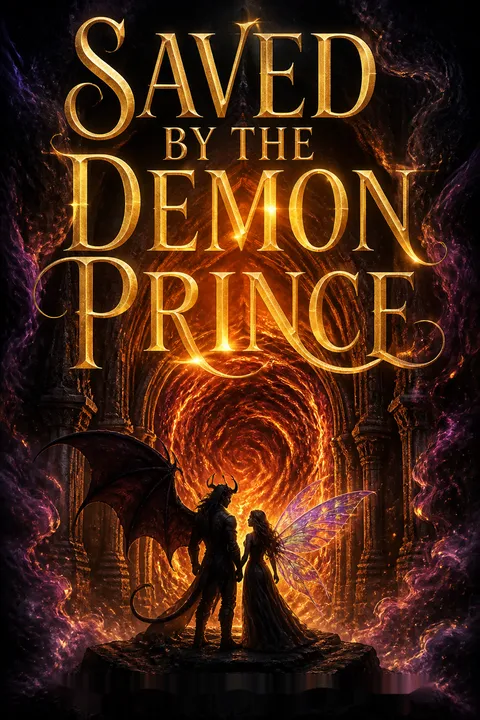


Plot Summary
Leo Crashes the Rowan Ball
Weeks after Leo sent Vera away from Vestia to keep her safe, he appears at a royal celebration in Rowan and insists she return with him. Vera refuses, reminding him through her actions that he no longer gets to choose her life. When guards seize Leo, she crushes an iron railing without meaning to, discovering that her strength is growing in Rowan.
The Hellfire ruby on Leo’s hand, made from fae hearts, deepens her anger. She touches his face, feels their old magical pull, then slaps him and walks away. The guards imprison Leo, while Vera is left with the painful knowledge that rejection has not extinguished her love.
Vera’s refusal is more than wounded pride. Leo’s earlier decision to remove her from danger repeated the loss of agency that defined her life in captivity, even though he meant it as protection. Her railing-crushing strength makes that conflict physical: her body is changing before either lover has learned how to understand what she can do. The ruby sharpens the scene’s moral tension. Leo carries an object made through fae suffering, yet Vera also knows the man who has tried to liberate fae. Love cannot erase evidence, and anger becomes her first available form of self-defense.
The Keeper Opens the Cell
While Leo waits in Rowan’s dungeon, Prince Laurie visits and warns him that Vera is building a life without him. Then Selena, Rowan’s Keeper and expert on fae magic, offers a way out. She wants Leo to help destroy the veil that hides and protects the city, arguing that Rowan must face the outside world if fae slaves are ever to be freed.
She uses Leo’s confiscated Hellfire ring and his longing for Vera to win his apparent agreement. Deep underground, Leo encounters Selena’s cloaked followers and the Keeper Stone that sustains the veil. Touching it sends him into a vision of his dead mother, Aurora, who challenges his habit of carrying every burden alone. He returns calmer, but keeps the vision secret.
Selena’s offer makes liberation and recklessness look deceptively alike. Leo recognizes that exposing Rowan could endanger thousands, but his need to reach Vera makes him accept proximity to a plan he distrusts. His mother’s vision reframes the same flaw from a more intimate angle: he treats responsibility as proof of love, then acts alone and calls it protection. The scene also binds family history to political power. The ring is not merely a tool or royal emblem; it connects Leo’s private grief to the violence that built demon rule. The vision gives him a reason to reconsider how he uses that inheritance.
Laurie Reveals the Rescue
After Leo disappears from the dungeon, Laurie visits Vera and urges her to remain out of public view while Rowan investigates the breach. Their strained conversation turns personal: Laurie admits that Leo saved him after demons shot him during their escape from Vestia, a fact Laurie hid because he resented owing Leo anything.
His account strengthens the suspicion that Leo has fae ancestry, though Vera refuses to confirm it. When guards report Leo missing, Vera nearly rushes after him, then recognizes how easily she is still pulled toward someone who left her. She stays in her room for three days, grieving both Leo’s absence and Rowan’s growing resemblance to a comfortable prison.
Laurie’s confession complicates Vera’s anger without cancelling it. Leo has acted with courage toward the prince, yet still made the decisive choice about Vera without her consent. That distinction matters: good deeds do not automatically repair relational harm. Laurie’s own concealment mirrors Leo’s, as both men hide information to manage consequences they fear. Vera, meanwhile, begins separating care from obedience. Her choice not to chase Leo is not emotional freedom, but it is a first attempt to pause before letting longing dictate her next move.
Syn in the Upstairs Room
Mia coaxes Vera out of her room and takes her to a Rowan club, where they find fae using product packaged as Syn, Leo’s synthetic substitute for Dust. The powder is actually real fae-derived Dust, sold under the false label. Their investigation is interrupted when Rob, Vera’s childhood friend, steps in to stop an aggressive stranger from cornering her.
Rob explains that Leo has killed the demon king’s councilors and freed the enslaved fae in Vestia, though he has not yet been formally crowned. Vera’s pride and hope collide with the fact that Leo came to Rowan for her and then vanished. Later, Laurie kisses her; she lets the moment happen, then admits to herself that she is still in love with Leo.
The counterfeit Syn turns Vera’s private heartbreak outward. Rowan’s sheltered nightlife is not insulated from the systems of exploitation she escaped; the same substance that once enriched demon society is being smuggled into a fae city under a reassuring name. Rob’s news forces Vera to revise her picture of Leo: he has accomplished the political work she once hoped they would do together, but his achievement does not settle what he did to her. Laurie’s kiss clarifies that gratitude, comfort, and attraction cannot substitute for the love she actually feels.
Selena Leads Vera Underground
The fae king summons Vera to account for Leo’s arrival. Selena presses her for information and suddenly lunges with a knife; Vera’s instinctive magic blocks the blade, revealing a protective power she cannot yet control. The king treats the attack as a useful demonstration, but Selena later tells Vera she knows where Leo is and can clear her name if she comes alone.
In the hidden grotto beneath Rowan, Vera finds Leo at the waterfall. She confronts him for deciding she was too weak to stay beside him. Leo tells her he removed his father’s councilors and freed Vestia’s slaves, then apologizes for sending her away. They choose to reconnect, and after Leo sleeps, Selena draws Vera toward the glowing stone.
This section puts competing forms of authority in direct contact. The king values Vera’s power when it can serve Rowan, even after Selena has attacked her; Selena, by contrast, treats Vera as a means to alter the city’s future. Vera’s reunion with Leo begins to repair intimacy, but it does not resolve their fundamental disagreement about protection and consent. Her willingness to approach the Keeper Stone shows how easily the desire to become powerful can be recruited by people who promise answers. She is seeking agency, yet has not been given the knowledge needed to judge the danger.
Vera Wakes with Wings
The Keeper brings Vera close to the stone that holds Rowan’s protective magic. When Vera touches it, the cavern shakes; Leo wakes and rushes to her, but Selena’s followers block him. Falling rock knocks Vera from the ledge, and the stone goes dark. The guards dig her from the rubble alive, though she remains unconscious for two days.
When she wakes, she has large, multicolored wings unlike any Rowan fae have seen. Leo explains that the veil has fallen, leaving the city exposed. Vera remembers a vision of an ancient winged woman whose warning was to protect the fae. Her new strength brings wonder, but the damage done to Rowan makes that wonder difficult to enjoy.
Vera’s transformation fuses bodily arrival with political catastrophe. The wings answer a longing she has carried since childhood, but they arrive through an event she did not understand and cannot simply celebrate. This is not a neat reward for suffering: the city pays for her emergence, and Vera immediately interprets that cost as personal guilt. The vision’s command gives her a possible purpose, though not a clear instruction manual. By making the same magic both the source of her new capacity and the cause of Rowan’s exposure, the story refuses to separate empowerment from consequence.
Rowan Plans Without a Veil
While Vera recovers, Leo gathers Rand, Marcus, Zell, Laurie, Mia, and Victor to understand what the Keeper Stone has done. Their tests connect Vera’s new wings to the stone’s lost power, but no one knows how to restore the veil safely. Victor recalls a legend that the original queen died after pouring her magic into it, making Vera’s possible sacrifice unacceptable to Leo.
Meanwhile, the group assesses the city’s weakness: Rowan has little modern infrastructure and no organized defense. Leo’s impatience clashes with Laurie’s insistence that the fae must act for themselves. The earlier counterfeit Dust becomes a warning that someone can manipulate fae from within, while the fallen veil gives hunters a route into the city.
The strategy meeting exposes a political problem that technical expertise cannot solve alone. Leo can imagine generators, communication systems, and defensive coordination, but Rowan’s leaders have spent generations organizing life around magical isolation. Their inexperience is not a personal failing so much as the accumulated cost of security without engagement. At the same time, the legend of the queen’s death tempts the group to treat Vera as infrastructure: a source of power whose body might repair the city. Leo’s refusal marks real concern, but it also risks repeating his old habit of deciding what Vera may endure.
Leo Names His Fae Blood
At Rowan’s formal gathering, Leo tells the assembled fae that his mother was fae and explains how his blood and Hellfire ring let him cross the veil. He asks them to judge him by his efforts to end slavery, though many remain wary of the demon who wears a ruby made from his mother’s heart. Afterward, Vera overhears the king offering Princess Mia to Leo as a political bride to secure an alliance.
Laurie admits he suspected the plan, then again asks Vera to choose him. Leo finds them together and challenges Laurie; the two princes fight while the crowd cheers. Vera stops them with a burst of barrier magic, then rebukes both men for turning her choices into a contest. Laurie accepts that she loves Leo, not him.
Leo’s disclosure converts private identity into public evidence, but Rowan’s suspicion does not disappear simply because he is honest. His mother’s heart in the ruby makes his lineage inseparable from the history that injured the fae. The proposed marriage reveals a second political danger: leaders still treat women as instruments for alliances. Laurie’s feelings are sincere, yet his proposal repeats the same presumption when he ignores Vera’s answer. By physically ending the duel, Vera refuses the role of prize and demonstrates that her power can interrupt the men’s familiar performance of possession.
Selena Names the King
Vera and Mia visit Selena in the dungeon to learn when the human hunters will arrive. Vera uncovers that Selena’s parents were not recorded as dead guards, but as fae sent on a secret mission to Vestia; she offers to search for them if Selena provides real intelligence.
Selena reveals that Leo’s missing father helped her remove the veil and is now working with human hunters. She sends Vera toward Rowan’s eastern edge, where the first force is gathering. Soon afterward, scouts return weakened after encountering hunters carrying suppression weapons.
Their fae had taken counterfeit Syn, which Leo recognizes as Dust altered to suppress magic. Faced with the scale of the threat, Leo gives Vestia’s crown to Rand and sets out to support Vera rather than command her to stay behind.
Vera’s bargain with Selena makes compassion strategically consequential. She does not excuse Selena’s fanaticism, but she recognizes the orphan’s unresolved uncertainty and offers a path to knowledge rather than vengeance. The revealed alliance shows how the former demon king turns Rowan’s isolation against it: he exploits both technological vulnerability and fae appetite for Dust. Leo’s decision to hand the crown to Rand is a transfer of responsibility, not merely an escape from politics. Most importantly, he chooses to accompany Vera on her terms, beginning to replace protective control with trust.
Three Fliers Enter the Tunnels
Vera and Leo head underground toward the Keeper Stone, with Laurie joining as a guide after scouts spot hunters in the passages. When an armed human force approaches, Leo plans to draw the attackers in separate directions so Vera can continue toward the grotto.
Laurie takes the hunter’s attention, and Vera warns him just in time to avoid an arrow, but Leo carries her onward rather than risk losing their chance at the stone. At the grotto entrance, they find more hunters than they can fight. Leo tastes blood from Vera’s bitten lip and draws strength from their magical bond. Their kiss gives both a surge of power, and they enter ready to reach the stone before the enemy.
The tunnel plan tests the difference between trust and control in a life-or-death setting. Leo’s strategy asks Vera to accept separation from him, the very experience that has made his earlier decisions painful. This time, however, he explains the risk and leaves her a meaningful role rather than making the choice for her. Vera’s warning to Laurie also shows that her loyalties are not reducible to romantic allegiance. The kiss is both intimate and tactical: their bond supplies power, but unlike their earlier connection, it now depends on shared purpose and mutual participation.
The Crown Feeds the Stone
The demon king ambushes Vera at the grotto and clamps a suppression collar around her neck. He plans to use her blood, but Vera breaks free once she can summon a barrier. Laurie arrives and drives arrows into the demon king, who falls into the pool and dies. Laurie is badly wounded, and Vera must leave him with Leo to reach the Keeper Stone before more hunters arrive.
The stone begins draining her strength, so Leo places the Hellfire Crown beside it and calls on the fae power held in its rubies. Vera apologizes to the dead and asks their help; their magic flows through Leo into her and then into the stone. The veil returns in altered form, and Vera survives.
The climax reverses the logic of inherited violence without pretending the past can be undone. The crown’s rubies were made through the taking of fae hearts; their power becomes useful only when Vera addresses the dead with remorse and asks rather than commands. That distinction transforms extraction into cooperation. Leo’s role is equally changed: he supplies power but does not replace Vera at the stone or decide that she must stop. The partial restoration avoids a clean return to the old order. Protection is recovered, but the city remains visible and technologically open, so survival now requires participation in the world Rowan once avoided.
The Island Burns Empty
After the battle, the veil again controls entry through the Gate, though it no longer hides Rowan or disables technology. Laurie recovers and prepares to become Rowan’s king; the old fae king steps aside, while Rand takes responsibility for Vestia after Leo gives up its crown. Vera and Leo return to their life together, and Leo proposes with a ring he designed himself.
His final gift is a journey to Alliance Island, where he has bought the site of Vera’s captivity, freed its remaining fae, and closed the auction house and dormitories. From the hill, they watch him burn the buildings that held her past. The fire cannot erase her memories, but Leo stays beside her as they decide what to build next.
The resolution rejects restoration as a return to the way things were. Rowan keeps a Gate but loses its invisibility; its people must meet the outside world rather than mistake isolation for safety. Political authority also shifts toward younger leaders who have experienced the costs of old arrangements. Leo’s destruction of Alliance Island is at once concrete restitution and an incomplete one: burning a place cannot burn away what happened there. His choice to ask Vera what should come next matters more than the gesture itself. Their future is framed as a shared project, not a rescue in which one partner decides the other’s destination.
Epilogue
Years later, Leo reads to their young son, Aaron, while Vera, pregnant with twins, listens nearby. Their bedtime ritual is noisy with requests for another story, a dragon voice, and a louder roar.
Once Aaron is asleep, Leo holds Vera at the mirror and reminds her that the life they built is worth its daily difficulties. Their family is no longer a distant possibility but the ordinary, affectionate consequence of surviving together.
The epilogue turns the story’s political and romantic resolutions into ordinary care. Leo once treated protection as a solitary duty; now he shares domestic work, affection, and the imaginative labor of reading to Aaron. Vera’s pregnancy extends their future, but the scene does not present family as a substitute for public responsibility. Their household exists alongside the continuing work of freeing fae and rebuilding connections between Rowan and Vestia. The bedtime story also answers Vera’s childhood deprivation of books with a home where stories are available, repeated, and enjoyed together. Safety becomes something practiced between people, not simply enforced by a barrier.
Analysis
The novel builds its romance around a conflict that is also political: who gets to decide what safety requires. Leo’s defining mistake is to convert fear into unilateral action. He sends Vera away because he believes love obliges him to protect her, while Vera experiences that decision through the history of being controlled by other people. Their reconciliation becomes credible only when Leo begins to accompany rather than command her. The story’s intimate and civic plots therefore share a structure. Rowan’s veil and Leo’s protective instincts both promise security by limiting exposure, but both can also deny others agency.
Vera’s transformation makes that parallel unusually concrete. Her wings arrive through a magical event that endangers Rowan, so empowerment is neither a clean reward nor a simple proof that she is special. She must confront responsibility without accepting the fantasy that she alone can repair every harm. The climax answers that problem collectively: Vera directs the stone, Leo supplies power, and the dead fae represented by the rubies are treated as participants rather than raw material. The solution does not erase the violence embodied in those gems, but it changes how their power is used.
The political resolution similarly refuses a return to untouched sanctuary. Rowan keeps a guarded entrance but becomes visible and technologically open. Its people must learn coordination, trade, and defense instead of relying on isolation. Meanwhile, Leo relinquishes a crown and helps end the institution that shaped Vera’s childhood, choosing concrete repair over inherited status. The ending’s domestic happiness does not cancel the larger work. It gives that work a human scale: trust is practiced in shared decisions, stories, gardens, and a future neither lover has to build alone.
Review Summary
Saved by the Demon Prince receives mostly positive reviews, with readers praising the trilogy's conclusion, world-building, and character development. Many appreciated the humor, action, and romance between protagonists Vera and Leo, though some felt their relationship lacked depth beyond physical attraction. Several reviewers loved the engaging plot and wanted spin-offs, while others found the ending anticlimactic or overly descriptive. A few noted unresolved questions about Vera's parents and missing wings. Overall, fans found the series addictive and well-written, recommending it highly.
Characters
Vera
The unwinged survivorRaised among enslaved fae, Vera has learned to read danger quickly and to protect other people even when she has little power of her own. Her love for Leo is intense, but his habit of making decisions on her behalf presses against her hard-won need for autonomy. She is curious, stubborn, and morally alert, especially to the gap between Rowan’s comfort and the suffering of fae beyond its borders. Vera’s defining tension is not whether she can be brave, but whether she can claim strength without accepting the burden of saving everyone alone. Her humor and directness keep her from becoming only a symbol of suffering.
Leo
The burdened demon princeLeo is an inventor and royal heir who approaches political crises as problems he should personally solve. He helped create Syn as a replacement for Dust and wants to free fae from the trade that enriched his kingdom. In private, however, he is jealous, guarded, and inclined to call unilateral control protection. His devotion to Vera is sincere, yet sincerity does not prevent him from hurting her when fear dictates his choices. Leo’s central psychological struggle is learning that responsibility is not the same as ownership and that love requires him to trust another person’s judgment, even when he cannot control the outcome.
Laurie
The hopeful fae princeLaurie is Rowan’s charming prince, a capable leader whose warmth makes him easy to underestimate. He wants his sheltered city to aid enslaved fae elsewhere, and he is willing to challenge his parents to make that happen. His affection for Vera is genuine, but he sometimes mistakes persistence for a persuasive answer and becomes competitive when Leo is near her. Laurie’s confidence masks the strain of being a royal son who wants to change the very system that protects his family. He values loyalty and public duty, though his feelings can pull him into choices that complicate both.
Selena
Rowan’s ambitious KeeperAs Keeper, Selena is Rowan’s authority on fae magic and inherited history. She is brilliant, experimental, and impatient with a society she considers complacent. Her political imagination reaches beyond the city walls, but she confuses strength with a willingness to expose others to danger. Selena studies people as carefully as she studies magical objects, looking for leverage as well as knowledge. Her composure makes her difficult to read, while her conviction gives her a dangerous capacity to rationalize harm as necessary progress.
Mia
The candid princessMia is Laurie’s sister, a princess who also commands Rowan’s guard. Her humor, impatience, and affection make her a lively counterweight to the palace’s formal caution. She is fiercely loyal to Vera and helps her move through the city as a friend rather than a political curiosity. Mia wants Rowan to engage with the wider world, but she also carries the practical responsibilities of protecting her people. Her feelings for Victor reveal a softer uncertainty beneath her confident public manner.
Rand
Leo’s blunt lieutenantRand is Leo’s longtime associate and a practical communicator who can translate the prince’s plans into action. His teasing manner conceals a strong sense of responsibility for Vestia and the people depending on it. Rand is willing to confront Leo when grief or romantic anxiety makes him lose perspective, though he has his own evasions around intimacy and commitment. His loyalty is not blind obedience; he can challenge Leo and still stand ready to carry work Leo cannot.
Rob
Vera’s protective old friendRob grew up with Vera and treats her like family. Physically imposing but gentle in manner, he notices when someone is cornered and intervenes without waiting to be asked. He has a nurturing instinct and wants to restore the closeness of the group that once shared a home. His affection for Rand is complicated by distance and uncertainty, leaving him more comfortable offering practical care than naming what he wants.
Victor
Mia’s steady lieutenantVictor serves as Mia’s lieutenant and is a disciplined member of Rowan’s guard. His calm presence contrasts with Mia’s quick temper, while his knowledge of fae traditions makes him a valuable voice when the city confronts an unfamiliar crisis. He is protective without being showy and takes time to recognize that his relationship with Mia may involve more than professional loyalty.
Marcus
The careful researcherMarcus is a human scientist and analyst who supports Leo’s technical work. He relies on records, measurements, and cautious explanation, a temperament that can be overshadowed by Zell’s louder confidence. In Rowan, his curiosity becomes a bridge between a technology-rich kingdom and a city unfamiliar with modern systems. He is conscientious and easily flustered, but he keeps asking what evidence actually shows.
Zell
The abrasive lab geniusZell is a demon scientist who leads Vestia’s royal laboratories. He is irreverent, provocative, and proud of his technical expertise, often using jokes to avoid emotional seriousness. Beneath the abrasiveness, he can recognize when a scientific model is inadequate, especially when fae magic exceeds what instruments can explain. His loyalty to Leo is expressed more through practical work than tenderness.
Rowan’s King
The cautious fae rulerLaurie and Mia’s father rules a city whose security and identity depend on the veil. He values peace and sees himself as responsible for preventing danger from reaching his people. That protective instinct also makes him wary of outside engagement and slow to accept the needs of enslaved fae beyond Rowan. He is a courteous political figure, but his concern for stability can make him dismissive of younger voices.
Leo’s Father
The anti-fae rulerLeo’s father is a powerful demon ruler whose hostility toward fae shapes Vestia’s political order. He regards domination as a natural right and treats people as expendable instruments of power. His relationship with Leo is marked by coercion, secrecy, and an inheritance built from violence. He represents the old regime’s conviction that force can preserve authority indefinitely.
Aurora
Leo’s remembered motherAurora is Leo’s deceased mother, remembered as a loving and complicated presence. Her influence remains important to his understanding of family, grief, and the choices that shaped his childhood. The memory of her offers a perspective that differs from the rigid story Leo has been told about his father.
Elise
The shrewd Vestian ownerElise is a formidable businesswoman with ties to the former trade in fae and to Leo’s political world. She is practical, self-possessed, and alert to opportunities others overlook. Her relationship with Zell is playful and combative, while her history with Leo gives her a personal stake in the changes transforming Vestia.
Zeus
The hostile little dogZeus is Elise’s small white dog, carried into Rowan by Zell. He snarls at strangers, bites tails, and rarely behaves like the harmless pet people expect. His fierce attachment to Elise gives the intimidating demon entourage an unexpectedly comic complication.
Lydia
Marcus’s partnerLydia is Marcus’s partner, mentioned as part of the circle of friends Vera left behind. She remains connected to the life and relationships that continued outside Rowan while the central group faced its crisis.
Plot Devices
The Keeper Stone and Veil
Protects, then exposes RowanThe Keeper Stone sustains the magical veil that hides Rowan, blocks outsiders, and disables modern technology inside the city. Selena’s experiments draw Vera to the stone, where Vera’s unusual affinity changes its power and brings the veil down. The stone then becomes the focus of the final effort to restore protection. Its altered return leaves Rowan visible and technologically accessible while retaining a guarded Gate, forcing the city to exchange absolute seclusion for a more connected form of security.
Hellfire Rubies and Crown
Concentrates stolen fae powerHellfire rubies are made from fae hearts and embody the violence of demon rule. Leo wears a small ruby connected to his mother, while the demon crown contains multiple stones. Their power responds to Leo and later helps Vera channel enough energy to restore the Keeper Stone without giving her life. The rubies therefore function both as instruments of oppression and as a source of power whose use depends on acknowledging the fae whose lives created it.
Syn and Counterfeit Dust
Tempts, then disables faeLeo develops Syn as a synthetic alternative to Dust, the drug made from fae blood. The Syn packaging is later used to disguise real Dust altered with a power-suppressing agent. Fae take it believing it is safe, then find their magic weakened when hunters attack. The counterfeit turns Leo’s successful invention into cover for a weapon and links the wider political conflict to an intimate question of trust in what people consume.
Fae Linking and Blood
Transfers healing and powerFae can link to heal one another, while fae blood can intensify a demon’s strength and magical response. Vera and Leo’s physical contact also carries an unusually potent magical charge. The system shapes both intimacy and combat: it allows characters to heal injuries, complicates the ethics of using another person’s body as a resource, and eventually gives Leo and Vera a way to act together under threat.
Suppression Technology
Neutralizes magic at close rangeMetal cuffs and collars can suppress a fae’s power when worn, making capture possible even for strong characters. The hunters also deploy a distant suppression method that leaves groups of fae weakened before a fight begins. Its appearance escalates the danger beyond ordinary combat and shows how human technology can exploit the same vulnerability that demon inventions once created.
Download PDF
Download EPUB
.epub digital book format is ideal for reading ebooks on phones, tablets, and e-readers.








