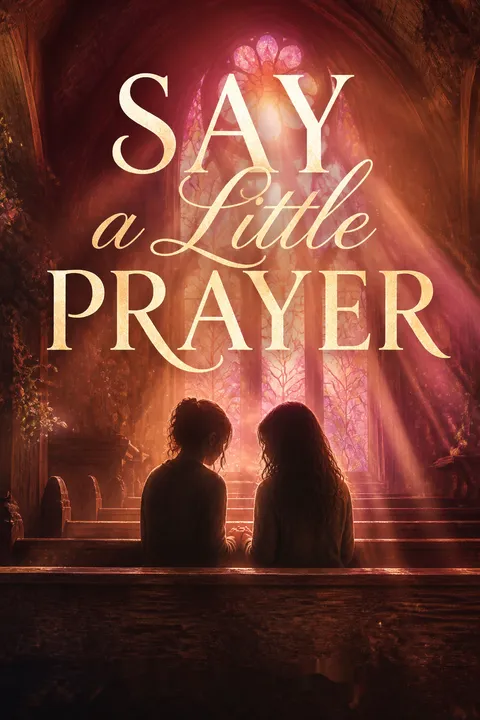


Plot Summary
A Slap Costs Shrek
Seventeen-year-old Riley Ackerman strikes classmate Amanda Clarke after Amanda publicly spreads a cruel rumor about Riley’s sister, Hannah, who had an abortion. At school, Amanda hides the reason for their conflict, and the principal punishes Riley while treating her anger as the only problem that matters.
A week of suspension would remove Riley from tech rehearsals for Shrek, her first lead role and the one place she feels secure. Principal Rider offers a way out: attend Pleasant Hills Baptist Church’s youth camp in Kentucky and submit a reflective essay.
Riley has avoided the church since its pastor condemned her sexuality and humiliated Hannah. Still, protecting the musical matters more than refusing the camp, so Riley accepts a week among people she no longer trusts.
The inciting choice is constrained rather than freely made: Riley can preserve her place in the musical only by entering the institution that helped make her feel unwelcome. Her assault is wrong, but the school’s response obscures the provocation and the unequal treatment Riley sees around her. That mismatch fuels her anger. Theater offers more than an extracurricular refuge; it is a place where she can control how others see her, through a role she has earned. The camp bargain therefore threatens both her creative identity and her fragile sense of safety, setting up a story in which compliance and resistance will be difficult to separate.
Back Among the Faithful
Before leaving, Riley packs with her older sister, Hannah, whose abortion prompted the church’s public condemnation. Riley still resents Amanda and the friends who stayed close to the pastor after Hannah was shamed, while Hannah urges her not to let them dictate her choices.
At the church parking lot, Pastor Young singles Riley out during prayer requests, turning her return into a public reminder of her absence. Her best friends, twins Julia and Ben Young, ease the tension, and Julia introduces her to Delaney and other campers.
At the Kentucky cabins, Amanda and Greer Wilson claim bunks in Riley’s room, leaving her trapped with the classmate she hit and the former friend she blames for abandoning Hannah. Riley’s first hours make clear that camp is not a fresh start.
Riley’s hostility has a specific history, but it also protects her from the more difficult experience of missing a community that rejected her. Hannah’s response complicates Riley’s righteous certainty: she supports her sister without asking Riley to keep fighting on her behalf. Julia’s welcome offers real comfort, yet the public prayer request shows how care at Pleasant Hills can become a means of exposure. The cabin assignment then makes that tension physical. Riley cannot keep the past at a distance when Amanda and Greer share her narrow living space, and the camp’s social rituals force her to decide whether she will observe, endure, or intervene.
Seven Sins, Seven Days
At the opening service, Pastor Young frames the camp week around seven deadly sins and their supposed antidotes, presenting sin as a threat that can spread through a person’s life. Riley remembers how his teaching once made her fear damnation when she first questioned whether her attraction to girls could be changed.
Watching campers accept his certainty, she connects that old fear to the way he publicly disciplined Hannah. She decides to commit each sin during the week, then use her school essay to show that the behaviors are not automatically wicked.
Her hope is larger than satisfying Principal Rider: she wants the congregation to recognize that Pastor Young’s authority is neither divine nor beyond challenge. That night she begins recording observations in her camp prayer book.
The seven-sin scheme gives Riley a structure for turning private anger into a public argument. At first, she treats the assignment like a clever experiment: if she can demonstrate harmless versions of the condemned behaviors, the pastor’s moral framework will collapse. Yet the plan is also retaliatory. She wants to expose him because he hurt Hannah and because she fears that losing Julia would repeat that injury. Her notes begin as evidence, but writing also lets Riley name feelings she has kept sealed away. The prayer book therefore becomes both a tool of resistance and a record of her increasingly tangled motives.
Shelter Under the Table
For the first virtue lesson, counselor Gabe orders Riley’s group to build a wilderness shelter without using the supplies at their picnic table. Riley refuses to treat an ill-defined task as sacred simply because a counselor assigned it. Instead, she crawls beneath the table and invites Delaney and Greer to rest there with her.
Their improvised shelter earns no prize, but the pause relieves Greer’s stress and gives the three girls a rare moment of ease. Riley and Greer then argue about Riley’s contempt for campers who stayed at church, exposing how her anger can flatten people into sides. Later, Pastor Young corners Riley on the path and warns that he will report her if she disrupts camp or becomes a bad influence on his children.
Riley’s first supposed sin produces a practical good: a break from pointless exertion. The scene challenges the camp’s equation of obedience with virtue, but it also exposes the limits of Riley’s counter-sermon. She is quick to judge Greer as a symbol of complicity, and Greer correctly notices that leaving Pleasant Hills has not made Riley automatically fair-minded. The pastor’s warning sharpens the stakes. Riley’s experiment is no longer a harmless private joke; he is monitoring her and can influence the outcome of the school bargain. Resistance now requires judgment as well as nerve.
The Thrift Store Test
On a town outing meant to teach generosity, Ben and Julia reveal their secret habit of slipping from the Walmart trip to a secondhand shop. Inside, Julia initially refuses to browse because campers are warned against material indulgence and she feels responsible for setting an example.
Riley encourages her to choose what she wants, and the two try on clothes together while Ben worries that classmates at his upcoming art program will see him as an amateur. Riley reassures him that he earned his place without changing himself.
She eventually buys a bold skirt, and Julia pays for a green dress she clearly wants. When they return, Riley hides both purchases beneath her workbooks so Pastor Young will not use them as proof that she is corrupting his daughter.
The outing reveals how moral rules can make ordinary wanting feel like evidence of bad character. Julia’s hesitation is not simple prudence; she has been trained to understand her visibility as a form of responsibility. Riley helps her claim a small pleasure, but the gesture is not purely selfless: Riley wants time with Julia and is already imagining how much more of her she wants. Ben’s anxiety about the art program offers a parallel vulnerability. His fear of not belonging cannot be solved by a uniform, and Riley’s support shows that she can offer others the acceptance she struggles to extend to herself.
A Midnight Feast
Pastor Young turns the temperance lesson into a full day without meals, while counselors retain access to the kitchen. Hungry and increasingly angry, Riley leads Julia, Delaney, Torres, and a reluctant Greer into the cafeteria after midnight.
Julia uses the hidden key to open the door, and the girls find refrigerators stocked with food. They share an abundant meal, then clean up before a counselor’s flashlight forces them to flee through the woods. In the dark, Julia hides in Riley’s bed, and they nearly reveal how much they want to be close.
The next day Riley learns that Amanda has been crying in private and that Greer has been trying to make sure the girls have snacks. Riley writes a furious account of the church’s hypocrisy in her prayer book.
The fast makes deprivation a lesson imposed by people who exempt themselves from it. The midnight meal is gluttony only within the camp’s narrow vocabulary; in practice, it is mutual care and a response to an avoidable hardship. The campers’ shared risk creates a temporary community less dependent on doctrine than on food, trust, and quick decisions. Riley’s discovery that Amanda is hurting unsettles the enemy image she relies on, while Greer’s practical kindness complicates their feud. Still, Riley’s written account frames the congregation as uniformly complicit. Her emerging critique may be perceptive, but anger is shaping what she is prepared to see.
Glass in the Clearing
During capture the flag, Riley and Julia spot the opposing team’s flag guarded by Amanda. Riley draws Amanda’s attention long enough for teammate Torres to seize it, giving Riley’s side the win.
When Riley returns for a borrowed hat, she finds Amanda crying again and presses her until Amanda admits she was rejected from Indiana University’s dance program. Amanda had concealed the rejection from friends and family because she fears losing the future she planned. She also admits she misses Hannah but felt too frightened to oppose Pastor Young after he shamed her publicly.
Riley explains her own anger, then encourages Amanda to break the camp’s glass decorations with her. They take turns smashing ornaments and apologize to each other, though Amanda’s apology to Hannah remains unfinished.
Winning the game does not satisfy Riley because the contest cannot repair the damage beneath it. Her encounter with Amanda shifts from provocation to disclosure: Amanda’s carefully managed perfection conceals fear of failure and isolation. Their destruction of the ornaments gives anger a physical outlet without pretending that rage alone resolves the conflict. Riley’s partial forgiveness is important, but she does not confuse it with absolution. Amanda must still face the harm she caused Hannah. The scene also reframes the pastor’s authority: both girls have learned to suppress anger because he labels it sinful, leaving them without a language for protest until they make one together.
Firelight and Almosts
At the campfire, Riley watches Amanda and Greer begin to recover their ease with one another, then finds Julia sitting apart with her prayer book. Riley joins her, explains that Amanda has apologized, and admits she does not know what to do with the possibility that the former friends may change.
Julia says she values camp most when it brings people together, and hints that other churches make room for a kinder faith. When Riley asks whether Julia would still want her if she never returned to church, Julia reassures her.
Julia rests a hand on Riley’s knee, and Riley nearly believes they might kiss. Julia abruptly leaves instead. Across the fire, Pastor Young watches Riley, turning a private moment of longing into another source of shame and fear.
The conversation brings Riley close to the intimacy she wants while showing how fear interrupts it. Julia can imagine a faith organized around care, yet she still measures her choices against her father’s power. Riley, meanwhile, wants reassurance that friendship will survive her refusal to believe, but she cannot ask directly whether Julia desires her. The firelight scene makes that unsaid question visible through touch and withdrawal. Pastor Young’s watchfulness magnifies Riley’s learned self-surveillance: even without an accusation, she feels compelled to treat ordinary closeness as something requiring defense.
The Pastor’s Warning
The next morning, Pastor Young praises Riley’s capture-the-flag play, then tries to use the warmth of the exchange to draw her back into the church. He separates Riley’s future from Hannah’s choices and suggests her family’s troubles need not obstruct her relationship with God.
Riley rejects the invitation and tells him she came to satisfy Principal Rider’s requirement, not to repent. The pastor responds by threatening to report that the camp has failed to reform her. Riley knows this could jeopardize her school agreement, but she refuses to pretend.
At the day’s chastity lesson, counselor Cindy uses a damaged-paper exercise to warn girls that sexual desire will diminish their worth. Riley recognizes the shame tactic and recommits to finishing her argument against the camp’s moral certainty.
The pastor’s offer of welcome is conditional: Riley is acceptable if she returns on his terms and treats Hannah’s experience as a separate problem. His threat exposes the institutional leverage behind his pastoral concern, while Riley’s refusal marks a shift from clever defiance to direct boundary-setting. Yet the chastity lesson shows how deeply the church’s language still reaches her. Cindy’s exercise turns girls’ bodies and futures into sources of anticipated male judgment. Riley’s resistance is therefore not simply disbelief; it is the hard work of distinguishing her own moral sense from shame she has been taught to experience as conscience.
The Kiss and the Notebook
After class, Riley finds Julia alone in the chapel and asks why she tolerates lessons she does not fully believe. Julia admits that she doubts her father but feels constrained by the standards her parents set. As their closeness grows, Julia kisses Riley.
Riley kisses her back, then explains that she has been using the week’s sins to build a case against Pastor Young. Julia hears this as proof that Riley’s feelings are part of an experiment. She demands to see Riley’s notes, but the prayer book contains Riley’s harsh judgment of the campers as well as her critique of the pastor.
Julia reads enough to feel manipulated. Their argument turns on Riley’s silence about her hurt and Julia’s fear of confronting her father; Riley leaves after accusing Julia of being like him.
The kiss does not solve the central conflict because intimacy arrives before either girl has learned how to speak honestly about power. Riley has treated her campaign as a way to protect Julia and dismantle the pastor’s influence, but she never tells Julia what she is doing. Julia therefore experiences the kiss beside the plan as evidence that she has been made into material for Riley’s argument. Riley’s accusation is also defensive: she converts Julia’s fear into a moral failure rather than asking what it costs her to live under her father’s authority. Their rupture exposes the difference between opposing harm and knowing how to care for someone caught inside it.
The Storm Sends Them Home
A severe storm forces the camp to end early, before Riley can complete the seven-sin plan or repair things with Julia. On the bus, she travels beside a boy she barely knows, then returns home to Hannah and finally breaks down. Riley tells her sister everything: the campaign, the kiss, and the fight.
Hannah points out that Riley has been treating her as fragile and carrying responsibility for an injury she did not cause. Riley admits she still misses the small comforts of Pleasant Hills even though she rejects its pastor’s cruelty.
Later, Amanda visits Hannah, who agrees to hear her out. In the days that follow, Riley gives Principal Rider a restrained essay and struggles with the silence between herself and Julia. Ben eventually invites her to a church gathering where the campers will reunite.
The early departure strips Riley of the ending she imagined, but it also removes the camp structure that let her postpone grief through tasks and schemes. At home, she discovers that being Hannah’s protector has become another way to avoid her own pain. Hannah’s insistence on her agency releases Riley from a burden that was never hers to carry. Riley’s admission that she misses Pleasant Hills preserves emotional complexity: rejecting an institution does not erase affection for its rituals or people. Amanda’s visit offers the possibility of repair, while Riley and Julia remain divided by the truth they failed to discuss.
The Prayer Book Scandal
At the church gathering, Riley hopes to speak with Julia, but the service begins before they can talk. Pastor Young interrupts the sermon to present a blue prayer book found in the girls’ cabin.
It is Julia’s, marked with a butterfly sticker, and its pages describe her feelings for Riley and her struggle with what the church has taught her about desire. The pastor reads from it publicly and calls for its author to repent. To protect Julia, Riley claims the book as her own.
Greer then identifies it as hers, followed by Delaney, Torres, Amanda, and Ben, each refusing to let the pastor single anyone out. Julia finally acknowledges that it belongs to her. As Pastor Young presses Riley to confess, she and the others leave the pews together and walk out of the service.
The public reading turns private writing into a weapon of discipline, repeating the church’s earlier pattern of making vulnerable people answer for themselves before an audience. Riley’s initial lie is an act of protection, but the others’ competing claims transform it into collective refusal. Their solidarity matters precisely because they do not share identical histories or beliefs. Greer, Amanda, and the others risk standing against a leader who has taught them that dissent is dangerous. Julia’s decision to acknowledge the book is not a required confession of shame; it is an assertion of ownership after her father has tried to control the meaning of her words.
Hands Held Beyond Church
In the church bathroom, the group stays with Julia instead of returning to the service. Ben comforts his sister, and Riley gives Julia room to say that she is a lesbian and explain why fear made her lash out. Riley apologizes for comparing Julia to her father; Julia apologizes for the way she treated Riley.
They acknowledge their feelings and kiss again, this time without the confusion that followed their first kiss. Weeks later, Pleasant Hills has not transformed, but members are questioning Pastor Young and watching his conduct.
The church removes several young people, including Riley, Delaney, and Torres, from its rolls; the group burns the notices. At prom, Hannah attends with Ben, and Riley and Julia leave the dance in a limo for Taco Bell, holding hands as they make room for a relationship they can claim on their own terms.
The resolution refuses two easy endings: Julia is not forced into public disclosure on her father’s schedule, and the church is not magically remade by one walkout. Repair happens first in private, where Riley and Julia can take responsibility for specific injuries and choose how much to reveal. Their relationship remains discreet because the town and family pressures have not disappeared, but discretion now belongs to them rather than being imposed by shame. The burned membership notices turn institutional exclusion into a chosen farewell. The final detour to Taco Bell is modest but meaningful: the girls redirect a formal celebration toward a date they have designed for themselves.
Analysis
Say a Little Prayer treats religious trauma not as an abstract loss of belief but as a set of learned reflexes: Riley anticipates judgment, Julia edits her desires, and campers mistake silence for safety. The seven-sin structure makes those reflexes visible by placing ordinary acts beside the church’s severe labels. Resting under a table, buying a dress, sharing food, feeling anger, and wanting another girl become tests of who has the authority to name an action good or corrupt. Riley’s early strategy is to defeat Pastor Young with proof, but the story shows that evidence alone cannot repair relationships she has avoided discussing. Her notes expose her own contempt as well as the pastor’s coercion. The climax shifts the measure of change from winning an argument to interrupting public humiliation: campers protect Julia by refusing to let one person bear the accusation alone. Their solidarity does not reform Pleasant Hills overnight, and the ending avoids pretending it does. Instead, Riley and Julia claim a more modest freedom: the right to choose what they believe, what they disclose, and how they love. The romance matters because it is not a cure for institutional harm; it gives the girls a relationship in which honesty and consent can be practiced. Riley’s growth likewise does not require forgiving the church or abandoning anger. It requires distinguishing protection from control, and understanding that loyalty can mean standing beside someone without deciding their choices for them.
Review Summary
Say a Little Prayer received largely positive reviews, praised for its humor, relatable characters, and nuanced exploration of religion and queerness. Readers appreciated the authentic portrayal of church camp experiences and religious trauma. The book's irreverent tone and chapter titles were highlights for many. Some critiqued the plot's plausibility and character development, while others found the ending abrupt. Overall, reviewers recommended it for fans of queer YA literature and those grappling with faith and identity.
Characters
Riley Ackerman
Defiant theater kidRiley is a bisexual high school junior, an ambitious actor, and the story’s sharp, funny narrator. She relies on wit and anger to keep other people from seeing how much rejection hurts her. After leaving Pleasant Hills because of its pastor’s condemnation of queer people, she still misses the friendships and rituals she left behind. Her loyalty to Hannah makes her protective, sometimes to the point of assuming she must carry her sister’s pain for her. Riley’s talent for noticing hypocrisy helps her challenge the church, but her certainty can also make her judge people before understanding their fear. Theater gives her a place to choose how she is seen; the story tests whether she can risk being known without controlling the outcome.
Julia Young
Pastor’s dutiful daughterJulia is Riley’s longtime best friend and the daughter of Pleasant Hills’ pastor. Smart, organized, and deeply conscientious, she is accustomed to being watched as an example for other young people. Her steady affection for Riley sits beside a strong fear of disappointing her family, a tension she rarely names aloud. Julia finds comfort in friendship and in a version of faith centered on kindness, even when the church’s lessons contradict that belief. Her care often appears as practical attention and quiet physical closeness. Because she is used to meeting expectations, choosing what she wants for herself requires more than recognizing desire; it means confronting the cost of living under someone else’s authority.
Hannah Ackerman
Riley’s protective sisterHannah is Riley’s older sister, a gifted ballet dancer preparing to leave Ohio for college. After an abortion, she becomes the target of public judgment from Pastor Young and people in their church. She is gentle but not fragile, and her tendency to meet conflict with calm can make Riley underestimate her resilience. Hannah loves Riley while resisting the role of someone who must be rescued. She wants her sister to understand that support does not require taking responsibility for every painful event. Her relationship with Riley anchors the book’s family subplot, while her complicated connection to former friends shows how an intimate betrayal can reshape an entire social circle.
Pastor Young
Controlling church leaderPastor Young leads Pleasant Hills and is the father of Julia and Ben. Charismatic and attentive, he remembers details about people’s lives and knows how to make his congregation feel noticed. He also uses that pastoral authority to frame disagreement as spiritual failure, especially when teenagers question his teachings about sexuality, gender, and sin. His public warmth makes his private warnings harder to challenge, because he presents control as care. He appears to believe that strict guidance protects his family and congregation, but his certainty leaves little room for the people he claims to shepherd to define their own needs. He is both a parent in Riley’s social world and the central authority she resists.
Ben Young
Artful, awkward loyalistBen is Julia’s twin brother and one of Riley’s oldest friends. Creative, fashionable, and socially easygoing, he hides nerves about his upcoming art program behind jokes and charm. He is more perceptive than his goofy manner suggests, especially when his friends need help. Ben’s closeness to Hannah and his loyalty to Riley and Julia link the two families, while his position as Pastor Young’s son makes his easygoing independence more complicated than it first appears.
Amanda Clarke
Polished former friendAmanda is a popular dancer and Riley’s classmate, known for her immaculate appearance and composed manner. She has long been close to Hannah and Greer, but her smooth social confidence hides the strain of trying to maintain other people’s image of her. Amanda’s belief in conventional success and her fear of disappointing family shape how she behaves at school and church. Riley initially sees her as a hypocrite and antagonist, but small signs of distress complicate that picture. Her story asks whether someone can acknowledge harm after fear has helped them participate in it.
Greer Wilson
Ambitious rule keeperGreer is a high-achieving student, student government leader, and former friend of Hannah and Riley. She likes plans, rules, and competence, and can make even a volunteer project feel like a campaign she intends to win. Riley’s anger turns Greer into a symbol of the people who stayed silent, but Greer’s own anxiety and loyalties are more complicated than Riley assumes. Her practical intelligence makes her valuable in a crisis, while her difficulty admitting fault leaves old wounds unresolved.
Delaney Adebayo
Candid camp outsiderDelaney attends a different Christian school and church but returns to Pleasant Hills camp with friends. Wry, direct, and socially perceptive, she recognizes the absurdities of camp without treating every camper as an enemy. She gives Riley companionship when Riley feels isolated and is willing to question a counselor’s authority. Delaney’s family belongs to a church with a gentler approach to faith, offering Riley a glimpse of religious community beyond Pleasant Hills.
Torres
Fearless team captainTorres is a younger camper and a skilled volleyball player who becomes the red team’s practical leader during capture the flag. She is frank, funny, and more athletic than Riley expects. Her confidence in the woods and willingness to join the group’s risky choices make her a useful counterweight to Riley’s anxious improvisation. Torres’s family provides a welcoming home outside the church’s influence.
Principal Rider
Punishment brokerPrincipal Rider oversees Riley’s school discipline after the fight with Amanda. He sees Riley’s academic and extracurricular promise, but his solution sends her to a church camp that has already caused her harm. He believes he is offering a constructive alternative to suspension. His decision sets the plot in motion and reveals how institutions can mistake compliance with a restorative outcome.
Riley’s mother
Steadfast family allyRiley’s mother is protective, outspoken, and attentive to both daughters. She supports Riley’s autonomy even when she is disappointed by Riley’s violence, and she helps Hannah through the aftermath of the abortion. Her steady presence gives Riley an example of care that does not depend on religious approval or perfect behavior.
Riley’s father
Gentle, affirming parentRiley’s father is a calm, affectionate presence in the Ackerman household. He supports his daughters through difficult moments and helps make their home a place where they can recover without being judged. His patient care contrasts with Pastor Young’s use of authority, giving Riley a lived example of love that does not require obedience.
Mrs. Young
Pastor’s quiet spouseJulia and Ben’s mother is warm toward Riley and socially gracious. She belongs to the same church household as Pastor Young but is not presented as the source of his teachings. Her presence reminds Riley that the Young family includes relationships and affections beyond the pastor’s public authority.
Collin
Hannah’s former boyfriendCollin is Hannah’s former boyfriend and a football player who remains accepted among their peers. His choices around Hannah’s pregnancy contribute to Riley’s anger at the unequal standards applied within their church community.
Counselor Cindy
Camp’s cheerful enforcerCindy is a camp counselor who collects phones, leads lessons, and delivers the camp’s chastity presentation. Her bright manner softens the surface of rules that still rely on shame and surveillance.
Counselor Gabe
Unprepared group leaderGabe leads Riley’s small group and assigns the shelter-building activity meant to teach diligence. His unclear instructions and dependence on the workbook expose the gap between camp’s polished moral lessons and its practical judgment.
Amanda’s mother
Status-conscious parentAmanda’s mother is a former beauty-pageant winner who prizes status and public appearances. Her presence helps define the polished social world Amanda is expected to maintain.
Plot Devices
Seven deadly sins curriculum
A weeklong moral experimentPastor Young organizes camp around seven deadly sins and the virtues meant to counter them. Riley turns that curriculum into a personal test: she intends to commit each sin and show that the actions are not automatically evil. The lessons structure the rising action, giving her a new challenge each day and a reason to observe how authority works. The device also exposes contradictions between the rules and the counselors’ behavior, from the fast that excludes leaders to lessons that equate desire with shame. Riley’s experiment starts as a plan to discredit the pastor, but it gradually reveals the difference between moral judgment and care.
The school essay bargain
A forced return to campAfter Riley hits Amanda, Principal Rider offers camp attendance and an essay as an alternative to suspension during theater tech week. This bargain gives the novel its immediate engine: Riley has a concrete reason to go, a deadline to meet, and an authority figure expecting a particular kind of reflection. The essay becomes more than schoolwork once Riley decides to use it to challenge Pastor Young. It also keeps her plan precarious, since the pastor can threaten to report that she has not changed. The assignment links school discipline to church power, showing how a well-intentioned intervention can send a teenager back into a harmful environment.
The blue prayer book
Private thoughts made evidenceEach camper receives a prayer book for reflection. Riley uses hers to record observations and draft her argument against Pleasant Hills, while Julia writes privately about feelings she cannot yet voice. The matching books make ownership easy to confuse, but a butterfly sticker marks Julia’s copy. The journal first gives Riley a place to turn anger into a plan; later, its private pages become vulnerable to public misuse. It represents the difference between writing as self-understanding and writing as something an authority can seize, interpret, and display. The book is central to the climax, so this device includes a major plot revelation.
Camp’s restricted routines
Rules create shared rebellionThe phone collection, virtue lessons, meal fast, and nighttime curfew make camp feel controlled and self-contained. These rules are not merely background: they produce the situations that force Riley and the other girls to act together. The missing meals lead to the midnight kitchen raid, while the no-phone policy isolates campers from their ordinary support systems. Once they break rules together, Riley encounters forms of solidarity she did not expect from people she had dismissed. The camp’s restrictions therefore intensify both the conflict and the friendships that begin to challenge Riley’s belief that everyone who stayed is simply complicit.
The public confession
Authority demands submissionPastor Young uses a church service to turn one camper’s private writing into a public demand for repentance. The ritual is designed to isolate the writer, make the congregation watch, and frame obedience as the only path back into community. Instead, the scene gives the other campers a choice: accept the pastor’s version of events or refuse to let him target one person alone. Their overlapping claims transform a staged confession into collective dissent. This device brings together the book’s concerns with privacy, shame, and moral authority, and its details reveal a major climax.
Download PDF
Download EPUB
.epub digital book format is ideal for reading ebooks on phones, tablets, and e-readers.








