

Key Takeaways
Treat schadenfreude as emotional evidence, not a verdict on your character
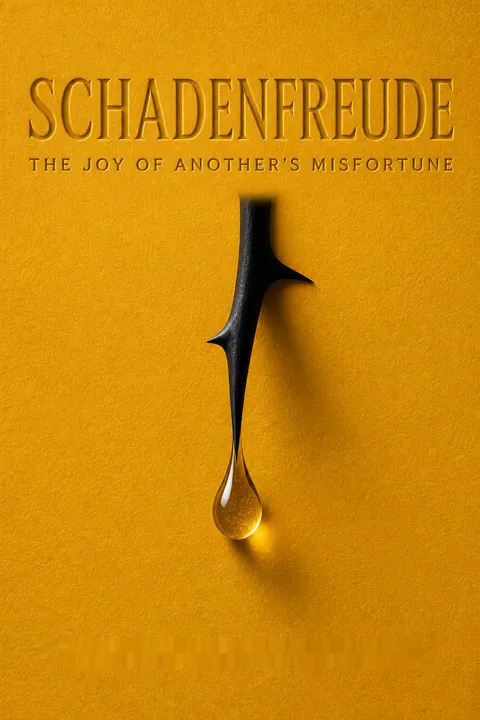
A familiar hidden pleasure. Schadenfreude is pleasure at another person’s misfortune, usually when the observer did not cause it. The German word combines ideas of harm and joy. The feeling can carry several motives at once: surprise at a mishap, relief from envy, satisfaction at apparent justice, or a small sense of winning against a rival. It is often private because people fear it reveals pettiness or cruelty.
Context changes the feeling. German football fans in one facial-muscle study smiled more broadly when the Dutch team missed a penalty than when Germany scored. Yet pleasure at a minor gaffe is not the same as enjoyment of severe suffering, and sympathy can coexist with a guilty flicker of satisfaction. The emotion is a clue to how people judge their place among others, not a complete moral portrait.
What's useful here is the distinction between an involuntary response and an endorsed action. Moral psychology often treats emotions as information about what a person values, but information is not a command. A flash of pleasure may reveal envy or a fairness judgment; choosing to amplify someone's humiliation is a separate decision. The caveat is that calling the feeling common should not excuse cruelty. Its moral significance depends less on its first appearance than on whether it is cultivated, shared, or used to justify harm.
Use laughter at mishaps to notice surprise, status, and the limits of control
Surprise drives the laugh. The book opens its accident chapter with a viral clip of a man confidently jumping into what he thinks is a pool, only to hit solid ice. Viewers valued the unexpected reversal: a person who seemed in control is suddenly exposed as mistaken. A developmental psychologist reports that babies laugh when adults drop objects, though not when someone falls and appears hurt. The surprise can help them make sense of a world that does not always behave as expected.
Laughter can relieve strain. A study discussed in the book found that social laughter, especially hearty laughter at slapstick, raised participants’ pain tolerance by up to 10 percent. The author also distinguishes staged comedy from real mishaps: the latter can feel sharper because the person did not plan the fall. That pleasure has a boundary. When a victim appears genuinely frightened or injured, laughter can quickly turn to discomfort.
The accident story links comedy to prediction: a laugh often arrives when an expectation collapses harmlessly. That helps explain why pratfalls can feel liberating, since they puncture the fantasy that competence guarantees control. The social setting matters too. Shared laughter can regulate tension and create affiliation, but an audience can mistake visible vulnerability for harmless entertainment. A useful test is whether the person remains a participant in the joke, rather than becoming an unwilling object of it.
Separate fair accountability from the pleasure of watching someone suffer
Punishment feels rewarding. The book describes a Swiss experiment in which participants playing a game were willing to spend money to punish people who cheated or freeloaded. Brain imaging linked the experience with activity in a reward-processing region. In another study, children paid tokens to keep watching selfish puppets being punished. These findings suggest that enforcing shared rules can feel satisfying, even to observers who were not directly harmed.
Satisfaction can outrun justice. The pleasure is strongest when a fall seems deserved, as when a hypocrite is exposed or a bully faces consequences. But judgments of desert are vulnerable to bias: a jury may feel good about rejecting a claimant because of assumptions about immigrants, rather than the evidence. Online shaming makes retaliation especially easy, since a crowd can condemn someone without facing the consequences of a face-to-face confrontation.
The account distinguishes a real social function from a dangerous emotional surplus. Rules need enforcement, and visible consequences can reassure people that exploitation is not cost-free. But the same reward can attach itself to punishment for its own sake. Legal systems try to separate evidence, proportionality, and due process from public appetite for humiliation. The online version often strips away those restraints. The sharper question is not simply whether someone deserves criticism, but whether the response is accurate, proportionate, and capable of repair.
Let smugness be challenged without turning every success into a target
Ridicule can enforce norms. People often enjoy seeing the boastful, hypocritical, or overconfident brought down to size. The book connects this impulse to the Danish Rule of Jante, a set of social expectations against claiming special status, and to the idea of tall poppies being cut down. The failed luxury festival promoted by an influencer became a public object of gloating because its extravagant promises collapsed so visibly.
The correction has a cost. Mockery can restrain arrogance and remind powerful people that they remain answerable to others. But it can also punish distinction itself. The same impulse that exposes empty boasting may discourage ambition, skill, or unusual self-expression. A useful distinction is between challenging conduct that harms or deceives others and resenting someone simply for being conspicuously successful.
This is a tension between egalitarian accountability and status policing. Groups need ways to challenge people who use prestige to dominate, but ridicule can become a low-cost substitute for examining whether success was earned or harmful. The tall-poppy image is especially ambivalent: cutting down a bully protects the group, while cutting down a capable person protects the group from comparison. The social value of mockery therefore depends on its target and its evidence, not on its rebellious tone.
Notice when a friend's setback is soothing an insecurity about your own life
Affection and rivalry coexist. The psychotherapist Philippa Perry described feeling little response when her daughter was praised, then a strong surge of pleasure when the praise was compared with a sibling’s children. The comparison made the family feel like a contest for rank and approval. Similar rivalry can surface among adult friends when one person’s job, home, income, or family life seems to outshine another’s.
Failure briefly restores balance. A friend’s botched renovation or failed boast can make an envious observer feel less inadequate, even while genuine affection remains. The book presents this as a hidden feature of close relationships, not proof that friendship is false. The feeling points toward what the observer wants, fears losing, or believes they should have achieved. Naming that insecurity can be more useful than building a case against the friend’s success.
Close relationships are especially potent comparison settings because people share history and know one another's former starting points. A friend's success can feel like evidence about what was possible for someone similar, making the comparison sharper than one with a distant celebrity. This does not mean every competitive reaction needs a confession. It does suggest that envy may be a map of desire. The constructive move is to separate wanting a similar life from wanting the other person to lose theirs.
Compare downward carefully; relief can curdle into fear or contempt
Comparison can console. Relative deprivation theory describes how people judge their circumstances partly against those around them, not only by their absolute conditions. During the Second World War, Black soldiers stationed in the segregated South sometimes reported greater satisfaction than those in the North, partly because they compared themselves with local Black communities facing harsher restrictions. The comparison changed how their own situation felt.
Looking down has limits. Downward social comparison means improving one's self-regard by comparing oneself with someone worse off. Cancer patients in a study sometimes imagined others with fewer sources of support to find gratitude in their own circumstances. But other people's suffering can also trigger anxiety, especially when observers identify with them or fear a similar fate. Curated social media intensifies upward comparisons, while failure stories can offer relief, but neither direction provides a reliable measure of a life.
Comparison is not merely vanity. It is a fast way to estimate whether one's circumstances are safe, fair, or improving. Yet the benchmark is often arbitrary: changing the comparison group can change the verdict without changing the facts. This is why gratitude based on someone else's hardship can be fragile. A more stable assessment combines social comparison with personal criteria, such as health, agency, and relationships, while recognizing that another person's setback does not make one's own problems imaginary.
Share your own failures to make imperfection a source of connection
A mishap can be offered, not imposed. The book contrasts laughing at another person's pain with inviting others to laugh at one's own. The website Fuck My Life collected short accounts of everyday disasters, letting readers feel less alone in their own bad days. In Durban, a choir for people living with HIV reclaimed jokes about illness by making humor part of mutual support rather than stigma.
Humor can help carry pain. The author also describes a Makushi healing ritual in which a shaman's family mocked and insulted a person's pain, turning it into a shared target. Such examples suggest that ridicule is not always directed against the sufferer. When people control the story and trust the audience, humor can make a private humiliation manageable and show that no one's life is as flawless as it appears.
Self-directed humor changes the power relation: the person in pain chooses what is exposed and how it is framed. That resembles other forms of narrative coping, where shaping an experience can restore a sense of agency without denying the harm. The distinction is consent. A joke made by a person about their own setback may build intimacy; the same joke repeated by outsiders can become stigma. Shared laughter supports people best when it reduces isolation rather than demanding that they minimize their suffering.
Treat workplace gloating as a signal of powerlessness, not a strategy for reform
Office rivalries hide beneath teamwork. Colleagues may be friends and competitors at once, especially when promotions, rankings, and bonuses make their standing visible. A senior university leader arrived for an informal meeting with toilet paper stuck to a shoe, giving employees a brief, private sense that authority was fallible. The moment did not change the workplace, but it loosened the leader's hold over their imaginations.
Resentment can trap its owner. Nietzsche called ressentiment a buried hostility that develops when people feel unable to confront someone who has wronged or dominated them. Secretly enjoying a boss's mistakes can offer relief and help colleagues bond, but it may leave the underlying power imbalance untouched. A small act of gloating can restore confidence for a moment; meaningful change still requires communication, collective action, or a change in working conditions.
The workplace example shows why private humor can matter even when it cannot solve a structural problem. Shared laughter may help employees recognize that an authority figure is not infallible, reducing intimidation enough to make speech more possible. But it can also become a pressure valve that lets the institution continue unchanged. The distinction resembles the difference between coping and intervention: relief is valuable, but it should not be mistaken for evidence that the source of the grievance has been addressed.
Aim political mockery upward, then turn its energy into action
Groups make rivals feel personal. The minimal group paradigm refers to research showing that people can develop loyalty to groups assembled on trivial distinctions. Once an in-group and an out-group form, members may favor their own side and take pleasure in the other side's mistakes. During suffrage campaigns, women used jokes and theatrical interruptions to expose the absurdity of political exclusion, making mockery one tool of resistance.
The same tool can deepen division. Political gaffes, scandals, and online pile-ons can challenge powerful figures, but gloating over an opponent's errors may also harden group identity and spread misleading stories. The book's warning is not that political humor should disappear. It is that mockery works differently when it exposes power than when it merely humiliates ordinary people or reinforces a group's contempt for outsiders.
Political humor can function as counter-speech: it makes authority look contingent and gives people a shared language for dissent. Its weakness is that attention can become the endpoint. A viral joke may strengthen solidarity inside a group while making persuasion across groups less likely. The important test is whether the laughter clarifies a real abuse and creates room for action, or whether it rewards the audience for already believing the worst about its opponents.
Name the pleasure privately, then choose whether it deserves a public performance
Recognition creates room to choose. The book's closing advice is not to purge schadenfreude, but to notice what it is doing. Ask whether the pleasure comes from perceived justice, rivalry, envy, relief, or anger. A trusted person may sometimes be told about the feeling, especially when honesty can strengthen a relationship rather than wound someone already in distress.
Keep the response proportionate. The author also advises against exposing another person's suppressed glee simply to embarrass them. Pleasure at a failure does not erase sympathy, but acting on it can still cause harm. The practical distinction is between feeling an emotion and deciding to broadcast, prolong, or weaponize it. Sometimes the most useful response is simply to understand what the feeling reveals, then offer the person who failed the same dignity one would want in return.
This approach treats emotional awareness as a pause between impulse and action. That pause is modest, but it matters in settings where public reactions can scale quickly. Disclosure is not automatically virtuous: an admission can burden the person who is already hurting, or become a request for absolution. The stronger principle is context-sensitive honesty. Recognize the emotion, protect the other person's dignity, and use the insight to address the insecurity or grievance beneath it.
Analysis
The book's strongest move is to stop treating pleasure at another's failure as a single moral category. It is an emotion assembled from judgments about status, fairness, belonging, danger, and comparison. That makes it psychologically informative, but also ethically unstable. The same laugh can be a response to a harmless reversal, a signal that a hypocrite has lost authority, or a crowd's permission to mistreat someone who is already vulnerable. Context is not decorative; it determines what the feeling means.
The historical method reinforces this point. Words for the emotion, and judgments about its acceptability, change across time and cultures. English speakers borrowed a German term even while pretending the feeling was foreign to them. The discrepancy exposes a broader problem in moral language: societies often condemn emotions they nevertheless organize into rituals, from sport and gossip to punishment and satire. Naming the pleasure makes that contradiction easier to examine.
The account is also persuasive about comparison. A friend's success can threaten because it offers a nearby measure of what one's own life might have been. A celebrity's failure can feel like a temporary reduction in distance. These reactions reveal that self-esteem is relational, not simply an inner possession. Yet the book's examples are stronger at explaining why gloating occurs than at measuring its frequency or long-term effects. Cultural and experimental findings illuminate mechanisms, but they should not be mistaken for universal rules about every person or society.
The most practical distinction is between feeling and performance. A fleeting satisfaction may reveal envy or a demand for fairness; turning it into ridicule, punishment, or a viral spectacle is a choice shaped by audience and power. That distinction avoids both moral panic and easy absolution. The emotion need not be purged, but it deserves scrutiny, especially when the target has little ability to answer back. Understanding schadenfreude is less about becoming perfectly benevolent than about recognizing when a private consolation is being converted into public harm.
Review Summary
Schadenfreude receives mixed reviews, with an average rating of 3.37/5. Some readers find it entertaining and insightful, praising its humor and examination of human nature. Others criticize its lack of depth, repetitive content, and overuse of examples. The book is described as an easy read that explores the concept of finding joy in others' misfortunes, but some feel it doesn't fully deliver on its premise. Several reviewers note that while the topic is interesting, the book's execution falls short of expectations.
People Also Read

Glossary
Schadenfreude
Pleasure at another's misfortuneA feeling of pleasure, satisfaction, or relief at another person's misfortune. The book treats it as a family of reactions rather than one simple impulse: it can arise from surprise, rivalry, perceived justice, envy, or group loyalty. The German word combines terms for harm and joy. It does not necessarily mean that a person wants suffering for its own sake.
Ilinx
Euphoria from disorientationA term used by sociologist Roger Caillois for the thrilling disorientation associated with experiences that unsettle ordinary perception or control. The word derives from a Greek term for a whirlpool. In the book, it helps describe the giddy pleasure people may feel when they witness sudden disorder, such as an unexpected accident or destruction.
relative deprivation theory
Well-being judged by comparisonThe idea that people assess how well or poorly they are doing partly by comparing their circumstances with those of others. A person can feel deprived despite having adequate resources if nearby people possess more, or feel comparatively fortunate when others face worse conditions. The theory emphasizes that subjective well-being depends on social reference points as well as material circumstances.
downward social comparison
Self-esteem through worse-off comparisonsA way of improving one's view of oneself by comparing one's situation with someone who appears less fortunate. The comparison may involve real people, imagined examples, or stories of others' setbacks. It can provide comfort and gratitude, but it can also encourage contempt or provoke anxiety when the observer fears sharing the other person's fate.
ressentiment
Hostility held in reserveA term Friedrich Nietzsche used for resentment that grows when someone feels unable to confront a person who has hurt or dominated them. Instead of direct resistance, the anger becomes suppressed and may find indirect outlets, including secret pleasure at the powerful person's failures. The book presents this as a possible source of workplace gloating that can soothe without changing the power relationship.
minimal group paradigm
Loyalty from arbitrary groupingsA research approach associated with social psychologist Henri Tajfel, showing that people can display favoritism toward an in-group and bias against an out-group even when group membership rests on arbitrary distinctions. The book uses the finding to explain how quickly group loyalty can develop, and why people may share and enjoy negative news about a rival group.
collective effervescence
Shared emotional group intensityÉmile Durkheim's term for the heightened feeling of unity and excitement that can arise when people gather around a shared event or purpose. In the book, the idea helps interpret public celebrations as group experiences rather than merely collections of individual reactions. Such shared intensity can build belonging, but it can also make crowds more willing to express harsh feelings.
FAQ
1. What is "Schadenfreude: The Joy of Another's Misfortune" by Tiffany Watt Smith about?
- Exploration of Schadenfreude: The book delves into the emotion of schadenfreude—taking pleasure in others’ misfortunes—examining its roots, expressions, and implications across cultures and history.
- Personal and Societal Analysis: Watt Smith combines personal anecdotes, psychological research, and cultural references to show how schadenfreude manifests in everyday life, from fail videos to political scandals.
- Moral and Emotional Complexity: The author investigates the moral ambiguity of schadenfreude, arguing that it is a complex, multifaceted emotion that reveals much about human nature and social dynamics.
- Structure and Approach: Each chapter explores a different aspect or “species” of schadenfreude, such as accidents, justice, envy, and power, providing a comprehensive look at the emotion’s many forms.
2. Why should I read "Schadenfreude: The Joy of Another's Misfortune" by Tiffany Watt Smith?
- Universal Relevance: The book addresses a feeling almost everyone experiences but rarely admits, making it highly relatable and insightful for understanding oneself and others.
- Blend of Humor and Scholarship: Watt Smith’s witty, confessional style makes complex psychological and philosophical ideas accessible and entertaining.
- Cultural and Historical Insights: Readers gain a broader perspective on how schadenfreude has shaped societies, from ancient Rome to modern social media.
- Practical Reflection: The book offers guidance on recognizing, understanding, and even constructively engaging with schadenfreude in daily life.
3. What is the definition of schadenfreude according to Tiffany Watt Smith?
- Literal Meaning: Schadenfreude is a German word combining “Schaden” (damage/harm) and “Freude” (joy/pleasure), meaning “damage-joy.”
- Distinct from Sadism: It refers to pleasure at another’s misfortune, but crucially, the person feeling it does not cause the misfortune (unlike sadism).
- Cultural Universality: While English lacks a native term, many languages have their own words for this emotion, highlighting its universality.
- Complex Emotion: Watt Smith emphasizes that schadenfreude is not just malice; it can involve feelings of justice, relief, superiority, or even community.
4. What are the main types or "species" of schadenfreude described in the book?
- Accidents and Mishaps: Enjoyment of others’ minor misfortunes, like fail videos or slapstick, often rooted in surprise and relief.
- Justice and Comeuppance: Satisfaction when someone “deserves” their misfortune, such as hypocrites or wrongdoers being exposed.
- Superiority and Smugness: Glee at the downfall of the arrogant, pretentious, or overly successful—often linked to envy or the desire for equality.
- Group and Tribal Dynamics: Pleasure in the failures of rivals, whether in sports, politics, or workplace settings, reinforcing group identity and cohesion.
5. How does Tiffany Watt Smith explain the psychological and evolutionary roots of schadenfreude?
- Survival and Bonding: Laughter at others’ mishaps may have evolved to help humans bond and cope with hardship, strengthening group cohesion.
- Status and Comparison: Schadenfreude often arises from social comparison, providing a boost to self-esteem when others falter.
- Justice and Fairness: The emotion can be a response to perceived violations of fairness, offering satisfaction when balance is restored.
- Empathy’s Shadow: While empathy is prized, schadenfreude is its “shadow,” revealing the complexity and duality of human emotional life.
6. What are some key cultural and historical examples of schadenfreude discussed in "Schadenfreude: The Joy of Another's Misfortune"?
- Ancient and Medieval References: The book cites St. Thomas Aquinas, Nietzsche, and Lucretius, showing schadenfreude’s long philosophical history.
- Victorian and Modern Britain: Examples include public reactions to political scandals, sports rivalries, and even national disasters.
- Global Perspectives: The author references Melanesian “Banbanam,” Japanese proverbs, and Dutch “leedvermaak,” illustrating the emotion’s cross-cultural presence.
- Contemporary Media: Fail videos, reality TV, and social media pile-ons are modern arenas where schadenfreude thrives and is openly displayed.
7. How does schadenfreude manifest in everyday life, according to Tiffany Watt Smith?
- Minor Everyday Incidents: Laughing at someone tripping, a rude person’s card being declined, or a show-off’s plans going awry.
- Workplace and Family Dynamics: Secret satisfaction at a rival’s setback, a boss’s embarrassment, or a sibling’s failure.
- Online and Media Consumption: Enjoyment of fail compilations, celebrity scandals, and public shaming events.
- Self-Reflection: The author encourages readers to notice their own schadenfreude, often mixed with guilt, relief, or camaraderie.
8. What are the moral and ethical implications of schadenfreude explored in the book?
- Moral Ambiguity: While often seen as “bad,” schadenfreude can also be harmless, justified, or even beneficial in certain contexts.
- Boundary Questions: The book discusses when schadenfreude is acceptable (e.g., deserved comeuppance) and when it crosses into cruelty or sadism.
- Empathy vs. Schadenfreude: Watt Smith argues that both can coexist, and that recognizing schadenfreude can lead to greater self-awareness and compassion.
- Social Consequences: The emotion can reinforce group bonds but also fuel division, bullying, or mob justice, especially online.
9. What advice or "rules of engagement" does Tiffany Watt Smith offer for dealing with schadenfreude?
- Acknowledge Its Benefits: Recognize that schadenfreude can help us cope, bond, and see life’s absurdities.
- Embrace Emotional Complexity: Understand that feeling schadenfreude doesn’t negate empathy or make you a bad person.
- Use Self-Awareness: Notice when and why you feel schadenfreude; it can reveal underlying insecurities or desires for justice.
- Confess Selectively: Sometimes, admitting your schadenfreude (to trusted people) can defuse shame and foster honest relationships.
- Respond to Others’ Schadenfreude: If you’re the target, remember it often reflects your own strengths or others’ vulnerabilities.
10. How does "Schadenfreude: The Joy of Another's Misfortune" by Tiffany Watt Smith connect schadenfreude to broader social and political phenomena?
- Group Identity and Tribalism: The book shows how schadenfreude strengthens in-group bonds and animates rivalries in politics, sports, and workplaces.
- Public Shaming and Social Media: Online platforms amplify schadenfreude, making it more visible and sometimes more destructive.
- Political Satire and Activism: Mockery and ridicule have been used as tools for social change, but can also entrench divisions.
- Empathy and Out-Groups: The emotion is often directed at those perceived as “other,” highlighting the challenges of empathy in polarized societies.
11. What are the key takeaways from "Schadenfreude: The Joy of Another's Misfortune" by Tiffany Watt Smith?
- Schadenfreude is Universal: Everyone experiences it, and it serves important psychological and social functions.
- Not Simply Malicious: The emotion is complex, often intertwined with justice, relief, envy, and even love.
- Self-Understanding is Key: Recognizing and reflecting on schadenfreude can lead to greater emotional intelligence and healthier relationships.
- Balance and Boundaries Matter: While schadenfreude can be harmless or even helpful, unchecked it can fuel cruelty, division, or self-delusion.
- Community of the Failed: Embracing our shared imperfections can foster connection and resilience in a world obsessed with perfection.
12. What are the best quotes from "Schadenfreude: The Joy of Another's Misfortune" by Tiffany Watt Smith and what do they mean?
- “Schadenfreude, exultant, exquisite and utterly shabby, is a flaw, granted. But it is the flaw we must face up to if we truly want to understand life in the modern world.”
- This quote encapsulates the book’s central thesis: schadenfreude is a universal, revealing, and ultimately human emotion that deserves honest examination.
- “No one likes to think about their flaws, but in them so much of what makes us human is revealed.”
- Watt Smith argues that our less admirable feelings, like schadenfreude, are windows into our true selves and social nature.
- “A superior smirk is revealed as a sign of vulnerability. What might seem a sort of hate may really be a conflicted kind of love and a desire to belong.”
- This line highlights the emotional complexity behind schadenfreude, suggesting it often masks deeper needs for connection and self-worth.
- “If we peer more closely at this hidden and much-maligned emotion, liberate ourselves from its shame and secrecy, we will discover a great deal about who we really are.”
- The author encourages readers to confront and understand schadenfreude, not to suppress it, as a path to self-knowledge and empathy.
Download PDF
Download EPUB
.epub digital book format is ideal for reading ebooks on phones, tablets, and e-readers.








