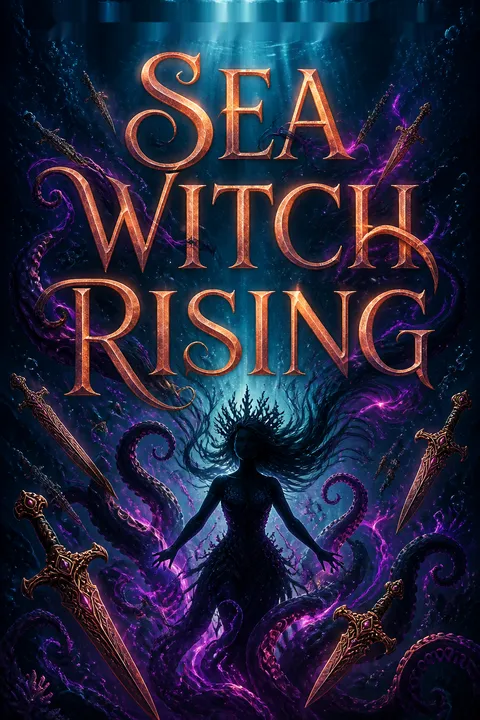


Plot Summary
Prologue
A mermaid tells the Sea Witch how she watched Prince Niklas, rescued him from a shipwreck, and followed him to shore. She has surrendered her voice to become human and hopes he will love her, though her account conceals the truth: he has not recognized her as his rescuer.
The Sea Witch understands the danger. She once made a similar bargain for love, and knows the price can be fatal. Still, she grants the mermaid’s wish, believing that a chance at love may be worth the risk.
The prologue sets up a story of love as an exchange, but its most important detail is the mermaid’s self-deception. She rearranges the past so that her desire seems already justified, while the Sea Witch recognizes that hope can be both sustaining and perilous. The scene also links the present bargain to Evie’s earlier choices without requiring the reader to know their history. Its tension comes from the gap between what the mermaid wants to believe and what the Sea Witch can see, making consent and responsibility uneasy from the start.
The Sea King Strikes
Evie, a witch imprisoned beneath the sea, feels a sudden change when Alia, the sea king’s daughter, leaves the water to pursue a human prince. The shift eases the magical imbalance that has let the king hoard power, and Evie begins considering how to strengthen the nearly extinguished magic on land.
Her former friend Anna, now rooted as a polypus, warns that Evie’s earlier attempt to correct an imbalance caused disaster. Before they can settle their argument, the sea king arrives. He demands that Evie reverse Alia’s transformation, but she refuses to override his daughter’s choice. When Evie names the four-day limit on Alia’s bargain, he blasts her with a spell that drains her strength and leaves her unconscious.
Evie’s imprisonment turns power into a question of ownership: the king controls her body, while Alia’s departure briefly alters the system he has built around himself. Evie’s refusal is not a simple defense of romantic freedom; it is also a challenge to a ruler who treats his daughters as extensions of his authority. Yet the attack exposes the cost of resisting him. Anna’s warning about Evie’s past failure complicates her resolve, suggesting that good intentions can still intensify imbalance when they are pursued without understanding the whole system.
Runa Finds the Foundling
Runa, Alia’s twin, swims to the Øldenburg castle after a day without her sister. Through a balcony above the water, she sees Alia dancing in a human body and learns that Niklas plans to marry Sofie, a noblewoman, within days. Alia cannot speak or write because the Sea Witch took her voice, and the prince has not recognized her as the mermaid who saved him from the storm that killed his father and brothers.
Runa reminds her that the bargain gives her four days to win his love or die, with killing him as the other route to survival. Alia rejects that possibility and, hurt by Runa’s bluntness, orders her twin to leave. Runa returns to the Sea Witch, determined to save her.
Runa’s discovery replaces the comforting assumption that Alia has simply found a new life with the knowledge that her sister has entered a binding, timed bargain. Their conflict is rooted in different ways of coping with danger. Runa uses skepticism to keep catastrophe imaginable and therefore manageable; Alia treats faith in love as a reason to act. The lost voice makes Alia’s position especially precarious: she can display feeling, but cannot correct the story others tell about her. Her silence is both a magical cost and a practical loss of agency.
The Witch's Price
Still weakened by the sea king’s attack, Evie tells Runa she can restore her strength only with ríkifjor, rare flowers that Runa secretly cultivates for her father. Runa recruits her sisters Eydis, Ola, and Signy, then steals seeds hidden beneath the statue of Niklas in Alia’s garden. Their grandmother, Queen Mother Ragnhildr, distracts the guards while the sisters carry jewels to the Sea Witch.
Runa grows the flowers, but Evie rejects the treasure and asks instead for the sisters’ hair. After taking it, she gives Runa a coral knife and explains that Alia must kill Niklas and let his blood fall on her feet if she cannot win his love. Runa refuses to accept this as an antidote and offers herself in Alia’s place.
The bargain exposes how different characters assign value. Runa assumes that jewels or political wealth will matter to Evie, while Evie asks for hair, a seemingly ordinary possession that is bound to the mermaids’ magic. Runa’s willingness to surrender her own future is not romantic idealism but an expression of twinship as identity: saving Alia feels inseparable from saving herself. Yet the knife makes the cost unmistakable. The promised rescue is not a reversal of Alia’s bargain; it is another bargain built around the same violence.
Two Sisters on Land
Evie agrees to change Runa, but sets separate terms: Alia must still complete her own bargain, while Runa must eventually return Niklas’s ring and the knife, and place his blood on her feet. If Runa misses her deadline, she will remain human. Runa drinks the potion in a secluded lagoon, forms a seaweed skirt with her magic, and struggles up the cliffs on unfamiliar legs.
At the castle, she meets Will, one of Niklas’s friends, who leads her to Alia. The king welcomes Runa and asks both sisters to attend his wedding. His fiancée Sofie joins them in the garden and frankly warns Alia that Niklas’s marriage is a political arrangement. Alia breaks down, then learns what Runa has risked for her.
Runa’s transformation makes the stakes bodily rather than hypothetical: land requires her to relearn movement, dress, and survival. Her reunion with Alia does not erase their earlier quarrel. Instead, the sisters must face that their choices have connected their fates without making them identical. Sofie’s intervention is significant because she speaks plainly about the political machinery that Alia has mistaken for romance. Her honesty hurts, but it gives the sisters a clearer picture of the forces surrounding Niklas and of what their bargain will demand.
The Knife in Niklas
The sisters attend Niklas and Sofie’s wedding, then stay through the reception to avoid attracting suspicion. After the celebration, Runa and Alia enter the royal bedchamber. Alia cannot bring herself to stab the sleeping king, so Runa takes the knife and drives it into his heart.
She retrieves his red ring, but Alia knocks the blade from the balcony during a struggle with Sofie, and Niklas’s blood never reaches either sister’s feet. The women escape through a concealed passage as guards search the castle. In the countryside, Alia tells Runa that she loved Niklas, and the twins argue over his choices and the danger of his U-boat deal. At dawn, Alia dissolves into sea foam, leaving Runa alone and human.
The murder is a collision between magical rules and moral agency. The bargain assigns Alia the killing, but Runa performs it; the act therefore saves neither sister as promised. Runa’s willingness to take the knife is an extreme form of protection, yet it cannot substitute for Alia’s choice or satisfy the spell’s terms. Alia’s death forces Runa to face the limit of devotion: love can motivate sacrifice, but it cannot guarantee rescue. Their final argument also keeps Niklas morally complicated, since his economic decisions threaten others even though Alia still loves him.
A Coven in Hiding
As Runa grieves beside the sea, Will approaches without trying to arrest her. He reveals that he has a small gift for magic and has been resisting the secret U-boat program, which Niklas approved to earn money for his strained kingdom. Will guides Runa to Katrine, a powerful Danish witch who runs a rural safe house.
Katrine recognizes the sea in Runa’s magic but initially rejects her because of the king’s murder. Runa forces her way inside, and Sofie emerges from hiding, having fled the castle after Niklas’s death. Will explains that the boats are intended for Germany and could kill sailors and threaten sea life. Runa joins the group, proposing they destroy the vessels and the equipment needed to build more.
The safe house gives Runa a community beyond her family, but belonging is not automatic. Katrine’s suspicion reflects the witches’ need to survive in a world where exposure can mean persecution; Runa’s anger cannot make that history disappear. Will’s support matters because he offers help without demanding that Runa deny what she has done. Their alliance also reframes the U-boat plot: human warfare is not a distant political issue but an immediate threat to the sea and its inhabitants. Runa begins to act for people beyond her twin.
Runa Chooses the Shore
Runa studies Katrine’s grimoires and learns that magic demands an exchange of equal value. She finds a possible route back to the sea using Niklas’s ring, his blood, and the knife, but the spell remains uncertain. Before the U-boat raid, she could still use the king’s blood to attempt the return.
Instead, after hearing that a conspirator has exposed their plan, she faces dawn and lets her human transformation become permanent. She believes she must remain with the witches and protect them from her father, the sea king, whose dependence on Runa’s flowers has made him increasingly unstable. Will stays beside her, though he knows her decision may separate them. The group prepares for the raid despite the danger.
Runa’s choice marks a shift from rescue as a private obligation to responsibility as a public commitment. The return spell offers a route to her former home, but that home now means service to a king who uses her gardening gift to sustain his power. Remaining human is not a rejection of the sea so much as a refusal to let inherited duty decide every action. The choice is made under grief, not certainty, which keeps it from becoming a simple declaration of independence. Runa accepts a future she cannot fully predict because other lives depend on her presence.
Six U-Boats Burn
At the warehouse, German guards ambush Runa, Will, and Agnata after learning the rebels’ plan. Sofie appears to side with them, recording a staged confession from Runa, but uses the moment to help her break free. Runa shatters the lights with magic, and she and Sofie reveal their witchcraft to the guards, freeing Will and Agnata from a storage room.
The group discovers that Agnata betrayed them for money and restrains her. With Baron Gerhard due to inspect the vessels, they have little time. Runa, Will, and Sofie use the wildfire spell, learned through ink and shared practice, to melt all six U-boats and set the warehouse ablaze. They escape in a stolen motorcar just before the explosion destroys the program.
The warehouse turns secrecy into a tactical liability. Sofie’s apparent betrayal is a performance designed to create an opening, while Agnata’s actual betrayal shows how survival under coercion can become complicity. The distinction is not that one woman is flawless and the other irredeemable; rather, Sofie chooses solidarity at personal risk, while Agnata tries to purchase safety by sacrificing others. The witches’ collaborative fire also demonstrates a new form of power. It is not inherited from a ruler or hoarded in a flower, but learned through practice and shared effort.
The Sea King Sows Fear
After the warehouse burns, Runa’s sisters visit the countryside and reveal that their father has falsely blamed Alia’s disappearance on a human mine. He is using the story to prepare the merpeople for war, while Runa’s garden wilts without her magic. The sisters also report that sea mines are injuring merpeople and that their father needs land magic to replace the power he is losing.
Before Runa can return the sisters safely, a mine explodes nearby, badly injuring Ola and scattering the group. Evie heals them and sends them back with a warning: the sea king plans to attack the remaining witches. Meanwhile, Agnata admits she sold Niklas’s ring to a guard, who plans to meet a buyer at a tavern. Runa and her allies must recover it.
The sea king’s propaganda converts private grief into a political weapon. By blaming humans for Alia’s disappearance, he makes fear appear to be evidence and prepares the merpeople to accept a war they have not chosen. The mine blast gives that danger physical force, while the dying garden reveals how the king’s apparent strength depends on Runa’s labor. The ring’s theft connects these large systems to a small, concrete object: Runa needs it to reach Evie, and Agnata’s sale has turned it into leverage. Every private betrayal now has public consequences.
The Ring in the Flood
At the tavern, Runa recognizes Møller wearing Niklas’s ring, but he recognizes her too and calls for the guards. Will punches him while Runa freezes his hand, and Sofie takes the ring. Armed officers flood the tavern, forcing the group into streets already filling with water and dead fish. During the escape, Runa shields Sofie from a gunshot, and Will is shot in the shoulder.
She removes the bullet and heals him before running alone toward Evie’s cove. The storm has swallowed the beach, so Runa climbs a slick stone wall as waves and hail batter her. She throws the ring into the witch’s lair. Below, Evie has already recovered the lost coral knife and is being drained by the sea king.
The ring’s recovery is an act of coordination rather than a solitary theft: Sofie takes it, Will protects the group, and Runa uses magic to keep them alive. But the widening flood changes the mission’s scale. Runa must leave the people she has chosen as family in order to reach the one person who may prevent the sea king’s attack. Healing Will before she runs makes that separation emotionally costly. The ring crossing the wall is a fragile transfer of trust, linking Runa’s human allies to Evie’s struggle beneath the water.
Evie Breaks the King's Hold
The ring reaches Evie just as the sea king threatens to kill Queen Mother Ragnhildr unless Evie turns her polypi into merpeople. Evie performs the spell, but the king then kills his own mother and demands that Evie grow him more ríkifjor. The ring revives Evie’s strength and lets her escape her prison.
She finds the sea king preparing to detonate mines beneath the kingdom, and strips their explosive power before they can destroy the homes below. With the merpeople watching, Evie exposes the king’s lies. Runa’s sisters confirm that Alia chose to go to land and that Runa is alive. Evie severs the magical bonds controlling Alia, Anna, and the other transformed soldiers. The king loses his stolen power and falls dead.
The ring does more than restore Evie’s magic; it reconnects her to a history of love and freedom that the sea king’s system cannot absorb. His demand that she remake the dead into soldiers reveals the endpoint of hoarding: even grief becomes material for an army. Evie counters him not by matching his scale of force alone, but by exposing his lies before the people whose consent he has manipulated. Cutting the bonds to the polypi redistributes agency. The king’s defeat follows from the collapse of control, not from a more efficient claim to it.
Four Hands Calm the Sea
On land, Runa reunites with Will and Sofie amid the king’s storm, while the streets flood and guards pursue them. When Agnata is captured, Sofie frees her, and the four allies use shields, ice, and swarms of dead fish to hold off the armed men. A guard shoots Will, but Runa removes the bullet and heals his shoulder before racing toward the cove.
On a stone wall above the waves, she gathers the others and begins a spell to calm the sea. Alia’s voice joins their chant, though Alia is no longer alive. The storm loses its force, the water recedes, and the four humans and witches remain together as the immediate danger passes.
The land battle answers the sea king’s attempt to turn weather into an instrument of obedience. Runa’s allies are not a polished army: they are frightened, compromised people who keep choosing to return to one another. Agnata’s rescue does not erase her betrayal, but it allows her to act differently in the crisis. Alia’s voice joins the spell without undoing her death, giving grief a role in collective action rather than using it as a substitute for loss. The storm quiets through shared effort, not through the restoration of a single ruler.
A Witch's New Kingdom
With the sea king dead, Queen Bodil accepts Evie’s account of what happened, and the royal family offers Evie the crown because she stopped the mines and protected the kingdom. Evie becomes queen, then releases the polypi, including Anna and Alia, so they can choose their own fate. She sends Alia’s red flowers to Runa.
Still human, Runa leaves the storm-damaged shore with Will, Sofie, and Agnata. In a hidden cave near the lagoon, she finds Evie’s old books and a copy of the Spliid Grimoire. Runa presses Alia’s flower petals into its pages, carrying her sister’s memory into a life of witchcraft and rebellion. She has lost her twin and her former home, but not her capacity to act.
The ending refuses to equate restoration with returning everything to its former condition. Evie inherits authority, but the damaged crown and newly freed polypi make clear that the kingdom must be rebuilt around changed relationships. Runa does not regain her tail or her sister; instead, she claims a vocation that can preserve what Alia hoped to pursue. The flowers and grimoire make memory practical: they become part of the knowledge Runa will carry forward. Her future remains open, but it is no longer defined only by a father’s needs or a twin’s survival.
Analysis
Sea Witch Rising treats magic as a political economy: power moves through bodies, family labor, memory, and exchange. The sea king’s strength depends on ríkifjor grown by Runa, yet he treats her skill as an entitlement rather than a relationship. His authority is therefore less self-sufficient than it appears. When Runa leaves, the garden withers and the king’s reliance becomes visible. Evie’s bargains operate by similar rules, but her story asks whether a strict exchange can account for intention, grief, or care. The plot repeatedly shows that the magical system recognizes actions and conditions more readily than motives. Runa kills Niklas to save Alia, but the spell does not accept the substitution as she hopes.
The novel also resists making romantic love the only meaningful form of attachment. Alia’s longing is real, but her belief that Niklas must return it narrows her sense of possibility. Runa’s love for her twin is no less intense, yet it is expressed through argument, protection, and eventually a life chosen beyond the sea. Will, Sofie, and even Agnata complicate the idea that loyalty is pure or permanent. People act from fear, duty, ambition, and affection at once, and their choices matter more than their labels.
The human war and the sea king’s proposed war mirror each other without becoming equivalent. Both rulers turn danger into permission to accumulate power; both present control as protection. Against them, the witches’ shared practice offers a different model. Runa teaches magic through collaboration, and the final storm spell depends on people joining hands rather than submitting to a sovereign. The ending does not erase the dead or restore the sisters’ former lives. Instead, it makes grief part of a new inheritance: a flower, a grimoire, and a human girl who can use what she has learned to build a future not prescribed by her father.
Review Summary
Sea Witch Rising received mixed reviews, with some praising its creative retelling of The Little Mermaid and strong female characters, while others found it lacking compared to the first book. Many enjoyed the focus on sisterhood and the Sea Witch's perspective, but some felt the plot was slow or convoluted at times. Readers appreciated the magic system and world-building, though some wanted more character development. Overall, it was seen as a solid sequel that expanded on the original story, even if it didn't quite match the impact of Sea Witch for all readers.
Characters
Evie
The imprisoned sea witchEvie is a witch with both land and sea magic, confined to a hidden cove by the sea king. Her history includes a costly attempt to correct a magical imbalance and a youthful love for a human prince, experiences that make her alert to the difference between desire and entitlement. She can be compassionate, but she is also proud and capable of making consequential choices on behalf of others. Anna’s presence keeps old guilt and unresolved loyalty close at hand. Evie’s central tension is whether she can use power without repeating the mistakes that once helped create the danger she now hopes to repair.
Runa
The twin who growsRuna is the sea king’s youngest daughter and Alia’s twin. She cultivates the rare ríkifjor flowers her father depends on, a practical talent that sits alongside her habit of questioning grand romantic stories. Her love for Alia makes her fiercely protective, sometimes to the point of deciding what is best for her sister. On land, she must learn to use a body and a kind of magic that feel unfamiliar. Runa’s sharp judgment can harden into certainty, but her loyalty also pushes her beyond family duty toward people she has only just met.
Alia
The dreaming twinAlia is Runa’s twin, a graceful dancer with a gift for making beautiful things. Fascinated by the human world, she falls in love with Prince Niklas and believes that becoming human will give him a chance to see her as she sees him. Her romantic conviction is genuine, but it leaves her vulnerable to the silence imposed by her bargain and to a court that interprets her through appearances. Alia is not simply naïve: she is imaginative, determined, and willing to pursue a life beyond the role assigned to a royal daughter. Her bond with Runa shapes both sisters’ understanding of love and independence.
Aegir
The power-hoarding kingAegir rules the merpeople and draws strength from their magic, especially the rare flowers cultivated by Runa. His fear of human violence is not imaginary, but he turns that fear into a rationale for controlling his family and gathering more power. His dependence on ríkifjor sharpens his volatility and narrows his concern for the people he governs. Aegir understands how to persuade a frightened population, presenting ambition as protection. His history with human queens and witches makes his hostility toward the surface more complicated than simple hatred.
Niklas
The young human kingNiklas is the young Øldenburg king whom Alia saves from a shipwreck. His father and brothers died in the same storm, leaving him with a throne and obligations he did not expect to inherit. Warm in company and drawn to Alia’s dancing, he is also bound by political pressures, including a marriage intended to help his kingdom. His choices about the U-boat project affect people far beyond the court. Alia sees his charm and the possibility of love; Runa sees the risks of mistaking attention for commitment.
Will
The reluctant wizardWilliam Jensen, known as Will, is a nobleman’s cousin who is more comfortable with the life of a farm boy than with court ceremony. His magic is limited at first, and he has learned little in a society that has driven witches into hiding. Will opposes the U-boat program because he sees its human cost and the danger it poses to the sea. His easy humor helps him move through elite rooms, but his steadiness matters more when plans fail. He treats Runa as a partner rather than a curiosity, allowing trust to grow through shared risk.
Sofie
The unwilling royal brideSofie is a noblewoman promised to Niklas in a political marriage. She loves books, notices more than court etiquette allows her to say, and understands that fathers use daughters to secure influence. Her bluntness can wound, but it comes from knowing the cost of being treated as a bargaining piece. Sofie has a connection to magic and a complicated relationship with her family’s power. She is quick-witted under pressure and capable of using performance as strategy, even while trying to keep her own grief at a distance.
Anna
Evie's former confidanteAnna was once close to Evie and is now bound to a polypus body in the Sea Witch’s cove. She has a voice again, but the years and their shared history have changed the terms of their friendship. Anna offers practical advice and often challenges Evie’s assumptions, sometimes with humor and sometimes with resentment. Her desire for independence makes her wary of being treated as a memory or a possession. She remains a living reminder of the cost of bargains made in the name of love.
Queen Mother Ragnhildr
The sea king's motherRagnhildr, called Oma Ragn by her grandchildren, is the sea king’s mother and a formidable elder in the underwater court. She taught Runa to garden and helped raise the twins with stories and songs. Her humor gives the younger mermaids room to breathe, while her age and political standing let her challenge her son more openly than others can. Ragnhildr senses changes in magic and sees the danger in Aegir’s growing dependence on power. Her loyalty to family does not require blind agreement with the king.
Katrine
The hidden Danish witchKatrine is a practicing witch who shelters members of a small, vulnerable magical community in the countryside. Her knowledge comes from old books and family teaching, not from a thriving tradition, so her magic is limited by generations of persecution. She is cautious about strangers and especially wary of Runa’s connection to a royal murder. Once Runa earns a place in the safe house, Katrine helps her study the land’s magic and search for a way home. Her refuge offers safety, but never the illusion that safety is permanent.
Eydis
The glittering eldest sisterEydis is Runa and Alia’s older half sister, confident in her judgment and protective of the younger mermaids. She keeps a hidden cache of jewels and is willing to spend it when her sisters need help. Eydis often takes command, but her authority is rooted in care rather than a desire to rule. She understands the sea kingdom’s risks and can imagine options when Runa is overwhelmed. Her loyalty is practical: she shows up, organizes the family, and helps carry the consequences of choices she did not make.
Ola
The tender-hearted sisterOla is one of Runa and Alia’s older half sisters. She is compassionate and inclined to trust their father, believing that involving him may be safer than acting behind his back. Runa and Eydis must persuade her to join their effort to help Alia. Ola’s tenderness makes her responsive to other people’s distress, but it also leaves her susceptible to the promise that authority will protect the family.
Signy
The sharp-tongued sisterSigny is another of Runa and Alia’s older half sisters. Dryly funny and skeptical, she often punctures the family’s tension with a quick observation. She agrees to help with the dangerous effort to save Alia and follows through even when the plan demands personal sacrifice. Signy is less likely than Ola to trust their father’s promises, but her wit does not make her indifferent; it is one way she steadies herself and the people around her.
Agnata
Sofie's watchful attendantAgnata is Sofie’s handmaiden and closest companion at court. She is observant and has access to information the rebels need about the castle and the U-boat project. Her dependence on Sofie is clear, though the war and the murder place pressure on their loyalty. Agnata is frightened by the danger of being caught between powerful families and a group of witches. She is not a trained fighter, but she can become an important participant when events move beyond the protections of the court.
Queen Bodil
The sea king's second queenBodil is Aegir’s second wife and the mother of his younger daughters. She lives within a court shaped by his authority and must navigate the competing needs of her children and the monarchy. Her role is quieter than Ragnhildr’s, but her presence represents the family life Aegir claims to protect. She is also one of the people whose response to the kingdom’s crisis matters once the king’s version of events is questioned.
Phillip
The quiet court informantPhillip is a distant cousin of Niklas and a friend within the young king’s circle. He passes information about U-boats to Will, placing him near the court’s secret political dealings. Phillip is a useful link between the royal household and those trying to stop the weapons from reaching Germany.
Baron Gerhard
Sofie's calculating fatherBaron Gerhard is Sofie’s father and a powerful nobleman from Holsten. He helps secure the marriage and supports the U-boat sale, viewing political and financial arrangements through the interests of his house. His influence narrows Sofie’s freedom and complicates the rebels’ effort to halt the program.
Tante Hansa
Evie's careful mentorTante Hansa is Evie’s aunt and former teacher, remembered for giving her spell books and trying to keep her safe from a hostile world. Her lessons about magic and its costs remain present in Evie’s thoughts, even when Evie questions the restraint Hansa taught her.
Nik
Evie's childhood companionNik, also named Niklas, is the human prince Evie loved when they were young and the grandfather of the king Alia pursues. He and Evie shared a close friendship that crossed the boundaries of rank and family expectation. His affection for her, and the keepsakes he left behind, shape Evie’s memories of the life she might have had on land.
Plot Devices
The Four-Day Exchange
Love's dangerous deadlineThe transformation spell gives Alia four days to win Niklas’s love or face death, with his blood as the alternate payment. Runa makes a separate bargain that gives her a chance to return to the sea, but its conditions depend on the ring, the knife, and blood reaching the right person. The rules drive the sisters toward choices they would otherwise reject and prevent love from functioning as a simple cure. Each missed condition has consequences, making the spell a mechanism for testing the difference between intention and outcome.
Ríkifjor Flowers
Power grown in a gardenThe rare flowers cultivated by Runa produce a serum that strengthens the sea king’s magic. Their growth depends on Runa’s talent, so her absence weakens both the crop and the ruler who has come to rely on it. The plants connect family labor to political power: a daughter’s skill becomes a resource her father expects to control. Their eventual decline also exposes the instability beneath Aegir’s apparent strength and gives Runa a concrete way to challenge the system built around her.
Niklas's Red Ring
A link across worldsThe red-stoned ring passes from one generation of the Øldenburg family to another and carries a personal history connected to Evie’s life above the sea. Runa takes it from Niklas’s room, then must recover it after Agnata sells it. The ring becomes both a practical component in magical exchanges and a grounding object for Runa’s land magic. Its journey links the sisters’ bargain, Evie’s freedom, and the human allies trying to stop the U-boat program.
The Coral Knife
A bargain made tangibleEvie gives Runa a magically sharpened coral knife as the instrument through which Alia could take Niklas’s blood and satisfy her bargain. The blade makes the spell’s abstract terms physically immediate, but its use does not proceed as intended: Runa, not Alia, kills the king, and the knife is lost in the water. Evie later retrieves it, preserving the possibility of another exchange. The knife represents how magical rules can demand acts that the people involved may be unable or unwilling to complete.
The U-Boat Program
War's underwater threatHavnestad’s secret production of U-boats ties the human war to the underwater world. The vessels threaten sailors and sea life, while their ability to travel beneath the surface raises the possibility that humans could discover merpeople. Will and his allies oppose the program, and Runa expands their goal from destroying the finished vessels to preventing further production. The boats turn a local romance and family crisis into a wider conflict over weapons, profit, fear, and the safety of both worlds.
Download PDF
Download EPUB
.epub digital book format is ideal for reading ebooks on phones, tablets, and e-readers.








