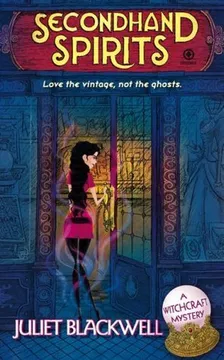


Plot Summary
A Familiar in the Shop
Lily Ivory has just opened Aunt Cora’s Closet, a vintage shop on San Francisco’s Haight Street, hoping at last to build a home and a life among other people. Then Aidan Rhodes, a striking male witch who knew Lily’s father, visits and leaves behind Oscar, a scaly, shape-shifting creature who insists he is her familiar.
Lily refuses him, but Oscar transforms into a potbellied pig and wins over her warmhearted employee, Bronwyn. Lily lets him stay, calling him Oscar and pretending he is only a temporary guest. Her other coworker, Maya, takes Lily to inspect clothes at the home of Frances Potts. As fog gathers outside, Lily wonders whether Aidan’s arrival means her new, ordinary routine is already in danger.
Lily’s shop is more than a business: it is her chosen method of belonging. She handles the past through garments, whose traces of former lives make connection feel safer than intimacy with living people. Oscar disrupts that arrangement by arriving as a dependent being rather than an object she can assess and resell. Her refusal is partly practical, but also protective: she fears that attachment will expose her difference. The scene starts her movement from solitary competence toward reciprocal care, while Aidan’s connection to her father signals that the life she is trying to leave behind has followed her.
The Basement Wail
At Frances Potts’s crowded basement, Lily finds two fine wedding gowns and a deep red dress whose vibrations carry a grief so intense she drops it. Frances recognizes the garment and quietly agrees to leave it untouched. Then Lily and Frances hear a woman’s terrible cry, while Maya hears nothing. Moments later, Jessica, a neighborhood child who had been helping Frances in the kitchen, disappears from her home.
Witnesses whisper about La Llorona, the weeping spirit said to steal children near water. Lily recognizes the danger in the cry and decides to protect Frances, who heard it too. In the Potts house, she takes strands of pale hair from a brush and studies a family photograph, unaware that her choice will matter later.
The basement gathers the book’s two kinds of history: the material past preserved in clothing and the psychic past that refuses to stay buried. Lily’s sensitivity makes the red dress a warning, but not an explanation; she can register suffering without knowing its source. Frances’s recognition suggests a shared knowledge neither woman can comfortably name. The child’s disappearance converts Lily’s private perception into an obligation. Her decision to act is compassionate, but it rests on incomplete information, establishing a central tension: intuition can reveal that danger exists without reliably identifying who or what caused it.
A Spell That Fails
Lily brews a protection spell using the hair she collected, then goes to the bay hoping to confront La Llorona. The spirit appears only briefly, wailing and fleeing before Lily can hold her there. By morning, Frances is dead. Two inspectors visit Lily’s shop, explain that a street camera recorded her entering the Potts house overnight, and demand the clothes she bought.
Lily learns they found a pentagram near Frances’s body, and they treat her knowledge of the symbol as suspicious. At the same time, Max Carmichael arrives seeking protective herbs for a ghost hunt on the bay. Lily gives him her own medicine bag and warns him away from the water. Her failed spell now carries both guilt and police scrutiny.
Lily’s first attempt at protection exposes the gap between supernatural skill and actual control. She prepares for a demon, yet the immediate threat is a death inside a home, beyond the narrow terms of the spell she casts. Her confidence in ritual procedure cannot compensate for a mistaken reading of the situation. The police investigation adds a social version of the same problem: because Lily knows the signs, others mistake knowledge for culpability. Max’s arrival makes belief itself contested. Lily can neither prove what she senses nor safely ignore it, and the two forms of uncertainty converge around her.
The Soul Price
While Lily hosts a wedding-dress fitting that brings customers and neighbors into her shop, Bronwyn recognizes Lily’s daily cleansing rituals and invites her to join the coven. Lily cannot accept yet, afraid her uncontrolled power might endanger them. She visits Aidan at his office inside a wax museum, where he dismisses La Llorona as unlikely to have killed Frances but confirms that Jessica may be recoverable only through a soul-for-soul exchange.
Lily rejects his offer to investigate on her behalf because she will not owe him. Still, the warning changes her aim: rescuing Jessica may require a sacrifice, and choosing whose life to trade would make Lily responsible for deciding whose soul is expendable.
The bridal fitting gives Lily a small, practical triumph: she helps strangers inhabit clothes that let them feel more fully themselves. That success contrasts with the moral uncertainty of Aidan’s proposed exchange. Lily’s refusal to accept help is not simply independence; it is a defense against becoming indebted to someone whose motives she cannot read. Yet the information makes solitary action less viable. Bronwyn’s invitation offers a different kind of power, grounded in mutual support rather than hierarchy, but Lily’s fear of harming others keeps her outside it for now.
The Hidden Altar
Lily visits Jessica’s grieving family, and the girl’s young brother confirms that a ghostly woman took her. Their cousin Tomás dismisses the supernatural explanation but says Frances’s house has long seemed dangerous. That night, Lily returns to the house with Max, who has followed the suspicious activity despite his disbelief.
In the attic they find a child’s playroom and a dollhouse; behind a closet door, a concealed altar holds a bloodied animal sacrifice, blackened bones, and clippings about Lily’s Texas past. When the room traps them and a ritual knife flies at Lily, Max steps in front of it and is stabbed. Lily drags him out with Tomás’s help, then uses a brew and healing spell to keep him alive.
The altar turns private dread into material evidence, but its mixture of religious objects and violence does not immediately reveal who used it or why. Lily’s ability to read vibrations cannot settle the question of intention. Max, meanwhile, performs an act of trust before he possesses the language to understand Lily’s world: he protects her with his body, then accepts her care. His wound makes skepticism costly without instantly erasing it. Tomás’s intervention further complicates Lily’s assumptions about danger. A person who rejects magic can still act with courage, while the supernatural threat remains entangled with very human choices.
Friends Against the Evidence
After Max leaves Lily’s apartment, unwilling to accept that spirits attacked them, Inspector Romero questions Lily about her Texas past and Frances’s death. Lily’s neighbor Maya, however, hears her account of magic and says she trusts her even without understanding.
When photos from the altar reveal its grisly details, the two women and Bronwyn spend the evening together, giving Lily her first real night of friendship. Meanwhile, Sandra Schmidt, another neighbor, shows Lily a copy of the witch-hunters’ manual and later bids fiercely for a sinister stone statue at an auction.
Lily notices Sandra’s fixation on Frances’s property and her clothes. When Frances’s two wedding gowns vanish from the shop, Sandra’s unusual curiosity begins to look less harmless.
This section distinguishes trust from agreement. Maya does not need to adopt Lily’s account of magic in order to stand beside her, a form of recognition Lily has rarely experienced. Their friendship becomes a counterweight to the police’s suspicion and Max’s refusal. Sandra’s behavior, by contrast, shows how curiosity can become acquisitive: she approaches the occult as something to collect and deploy, not a relationship demanding care. The missing gowns sharpen that distinction. Clothing in Lily’s hands preserves human stories; in Sandra’s, it may become a tool. The same objects can carry very different intentions.
The Inheritance Trap
Frances’s lawyer, Delores Keener, tells Lily that Frances changed her will after their first meeting and left Lily everything. Lily plans to refuse the inheritance and visits Frances’s estranged daughter, Katherine, who calls the old house a burden and rejects questions about her vanished sister.
As Lily and Maya leave, a driverless car swerves at them and crashes into the narrow passage where they take cover. Katherine watches from her window without visible alarm.
At the Chronicle, reporter Nigel Thorne tells Lily that children have disappeared from Hunters Point at intervals for decades, often around March. His records connect the pattern to a woman who drowned her children near the bay, giving Lily reason to seek out Hervé LaMansec, a practitioner familiar with the local legend.
The inheritance looks like a windfall but functions as a threat: it gives Lily a possible motive in the police’s eyes and draws her deeper into a house she would rather avoid. Katherine’s detachment does not explain the attempted killing, but her presence at the window makes the danger feel targeted rather than accidental. Nigel’s reporting then enlarges the case beyond Jessica and Frances. Repeated disappearances have been treated as isolated tragedies, partly because the neighborhood’s residents are easy for authorities to overlook. The supernatural pattern and the civic pattern mirror one another: what is not connected in official records can still form a devastating continuity.
The Hand of Glory
At Hervé LaMansec’s shop, Lily learns that the altar’s candleholder may be a Hand of Glory, made from a hanged man’s hand and able to open doors, including spiritual ones. He also identifies the blackened bones as possibly belonging to a cat, a substance associated with invisibility.
Before Lily can pursue the meaning, she finds Sandra choking in her own shop, dressed in one of Frances’s missing gowns and surrounded by a weak spell circle. Sandra manages to connect her distress to Frances’s house. Lily calls for help, takes a lock of Sandra’s hair, and hurries there, realizing the spell’s source must be elsewhere. Sandra’s ordeal confirms that someone is using the old objects to attack living people.
Hervé gives Lily what her own sensitivity cannot: technical knowledge about how the altar’s objects function. His expertise reframes the room not as a vague site of evil but as a working apparatus designed to cross boundaries and conceal its user. Sandra’s choking brings that danger into the present tense. Her earlier fascination with occult objects now appears to have left her exposed to a practice she did not understand. Lily’s response is decisive but still uncertain; she has to infer the spell’s mechanism while Sandra struggles to breathe. Knowledge here is not mastery. It is the difference between a guess and a chance to intervene.
Fire at the Potts House
At the Potts house, Lily finds a hex doll tied to Sandra’s hair and cuts its black thread, ending the spell. The altar then ignites, and flames spread through the old building. Tomás, who came searching for clues about Jessica, uses a fire extinguisher to pull Lily from the burning room. Outside, Lily discovers a heart-shaped sachet containing bloodied hair and bone.
She recognizes it as a sweetness charm, a device that can hide evil intent beneath a harmless appearance. While the fire consumes the house, Lily takes a mandrake root from Frances’s garden for Aidan and learns from Mother Decotier, a spirit, that Frances made a deal with La Llorona to recover her daughter. The full moon is their deadline.
The house’s destruction is both escape and loss: it removes a dangerous altar, but also erases evidence Lily has only begun to interpret. Tomás’s rescue forces Lily to revise her picture of him; his anger at witches does not prevent him from risking himself for a stranger. The sweetness charm offers a precise image of the case’s central problem: apparent gentleness can conceal predation, and perception itself can be manipulated. Mother Decotier’s answer connects the charm, the disappearances, and Frances’s grief, but offers no easy remedy. Lily now knows the stakes and has little time to prepare.
The Sister in White
At Frances’s funeral, Lily sees Katherine praying with a rosary, not casting a spell. Katherine admits that her missing sister is not dead and not human, then leaves before Lily can learn where she is. The police classify Frances’s death as suicide by poison, while Sandra, recovering in hospital, insists the danger came from Frances’s daughter.
Lily returns to Aidan, agrees to let him help summon and hold La Llorona, and asks him to arrange a sculpture of Mary Ellen Pleasant as payment to Mother Decotier. She finally asks Bronwyn’s coven for support. Maya and the other women agree to gather at India Basin. Lily calls her grandmother Graciela, prepares a spell, and writes a will in case she does not return.
The funeral replaces suspicion with a more difficult truth: Frances’s actions grew from grief, but her daughter’s return did not restore the family she lost. Katherine’s prayer distinguishes her from the apparent occult danger, while her warning confirms that the missing child remains part of the present conflict. Lily’s preparations mark a change in her understanding of strength. She still plans to confront the threat, but now accepts help from Aidan, Graciela, Bronwyn, Maya, and women she has barely met. Her will exposes how seriously she considers the risk, even as asking others to stand with her makes survival a shared concern.
A Soul for Jessica
At India Basin under the full moon, Bronwyn’s coven forms a circle while Aidan draws La Llorona through the fog. The adult Elisabeth appears as Delores Keener, the lawyer who handled Frances’s will.
She reveals that Frances’s hair Lily used in the protection spell was actually hers, so the spell protected Elisabeth from the poisoned meal. Frances had tried to die and take her returned daughter with her; after Elisabeth survived, she secretly lived in the attic and used the Hand of Glory and black-cat bones to move unseen.
Elisabeth offers Lily greater power if she joins them. Lily refuses and offers Elisabeth as the soul La Llorona wants. When the spirit drags Lily underwater, she finds Jessica, breaks free, and floats with the child to the surface.
The revelation makes Lily’s earlier mistake consequential without making it a failure of compassion: she protected someone, but not the person she intended, because she could not identify the hair she took. Elisabeth’s survival also exposes the terrible cost of Frances’s bargain. Maternal love becomes inseparable from coercion, secrecy, and the sacrifice of other children. Elisabeth tempts Lily with the same certainty her own power cannot provide, but Lily refuses to convert strength into dominion. Her offer transfers the burden back to the person who helped sustain the cycle. The rescue depends not on solitary force but on the circle holding while Lily enters the water.
A Home Among the Living
Max and Charles Gosnold pull Lily and Jessica from the bay. Jessica is dazed but physically unharmed, and Maya and Bronwyn take her home without burdening her family with an impossible explanation. La Llorona leaves San Francisco, persuaded by the combined force of Lily, Aidan, and the coven. The next day Tomás brings Lily flowers from Jessica’s family and promises his help in the future.
Max returns with wildflowers, admits he is not frightened away by Lily’s powers, and asks her to a wedding months later. Lily accepts. Maya and Bronwyn spend the night at her apartment, and Lily gives Frances’s estate to the neighborhood association for a park. Her shop, friendships, and magical life now belong to the same community.
The resolution answers the opening’s emotional question as much as its supernatural one. Lily began by treating belonging as something she might earn through respectable work and careful concealment. She ends with friends who know her abilities, a partner willing to remain curious, and a neighborhood whose children she has helped protect. Jessica’s return cannot undo the losses that preceded it, and the park cannot repair every wound in Hunters Point, but Lily redirects Frances’s property toward shared use rather than private possession. Her power becomes most constructive when it is supported by relationships and used without pretending she can control every consequence.
Analysis
Secondhand Spirits builds its mystery from a tension between what can be sensed and what can be known. Lily is unusually receptive to the emotional residue of objects, yet this does not make her omniscient. The hair she takes from Frances’s brush seems like a sound magical ingredient, but it belongs to someone else; her protection reaches the wrong person. The novel thereby refuses the comforting fantasy that heightened perception guarantees moral clarity. Lily’s power can expose pain, but only patient investigation and other people’s testimony can interpret it.
The story also treats memory as materially uneven. Frances preserves clothes and a house, while her family loses the ability to speak openly about its central trauma. The neighborhood’s repeated child disappearances likewise persist in local memory without becoming a coherent public history. Nigel’s old reporting and Maya’s oral-history work represent different attempts to preserve what institutions neglect. Against these fragments, the supernatural explanation does not erase ordinary social failures: poverty, racial suspicion, and the assumption that missing children from a marginalized community are isolated cases all help the pattern continue unnoticed.
Lily’s emotional arc turns on the difference between self-reliance and ethical independence. She initially avoids covens and resists Aidan’s help because dependence feels like surrendering control. Yet the climax succeeds through a web of distinct contributions: Graciela’s teaching, Aidan’s power, the coven’s collective focus, Max’s rescue, and Tomás’s courage. No single person possesses enough knowledge or strength to solve the crisis alone. Lily becomes more powerful not by dominating others, but by accepting support without handing over judgment.
Frances’s grief remains morally complicated. Her longing for a lost child explains her bargain without absolving its consequences. Elisabeth’s survival is not a restoration of the past, and the returned child cannot simply be folded back into ordinary family life. By rescuing Jessica and giving the Potts property to the neighborhood, Lily chooses repair where she can, while recognizing that love, memory, and magic cannot reverse every harm.
Review Summary
Secondhand Spirits is a witchy mystery set in San Francisco, featuring Lily Ivory, a powerful witch who runs a vintage clothing store. Readers enjoyed the unique blend of paranormal elements, vintage fashion, and mystery, praising the well-developed characters and intriguing plot. While some found the pacing slow at first, many appreciated the rich world-building and magical elements. The book's darker tone and authentic witchcraft details were noted, with most reviewers expressing enthusiasm for continuing the series.
Characters
Lily Ivory
The solitary witchLily is a natural witch from Texas who has settled in San Francisco to run Aunt Cora’s Closet, a shop devoted to vintage clothing. She senses the histories held in old objects and can work powerful spells, though her abilities often exceed her control. Years of rejection have made her guarded, practical, and quick to leave before anyone can turn against her. Her attraction to vintage garments reflects a safer form of intimacy: she can touch lives through what people leave behind. At first she wants to pass unnoticed as an ordinary shopkeeper. Her loyalty to vulnerable people keeps drawing her into danger, and her growing friendships challenge the belief that staying alone is the only way to stay safe.
Max Carmichael
The skeptical investigatorMax is a freelance journalist and professional skeptic who investigates people exploiting public fears. He has reported from conflict zones and carries the reserve of someone shaped by repeated exposure to violence. His wife’s death remains a private wound, and his work offers a way to impose evidence and structure on a world that has hurt him. He meets Lily while preparing a ghost investigation, then finds his certainty tested by events he cannot easily explain. His attraction to her grows alongside his distrust of witchcraft. Max’s defining tension is not simply belief versus disbelief, but whether he can remain emotionally present when experience threatens the worldview that has helped him endure.
Oscar
The unwanted familiarOscar is a small, scaly supernatural creature who can disguise himself as a potbellied pig. Aidan delivers him to Lily as a familiar, but Oscar quickly establishes his own place in her home, shop, and daily routines. He is comic, hungry, vain, and more perceptive than he first appears. His attachment to Bronwyn and his sensitivity to danger show that he is not merely a magical accessory. Lily initially sees him as an imposition and worries that he will complicate her efforts to appear normal. His steady presence gradually becomes a source of comfort, and caring for him gives Lily a low-stakes way to practice the intimacy she has avoided.
Aidan Rhodes
The powerful witch brokerAidan is a handsome male witch who knows Lily’s father and operates from an office in San Francisco’s Wax Museum. He is confident, politically connected, and skilled at using charm to make his offers difficult to refuse. His knowledge of local supernatural affairs makes him useful, but his habit of withholding information keeps Lily wary. Aidan is also an herbal novice, which makes Lily’s brewing skills valuable to him. Their relationship balances mutual attraction, strategic bargaining, and genuine assistance. He represents a form of power organized through authority and favors, in contrast with the reciprocal strength Lily begins to find among Bronwyn’s coven.
Bronwyn
The generous coven keeperBronwyn rents space for her herbs inside Lily’s shop and works as an amateur witch within a welcoming Wiccan coven. Affectionate, sociable, and unembarrassed by her enthusiasm, she offers Lily friendship before Lily knows how to accept it. Her apparent lack of magical power does not diminish her emotional steadiness or her ability to gather people. She recognizes Lily’s cleansing rituals and invites her into a community without demanding that she explain herself first.
Maya Jackson
The clear-eyed allyMaya is a young art student who finds vintage clothing for Lily’s store and records the stories of older residents. Her humor is dry, her judgment independent, and her interest in people grounded in attention rather than sentimentality. She helps Lily meet Frances and stays close when the case becomes frightening. Maya does not need to understand magic before deciding Lily deserves her trust. Her practical courage helps turn Lily’s private struggle into a shared effort.
Frances Potts
The guarded matriarchFrances is an elderly Louisiana-born woman who has lived for decades in a once-grand Hunters Point house crowded with family possessions. She is hospitable to neighborhood children and protective of her private history, which makes her difficult to know even when she is kind. Her long attachment to the house and its contents reflects a life shaped by grief and isolation. Lily recognizes something familiar in her, though she does not yet understand why.
Jessica Rodriguez
The missing childJessica is a lively neighborhood girl who visits Frances and helps with kitchen chores. Her ease with adults and her playful imagination make her disappearance especially painful to the people around her. She is the immediate reason Lily turns her supernatural knowledge into a public risk, even though Jessica herself knows little of the forces surrounding her.
Tomás
The wary neighborhood protectorTomás is Jessica’s cousin, a tattooed young man whose anger and hard-edged manner conceal a strong sense of responsibility toward his family. He distrusts Frances and rejects Lily’s explanation of magic, yet he investigates Jessica’s disappearance himself. His actions show that skepticism and courage can coexist, even when he wants no association with witches.
Sandra Schmidt
The intrusive neighborSandra owns Peaceful Things, the New Age shop beside Lily’s, and leads a neighborhood association. She is energetic, persistent, and eager to be included in other people’s plans, often ignoring their boundaries. Her interest in occult objects is more serious than her breezy manner suggests. She wants the troubled Hunters Point area to change, but her methods and motives remain difficult for Lily to read.
Katherine Airey
The estranged daughterKatherine is Frances’s surviving daughter, now living in a strikingly modern Pacific Heights home. She is wealthy, controlled, and deeply reluctant to revisit her childhood or her mother’s history. Her polished surroundings contrast with the painful family memories she keeps tightly contained. Although she resists Lily’s questions, her reactions suggest that the old disappearance still shapes her life.
Delores Keener
The composed attorneyDelores is Frances’s lawyer, a poised professional with close ties to Frances’s family and a growing public profile. She handles the older woman’s legal affairs and presents herself as capable, self-assured, and socially adept. Her presence connects the private Potts household to the city’s institutions and gives Lily an unexpected link to the legal consequences of the case.
Elisabeth Potts
The vanished sisterElisabeth is Frances and Ronald Potts’s younger daughter, whose disappearance as a child left her family fractured. She persists in the memories of her sister and mother and becomes a crucial absence in Lily’s investigation. The sparse information about her early life makes her less a familiar presence than a question that has shaped the Potts family for decades.
Inspector Carlos Romero
The watchful detectiveRomero is an SFPD homicide inspector investigating Frances’s death. He is skeptical but perceptive, and his questions show that he is willing to consider details that do not fit an easy account. His prior friction with Max makes him cautious around the journalist, while his family connections leave him more open to the possibility that Lily’s abilities are real.
Hervé LaMansec
The practical vodou priestHervé runs a spiritual shop in the Mission District and inherited a practice of helping families troubled by the Hunters Point disappearances. He is direct about the limits of what he can do and wary of Lily’s request to confront La Llorona. His expertise identifies the function of objects Lily can sense but cannot interpret. He treats supernatural work as both a vocation and a livelihood, with boundaries shaped by experience.
Graciela
Lily’s distant mentorGraciela is Lily’s grandmother and first teacher in the craft. She taught her spells, discipline, and the ethical danger of using power as though it made its holder a god. Their estrangement leaves Lily without the guidance she most needs, but Graciela’s lessons remain present in her decisions. She embodies a family bond Lily has not yet found the courage to restore.
Charles Gosnold
The theatrical ghost hunterCharles sells ghost tours and paranormal investigations with confidence and a gift for showmanship. He is more performer than sensitive, but his willingness to bring a boat and crew eventually becomes useful to Lily’s plan.
Nigel Thorne
The persistent reporterNigel is a veteran Chronicle reporter who covered the Potts family’s tragedy and later tracks other child disappearances. His old notes preserve connections that the police and public have treated as separate cases.
Mother Decotier
The cryptic spirit guideMother Decotier is a deceased spiritual practitioner whom Hervé can summon near a memorial to Mary Ellen Pleasant. She answers Lily’s urgent questions in fragments, requiring Lily to interpret rather than simply receive guidance.
Plot Devices
The Book of Shadows
A witch’s working memoryLily’s inherited book gathers spells, recipes, memories, and advice from her grandmother. She consults it before brewing, uses it to check what she knows about La Llorona, and eventually finds an old recipe for a sweetness charm. The book behaves less like a fixed manual than a living archive, with pages sometimes opening on material Lily needs. Its practical function is to preserve craft knowledge, while its emotional function is to keep Graciela present even when Lily cannot bring herself to call her.
Vibrations in old things
History made physically legibleLily senses emotional traces in clothing, objects, and places. This ability helps her recognize that Frances’s red dress holds profound grief, assess garments for customers, and detect when the Potts house contains more than ordinary ghostly residue. Yet vibrations do not disclose a complete story or reliably distinguish danger from pain. The device therefore gives Lily access to evidence while preserving uncertainty. It makes the past tangible, but does not let her control what that past means.
Oscar the familiar
A companion and magical aidAidan’s unexpected gift becomes Lily’s shape-shifting familiar. Oscar can appear as a potbellied pig around ordinary people and as a small, scaly creature when hidden. He offers information about supernatural beings, accompanies Lily into danger, and provides a daily relationship that is neither business nor obligation. Lily’s medicine bag and protective talisman help keep him safe. His presence turns the abstract idea of a familiar into an evolving bond, while his own uncertain loyalty and history preserve an element of mystery.
The sweetness charm
A harmless face for dangerThe charm masks harmful intent beneath an appearance of warmth and safety. Lily finds its bloodied contents in a stitched sachet at the Potts house and understands that it helped Frances seem welcoming even as the house concealed a darker history. The charm also offers a model for reading the case: appearances can be made persuasive, and Lily’s first impressions are not always reliable. Its presence complicates the familiar distinction between a kindly elder and a threatening presence.
The soul bargain
A cost attached to rescueAidan explains that La Llorona may release a stolen child only in exchange for another soul. Frances’s long grief led her to make a bargain that strengthened the spirit and tied successive child disappearances to her family’s tragedy. Lily must face the same exchange at the full moon, but refuses to choose an uninvolved victim. The bargain makes the climax an ethical decision as well as a magical confrontation, testing whether Lily can protect Jessica without claiming the right to decide that someone else’s life is disposable.
Download PDF
Download EPUB
.epub digital book format is ideal for reading ebooks on phones, tablets, and e-readers.








