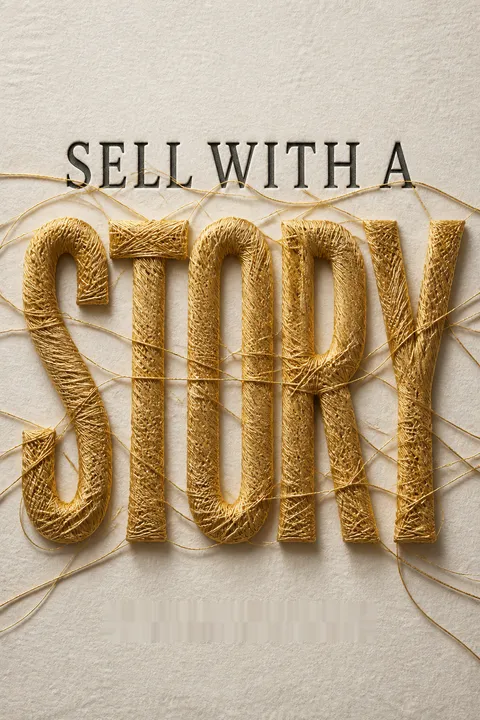


Key Takeaways
Give ordinary products a story buyers can picture and repeat.
Stories add meaning. Photographer Chris Gug explained that the pigs in one of his Caribbean images lived on an island with little food. A nearby restaurant began dumping scraps offshore, and the pigs learned to swim toward boats. The photograph became more than an unusual image: it carried a memorable account of how the animals got there. The buyers took it home after hearing the story, not just after seeing the picture.
A separate experiment put short, fictional stories beside 100 inexpensive secondhand objects on eBay. The objects cost about $129 in total and sold for more than $3,600. Stories can make a product easier to value, remember, and discuss, even when its physical features have not changed.
Meaning can change perceived value without changing a product’s practical function. That is useful when a seller needs to help a buyer understand why an otherwise ordinary offering matters. The eBay experiment is vivid, but it does not isolate storytelling from every other influence on those sales, and its fictional stories differ ethically from real customer evidence. Its strongest lesson is therefore about attention and interpretation, not a guaranteed price premium. A story can enrich a truthful offer, but it cannot make a poor fit valuable to a buyer who does not need it.
If nothing happens, your message is a pitch, not a story.
Events make the difference. A sales story follows something that happened to someone. It usually establishes when and where the event occurred, identifies a central person and their aim, and shows what stood in the way and what followed. A product description can be persuasive without being a story, but it does not give listeners a sequence of events to picture.
The book contrasts a generic teeth-whitening pitch with a customer account from the University of Leeds. Network manager Dave Neild faced copyright complaints and virus-infected student computers. His team tested a security product, and the complaints stopped while the university recovered about 30 percent of its lost bandwidth. The second account is a story because it gives the buyer a person, a problem, actions, and an outcome.
This distinction helps sellers diagnose why a presentation feels forgettable. A feature list asks the audience to assemble a situation for themselves; a narrated event supplies one. That can lower the effort required to understand a benefit. Still, not every useful sales communication needs a plot. A clear price, specification, or warranty may be more useful than an anecdote at a decision point. The practical test is not whether stories are superior in every case, but whether an event gives the buyer context that a claim alone cannot provide.
Tie demanding sales work to a real customer benefit.
Purpose can change effort. In a study led by Adam Grant, call-center fundraisers read stories about university students whose scholarships came from donations. A second group read about how call-center work had benefited the employees themselves, while a control group received no stories. Over the following week, the scholarship-story group more than doubled its pledges and money raised compared with its own earlier performance. The employee-benefit stories produced no significant change.
The practical suggestion is to keep a personal account of a time your work genuinely helped a customer. Recalling that moment before a difficult call can reconnect routine selling with a human outcome. A second kind of self-talk can reduce pressure: imagine being calm enough to advise the buyer rather than needing the deal at any cost.
The study points toward task significance, the idea that work feels more motivating when people can see whom it helps. That connection can matter in sales, where rejection and repetitive targets can shrink attention to the next transaction. The result should not be treated as proof that purpose stories reliably double performance in every sales team. The setting was a specific fundraising workplace, and results can depend on the job, incentives, and credibility of the story. Purpose is most useful when it reflects an actual customer benefit, not a moral gloss on unsuitable selling.
Ask buyers what happened, then listen for the story underneath.
The buyer’s account comes first. A short answer such as needing a more efficient warehouse reveals a goal, but not the daily breakdown behind it. Asking when the problem became unmistakable can uncover the missed shipment, emergency production run, or misplaced inventory that explains what the buyer needs. The account also exposes what the buyer values in a supplier, which a list of desired traits may not reveal.
Microsoft’s travel team faced a vivid test when an Icelandic volcano stranded about 180 employees in Europe. Its travel partner helped arrange a charter flight to Madrid and onward transportation. The procurement leader shared the episode with suppliers to show what dependable partnership meant in practice. To draw out such accounts, ask about specific incidents, use open questions, leave silence, and invite buyers to describe a typical day.
A buyer’s narrative is a form of contextual data. It reveals sequence, workarounds, stakes, and who is affected, details that can disappear in a high-level needs statement. This resembles qualitative interviewing: questions about a concrete incident often produce more useful information than asking someone to summarize an abstract problem. But a story is still one person’s perspective, not a complete operational diagnosis. Sellers should check their interpretation, ask who else is involved, and avoid steering the buyer toward a problem that conveniently matches the product.
Demonstrate trust by showing when you admit limits and mistakes.
Credibility needs evidence. Buyers may hear a promise to be honest as just another sales line. A specific account of declining work you could not handle, admitting an error, or advocating for a customer gives that promise a history. The point is not to confess for effect. It is to show how you behave when honesty carries a cost.
When Huntington National Bank wanted help reducing paper use, Xerox initially resisted because lower volume meant lower revenue. The customer found its own way to cut paper by 25 percent, and Xerox invoked a contract term that raised the per-page price. Account representative Eric Storey reviewed the dispute, concluded the customer had a fair case, and persuaded Xerox leadership to withdraw the increase. His story gave prospects evidence that he could challenge his own company when warranted.
Trust is better understood as calibrated confidence than as liking. A seller who can name the limits of a solution may be more credible precisely because the admission makes the remaining claims easier to evaluate. The Xerox example also shows that advocacy is not automatic agreement: the representative assessed both sides before arguing for the customer. That distinction matters. If every story presents the salesperson as a selfless champion, the performance can become as unbelievable as a boast. The strongest account includes the tension and the reasoning behind the choice.
Choose stories for the decision they serve, not their drama.
Start with the intended change. Before searching for an engaging anecdote, decide what the buyer should understand, feel, or do. Then look for a real success, failure, or moment of insight that makes that point clear. The central person should be recognizable to the audience, the challenge should resemble a problem they could face, and the effort to resolve it should feel real.
A useful story moves from a brief reason to listen into the relevant situation, the obstacle, the attempts to address it, and the result. It then connects the result to a lesson or a sensible next step. If no true example is available, a plausible hypothetical can help, provided it is clearly presented as imagined. A dramatic story that does not serve the buyer’s decision is still wasted time.
This is a form of audience-centered design: select evidence by the decision it needs to support, rather than by the storyteller’s attachment to the anecdote. Similarity between the story’s central person and the buyer can make an unfamiliar outcome easier to consider. Yet similarity is not the same as proof. A close match may invite useful comparison, but it cannot establish that the buyer will get the same result. The story should open a relevant question, while data, constraints, and the buyer’s own circumstances determine whether the proposed action makes sense.
Answer objections with a customer’s lived consequences, not another feature list.
Make the stakes concrete. A common objection is that a solution sounds useful but may not justify its cost. Tiffany Lopez, who sold software to automate administrative paperwork, encountered a prospect worried that time savings would have little financial value. She described a municipal zoo facing a similar burden. When asked what its staff could do with recovered time, the team realized it could pursue more grant funding, which helped pay for major projects such as a gorilla exhibit.
Stories can also make the cost of waiting visible. Lopez had a prospect delay implementation, then face an acquisition that increased accounts-payable work just as an experienced manager left. The delay left the team more overloaded. These accounts do not replace questions about budget, timing, or risk. They help buyers imagine consequences that an abstract claim may leave hazy.
Stories can reframe an objection by making hidden opportunity costs visible. In decision science, people often evaluate immediate, certain costs more readily than uncertain future benefits. A concrete customer episode can bring the future into view. It can also bias judgment by making one outcome feel inevitable when it is only possible. A responsible seller should distinguish a representative pattern from a one-off case, and ask the buyer whether the comparison fits. The goal is not to defeat an objection rhetorically, but to make the underlying trade-off easier to inspect.
Keep helping after the sale with stories that guide use and loyalty.
The contract is not the finish. Stories can help customers choose how to use what they bought. On a Backroads cycling trip, a leader could explain how a less experienced guest completed a difficult route by starting early and receiving support along the way. That example lets another traveler make an informed choice without being labeled slow or being told what to do.
Stories can also define good service and preserve lessons inside a sales team. A hotel employee once lent speaker Mark Bowser a pair of trousers after Bowser discovered he had packed no pants before an early seminar. The episode became a memorable example of attentive service. By contrast, salesperson Steve Blair’s failed attempt to use a chocolate sample to sway a buyer taught colleagues not to rely on reactions they cannot predict. Capture both the wins and the mistakes.
Post-sale stories can function as informal onboarding. They translate broad promises such as flexibility or attentive service into concrete options customers can adapt. They also help organizations retain experience that might otherwise leave with an employee. But anecdotes should complement, not replace, clear instructions, especially when safe or correct product use matters. A memorable exception can inspire, yet it may create expectations the service team cannot consistently meet. The useful story illustrates a genuine practice and clarifies its limits.
Turn data into a discovery buyers can follow themselves.
Numbers can have a plot. Instead of presenting a conclusion first and then piling up supporting charts, a seller can show how the evidence developed and let the audience follow the reasoning. One approach traces a business situation over time. Another walks through the analyst’s investigation, including plausible explanations that failed before the evidence clarified the answer.
In a strategy presentation about disposable diapers, the author compared sales and profit over several decades. The measures rose together while the market was growing, but after 1983, when disposable diapers had reached nearly all diaper-using households, the relationship disappeared. The audience connected the change to market maturity and began proposing strategic consequences. The story made the data easier to interpret, while inviting the room to take part in the conclusion.
A discovery narrative can make analysis more engaging because it exposes how a conclusion was reached rather than presenting it as an unexplained verdict. It also makes assumptions visible and gives decision-makers a chance to test their own explanations. That participation can build ownership, but it carries a risk: a persuasive sequence may encourage people to mistake correlation for cause. The diaper example is useful as a strategic interpretation, not as a universal law about mature markets. A sound data story keeps the evidence available for scrutiny and marks where inference begins.
Practice from notes, preserve truth, and save stories as sales assets.
Preparation should sound human. The book recommends keeping sales stories short enough to fit the conversation. The examples have a median length of about 280 words, roughly two minutes aloud, with most intended to take one to three minutes. A brief outline can preserve the sequence and key facts without making delivery sound memorized. Practice by telling the story conversationally, then revise based on what listeners understand or miss.
Accuracy matters more than exact wording. A remembered quote can be paraphrased if it preserves what was meant, but changing the outcome or lesson can deceive the buyer. Label imagined examples clearly, protect confidential identities, and seek permission when using customers’ accounts. Keep useful stories in a searchable collection, with notes about the audience and purpose they serve.
The outline approach treats storytelling as a professional capability rather than a theatrical gift. It supports consistency while leaving room for natural conversation. The ethical guidance is equally important because stories often travel farther than the meeting where they begin. A minor memory error may be harmless, but a changed outcome can distort a buyer’s risk assessment. In practice, maintaining source notes and permission records is a form of information governance: it protects both the subject of the story and the seller’s long-term credibility.
Analysis
Sell with a Story is a practical business guide built from interviews, sales examples, and selected research, rather than a controlled study of storytelling’s effects on revenue. Its central contribution is not simply the claim that stories persuade. It is a map of where narrative can serve a sales relationship: explaining a seller’s work, motivating the seller, learning about the buyer, establishing trust, demonstrating a product’s relevance, responding to hesitation, supporting a decision made in the seller’s absence, and helping customers after purchase.
The book’s strongest distinction is between a story and a persuasive statement. An event involving a person, an obstacle, and an outcome gives a buyer something concrete to imagine and retell. That matters in organizations where decisions are distributed across colleagues who never attend the sales meeting. The author also treats story choice as more important than performance. A modest account that fits the buyer’s circumstances is more useful than an impressive anecdote with no bearing on the decision.
The argument benefits from a careful boundary: emotional engagement is not the same as sound evidence. Stories can make consequences vivid, but they can also make rare outcomes feel typical, encourage unjustified causal explanations, or exploit sympathy. The book recognizes the ethical danger of manipulation and insists on transparency around invented examples and material facts. That caution should remain central, particularly in high-stakes purchases where claims affect safety, finances, or public services.
The most durable practical insight is to treat narrative as a supplement to diagnosis and proof. A story can earn attention, reveal a need, and make evidence memorable. It cannot establish that a product fits this buyer without asking questions, checking assumptions, and examining relevant data. Used that way, storytelling is not a substitute for selling responsibly. It is a way to make responsible selling clearer, more human, and easier for others to carry forward.
Review Summary
Sell with a Story receives mostly positive reviews, with readers praising its practical approach to storytelling in sales. Many appreciate the book's actionable tips, exercises, and real-world examples. Reviewers find it engaging and valuable for both beginners and experienced professionals. Some highlight its effectiveness in improving sales techniques and communication skills. A few readers mention repetition in certain chapters or find parts less engaging. Overall, the book is praised for its insights on using stories to capture attention, build trust, and close sales.
People Also Read







Glossary
Sales story
Narrative used in sellingA sales story is an account of events used to earn a sale or maintain a customer relationship. It can appear throughout the selling process, from introducing the seller and understanding the buyer to explaining a product, addressing objections, closing, and supporting the customer after purchase.
anti-stories
Buyer beliefs opposing changeAnti-stories are the implicit or explicit accounts buyers hold that support an objection or make a proposed change seem unwise. For example, a buyer may imagine that saved work time will produce little value. A seller can respond with a more relevant customer account that makes another outcome easier to consider.
Two-roads stories
Contrasting outcomes with and withoutTwo-roads stories compare what happens when a person faces a situation without a product or service and what could happen in a similar situation with it. The contrast helps buyers picture the practical consequences of a choice, rather than hearing product benefits as detached specifications.
Story Spine
Fill-in story outlineA Story Spine is a sequence of unfinished sentence prompts used to organize a narrative. In this book, it helps a salesperson move from a reason to listen through the setting, central person, problem, response, and outcome, then connect the events to a lesson or suggested action.
discovery journey story
Narrative of reaching a conclusionA discovery journey story presents how an analyst or seller investigated a question and arrived at a conclusion. Rather than announcing the recommendation at the start, the teller reveals relevant evidence and some failed explanations so the audience can follow, test, and sometimes reach the insight themselves.
intimacy threshold
Comfort boundary for personal detailThe intimacy threshold is the unspoken limit on personal or emotional closeness that a particular group is comfortable with in a conversation. It varies among people and cultures. A storyteller should notice signs of discomfort and adjust the emotional intensity or personal disclosure accordingly.
hard points
Story facts not to changeHard points are the essential facts that preserve a story’s integrity: its core situation, people, obstacle, general process, outcome, and lesson. Names or identifying details can sometimes be concealed, but altering a material outcome or lesson can mislead the audience about what happened or what the example proves.
soft points
Details with some flexibilitySoft points are details that may be adjusted or simplified without changing the essential meaning of a story. Depending on audience expectations and the teller’s intent, these can include approximate timing or location, omitted names, event order, and reconstructed dialogue. Flexibility does not justify changing material facts or presenting fiction as true.
FAQ
What's Sell with a Story about?
- Storytelling in Sales: Sell with a Story by Paul Smith focuses on the power of storytelling in the sales process, teaching salespeople how to use stories to capture attention, build trust, and close sales.
- Structured Approach: The book provides a structured method for crafting sales stories, including identifying the right stories and understanding when to use them.
- Real-World Examples: It includes numerous examples and anecdotes from successful salespeople, illustrating how storytelling can transform sales interactions.
Why should I read Sell with a Story?
- Enhance Sales Skills: The book can significantly improve your sales skills by teaching you how to engage prospects through storytelling, making pitches more relatable and memorable.
- Practical Guidance: It offers practical advice and frameworks that can be immediately applied to your sales strategy, valuable for both novice and experienced professionals.
- Builds Relationships: Learning to tell compelling stories helps build stronger client relationships, as stories humanize the sales process and foster trust.
What are the key takeaways of Sell with a Story?
- Storytelling as a Skill: Storytelling is not just an art but a skill that can be learned and mastered to improve sales effectiveness.
- Four Elements of a Great Story: A great sales story includes a relatable hero, a relevant challenge, an honest struggle, and a worthy lesson.
- Seven-Step Structure: Smith outlines a seven-step structure for crafting effective sales stories, including context, challenge, conflict, and resolution.
What are the best quotes from Sell with a Story and what do they mean?
- “Stories sell.”: This quote emphasizes that effective storytelling can significantly enhance a salesperson's ability to connect with prospects and close deals.
- “Your story is your most critical sales weapon.”: It highlights that a well-crafted story can be more persuasive than traditional sales techniques.
- “A great sales story changes everything.”: This suggests that a compelling story can shift the dynamics of a sales conversation, engaging the buyer on a deeper level.
What is a sales story according to Sell with a Story?
- Definition: A sales story is any narrative used in the process of earning a sale and maintaining a customer relationship, applicable at various sales stages.
- Components: Effective sales stories typically include a time, a place, a main character, an obstacle, a goal, and unfolding events.
- Purpose: The primary purpose is to illustrate a point, convey a lesson, or demonstrate how a product or service can solve a problem.
How can I craft effective sales stories according to Sell with a Story?
- Identify Your Objective: Define what you want your audience to think, feel, or do as a result of your story.
- Use a Structured Approach: Follow the seven-step structure outlined in the book to ensure your story is coherent and impactful.
- Practice and Refine: Practice telling your story to ensure it flows well and resonates with your audience, gathering feedback for refinement.
What are the different types of sales stories mentioned in Sell with a Story?
- Introduction Stories: These help explain what you do in a relatable way, making it easier for prospects to understand your role and value.
- Problem Stories: These narratives illustrate common challenges that prospects face, helping them recognize their own issues and see the relevance of your solution.
- Customer Success Stories: These showcase how other customers have successfully used your product or service, providing social proof and building credibility.
How do I transition into a story during a sales call according to Sell with a Story?
- Use a Hook: Start with a hook that generates interest and gives your audience a reason to listen.
- Avoid Apologies: Don’t apologize for telling a story or ask for permission; confidently introduce the story as a relevant example.
- Keep It Relevant: Ensure that your transition flows naturally from the previous discussion, making it clear why you are sharing the story.
What are the common mistakes to avoid when telling sales stories according to Sell with a Story?
- Overly Long Introductions: Avoid lengthy setups that can bore your audience; get to the point quickly while providing necessary context.
- Using the Word “Story”: Refrain from explicitly stating that you’re going to tell a story, as it can create resistance.
- Neglecting the Lesson: Ensure that your story has a clear lesson or takeaway that aligns with your sales objectives.
How can storytelling help in handling objections during sales according to Sell with a Story?
- Address Objections with Stories: Use stories to illustrate how other customers have overcome similar objections.
- Create Urgency: Share stories that highlight the consequences of delaying a decision, motivating prospects to act sooner.
- Build Trust: By sharing honest stories about challenges and mistakes, you can build credibility and trust with your prospects.
What techniques does Sell with a Story suggest for enhancing emotional impact?
- Identify Emotional Moments: Identify key emotional moments within your narratives to create a connection with the audience.
- Show, Don’t Tell: Show emotions through actions and dialogue rather than simply stating them, allowing the audience to infer feelings.
- Use Dialogue: Incorporate dialogue to make stories more engaging and dynamic, enhancing the overall impact of the narrative.
How can I apply the lessons from Sell with a Story in my sales process?
- Craft Your Own Stories: Use the templates and techniques provided in the book to craft your own sales stories tailored to your audience.
- Practice Delivery: Practice your stories to ensure they sound natural and conversational, using methods like rehearsing with a colleague.
- Engage Your Audience: Focus on engaging your audience emotionally during your sales presentations, using storytelling techniques to create a connection.
About the Author
Other books by Paul Smith
Download PDF
Download EPUB
.epub digital book format is ideal for reading ebooks on phones, tablets, and e-readers.








