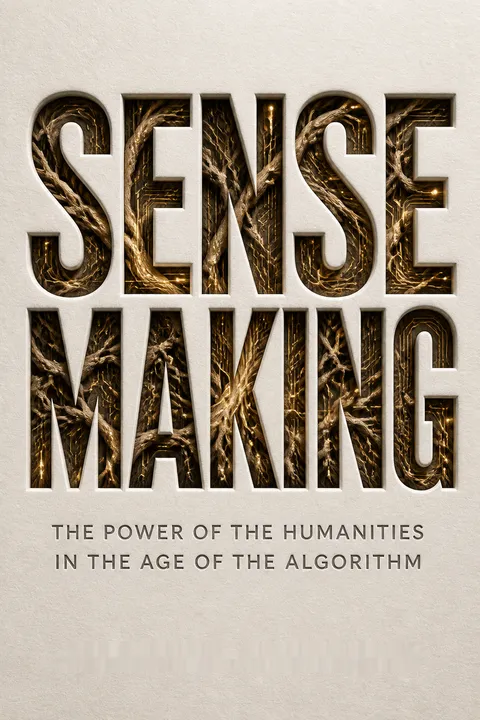


Key Takeaways
Pair algorithms with cultural inquiry, because people never behave as context-free data
The measurement gap. A health technology company surveyed thousands of people with diabetes and learned that many missed medication because they forgot. The finding described the problem but offered no account of how medication fit into daily life, or how to change that life. Similar blind spots appear when campaign polls track voter segments but miss a change in public mood, or when a technically superior solar product loses to a competitor that better understands its clients’ goals.
Numbers need interpretation. The argument is not that data or science are useless. They are powerful for questions with measurable, stable properties. But human actions are shaped by culture, history, relationships, and shifting circumstances. Numbers can show what happened; understanding people helps explain why it happened and what might matter next.
What's striking is the distinction between prediction and understanding. A model can accurately identify who forgets medication while leaving the intervention problem untouched. This resembles the difference between optimizing a proxy and improving the outcome the proxy is meant to represent. Quantitative tools are strongest when their assumptions are visible and their measures remain connected to lived consequences. The book's corrective is valuable, though it risks making qualitative judgment sound inherently wiser. Human interpretation can also be mistaken or self-serving, so the practical answer is not to choose data or context, but to make each test the other's blind spots.
Study the shared world shaping behavior, not just what individuals say they prefer
Choices have a setting. The book argues that people do not act as isolated decision-makers. Their sense of what is normal, desirable, or even noticeable comes from the social worlds they inhabit. Those worlds include unspoken habits, status rules, histories, and shared meanings. A survey that asks people to evaluate a product outside their ordinary setting can therefore miss the forces that govern its use.
Culture changes the product. Howard Schultz’s exposure to Italian coffee bars helped him see how that social ritual might fit American life, where coffee had largely meant a quick, ordinary drink. Ford faced a different context: lane-assistance technology has little value where roads lack marked lanes, while car ownership can signal different things in different cities. The same feature can be useful in one world and irrelevant in another.
This view connects closely to situated cognition, the idea that thinking and action are shaped by the environments and social practices in which they occur. It also clarifies why stated preferences can be unreliable: people may not have language for tacit norms, or may answer in ways that fit the interview rather than daily life. The cultural lens does not erase individual variation, however. People can resist or reshape the norms around them. Good inquiry therefore looks for both shared patterns and the moments when a person departs from them.
Add context-rich observation to behavioral metrics before making a major bet
Two textures of evidence. The book calls behavioral traces such as searches, purchases, and travel patterns thin data: useful records of what people do, but limited explanations of what those actions mean. Thick data captures actions in context, including relationships, moods, customs, and the practical knowledge people use without stopping to explain it. Clifford Geertz’s example of a wink makes the distinction clear: a sensor can record an eye movement, but only context can tell whether it signals complicity, sarcasm, or something else.
Use both. A milk-purchase statistic can show how much households buy. Observing a holiday meal where apples and honey carry shared significance reveals a different kind of information. Thin data offers scale; thick data helps interpret that scale. Neither is a substitute for the other.
The pairing resembles mixed-methods research: quantitative evidence can reveal prevalence, while qualitative observation can uncover mechanisms and meanings. The two forms can also correct one another. A vivid interview may suggest a pattern that proves uncommon, while a large dataset may reveal a trend whose cause is still unclear. The useful discipline is to move between them rather than treating one as the final judge. Thick data is not automatically rigorous simply because it feels intimate; its value depends on careful observation, transparent interpretation, and comparison across cases.
Go where people live the problem, not where researchers have simplified it
Phenomenology in practice. The book uses phenomenology to mean the disciplined study of how people experience their world. Instead of examining a behavior in an artificial setting, researchers observe it within ordinary routines and relationships. The point is not simply to watch people, but to understand what an experience means to them in a particular context.
Aging was not a financial product. A Scandinavian insurer believed its annuities were low-interest products and was losing older customers. Researchers reframed the inquiry around the experience of aging, then spent time with people and their families. Around age 55, many described a loss of control, changing family roles, and uncertainty about work and money. Their finances were being reorganized at exactly the moment the firm largely ignored them. After it refocused on these customers, attrition fell by 80 percent over two years, without increased customer-service costs.
This case shows how reframing can reveal a need that conventional customer research has classified out of view. The product category is not always the right unit of analysis; a life transition may better explain when advice becomes useful. The approach has affinities with service design and clinical ethnography, where observing the full journey often exposes friction invisible in isolated transactions. The reported business result is compelling, but one client example cannot establish that the method alone caused the improvement. The broader lesson is methodological: test whether the problem statement matches the experience people are actually navigating.
Make uncertain bets by combining numbers, shared moods, and embodied experience
Four kinds of knowing. The book distinguishes objective knowledge, such as prices and measurements; subjective knowledge, such as personal sensations; shared knowledge, such as a group’s norms and moods; and sensory knowledge, the bodily pattern recognition built through experience. Strong judgment can draw on all four rather than treating numerical evidence as the only legitimate input.
The pound trade. In 1992, George Soros and colleagues read more than economic data as they considered whether Britain could sustain its position in Europe’s exchange-rate system. They examined German political priorities, British economic pressures, and the conflict between national autonomy and monetary union. Their interpretation led them to bet heavily against the pound. The trade became known as Black Wednesday; Soros’s personal fortune reportedly grew by $650 million, while estimates put the fund’s profit above $1 billion. The book links their judgment to both analysis and contextual knowledge.
The example makes a strong case for combining formal analysis with local knowledge, much as intelligence work and crisis response do when signals are incomplete. It also highlights a key distinction between a hunch and an informed intuition: expertise can compress patterns learned through sustained exposure. Still, bodily confidence is not proof. Stress, overconfidence, and selective memory can all masquerade as insight, especially after a successful bet. The most defensible version of the argument treats intuition as evidence to investigate, not authority to obey. Soros’s practice of questioning his own assumptions offers a useful safeguard.
Give creative insight time to emerge from deep immersion, not a forced brainstorm
Creativity is not a factory. The author describes creative understanding as something that can emerge through sustained involvement with a subject, rather than as a product reliably manufactured by a universal process. He calls this receptive, prepared state grace. It does not mean waiting passively: it means learning the material, observing its context, and remaining open to connections that cannot be scheduled.
The watchmaker’s mainspring. Architect Bjarke Ingels struggled to find a design for a museum connected to a historic Swiss watchmaker. Seeing an artisan work with a watch’s tightly wound spring helped him recognize a form that could organize the building’s visitor route. The insight arose from knowledge of the project and contact with its craft. The book also contrasts this kind of immersion with short, context-poor brainstorming, where novelty can become detached from the problem it is meant to solve.
The account fits research on incubation: after concentrated work, a break can allow associations to reorganize without deliberate, stepwise reasoning. But the pause only helps because the mind has been furnished with relevant experience. Ingels’s idea is not spontaneous magic; it is a connection made legible by knowledge of architecture and watchmaking. There is also a practical check against romanticizing intuition: a compelling concept must still work across the design’s constraints. Creative receptivity and disciplined testing are partners, not alternatives.
Build expertise until rules become judgment tuned to the situation
Mastery changes attention. Drawing on philosopher Hubert Dreyfus, the book describes skill as progressing from rule-following toward increasingly fluid recognition of whole situations. Beginners rely on explicit instructions. With practice, they notice patterns, prioritize what matters, and eventually respond without consciously calculating every step. This is not mindless reflex; it is experience working beneath deliberate analysis.
Read the room. Negotiation teacher Sheila Heen knows her material well enough to focus on the people in front of her. When an executive complained that his wife gave unclear feedback, Heen recognized that his demand for perfectly phrased criticism protected him from hearing it. She raised the point playfully, allowing the room to learn without humiliating him. Her judgment depended on reading his status, the group’s mood, and the moment’s tolerance for challenge. Expertise here is not a script but a practiced sensitivity to context.
This account usefully distinguishes expertise from mere tenure. Repetition matters when it develops perceptual discrimination and feedback, not when it simply reinforces routine. The expert’s apparent ease can conceal a large store of learned distinctions, much as fluent language hides years of practice. Yet tacit judgment can be hard to inspect, teach, or correct. In high-stakes work, it helps to pair experienced practitioners with explicit review: explain decisions where possible, compare predictions with outcomes, and preserve room for dissent. Mastery should sharpen accountability, not exempt it.
Design around the human occasion, not the product or metric alone
Meaning precedes features. Ford’s research on future luxury drivers found that cars were unused about 95 percent of the time, while much of the driving that did occur was spent in traffic. The company had emphasized engineering features, but the research suggested that customers also valued privacy, connection, and productive use of time. Luxury could mean a personal retreat, a shared space for friends, or a mobile setting for meeting clients.
Follow the experience. A grocery chain that focused on increasing store revenue reframed its question around how people experience cooking. Researchers found shoppers moving between an evening rush for quick meals and a more exploratory mood when preparing to host guests. Those situations called for different store atmospheres and services. In both cases, designing for the larger human purpose revealed possibilities that a product-focused or segment-focused model had missed.
The shift from product to occasion is a powerful form of strategic reframing. It moves inquiry from what an organization sells to the role its offering plays in a customer’s day, which can expose opportunities across service, environment, and communication. This also guards against feature escalation, where organizations add capabilities without confirming that people value them. The limitation is that observed meanings do not dictate a single design solution. They guide hypotheses, which still require prototyping and evaluation across different users, settings, and trade-offs.
Use technology to support personal care, not to standardize people away
One resident, one context. Randall, an 87-year-old man with dementia, became agitated during the daily 3 PM staff change. His caregivers connected the moment to his former life as a teacher, when that hour marked the end of the school day. They addressed him as his students once had and used songs, stories, and a quieter space to help him settle. Notes about his history and what calmed him were shared among the care team.
Personalization can save time. The book argues that checking off bodily tasks while ignoring a person’s triggers can create more distress, falls, and work. Care tailored to Randall took knowledge that could not simply be scaled into one rule for every resident, yet it made care more efficient for him and supported caregivers’ sense of purpose. Technology is most useful when it helps staff access such individual knowledge at the right moment.
Randall’s case brings the book’s argument down to a consequential human scale: efficiency is not always faster task completion; preventing distress can reduce the work generated by a poorly matched routine. This resonates with person-centered care, which treats biography and preference as part of clinical context rather than optional decoration. The story also warns against turning personalization into an unfunded mandate. Staff need time, stable teams, and usable systems for sharing what they learn. Technology can help preserve context, but it cannot substitute for the relationships that produce it.
Analysis
Sensemaking makes a persuasive case that data about human behavior is not self-interpreting. Its deepest contribution is not a rejection of measurement, but a change in what counts as evidence: mood, history, social convention, sensory experience, and tacit skill become relevant alongside prices, counts, and correlations. The argument gains force through cases in which the original business question is too narrow. An insurer asks about annuity sales and discovers a life transition; a grocery chain asks about store spending and discovers competing experiences of cooking; Ford asks about vehicle features and discovers meanings attached to time spent in a car.
The book also offers a useful account of how judgment develops. Novices depend on explicit rules, while experienced practitioners learn to perceive patterns in whole situations. This helps explain why an expert can notice a meaningful change before it appears in a dashboard. Yet intuition is not a truth detector. A successful hunch can reflect expertise, but it can also reflect luck, bias, or a story constructed after the outcome. The strongest practice therefore combines immersion with challenge: identify assumptions, seek disconfirming evidence, compare interpretations, and test interventions.
The narrative favors humanities-trained interpretation, sometimes more confidently than its evidence warrants. Salary comparisons at the extreme upper end do not establish that humanities education causes leadership success; selection effects, institutional networks, and prior opportunity may also matter. Nor does a compelling case study establish that qualitative inquiry alone produced a business result. These limits do not weaken the central proposition. They specify how it should be used. Quantitative analysis can locate patterns and estimate scale; cultural inquiry can explain what the categories mean and why people respond as they do. Neither method is sufficient for every question.
The resulting model is practical: use algorithms for what they measure well, then ask what their measurements omit. Enter the settings where behavior occurs, learn the language and history shaping those settings, and remain willing to revise the question. Human judgment matters most not where numbers fail, but where a decision depends on deciding what the numbers are about.
Review Summary
Sensemaking argues for the importance of humanities and context in decision-making, contrasting with data-driven approaches. Reviewers found the book's critique of big data and algorithms insightful, appreciating its emphasis on cultural understanding. Some praised the real-world examples and implications for business, while others felt the arguments were repetitive or poorly supported. The book's stance on design thinking and Silicon Valley culture was controversial. Overall, readers found the book thought-provoking, though opinions varied on its effectiveness in presenting its core ideas.
People Also Read






Glossary
Sensemaking
Cultural interpretation in practiceThe author’s term for a humanities-grounded way of understanding people and their worlds. It combines observation, cultural knowledge, interpretation, and practical judgment to identify what matters in a specific human situation. Rather than treating data as self-explanatory, sensemaking examines how actions acquire meaning within social contexts.
Thick data
Context-rich human evidenceInformation that captures the meanings, relationships, moods, and circumstances surrounding human behavior. Unlike behavioral traces such as clicks or purchases, thick data aims to show how people experience and interpret their actions. It is gathered through methods such as observation, interviews, and attention to cultural practices, and is used alongside quantitative evidence.
Phenomenology
Study of lived experienceA philosophical approach concerned with how phenomena appear in lived experience. In the book’s practical use, it means investigating how people experience an activity, object, or situation in its ordinary social setting. Researchers attend to relationships and context, rather than assuming that a measurable description alone captures what the experience means.
Phronesis
Situated practical wisdomAn Aristotelian idea the book uses for judgment that integrates abstract knowledge with experience. A person exercising phronesis does not merely apply a rule mechanically. They interpret the particular situation and recognize what action fits its circumstances, drawing on learned skill and an understanding of the people and systems involved.
Abductive reasoning
Inference to a useful explanationA form of reasoning that proposes a plausible explanation for observations that do not already have a clear account. In the book’s description, inquiry begins openly, patterns are identified across evidence, and an explanatory idea is formed. Because an abductive conclusion is a fallible proposal rather than proof, it remains open to testing and revision.
The Four Types of Knowledge
Four sources of knowingThe book distinguishes objective knowledge, which is measurable and repeatable; subjective knowledge, which concerns personal sensations and feelings; shared knowledge, which concerns culturally held experiences and moods; and sensory knowledge, which develops through bodily experience and practice. The framework argues that understanding human situations often requires synthesizing all four.
Analytical empathy
Systematic perspective-takingA disciplined attempt to understand another person’s worldview without requiring agreement or approval. It uses observation, evidence, and interpretive frameworks to examine how people experience their circumstances. In the book, analytical empathy helps researchers and practitioners understand unfamiliar social worlds rather than relying on assumptions or simple emotional identification.
Meaningful differences
Contextual distinctions that matterDifferences that shape what people value, how they interpret situations, and what actions make sense to them. The term contrasts with treating people and objects as interchangeable resources. Recognizing meaningful differences requires a perspective grounded in a particular practice or world, rather than optimization based only on standardized measures.
Grace
Receptive creative insightThe author’s label for creativity experienced as an insight that emerges through a person’s engaged relationship with a subject and its context. It is not presented as effortless inspiration: it depends on accumulated knowledge, sustained attention, and openness to connections that cannot be forced on command.
Dreyfus's five-stage process
Progression toward skilled judgmentA model of skill acquisition, associated with Hubert Dreyfus and summarized in the book, moving from novice through advanced beginner, competence, and proficiency to expertise. Early learners depend heavily on context-free rules. With experience, they recognize situational patterns and increasingly respond to whole situations through developed, often tacit judgment.
FAQ
1. What is "Sensemaking: The Power of the Humanities in the Age of the Algorithm" by Christian Madsbjerg about?
- Humanities vs. Algorithms: The book argues for the enduring value of the humanities—literature, philosophy, history, art—in understanding people and culture, especially as society becomes increasingly obsessed with data, algorithms, and STEM fields.
- Sensemaking Defined: Madsbjerg introduces "sensemaking" as a rigorous, humanities-based practice of cultural inquiry that helps individuals and organizations interpret complex human behavior and make better decisions.
- Critique of Data-Driven Culture: The author critiques the overreliance on big data and algorithmic thinking, showing how it often fails to capture the richness and unpredictability of human life.
- Practical Application: Through case studies and stories from business, politics, and daily life, the book demonstrates how sensemaking leads to deeper insights and more effective leadership.
2. Why should I read "Sensemaking" by Christian Madsbjerg?
- Relevance in a Data-Driven World: The book addresses the growing dominance of data and algorithms in business, education, and society, making it essential reading for anyone navigating these changes.
- Career and Leadership Insights: Madsbjerg shows that the most successful leaders often have backgrounds in the humanities, offering a counter-narrative to the STEM-only approach to career success.
- Practical Tools: Readers gain actionable frameworks for understanding culture, interpreting complex situations, and making better decisions in business and beyond.
- Restoring Human Perspective: The book is a call to reclaim the human factor in organizations, innovation, and leadership, making it valuable for anyone interested in critical thinking and empathy.
3. What are the key takeaways from "Sensemaking" by Christian Madsbjerg?
- Humanities Are Essential: Training in the humanities is not just relevant but crucial for leadership, innovation, and understanding people.
- Limitations of Big Data: Data and algorithms can’t fully explain or predict human behavior; context, culture, and qualitative insights are indispensable.
- Sensemaking as a Method: The practice of sensemaking—deep cultural engagement, empathy, and pattern recognition—yields better insights than reductionist, quantitative approaches.
- Leadership Requires Perspective: The best leaders synthesize multiple types of knowledge and care deeply about the worlds they operate in.
4. How does Christian Madsbjerg define "sensemaking" in the book?
- Ancient Practice, Modern Need: Sensemaking is described as an ancient, humanities-based practice of cultural inquiry, updated for the challenges of the algorithmic age.
- Practical Wisdom (Phronesis): It involves practical wisdom—phronesis—combining knowledge and experience to interpret complex, ambiguous situations.
- Five Principles: The method is built on five principles: Culture—not individuals; Thick data—not just thin data; The savannah—not the zoo; Creativity—not manufacturing; The North Star—not the GPS.
- Deep Engagement: Sensemaking requires rigorous, sustained engagement with culture, empathy, and the ability to see patterns and meaning in context.
5. What are the "Five Principles of Sensemaking" in "Sensemaking" by Christian Madsbjerg?
- Culture—not Individuals: Focus on understanding shared worlds and social contexts, not just individual opinions or behaviors.
- Thick Data—not Just Thin Data: Value rich, contextual, qualitative data (stories, moods, rituals) over abstract, quantitative data points.
- The Savannah—not the Zoo: Study people in their natural, lived environments, not in artificial or abstracted settings.
- Creativity—not Manufacturing: Embrace abductive, creative reasoning and openness to new insights, rather than rigid, linear problem-solving.
- The North Star—not the GPS: Use sensemaking to develop perspective and direction, rather than relying solely on step-by-step, algorithmic guidance.
6. How does "Sensemaking" by Christian Madsbjerg critique the dominance of big data and algorithmic thinking?
- Reductionism Warning: The book warns that reducing human behavior to data points strips away context, meaning, and unpredictability.
- False Objectivity: Madsbjerg argues that big data often gives the illusion of objectivity and certainty, but lacks explanatory power and insight into "why" things happen.
- Case Studies of Failure: Examples like Google Flu Trends and failed market research show how data-driven approaches can miss the real drivers of human behavior.
- Need for Interpretation: The author insists that data must be interpreted through human judgment, cultural understanding, and critical thinking.
7. What is the difference between "thick data" and "thin data" in "Sensemaking" by Christian Madsbjerg?
- Thick Data: Refers to rich, qualitative, contextual information—stories, moods, rituals, sensory experiences—that reveal the meaning behind behaviors.
- Thin Data: Consists of quantitative, abstract, decontextualized data points—clicks, purchases, survey responses—that lack depth and context.
- Importance of Thick Data: Madsbjerg argues that thick data is essential for understanding culture, making sense of complex situations, and making better decisions.
- Integration Needed: While thin data has its place, it must be complemented by thick data to achieve true insight.
8. How does "Sensemaking" by Christian Madsbjerg apply to business and leadership?
- Case Studies: The book features examples from Ford, luxury car brands, supermarkets, and hedge funds, showing how sensemaking leads to better products, strategies, and market insights.
- Leadership Skills: Successful leaders use sensemaking to interpret complex environments, understand customers, and anticipate change.
- Organizational Culture: Sensemaking helps organizations move beyond siloed, reductionist thinking to holistic, empathetic understanding of their markets and employees.
- Competitive Advantage: Companies that practice sensemaking are better equipped to innovate, adapt, and thrive in uncertain environments.
9. What role do the humanities play in "Sensemaking" by Christian Madsbjerg, and why are they important?
- Training for Perspective: The humanities train people to synthesize information, empathize with others, and see patterns in culture and history.
- Critical Thinking: Disciplines like literature, philosophy, and history foster critical thinking, creativity, and the ability to question assumptions.
- Leadership and Innovation: Many top leaders and innovators have humanities backgrounds, which help them navigate ambiguity and complexity.
- Cultural Engagement: The humanities provide the tools for deep cultural engagement, which is essential for sensemaking and effective decision-making.
10. What are some real-world examples or case studies from "Sensemaking" by Christian Madsbjerg?
- Ford and Lincoln: Ford used sensemaking to reimagine the Lincoln luxury brand by understanding the cultural worlds of new customers in China, India, and Russia.
- George Soros and Hedge Funds: Soros and his team used thick data and sensemaking to make successful, high-stakes bets in currency markets.
- Supermarkets and Cooking: A European supermarket chain increased revenue by understanding the moods and rituals of cooking, not just shopping habits.
- Healthcare and Aging: A Scandinavian insurance company improved customer retention by studying the lived experience of aging, not just financial data.
11. How does "Sensemaking" by Christian Madsbjerg suggest we cultivate creativity and insight?
- Abductive Reasoning: Emphasizes the importance of abductive (creative, non-linear) reasoning over deductive or inductive logic for generating new ideas.
- Immersion and Openness: Encourages deep immersion in context, openness to new experiences, and the willingness to sit with uncertainty and doubt.
- Letting Go of Control: Creativity is described as a state of grace—insights come through us, not from us, and cannot be forced by will alone.
- Pattern Recognition: The more we engage with culture, art, and theory, the more "furnished" our minds are for recognizing meaningful patterns and making creative leaps.
12. What are the best quotes from "Sensemaking" by Christian Madsbjerg, and what do they mean?
- "We are in grave danger of completely eroding our sense of the human world in favor of these false abstractions." — Warns against losing touch with real human experience by overvaluing data and models.
- "Sensemaking is a method of practical wisdom grounded in the humanities." — Highlights the book’s central thesis that practical, context-sensitive wisdom comes from humanities-based inquiry.
- "We learn to navigate through the rich reality of our world, developing a finely honed perspective on where we are and where we are headed." — Emphasizes the importance of perspective and navigation over rigid, step-by-step solutions.
- "Without care, everything is 'correct' and nothing is 'true.'" — Stresses that meaning and value come from caring about context, not just following procedures or optimizing for efficiency.
- "People are for making and interpreting meaning." — Summarizes the book’s ultimate answer to the question of human purpose in an age of algorithms.
About the Author
Other books by Christian Madsbjerg
Download PDF
Download EPUB
.epub digital book format is ideal for reading ebooks on phones, tablets, and e-readers.








