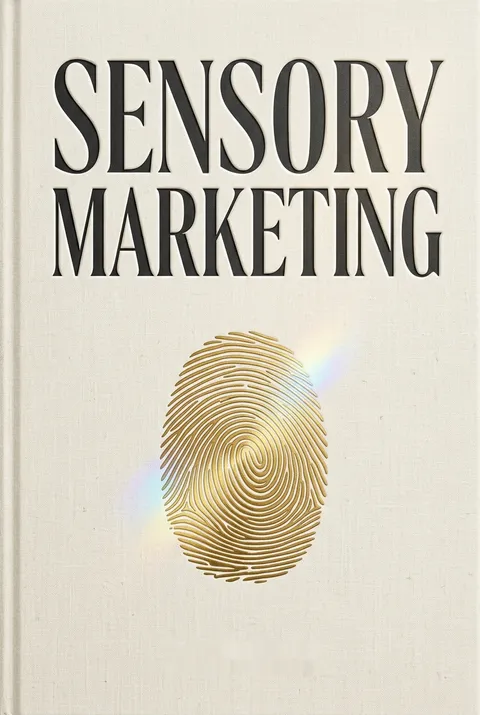


Key Takeaways
Build a brand people can sense, not merely recognize.
Make sensation strategic. Sensory marketing treats smell, sound, sight, taste, and touch as deliberate ways to communicate a brand’s identity and values. The goal is not to add a scent or a soundtrack for a quick sales bump, but to make the whole experience recognizable and meaningful over time. The authors contrast this with mass marketing, which broadcasts messages, and relationship marketing, which focuses on retaining customers. Sensory marketing instead asks how a firm meets the individual through an experience.
Starbucks as a vivid case. A visit draws on the coffee aroma and flavor, the interior’s colors and lighting, selected music, and the feel of the chairs. Together these cues support the idea of Starbucks as a place to spend time, not simply a counter selling coffee. The five senses become strategic when their signals reinforce the same brand promise.
The useful shift is from asking what a company says about itself to asking what customers repeatedly encounter. That connects branding to environmental psychology: a place can influence attention and mood before anyone reads a sign. Yet sensory richness is not automatically good. A crowded mix of smells, noise, and visual cues can feel intrusive or exhausting. A strong strategy therefore depends on selection and coherence, not maximum stimulation. The Starbucks example works because the sensory details serve a recognizable experience rather than competing to be noticed.
Design every encounter for the customer's personal interpretation.
Experience is personal. The book calls an individual’s interpretation of a brand encounter “experience logic.” A customer combines present sensations with memory, mood, identity, and context, so the same store or product can delight one person and repel another. A shopping account in the book illustrates this: one shopper was put off by a dark, untidy clothing store, while music in another shop made her curious enough to enter despite reservations about the retailer.
Plan for perception, not intention. Firms can choose a color, scent, or layout, but they cannot dictate what it means to each customer. Their task is to make the intended identity legible across encounters, then notice where the experience diverges. This also explains the book’s emphasis on individualization: customers use brands not only for practical function, but also to express lifestyle and self-image.
This model resembles a basic principle of cognitive science: perception is not a camera recording the world, but an interpretation shaped by prior knowledge and current goals. That makes customer experience inherently variable, not a defect that a perfect campaign can eliminate. The practical implication is to test sensory choices with different customers and situations rather than treating one response as universal. Personalization also has limits. A brand can support self-expression, but it should not presume that every purchase is a deep statement of identity.
Use scent as memory's shortcut, but make it fit the brand.
Scent travels through association. The authors describe smell as unusually close to emotion and memory: a familiar odor can call up a past place or feeling before a person can easily put the association into words. They cite research suggesting people can recognize thousands of scents and report strong scent-linked memories. That makes scent a possible brand cue, but only when its character suits the product and setting.
Fit matters more than force. A subtle floral scent in a room displaying Nike shoes led most participants in one cited experiment to prefer those shoes, even at a higher price. The book also describes Thomas Pink using the smell of freshly washed clothes, a natural match for shirts. By contrast, a scent that clashes with a product or overwhelms a space can confuse or alienate customers. Staff allergies and sensitivities also belong in the decision.
Scent is powerful partly because it is difficult to ignore once noticed, which makes it a high-impact but high-risk design choice. The example of washed-clothes aroma shows how congruence can make a cue feel like evidence about the product, rather than an unrelated attempt at persuasion. That same mechanism raises an ethical question: subtle influence can be effective without being fully conscious. A responsible approach treats scent as part of the environment customers must inhabit, not merely as a lever to keep them shopping.
Give sound a consistent personality, from the jingle to the room.
Sound sets a scene. Music, a voice, or a short audio signature can make a brand easier to recognize and can shape how a place feels. The book argues that sound should be considered across the entire customer experience, including store music, telephone systems, employees’ voices, and unwanted background noise. In restaurants, faster music was associated with quicker turnover, while slower music could encourage a longer stay.
Saab made the song part of the story. For its environmentally minded BioPower cars, Saab built a campaign around the idea of release and commissioned a distinctive version of a song performed by the then little-known singer Frida Öhrn with her band. The music helped carry the emotional message beyond the car’s functional claims. The lesson is to choose sound that fits the identity and context, not simply whatever is popular.
Sound is both content and environment: a song can communicate personality, while acoustics determine whether conversation is comfortable or tiring. This makes the book’s emphasis on a coherent sound profile more useful than treating music as decorative background. But there is no universally calming tempo or genre. Culture, age, task, and personal preference change how music is heard. The Saab case also shows a less obvious route to distinctiveness: a brand can create value by giving an artist or a piece of music a meaningful context, not only by borrowing a famous hit.
Make visual details work as one recognizable brand signature.
Build a visual whole. A logo rarely carries a brand alone. The book’s term “genetic code” refers to a distinctive visual identity formed by recurring choices such as shape, color, packaging, design, and the appearance of stores or websites. Coca-Cola’s bottle and Apple’s product design illustrate how recognizable forms can carry identity even without a long explanation. Packaging matters especially in retail, where a customer may have only moments to notice a product among competitors.
The setting speaks, too. Abercrombie & Fitch’s stores combined dark interiors, focused lighting, lifestyle imagery, staff clothing, and prominent displays to create a particular atmosphere. Whether or not every customer liked that atmosphere, its elements pointed in the same direction. Visual consistency does not require sameness everywhere; seasonal variation can refresh a brand, provided customers can still recognize its underlying character.
The idea of a visual signature is closely related to cognitive fluency: repeated, compatible cues can make a brand easier to identify and process. The strongest design systems therefore balance recognition with enough variation to remain fresh. The Abercrombie example also makes an important point about coherence: consistency can sharpen identity without guaranteeing universal appeal. A visual environment that feels distinctive to one audience may exclude another. Good design asks not only whether a brand is recognizable, but also who feels invited by the signals it sends.
Treat taste as a whole scene, not just a flavor.
Eating recruits several senses. The book argues that taste depends heavily on smell and is also shaped by appearance, texture, sound, expectations, and setting. It cites a claim that losing the ability to smell can reduce perceived taste by as much as 80 percent. In one restaurant study, descriptive dish names increased sales by up to 27 percent, showing how words can alter expectations before the first bite. Presentation and atmosphere help complete the experience.
Invite people to sample. Whole Foods offered tastings throughout its stores, making food an active part of the visit instead of a product behind packaging. Hotel Chocolat similarly combined sampling with chocolate-colored interiors, attractive packaging, and staff knowledge. These cases show that a company need not sell food as its main product to use taste meaningfully. The sample, however, must deliver the quality and character the brand implies.
Taste makes sensory marketing especially concrete because expectations can be checked immediately: the bite either supports the promise or does not. The interaction of aroma, appearance, and flavor also illustrates why experience cannot be reduced to a single product attribute. Still, tasting is not equally appropriate in every context, and strong sampling can create waste or pressure customers to buy. The broader principle is to make the product’s value easy to experience, while preserving a genuine choice to decline.
Let customers touch the value you claim to offer.
Touch makes qualities tangible. Material, surface, weight, temperature, shape, and firmness can influence how people judge a product. A heavy remote control may feel substantial; a soft chair may communicate comfort. The authors use IKEA as an example of a retailer that encourages customers to handle products, and describe an overnight stay in one store that let guests experience its beds directly. Physical access can also prompt customers to inspect items they might otherwise overlook.
Design for real interaction. A touchscreen, a product demonstration, or an accessible display can turn a claim into something customers can test. This is especially relevant for clothes, furniture, and electronics, where feel and fit are difficult to judge from a description alone. Online sellers face a constraint because customers cannot physically handle products, though detailed images, measurements, and descriptions can partly reduce uncertainty. Touch should be invited, not assumed: customers differ in comfort and desire for contact.
Touch is a form of information, not just pleasure. Feeling a fabric or testing a button lets a customer evaluate attributes that words and images may not convey, which can reduce uncertainty in a purchase. The book’s examples are strongest when access enables informed choice. There is a counterpoint: encouraging contact can become pressure, and not every customer wants physical interaction. Inclusive design offers the right test: can people learn about the product through touch, sight, or clear explanation, according to their needs?
Align all five senses around one honest brand promise.
Give the experience a center. The authors call the emotional, rational, and value-based core of a brand its “brand soul.” Their operational model distinguishes the equipment or channels that deliver cues, the sensations those cues produce, and the sensory expressions customers encounter. In practice, this means starting with what the brand stands for, then choosing details that support it across products, communications, and service settings.
Whole Foods shows the principle. The retailer combined natural food aromas, selected music, nature-related colors and lighting, samples, and accessible products. The cues supported a consistent impression of food and environmental care. A “service landscape,” the book’s term for the physical or virtual setting where a firm presents its brand, is part of that promise too. Sensory choices work best when they are coherent, useful to customers, and compatible with the company’s actual conduct.
This synthesis turns a list of sensory tricks into a management discipline: decide what the brand means, then audit whether each customer touchpoint reinforces or contradicts that meaning. The link to service design is important because customers experience a company as a sequence of encounters, not as a logo in isolation. Coherence, however, cannot substitute for substance. A store that signals environmental care while the business behaves irresponsibly creates a credibility gap. Sensory design can make values visible, but it cannot make values true.
Analysis
Sensory Marketing is a practice-oriented business book built around one claim: brands are experienced through the body as well as interpreted through language and product features. Its structure moves from changing social and commercial conditions to five sense-specific discussions, then gathers those discussions into a model of brand identity and customer experience. The recurring case studies make an abstract proposition concrete: a hotel scent, a distinctive car song, a store’s lighting, a food sample, or a product’s weight can all help communicate what a company stands for.
The most durable contribution is its insistence on coherence. It is not enough to activate more senses; cues must fit the offering, reinforce one another, and remain consistent across the actual service experience. This anticipates contemporary service design, where the brand is understood through every interaction, including the room, interface, staff, packaging, and waiting period. The book also usefully treats the customer’s interpretation as subjective, recognizing that memory, lifestyle, mood, and culture shape what a cue means.
Its evidence requires more caution than its strategic intuition. Many examples are interviews, company cases, or studies reported secondhand, and the book sometimes moves quickly from a measured response in one setting to a general business recommendation. A sales increase after adding scent, for example, does not by itself establish that scent caused the change or that the result will transfer to another audience. The text also reflects its 2009 moment, especially in its predictions about digital and sensory technology.
A modern application should therefore treat sensory ideas as hypotheses to test, not universal laws. Measure more than immediate sales: assess comfort, accessibility, recall, repeat visits, and whether customers correctly infer the intended values. Include employees, people with sensory sensitivities, and customers from different cultural backgrounds. The book’s deepest lesson survives these qualifications: a brand is not only what it claims, but also what people repeatedly feel, hear, see, taste, and touch.
Glossary
Sensory marketing
Branding through the sensesA strategic approach to marketing that uses sensory cues to express a firm’s identity and values and shape customers’ experiences of its products, services, and settings. It aims to integrate sensory encounters into a coherent brand impression, rather than using sight alone or relying only on broad advertising and customer-retention tactics.
Experience logic
Personal interpretation of experienceThe individual, subjective process by which a customer interprets an encounter with a brand. Prior experiences, identity, lifestyle, social context, and current mood affect the meaning a person gives to sensory cues. The term emphasizes that a company can design an experience, but cannot dictate how every customer will perceive it.
Sense expression
A cue expressing brand identityA feature or action through which a firm communicates a brand’s identity and values in relation to one or more senses. Examples include scent, music, color, packaging, food samples, material, and product shape. Sense expressions can operate individually or together, and should match the qualities the brand intends customers to recognize.
Service landscape
Setting where the brand appearsThe physical or virtual environment in which a firm or brand is presented and experienced. A store, hotel, restaurant, office, or website can function as a service landscape. Its layout, sounds, lighting, materials, and interactions contribute to the customer’s impression, alongside the product or service itself.
Brand soul
Brand identity with emotional depthThe emotional, value-based, and rational core that gives a brand a character beyond its functional features. The concept connects the company’s intended identity with the mental image formed by customers. A brand’s sensory cues are most effective when they communicate this core credibly across products, people, communications, and environments.
Sensors, sensations, and sense expressions
A model for sensory brand cuesThree connected ideas used to describe sensory marketing in practice. Sensors are devices or channels that deliver cues or gather information. Sensations are the responses those cues evoke in a person. Sense expressions are the brand-related features customers encounter, such as music, color, scent, or texture. Together, they help firms plan and examine sensory experiences.
Glocalization
Global and local forces togetherThe simultaneous movement toward global standardization and local differentiation. In the book, this tension helps explain why firms face international competition while customers continue to seek products and experiences suited to distinct identities, cultures, and lifestyles. It creates pressure to remain recognizable across markets without assuming customers everywhere want the same experience.
Genetic code
Distinctive visual brand signatureThe recognizable combination of visual features that helps distinguish a brand, such as shape, color, design, packaging, and the appearance of its retail or digital environments. The term describes a coherent visual identity rather than a single logo. Coca-Cola’s bottle and Apple’s design language are examples discussed in the book.
Download PDF
Download EPUB
.epub digital book format is ideal for reading ebooks on phones, tablets, and e-readers.








