

Key Takeaways
Make freedom a daily practice, not a one-time altar experience.
The altar is a beginning. Ruffin’s central argument is that conversion or a moment of deliverance does not end the struggle. Believers must build a life that supports the freedom they have received. She compares deliverance to an eviction: removing what has occupied a person is only part of the work; the newly cleared life must also be filled and governed differently.
Practice what sustains you. The book points repeatedly to Scripture, prayer, self-discipline, and ongoing connection with God. Ruffin presents these not as proof that someone has failed to be delivered, but as ways to live out freedom consistently. The central question shifts from whether a person had a powerful experience to how that person will care for life after it.
The book’s maintenance metaphor makes a useful distinction between a breakthrough and the conditions that help it last. In behavior-change terms, a dramatic decision may supply motivation, while routines, relationships, and responses to stress shape what happens on ordinary days. That framing can reduce the pressure to treat one emotional moment as a permanent fix. Its limitation is that a struggle returning does not, by itself, prove spiritual failure or a demonic cause. The same practical question can be asked without blame: what support, skill, or change in circumstances would make this freedom easier to sustain?
Expect temptation at transitions, and prepare before desire takes the wheel.
Temptation has patterns. Ruffin describes two spiritual seasons. In an active season, a believer feels engaged through prayer, Scripture, and service. In an inactive season, attention and discipline have slipped, making a familiar temptation harder to resist. She argues that temptation can arise in either season, especially at moments of change or opportunity.
Learn from the wilderness. Ruffin reads Jesus’s forty days of temptation as a model for meeting pressure with preparation. The temptations challenge his identity, appeal to hunger, and offer power by a shortcut. In the book’s interpretation, Jesus answers each with Scripture rather than accepting the tempter’s framing. The lesson is to recognize what a temptation is appealing to, and decide in advance what truth and practice can guide a response.
Transitions can unsettle routines, so the book’s emphasis on preparation has a practical reach beyond its spiritual explanation. A person facing a predictable pressure point can plan whom to contact, what to avoid, and which commitments to keep. That is more useful than assuming resolve will appear at exactly the right moment. The caution is that interpreting every difficult season as an attack can make ordinary stress feel ominous. Preparation should build steadiness and discernment, not constant suspicion or the belief that calm periods are unsafe.
After a lapse, return to surrender before shame turns one fall into a cycle.
A fall can become a loop. Ruffin names a recurring sequence: surrender, a lapse, guilt, shame, condemnation, forgiveness, and renewed surrender. In her account, the most damaging part is not simply the lapse. It is the belief that failure makes a person unworthy of prayer, Scripture, or help, which can prolong isolation.
Return instead of hiding. Ruffin describes feeling too guilty to open her Bible or face others after falling. Her answer is to seek forgiveness and return to a life oriented toward God, rather than treating one failure as the end of the process. She also draws on the biblical image of a righteous person who falls and rises again. She reports that her own journey included repeated setbacks before she learned practices she says helped her maintain freedom.
This section’s strongest insight is that shame can turn a lapse into withdrawal from the very people and practices that might help. Many recovery approaches likewise distinguish a setback from a total return to an old pattern: the next response matters. That does not make consequences irrelevant, but it keeps a mistake from becoming an identity. The book places this repair within forgiveness and surrender to God. Readers may also find it helpful to seek trusted pastoral or professional support, especially when repeated behavior is connected to trauma, compulsion, or severe distress.
Replace bare willpower with prayer, Scripture, and practiced daily devotion.
Effort alone was not enough. Ruffin recounts periods when she fasted and prayed, then went months or even a year without returning to a behavior she wanted to leave. She later understood those stretches as suppression rather than full change. In her account, trying to defeat the struggle through personal force left her vulnerable when desire returned.
Build a relationship and a routine. Her proposed response is to submit to God, study Scripture, pray, worship, and make devotion part of daily life. She describes waking early to pray, reading before and after Bible study, and serving in church. These practices are meant to strengthen commitment and provide direction, rather than relying on a burst of motivation during a crisis.
The distinction between suppressing an urge and changing the way someone responds to it is valuable. Repeated practices can make a chosen response easier to access under pressure, while an all-or-nothing reliance on willpower can leave a person feeling defeated after a setback. Spiritual devotion may be deeply sustaining for readers who share Ruffin’s faith. It should not be treated as the only legitimate form of help, however. Medical care, counseling, peer support, and practical changes can complement religious practice rather than compete with it.
Map recurring triggers and choose a response before the vulnerable moment arrives.
Preparation beats surprise. Ruffin calls for a proactive approach: notice recurring patterns, prepare for predictable pressures, and seek spiritual guidance instead of waiting until a crisis to respond. She uses David’s fight with Goliath to illustrate how earlier, less visible battles can prepare someone to face a larger challenge. Small acts of resistance, in her framing, are practice for harder moments.
Make the idea practical. The book also advises readers to identify the specific struggle they face, renew their minds, and ready their spiritual resources. Translated into daily choices, that means noticing when a temptation tends to appear and deciding what action will interrupt the pattern. Ruffin emphasizes preparation rather than treating every recurrence as a completely new problem.
This is one of the book’s most transferable ideas: preparation can turn a vague promise to do better into a response that is ready when needed. It also resembles planning used in many forms of coaching and relapse prevention, where people identify high-risk situations before they occur. The metaphor of spiritual combat may energize some readers, but it should not encourage conflict with actual people or endless monitoring for invisible threats. The most constructive version is clear-eyed prevention, paired with enough flexibility to adjust when the plan does not work.
Use spiritual practices as a coordinated toolkit, not empty performance.
Several practices serve different roles. Ruffin presents the biblical armor of God as a picture of readiness: truth, righteousness, peace, faith, salvation, and Scripture. She also names prayer, fasting, praise, worship, transparency, and obedience as ways believers can respond to struggle. For example, she recounts the biblical story of King Jehoshaphat sending singers ahead of an army, treating praise as a way to express trust during danger.
Make the practice personal. Ruffin says prayer changed for her when she began praying Scripture rather than only repeating her distress. She encourages readers to speak biblical truths, be honest with God and trusted people, and follow convictions about what to change. The point is not to perform every practice at once, but to draw on them with purpose.
The toolkit framing respects the fact that different practices can meet different needs. Scripture can focus attention, honest conversation can reduce isolation, and worship can give a person a way to express hope. Those effects are meaningful even without assuming that a particular ritual mechanically controls events. Fasting deserves particular care: abstaining from food is not suitable for everyone, and health needs should take priority. A practice is most useful when it supports care and wise action, rather than becoming a test of spiritual worth.
Seek support from trusted people, while keeping healthy boundaries around authority.
Freedom should not be solitary. Ruffin urges believers to stay connected to a local church, seek counsel, and have trusted people who can offer prayer and accountability. She argues that aftercare matters because a person who receives support only at a public altar call may be left without help for the work that follows. In her own story, church involvement and personal devotion both played a role.
Choose leaders carefully. The book recognizes that some leaders misuse submission to control or manipulate people. Ruffin advises readers to seek wise counsel when leadership acts contrary to Scripture. This creates an important tension in her advice: she strongly values submission to godly leaders, while also acknowledging that authority can be abused. Support should help a person grow, not make them fearful or dependent.
The emphasis on follow-up is compelling because change is often easier to sustain when a person can ask for help without having to start from zero each time. Community can provide encouragement, practical accountability, and a sense of belonging. The boundary condition is essential: spiritual authority does not make a leader infallible. Healthy support allows questions, consent, and outside counsel. When a leader isolates someone, demands unquestioning obedience, or discourages appropriate care, the language of accountability should not be used to excuse that conduct.
Turn a hard-won story into service without treating family history as destiny.
A testimony can encourage others. Ruffin points to the Samaritan woman in the Gospel of John, who tells her community about meeting Jesus. She uses the story to argue that a personal account of change can give other people hope. Ruffin also shares her own experience of deliverance, including her former same-sex relationships, as part of her testimony.
Look at patterns carefully. The book encourages readers to discuss family history and identify repeated struggles, comparing this to reviewing medical history. Ruffin interprets recurring patterns through the language of generational curses and spiritual forces, and urges readers to bring hidden problems into the open. The practical value of examining family patterns is distinct from the claim that those patterns prove a curse or demon is present.
Stories can make change imaginable, and family histories can reveal recurring circumstances, behaviors, or silences that deserve attention. But the book’s spiritual interpretation should not be mistaken for established diagnosis. In particular, same-sex orientation is not a disorder, and framing it as something to be delivered from can stigmatize LGBTQ people and encourage harmful efforts to change them. A testimony remains meaningful as an account of one person’s faith and choices; it cannot establish that another person’s identity is pathological or that family patterns have a supernatural cause.
Anchor change in belonging, then keep tending the life that follows.
Identity is a source of strength. Ruffin argues that a believer’s sense of being loved, forgiven, and adopted by God can counter messages of rejection and defeat. She returns to the biblical idea that salvation is a gift, not something earned by perfect behavior. In this view, confidence in belonging helps a person face setbacks without concluding that the relationship with God has vanished.
Keep up the maintenance. Ruffin compares spiritual life to a vehicle that needs regular service. A car can look fine and still need care; likewise, outward appearance does not reveal every internal struggle. The analogy reinforces her main point: continued prayer, reflection, Scripture, and support help a person keep moving through changing seasons. Freedom is not presented as flawlessness, but as ongoing care and renewed commitment.
A stable sense of belonging can make change less dependent on perfect performance. When a setback does not erase a person’s worth, it becomes easier to ask for help and try again. The maintenance analogy captures that ordinary upkeep better than a dramatic before-and-after story. Its best use is as an invitation to notice what needs care, not as a reason to label every difficulty a spiritual defect. Readers can hold the book’s language of identity alongside practical measures of progress, including safety, wellbeing, and healthier relationships.
Analysis
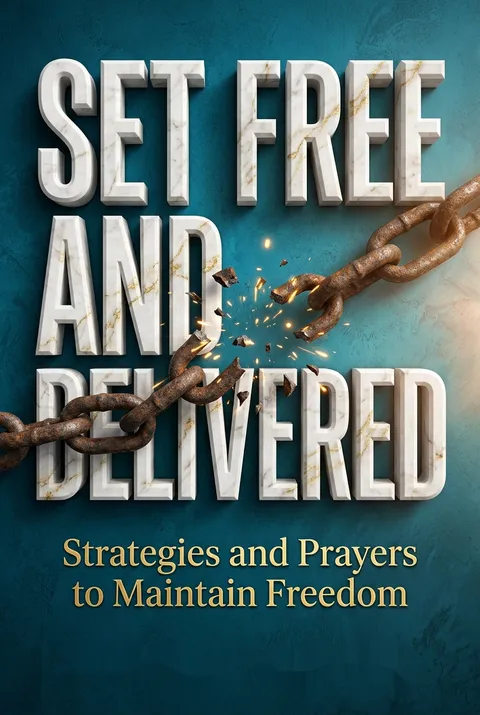
Set Free and Delivered is a 51,869-word Christian devotional and practical guide organized around a clear tension: God provides freedom, yet the believer must actively maintain it. Nine chapters move from life after conversion through temptation, spiritual practices, accountability, generational patterns, and victory in Christ. Personal testimony supplies the narrative thread, while prayers and declarations make the book function partly as a devotional manual. Its central contribution is less a novel theory of change than a sustained emphasis on what happens after a highly emotional breakthrough.
The book is most useful when its spiritual language directs readers toward concrete practices: daily devotion, honest disclosure, planning for vulnerable moments, and support from other people. Its account of the shame cycle is especially perceptive. A lapse followed by concealment can deepen isolation, while forgiveness and renewed engagement can interrupt that progression. The book also recognizes, though not always consistently, that church leadership can be misused and that accountability needs trustworthy boundaries.
Its limits matter. The author interprets struggles, including sexual behavior and family patterns, through a framework of demons and deliverance. That is a theological interpretation, not a clinical finding. Treating sexual orientation as bondage is stigmatizing and is not supported by evidence that orientation is a disorder. Likewise, recurrent behavior or mental distress can have psychological, social, medical, and material causes that prayer alone may not address. A responsible reading can preserve the book’s emphasis on hope, chosen practices, and community while declining claims that spiritual warfare explains every setback. Faith practices may complement professional care; they should not be used to shame people, discourage treatment, or excuse abusive authority.
Review Summary
Set Free and Delivered receives high praise from readers, with an average rating of 4.33 out of 5. Reviewers appreciate Ruffin's personal experiences and practical strategies for maintaining spiritual freedom. The book is described as life-changing, offering powerful prayers and declarations to help Christians resist temptations and old habits. Readers find it particularly useful for new believers and those struggling with returning to past sins. The book's emphasis on spiritual warfare and living in victory is highlighted, with many finding it encouraging and informative.
Glossary
After the altar
Life after conversionRuffin’s term for the ongoing life that follows a conversion or deliverance experience. It includes developing a relationship with God, learning Scripture, practicing devotion, responding to temptation, and seeking support. The phrase emphasizes that an altar experience is a beginning, not a complete account of how a person lives out change.
Sin cycle
Repeated fall-and-shame patternRuffin’s sequence of surrender, a fall into sin, guilt, shame, condemnation, forgiveness, and renewed surrender. She argues that a person can become trapped when guilt and shame lead to hiding and disengagement. Returning to God and accepting forgiveness are presented as ways to interrupt the pattern rather than treating a lapse as final.
Proactive warfare
Preparation before temptationRuffin’s approach of preparing for spiritual struggle before an attack or temptation is underway. It involves noticing recurring vulnerabilities, seeking God’s guidance, and readying practices such as prayer and Scripture. She contrasts this posture with reacting only after feeling caught off guard, while warning that spiritual engagement should be guided by wisdom.
Active season
Period of spiritual engagementRuffin’s label for a period when a believer feels engaged in spiritual life through practices such as prayer, Scripture reading, church participation, and self-discipline. She contrasts it with an inactive season, when focus and engagement have weakened. In both conditions, she says temptation may arise, so readiness cannot depend only on feeling spiritually energized.
Enemy of kairos
Temptation at opportune momentsRuffin’s name for the spiritual opposition she believes waits for an opportune or seasonable time to tempt a believer. She bases the term on kairos, a Greek word for an appropriate or decisive time, and connects it to the biblical account of Satan departing from Jesus until a more favorable moment. It is a theological concept in her framework, not an empirically established force.
Maintaining deliverance
Sustaining experienced freedomThe continuing work of living out freedom after a conversion or deliverance experience. In Ruffin’s account, this involves spiritual practices, disciplined choices, preparation for temptation, honest confession, and support from a faith community. The term captures the book’s main distinction between receiving a breakthrough and building a life that sustains it.
Download PDF
Download EPUB
.epub digital book format is ideal for reading ebooks on phones, tablets, and e-readers.








