


Plot Summary
Prologue
Twenty-two years before the main story, a secret government experiment tries to remake its young subjects into assassins. Subject Four has resisted physical punishment, but months of white torture leave him nearly unresponsive: his cell, food, clothing, and guards are stripped of color and speech. The researchers regard his apparent collapse as progress, a blankness they can shape.
Their report ends by questioning whether Four is fit for the project at all, and hints that his elimination may follow the same course as Subject One. The child who survives this experiment will grow into Sariel,1 whose later desire to choose pain for himself gives the opening its grim counterpoint.
The report reduces a child to a test result, turning the language of care into the machinery of violation. Its clinical tone is not neutral: it makes coercion sound like successful treatment and treats a living mind as an empty surface. That framing matters because Sariel's adult life is shaped by a struggle over who gets to define his limits. The prologue also establishes the book's central tension around pain. What was once imposed on him cannot simply be erased, but its meaning can change when he later seeks sensation by choice, with someone he trusts.
The Unreturned Crush
At a winter brunch with his foster brothers, Sariel1 tries to set aside two emergencies: his foster mother Meg4 lies comatose after cyanide poisoning, and an unknown admirer19 has mailed blue underwear with a typewritten declaration of devotion.
Sariel1 is a gifted researcher, but his scientific skill has not woken Meg,4 and his attempts at dating have repeatedly fizzled. His oldest attachment, Uri,2 is harder to escape. Uri2 is his close friend and fiercely protective foster brother, yet Sariel1 has spent years wanting a kind of intimacy Uri2 has never acknowledged.
When the brothers debate the stalker,19 Uri2 insists the sender is not his newly discovered biological brother, Ezra,3 and then drags Sariel1 outside to demand details about a male colleague. Sariel's1 need for independence collides with Uri's2 claim over his life.
The opening makes Sariel's two forms of helplessness collide. He cannot reason Meg awake, and he cannot reason himself out of wanting Uri. His research gives him precision in public life, but intimacy keeps presenting evidence he cannot interpret with confidence. The stalker package is frightening partly because it imitates romance through the language of destiny, while Uri's protection also slips into possession. Sariel's central problem is therefore not simply unrequited love. It is learning to distinguish attention that steadies him from attention that denies him agency.
A Head on Snow
After finding a headless man on the steps of his lake house, Uri2 identifies the victim as Jasper Pendelton, a criminal on the brothers' list of targets. Security footage shows a masked figure delivering the body, then escaping through a route that defeats the household's AI surveillance.
Uri2 recognizes the visitor as the elusive biological brother3 he has searched for, though the brothers have not yet learned his chosen name. The stranger3 later enters Uri's2 gun room, introduces himself as Ezra,3 and admits he works as an assassin.
He says he is in Chicago because he and Uri2 share an enemy: Phoenix. Ezra3 offers only fragments about their past and the threat, then leaves by boat through a hidden utility access. Uri2 gains a lead, but not the control he wants.
Ezra's entrance turns family history into an active security breach. Uri is not moved by conventional brotherly longing; what unsettles him is that another person can enter his territory and know more than he does. The body is both evidence and provocation, forcing him to treat the past as a present-tense problem. Ezra's refusal to explain himself mirrors Uri's own habit of controlling information. Their resemblance does not create trust; it sharpens rivalry, because each recognizes in the other a capacity for violence that neither can safely dismiss.
The House Built for Sariel
When rodents appear in Sariel's1 upscale apartment building, Uri2 moves him and his hairless guinea pig, Albert E., into the lake house. Sariel1 finds a custom laboratory, a room prepared around his childhood preferences, and even a dedicated habitat for his pet.
Uri2 insists they share a bedroom and fastens a monitor around Sariel's wrist, calling it protection. At the hospital, Sariel1 tells Linda5 that pain, not inflicting it, may be the pleasure he has been afraid to explore.
Uri2 overhears the conversation but fixates on Sariel's1 mention of dating and becomes jealous. Sariel1 mistakes his reaction for rejection of the private truth he has just confessed, then leaves in distress. Their closeness deepens even as each misunderstands what the other has heard.
The house is an extravagant expression of attention, but it arrives with a tracking bracelet and unilateral rules. Care and control occupy the same rooms, making Sariel's gratitude difficult to separate from the loss of choice. His admission to Linda reframes pain as a possible way to reclaim sensation after childhood torture, not as a simple repetition of it. Uri, however, hears through the filter of possessiveness. The resulting misunderstanding shows how secrecy becomes a form of power: each man is reacting to a partial truth, while the person most affected has the least reliable account of what is happening.
A Cocaine-Blurred First
Sariel1 goes out with Lori,11 Ollie,10 and Michael6 hoping to escape the pressure of living with Uri.2 A fight with two hostile men ends with a packet of cocaine bursting over the group, and the accidental exposure leaves them euphoric, impulsive, and poorly filtered. Sariel's1 fantasies about Uri2 surface as blunt requests for intimacy.
Uri,2 furious that Sariel1 ignored his calls but plainly aroused, gives in to a sexual encounter in the car. Sariel1 experiences his first real release with Uri,2 but the drug soon makes him vomit, and Uri2 takes him home. In the morning, Sariel1 is left with fragments of memory, a sore throat, and uncertainty about what the encounter means. The intimacy has happened; the conversation that might define it has not.
The accidental drug exposure lowers Sariel's inhibition without resolving the question of consent or the relationship's underlying imbalance. His desire is real, but the circumstances make its expression difficult to interpret, especially for someone already unsure how to read social signals. Uri responds to opportunity and jealousy rather than offering clarity. The morning-after uncertainty prevents the scene from functioning as a simple romantic breakthrough. Instead, it raises a more difficult question: can a long-standing attachment become mutual without becoming another form of control?
The Package in the Lab
At work, Sariel1 opens a red parcel containing restraints and a photograph of himself with the eyes burned out. His panic becomes so severe that Uri2 has to breathe for him until he can regulate his own lungs.
The brothers learn that someone bribed a building guard to deliver the parcel; the guard is later found dead, apparently killed with a hard-to-detect paralytic. That evening, Uri2 takes Sariel1 to the shooting range, where close instruction and a loaded weapon blur into sexual play.
Sariel1 responds to the sensations and reaches orgasm, but Uri2 stops before satisfying himself, then retreats into silence. Sariel1 reads the withdrawal as pity and feels used. The stalker's19 threat and Uri's2 mixed signals leave Sariel1 frightened, aroused, and less certain than before.
The parcel turns Sariel's workplace, the site where his expertise usually grants him authority, into a place of bodily threat. Uri's emergency care is effective, but its intimacy also reinforces Sariel's dependence on him. At the range, the gun concentrates their attraction into a scene of risk and control, yet Uri's refusal to explain himself turns pleasure into evidence Sariel must interpret alone. His distress is not caused by desire itself. It comes from being asked to trust sensations while the person guiding them withholds their meaning.
The Two Locked Rooms
While visiting Sully14 and Ren,15 Sariel1 learns that Uri2 belongs to Madame Claudette's, an exclusive club for BDSM. He goes there to see what Uri2 has kept from him. In one gallery, he watches Uri2 use a whip on a submissive man whose appearance resembles his own, and the sight convinces Sariel1 that Uri's2 desire belongs elsewhere.
He flees into another room and accepts a stranger's offer to dominate him, hoping pain will silence the image. The scene turns dangerous when the man strikes him and prepares to continue. Uri2 breaks in, beats the attacker, and frees Sariel.1 The rescue does not erase the hurt, but it forces the truth into the open: Sariel's1 longing and Uri's2 sadism are entangled, and neither can keep pretending otherwise.
The club makes Sariel confront desire as a practice rather than an abstract fantasy. Seeing Uri with another submissive is painful because Sariel has been denied the information needed to imagine a place for himself in that world. His impulsive attempt to replace one kind of humiliation with another is not liberation; he has no established trust with the new partner. Uri's intervention restores immediate safety, but his violence also repeats the possessive logic Sariel must question. The scene distinguishes chosen vulnerability from harm imposed without regard for a person's limits.
Marks Beneath the Shirt
After taking Sariel1 away from the club, Uri2 tends the rope burns on his wrists and explains that the people he used there were substitutes, not rivals for Sariel's1 place in his mind.
He removes his shirt and shows a body covered in images tied to Sariel:1 flowers from their first meeting, details of Sariel's1 work and favorite things, and marks counted against the times Uri2 restrained himself from taking what he wanted. Sariel1 admits to Uri2 that pain excites him when he can choose it.
Uri2 explains that he avoided acting on his sadism because Sariel's1 childhood torture nearly destroyed him. Once Sariel1 names his own desire, Uri2 can no longer treat protection as a reason to deny it. They begin a sexual relationship on terms Sariel1 has finally voiced.
The tattoos function as a private archive of a relationship Uri has never been able to describe in ordinary emotional language. They prove attention and fixation, but not automatically care: Sariel still has to decide whether this devotion can respect his choices. His disclosure changes the ethical shape of their intimacy. Pain ceases to be something Uri assumes Sariel cannot bear and becomes something Sariel can request and negotiate. The turning point matters because agency comes not from being rescued by a more powerful person, but from making one's own desire legible.
The Lecturer's Red Box
Sariel1 gives a university lecture while Uri2 secretly equips him with nipple clamps and anal beads, turning the journey and presentation into a private test of endurance. Uri2 arrives before the event ends and publicly identifies himself as Sariel's1 boyfriend when Trent,20 a former date, approaches.
In Sariel's1 temporary office, they find a box addressed to him containing two dead birds and a note pairing their names. The sight triggers another panic attack, and Uri2 uses his voice and breathing to bring Sariel1 back.
He explains that he bought the lake house for the field of blue flowers that reminded him of their first meeting. His fixation reaches back to childhood, but the fresh threat makes their private declaration inseparable from danger.
The lecture places Sariel's professional authority beside an intimate submission he has not chosen to disclose publicly. The hidden toys give Uri power over his body at a moment when Sariel is trying to speak as a scientist, a tension the scene renders deliberately uncomfortable. The dead birds then convert romantic symbolism into menace. Uri's account of the house and the flowers offers Sariel a history of being remembered, but that history is also a claim of ownership. Tenderness and threat remain difficult to disentangle, even as the couple becomes more honest.
The Intern Behind It
Rami8 traces the packages to Margaret Smith,19 an intern Sariel1 had encountered in his laboratory. Security footage shows her placing the dead-bird box at the university, while her volunteer work in an emergency room explains how she obtained the drug used to kill the bribed guard. A hair from an earlier package links the case to Francis Moreland, a man who had been abducted and assaulted.
The brothers locate Margaret19 and bring her to their base. Sariel1 learns she has an obsessive fixation on him and has killed and abducted people while trying to reach him. Uri2 handles the threat, but Sariel1 is angry that the family withheld the danger from him. The stalker19 is stopped, yet Sariel1 feels more excluded than protected.
Margaret's access to Sariel is enabled by ordinary institutional trust: she is an intern, a volunteer, and someone whose presence in professional spaces does not initially seem alarming. The danger is not supernatural or unknowable; it grows through small breaches that the family notices too late. Their secrecy may be intended as protection, but it reproduces the structure of Sariel's childhood powerlessness. Discovering the truth does not simply solve the stalker plot. It gives Sariel a new reason to challenge the family's assumption that safety requires withholding information from him.
The Rat Trail
At a restaurant gathering for Sully,14 Lori11 accidentally reveals that Uri2 arranged the rodent infestation that forced Sariel1 out of his apartment. Sariel1 realizes Uri2 may also have driven away his dates, including men who abruptly moved, disappeared, or stopped answering.
He confronts Uri2 by phone, and Uri2 admits to threats, bribes, and other interference intended to keep Sariel1 close. Uri2 calls it protection and refuses to apologize; Sariel1 hears that his romantic failures were engineered to leave him dependent.
He walks outside to think, where Trent20 and two accomplices seize him, strike him, and take him to a remote cottage. The revelation of Uri's2 manipulation gives Sariel1 a reason to pull away just as a more immediate danger removes his freedom altogether.
The rat infestation turns an earlier act of care into retrospective coercion. Uri did not merely offer Sariel a safe home; he manufactured the crisis that made the offer difficult to refuse. His admission exposes the asymmetry at the center of their relationship: Uri has acted on his desire while Sariel has been asked to mistake the consequences for chance. Sariel's anger is therefore a necessary assertion of reality, not a rejection of intimacy. The kidnapping follows at the moment he tries to reclaim space, making the difference between chosen closeness and enforced proximity brutally concrete.
Sariel Breaks Free
Trent20 tells the bound Sariel1 that he attacked Uri2 and intends to possess him, but Sariel1 refuses to accept the claim that Uri2 is dead. He dislocates and resets his own wrist to escape the ropes, hides scissors, then attacks Trent20 when a noise distracts him.
Sariel1 knocks him through a glass table and takes his gun. Outside, Ezra,3 the elusive assassin, reveals that he followed the kidnapping and let Sariel1 prove he could escape for himself. Uri2 arrives alive, bruised and bleeding, and gathers Sariel1 into his arms.
Back at the brothers' base, Uri2 tortures Trent20 for abducting Sariel1 and killing other men, then shoots him. Sariel's1 resistance changes how his family sees him, though his reunion with Uri2 does not erase their unresolved argument about control.
Sariel's escape is a practical answer to the family habit of treating him as the person who must be protected. He relies on training, pain tolerance, and improvised weapons rather than waiting for a stronger rescuer. Ezra's choice to observe rather than intervene is ethically unsettling, but it recognizes a competence the family often overlooks. Uri's survival gives Sariel relief, not instant reconciliation. His actions demonstrate that vulnerability and capability can coexist, and that being endangered does not make him helpless or justify others making every decision for him.
Phoenix in the Smoke
As Uri2 finishes killing Trent,20 a fire races from a nearby shed toward the brothers' base, and the building's safety system fails. Uri2 is trapped behind a jammed door while Sariel1 and Ezra3 get out; a fireman in disguise then shoots Uri2 and reveals that Phoenix has been directing attacks on the family for more than a year.
Phoenix claims responsibility for Meg's4 poisoning, the manipulation of the brothers' investigations, and the failures of their tracking systems. Ezra3 shoots Phoenix, but when he and Uri2 escape the smoke, the enemy's body has vanished.
The family later discovers Phoenix has no fingerprints, a clue Ezra3 connects to Subject Nine. He identifies Phoenix as a woman, but not by name. The fire destroys the base and leaves the central threat unresolved.
The fire makes the family's hidden violence physically visible: their carefully controlled base becomes a trap, and the systems meant to keep them safe fail at the decisive moment. Phoenix's confession reframes scattered crises as a single campaign, while the missing body preserves uncertainty rather than granting a clean victory. The revelation of Subject Nine links the present antagonist to the original experiment, suggesting that the children were not the only ones shaped by it. Yet the family's certainty remains incomplete. They have a designation and a gender, not a face or an explanation.
Epilogue
Three days after the fire, Sariel1 and Uri2 resume their consensual BDSM relationship, with Sariel1 blindfolded, restrained, and eager for the pain Uri2 gives him. Their intimacy has become more explicit, but it still carries the couple's unresolved difference: Sariel1 names his love, while Uri2 describes an enduring need to keep him close rather than claiming to understand love.
At a family gathering, Uri2 and Sariel1 plan matching Seven-and-Four tattoos for their ring fingers. Ezra3 joins the household's uneasy circle, and when the family presses him for the truth about Phoenix, he identifies the enemy as Subject Nine. The revelation points back toward the experiment without resolving who she is.
The epilogue offers emotional closeness without pretending that the couple has become conventional. Sariel's submission is now spoken and chosen, while Uri's possessiveness remains the language through which he can express attachment. The matching numbers turn their shared history of institutional dehumanization into a mark they select for themselves, though the numbers cannot undo what happened. The final identification of Phoenix complicates that private resolution. The lovers have named their bond, but the larger history that produced their violence remains unfinished, and the family is still living inside its consequences.
Analysis
Seven+Four links romance, trauma, and a vigilante family's violence through a recurring question: who gets to decide what another person can endure? Sariel's1 childhood torture gives pain a history, but the story does not treat his later masochism as a simple repetition of abuse. His desire becomes meaningful when he can name it, choose a partner, and set conditions. That distinction is central to his growth, although Uri's2 possessiveness repeatedly threatens to erase it.
Uri's2 attachment is neither conventional tenderness nor emotional emptiness. He is capable of sustained attention, memory, and restraint, yet he often understands care as ownership. His custom laboratory, years of tattoos, and protection of Sariel1 coexist with surveillance, sabotage, and coercion. The novel refuses to make those gestures equivalent. The fact that Uri2 is devoted does not make his control harmless, and Sariel's1 attraction does not remove his right to object. Their relationship becomes more honest when Sariel's1 preferences are spoken, but its power imbalance remains part of the story rather than a problem solved by sex.
The foster family offers an alternative to the state project that made children into numbered weapons. Meg4 and Linda's5 code gives the brothers a chosen structure, allowing them to direct their violence toward people they believe have escaped justice. Yet their code cannot prevent secrecy, retaliation, or misjudgment. Phoenix exploits precisely those weaknesses, turning the family's protective instincts into openings for manipulation. The fire at the base makes that vulnerability literal: security systems and private fortresses fail when the enemy understands the family from within its history.
The unresolved Subject Nine reveal widens the novel beyond the couple's emotional settlement. Sariel1 and Uri2 can choose one another, and Sariel1 can claim the terms of his own desire, but neither can close the institutional past that shaped them. Their bond is a form of survival, not absolution. The ending leaves the family with a clearer enemy and no final explanation, preserving the sense that recovered agency must still be defended.
Review Summary
Seven+Four is the fifth book in the Angels of Wrath series, following foster brothers Sariel and Uriel. Readers largely praise the slow-burn romance, intense chemistry, and dark, possessive dynamic between the protagonists. Highlights include Uri's obsessive devotion, filthy spice, and engaging group dynamics among the brothers. Criticisms cite editing issues, pacing inconsistencies, underdeveloped plot points, and Uri's controlling behavior. The cliffhanger ending and teased next couple left readers eagerly anticipating the next installment. Overall rating: 4.19/5.
Characters
Sariel Bear-Stone
The brilliant survivorSariel is a gifted medical researcher, a gentle presence in a family of killers, and a survivor of childhood experimentation. His instinct is to study what frightens him, using science to make the world legible, but social cues and romantic intent often leave him uncertain. He relies on his foster family for safety while quietly resenting the ways they treat him as fragile. His attraction to Uri2 is shaped by years of closeness and dependence, yet Sariel's deeper challenge is to claim his own desires without surrendering his right to set limits. His kindness is not weakness; it is a chosen way of moving through a violent world.
Uriel Mahoe
The possessive protectorUri is a wealthy restaurateur, an accomplished manipulator, and a sadist who channels his violence toward people he considers deserving. He understands social performance as a tool and experiences attachment in an intense, possessive form, especially toward Sariel1. His instinct to protect can become indistinguishable from a desire to control, because he treats closeness as something to secure rather than negotiate. Uri is not simply incapable of attachment; he is unable to translate it into the mutual language others expect. Sariel1 matters to him more than anyone, but whether that devotion can respect Sariel's1 independence is the central question of his character.
Ezra
The elusive assassinAn experienced assassin who moves through Chicago by hidden routes, Ezra appears around Uri's2 family with carefully rationed information and little visible fear. He is observant, calculating, and difficult to read, with a dry humor that surfaces even when weapons are drawn. His long history of institutional captivity has left him outside the family culture that helped the other foster brothers build rules around their violence. Ezra is drawn to questions of identity, survival, and what makes one person belong to another. He can offer help while withholding his motives, making trust a negotiation rather than a given.
Meg Bear
The family's first refugeMeg is a psychologist and foster mother who helped give the abused children a home, structure, and a way to direct their violent impulses. Her care is practical as well as emotional: she studies each child's needs and adapts her approach as they grow. For Sariel1, she represents the possibility that family can be created through patient commitment rather than blood. Her absence from daily life weighs on the household, but the values she established continue shaping how the brothers understand responsibility.
Linda Stone
The watchful rescuerLinda is a retired secret agent and Meg's4 partner, formidable in a crisis and deeply committed to the children she and Meg4 rescued. She balances affection with blunt practical judgment, encouraging her sons to face their needs rather than obey social convention. Linda sees Sariel's1 strength where he sees only difference, and she understands that surviving trauma does not require one approved response. Her authority within the family comes from action and earned trust, not softness alone.
Michael Bear-Stone
The forensic scholarMichael is Sariel's1 foster brother, a hematologist and forensic pathology professor whose expertise often turns a baffling injury or death into usable evidence. He is married to Raph7 and combines academic precision with conspicuous warmth. Michael makes room for humor and tenderness inside a family that often treats violence as ordinary, and he can recognize when someone needs medical attention rather than another threat. His gentleness does not mean he is detached from the family's dangerous work.
Raphael Bear-Stone
The strategic enforcerRaph is one of the foster brothers and the president of Bear-Stone Labs. His eidetic memory makes him a valuable source of detail, while his colder manner and capacity for violence make him difficult to intimidate. He is married to Michael6 and often places himself between danger and the people he loves. Raph is also a keeper of family rules, though his own history makes those rules more complicated than conventional morality.
Ramiel Masters
The family's hackerRami is a powerful, physically imposing foster brother who uses his technical skill to investigate threats and protect the household. His AI, Serena, and his network of databases make him the family's information hub. He is devoted to Hunter13 and more openly affectionate than his former, emotionally distant self. Rami's jokes can be as blunt as his methods, but beneath them is a steady impulse to keep the family connected and prepared.
Raguel Carver
The volatile builderRague is a foster brother whose construction and demolition expertise has helped shape the family's homes and work spaces. His anger can become physically destructive, a legacy of the experimentation he endured, but he has learned to manage it more effectively with Ollie10 beside him. He is protective, taciturn, and most comfortable showing care through practical action. His capacity for sudden violence makes calm and trust within his marriage especially important.
Oliver Carver
Rague's steady anchorOllie is Rague's9 husband and a longtime friend of the family. He brings humor, directness, and a calming physical presence to tense situations. His past in underground fighting gives him the skill to defend himself, but his greatest strength is understanding when Rague9 needs help regulating his anger. Ollie also cares deeply for his younger brother Sully14, sometimes struggling to balance that protectiveness with Sully's14 need to live independently.
Lori Boone
The fearless instigatorLori is a sharp-tongued friend of the brothers, Gabe's12 fiancé, and a loyal companion to Sariel1. His theatrical humor can puncture a tense room, though he is capable of turning from banter to violence when someone threatens his friends. Lori encourages Sariel1 to explore life beyond the laboratory and refuses to treat his awkwardness as a reason to pity him. His confidence often masks a serious, protective attentiveness.
Gabriel Reed / Bezaliel
The lawyer with another selfGabe is a lawyer and one of Sariel's1 foster brothers. His alter, Bez, presents a more forceful and sometimes more openly aggressive side; both are part of the same complicated person. Gabe's professional precision makes him formidable when pursuing a case, while his relationship with Lori11 draws out a more affectionate dimension. The family's familiarity with his multiplicity reflects their broader refusal to reduce one another to a single trait.
Hunter
The private investigatorHunter is Rami's8 boyfriend and a private investigator whose work often overlaps with the family's efforts to identify dangerous people. His imposing presence is tempered by a patient, affectionate manner with Rami8. Hunter contributes practical investigative skills and a willingness to keep working through ugly cases, while his relationship gives Rami8 a grounding connection outside the family's violence.
Sully Carver
The resilient younger brotherSully is Ollie's10 younger brother, a young man recovering from a traumatic kidnapping and working toward greater independence. He can be clumsy and self-conscious, but his humor and willingness to pursue college show a quiet determination. Ollie's10 protectiveness is understandable, yet Sully wants the chance to make choices and test his own resilience rather than remain a permanent object of worry.
Ren
The practical tripletRen is one of the triplets and Sully's14 prospective college companion. He offers practical help and a familiar presence as Sully14 prepares to live on campus.
Dare
The young hackerDare is one of the triplets and a budding hacker who works with Hunter's13 investigative agency. He also shares Sariel's1 interest in animals and helps introduce him to a pet shelter.
Ash
The abrasive tattoo artistAsh is one of the triplets, a prickly young man with artistic skill. Uri2 supports his work as a tattoo artist, though Ash's bluntness keeps their exchanges combative.
Clover
The nimble hired thiefClover is a professional thief hired by the brothers when a job requires unusual access. His skill at reading people makes him useful, while his eccentric humor and casual attitude toward danger make him hard to manage.
Margaret Smith
The curious laboratory internMargaret is an intern at Bear-Stone Labs whose interest in Sariel's1 research brings her into his professional orbit. She appears eager to speak with him, though Sariel1 is too distracted and overworked to give their brief encounter much attention.
Trent Dohner
Sariel's former dateTrent is a university academic who once dated Sariel1 briefly and later returns to his professional sphere. He offers the possibility of an ordinary romantic connection, which appeals to Sariel1 even as their limited history leaves him unsure how much trust to place in him.
Plot Devices
The family code
A boundary for violenceLinda's5 rules give the foster brothers a framework for directing their violent impulses. They must protect children and animals, be certain a target deserves punishment, avoid revenge kills alone, and ask their brothers for help. The code does not make their methods lawful or their judgments infallible. Instead, it supplies internal limits that matter precisely because each brother can be dangerous. Uri's2 anger repeatedly tests those limits, especially when Sariel1 is involved, and the family's insistence on the rules creates a tension between personal obsession and collective responsibility.
Serena and the trackers
Surveillance with blind spotsSerena is the family's AI security and tracking system, supported by cameras, phone data, and devices embedded in the brothers. Rami8 uses it to trace packages, monitor locations, and identify suspicious movements. Uri2 also uses Sariel's1 phone tracker and wrist monitor to keep him close. The system appears nearly comprehensive, but Ezra3 knows how to evade it, and Phoenix can interfere with its signals. This creates a useful contrast: the family's technical reach can identify patterns, yet it cannot guarantee safety or replace trust between people.
The typewritten packages
A stalker leaves a trailAnonymous packages arrive at Sariel's1 workplace and home, carrying intimate or disturbing objects and typewritten messages. Their lack of usable fingerprints initially frustrates the investigation, while small physical traces eventually connect the threats to people who have been harmed. Each delivery moves the danger closer to Sariel's1 private and professional life. The packages also imitate intimacy: they claim a destined bond while denying Sariel1 any knowledge or consent. Their progression makes an unseen obsession tangible before the family knows who is responsible.
The subject numbers
Trauma's surviving labelsThe children taken into Project Blood Assassin were numbered and treated as experimental material rather than as people. Those labels remain physically and psychologically present long after their rescue, connecting present danger to a history the family cannot fully leave behind. Sariel's1 number and Uri's2 number become part of their private symbolism, while the later mention of Subject Nine suggests that the experiment's surviving history extends beyond the brothers. The numbering device makes institutional dehumanization legible, but its reuse by the characters also shows them reclaiming marks that were first imposed.
Chosen pain
A reclaimed bodily languageSariel's1 interest in BDSM develops from his recognition that pain can excite him when he chooses the circumstances and trusts the person guiding the scene. This is not presented as a cure for childhood abuse or as proof that trauma caused a fixed sexual identity. Rather, the story distinguishes imposed torture from negotiated sensation through Sariel's1 ability to express desire, establish a safe word, and stop or continue. Uri's2 sadism makes their compatibility intense, but their relationship remains ethically fraught whenever his possessiveness threatens to substitute for Sariel's1 consent.
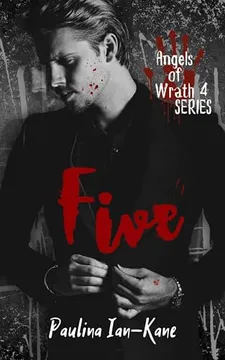
Angels of Wrath Series


Download PDF
Download EPUB
.epub digital book format is ideal for reading ebooks on phones, tablets, and e-readers.








