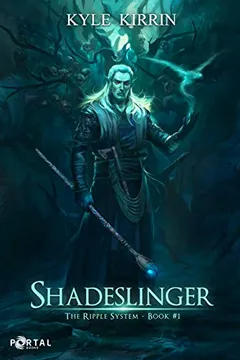


Plot Summary
Ned Buys the First World
On his birthday, Ned Altimer1 watches a trailer for Earthblood Online, a full-dive game where player choices reshape the world. Rich from an inheritance but isolated after his father’s death and his own business failure, Ned1 sees the game as a chance to begin again. He buys all fifty lifetime Head Start memberships, intending to monopolize the first three days.
The game’s creator,5 Kline,5 reluctantly approves the purchase and offers Ned1 a sentient guide, the Axe of Unbridled Knowledge, while arranging for the whole player base to be told who owns it. Ned1 accepts the axe despite Kline’s5 contempt, gaining an advantage that will make him both powerful and a target.
Ned’s purchase is not merely an extravagant gaming decision. He treats access as a substitute for trust: rather than invite companions, he buys enough time to avoid needing anyone. The choice grows from his history of wealth, failed responsibility, and suspicion that affection is usually transactional. Kline recognizes this contradiction and turns it into spectacle, making Ned’s private escape publicly legible as greed. The game begins with Ned trying to purchase control, while its defining promise is that actions produce consequences no player can fully own.
Frank Hates Magic
During character creation, the axe introduces himself as Frank2 and tries to steer Ned1 toward a brawling Half-Troll. Ned1 instead selects a Woodbone Fae Mystic, drawn to shadow magic, mobility, and the race’s exceptional Intelligence. Frank2 supplies carefully slanted advice and withholds the race’s severe Constitution weakness, leaving Ned1 with dangerously little Health and poor Mana regeneration.
The Head Start begins in a cavern war zone, where Ned1 earns his first spell by killing a wounded Fair Folk soldier with his staff. The Gardener7 recruits him to defend the Underworld Tree, and Ned1 survives a raid, kills a rare thunder-struck Treant, and discovers that rare victories can yield Renown as well as gear.
The first conflict is both mechanical and relational. Ned’s desire to choose his own identity clashes with Frank’s programmed hostility to magic, while the character system turns that disagreement into lasting bodily limits. Ned responds by studying mechanics rather than simply blaming bad luck. His cautious spellcasting, movement, and resource management establish a style opposed to Frank’s appetite for direct violence. The game’s rules make agency real, but not clean: choices matter, yet the player may not understand their cost until the consequences have already attached.
A Flute Calls the Deep
The Gardener7 sends Ned1 to stop Merchant Fairies from taking Woodbone bones, which their enemies carve into instruments. Ned1 learns Soul Alchemy from the Gardener7 and uses harvested monster souls to craft temporary spell enhancements. In a burial chamber, he confronts the Marrowsong Matriarch, whose music summons young Soundwhales through stone.
Ned1 survives by frightening her, dodging the creatures, and binding her in their path; one whale kills her. She drops the Flute of the Woodbone King, an artifact tied to ending the feud. The Gardener7 then directs Ned1 to find the exiled Symphonist,8 while Frank2 reveals that the Matriarch’s assumptions about a hidden mistress have unsettled the Woodbone leader.
The quest first presents the conflict as a defense of the dead, but the stolen bones and musical weapon point toward a political history larger than Ned’s assigned objective. His victory depends on interpreting an enemy’s mechanics and using them against her, not on overpowering her. The flute becomes a portable piece of unresolved history: Ned does not yet know its purpose, but keeps it because he recognizes that rare objects can outlive their first apparent use. His growing competence rests on attention to systems and to what they conceal.
Lars Walks Through Snow
At a lonely inn, Ned1 meets Lars,6 a Fair Folk musician whose flute playing threatens to summon something beneath the building. Frank’s2 awkward advice helps Ned1 befriend him over a night of drinking, and Lars6 agrees to travel with him to the Symphonist.8 On the Wailing Woods escort, Lars’s6 music attracts hostile creatures while Ned1 fights to keep every attacker away from him.
When a final wave closes in, Ned1 stays to hold the enemies back until the escort completes, but a Guardian kills him at the finish. Death costs Renown and drops Frank.2 Ned1 sprints back as a ghost and retrieves the axe, then learns he has lost access to two additional hidden quests by dying before reaching the Symphonist.8
The escort turns Ned’s stated isolation into an immediate test. He risks himself not for a stat reward but because Lars has become a person he wants to protect. His death exposes the material cost of attachment: the game can take Frank, impose penalties, and close opportunities without regard for Ned’s intentions. Yet Ned does not retreat into the belief that connection is pointless. He recovers Frank, accepts the lost opportunities, and continues toward the Symphonist, carrying responsibility forward instead of treating failure as proof that caring was foolish.
The World Tree Burns
The Symphonist8 reveals herself as the exiled Woodbone queen and uses Lars’s6 entranced music to call Ocelum, a colossal Soundwhale, toward the Fair Folk World Tree. As the Fair Folk king fights her, Ned1 learns that the supposed raid on the Underworld Tree had been a rescue mission: the Gardener7 had abducted the king’s sons for their blood.
Seeing the Symphonist8 choose vengeance over any future for her people, Ned1 kills her, abandoning the quest she gave him. Lars6 then uses the King’s Flute to redirect Ocelum toward the Underworld Tree instead. The tree is consumed, pushing the Woodbone Fae toward extinction. Ned’s1 choice triggers the first Ripple, earns him the Worldshaker title, and wins him a rare World Tree seed.
Ned’s defining decision breaks the simple opposition between quest success and failure. He refuses to serve a revenge plan that would destroy lives for the sake of pride, even though killing the quest giver costs him the official objective. The disaster that follows is still partly his responsibility: redirecting Ocelum saves the Fair Folk but destroys the Woodbone homeland. The Ripple system makes that moral choice consequential at world scale. Ned gains power, yet the reward arrives braided with guilt, forcing him to face the difference between changing history and improving it.
The Sands Become Home
Ned1 selects the Merchant Renown path and sails for the Onyx Sands, hoping to build influence through trade and property rather than conquest. His AI companion, House,3 joins him as a Marbleskin Golem, but Kline5 removes her equipment and combat abilities after she races through her starter area with superhuman efficiency. House3 must now learn human behavior while barred from fighting.
Ned1 claims concealed plots in the Withered Vale, plants the World Tree seed, and helps guards repel a Barbarian raid. He also agrees to an uneasy partnership with Darling’s4 small guild, Omen, offering their members Head Start access and equipment in exchange for future help. A Woodbone assassin reaches the departing boat and vows to hunt Ned1 across the world.
Ned’s plans begin shifting from individual optimization to institution-building. House’s arrival offers companionship and practical help, but Kline’s intervention reduces her to a learner whose usefulness depends on social adaptation rather than combat. Ned accepts the limitation without abandoning her, assigning her work that suits her strengths. His secret plots and bargain with Omen show the same ambivalence: he wants allies, yet still manages relationships as contracts and keeps his most valuable assets hidden. The desert gives him a home, but the assassin makes clear that home will also be a place he must defend.
The Pirate Queen’s Ring
Ned1 sails north to a frozen Renown Event, where he and House3 draw groups of ghosts behind their small boat and use his Soulshatter spell to destroy them in clusters. The grind lifts him to level seven and yields a powerful staff, but retrieving the Pirate Queen’s ring from her sunken ship nearly kills him.
After a ghostly reconnaissance reveals the correct cabin, House3 distracts a drowned guard while Ned1 unlocks it and takes the ring. He returns it to the grieving Pirate King,12 who rewards him with training in Enchanted Firearms. Choosing that skill for his permanent class change makes Ned1 the first Shadeslinger: his shadow spells become mobile gun techniques, and his Health and Mana limitations improve dramatically.
The event’s danger converts Ned’s abstract attraction to a second life into physical action. His fear of drowning, rooted in childhood trauma, does not vanish; he dives anyway, uses a ghostly death to scout, then accepts help from House to finish the task. The class change is earned through a relationship built on evidence and trust, not simply a menu choice. The new guns also reconcile Ned and Frank’s competing tastes: Ned keeps magic, while Frank receives weapons he considers satisfying. Cooperation becomes more effective when neither character has to erase the other.
A City Nearly Hangs Ned
Returning to the Withered Vale, Ned1 finds the town burning after raiders steal its water and set fires. He organizes rescues and uses blasts of sand to smother flames, but the timer expires before he reaches the required score, costing Renown and leaving the city Unfriendly toward him.
The surviving villagers suspect Ned1 because the raiders were calling for him; the captain9 protects him from a mob, then identifies a Red Hand insignia linking the attackers to the Woodbone. Lars6 arrives with news that his inn has burned and his mother11 is missing. Ned1 starts selling his stored water through Lars,6 while House3 helps build a new inn around the hidden tree, turning their plots into an economic foothold.
The Vale makes Ned confront a limit that wealth cannot solve: urgency, manpower, and public trust are not interchangeable resources. He helps the city, yet still fails its rescue measure, and the town’s suspicion persists because people judge visible losses more readily than invisible effort. The captain’s defense prevents violence but does not restore belonging. Ned’s response is practical, sometimes ruthless, but also protective: he employs Lars and builds shelter. The new inn is more than a revenue stream; it is an attempt to create durable ties in a place where he has not yet earned acceptance.
Water Buys an Alliance
Ned1 helps villagers survive Akura, a sea god that destroys their fishing settlement, and earns enough trust to trade for a boat. He and House3 uncover that Merchant House Vesuvian sells supplies and spell scrolls to the Barbarians, while its enforcers beat Lars6 for selling water without a permit.
Ned1 kills the two enforcers and takes their trade cloaks, then follows a hidden caravan route with Darling,4 Rock,13 and Nina.14 The four defeat a Bloodgorged Ascendant guarding the shipment and recover scrolls for the captain.9 The raid’s success gives Ned1 a path toward a larger assault, while Darling’s4 guild arrives in force. Ned1 keeps the inn concealed, though the alliance is now central to his survival.
Trade in the Vale is not neutral exchange: scarcity is deliberately managed by powerful houses, and the law protects their margins more reliably than the thirsty. Ned recognizes the system’s leverage and exploits it, but his violence against the enforcers marks a turn from bargaining to enforcement on his own terms. Darling’s group provides the scale he lacks, while Ned supplies knowledge, equipment, and strategic direction. Their alliance remains transactional, yet the rescue of Lars and the risks taken together begin to produce something less easily reduced to a contract.
Forty Players Enter the Stronghold
With the Vale’s captain9 offering intelligence, Ned1 and Omen enter the Barbarian stronghold before the forty-person raid timer expires. They first fight Bloodstitched Golems, fused bodies of Barbarians and Fae that force the tanks to split their targets. A trapped rogue dies, and the rest of the group must advance without him.
At the next chamber, Ned1 learns that three former Barbarian leaders serve the Gardener.7 The raid separates their warrior, mage, and assassin roles, with Ned1 kiting the mage while Jukes15 and Ton tank the others. Ned1 uses the captain’s9 scrolls to nullify a lethal fire debuff and reverse the twins’ healing. The raid kills the Triumvirate, but loses three damage dealers and a healer.
The first raid stages reward coordination more than individual brilliance. Ned’s best contribution is not simply his damage; he identifies threat problems, tracks mechanics, uses a scroll to remove a tank’s dangerous debuff, and helps turn the twins’ healing against them. The encounter also reveals the cost of Ned’s ambition in bodies lost, even when the group succeeds. Darling’s leadership remains decisive, while Ned learns that power inside a group requires restraint. His personal damage meter matters less than keeping the raid’s fragile structure intact.
The Gardener’s Blood Bargain
At the Sanctum, the Gardener7 reveals that he has been feeding a new tree with the bodies of his own followers and offers the raid permanent Blood Fae transformations. Exo18 and Nala18 abandon the group for the promised power, but Darling4 removes them from Omen, and the remaining players refuse the bargain.
The Gardener7 sacrifices the deserters to strengthen himself, then attacks behind spinning blood prisons that can carry victims into the pool for instant death. Ned1 helps free trapped allies and watches the boss raise slain players as servants. The raid is already depleted, and the offer exposes Ned’s1 secret World Tree seed to the others. Still, Darling4 and her guild choose to finish the fight beside him.
The Gardener’s offer reproduces Ned’s earliest fear: that companions stay only while the transaction remains favorable. Exo and Nala choose guaranteed personal advancement over a shared commitment, confirming that loyalty cannot be purchased outright. Darling answers not by demanding obedience but by enforcing the guild’s own standard of trust. Ned’s concealed seed gives the enemy a weapon for division, yet the raid’s remaining members make their choice with the information available. Their refusal is not proof that the group will never fracture; it is a concrete decision to bear risk together now.
A Second Army of Ice
As the Gardener’s7 final phase begins, his mutations increase his damage while the raid’s remaining tank struggles to survive. The party’s output cannot beat the enrage timer, and Ned1 sees the loss of the Vale, his inn, and Frank2 looming with defeat. He drinks the Epic blood vial taken from Evalia, permanently changing from Woodbone Fae to Blood Fae.
The transformation removes his passive spell duplication but grants Double Cast, letting him duplicate the Arctic Army scroll Sarissa10 rewrote for him. The scroll summons two charging hosts of icy warriors that destroy the blood prisons and overwhelm the Gardener.7 Ned’s1 blowback nearly kills him, but the healers keep him alive until the boss falls and the raid succeeds.
Ned’s race change is the book’s sharpest answer to the question of whether identity is chosen or inherited. He accepts the very blood magic he condemned because the immediate alternative is collective failure. The act is neither a clean moral victory nor a simple power-up: it changes his character permanently and costs him a racial ability. Its effectiveness depends on earlier relationships and choices, including Sarissa’s scroll, the profession system, and the healers’ decision to keep him alive. Survival becomes a collaborative achievement, not the triumph of a lone optimized avatar.
The Vale Changes Hands
The raid’s turn-in awards Ned1 the Epic pistol Fae’s End, honors him with the Vale, unlocks every Tier II building, and lifts him to Renown Rank VIII, briefly placing him above Tyrann.17 His victory triggers a major Ripple declaring the Woodbone Fae no longer playable, though existing players receive a modified path to catch up with the world’s changes.
Ned1 also acquires an Auction House pattern, suggesting a route toward the economic network he has been planning. Outside the guardhouse, the townspeople who once wanted him hanged now applaud. Back at the inn, Lars’s mother11 returns after wandering in the desert, drawn by the tree’s presence, and Lars6 becomes Ned’s1 first confirmed NPC Follower.
The reward resolves the immediate material stakes while widening the consequences of Ned’s actions. He gains property, status, and a new economic tool, but the Ripple again alters other players’ world and choices. The former Woodbone’s removal as a playable race is a victory with ethical residue, not a neutral scoreboard result. The return of Lars’s mother offers a quieter counterweight: Ned’s investment in a place and its people has made reunion possible. His ambition begins to produce community, though it remains entangled with control.
Ned Chooses the Long Game
Ned’s1 new merchant path gives him tools to conceal trade through an Alias, while House3 expands the inn’s farms and professions. He tells Darling4 the truth about his father’s corporate empire: Ned1 abandoned it after firing a sick man and realizing he had become an instrument of the same cruelty he despised.
Ned1 wants to build wealth without treating people as disposable. He declines Darling’s4 guild invitation in favor of a secret partnership, planning to leave the Sands before the approaching manhunt reaches his hidden holdings.
Tyrann,17 now the Worldshaker and founder of the Cult of Information, offers protection in exchange for making Frank’s2 knowledge public. Ned1 refuses, preferring an uncertain struggle to an easy victory that would surrender his purpose.
Ned finally names the moral wound beneath his business failure. He did not leave because he was incapable of strategy; he left because success required him to repeat his father’s cruelty. The economic path therefore becomes a test of whether wealth can be organized differently, not a return to the identity he fled. His decision to work with Darling privately preserves both ambition and caution. Refusing Tyrann’s protection is a rejection of another purchased shortcut: Ned chooses the risk of being hunted because protection without self-determination would reproduce his old life in a new world.
Analysis
Shadeslinger builds its argument through a tension between leverage and relationship. Ned1 enters the game believing that money, information, and preparation can spare him from dependence. His wealth buys the Head Start, but the resulting public hostility makes isolation impossible. Progress comes only when he learns to coordinate with people whose motives he cannot fully control: House,3 Lars,6 Darling,4 and Omen. The book treats systems literacy as a genuine form of power, yet repeatedly shows that understanding mechanics is insufficient when trust, grief, pride, and reputation enter the calculation.
The game’s realism sharpens this problem. NPCs bargain, fear, grieve, and remember, so Ned1 cannot comfortably treat them as disposable content. His decisions about the Symphonist,8 the Vale, the inn, and the raid reveal an uneven moral education. He can be calculating when scarcity gives him an advantage, but he also gives food, protects companions, and refuses Tyrann’s17 offer of painless security. His ideal of an empire that does not crush those at the bottom is compelling precisely because he has not yet proven he can build one.
The class and Renown systems externalize identity as accumulated choice. Ned1 begins with a race selected through misinformation, then changes class through a decision rooted in his own play style. Later, he changes race under desperate pressure, complicating any simple claim that his identity is wholly self-authored. The Ripple system magnifies every choice, including choices made for defensible reasons. Ned’s1 victories therefore bring both status and collateral damage: the world changes, but not always in the direction he intended.
Frank2 and House3 provide contrasting models of artificial personhood. Frank2 is vivid but emotionally abrasive, while House3 is capable yet socially literal. Ned1 must relate to both as more than equipment, and their presence tests whether companionship depends on human likeness. By the ending, Ned1 has not escaped the world’s contests; he has chosen which risks he will accept. Rejecting Tyrann’s17 protection preserves uncertainty, agency, and the possibility that his new economy can become something other than his father’s machine.
Characters
Ned Altimer
The reluctant worldshaperA wealthy heir who has withdrawn from ordinary life after a disastrous business tenure and his father’s death, Ned enters Earthblood Online hoping to become someone he can respect. He is strategic, observant, and unusually willing to negotiate, but he often confuses self-sufficiency with safety and treats alliances as arrangements to manage. His history makes him sensitive to exploitation and to the human cost hidden behind efficient decisions. In the game he discovers that ambition can be constructive only when it accounts for the people who bear its consequences. He is not naturally heroic; he becomes more responsible by repeatedly choosing obligations that complicate his plans.
Frank
The murderous talking axeFrank is the Axe of Unbridled Knowledge, an artifact AI designed to guide its wielder through the game’s systems. He is abrasive, gleefully violent, and openly hostile to magic, which makes him a comic foil to Ned’s1 cautious caster build. His knowledge is valuable but restricted by level and quests, and he often bends his guidance out of spite. Beneath the insults, Frank craves recognition from Kline5, the creator he admires, and later discovers that Ned’s1 loyalty matters to him too. Their relationship works because neither pretends the other is easy to live with.
House
The learning AI companionHouse is Ned’s1 inherited home-security AI, dependable and literal, who has long served as his closest companion outside the game. Once given an avatar, she struggles to interpret humor, social cues, and figurative instructions, yet approaches each failure as a problem she can study. Kline5 restricts her combat abilities because her efficiency threatens game balance, leaving her to contribute through crafting, trading, planning, and property management. House’s earnest attempts to understand people give Ned1 a mirror for his own social limitations. She is neither a human imitation nor a mere tool, and the story treats her developing agency as a relationship to be negotiated with respect.
Darling
Omen’s ambitious leaderDarling leads Omen Habet Nomen Latine, a long-running gaming guild that wants to become a leading force in the new world. Direct, competitive, and comfortable making hard calls, she initially treats Ned’s1 offer as a transaction and challenges him when he withholds the full extent of his advantage. She is also attentive to the needs and limits of her members, organizing them through raids and holding them to shared standards. Her confidence conceals a private longing to lose herself in a game without the pain that follows her outside it. Darling’s connection with Ned1 grows through candor, shared risk, and mutual respect rather than easy trust.
Kline
The antagonistic game creatorKline is the creator of Earthblood Online and Frank’s2 father, a brilliant developer with an abrasive, judgmental streak. He sees the game as an experiment in how people might change when their circumstances change, and he considers Ned1 an ideal public test because Ned1 has advantages and a reputation for failure. Kline’s personal dislike leads him to alter Frank’s2 disposition, though he later acknowledges unintended consequences. He cares intensely about the game’s integrity and its evolving AI, even when his methods are controlling. His relationship with Ned1 makes the boundary between developer, antagonist, and observer deliberately unstable.
Lars
The troubled Fair Folk musicianLars is a young Fair Folk musician and innkeeper’s11 son whose flute can summon dangerous forces. He is awkward but sincere, drawn to music even when it frightens his mother11 and threatens their inn. Ned’s1 friendship gives Lars a reason to travel beyond familiar routines, while Lars’s musical ability connects the personal story to the conflict between the two fae peoples. He wants to become useful without being reduced to his talent, and his choices often carry consequences beyond what he fully understands.
The Gardener
The desperate Woodbone leaderThe Gardener tends the Underworld Tree and guides the Woodbone Fae through a long decline. He presents himself as a guardian of his people, but his methods grow increasingly desperate and violent as their homeland and old power structures fail. His interest in blood and alchemy reflects a leader who sees survival as justification, even when the people he claims to protect bear the cost. He is a major antagonist because he understands communal need, then converts it into permission to sacrifice others.
The Symphonist
The exiled Woodbone queenThe Symphonist is the former Woodbone queen, exiled after a brutal war and feared for her music. She carries genuine historical injury, but channels it into a plan driven by pride and vengeance rather than reconciliation. Her command of sound gives her political power as well as magical force, and her bond with Lars’s6 music is central to the conflict. She represents the danger of making personal restoration synonymous with justice for an entire people.
Arlann
The Vale’s steadfast captainArlann commands the Withered Vale’s underfunded guard and has spent years protecting a city constrained by raiders, merchant power, and scarce water. He is practical and duty-bound, sometimes to the point of sacrificing his private happiness to his post. His guarded history with Sarissa10 gives Ned1 a way to understand the man beyond his military role. Arlann values evidence and responsibility, but he recognizes when pride is interfering with his obligations.
Sarissa the Blue
The isolated tower mageSarissa is a legendary mage living in Highwater City’s Frozen Dagger, surrounded by petitioners who hope to earn her attention. Her immense power contrasts with the untidy, exhausted life she keeps in private. She and Arlann9 share a painful history, and her willingness to help Ned1 is motivated less by his need than by her unresolved concern for the captain9. Sarissa is discerning, proud, and capable of generosity without pretending that old wounds have healed.
Darling’s mother
The vanished innkeeperLars’s mother11 is a practical innkeeper whose business and family anchor him before the game’s conflicts pull him outward. She worries about his dangerous music but does not want to extinguish the one pursuit that makes him happy. Her history with the inn makes shelter more than a commercial asset. She represents the ordinary lives that large political decisions can erase or, sometimes, restore.
The Pirate King
The grieving sea rulerThe Pirate King commands a floating fleet and rules through a blend of wealth, tradition, and personal authority. His grief for the missing queen becomes visible when Ned1 returns her ring, briefly stripping away the swagger of a ruler who has built an empire at sea. He values reciprocal obligation and tests Ned’s1 intentions before offering training. His willingness to equip an outsider rests on trust earned through a meaningful act.
Rock
The silent guild tankRock is a towering player, a durable tank, and a devoted friend to Darling4 and her sister Nina14. He communicates sparingly in public, relying on action and small gestures rather than explanation. His reluctance to accept gear he feels he has not earned reveals a strong internal code, even when that restraint could hinder the group. House3 finds a natural point of connection with his quiet, task-focused manner.
Nina
The teasing dagger fighterNina is Darling’s4 younger sister, a quick dagger fighter who uses humor and provocation to unsettle people around her. Her bright, needling manner can disguise how closely she watches the group and how readily she commits in danger. She trusts Rock13 and has a complicated but affectionate rhythm with Darling4. Nina’s jokes are not simply decoration; they give her a way to manage tension without pretending the stakes are small.
Jukes
The agile guild tankJukes is a Dexterity-based tank who relies on evasion rather than heavy armor. He worries that his unconventional build will fail the guild when a fight cannot be dodged, and fears losing a role he has wanted for years. His caution makes him receptive to practical reassurance, but he remains willing to take responsibility when the raid needs him. Jukes gives the group a second tank whose strengths and weaknesses differ sharply from Ton’s.
Zoe
The nature-magic healerZoe is a healer whose nature magic can restore several allies and cleanse certain disabling effects. Her ability becomes strategically important when the raid encounters mechanics that cannot be solved by damage alone. She remains calm amid rapidly changing fights, and Ned’s1 decision to protect her reflects his growing attention to roles and interdependence rather than his own damage output.
Tyrann
The information-seeking streamerTyrann is a prominent streamer and highly competitive player who pursues Renown by founding the Cult of Information. He believes knowledge should be shared widely and sees Frank2 as a means to make the game more transparent. His offer to Ned1 is both protective and ambitious, reflecting a worldview in which access to information can reshape the entire player community.
Exo and Nala
The raid’s dissentersExo and Nala are Omen members who challenge Ned’s1 authority and become dissatisfied when the raid’s risks outweigh its guaranteed rewards. Their skepticism is not baseless: the group is depleted and failure would cost everyone. They represent the pressure a leader faces when shared commitment competes with an immediate personal advantage.
Plot Devices
The Ripple System
Choices alter the worldRenown measures how strongly a player’s actions change the game, while Ripples announce changes large enough to affect the world’s available paths. The system rewards unusual achievements, property development, exploration, combat, trade, and political choices. It makes Ned’s1 decisions consequential beyond his character sheet: killing the Symphonist8, destroying the Underworld Tree, and defeating the Gardener7 reshape the fate of an entire playable people. The mechanism turns moral agency into a game statistic without making its consequences morally simple.
Frank’s Axe
Guide and unreliable allyThe Axe of Unbridled Knowledge is a sentient artifact that provides lore, strategic hints, and access to information Ned1 could not easily discover alone. Its knowledge is limited by Ned’s1 level and by quest restrictions, while Frank’s2 personality is hostile, violent, and specifically biased against magic. The axe can be dropped when Ned1 dies, making it both an advantage and a concrete vulnerability. Frank’s2 banter gradually becomes a genuine relationship, even though his motives and helpfulness remain unpredictable.
Class and Profession Paths
Build choices shape survivalRaces and archetypes combine into starting classes, while later specializations permanently alter abilities, equipment, and stat growth. Ned’s1 fragile Woodbone Mystic build first magnifies the danger of every mistake, then becomes the foundation for the mobile Shadeslinger class after he learns Enchanted Firearms. Soul Alchemy converts monster drops into temporary combat effects, linking exploration and combat to crafting. The systems reward experimentation, but their permanence makes incomplete information costly.
Housing and Trade
Turn property into powerPlayers can claim plots, construct buildings, consolidate ownership, and earn resources from visitors or NPCs. Ned1 uses a hidden inn, a World Tree seed, and House’s3 later farms to establish a private economic base in the Withered Vale. The system connects property to Renown, experience, city growth, and access to higher-level structures. Trade is not a passive menu: prices, shortages, rules, routes, and reputation determine what a player can actually build or sell.
Full-Dive Reality
Immersion makes choices intimateEarthblood Online reproduces taste, smell, touch, weather, exhaustion, and combat sensations, making the virtual setting feel like a lived environment. Ned’s1 food, cold, fatigue, fear of drowning, and physical exertion therefore shape his decisions as much as statistics do. Full immersion also gives House3 an embodied existence and makes NPCs harder to dismiss as menu interfaces. The sensory realism supports the book’s central question: when a simulated person can suffer, what obligations does a player owe them?
Download PDF
Download EPUB
.epub digital book format is ideal for reading ebooks on phones, tablets, and e-readers.








